Seasonal
How North Las Vegas Homeowners Can Prevent Costly Pipe Bursts in Summer
Key Takeaways
- Desert heat above 110 degrees expands copper, CPVC, and PVC pipes daily, fatiguing joints until they crack, with attic and exterior wall pipes at highest risk.
- Keep home water pressure between 40 and 60 PSI; test it with a cheap hose bib gauge and replace a worn pressure regulator, which typically lasts 8 to 12 years.
- Hard water in North Las Vegas builds scale that narrows pipes, raises pressure, and speeds corrosion, so a water softener extends pipe life.
- Protect exposed hose bibs, irrigation lines, attic pipes, and pool plumbing with foam sleeves, UV-rated wrap, ventilation, and shade before peak heat.
- Watch for early warning signs like water bill spikes, discolored water, banging pipes, damp spots, warm floor areas, and musty smells.
- Run a summer inspection of visible pipes and shutoff valves, and schedule a professional inspection for homes over 25 years old.
- In a burst, shut off the main water valve, cut power to wet areas, limit damage, then call an emergency plumber right away.
- Long-term upgrades like repiping, a new pressure regulator, and smart leak detection with auto shutoff greatly lower burst risk.
In This Article
It was a Saturday afternoon in July when the Ramirez family pulled into their driveway off Aliante Parkway after a weekend trip. They opened the garage and stepped into two inches of standing water. A supply line had let go while they were gone, and the desert heat had been baking that pipe for weeks before it finally cracked.
Stories like this play out across North Las Vegas every summer. When temperatures push past 110 degrees, our plumbing systems take a beating that most homeowners never see coming. Summer heat, hard water, and pressure spikes work together to weaken pipes until one of them gives out.
The good news is that a pipe burst is rarely a surprise if you know what to look for. This guide walks through why desert summers are so hard on plumbing, how to spot the warning signs early, and the simple steps that keep your home dry when the heat is at its worst.
Why Summer Heat Puts North Las Vegas Pipes at Risk
Most people think of frozen pipes as the big winter threat back east. Out here in the desert, heat is the enemy. Our summers stress plumbing in ways that catch a lot of homeowners off guard.
A few local conditions make North Las Vegas pipes especially likely to fail in July and August:
- Long stretches of days above 110 degrees that never fully cool off at night
- Bone-dry soil that shifts and pulls away from buried water lines
- Older housing stock with aging pipe materials still in the walls
- Hard water that leaves mineral deposits inside every pipe run
- High water pressure from the utility that older joints struggle to handle
When you stack those factors together, a pipe burst becomes a question of when, not if, for many homes. Knowing how each one works helps you get ahead of the problem before summer heat does its damage to your desert plumbing.
How Extreme Heat Expands and Weakens Pipe Materials
Every pipe material in your home moves with temperature. When attic air hits 130 or 140 degrees and the water inside those lines warms up, copper, CPVC, and PVC all expand. That expansion puts steady strain on every joint, fitting, and solder connection in the system.
The trouble is that this cycle repeats every single day of summer. Pipes swell in the afternoon heat, then contract a little overnight, then swell again. Over a few seasons, thermal expansion works those joints loose and creates hairline cracks that grow with each cycle.
The pipes in your attic and inside exterior walls get the worst of it. Those spaces trap heat like an oven, and the pipe material there sees far higher temperatures than the lines under your kitchen sink. We see more summer failures in attic runs and west-facing walls than anywhere else in the house.
Copper solder joints are a common weak spot. When they heat and cool repeatedly, the solder fatigues and eventually leaks. A joint that held fine for fifteen years can start weeping in the middle of a brutal July heat wave.
Ground Movement and Dry Soil Around Aliante and Eldorado
The desert soil under North Las Vegas is not stable ground. When it dries out in summer, it shrinks and shifts, and that movement drags on anything buried in it, including your water lines. Neighborhoods like Aliante and Eldorado sit on soil that goes through big swings between the dry season and the occasional monsoon downpour.
As the ground dries and pulls away from a buried water line, the pipe loses the support that held it steady. Sections can sag, bend, or take on stress at the points where they connect to fittings. Over time, that strain shows up as a crack or a slow underground leak.
Soil movement is sneaky because you rarely see it happen. A buried water line can develop a leak that runs for weeks, soaking into the ground before you ever notice a wet spot in the yard or a jump in your bill. Homes in Aliante and the surrounding master-planned areas deal with this more than most.
Monsoon season makes it worse. A sudden heavy rain after weeks of dry heat causes the soil to swell fast, then shrink again as it dries. That quick back-and-forth is hard on older service lines that were already stressed.
Older Homes Near Cheyenne and Craig Road
Drive through the neighborhoods near Cheyenne Avenue and Craig Road and you will find plenty of homes built in the 1970s and 80s. Many of those houses still have their original plumbing, and that is where summer failures cluster.
A lot of these older homes have galvanized pipe or thin-wall copper that has been corroding from the inside for decades. Galvanized pipe rusts and narrows over the years, which raises pressure and weakens the walls of the pipe. By the time a hot summer rolls around, those lines are already living on borrowed time.
Thin copper from that era does not have much wall thickness to spare. Add years of hard water scale and daily thermal expansion, and a small weak point turns into a full burst. We get more emergency calls from these older neighborhoods during heat waves than almost anywhere else in the valley.
If your home near Craig Road still has its original pipes, summer is the season to pay attention. A quick inspection can flag the sections most likely to fail before they flood a wall or a slab.
Get Your Quote
Tell us what's going on and we'll get back to you fast.
Water Pressure Problems That Lead to Bursts
Ask us what causes the most summer pipe bursts across the valley, and water pressure is right at the top of the list. Too much pressure, or pressure that swings up and down, hammers on your pipes until something breaks.
Here are the pressure-related problems we run into most often in North Las Vegas homes:
- Utility pressure that runs higher than old pipes were built to handle
- A worn-out pressure regulator that no longer holds a steady range
- Water hammer shocks from fast-closing appliance valves
- Pressure spikes at night when overall demand drops
The frustrating part is that high pressure feels great in the shower. Strong flow seems like a good thing until you learn it is quietly working toward a pipe burst. Spotting the warning signs early is how you stay ahead of it.
How High Pressure From the Water District Stresses Pipes
The water that reaches your home has to travel through a large distribution system, and the utility keeps pressure high enough to serve every house on the line. That means the pressure arriving at your meter can run well above what your interior pipes were designed for.
Most plumbing systems are happiest in the 40 to 60 PSI range. When incoming pressure climbs past 80 PSI, every fitting, valve, and joint in your home takes on extra load. Older pipes and worn fixtures are the first things to give out under that strain.
Pressure often runs highest at night. When most homes stop using water in the late evening, overall demand on the system drops and the pressure in the pipes rises. Your home may sit at a safe level all afternoon and then get pushed hard at 2 a.m. while everyone is asleep.
That overnight spike is why some bursts happen when no one is running any water at all. The pipe was already weak, and the late-night high pressure from the water district was the final push it could not take.
Signs a Pressure Regulator Is Failing
Most homes have a pressure reducing valve, usually near where the main line enters the house, that knocks the incoming pressure down to a safe range. When that valve wears out, it stops holding pressure steady and your whole system pays the price.
Watch for a few telltale signs. Banging pipes when you shut off a faucet, toilets that run or refill on their own, and faucets that spit or sputter when you first turn them on all point to a pressure problem. Fixtures that wear out fast are another clue.
A pressure reducing valve does not last forever. Most run 8 to 12 years before they start to fail, and hard water can shorten that lifespan. If your home is more than a decade old and you have never replaced the regulator, it may already be on its way out.
Replacing a worn regulator is one of the cheaper ways to protect your entire plumbing system. Our team can test the valve and swap it out in a single visit if the readings show it is no longer doing its job. You can find more on our pipe and fixture services page.
How to Test Your Home Water Pressure
You do not need a plumber to get a quick pressure reading. A hose bib gauge costs around ten to fifteen dollars at any hardware store and screws right onto an outdoor spigot. It is one of the simplest checks a homeowner can run.
Screw the pressure gauge onto a hose bib, make sure no other water is running in the house, and turn the spigot on all the way. The needle will show your static pressure. For the most accurate picture, take a reading in the afternoon and another late at night when pressure tends to climb.
If the gauge reads between 40 and 60 PSI, your system is in a healthy range. Anywhere from 60 to 75 is worth watching. Once you cross 80 PSI, it is time to call a plumber and have a pressure regulator checked or installed.
Keep the gauge and test again every few months, especially heading into summer. A rising reading over time often means your regulator is starting to slip, and catching it early can save you from a burst.
Water Hammer and Sudden Shutoffs
Ever hear a loud thud in the walls when the washing machine or dishwasher shuts off? That noise is water hammer, and it is more than an annoyance. It is a shockwave traveling through your pipes.
Appliances with fast-closing valves stop the flow of water almost instantly. All that moving water has to go somewhere, so it slams against the closed valve and sends a pressure spike back through the lines. Repeat that thousands of times and it works joints loose and cracks fittings.
The fix is a water hammer arrestor, a small device that gives the shockwave a cushion of air to absorb into. Installing arrestors near washing machines, dishwashers, and other quick-shutoff appliances takes most of the punch out of those spikes. It is an inexpensive upgrade that spares your pipes a lot of abuse.
If you hear regular banging every time an appliance cycles, that is a sign the shocks are already stressing your system. Adding an arrestor or two is a smart move before the noise turns into a leak.
Need Help in Las Vegas?
Active Plumbing serves Las Vegas and all of Las Vegas Valley.
The Hard Water Factor in North Las Vegas
North Las Vegas has some of the hardest water in the country. All that dissolved mineral has to go somewhere, and a lot of it ends up coating the inside of your pipes.
Hard water sets up pipe bursts slowly and quietly. Here is what the mineral buildup does over time:
- Coats the inside of pipes with a layer of scale that narrows the flow
- Raises internal pressure as the openings shrink
- Speeds up corrosion where scale traps moisture against pipe walls
- Wears out water heaters, faucets, and valves faster than normal
None of this happens overnight, which is why so many homeowners miss it. By the time hard water damage shows up, the scale has been building for years and summer heat only pushes a stressed pipe closer to the edge.
How Mineral Scale Narrows and Corrodes Pipes
The calcium and magnesium in our water do not stay dissolved forever. They settle out and cling to the inside of pipe walls, building a rough layer of scale that grows thicker with every year of use. Hot water lines and the water heater collect it fastest.
As that scale builds, the inside of the pipe gets narrower. The same amount of water now has to squeeze through a smaller opening, which raises the pressure inside the line. Higher pressure on top of an already weakened pipe is a recipe for a burst.
Scale does more than restrict flow. It traps moisture and minerals against the metal, which speeds up corrosion underneath. On older galvanized or copper lines, that hidden corrosion eats away at the wall until a weak spot forms.
When summer heat adds daily thermal expansion to a pipe that is already scaled and corroded, the weak point finally lets go. That is why hard water and heat are such a dangerous pair in this valley.
Warning Signs of Buildup in Your Plumbing
You cannot see inside your pipes, but hard water leaves clues around the house. Weak flow from a faucet that used to run strong is one of the first signs that scale is narrowing the lines behind the wall.
Look at your faucet heads and showerheads. Crusty white deposits around the aerators and nozzles mean the same buildup is forming inside your pipes. If you have to soak fixtures in vinegar just to keep the water flowing, scale is winning.
Rusty or discolored water is another warning. When water comes out brown or has a metallic taste, it often points to corrosion happening inside older pipes, sometimes made worse by trapped scale. That is a sign the pipe wall is breaking down.
Low flow, crusty fixtures, and off-color water are all worth taking seriously. Together they tell you the inside of your plumbing is not as clean and open as it should be.
How Water Softeners and Filtration Reduce Risk
The best way to fight hard water is to stop the scale before it forms. A water softener removes the calcium and magnesium that cause buildup, so your pipes, water heater, and fixtures stay cleaner and last longer.
Softer water means less scale coating the inside of your lines, which keeps pressure steadier and slows the corrosion that leads to bursts. Homeowners who add a softener often notice better flow and appliances that hold up far longer. It is one of the better long-term investments for a desert home.
For homes where salt is a concern, salt-free conditioning is another option that reduces scale without adding sodium. Our team installs both systems and can walk you through which fits your home best. You can read more on our water softener installation page.
Filtration helps too, cutting down on sediment and other particles that wear on valves and fixtures. Pairing a softener with the right filter gives your whole system the best shot at avoiding hard water damage. Explore our full range of water treatment options to see what makes sense.
Protecting Outdoor and Exposed Plumbing
The pipes you can see are often the ones that fail first in summer. Anything sitting out in the direct desert sun takes a punishment that indoor plumbing never sees.
Outdoor and exposed lines are easy to forget because they are out of sight most of the time. A little attention here goes a long way toward avoiding a summer burst, so let us walk through the spots that need it most.
Sun-Baked Hose Bibs and Irrigation Lines
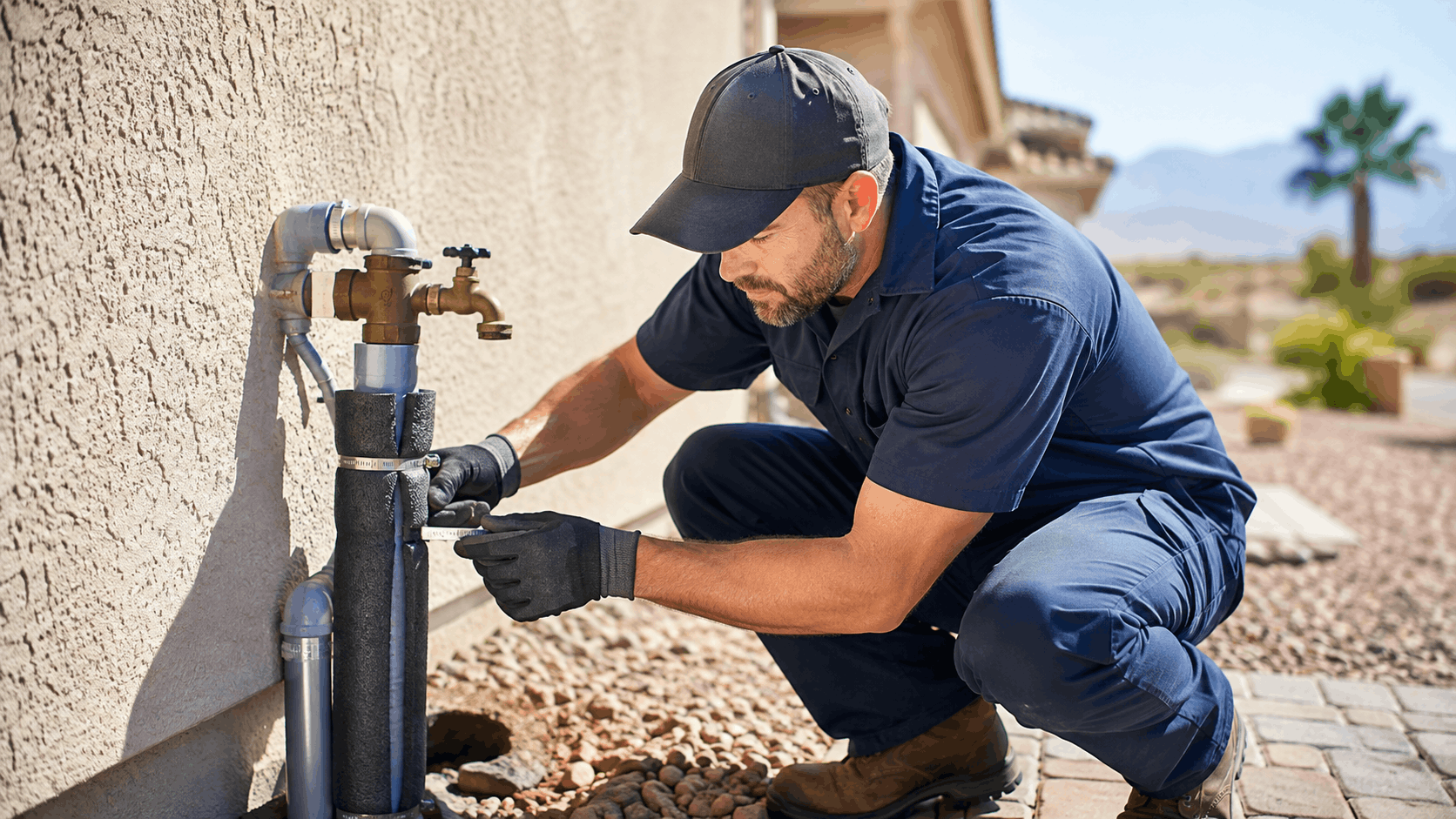
The spigots on the side of your house and the drip lines running through your yard sit in full sun all day. In neighborhoods like Craig Ranch and Aliante, that constant UV exposure makes plastic irrigation line brittle and cracks the rubber washers inside hose bibs.
Drip irrigation is especially prone to summer failure. The thin poly tubing gets baked until it splits, and a single crack can leak for days before anyone notices the wet gravel. Cracked emitters and fittings are common too once the plastic starts to break down.
A sun-damaged hose bib can start dripping at the connection or crack at the valve stem. That slow leak wastes water and can undermine the soil right against your foundation. Checking your spigots at the start of summer catches these before they get worse.
Simple shading and insulation help a lot. Insulated covers on hose bibs and shade over exposed irrigation manifolds keep the sun off the parts most likely to fail. It is cheap protection for lines that would otherwise cook all summer.
Attic and Garage Pipes That Overheat
Attic temperatures in a North Las Vegas summer can top 140 degrees. Any pipe running through that space is sitting in an oven for months, and the heat cooks the material and weakens the solder joints holding copper lines together.
Garages get hot too, especially ones that face west and take the afternoon sun. Water lines and the water heater in an uninsulated garage deal with heat that stresses fittings and shortens their life. These are spots where summer heat damage shows up fast.
Better ventilation makes a real difference. An attic fan or added roof venting pulls hot air out and lowers the peak temperature your pipes have to survive. Cooler attic air means less thermal expansion and slower joint fatigue.
Wrapping exposed attic and garage pipes in insulation is another easy win. Pipe wrap keeps the water inside cooler and shields the pipe from the worst of the ambient heat. Together, ventilation and wrap take a lot of stress off the most vulnerable runs in the house.
Pool Equipment and Backyard Plumbing
Backyard pools are everywhere in North Las Vegas, and the plumbing that runs them works hard in summer. Pool pump lines, filters, and supply plumbing run for hours a day in full heat, which puts steady stress on the fittings and seals.
The exposed PVC around pool equipment is a common failure point. Constant sun makes it brittle, and the vibration from the pump loosens joints over time. A cracked pump line can dump water fast and run the pump dry, which damages the equipment too.
Backyard supply lines that feed outdoor kitchens, sinks, or misters see heavy summer use as well. Those runs often sit in the sun and take the same UV and heat stress as your irrigation. Weak fittings and sun-brittle pipe are the usual culprits when one leaks.
Checking your pool and backyard plumbing at the start of summer catches brittle pipe and weeping fittings early. A few minutes looking over the equipment pad can save you a flooded yard and a damaged pump.
Insulating and Shading Vulnerable Runs
Most of the protection your exposed pipes need is stuff a homeowner can add in an afternoon. Foam pipe sleeves slip right over exposed lines and cut down how much heat reaches the pipe. They are cheap and available at any hardware store.
For pipes in direct sun, look for UV-rated wrap made to stand up to constant exposure. Regular tape and foam break down fast out here, so the UV-rated stuff is worth the small extra cost. It keeps working season after season instead of falling apart by August.
Simple shade covers do a lot too. A small cover over a hose bib, an irrigation manifold, or a pool equipment pad blocks the direct sun that does the most damage. Even a piece of shade cloth can drop the temperature on those parts.
Walk your property before the worst of the heat sets in and note every pipe you can see. Wrapping and shading those runs takes an hour or two and removes one of the biggest summer burst risks from your list.
Early Warning Signs of a Pipe About to Burst
A pipe almost never bursts without warning. There are small clues that show up days or weeks ahead, and catching them early is what separates a quick repair from a flooded home.
Here are the warning signs we tell every homeowner to watch for, and what each one usually means:
| Warning Sign | What It Often Means |
|---|---|
| Sudden jump in your water bill | A hidden leak in a wall or slab running non-stop |
| Brown or discolored water | Corrosion breaking down the inside of a pipe |
| Whistling, knocking, or banging in the walls | Pressure problems or a weakening joint |
| Damp spots or wall stains | A slow leak soaking into drywall or flooring |
| Warm spot on the floor | A possible slab leak in a hot water line |
| Musty or mildew smell | Moisture from a hidden leak feeding mold |
If you notice any of these, do not wait for the pipe to fail. Early leak detection is far cheaper than cleaning up after a burst.
Sudden Spikes in Your Water Bill
Your water bill is one of the best leak detectors you have. When it jumps for no obvious reason, that extra water is often going somewhere it should not, usually a hidden leak inside a wall or under the slab.
A steady hidden leak can add tens of dollars a month, and a bigger one can push your bill up by a hundred dollars or more. If your usage climbs while your habits have not changed, that is a red flag worth chasing down.
Compare your current bill to the same month last year. Our summer usage always rises a bit with irrigation and pools, but a sharp spike beyond that pattern points to a leak. The sooner you investigate, the less water and money you lose.
A simple check is to shut off every fixture and watch the meter. If it keeps ticking with nothing running, water is escaping somewhere and it is time to find it. Our team can pinpoint the source with electronic leak detection before it becomes a burst.
Discolored Water and Odd Noises
Water that comes out brown, yellow, or cloudy is telling you something about the inside of your pipes. Discolored water often means corrosion is breaking down the pipe wall, especially in older galvanized or copper lines. That corrosion is exactly what leads to a burst.
Strange noises are another warning. Whistling when water runs can mean a restriction or a pressure problem, while knocking and banging point to water hammer or a joint under stress. Pipes that make new sounds are pipes that are changing on the inside.
Pay attention to when the noises happen. A knock every time an appliance shuts off is water hammer, while a constant whistle might mean a partially blocked or corroded line. Both are worth a closer look before summer heat finishes the job.
If your water is discolored and your pipes are noisy at the same time, treat it as a serious sign. That combination usually means corrosion and pressure are teaming up against your plumbing.
Damp Spots, Stains, and Musty Smells
A slow leak rarely announces itself with a flood. It shows up as a damp spot on a wall, a yellow-brown stain on the ceiling, or a patch of flooring that always feels a little wet. These are early signs that a pipe is failing behind the scenes.
A warm spot on the floor is a classic sign of a slab leak. When a hot water line under the concrete starts leaking, it heats the floor above it. If one area of tile or carpet feels warm for no reason, get it checked right away.
Your nose can catch a leak too. A musty, mildew smell in a room with no obvious water source usually means moisture is collecting somewhere hidden and mold is starting to grow. That smell often shows up before any visible stain does.
None of these signs get better on their own. A water stain or a warm slab spot is a pipe asking for attention, and dealing with it early keeps a small leak from becoming a burst and a mold problem.
Need Help in Las Vegas?
Active Plumbing serves Las Vegas and all of Las Vegas Valley.
A Summer Plumbing Inspection Checklist
A little routine maintenance before and during the hot months goes a long way. You do not need special tools for most of it, just a few minutes and a flashlight.
Run through this simple plumbing inspection at the start of summer and again mid-season to catch trouble early.
Checking Visible Pipes, Joints, and Fittings
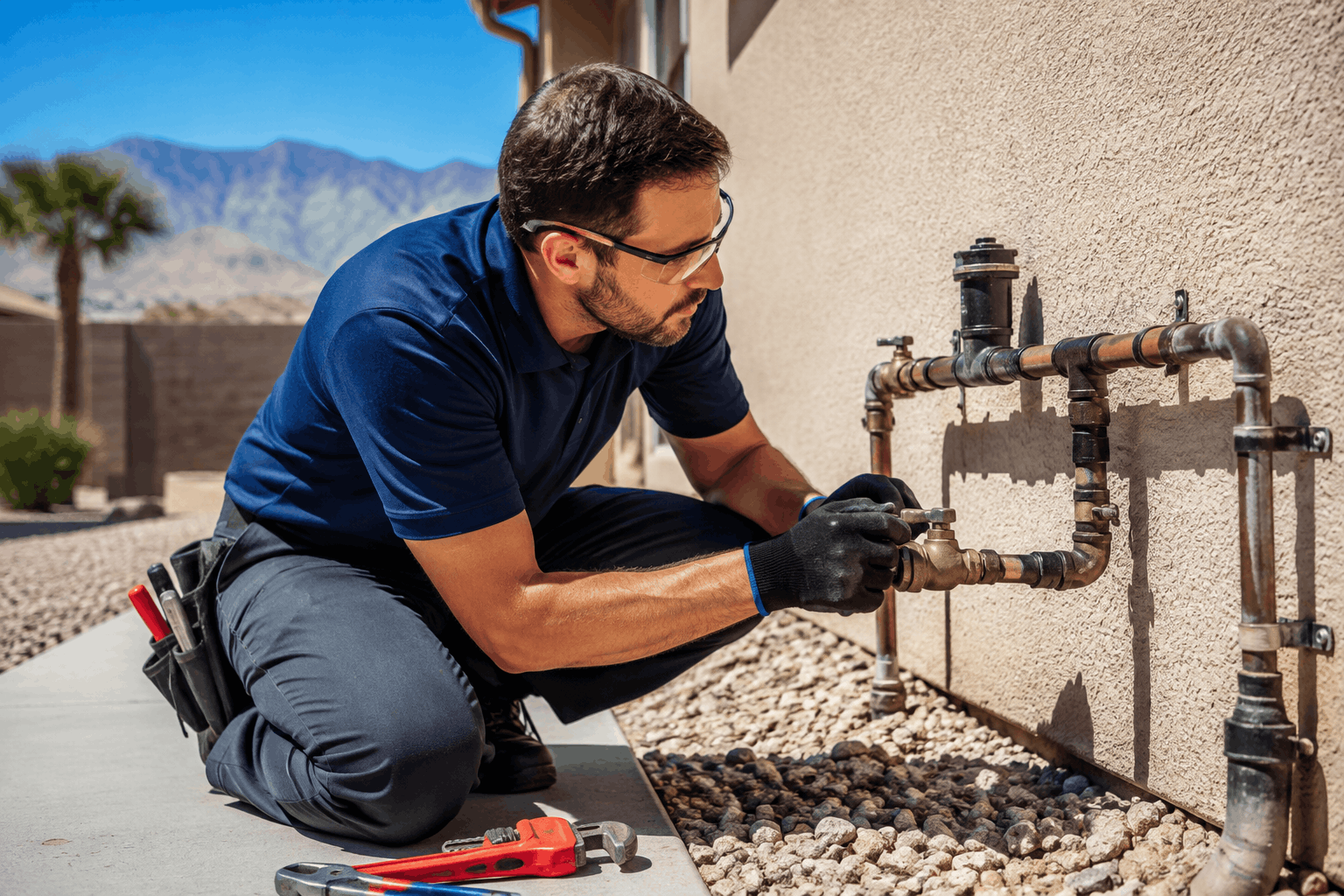
Start with the pipes you can actually see. Look under every sink, in the garage, and around the water heater for anything that looks off. You are hunting for moisture, corrosion, and any pipe that looks swollen or discolored.
Run your hand along each pipe joint and fitting and feel for dampness. Even a tiny bit of moisture around a connection means it is weeping and could get worse under summer stress. Green or white crust on copper is a corrosion check flag worth noting.
Pay close attention around the water heater, since that is where hot water and hard water do the most damage. Rust at the base, damp spots, or mineral crust on the fittings all point to problems building up. Our water heater services team can look closer if something seems off.
Write down anything you find, even if it seems minor. A joint that is just barely damp in June can be a full leak by August, and having noticed it early gives you time to fix it on your schedule instead of during an emergency.
Testing Shutoff Valves and the Main
The worst time to go looking for your main shutoff valve is while water is pouring into your house. Find it now, before you need it, so you can move fast in an emergency. In most North Las Vegas homes it sits in the garage, near the front hose bib, or at the curb in the meter box.
Once you find the main, test it. Turn it off, check that the water stops at your faucets, then turn it back on. A valve that is stuck or hard to turn needs attention, because a shutoff that will not move does you no good when a pipe bursts.
Test the individual shutoff valves under sinks and behind toilets too. These small valves seize up over time, especially with hard water. Working each one a couple of times a year keeps it from freezing in the open position.
Make sure everyone in the house knows where the main water valve is and how to shut it off. In a burst emergency, the person who is home might not be you, and thirty seconds of knowing where the valve is can save thousands in damage.
When to Schedule a Professional Inspection
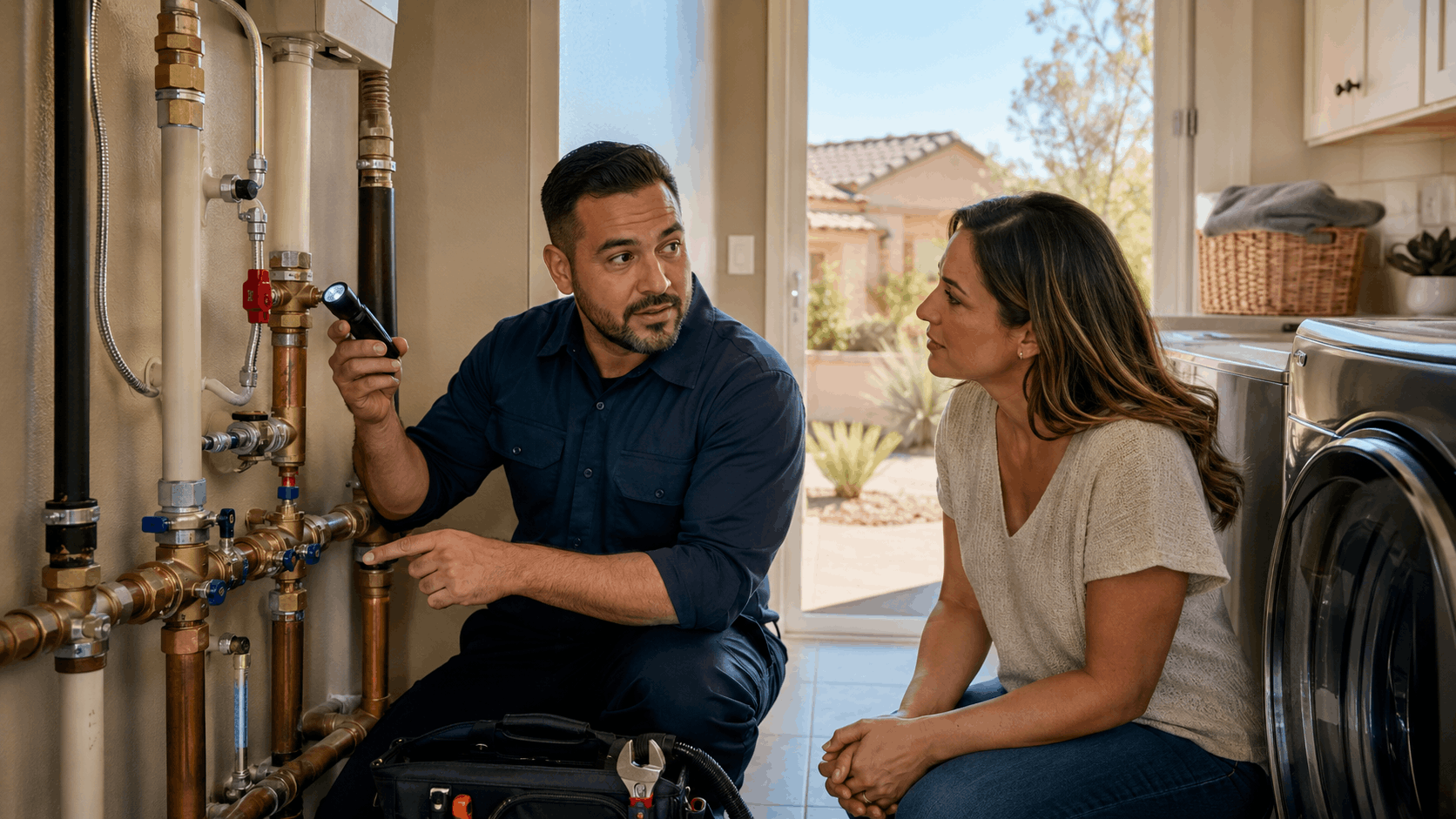
A homeowner check catches a lot, but some problems hide where you cannot see them. Homes over 25 years old, or any home that has had leaks before, should get a professional inspection before peak heat arrives.
Our team looks at the things a quick visual pass misses. We check pressure, inspect the condition of aging pipe materials, test the regulator, and look for early corrosion inside the system. That is how we flag a weak point before summer heat turns it into a burst.
Older homes near Cheyenne and Craig Road benefit the most from this. When the original galvanized or thin copper is still in the walls, a professional eye can tell you which sections are close to failing and which have life left. That knowledge helps you plan repairs instead of reacting to emergencies.
Scheduling an inspection in spring or early summer gives you time to make any fixes before the heat is at its worst. Reach out through our contact page to set one up.
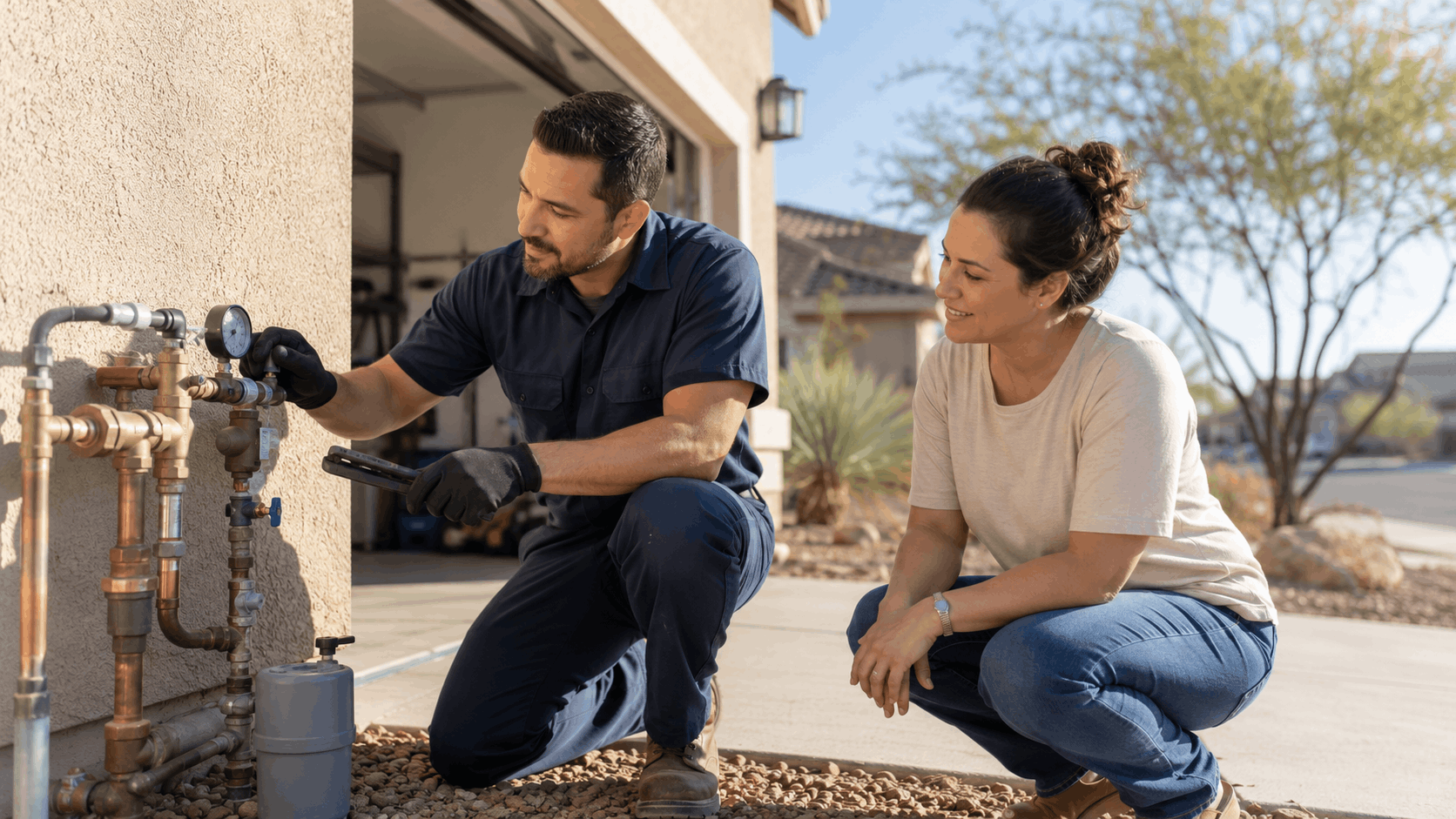
What to Do When a Pipe Bursts
Even with good prevention, pipes sometimes fail. When one bursts, the first few minutes matter most. A calm, clear plan limits the damage and keeps everyone safe.
Here is exactly what to do the moment you find water spraying or pooling in your home.
Shutting Off Water and Power Safely
Your first move is the main water valve. Shut it off to stop the flow, because every second it runs adds gallons to the mess. This is why finding and testing that valve ahead of time pays off.
Next, think about electrical safety. If water is near outlets, appliances, or the electrical panel, cut power to those areas at the breaker before you step into the water. Standing water and electricity are a dangerous mix, so do not take chances.
If you cannot safely reach the breaker without walking through water, stay out and call for help. No belongings are worth an electrical shock. Keep everyone, especially kids and pets, clear of the flooded area until power is off.
Once the water is off and the power is safe, you can move on to protecting your home. Getting these two steps done fast makes everything after them easier.
Limiting Water Damage Before Help Arrives
With the water shut off, start protecting what you can. Move furniture, electronics, boxes, and anything valuable out of the wet area and up off the floor. The faster you get belongings clear, the more you save.
Start soaking up standing water with towels, a mop, or a wet vac if you have one. The longer water sits, the deeper it soaks into flooring, baseboards, and drywall. Getting the bulk of it up early makes a big difference in the final repair bill.
Open windows and run fans to get air moving. Our dry desert air actually works in your favor here, pulling moisture out fast once you get it circulating. Good airflow slows mold growth, which can start within a day or two in damp materials.
Do what you safely can, but do not put yourself at risk. The goal is to limit the damage until our team gets there, not to fix the pipe yourself.
Calling Active Plumbing for Fast Repairs
Once the water is off and the area is safe, call us. Our team responds quickly across North Las Vegas, from Aliante and Eldorado to Sunrise Manor, for burst pipe repair day or night.
A burst pipe is a true emergency, and it does not wait for business hours. That is why we offer emergency plumbing service, so you are not left standing in a flooded house waiting until morning. The faster we get there, the sooner the water stops and the drying can start.
When we arrive, we find the failure, fix or replace the damaged section, and check the surrounding pipe for other weak spots. Our goal is to get your water back on safely and make sure the same problem does not repeat next week. Learn more about our burst pipe repair service.
Keep our number somewhere everyone in the house can find it. In a middle-of-the-night emergency, having a plumber you can call right away saves both time and stress.
Need Help in Las Vegas?
Active Plumbing serves Las Vegas and all of Las Vegas Valley.
Upgrades That Lower Your Risk Long Term
Prevention and quick response handle the short term, but some upgrades take the worry off the table for years. These are the investments worth considering if you want lasting protection.
Here are the upgrades that make the biggest difference for North Las Vegas homes:
- Repiping old galvanized or thin copper systems
- Installing a fresh pressure regulator to hold safe PSI
- Adding smart leak detectors and automatic shutoff valves
- Putting in a water softener to slow scale and corrosion
Not every home needs all of these, but each one lowers your odds of a summer burst. Let us break down when each makes sense.
Repiping Old or Failing Systems
If your home still has its original galvanized pipe from the 70s or 80s, a full repipe is often the smartest long-term move. Galvanized lines rust from the inside and only get worse, so replacing them ends the cycle of leaks and repairs for good.
A repipe swaps out the old, failing lines for modern materials that stand up better to heat and hard water. It clears out the corrosion and scale problems in one project instead of chasing leak after leak. For a home that has already had a couple of bursts, it usually pays for itself in avoided damage.
Timelines depend on the size of the home and how the plumbing is routed, but many repipes wrap up in a few days to a week. We plan the work to keep your water disruption as short as possible. It is a bigger project, but it solves the root problem.
If you are not sure whether your home needs a full repipe or just targeted repairs, our team can assess it and give you a straight answer. Sometimes replacing a few bad sections is enough, and we will tell you when that is the case.
Installing a New Pressure Regulator
A new pressure reducing valve is one of the most affordable upgrades that protects your whole home. It holds your incoming PSI in that safe 40 to 60 range no matter how high the utility pressure climbs, including those late-night spikes.
If your current regulator is more than a decade old, replacing it is cheap insurance. A fresh valve keeps steady pressure control across every fixture and pipe, which takes daily strain off your entire system. That steady pressure alone prevents a lot of bursts.
We test your pressure first to confirm the regulator is the issue, then size and install the right valve for your home. It is a quick job that delivers protection well beyond its cost. For many older homes, it is the single best first step.
Pairing a new regulator with water hammer arrestors gives your pipes even more relief from pressure shocks. Together they smooth out the ups and downs that wear plumbing out early.
Adding Leak Detection and Auto Shutoff Systems
Smart technology has made it possible to stop a burst before it floods your home. A whole-home leak detection system watches your water flow and can catch a problem the moment it starts. Some setups even shut the water off automatically.
Smart leak sensors placed near water heaters, under sinks, and by appliances alert you the second they detect moisture. When paired with an automatic shutoff valve, the system can cut the water on its own if it senses a major leak, even when no one is home.
That auto shutoff is a game for families who travel in summer, like the one that came home to a flooded garage. Instead of days of running water, the system stops the flow in seconds and sends an alert to your phone. Explore our whole-home leak detection system to see how it works.
These systems are especially worth it for homes with a history of leaks or valuable finishes to protect. The cost of the system is small next to the price of a major water damage cleanup.
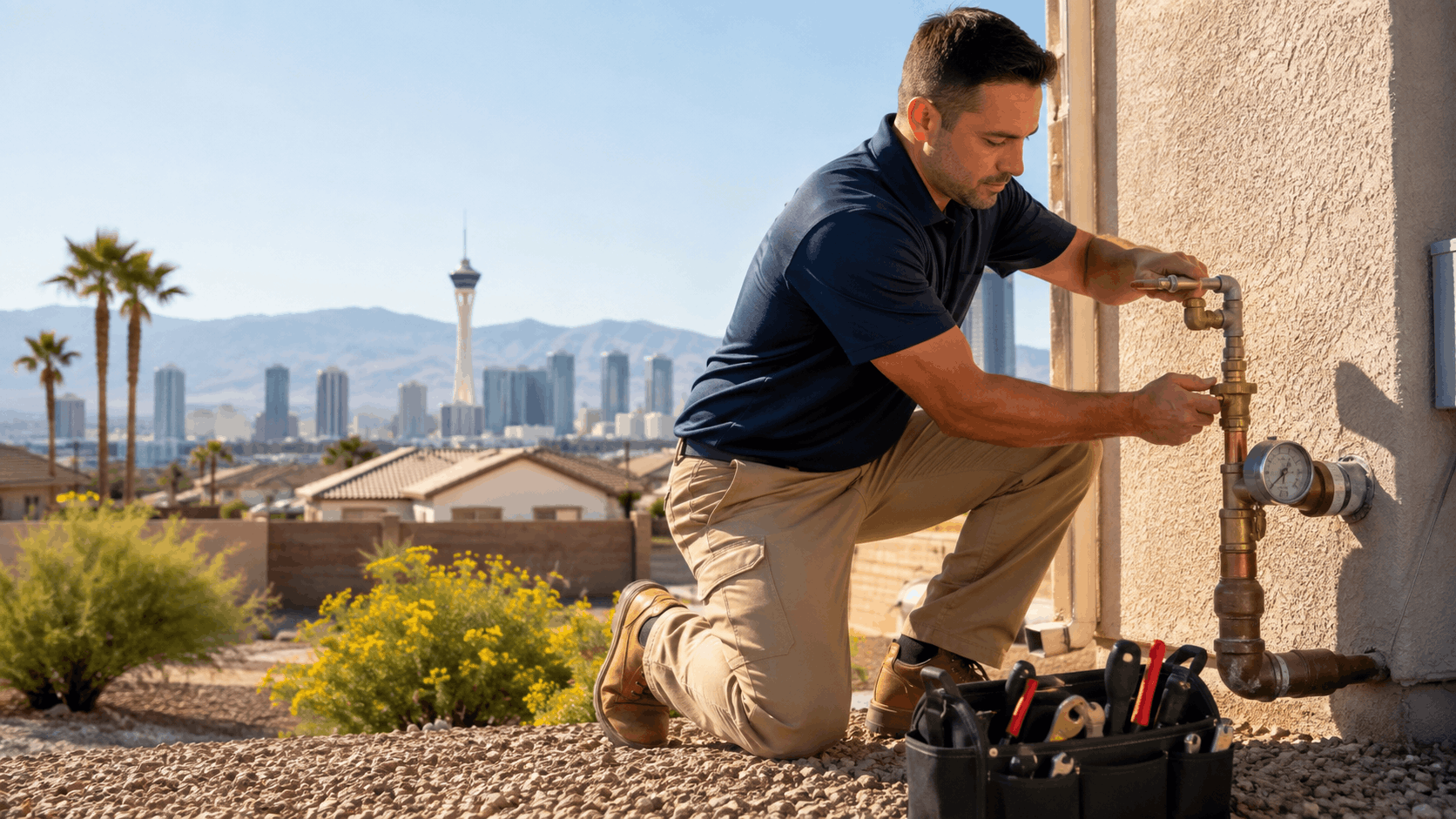
Final Thoughts
Summer pipe bursts in North Las Vegas are not random bad luck. Heat, dry soil, hard water, and high pressure work together to wear pipes down, and every one of those factors can be managed with a little attention.
Check your water pressure, watch for early warning signs, protect your exposed lines, and run a quick inspection before the heat peaks. Those simple habits stop the vast majority of bursts before they ever happen.
When you need help, whether it is a summer inspection, a water softener install, or an emergency at 2 a.m., our team is ready across North Las Vegas. Contact Active Plumbing to schedule a consultation or call us the moment a pipe gives out. We know these neighborhoods, and we are here to keep your home dry.
Frequently Asked Questions
- Can hot summer weather really cause a pipe to burst?
- Yes, and it happens more than people expect. When temperatures climb past 110 degrees, copper, CPVC, and PVC pipes expand and contract every day, which fatigues joints and creates cracks. At the same time, dry desert soil shifts and pulls away from buried water lines, adding strain. Attic pipes get the worst of it, sitting in 140-degree heat that cooks solder joints until a weak spot finally gives way.
- What water pressure is safe for my North Las Vegas home?
- A healthy home runs between 40 and 60 PSI. Readings from 60 to 75 are worth watching, and anything above 80 PSI puts your pipes at real risk of a burst. Utility pressure often spikes at night when demand drops, so it can climb higher than you realize. If your pressure runs above the safe range, a pressure regulator will bring it back down and protect your whole system.
- How do I find my main water shutoff valve?
- In most North Las Vegas homes, the main shutoff sits in the garage, near the front hose bib on the outside wall, or in the curb meter box out front. Look for a valve or lever on the main water line where it enters the house. Find it and test it now, before an emergency, and make sure everyone in the home knows how to turn it off quickly.
- How much does it cost to fix a burst pipe?
- The cost depends on where the pipe is and how much damage it caused. A simple, accessible repair is on the lower end, while pipes hidden inside walls or under a concrete slab cost more because they take extra work to reach. Slab leaks are the most involved. Water damage cleanup can add to the total too, which is why catching leaks early saves so much money.
- Are older homes more likely to have summer pipe bursts?
- They are. Homes built in the 1970s and 80s near Cheyenne Avenue and Craig Road often still have aging galvanized or thin copper pipes. Those materials corrode from the inside over decades, narrowing and weakening until summer heat and pressure push them over the edge. If your older home still has its original plumbing, it faces a higher risk and is worth a professional inspection before peak heat.
- Does hard water make pipe bursts more likely?
- Yes. North Las Vegas has very hard water, and the calcium and magnesium in it build a layer of scale inside your pipes. That scale narrows the openings, which raises internal pressure, and it traps moisture against the pipe walls, which speeds up corrosion. Over the years, a scaled and corroded pipe becomes far more likely to burst, especially with summer heat adding daily thermal expansion.
- How often should I have my plumbing inspected?
- A yearly inspection is a good rule for most homes, ideally in spring or early summer before the heat peaks. Homes over 25 years old or any home that has had leaks before should stick to that schedule without fail. An annual check lets us catch weak joints, worn regulators, and early corrosion before they turn into a burst, so you can fix problems on your own timeline.
- Will a water softener protect my pipes?
- A water softener helps a lot. By removing the calcium and magnesium that cause scale, it slows the buildup that narrows pipes and speeds corrosion. Softer water keeps your pressure steadier and extends the life of your pipes, water heater, and fixtures. It will not undo damage that is already there, but it stops the problem from getting worse and is a strong long-term investment for a desert home.
- What should I do first if a pipe bursts at night?
- Shut off the main water valve first to stop the flow. Then check for electrical safety and cut power at the breaker to any area where water is near outlets or appliances. Move belongings out of the wet zone and start soaking up standing water. Once the area is safe, call an emergency plumber right away, because a fast response limits both the water damage and the risk of mold.
- Does Active Plumbing offer emergency service in North Las Vegas?
- Yes. Our team provides fast emergency response across North Las Vegas and the surrounding valley, including neighborhoods like Aliante, Eldorado, and Sunrise Manor. A burst pipe cannot wait until morning, so we are available day and night for burst pipe repair and other plumbing emergencies. Keep our number handy, and call the moment you have a problem so we can get your water off and the repair underway quickly.
A
Licensed plumbing professionals serving Las Vegas and Las Vegas Valley.
Licensed in Nevada · License #0047021
Last updated on
Why trust Active Plumbing?
Founded in 1991, Active Plumbing is a licensed and insured plumber serving Las Vegas and Las Vegas Valley. All content is reviewed by our licensed technicians.

Need Help in Las Vegas?
Active Plumbing serves Las Vegas and all of Las Vegas Valley.
Related Articles
Cost Guides
Burst Pipe Repair Cost Vegas: Emergency Response vs Standard Response Pricing
Compare emergency versus standard burst pipe repair pricing in Las Vegas, plus real cost ranges, local causes, insurance tips, and how to choose the right response tier.
Local
Why Foundation Shifts in the Las Vegas Foothills Cause Pipe Bursts
Las Vegas foothill and slope communities see foundation movement from expansive soils and monsoon rain. That movement can stress pipes and cause bursts. Here's why it happens and how to respond with burst pipe repair.
Safety & Prevention
Galvanized Pipe Lead Risk: Why North LV Homes Need Testing Before Renovation
Galvanized pipe in older North Las Vegas homes can trap and release lead. Learn why testing before a renovation protects your family and saves money.