Cost Guides
Burst Pipe Repair Cost Vegas: Emergency Response vs Standard Response Pricing
Key Takeaways
- Burst pipe causes in the valley include winter cold snaps, aging galvanized and polybutylene pipe, hard water buildup, and shifting slab soil.
- Basic spot repairs run $150 to $500, while complex access, cleanup, or whole-home repipes can reach several thousand dollars.
- 30-minute emergency response carries a premium for after-hours labor and stocked-truck readiness, but often saves more than it costs when water is spreading.
- Standard response saves money when a leak is small, stable, and fully shut off with no active damage.
- Locating and testing the main shutoff valve in advance is the single most useful step a homeowner can take before an emergency.
- Most homeowners insurance covers sudden bursts but not slow leaks, so fast reporting, photos, and an itemized estimate matter.
- Major repairs and repipes often need a Clark County or City of Las Vegas permit, and HOA rules can affect exterior work.
- Choose the response tier by weighing how fast water is spreading against damage risk, time of day, and neighborhood location.
In This Article
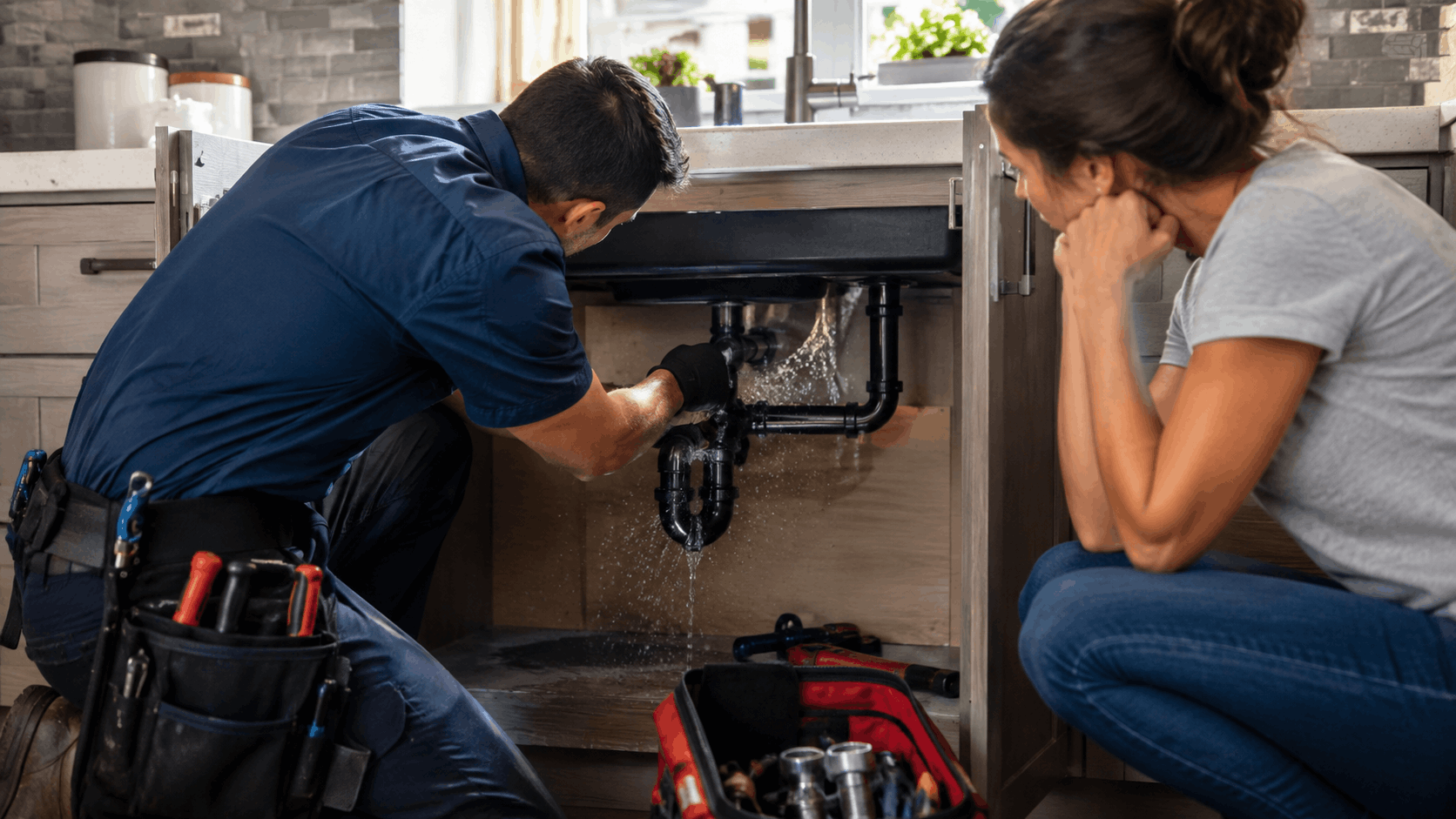
It is 1 a.m. in a quiet Summerlin cul-de-sac. A homeowner wakes to the sound of water rushing behind the guest bathroom wall. By the time they find the flashlight, a dark stain is creeping across the ceiling below. Panic sets in, and the first question that hits is simple: who do I call, and what is this going to cost me?
That scene plays out across the Las Vegas valley more often than most people expect. A burst pipe does not care about the hour, and the price of fixing it can swing wildly depending on how fast a crew reaches the door. Our team at Active Plumbing has answered these calls from Aliante to Henderson, and we have seen how the right decision in those first minutes shapes the final bill.
What Causes Burst Pipes in Las Vegas Homes?
People assume the desert is too warm for pipe trouble, then a January cold snap proves them wrong. The truth is that burst pipe causes in the valley come from a mix of climate swings, aging materials, and mineral-heavy water. Knowing why pipes fail helps a homeowner spot warning signs before a small drip turns into a flood.
Las Vegas plumbing faces a stack of stresses that differ from wetter climates. Extreme summer heat, sudden winter freezes, hard water, and shifting soil all wear on lines over decades. Below are the biggest reasons pipe failure shows up in homes across the valley.
- Sudden temperature drops that freeze exposed pipes
- Old galvanized and polybutylene lines past their lifespan
- Corrosion from years of hard mineral water
- High pressure and moving soil under slab foundations
Winter Cold Snaps and Uninsulated Pipes
Most of the year, freezing is not on anyone's radar here. Then a fast cold snap rolls through, and homes near Summerlin and the northwest foothills get caught off guard. Overnight lows near the ridgelines can dip well below what the central valley sees, and that difference matters for exposed pipe.
Frozen pipes usually strike the parts of a home nobody thinks about. Exterior hose bibs, garage lines, and pipes running through uninsulated attic spaces freeze first. Water expands as it turns to ice, and that pressure splits copper or cracks fittings, often without a sound until the thaw hits.
Homes built on the western edge of the valley tend to have more exposed runs because of elevation and sprawling layouts. When temperatures fall into the 20s, we field a spike of calls from families near the foothills who never insulated a garage line. A simple foam sleeve on exposed pipe costs a few dollars and prevents a repair that runs into the hundreds or thousands.
The frustrating part is that these freezes only last a night or two. A homeowner who wraps vulnerable pipes before the first cold front avoids the whole problem. Our crews carry insulation on the truck and can point out every at-risk line during a quick visit.
Aging Galvanized and Polybutylene Lines
Older neighborhoods hold a lot of charm and a lot of outdated pipe. Homes around the Historic Westside and John S. Park were often plumbed with galvanized steel that has been quietly rusting from the inside for fifty years or more. That corrosion narrows the pipe and weakens the walls until a section simply gives way.
Polybutylene is the other troublemaker in old homes. Builders used this gray plastic pipe heavily from the late 1970s into the mid 1990s, and it reacts badly to chlorine and minerals in the water supply. It grows brittle over time, then fails at fittings and along straight runs with little warning.
When we open a wall in one of these older properties, we frequently find galvanized pipe flaking apart at the joints. A spot repair on that kind of line is often a short-term patch, because the rest of the system is in the same worn condition. That is why many owners of vintage homes eventually weigh a full pipe and fixture upgrade against repeated repairs.
If a home still runs on original galvanized or polybutylene pipe, a burst is not a question of if but when. We recommend a plumbing inspection so owners can plan on their own timeline instead of reacting to a 2 a.m. emergency. Catching it early keeps the choice in the homeowner's hands.
Hard Water and Mineral Buildup
The water delivered by the Las Vegas Valley Water District is some of the hardest in the country. It carries high levels of calcium and magnesium picked up from the Colorado River and local groundwater. Those minerals coat the inside of pipes and fixtures a little more with every gallon that flows through.
That buildup does two damaging things over time. It narrows the pipe, which forces water to squeeze through a smaller opening and raises internal pressure. It also traps corrosive deposits against the pipe wall, speeding up the breakdown of metal lines.
Homeowners often notice the signs without connecting them to a burst risk. Reduced flow at the faucet, white crust around fixtures, and water heaters that fail early all point to hard water at work. Left unchecked, the strain on aging pipe eventually finds the weakest joint and lets go.
Treating the water at the source slows this whole process down. Many families across the valley install a water softener to cut the mineral load and protect their plumbing. It is one of the better long-term moves a Vegas homeowner can make to reduce mineral buildup and extend pipe life.
High Water Pressure and Soil Shifting
Strong water pressure feels great in the shower and hard on the pipes. Many valley homes run at pressures above 80 psi, which sits at the top edge of what residential lines are built to handle. That constant force stresses joints and thin spots until one cracks.
The ground itself adds another layer of trouble. Desert soil expands and contracts with moisture and heat, and that movement shifts the slab foundations most valley homes sit on. Pipes routed under or through the slab get pushed and pulled with every season.
A slab leak often starts as a hairline crack from this soil movement, then grows under pressure. Homeowners might notice a warm spot on the floor, a spike in the water bill, or the sound of running water with every tap shut off. These leaks are hard to spot because the damage hides beneath concrete.
Our team uses electronic leak detection to pinpoint slab leaks without tearing up an entire floor. Catching a pressure or soil-related failure early keeps the access work small and the cost down. A pressure regulator check is a quick step that protects the whole system.
Get Your Quote
Tell us what's going on and we'll get back to you fast.
Emergency Response vs Standard Response: What They Mean
The phrase emergency response gets used loosely, so it helps to define exactly what each service tier delivers. The difference comes down to how fast a plumber Las Vegas homeowners call can physically be at the door. That speed carries real cost and real value depending on the situation.
Standard response and emergency response solve different problems. One saves money on repairs that can wait, and the other saves property when water is actively spreading. The table below lays out the core differences at a glance.
| Feature | 30 to 60 minute Emergency Response | Standard Response |
|---|---|---|
| Arrival window | Roughly 30 to 60 minutes | Same-day or scheduled appointment |
| Availability | 24/7 including nights and holidays | Business hours |
| Best for | Active flooding, burst pipes, no shutoff | Slow leaks, planned repairs |
| Cost | Premium rate | Standard rate |
How 30 to 60 minute Emergency Dispatch Works
Fast response is not luck, it is logistics. Emergency dispatch relies on on-call crews who stay ready outside normal hours and trucks that are already stocked with common repair parts. When a call comes in, the nearest available tech heads out without a return trip to the shop.
Our dispatch team keeps track of where each crew sits across the valley in real time. That way, a burst pipe call in Enterprise routes to the closest tech instead of one stuck across town. Pre-stocked trucks carry copper, PEX, fittings, shutoff valves, and drying gear so the repair starts the moment the crew arrives.
Being a 24/7 plumber means keeping people and equipment on standby around the clock. That readiness is what makes a fast response possible at 3 a.m. on a holiday weekend. The homeowner does not wait for someone to wake up, drive to the warehouse, and load parts.
For true water emergencies, this speed is the whole point. Our emergency plumbing service exists to stop damage before it spreads room to room. Every minute shaved off arrival time is water that never reaches the flooring and drywall.
What Standard Response Looks Like
Not every plumbing problem is a five-alarm event. A slow drip under the sink, a fixture that needs replacing, or a minor leak the homeowner has already contained can wait for a scheduled repair. Standard response covers these situations at a standard rate.
With standard service, a homeowner books a same-day or next-day window that fits their schedule. The crew arrives during business hours when labor rates are lowest. There is no premium for nights, weekends, or rushed dispatch built into the price.
This tier makes sense when water is fully shut off or when the leak is small and stable. A homeowner who catches a weeping joint under the vanity and closes the local valve has bought time. Waiting until morning for standard service can cut the bill noticeably.
We help callers decide honestly which tier they need. If a problem can safely wait, we say so rather than pushing an emergency call. That judgment is part of working as a local team that treats neighbors fairly.
Which Situations Truly Need Emergency Speed
The clearest sign of a real water emergency is water the homeowner cannot stop. If the main shut off valve does not slow the flooding, or the break is spraying inside a wall, every minute counts. That is when emergency response earns its cost.
Other true emergencies include sewage backing up into living space, a water heater flooding a garage, or a burst pipe above finished ceilings. In each case, standing water is actively damaging the structure and contents. Delay only multiplies the repair cost.
Some situations feel urgent but are not. A leak the homeowner has contained with a bucket and a closed valve, or a drip that has been slow for weeks, can usually wait for standard service. The test is whether water is spreading right now.
When in doubt, a quick phone call sorts it out. Our dispatchers ask a few questions about flow, location, and shutoff status to gauge severity. That conversation often saves a homeowner from paying an emergency premium they did not need.
Response Times Across the Valley
The valley is large, and travel time changes with geography and traffic. A crew already working near a neighborhood reaches the next call fast, while a run to the far edges takes longer. Distance from the nearest available truck is the biggest factor in arrival time.
Areas like Henderson, Centennial Hills, and the southwest each have their own drive characteristics. A late-night call to Henderson moves quickly with empty freeways, while the same distance at 5 p.m. crawls through rush hour. Central neighborhoods near the resort corridor usually see the fastest windows.
We position crews across the valley precisely so no single area waits too long. Coverage for spots like Aliante in the north and Enterprise in the south is planned around real drive data, not guesswork. That is how a 30 to 60 minute target stays realistic across such a spread-out region.
Weather and events also shift response times. A cold snap that bursts pipes across multiple neighborhoods stretches every crew thin at once. During those spikes, honest dispatch means giving callers a real arrival estimate instead of a promise we cannot keep.
Need Help in Las Vegas?
Active Plumbing serves Las Vegas and all of Las Vegas Valley.
Burst Pipe Repair Cost Breakdown in Las Vegas
Homeowners want a number, and the honest answer is that repair cost depends on several factors. Pipe type, location of the break, access difficulty, and any water damage all feed into the final pipe repair price. Breaking the bill into line items makes the total easier to understand.
The table below shows rough ranges we see across the valley. These are ballpark figures for planning, not a firm quote, since every home and break is different. Labor cost and materials both play into where a job lands.
| Line Item | Typical Range | What It Covers |
|---|---|---|
| Basic spot repair | $150 - $500 | Single accessible break, parts and labor |
| Complex repair | $500 - $1,500 | Hard access, slab or ceiling work |
| Drywall and access | $200 - $800 | Cutting and patching walls or ceilings |
| Water extraction and drying | $500 - $3,000+ | Cleanup after flooding |
| Whole-home repipe | $4,000 - $15,000 | Replacing all supply lines |
Typical Price Ranges by Pipe Type
The material of the failed pipe shapes the repair cost more than most people expect. Copper pipe is durable but pricey, both for the metal itself and the soldering labor a proper joint requires. A copper spot repair often runs at the higher end of the basic range.
PEX has become the go-to for repairs and repipes across the valley. It is flexible, resists mineral buildup better than metal, and installs faster, which lowers labor cost. A PEX repair usually costs less than the copper equivalent for the same location.
PVC and CPVC handle certain lines and tend to sit in the middle on price. PVC cost stays low for the material, though it is used more for drain and irrigation than pressurized supply. The right choice depends on where the break sits and what the rest of the system uses.
Our crews carry all three materials on the truck so the repair matches the existing plumbing. Mixing pipe types wrong creates new failure points, so we match or transition properly. That attention keeps the fix lasting instead of becoming next year's callback.
Access and Drywall Repair Charges
Reaching the break is often the expensive part. A pipe that fails inside an open crawlspace is cheap to fix, while one buried behind tile or under a slab drives the cost up fast. Access work is billed on top of the actual pipe repair.
When a break hides behind finished drywall, the crew must cut an opening, complete the repair, then patch and often repaint. Wall opening and drywall repair add labor and materials to the total. Ceiling breaks cost more because of the overhead work and the risk of spreading water damage.
Slab access is the toughest and priciest scenario. Reaching a pipe under the concrete foundation may mean jackhammering a section of floor or rerouting the line overhead instead. Slab access work can add hundreds to thousands depending on the approach.
We always explain access costs before starting so there are no surprises. In many cases, an overhead reroute avoids tearing up a slab and comes out cheaper overall. Choosing the smartest access path is where an experienced local crew saves the homeowner money.
Water Damage and Cleanup Add-Ons
The pipe repair is sometimes the smaller half of the bill. When a burst floods a room, the cleanup that follows adds real cost. Water extraction, drying equipment, and mold prevention all become part of the job.
Standing water soaks into flooring, baseboards, drywall, and subfloor within minutes. Commercial-grade extraction and air movers pull that moisture out before it causes lasting harm. Cleanup cost scales with how long the water sat and how far it spread.
Mold prevention is the piece homeowners forget until it is too late. Vegas heat can dry the visible surface while moisture lingers inside the wall cavity. That hidden dampness grows mold within a couple of days, turning a plumbing repair into a remediation project.
Acting fast on both the repair and the drying keeps this add-on small. A crew that stops the water and starts extraction in the same visit prevents the damage from compounding. That is one more reason fast response often costs less in the end.
Full Repipe vs Spot Repair Pricing
When a single joint fails on an otherwise sound system, a spot repair is the obvious call. It fixes the break at the lowest cost and gets the water back on quickly. For newer homes with good pipe, this is almost always the right move.
Older properties on the east side tell a different story. When galvanized or polybutylene pipe fails in one spot, the rest of the system usually sits in the same worn state. Repeated spot repairs on failing pipe add up to more than a repipe over a few years.
A whole home repipe replaces every supply line at once, typically with PEX or copper. Repipe cost runs higher upfront but resets the clock on the entire system. For a home fighting constant leaks, it often pays off in avoided emergencies and water damage.
We walk owners through the math honestly. If two or three spot repairs are looming, a repipe may be the cheaper long-term path. If the system is otherwise healthy, we fix the one break and leave the rest alone.
Why Emergency Response Costs More
Nobody loves paying an emergency premium, so it helps to see exactly what that money buys. Emergency pricing covers the real expense of keeping crews ready and moving fast at any hour. Understood clearly, the after hours cost makes sense as insurance against far bigger losses.
The response premium is not a random upcharge. It reflects specific costs that a standard daytime call does not carry. Here is what goes into that difference.
- Premium labor for nights, weekends, and holidays
- On-call staff kept ready outside business hours
- Trucks stocked and staged for immediate dispatch
- The damage a fast repair prevents
After-Hours, Weekend, and Holiday Rates
Plumbers who work at 2 a.m. on a Sunday earn premium pay, and that shows in the after hours rate. Nights, weekends, and holidays all carry higher labor charges because crews are working outside normal hours. This is standard across the trade, not unique to any one company.
A holiday call is the most expensive tier because staffing on those days costs the most. A tech giving up Thanksgiving to fix a burst pipe is compensated accordingly. Weekend service sits below that but still above a standard weekday rate.
The upside is availability when it matters most. A pipe does not wait for Monday morning, and neither should the response when water is spreading. Paying weekend service rates beats watching a flood ruin a floor for two days.
We keep our premium structure transparent so callers know the rate before the crew rolls. There are no hidden fees stacked on at the end. Clear pricing upfront is how we keep trust with valley homeowners.
On-Call Crews and Stocked Trucks
Readiness has a cost even when no call comes in. Keeping an on-call crew available overnight means paying people to stand by. That standby time is baked into emergency pricing because it is what makes the 30 to 60 minute window possible.
Stocked trucks carry another expense. Each vehicle holds a full inventory of pipe, fittings, valves, and drying equipment so no job stalls waiting for parts. Maintaining that inventory across multiple trucks ties up money that a scheduled-only operation avoids.
This investment is what separates a genuine fast-response service from a company that promises speed it cannot deliver. When a homeowner in Centennial Hills calls at midnight, the readiness is already paid for and waiting. The premium simply shares that cost with the people who use it.
Without stocked trucks and on-call staff, fast response is just a slogan. The infrastructure behind the promise is real and ongoing. That is the honest reason emergency work costs more than a planned repair.
Damage Avoided by Acting Fast
The premium looks small next to what fast action saves. A burst pipe can dump gallons per minute into a home, and that water finds flooring, drywall, cabinets, and belongings. A quick shutoff and repair stops the loss before it multiplies.
Consider a break above a finished ceiling in a two-story home. Thirty extra minutes of flow can mean the difference between a small drywall patch and a collapsed ceiling with ruined furniture below. The avoided damage often dwarfs the emergency fee several times over.
Water damage also triggers the cleanup and mold costs covered earlier. Every minute the water runs raises the extraction and drying bill later. Fast response caps that spiral early, which is a real cost savings even after the premium.
We have watched homeowners save thousands by calling the moment a pipe let go instead of waiting until morning. The fast fix protects the parts of a home that are expensive and slow to replace. In those cases, the premium is the cheapest line item on the whole job.
When Standard Response Saves Money
Emergency speed is not always the smart financial choice. When a leak is small and fully contained, waiting for standard service saves the premium with no added risk. A homeowner who shut the valve and mopped up has already won the important battle.
Non-urgent repairs like a slow drip, a fixture swap, or a leak inside a shut-off line belong on the standard rate. There is no damage clock running, so paying overnight prices makes no sense. Scheduling for the next business day keeps labor at its lowest.
The trick is judging honestly whether water is still spreading. If the answer is no and the situation is stable, standard response is the right call. If water is moving and cannot be stopped, the premium pays for itself.
We would rather tell a caller to wait and save money than upsell an emergency they do not need. That honesty is how a local plumber earns repeat trust. Saving a neighbor a few hundred dollars today builds a relationship for years.
Need Help in Las Vegas?
Active Plumbing serves Las Vegas and all of Las Vegas Valley.
What Homeowners Can Do Before the Plumber Arrives
The minutes before the crew shows up matter a lot. A few smart moves can limit damage and lower the final bill, whether the call is a 30 to 60 minute emergency or a standard visit. These burst pipe steps are simple and safe for most people to handle.
The goal is to stop the water, protect belongings, and stay safe. None of this replaces the repair, but it buys time and cuts the cleanup cost. Here is what to do while help is on the way.
Finding and Shutting the Main Water Valve
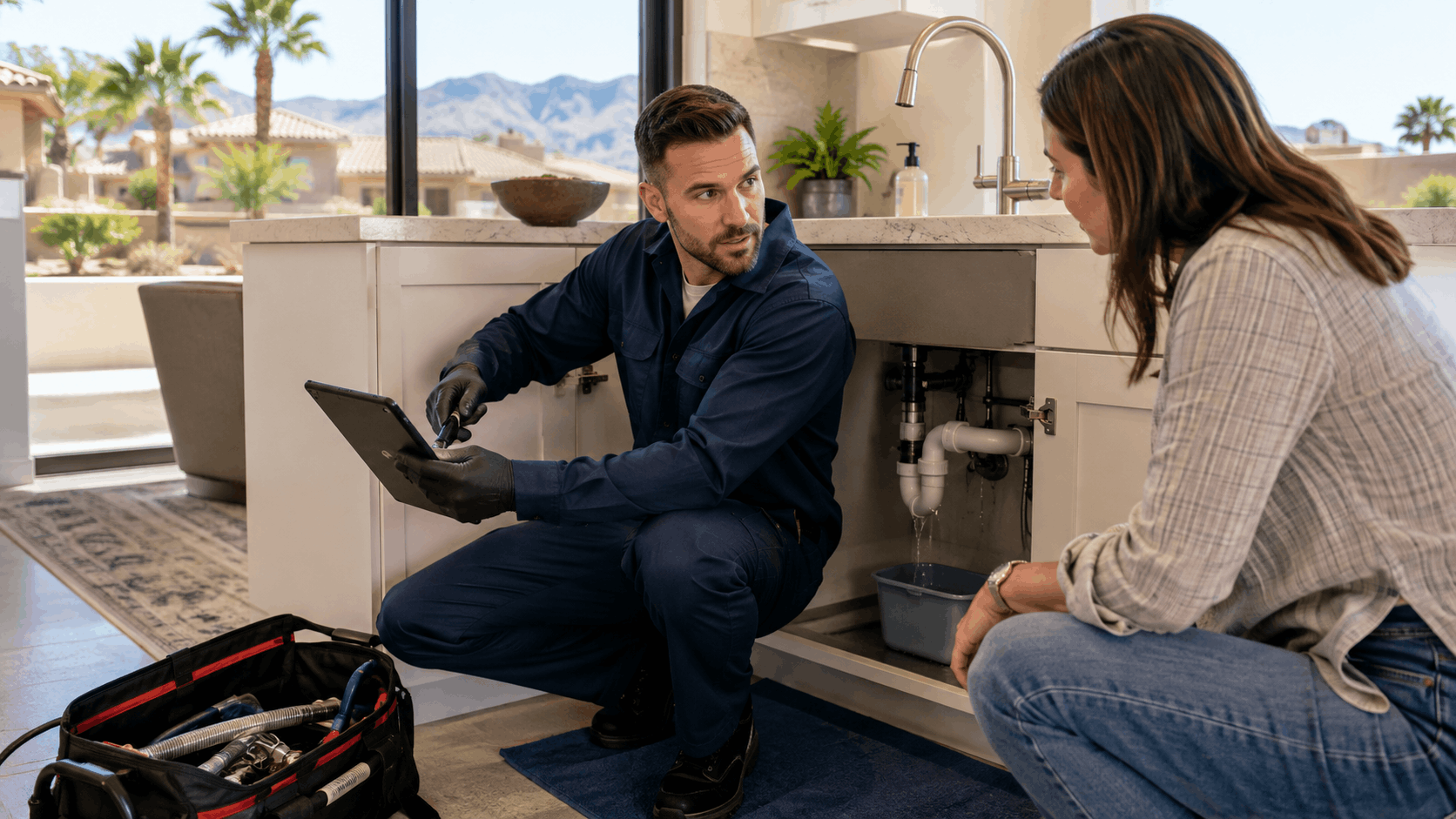
The single most useful thing a homeowner can do is find the main shutoff before an emergency ever happens. In most valley homes, the main valve sits near the garage, along an exterior wall, or in a box near the front curb. Knowing its location in advance saves frantic searching during a flood.
To shut off the water, turn the valve clockwise until it stops. A quarter-turn ball valve moves 90 degrees, while a round gate valve needs several full turns. Once it is closed, the flow to the whole house stops and the flooding slows to a trickle.
If the main valve is stuck or corroded, the curb meter box near the street usually has a shutoff too. That one may need a meter key to operate, which is worth keeping in the garage. Practicing this once on a calm afternoon makes it automatic when it counts.
We recommend every homeowner locate and test their shutoff twice a year. A valve that has never been turned can seize up right when it is needed. A quick test keeps it working and confirms exactly where to go at 2 a.m.
Draining Lines and Cutting Power Safely
After the main is off, opening the lowest faucet in the house drains the remaining pressure. This relieves water still sitting in the pipes and reduces how much drains from the break. Running a garden spigot or a downstairs tub tap works well for this.
Electrical safety comes first around any standing water. If water is near outlets, the panel, or appliances, do not walk into it. Water and electricity together are deadly, and no repair is worth that risk.
When it is safe to reach the breaker panel without stepping in water, cut power to the affected area. Shutting off circuits for flooded rooms removes the shock hazard before cleanup begins. If the panel itself is near water, wait for the professionals.
These steps protect people and property at the same time. Draining the lines limits the mess, and killing power prevents a tragedy. Both take only a minute once the main valve is closed.
Moving Belongings and Documenting Damage
While waiting for the crew, move furniture, rugs, and valuables out of the water's path. Lifting items onto counters or into dry rooms saves them from soaking. Even a few inches of elevation protects wood legs and electronics.
Documentation matters for the insurance claim that often follows a burst pipe. Take clear photos and video of the water, the damage, and the affected belongings before cleanup starts. Insurers want to see the extent of the loss as it happened.
Save any damaged items rather than tossing them right away. An adjuster may need to inspect ruined flooring or furniture to approve the claim. Keeping records of what was lost speeds up reimbursement.
Protecting belongings and building a photo record are the quiet steps that pay off later. The repair fixes the pipe, but good documentation recovers the value of what the water ruined. A few pictures on a phone can mean thousands back from the insurer.
What Not to Touch Until Help Arrives
The urge to patch a burst pipe is strong, but DIY fixes often backfire. A wrap of tape or a hardware-store clamp on a pressurized line usually fails again fast, sometimes at a worse moment. A temporary patch can also hide the true extent of the damage from the crew.
Cutting into walls or slabs without knowing what runs behind them risks hitting wiring or gas lines. That guesswork turns one problem into several. Leaving the access work to the crew keeps everyone safe and the repair clean.
Some DIY attempts void manufacturer warranties on pipe or fittings. An improper repair on a warranted system can cost the homeowner the coverage they were counting on. It is not worth the gamble on a modern plumbing system.
The best move is to shut the water, protect the area, and wait. The crew arrives with the right parts and knowledge to fix it once. Leaving the repair alone until then avoids the DIY risk of making the job harder and pricier.
Insurance, Permits, and Local Requirements
The paperwork side of a burst pipe affects the total cost as much as the labor. Insurance coverage, permits, and HOA rules all shape what a homeowner pays and how the work proceeds. Handling this side right keeps the project smooth and the reimbursement flowing.
Local authorities in Clark County and the City of Las Vegas set the rules for major plumbing work. Knowing when a permit applies and what insurance covers avoids costly surprises. Here is how the paperwork fits together.
What Homeowners Insurance Usually Covers
Most homeowners insurance policies cover a sudden burst pipe and the water damage it causes. Because the failure is abrupt and accidental, insurers generally treat it as a covered event. That coverage often includes the cleanup, drying, and repair of damaged flooring and drywall.
Slow leaks are a different story. A drip that seeped for weeks or months is frequently denied as a maintenance issue the owner should have caught. This is why fast reporting and good documentation of a sudden burst matter so much.
The pipe repair itself is sometimes covered and sometimes not, depending on the policy. Many policies pay for the resulting water damage but not the failed pipe. Reading the policy or calling the agent clears up exactly what applies.
We provide itemized documentation that helps homeowners file a clean claim. Separating the sudden-event damage from any older wear gives the adjuster what they need. Clear paperwork is often the difference between an approved and a denied claim. The federal consumer guide on homeowners insurance is a helpful place to understand basic coverage terms.
Permits Through Clark County and City of Las Vegas
Small spot repairs rarely need a permit, but larger work often does. A whole-home repipe, a slab reroute, or major supply line replacement usually requires a plumbing permit. The rule protects homeowners by requiring the work meet code and pass inspection.
Whether the property falls under Clark County or the City of Las Vegas building department depends on the address. Each has its own permitting process and fees, and unincorporated areas go through the county. A licensed plumber knows which authority applies and pulls the permit as part of the job.
Skipping a required permit creates problems later. Unpermitted work can complicate a home sale, void insurance on the repair, and force expensive rework if discovered. It is not a corner worth cutting on major plumbing.
Our team handles permitting so the homeowner does not have to decode the rules. We pull the right permit, schedule the inspection, and make sure the work passes. That keeps the repair legitimate and protects resale value down the road.
HOA Rules in Communities Like Summerlin and Green Valley
Many valley homeowners live under an HOA, and those rules can affect a repair. Communities like Summerlin and Green Valley in Henderson often have guidelines about exterior work, landscaping disruption, and contractor scheduling. Exterior line repairs may need HOA sign-off before digging begins.
HOA rules most often touch anything visible from the street or shared spaces. Trenching across a front yard to reach a service line, or working near common areas, can trigger a review. Knowing the community's process avoids fines and delays.
Scheduling can also be restricted. Some HOAs limit the hours contractors may work or require advance notice for driveway and street access. An emergency call usually overrides these limits, but planned repairs should respect them.
We work within HOA guidelines across the valley's planned communities every week. Coordinating with the association keeps the repair compliant and the neighbors happy. That local familiarity saves homeowners the headache of chasing approvals themselves.
Getting a Detailed Written Estimate
A written estimate protects the homeowner on cost and the insurer's records. An itemized quote breaks out parts, labor, access work, and cleanup so nothing is a mystery. That clarity helps with both budgeting and the insurance claim.
A vague verbal number invites disputes and surprise charges. A detailed estimate lists each line item with its price, so the final bill matches expectations. It also gives the homeowner a document to compare against other bids if they choose.
For insurance purposes, an itemized quote is often required. Adjusters want to see exactly what the repair involves and why each cost is justified. A clear written estimate speeds the claim and reduces back-and-forth.
We provide written estimates before work begins on any non-emergency job, and clear documentation on emergency calls once the water is stopped. Homeowners know the numbers before we start cutting. That transparency is a basic part of fair service.
Need Help in Las Vegas?
Active Plumbing serves Las Vegas and all of Las Vegas Valley.
How to Choose the Right Response Tier for Your Situation
With the costs and tradeoffs laid out, the decision comes down to a few clear factors. Choosing a plumber and a response tier is about matching speed to severity without overpaying. This simple decision guide helps a homeowner weigh the call in the moment.
Speed, cost, and damage risk all pull in different directions. The right choice balances them based on what the water is actually doing. Here is how to think it through.
Assessing How Fast Water Is Spreading
Start by watching the water itself. A pipe gushing with the main valve off, or water climbing across a floor, signals a true emergency. Fast-moving water reaching multiple rooms means the damage is compounding by the minute.
Location matters as much as flow rate. Water spreading on a ground-floor slab is bad, but a break above a finished second-story ceiling threatens everything below it. A leak in a finished, furnished space carries higher stakes than one in a bare garage.
Judge severity by asking whether the situation is stable or worsening. If the water is contained and not growing, there is time to plan. If it keeps spreading despite the shutoff, that is the signal for emergency dispatch.
This quick assessment guides the whole decision. Fast spread and finished spaces point to emergency response. Contained, stable, or bare-area leaks lean toward standard service and lower cost.
Weighing Repair Cost Against Damage Risk
The core tradeoff is the emergency premium versus the potential property loss. When the water threatens expensive flooring, cabinetry, or belongings, the premium is small next to what it protects. Paying to stop the damage early is the cheaper path.
When little is at risk, the math flips. A contained leak in an unfinished space threatens almost nothing, so paying an after-hours premium wastes money. Standard service handles it at a lower rate with no downside.
Think of the premium as insurance priced against the specific risk. High damage risk justifies the cost, and low risk does not. Matching the spend to the exposure is how a homeowner avoids both overpaying and underreacting.
When the call is genuinely unclear, a quick conversation with our dispatch settles it. We help callers weigh cost versus risk honestly. That guidance often saves money while still protecting the home.
Time of Day and Location Factors
The clock changes the calculation. A break at 2 a.m. near Aliante may need emergency response simply because no standard service runs overnight and water cannot wait until morning. The same leak at 10 a.m. could go standard.
Location within the valley affects arrival time and options. A daytime leak near the Arts District sits close to central crews and gets fast standard service. A remote address at night has fewer choices, tilting toward emergency dispatch.
Time of day also drives cost directly through premium rates. A repair that can safely wait until business hours avoids the night and weekend surcharge. Whenever the situation allows, timing the call for standard hours saves money.
Balancing the hour, the neighborhood, and the severity leads to the right tier. There is no single answer that fits every home. The best choice reads all three factors together in the moment.
Working With a Local Team That Knows the Valley
A crew that works the valley daily brings knowledge that speeds every repair. A local plumber knows the fastest routes to Centennial Hills, the common pipe types in older east-side homes, and how the water district's hard water affects each system. That familiarity shortens diagnosis and repair time.
Valley knowledge also means understanding which neighborhoods sit on slabs prone to shifting and which have aging galvanized lines. A crew that has opened hundreds of local walls anticipates problems before cutting. That experience keeps costs down and repairs lasting.
A trusted team also handles the local paperwork smoothly, from Clark County permits to HOA approvals in planned communities. They have relationships with the building departments and know the community rules. That saves the homeowner the runaround of learning it all from scratch.
Our roots run across every corner of the valley, from North Las Vegas to Henderson. We know the streets, the water, and the homes because we work them every day. When a pipe bursts, that local depth turns a stressful night into a fast, fair repair. Reach out through our contact page any time.
Final Thoughts
A burst pipe is stressful, but the response does not have to be a gamble. The cost comes down to pipe type, access, water damage, and whether the situation demands 30 to 60 minute speed or fits standard service. Knowing the difference lets a homeowner spend wisely instead of reacting blind.
The smartest move happens before any emergency: locate the main shutoff, insulate exposed pipes before cold snaps, and treat hard water at the source. Those steps prevent many bursts and shrink the damage when one does hit. When water is spreading and cannot be stopped, fast response protects far more than it costs.
Whether a home sits in Summerlin, Henderson, or North Las Vegas, our team is ready to help at any hour. Call Active Plumbing for a burst pipe repair or a free consultation on protecting a home's plumbing. Get the honest advice and fast, fair service that valley homeowners have trusted for years.
Frequently Asked Questions
- How much does burst pipe repair cost in Las Vegas?
- A basic accessible spot repair typically runs $150 to $500, while complex jobs with slab or ceiling access reach $500 to $1,500 or more. Water extraction, drying, and drywall repair add to that. The final number depends on pipe type, break location, access difficulty, and any flooding. A written estimate breaks down each line item so the price range is clear before work begins.
- How much more does 30 to 60 minute emergency response cost than standard?
- Emergency response carries a premium over the standard rate because of after-hours labor, on-call staffing, and stocked-truck readiness. The response cost premium varies by time and day, with holidays highest and weekdays lowest. That extra pays for a crew reaching the home in roughly 30 to 60 minutes at any hour. When water is actively spreading, the premium often costs far less than the damage a fast repair prevents.
- Does homeowners insurance cover a burst pipe?
- Most policies cover a sudden burst pipe and the resulting water damage because it is abrupt and accidental. Slow leaks that seeped for weeks are often denied as maintenance issues. The failed pipe itself may or may not be covered depending on the policy, though the water damage usually is. Fast reporting, clear photos, and an itemized estimate give the best chance of an approved insurance claim.
- How fast can a plumber reach my home in Las Vegas?
- With 30 to 60 minute emergency dispatch, arrival typically falls between 30 and 60 minutes depending on the neighborhood and traffic. Central areas near the resort corridor see the fastest windows, while far edges like Aliante or the southwest take longer. Rush hour and valley-wide freeze events stretch response times. Our dispatch positions crews across the valley to keep arrival time short in every area we serve.
- Can I turn off the water myself before help arrives?
- Yes, and it is the single best thing to do. Find the main valve near the garage, an exterior wall, or the curb meter box, and turn it clockwise until it stops. This shuts off water to the whole house and slows the flooding. Then open the lowest faucet to drain remaining pressure. Knowing the shutoff location in advance saves precious time during an emergency.
- Do burst pipe repairs need a permit in Clark County?
- Small spot repairs usually do not require a permit, but larger work often does. A whole-home repipe, slab reroute, or major supply line replacement typically needs a plumbing permit through Clark County or the City of Las Vegas building department. The permit ensures the work meets code and passes inspection. A licensed plumber pulls the correct permit and schedules the inspection as part of the job.
- What causes pipes to burst in the desert?
- Several factors drive burst causes in the valley. Sudden winter cold snaps freeze exposed garage and exterior pipes, especially near the foothills. Hard water from the Las Vegas Valley Water District corrodes lines and builds mineral deposits. High water pressure and shifting desert soil crack pipes under slabs. Aging galvanized and polybutylene lines in older homes fail as they wear out over decades.
- Is it cheaper to repair one pipe or repipe the whole house?
- For newer homes with sound plumbing, a spot repair at $150 to $500 is the clear budget choice. For older homes with failing galvanized or polybutylene pipe, repeated repairs add up, and a whole-home repipe at $4,000 to $15,000 may cost less over a few years. The right call depends on the pipe's overall condition. We walk owners through the math to find the cheaper long-term path.
- What should I ask for in a repair estimate?
- Ask for an itemized written quote that separates parts, labor, access and drywall work, and any water cleanup. Each line should list its price so nothing is a surprise. Confirm whether permits are included and whether the estimate covers water damage restoration. A detailed written estimate helps with budgeting and is often required for an insurance claim, so clarity upfront protects the homeowner.
- Can waiting for standard response make the damage worse?
- It can, if water is still spreading. A break that keeps flowing despite the shutoff will soak flooring, drywall, and belongings the longer it runs, and delay raises the cleanup and mold costs. If the leak is fully contained with a closed valve, waiting for standard service is safe and saves money. The test is simple: if water is actively moving, do not wait.
A
Licensed plumbing professionals serving Las Vegas and Las Vegas Valley.
Licensed in Nevada · License #0047021
Last updated on
Why trust Active Plumbing?
Founded in 1991, Active Plumbing is a licensed and insured plumber serving Las Vegas and Las Vegas Valley. All content is reviewed by our licensed technicians.

Need Help in Las Vegas?
Active Plumbing serves Las Vegas and all of Las Vegas Valley.
Related Articles
Cost Guides
Emergency Plumber Cost Las Vegas: After-Hours Pricing Breakdown
A clear breakdown of emergency plumber cost in Las Vegas, including after-hours pricing, fees, neighborhood factors, and smart ways to lower your bill.

Cost Guides
Tankless Water Heater Installation Cost Vegas: 3-Bedroom vs 5-Bedroom Pricing
Compare tankless water heater installation costs in Las Vegas for 3-bedroom vs 5-bedroom homes, with pricing ranges, sizing tips, local factors, and Clark County permit details.
Cost Guides
Trenchless Pipe Bursting vs Pipe Lining vs Open Trench in Las Vegas Caliche Soil
Compare trenchless pipe bursting, pipe lining, and open trench sewer repair in Las Vegas caliche soil, with costs, timelines, and how to pick the right method.