How-To Guides
Repiping a Las Vegas Home While Living In It - The Real 3-5 Day Timeline, Walls, and Dust
Key Takeaways
- A typical Las Vegas repipe takes three to five working days with the family staying in the home the whole time.
- Hard water from the Las Vegas Valley Water District and aging galvanized or polybutylene pipe are the main reasons homes need repiping.
- Wall cuts are small and limited to fixture areas, closets, and interior walls, with attic routing removing many openings in single-story homes.
- Dust is controlled with plastic sheeting, zip walls, dust-collecting tools, and daily cleanup that matters more in the dry desert air.
- Water shutoffs are short and planned, usually a few hours, with flow restored by evening on nearly every workday.
- Repipes require a permit through Clark County or the City of Las Vegas, plus HOA notice in communities like Summerlin and Green Valley.
- PEX resists hard-water scaling and costs less, making it the top pick for most valley homes, though copper still suits some owners.
- Signs a home needs a repipe include repeat pinhole leaks, rusty water, and falling pressure across the whole house.
In This Article
A Summerlin mom called our office last spring, half-whispering into the phone. Her two kids were napping down the hall, and she had just gotten a quote to repipe the whole house. Her biggest fear was not the cost. It was the picture in her head of every wall torn open, dust everywhere, and no water for a week while a family of four tried to keep living there.
That worry is one of the most common ones we hear from families across the valley. The good news is that the reality of a repipe is a lot calmer than the horror story people imagine. Most families stay right in their home the entire time, water stays on for most of each day, and only a handful of small wall openings get made near fixtures.
Why Las Vegas Homes Need Repiping in the First Place
Homes here do not fail at random. There are a few clear reasons a house in the valley ends up needing a full repipe instead of another patch job. Most of it comes down to the water and the age of the pipes in the walls.
- Hard water that scales up the inside of pipes year after year
- Older pipe materials that corrode or crack over time
- Repeated leaks that cost more to chase than to solve at the root
- Falling water pressure that no fixture swap will fix
When those factors stack up, repiping Las Vegas homes becomes the cheaper long-term move. We see this pattern in both older bungalows and newer tract homes, just for different reasons.
Hard Water and Mineral Buildup From the Las Vegas Valley Water District
Water delivered by the Las Vegas Valley Water District is some of the hardest in the country. It carries a heavy load of calcium and magnesium picked up on its way from Lake Mead. That mineral content is what leaves the white crust on your faucets and shower glass.
Inside the walls, those same minerals build up on the inner surface of copper and galvanized pipes. Over the years the buildup narrows the pipe like plaque in an artery. A three-quarter inch line can slowly close down to half its usable width.
That narrowing is the number one cause of low water pressure we find in homes ten years or older. Families notice it first when two showers run at once and the flow drops to a trickle. A water softener installation can slow future buildup, but once the scaling is severe, fresh pipe is the only real fix.
The hard water problem never truly stops in this valley. That is why we push homeowners toward pipe materials that shrug off mineral scaling rather than collect it. It saves them from repeating this whole story a decade down the road.
Aging Pipe Materials in Older Neighborhoods Like Huntridge and Paradise Palms
The older heart of the valley tells its own story through its pipes. Homes near Huntridge, John S. Park, and Paradise Palms were often built with galvanized steel supply lines. That material was standard decades ago, but it rusts from the inside out.
Galvanized steel starts shedding rust flakes and pinhole leaks once it passes forty or fifty years of service. Many of those mid-century homes are well past that mark now. We have opened walls in the Paradise Palms area and found pipe so choked with rust that barely a straw-width of open space remained.
Some homes from the late 1970s and 1980s carry polybutylene supply lines, often gray plastic with metal or plastic fittings. Polybutylene became infamous for failing at the joints and cracking without warning. If a home has it, most plumbers and insurers treat a full replacement as the smart move.
Newer neighborhoods are not immune either. Even copper systems in homes near Paradise feel the effect of years of hard water. The material lasts longer, but the mineral scaling still catches up eventually.
Signs a Home Is Ready for a Full Repipe Instead of Spot Repairs
There is a tipping point where patching stops making sense. When a plumber fixes one pinhole leak and another shows up two months later three feet down the same line, the pipe itself is telling you it is done. Chasing leaks one at a time gets expensive fast.
Rusty or brown water is another loud warning sign, especially first thing in the morning. It usually means the inside of galvanized pipe is flaking away into the water you drink and bathe in. That is not something a filter alone should have to handle.
Dropping water pressure across the whole house points to widespread scaling rather than one bad fixture. If new faucets and cleared aerators do not bring the flow back, the trouble is in the walls. That is the classic repipe vs repair decision point.
We tell homeowners a simple rule. If the cost of the last two or three repairs is creeping toward the price of a repipe, it is time to stop patching. A whole-home leak detection system can also confirm just how many weak spots a home really has before that call gets made.
Get Your Quote
Tell us what's going on and we'll get back to you fast.
The Real 3-5 Day Repipe Timeline for an Occupied Home
People want a straight answer on how long this takes, so here it is. A typical single-family home in the valley runs three to five working days from first cut to final cleanup. The range depends on size and layout, which we cover below.
Here is the honest day-by-day breakdown for an occupied home so nobody is caught off guard.
| Day | What Happens | Water Impact |
|---|---|---|
| Day 1 | Planning, pipe mapping, access cuts, staging | Short shutoff windows |
| Days 2-3 | Running and connecting new lines, pressure testing | Off during work, on by evening |
| Days 4-5 | Inspection, drywall patching, cleanup | Fully restored |
Day 1: Planning, Water Shutoff, and Access Cuts
The first morning is about mapping before any pipe gets touched. Our crew walks the home and traces every supply run from the meter to each fixture. This pipe mapping step decides where the new lines will travel and where the access holes go.
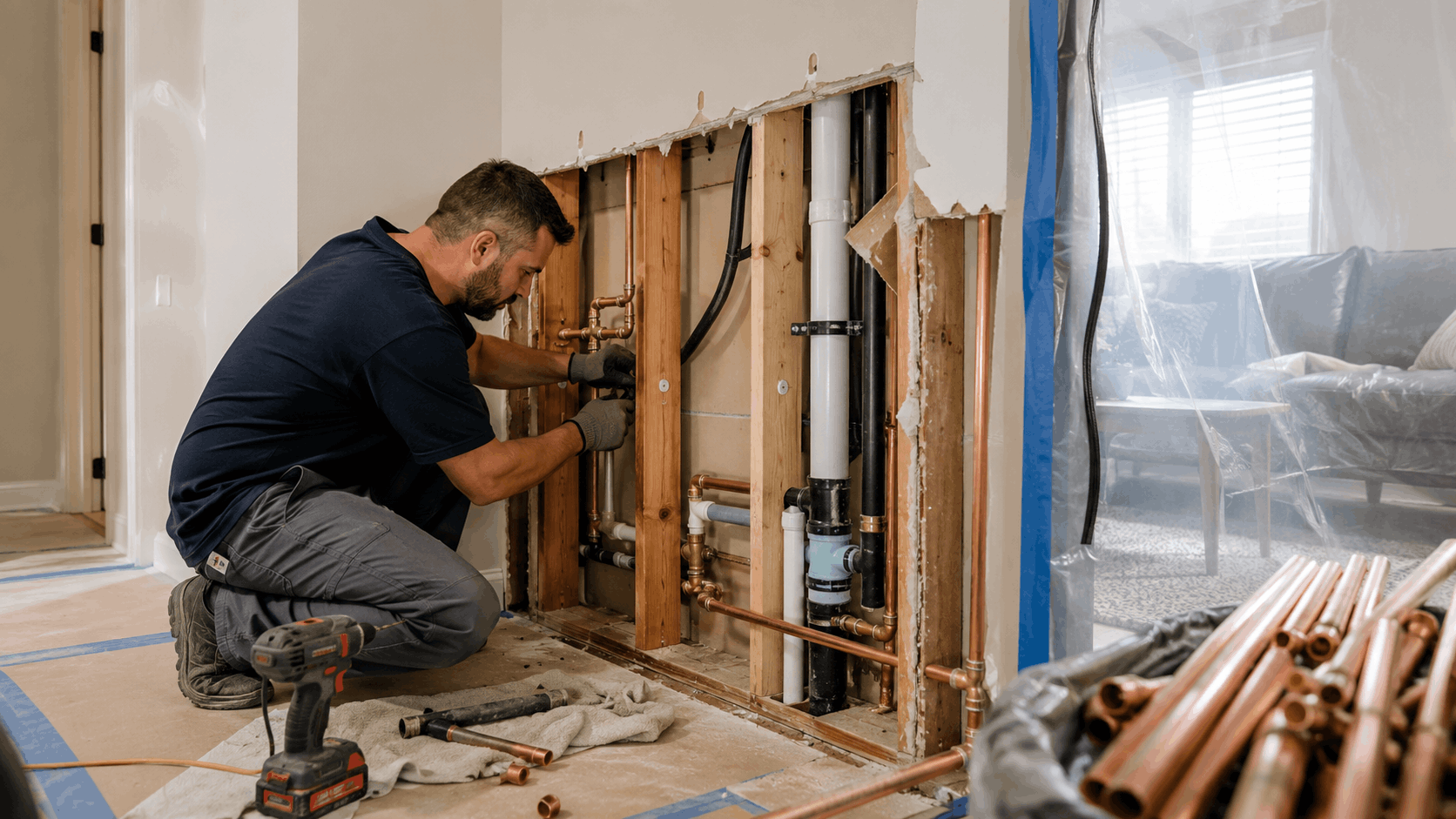
Once the plan is set, we protect floors and furniture and then make the access cuts. These are small, deliberate openings near fixtures and along the run, not random holes across the house. Staging the new PEX or copper and all the fittings happens the same day so day two moves fast.
Water shutoff on day one is brief and planned. We usually cut the main only while making the first connections, then restore it. Most families barely notice more than an hour or two without water on the opening day.
We also confirm the shutoff valve works and the meter is accessible. In some older homes near the central Las Vegas area, the main valve is corroded and needs replacing first. Catching that on day one keeps the rest of the week on schedule.
Days 2-3: Running New Lines Through Walls and Ceilings
The middle days are the heart of the job. This is when the new water lines actually go in, snaking through walls, ceilings, and often the attic. A PEX repipe moves quickly because the flexible tubing bends around framing without a fitting at every turn.
Our crew connects each fixture one section at a time, keeping the work organized so parts of the home stay usable. Hot and cold lines are run to every sink, tub, shower, toilet, and appliance. In a two-story home this is where the extra time shows up, since lines have to travel between floors.
Once the new system is joined, we run a pressure test before closing anything. The lines are charged with air or water and watched for any drop that would signal a leak. Nothing gets covered until that test holds steady.
Water is off during active connection work on these days but back on by evening in almost every case. We plan the sequence so the family has water each night for dinner, dishes, and bedtime routines. That daily rhythm is what makes staying home doable.
Days 4-5: Inspections, Patching, and Cleanup
The final stretch turns the house back into a home. First comes the city inspection, where an inspector verifies the new plumbing meets code before walls close. We schedule this so it does not stall the rest of the work.
After the inspection passes, drywall patching begins on every access hole. Our team cuts clean patches, secures them, and applies joint compound. Then comes texture matching to blend the repair into the surrounding wall so it disappears once painted.
Cleanup runs alongside the patching. We haul out old pipe, vacuum drywall dust, and wipe down surfaces in the work zones. The goal is to hand the home back cleaner than a lot of families expect after this kind of project.
We leave the patches paint-ready in most cases, which we explain more below. By the end of day five, the water runs clean and strong, the inspection paperwork is closed, and the only thing left is a coat of paint on the patched spots.
What Makes One House Take Longer Than Another
Not every home fits the same box, and a few factors push a job toward the five-day end. A two-story home is the most common one. Running lines up through floor cavities and between levels simply takes more cuts and more time than a flat single-story ranch.
Slab foundation homes add another wrinkle. When old lines are buried in the concrete slab, we reroute the new system overhead through walls and the attic instead of breaking up floors. That approach is cleaner but takes planning, especially in homes around Spring Valley where slab construction is common.
Home size and fixture count matter too. A three-bathroom house with a wet bar and outdoor kitchen has far more lines to run than a two-bedroom starter home. Each extra fixture adds connections and testing time.
Gated HOA communities can also stretch the calendar, though not the work itself. Approval notices and gate access for the crew sometimes add a day on the front end. We handle that paperwork early so the actual repipe still lands in the three to five day window.
Need Help in Las Vegas?
Active Plumbing serves Las Vegas and all of Las Vegas Valley.
The Truth About Walls: What Gets Opened and What Stays Closed
This is the fear that keeps homeowners up at night. The mental image of an entire house gutted to the studs is what makes people delay a repipe they clearly need. The real picture is far less dramatic.
- Cuts land near fixtures, not spread evenly across every room
- Openings are usually the size of a sheet of paper or smaller
- Attic and ceiling routing removes many wall cuts in single-story homes
- Closets and low-visibility spots take the openings whenever possible
Understanding where cuts actually go turns a scary project into a manageable one. Here is the breakdown of drywall and pipe routing.
Where Access Holes Actually Go
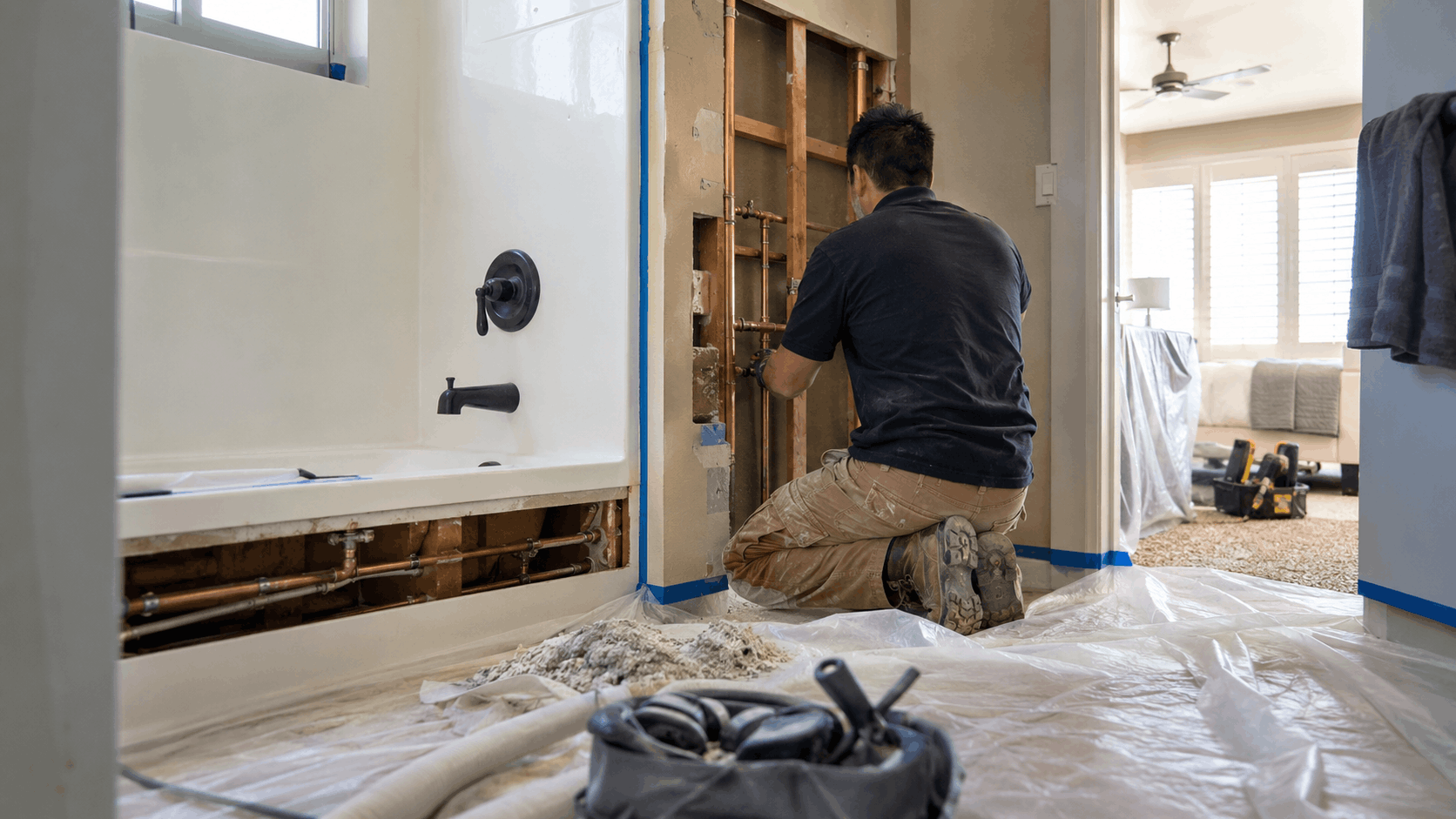
Access holes follow the plumbing, and plumbing clusters around fixtures. That means most cuts happen on the walls behind and beside sinks, tubs, showers, and toilets. These fixture walls are where the new lines have to connect, so that is where we open up.
We also use interior walls far more than exterior ones. Interior walls are easier to patch and do not touch insulation or the home's outer shell. When a line can route through an interior wall to reach a fixture, we choose that path.
Closets are a favorite spot for access holes. A cut inside a closet or behind a hanging clothes rod stays completely out of sight in daily life. We look for these hidden opportunities on every job to keep visible repairs to a minimum.
Homeowners are often surprised at how few holes a whole-house repipe really needs. A typical single-story home might see eight to fifteen small openings total. That is a world away from the wall-to-wall demolition people imagine.
Attic and Ceiling Routing to Reduce Wall Damage
The attic is a plumber's best friend in a single-story home. Instead of cutting a wall for every vertical run, we drop lines down from the attic to each fixture. That approach slashes the number of wall openings dramatically.
In a flat ranch-style home common across Sunrise Manor and the older east valley, most of the new pipe travels overhead. We only open the wall at the point where a line needs to reach a fixture below. The long horizontal runs stay hidden in the attic space entirely.
Ceiling routing does come with a desert catch, which we cover in the material section. Attic heat in Las Vegas summers is brutal, so pipe choice matters up there. We insulate lines run through the attic to protect them and keep water from turning scalding hot in the pipe.
Two-story homes cannot rely on the attic for the lower floor, which is one reason they take longer. Even then, we route as much as possible through ceiling and floor cavities to keep wall openings low. The fewer holes we make, the less patching everyone deals with later.
Drywall Patching and Texture Matching After the Repipe
Once the pipe work passes inspection, the finish work begins. Every access hole gets a proper drywall patch, not a piece of tape and a prayer. We cut backing, secure the patch, and build it up with joint compound so it sits flush with the wall.
Texture matching is where skill shows. Las Vegas homes use a range of wall textures, from knockdown to orange peel. Our team blends the new texture into the old so the repair does not stand out as a smooth island on a textured wall.
We leave patches paint-ready in the standard scope of work. That means the surface is smooth, textured, and primed if requested, waiting only for a topcoat. Homeowners usually handle final paint themselves so the color matches their exact wall, or they hire a painter for a whole-room refresh.
We are always clear about this split before the job starts. Some families want us to arrange painting too, and we can point them the right direction. The point is no surprises about what is included in the patch repair versus what the homeowner finishes.
Dust, Debris, and Keeping the Home Livable
Right after wall cuts, dust is the second worry we hear. Cutting drywall makes a fine powder, and nobody wants that drifting into a kid's bedroom or settling on the kitchen counter. Containment is how we keep a family comfortable while the work goes on.
Plastic Sheeting, Zip Walls, and Floor Protection
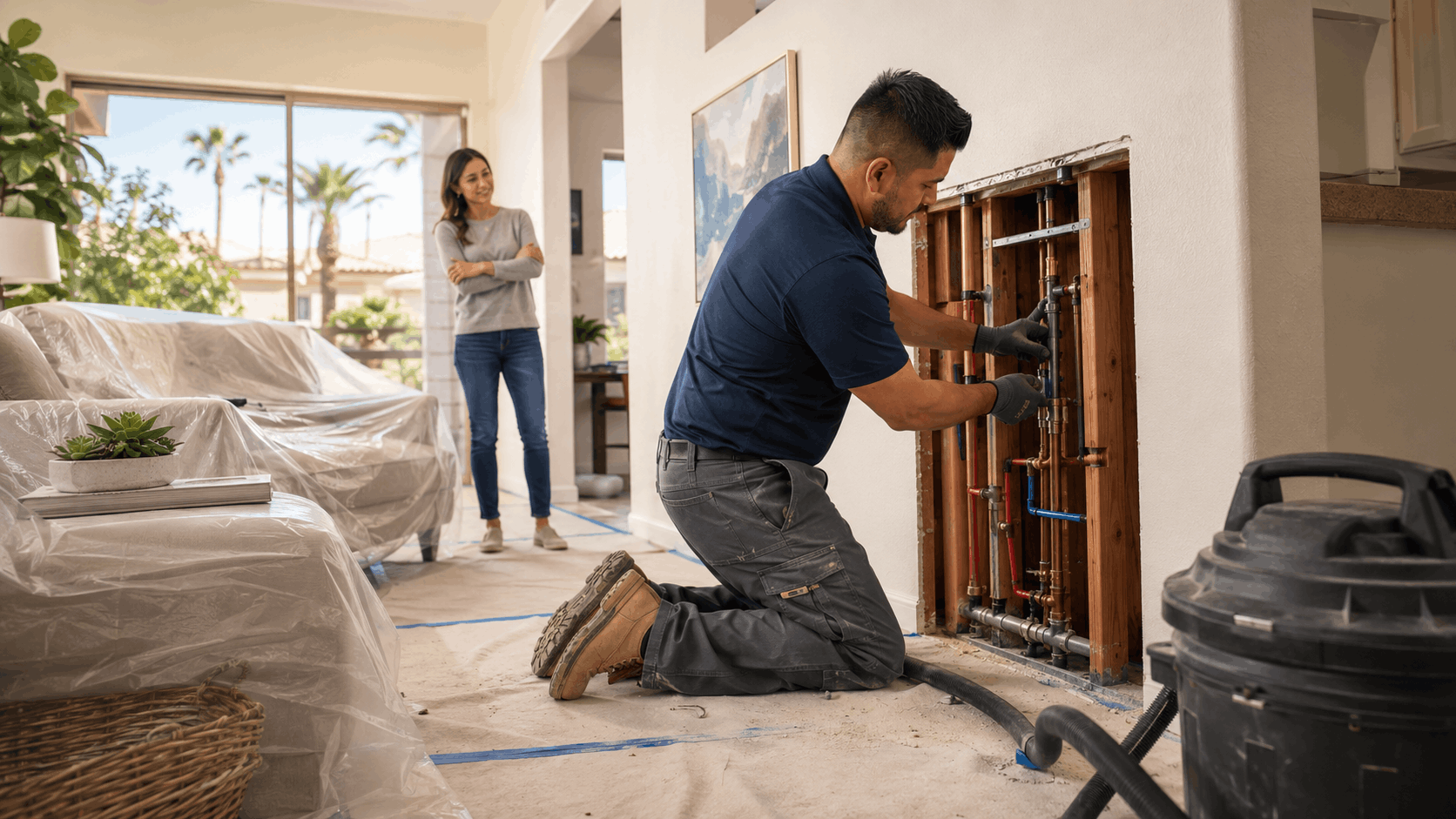
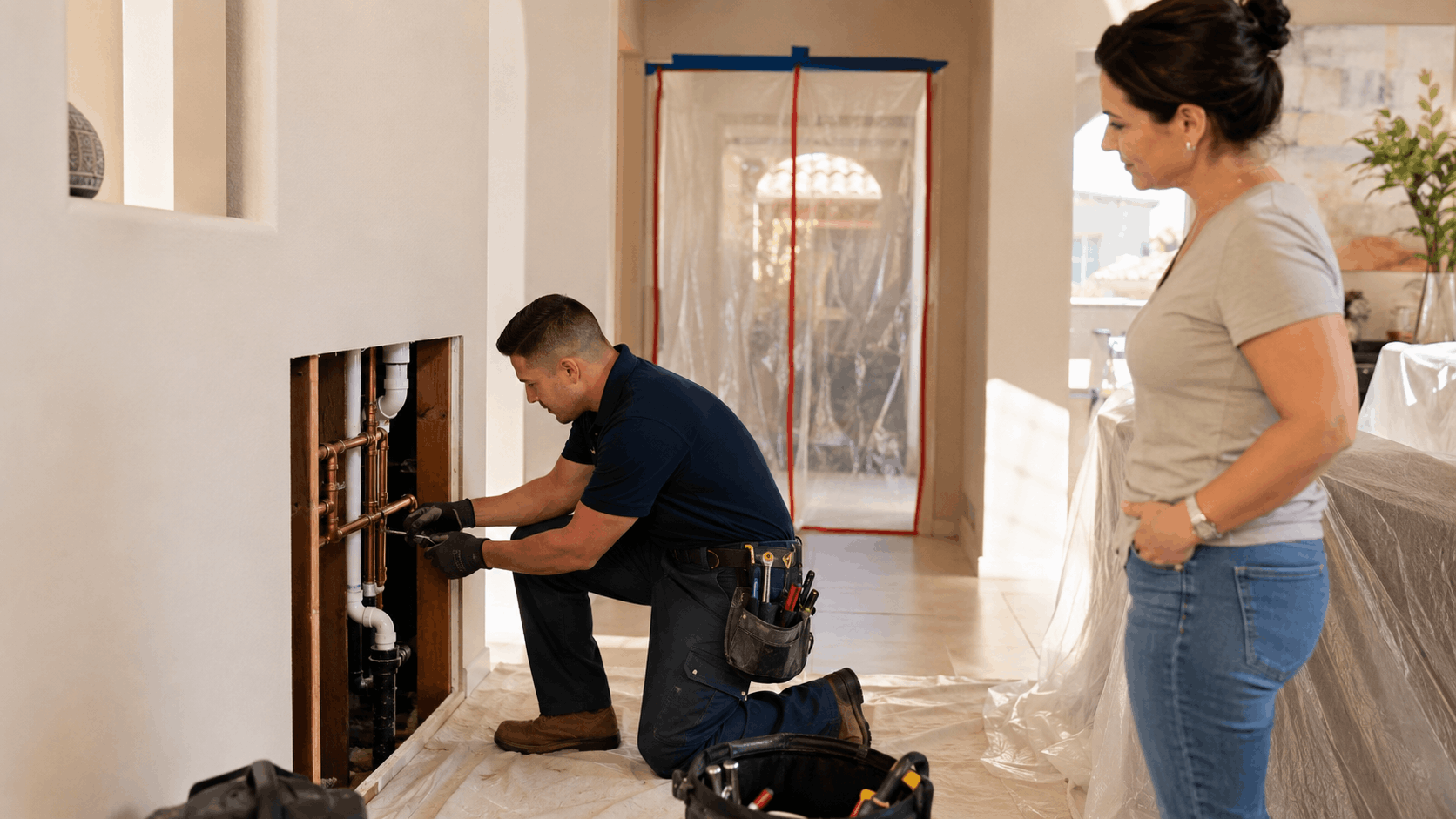
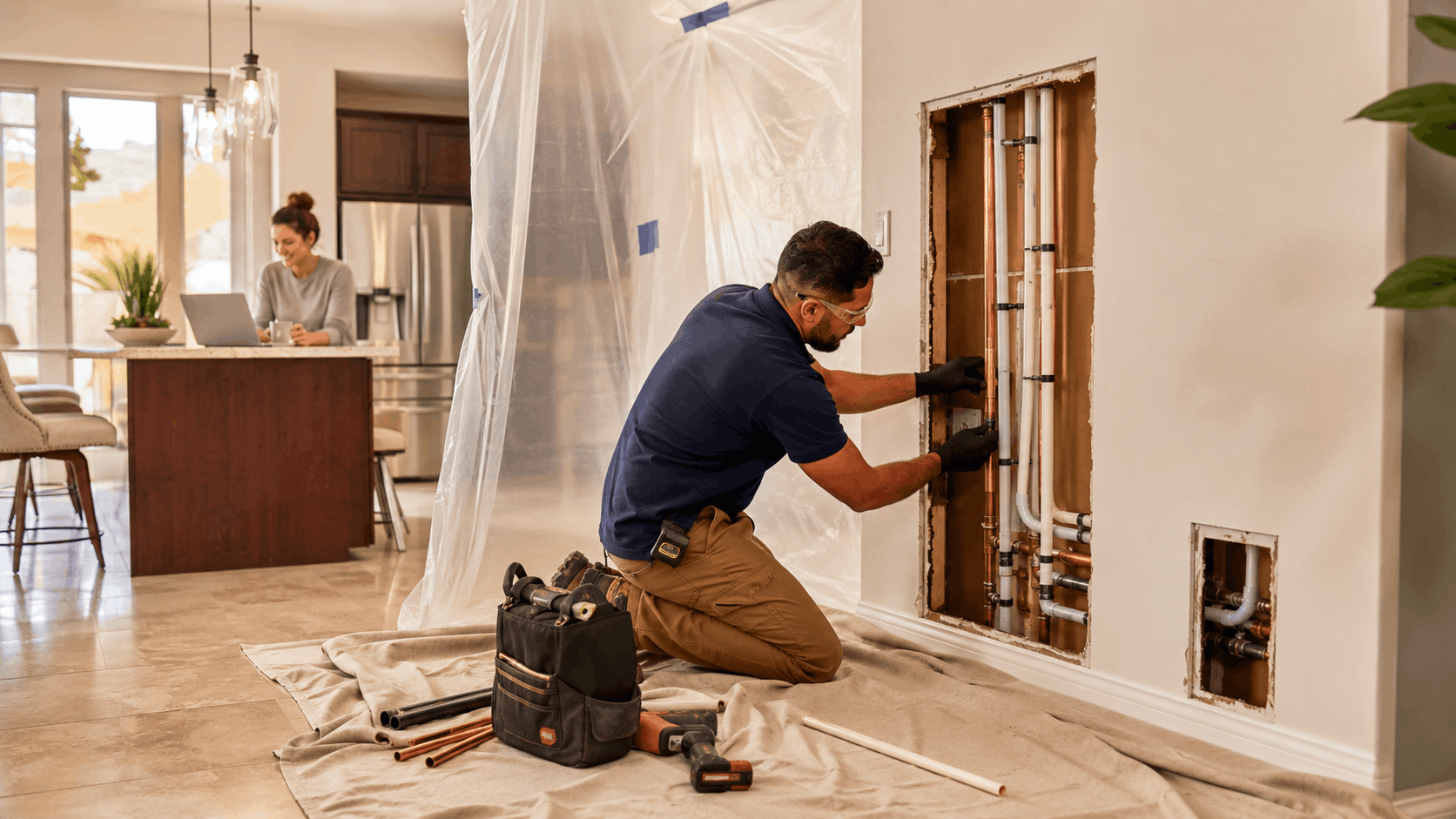
Before a single cut, we seal off the work zone. Plastic sheeting goes up to wall off the active area from the rest of the house. Zip walls with built-in zippers let the crew pass through without letting dust escape into living spaces.
Floor protection goes down over carpet, tile, and hardwood alike. We use adhesive film and heavy runners so foot traffic and dropped tools never mark the floor. Furniture near a work zone gets covered or moved clear of the action.
The containment moves with the crew. As work shifts from one bathroom to the next bedroom, the plastic and protection follow. This keeps the disturbed area small and the rest of the home clean and usable.
Families are often surprised they can cook dinner and put kids to bed a room away from active work. That is the whole point of tight containment. The mess stays behind the plastic where it belongs.
Managing Drywall Dust in the Desert Air
Our dry climate makes drywall dust behave differently than it would in a humid place. Fine particles stay airborne longer and drift farther when the air holds no moisture. Left unmanaged, that dust can travel through a whole house on the AC current.
We fight it at the source. Cutting tools with dust collection catch most of the powder before it ever hits the air. When sanding patches, we use vacuum-attached sanders that pull dust straight into a filter instead of releasing it.
Turning down or blocking off HVAC returns in the work zone stops the system from spreading dust room to room. We cover nearby vents so nothing gets pulled into the ductwork. That single step prevents dust from showing up in rooms far from the job.
Air scrubbers with HEPA filters run in larger jobs to clean the air continuously. By controlling dust at the cut, at the sand, and in the air, we keep the fine powder from becoming the mess homeowners dread. It is manageable when handled with the right tools.
Daily Cleanup and Living Around the Work Zone
Every workday ends with a cleanup, not just the final day. The crew vacuums the work zone, bags debris, and hauls out old pipe before leaving. Nobody wants to trip over a pile of galvanized steel on their way to the coffee maker in the morning.
We ask families to plan their rooms around the schedule too. If the main bathroom is getting worked on tomorrow, gather your toiletries tonight and shift the morning routine to another bath. A little prep the evening before smooths the whole day.
Keeping a clear path from bedrooms to a working bathroom matters most with young kids. We set up containment so those paths stay open and clean. The family keeps living in the home while the crew works around them.
Communication makes this work. We tell homeowners each evening which room is next so they can adjust. That short heads-up is what lets a family stay comfortable in a house that is mid-repipe.
Water Access While the Repipe Is Happening
The idea of a week without water scares people off, and it should, because it is not true. Water stays on for most of every day during a repipe. The shutoffs are short and planned, not an all-day drought.
- Water off only during active connection work, not all day
- Restored by evening on nearly every workday
- One bathroom or the kitchen often kept running when possible
- Shutoff times shared in advance so families can plan
How Long the Water Stays Off Each Day
A realistic shutoff window runs a few hours during the busiest connection stretches. On lighter days it might be under an hour. We time these windows around the family's schedule whenever we can.
The main goal is water restored by evening. Families need to cook, wash up, and get kids to bed with working faucets. We sequence the work so the system is charged and running again before dinner on almost every day of the job.
We announce the daily schedule each morning. Homeowners know the water will be off from, say, nine to noon, so they can shower early and fill what they need. No guessing and no all-day surprises.
On the final connection day the shutoff may run a little longer. That is the day everything ties together and gets pressure tested. Even then, we push to have full flow back before evening so the family's routine stays intact.
Keeping One Bathroom or Kitchen Line Working
Whenever the layout allows, we stage the job to keep one water source live. Often that is a single bathroom or the kitchen sink. This gives the family a working faucet and toilet even while the rest of the system is being replaced.
Staging like this takes planning on our end, but it makes a huge difference for a household. Kids can wash hands, someone can fill a pot for cooking, and the day feels almost normal. We map which fixture to keep last based on where the family spends the most time.
Not every home allows it, and we are honest about that upfront. Some layouts require the whole system down at once for a stretch. When that happens we keep those windows as short as possible and warn the family well in advance.
The kitchen line is usually the one families miss most. A working kitchen sink covers cooking, cleaning, and drinking water. We often prioritize keeping it live until the last possible moment.
Planning Around Kids, Work Schedules, and Pets
Families and remote workers can plan around shutoffs with a little foresight. Fill a few pitchers and a couple of jugs the night before for drinking and hand washing. Keep a stocked cooler if the fridge water line is temporarily down.
Remote workers should schedule big video calls outside the noisy cutting hours. We can tell you which rooms will be loudest and when. Setting up a work spot on the quiet side of the house keeps the day productive.
Kids do best with a simple heads-up. Let them know the water goes off for a bit like a game and have a backup bathroom plan ready. Bath time can shift to the evening when the water is back on.
Pets need water access too. Set out extra bowls before the shutoff and keep them in a calm room away from the crew and the noise. A little water storage and a quiet space keeps the whole household, furry members included, comfortable through the job.
Need Help in Las Vegas?
Active Plumbing serves Las Vegas and all of Las Vegas Valley.
Permits, Inspections, and HOA Rules in the Las Vegas Area
A repipe is not a job to do off the books. Local rules require permits and inspections, and they exist to protect the homeowner. Skipping them can wreck a future home sale and void insurance claims.
Pulling Permits With Clark County and the City of Las Vegas
A repipe needs a plumbing permit. Depending on the home's address, that comes through Clark County Building and Fire Prevention or the City of Las Vegas permit office. We handle this filing as part of the job so homeowners do not have to sort out the paperwork.
Only a licensed plumber should pull and work under that permit. A licensed contractor is accountable to code and to the inspector. That protection matters if anything ever comes up on the work later.
The permit ties the work to an official inspection record. When the home sells someday, that record proves the plumbing was done right and signed off. Buyers and their agents look for exactly that kind of documentation.
We know which office covers which neighborhoods across the valley. A home in unincorporated Clark County files differently than one inside city limits. Getting that right from the start keeps the timeline clean.
HOA Approval in Communities Like Summerlin and Green Valley
Gated and master-planned communities add a layer. Neighborhoods like Summerlin and Green Valley often want notice before work vehicles and crews show up. Some require a simple approval form filed with the HOA office.
The HOA rarely cares about the plumbing itself since it is inside the home. What they manage is gate access, parking for the work truck, and dumpster placement. We coordinate those details so the crew gets in without a hassle.
In Summerlin West and similar guard-gated areas, we file the access request early. That way the guard has our crew on the list on day one. A little lead time here prevents a wasted morning at the gate.
Green Valley and other Henderson master plans work much the same way. We ask homeowners for their HOA contact during the estimate. Handling the notice up front keeps the whole project on its three to five day track.
Passing the Rough and Final Inspection
A repipe involves two inspection stops. The rough inspection happens after the new lines are run and pressure tested but before walls close. An inspector confirms the pipe, fittings, and connections meet plumbing code.
We never close a wall before the rough inspection passes. Doing so would force cutting the patch back open if the inspector needed to see something. Getting it right the first time keeps the schedule and the walls intact.
The final inspection comes after everything is buttoned up. The inspector verifies the finished system works as approved and nothing changed after the rough sign-off. Once that passes, the permit closes and the job is officially complete.
These inspections protect the homeowner more than anyone. They are an independent check that the work is safe and up to code. We welcome them because our work is built to pass on the first visit.
Choosing PEX or Copper for a Las Vegas Repipe
The pipe material question comes up on every repipe. The two real choices are PEX and copper, and each has a place. Local water and attic heat both factor into the right pick.
| Factor | PEX | Copper |
|---|---|---|
| Hard water resistance | Excellent, resists scaling | Good, but scales over time |
| Lifespan | 40-50 years | 50+ years |
| Install speed | Faster, flexible | Slower, rigid joints |
| Relative cost | Lower | Higher |
Why PEX Handles Hard Water Well
PEX piping is the material we recommend most for valley homes. Its smooth plastic interior resists the mineral scaling that plagues metal pipe. Hard water flows through without leaving the buildup that chokes copper and galvanized lines.
Being scale resistant means PEX holds its water pressure over the decades. The inner diameter stays open instead of slowly closing with deposits. For a home fighting the hardest water in the country, that quality matters a great deal.
PEX is also flexible, which speeds up the install and cuts down wall openings. The tubing bends around corners and framing without a fitting at every turn. Fewer fittings means fewer potential leak points down the road.
The flexibility also lets us route lines through tight spots that rigid copper cannot reach. That translates to less demolition in your walls. For a family living in the home during the work, that is a real advantage.
When Copper Still Makes Sense
Copper is not obsolete, and some homeowners still choose it. It has a proven track record stretching back generations and can outlast PEX in the right conditions. Buyers sometimes view copper as a premium feature during a home sale.
Copper handles high temperatures without concern, which matters for attic heat in Las Vegas summers. Attic temperatures can soar past 140 degrees, and copper does not flinch. We still insulate it up there, but the material itself is unbothered by the heat.
Some homeowners simply prefer metal pipe for peace of factors like fire resistance and long history. Copper does not off-gas and is fully recyclable. For those reasons a few families ask for it specifically.
The trade-off is cost and scaling. Copper costs more in both material and labor, and it still collects mineral buildup from our hard water over time. We lay out both sides so homeowners choose with clear eyes.
Cost and Longevity Differences for Local Homes
Budget usually drives the final decision. A PEX repipe on a typical valley home runs lower than copper because the material and labor cost less. Copper can add several thousand dollars to the same job depending on home size.
On lifespan, both materials serve for decades. PEX carries a manufacturer rating around 40 to 50 years, and copper can push past 50 in good conditions. For most families, either choice outlasts how long they will own the home.
Repipe cost overall depends on square footage, number of bathrooms, and one versus two stories. A modest single-story home sits at the lower end, while a large two-story with multiple baths lands higher. We give a firm written number after seeing the home.
Our honest take for most valley homes is PEX. It resists the hard water that caused the problem in the first place, installs faster, and costs less. Copper stays a solid option for homeowners who want it and understand the trade-offs.
How Active Plumbing Handles Repipes for Families Staying Home
A repipe with a family still in the house calls for a different approach than an empty flip. Communication and cleanliness matter as much as the pipe work itself. Here is how our team runs these jobs.
- An in-home walkthrough with a clear written estimate before any work
- Daily updates on shutoff times and progress
- Tight containment and end-of-day cleanup
- Crews familiar with homes from Henderson to Centennial Hills
The In-Home Walkthrough and Written Estimate
Every repipe starts with a walkthrough in the home. We trace the existing lines, count fixtures, and note the wall texture and layout. This visit is how we map the plan and spot anything unusual before quoting.
The homeowner gets a written estimate, not a vague verbal range. It spells out the material, the number of access points, the patch scope, and the timeline. No surprise charges appear halfway through the job.
We walk the homeowner through the plan during that visit. Which walls open, where lines route, how long water goes off each day, and what patching is included. Questions get answered face to face before anyone commits.
This first visit also builds the schedule around the family. If someone works from home or a child has a nap window, we plan the noisiest work around it. The estimate reflects a plan the family actually agreed to.
Daily Communication During the Job
Once work begins, we keep the family in the loop every single day. Each morning the crew shares the shutoff window and which rooms are in play. That heads-up lets everyone adjust showers, meals, and work calls.
Every evening we recap progress and preview the next day. Homeowners always know where the job stands and what tomorrow brings. No wondering, no chasing us for answers.
If anything unexpected turns up behind a wall, we stop and explain it right away. Old rotted framing or a surprise second line gets discussed before we proceed. The homeowner stays in control of decisions about their home.
This steady contact is what makes living through a repipe bearable. Families relax when they know exactly what is happening. Good communication does as much for the experience as clean pipe work does.
Serving Neighborhoods From Henderson to Centennial Hills
Our crews work homes across the whole valley and know the housing stock in each area. From the master plans of Henderson to the newer builds up in Centennial Hills, we have seen the plumbing patterns firsthand. That familiarity speeds up the planning on any job.
We know the older galvanized systems in the central and east valley and the copper runs in the northwest. That means fewer surprises once the walls open. Experience with local homes shortens the guesswork.
We also handle related work when a repipe reveals it, from pipe and fixture services to water heater and softener upgrades. Many families pair a repipe with a tankless water heater installation while the walls are already open. Bundling the work saves a second round of disruption.
No matter the neighborhood, the process stays the same. Clean containment, short planned shutoffs, honest daily updates, and a home handed back better than we found it. That is what a repipe with the family home should look like.
Need Help in Las Vegas?
Active Plumbing serves Las Vegas and all of Las Vegas Valley.
Final Thoughts
A whole-home repipe sounds scary until you see how it actually runs. Three to five days, a handful of small wall openings near fixtures, contained dust, and water back on by most evenings. Families stay in their homes across Summerlin, Henderson, and the rest of the valley without checking into a hotel.
The hard water here is relentless, and older pipe eventually gives out. When patching costs start adding up, a repipe with fresh PEX or copper solves the root problem for decades. Doing it with permits, inspections, and a crew that communicates makes all the difference.
If rusty water, repeat leaks, or falling pressure sound familiar, our team is ready to take a look. Contact Active Plumbing for an in-home walkthrough and a clear written estimate. We will map your home, answer every question, and show you exactly how the work fits around your family.
Frequently Asked Questions
Can a family really stay in the home during a repipe?
Yes, most families stay in the home the entire time. We seal off the active work zone with plastic sheeting and keep a clear path to a working bathroom. Water shutoffs are short and planned, usually a few hours during connection work, with flow restored by evening. Between the containment and the daily schedule, families cook, sleep, and go about their routine while the crew works around them.
How many days does a Las Vegas repipe take?
A typical single-family home takes three to five working days from first cut to final cleanup. A flat single-story ranch with two bathrooms lands at the short end. Two-story homes, slab foundations, and houses with many fixtures push toward five days. Gated HOA communities can add a little front-end time for access approval, but the actual repipe still fits inside that window.
How many walls will be opened up?
Far fewer than most people fear. Cuts happen near fixtures, inside closets, and along interior walls rather than spread across every room. A typical single-story home sees roughly eight to fifteen small openings, usually the size of a sheet of paper. Routing lines through the attic removes many wall cuts entirely, so the visible impact stays small and easy to patch.
How bad is the dust during a repipe?
Manageable when handled right. Our dry desert air keeps fine drywall dust airborne longer, so we cut with dust-collecting tools, sand with vacuum attachments, and block off HVAC returns to stop dust from spreading. Plastic sheeting and zip walls seal the work zone, and air scrubbers run on larger jobs. Crews vacuum and clean the area at the end of every workday.
Will the water be off the whole time?
No, water stays on for most of every day. It goes off only during active connection work, typically a few hours, and we announce the window each morning. On nearly every day the water is back on by evening so the family can cook, wash up, and get kids to bed. We often keep one bathroom or the kitchen live during the job too.
Does the crew patch the drywall afterward?
Yes, drywall patching and texture matching are part of the standard scope. We cut clean patches, secure them, apply joint compound, and blend the texture to match the surrounding wall. Patches are left paint-ready. Most homeowners handle the final coat of paint themselves so it matches their exact wall color, or they hire a painter for a full-room refresh.
Is PEX or copper better for Las Vegas water?
For most valley homes we recommend PEX. Its smooth interior resists the mineral scaling caused by our hard water, it holds pressure over the decades, and it installs faster with fewer leak points. Copper still makes sense for homeowners who want a premium metal system and understand the higher cost. Both last for decades, but PEX handles local hard water with less buildup.
Do I need a permit to repipe my home?
Yes, a repipe requires a plumbing permit. Depending on your address it comes through Clark County Building and Fire Prevention or the City of Las Vegas permit office. We pull the permit and schedule the inspections as part of the job. A permitted, inspected repipe protects you at resale and keeps the work accountable to code with a licensed plumber.
How much does a full repipe cost in Las Vegas?
Cost depends on home size, number of bathrooms, and one versus two stories. A modest single-story home with PEX sits at the lower end, while a large two-story with multiple baths runs higher. Copper adds several thousand dollars over PEX for the same home. We give a firm written number after an in-home walkthrough so there are no surprises.
What are the signs my home needs a repipe?
Watch for repeated pinhole leaks, especially several along the same line within months. Rusty or brown water in the morning points to corroding galvanized pipe. Water pressure dropping across the whole house, not just one fixture, signals widespread mineral scaling. If your last few repairs are creeping toward the cost of a repipe, it is time to replace the pipe rather than keep patching.
Frequently Asked Questions
- Can a family really stay in the home during a repipe?
- Yes, most families stay in the home the entire time. We seal off the active work zone with plastic sheeting and keep a clear path to a working bathroom. Water shutoffs are short and planned, usually a few hours during connection work, with flow restored by evening. Between the containment and the daily schedule, families cook, sleep, and go about their routine while the crew works around them.
- How many days does a Las Vegas repipe take?
- A typical single-family home takes three to five working days from first cut to final cleanup. A flat single-story ranch with two bathrooms lands at the short end. Two-story homes, slab foundations, and houses with many fixtures push toward five days. Gated HOA communities can add a little front-end time for access approval, but the actual repipe still fits inside that window.
- How many walls will be opened up?
- Far fewer than most people fear. Cuts happen near fixtures, inside closets, and along interior walls rather than spread across every room. A typical single-story home sees roughly eight to fifteen small openings, usually the size of a sheet of paper. Routing lines through the attic removes many wall cuts entirely, so the visible impact stays small and easy to patch.
- How bad is the dust during a repipe?
- Manageable when handled right. Our dry desert air keeps fine drywall dust airborne longer, so we cut with dust-collecting tools, sand with vacuum attachments, and block off HVAC returns to stop dust from spreading. Plastic sheeting and zip walls seal the work zone, and air scrubbers run on larger jobs. Crews vacuum and clean the area at the end of every workday.
- Will the water be off the whole time?
- No, water stays on for most of every day. It goes off only during active connection work, typically a few hours, and we announce the window each morning. On nearly every day the water is back on by evening so the family can cook, wash up, and get kids to bed. We often keep one bathroom or the kitchen live during the job too.
- Does the crew patch the drywall afterward?
- Yes, drywall patching and texture matching are part of the standard scope. We cut clean patches, secure them, apply joint compound, and blend the texture to match the surrounding wall. Patches are left paint-ready. Most homeowners handle the final coat of paint themselves so it matches their exact wall color, or they hire a painter for a full-room refresh.
- Is PEX or copper better for Las Vegas water?
- For most valley homes we recommend PEX. Its smooth interior resists the mineral scaling caused by our hard water, it holds pressure over the decades, and it installs faster with fewer leak points. Copper still makes sense for homeowners who want a premium metal system and understand the higher cost. Both last for decades, but PEX handles local hard water with less buildup.
- Do I need a permit to repipe my home?
- Yes, a repipe requires a plumbing permit. Depending on your address it comes through Clark County Building and Fire Prevention or the City of Las Vegas permit office. We pull the permit and schedule the inspections as part of the job. A permitted, inspected repipe protects you at resale and keeps the work accountable to code with a licensed plumber.
- How much does a full repipe cost in Las Vegas?
- Cost depends on home size, number of bathrooms, and one versus two stories. A modest single-story home with PEX sits at the lower end, while a large two-story with multiple baths runs higher. Copper adds several thousand dollars over PEX for the same home. We give a firm written number after an in-home walkthrough so there are no surprises.
- What are the signs my home needs a repipe?
- Watch for repeated pinhole leaks, especially several along the same line within months. Rusty or brown water in the morning points to corroding galvanized pipe. Water pressure dropping across the whole house, not just one fixture, signals widespread mineral scaling. If your last few repairs are creeping toward the cost of a repipe, it is time to replace the pipe rather than keep patching.
A
Licensed plumbing professionals serving Las Vegas and Las Vegas Valley.
Licensed in Nevada · License #0047021
Last updated on
Why trust Active Plumbing?
Founded in 1991, Active Plumbing is a licensed and insured plumber serving Las Vegas and Las Vegas Valley. All content is reviewed by our licensed technicians.

Need Help in Las Vegas?
Active Plumbing serves Las Vegas and all of Las Vegas Valley.
Related Articles

How-To Guides
How to Stop Repeat Drain Clogs in Las Vegas Homes
Learn why Las Vegas homes get repeat drain clogs, from hard water and old pipes to tree roots, plus the professional methods that stop them for good.

How-To Guides
Manifold (Home-Run) PEX vs Trunk-and-Branch in Las Vegas Repipes: Pressure Balance in Big Homes
Compare manifold home-run and trunk-and-branch PEX layouts for Las Vegas repipes, including pressure balance, cost, timelines, and permits for large valley homes.
How-To Guides
Polybutylene vs Kitec vs Early PEX: Identifying What's Actually in Your 80s-2000s Las Vegas Walls
Learn how to tell polybutylene, Kitec, and early PEX apart in Las Vegas homes built from the 1980s to 2000s, and what to do if you find risky pipe.