Tips & Advice
Repipe Specialists for Summerlin Homes Built 1995-2007: The Kitec Epicenter

Key Takeaways
- Summerlin homes built between 1995 and 2007 carry the highest Kitec risk because the building boom overlapped Kitec's market years.
- Kitec's high-zinc brass fittings corrode through dezincification, and Las Vegas hard water speeds that failure dramatically.
- Desert attic heat and high water pressure in elevated Summerlin zones push Kitec fittings to fail sooner.
- Warning signs include orange or brass fittings at the water heater, pinhole leaks, ceiling stains, low pressure, and discolored water.
- Most Summerlin repipes use Uponor PEX-A, take 2 to 6 days, and cost roughly $6,000 to $18,000 depending on home size.
- A repipe requires a Clark County plumbing permit and often HOA notice in villages like The Ridges and Red Rock Country Club.
- The Kitec class action settlement claims deadline has passed, so replacement costs now fall on the homeowner.
- A permitted, warrantied repipe protects home value and prevents costly emergency water damage down the road.
In This Article
The call usually comes on a quiet weekend morning. A homeowner in The Vistas walks into the laundry room, hears a faint hiss behind the wall, and finds a slow water stain creeping across the ceiling. By the time they call us, the drywall is soft and the culprit is almost always the same: a failing Kitec fitting hidden inside a home built during Summerlin's biggest construction years.
If your Summerlin home was built between 1995 and 2007, there is a real chance it carries Kitec plumbing. This part of Las Vegas saw explosive growth during the exact window when Kitec was popular with builders, which is why the area has become the local epicenter for these failures. Our team has repiped hundreds of homes across the valley, and Summerlin keeps us busiest.
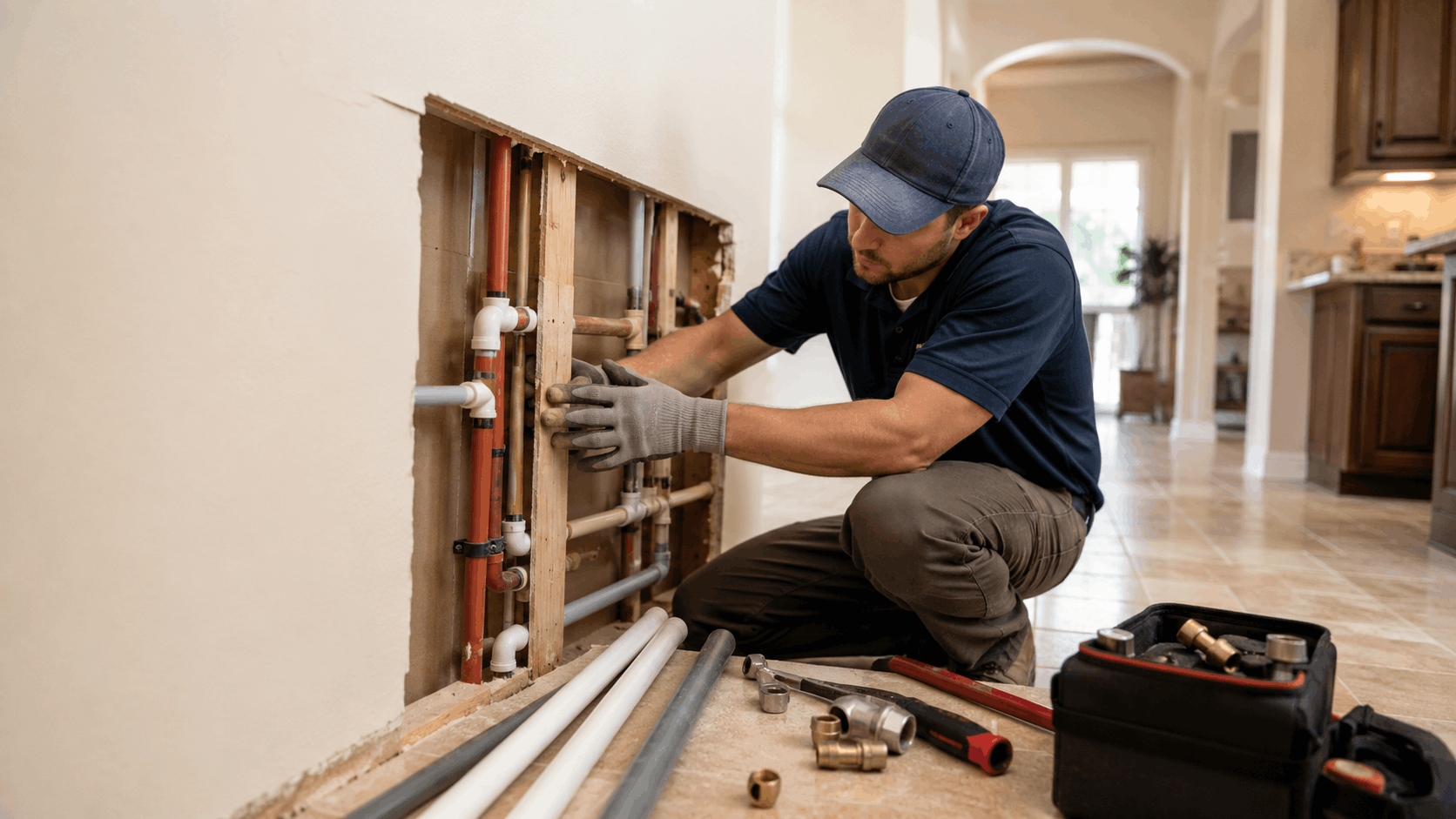
Why Summerlin Became the Kitec Epicenter in Las Vegas?
Summerlin grew fast, and it grew during the wrong years for plumbing. The Kitec plumbing system was sold to builders from the mid-1990s through the mid-2000s, which lined up almost perfectly with Summerlin's building boom. That timing left thousands of homes with the same hidden problem.
When a master-planned community fills in that quickly, builders tend to use the same materials across entire villages. One plumbing contractor working a subdivision often installed Kitec in dozens of homes in a row. That is why entire streets in some Summerlin neighborhoods share the same failure risk today.
| Factor | Why It Concentrated Kitec in Summerlin |
|---|---|
| Construction timing | Peak building years overlapped Kitec's market window |
| Master-planned scale | Same builders repeated the same materials village by village |
| Fast lot absorption | Contractors prioritized speed and cost over long-term materials |
| High home count | More homes built in that window means more Kitec in the ground |
The 1995-2007 Construction Boom in Summerlin Villages
Summerlin was one of the fastest-growing communities in the country during those years. Villages like The Vistas, The Trails, and Sun City Summerlin filled in lot by lot right as Kitec was gaining traction with production builders. The homes going up in that stretch are the ones we now see failing most often.
The Vistas in particular saw heavy development in the early 2000s, and we get regular calls from homes near the village center off Town Center Drive. The Trails, a little older, still saw plenty of Kitec on its later phases. Sun City Summerlin, built for active adults, added thousands of single-story homes during the same window.
What ties these areas together is not the age alone but the combination of age and builder habits. When a village absorbs lots quickly, plumbing crews repeat what worked on the last house. That repetition is why we can often predict Kitec before we even open a wall.
If you live in one of these villages and your home dates to this era, it is worth confirming what is behind your walls. Our Summerlin service team works these neighborhoods weekly and knows which streets tend to carry Kitec.
What Kitec Pipe Actually Is
Kitec is a PEX-AL-PEX pipe, which means it has a thin aluminum layer sandwiched between two layers of flexible plastic. The design was meant to combine the bendability of plastic with the strength of metal. On paper it sounded like a smart middle ground.
The pipe itself is rarely the main problem. The weak point is the brass fittings that connect the pipe at joints, valves, and manifolds. Those fittings are where the Kitec system tends to break down over time.
The brass used in many Kitec fittings had a high zinc content, which turns out to be a poor match for certain water conditions. When that brass reacts with the water, it corrodes from the inside out. Homeowners rarely see it coming because the damage happens inside the fitting, out of view.
Once a fitting corrodes far enough, it either restricts flow or lets go entirely. That is the moment a slow drip becomes a burst. Understanding the fitting problem is the difference between a planned repipe and an emergency flood.
Why Builders Chose It During Those Years
Production builders in a master-planned community like Summerlin work on tight schedules. Kitec was flexible, which meant crews could route it faster than rigid copper. Fewer joints and quicker bends translated to lower labor hours per house.
Cost played a big part too. Copper prices climbed during those years, and Kitec offered a cheaper alternative that still passed inspection at the time. For a builder framing hundreds of homes a year, small savings per house added up quickly.
The material also marketed itself well. It was pitched as a modern plumbing installation method with corrosion resistance and easy handling. Builders had little reason to doubt the claims when the product carried manufacturer backing.
None of this was reckless at the time. The failures showed up years later, long after the homes were sold and the builders moved on. That lag is exactly why so many Summerlin owners are only now learning what is inside their walls.
The Class Action Settlement Homeowners Should Know About
The Kitec recall and the class action settlement that followed are worth knowing about, even years later. The manufacturer faced a large settlement after widespread reports of fitting failures across North America. That settlement created a fund to help affected homeowners with claims.
The practical catch is that the claims deadline for the settlement has passed. Most Summerlin owners today cannot file a new claim, which means the repipe cost falls on them. That reality makes early planning more important, not less.
You can read background on the settlement through consumer reporting and legal summaries. The U.S. Consumer Product Safety Commission also maintains recall records worth reviewing at cpsc.gov. Knowing the history helps owners understand why acting now protects their home value.
The takeaway for Summerlin homeowners is simple. The settlement will not pay for your repipe, so the smart move is to identify the risk and budget for replacement before a failure forces the issue.
Get Your Quote
Tell us what's going on and we'll get back to you fast.
How Las Vegas Water Chemistry Speeds Up Kitec Failure
Las Vegas has some of the hardest water in the country. That mineral-heavy supply is tough on many plumbing systems, but it is especially rough on Kitec's brass fittings. The local water actually pushes these failures to happen sooner than they might elsewhere.
Our valley pulls most of its water from Lake Mead through the Las Vegas Valley Water District. That source is loaded with calcium, magnesium, and other minerals. When that water meets high-zinc brass, corrosion speeds up.
- Mineral content reacts with brass and accelerates internal breakdown
- Desert heat stresses the plastic layers in attic pipe runs
- Elevated water pressure in higher Summerlin zones adds strain to weak fittings
- Temperature swings cause repeated expansion and contraction of the pipe
Hard Water and Corroding Brass Fittings
The core problem is a process called dezincification. In hard water, the zinc in the brass fitting leaches away over time, leaving behind a weak, porous metal. What looks like solid brass becomes brittle and full of tiny channels.
Our high mineral content feeds this reaction. The more mineral-rich the water, the faster the brass corrosion moves through the fitting. That is why a Kitec fitting that might last decades in a soft-water region can fail much sooner here.
We often pull fittings during a repipe that look fine on the outside but crumble when handled. The inside tells the real story, with chalky white buildup and eaten-away metal. That hidden decay is what causes the sudden leaks owners report.
Many homeowners ask whether a water softener would have saved their pipes. Softer water does slow corrosion, but once Kitec is in the walls, replacement is the reliable fix. A softener protects the new system going forward.
Desert Heat and Attic Pipe Runs
Summerlin summers are brutal, and attic temperatures can climb well past 130 degrees. Many homes built in this era ran plumbing lines through the attic to save on slab work. Those attic runs bake in the heat month after month.
Heat stress is hard on the plastic layers of PEX-AL-PEX pipe. The material expands when hot and contracts when it cools at night. That constant pipe expansion and contraction works the fittings loose over time.
We see more attic-run failures during the peak summer months, usually July and August. A fitting that held through spring finally gives out when the attic hits its hottest stretch. Homeowners often report the leak right after a heat wave.
If your home has attic plumbing, the risk climbs with every hot season. This is one reason we recommend Summerlin owners not wait through another summer once Kitec is confirmed. The heat only accelerates what is already happening inside the fittings.
High Water Pressure From Elevation Zones
Summerlin sits on rising ground as you move west toward Red Rock. Homes along the western edge and in higher elevation zones often see stronger water pressure. That extra pressure adds strain to already weakened fittings.
The water district manages pressure by zone, and higher neighborhoods can run at pressures that stress older plumbing. A fitting corroded by dezincification is far more likely to blow under high pressure. Pressure and corrosion combine into a faster failure.
A properly set pressure regulator helps protect any plumbing system. Many homes have one at the main, but they wear out and drift over the years. We check regulator function during every repipe assessment.
For homes in Summerlin West and other elevated pockets, pressure is a real factor we watch closely. Controlling pressure will not save failing Kitec, but it protects the new pipes we install and prevents future strain.

Need Help in Las Vegas?
Active Plumbing serves Las Vegas and all of Las Vegas Valley.
Warning Signs Your Summerlin Home Has Failing Kitec
Most homeowners do not think about their pipes until something goes wrong. But Kitec usually gives a few clues before it fails outright. Learning the Kitec leak signs can help you act before a small problem becomes a flooded room.
Our crews have seen the same plumbing symptoms come up again and again on Summerlin calls. Some are visual, some show up in your water, and some are documented in your home records. Here is what we look for on a typical pipe failure inspection.
| Warning Sign | What It Usually Means |
|---|---|
| Orange or brass fittings at water heater | Visible Kitec system components |
| Ceiling or wall water stains | Active pinhole leak behind drywall |
| Dropping water pressure | Internal fitting buildup restricting flow |
| Discolored water | Corrosion byproducts in the line |
Orange or Brass-Colored Fittings Near the Water Heater
The easiest place to spot Kitec is around the water heater in your garage. Look for bright orange or yellow-brass fittings where the pipes connect. Kitec pipe often came in orange for hot lines and blue for cold, though colors varied.
Check for brand markings printed along the pipe. Names like Kitec, PlumbBetter, IPEX, KERR, and Plomberie appear on the tubing. A quick visual inspection with a flashlight often confirms the system without opening a single wall.
The manifold, the central distribution block, is another giveaway. Kitec systems frequently used a labeled manifold near the water heater. If you see that setup with brass fittings, the odds of Kitec are high.
If you are not sure what you are looking at, take a few photos and send them our way. Our team can usually identify Kitec from clear pictures of the fittings and any markings. It saves you a guessing game and helps us prepare an accurate assessment.
Sudden Pinhole Leaks and Water Stains
The classic Kitec failure is the surprise pinhole leak. A fitting corrodes through and starts weeping water behind the wall or above the ceiling. By the time it shows, the drywall damage is often well underway.
Homeowners describe brown rings on the ceiling, soft spots in the drywall, or a musty smell that will not go away. Some find warped baseboards or bubbling paint near an interior wall. These water stains point to a leak that has been running quietly for a while.
Because these leaks start small, they can go unnoticed for weeks. That slow drip fuels mold and rots the framing behind the surface. What could have been a simple fix becomes a repair job across multiple trades.
When a leak turns into a burst, it is time to call for emergency burst pipe repair right away. Shutting off the main and calling fast limits the water damage. Then we can plan the full repipe once the immediate leak is controlled.
Drops in Water Pressure or Discolored Water
As Kitec fittings corrode, mineral buildup collects inside them. That buildup narrows the opening and restricts flow. The result is low water pressure that gets worse over time, often first noticed in a shower or a far bathroom.
You might also see discolored water when you first turn on a tap. A rusty or cloudy tint can mean corrosion byproducts are working loose inside the lines. It tends to clear after running for a moment, then returns.
These symptoms creep in slowly, so people often blame the fixtures instead of the pipes. They replace a faucet or a shower head and see no improvement. The real problem sits inside the corroding fittings upstream.
If pressure keeps dropping across the whole house, the plumbing itself is the likely cause. Our pipe and fixture team can trace the restriction and confirm whether Kitec buildup is behind it. That diagnosis guides the repair decision.
Reviewing Original Builder Documents
Your home's paperwork can confirm what the walls hide. Original building permits and plumbing records sometimes list the piping system by name. It is worth digging through your closing documents and any builder folders.
Clark County keeps permit records that you can request or search. The permit history may show the plumbing contractor and the materials used during construction. That paper trail can settle the question without any demolition.
If you bought the home used, ask the seller or your title company for the original disclosures. Nevada requires certain material disclosures, and Kitec sometimes appears in those documents. A previous inspection report may also flag it.
When records are unclear, a professional inspection is the surest path. We combine a visual check at the water heater with a look at accessible fittings and your paperwork. Together those steps confirm Kitec with confidence.
The Repipe Process Step by Step
A whole-home repipe sounds intimidating, but it follows a clear routine. Knowing the repipe process ahead of time takes the mystery out of it. Here is how a typical PEX repipe unfolds from the first visit to the final cleanup.
Most Summerlin repipes run on a predictable sequence. We assess, plan, replace, test, and restore. Each stage has a purpose, and each one keeps the disruption to your home as short as possible.
| Stage | What Happens |
|---|---|
| Assessment | Walkthrough, fitting inspection, written estimate |
| Material selection | Choose PEX-A or copper for the new system |
| Installation | Open access points, reroute new lines |
| Testing and inspection | Pressure test and county sign-off |
| Restoration | Drywall patch and full cleanup |
In-Home Assessment and Written Estimate
Every repipe starts with a proper plumbing assessment. We walk the whole home, locate every fixture, and inspect the visible fittings. That walkthrough tells us how the plumbing is routed and where the access points will need to be.
We count bathrooms, kitchen lines, laundry connections, and outdoor spigots. We check the water heater setup, the manifold, and the main shutoff. Each of these affects the scope and the price.
From there we build a written estimate that spells out the work. It lists materials, labor, the number of access points, and the drywall patching included. A clear inspection and clear estimate mean no surprises once the crew starts.
We encourage homeowners to ask questions during this visit. If you want to compare PEX and copper or understand the timeline, this is the moment. A good estimate should leave you knowing exactly what you are paying for.
Choosing New Piping Materials
The two common replacement materials are PEX and copper. Most Summerlin repipes we do use PEX-A, specifically Uponor PEX, because it handles our water and heat well. It resists the corrosion that destroyed the original Kitec.
PEX-A is flexible, which means fewer fittings and fewer potential leak points. It also expands slightly under freeze conditions, which is a bonus during our rare cold snaps. For most homes, it delivers the best balance of durability and cost.
A copper repipe is still an option and some owners prefer it. Copper is proven and long-lasting, but it costs more in both material and labor. It also does not love our hard water over the very long term without treatment.
We walk each homeowner through the piping materials and let them decide. For the vast majority of Summerlin homes, PEX-A is the practical winner. Pairing it with a water treatment setup extends the life of the whole system.
Access, Cutting, and Rerouting Lines
To replace the pipes, the crew needs wall access. We cut small, planned openings at the points where the plumbing branches. These are kept as few and as small as possible while still allowing clean work.
Most of the new rerouting runs through the attic, following clean paths to each fixture. Attic runs let us reach bathrooms and the kitchen without tearing open every wall. Where attic access is limited, we open targeted wall sections instead.
We abandon the old Kitec in place once the new lines carry the water. There is no need to rip out every old pipe, which saves time and reduces damage. The new PEX becomes the working system.
Throughout this stage, we protect your floors and furniture and keep the openings tidy. Careful planning here is what keeps a repipe from feeling like a demolition. The goal is a working new system with the least mess we can manage.
Inspection, Patching, and Cleanup
Once the new lines are in, we run a pressure test on the entire system. This confirms every joint holds and there are no weak points. We do not close anything up until the system passes.
Next comes the county inspection. A Clark County inspector reviews the work to confirm it meets code. Passing this step is what makes the repipe official and protects your home value down the road.
After approval, we patch the drywall openings and prep them for paint. The drywall patch work restores the walls so the home looks whole again. Some owners handle final texture and paint themselves, and we coordinate on that.
Finally, we clean the entire work area. We haul away debris, wipe down surfaces, and leave the home tidy. A clean handoff is part of doing the job right, and it is how we want to leave every house.
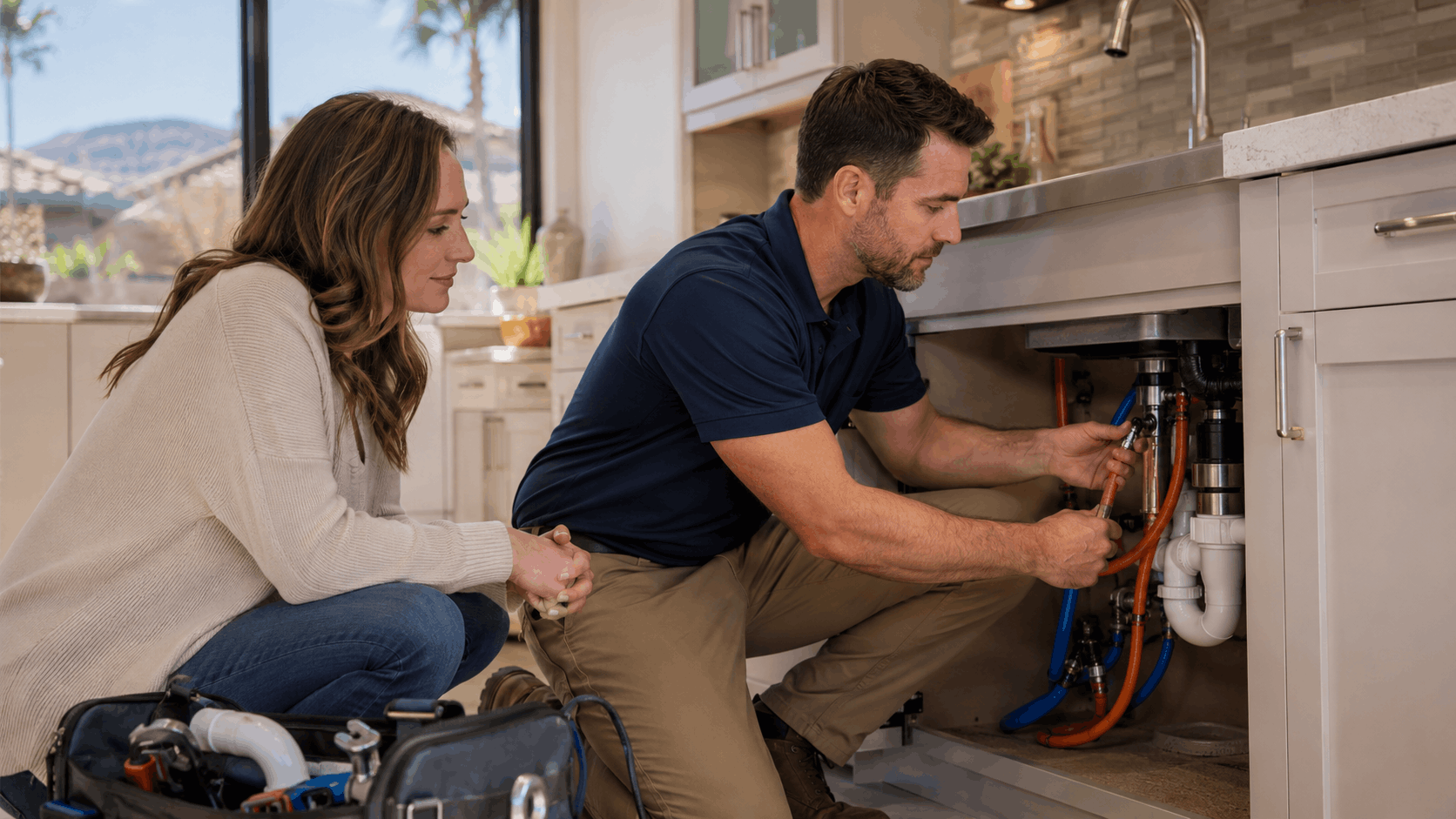
How Long a Repipe Takes and What It Costs in Summerlin
Homeowners always want two numbers first: how long and how much. Both depend on the size and layout of your home. Here are realistic ranges for Summerlin plumbing based on the homes we work in every week.
The repipe cost and repipe timeline scale with bathrooms, square footage, and stories. A compact single-story in Sun City looks very different from a large two-story in The Ridges. The table below gives a general starting point.
| Home Size | Typical Timeline | Typical Cost Range |
|---|---|---|
| Single-story, 2 bath | 2 to 3 days | $6,000 - $9,000 |
| Single-story, 3 bath | 3 to 4 days | $8,000 - $12,000 |
| Two-story, 3+ bath | 4 to 6 days | $12,000 - $18,000+ |
Typical Timeline From Start to Finish
A single-story Summerlin home with two bathrooms usually takes two to three days. The first day handles access and rough-in, the second finishes connections and testing. Patching often wraps up on the same visit or shortly after.
A two-story home takes longer because lines must run between floors. Reaching upstairs bathrooms means more access points and more careful routing. These jobs commonly run four to six days including inspection.
The county inspection can add a day depending on scheduling. We book inspections as early as possible so the timeline stays tight. Weather and attic conditions in summer can also affect the pace of attic work.
Every home is a little different, so the repipe timeline in your estimate reflects your actual layout. We give a firm schedule after the assessment. That way you can plan around water shutoff windows with confidence.
Price Ranges by Home Size and Fixture Count
Repipe pricing tracks closely with fixture count and square footage. More bathrooms, more sinks, and more outdoor connections mean more pipe and more labor. A three-bath home naturally costs more than a two-bath.
Square footage matters because larger homes have longer runs. A sprawling single-story can rival a two-story in total pipe length. We measure the actual runs during the assessment rather than guessing from the address.
Kitchen and laundry lines, water heater connections, and hose bibs all factor in. Each fixture adds to the material and time. That is why an accurate fixture count drives an accurate price.
The ranges in the table are typical for Summerlin, but your written estimate is the real number. We price the specific home, not an average. That precision is how we avoid surprise charges midway through the job.
Factors That Raise or Lower the Bill
Several things shift the final cost up or down. Slab access is a big one. Homes where lines must be reached through the slab cost more than homes we can route through the attic.
Finished basements, which are rare here but do exist, add labor because we protect and reopen finished space. Two-story layouts raise cost through extra access points. Simple single-story ranch homes tend to land on the lower end.
Material choice moves the number too. A copper repipe carries a higher material cost than PEX-A. Choosing PEX keeps labor and material lean while still delivering a durable system.
Add-ons like a new pressure regulator, a water softener install, or a whole-home leak detection system add cost but also long-term protection. We lay out these options so you can decide what fits your budget.
Living in the Home During the Work
Most families stay in the home during a repipe, and that works fine with planning. The water shutoff only happens during active work hours. We turn the water back on at the end of each day whenever possible.
That means you have running water in the evenings for cooking and bathing. During the day, we let you know the shutoff window so you can plan around it. Filling a few water jugs in the morning covers small needs.
Crews work in sections, so not every fixture is offline at once when we can help it. We keep at least one bathroom usable as long as the schedule allows. Living during a repipe is more manageable than most people expect.
For families who prefer to be away, a short stay elsewhere during the busiest day is an option. We work with your schedule either way. The goal is to keep daily life running while the new system goes in.
Need Help in Las Vegas?
Active Plumbing serves Las Vegas and all of Las Vegas Valley.
Working With Summerlin HOAs and Clark County Permits
Summerlin comes with its own layer of rules. Between HOA expectations and Clark County permits, a repipe involves some paperwork. Our team handles the plumbing permit process so you do not have to chase it down.
Getting the paperwork right protects your investment. A permitted, inspected repipe holds up at resale and satisfies future buyers. Skipping permits can create problems that surface at the worst time, during a sale.
HOA Notification in Master-Planned Villages
Many Summerlin villages ask for notice before interior work, even when it is inside your own walls. Communities like The Ridges and Red Rock Country Club have active HOAs that appreciate a heads-up. An HOA notice keeps everything on good terms with the association.
Interior plumbing rarely needs full architectural approval since it does not change the exterior. Still, some associations want to know when contractors will be on the property. Gate access and parking are common reasons they ask.
We help homeowners understand what their specific HOA expects. If a form or notice is needed, we point you to it and provide the details the association wants. Handling this early avoids any friction during the job.
Being a good neighbor matters in these communities. We keep our vehicles tidy, respect quiet hours, and stay within the approved schedule. That courtesy reflects well on you and keeps the HOA relationship smooth.
Pulling Plumbing Permits in Clark County
Clark County requires a plumbing permit for a repipe. As a licensed plumber, we pull that permit and schedule the required inspections. The permit ties the work to a licensed contractor and a code review.
Licensed, permitted work protects your resale value. When you sell, buyers and their inspectors want proof the plumbing was done to code. A permit record answers that question cleanly.
Unpermitted work can stall a sale or force costly rework later. It can also void warranties and create insurance headaches. The permit is cheap insurance against all of that.
We manage the permit paperwork from start to finish. You get the documentation for your records once the job passes. That file becomes part of your home's history and its value.
Passing the Final Inspection
The final inspection is where the county confirms everything meets code. An inspector checks the connections, the pressure test results, and the overall installation. Proper documentation keeps this step quick.
We prepare for the inspection so it passes the first time. Clean connections, correct materials, and a documented pressure test are what inspectors look for. Code compliance is built into how we work, not added at the end.
Once the inspection passes, the repipe is officially complete and on record. That record travels with the home. It is what makes future closings smooth when you decide to sell.
Homeowners get copies of the inspection sign-off for their files. Keep those documents with your home records. They prove the work was done right and add real value at resale.
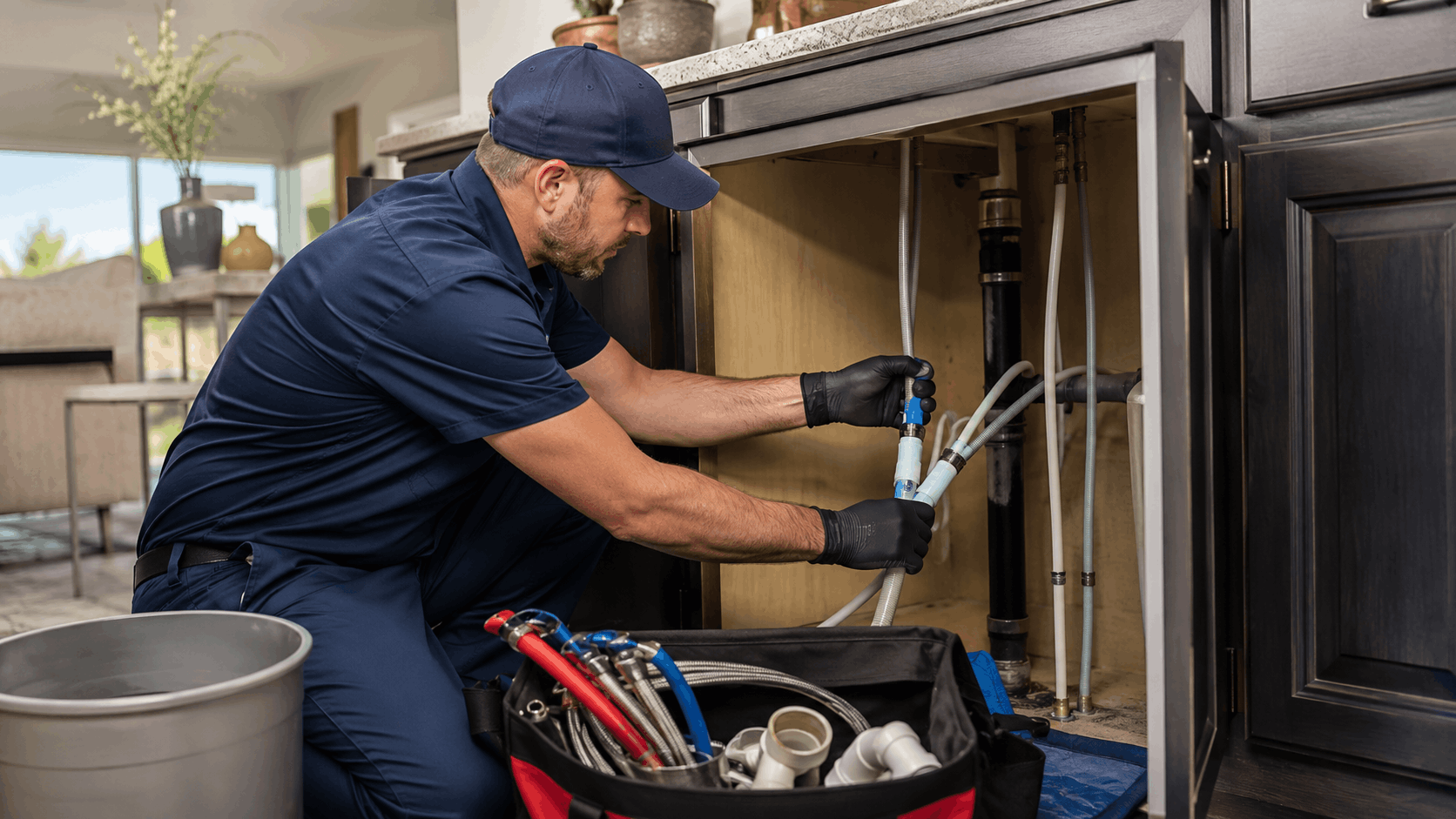
Why Summerlin Homeowners Trust Active Plumbing for Repipes
Kitec repipes are a specialty, not a side job. Active Plumbing has handled these across the valley for years. That volume of Las Vegas repipe experience is why Summerlin homeowners keep calling us.
Being a local plumber means we know these neighborhoods block by block. We know which villages carry Kitec and how the local water treats it. That knowledge shows up in faster, cleaner work.
Hands-On Experience With Kitec Across the Valley
Our crew has done Kitec repipes throughout Summerlin and the surrounding areas. We recognize the fittings on sight and know how they fail. That Kitec experience means fewer surprises once the walls open.
As repipe specialists, we have refined our process over hundreds of jobs. We know the fastest safe routing, the best access points, and how to protect the home along the way. Repetition has made us efficient without cutting corners.
Local knowledge matters more than most people think. A crew that works Summerlin daily reads a home faster than one that visits occasionally. We arrive already knowing what the era and the village usually mean.
That experience translates to a smoother project for you. Fewer surprises, tighter timelines, and confident answers to your questions. It is the difference between a specialist and a generalist.
Protecting Floors, Walls, and Landscaping
A repipe touches a lot of your home, so property protection is part of the plan. We lay down floor coverings, protect furniture, and keep dust contained. The home should look cared for while we work.
Clean work is a habit, not an afterthought. We plan access points to keep openings small and organized. That approach limits both the mess and the patching that follows.
Outside, we watch the landscaping around access to hose bibs and the main. Summerlin yards are an investment, and we treat them with care. We restore the area when the outdoor work is done.
Respecting the property is how we want to leave every home. You should feel comfortable with our crew in your house. That care is a standard part of the job, not an extra.
Warranty and Follow-Up Support
We back our repipes with a warranty so you have long-term confidence. The repipe warranty covers the workmanship and the new system. If something needs attention, you have a clear path to us.
Follow-up support does not end when we drive away. We stay reachable for questions after the job. If you notice anything unusual, a quick call gets it addressed.
A guarantee only means something if the company stands behind it. We do, because we live and work in this valley. Our reputation depends on the homes we finish.
You can always reach our team through the contact page for warranty questions or follow-up needs. We keep your project records on file. That makes any future support simple.
Serving Summerlin and Surrounding Neighborhoods
We serve Summerlin and the neighborhoods that surround it every day. Peccole Ranch, Queensridge, and Downtown Summerlin are all regular stops for our crews. Those areas share the same era and the same Kitec risk.
Our Peccole Ranch service stays busy because those homes fall right in the Kitec window. Queensridge and the areas near Downtown Summerlin round out our weekly routes. We know the drive and the neighborhoods well.
Being nearby means faster response when a leak turns urgent. We are not coming from across the valley. That proximity matters when water is running behind a wall.
Wherever you are in the Summerlin area, we are close and ready. From The Vistas to the western edge near Red Rock, we cover it. Local coverage is part of what makes us the practical choice.
Need Help in Las Vegas?
Active Plumbing serves Las Vegas and all of Las Vegas Valley.
Final Thoughts
Summerlin homes built between 1995 and 2007 carry a real, well-documented plumbing risk in Kitec. Our hard water, desert heat, and elevation pressures push those fittings toward failure faster than in most places. Waiting only raises the odds of a surprise leak and the damage that comes with it.
The good news is that a planned repipe is straightforward, predictable, and protective of your home value. Identify whether you have Kitec, budget for the replacement, and handle it on your terms rather than during an emergency. A permitted, warrantied repipe puts the problem behind you for good.
If your Summerlin home fits the profile, reach out to Active Plumbing for an assessment and a written estimate. Call our team or visit our contact page to schedule a consultation. We will confirm what is behind your walls and give you a clear plan.

Frequently Asked Questions
How do I know if my Summerlin home has Kitec plumbing?
Start at the water heater in your garage. Look for orange or yellow-brass fittings and a labeled manifold. Check the pipe for brand names like Kitec, IPEX, PlumbBetter, or KERR printed along the tubing. You can also review your original building permits and Clark County records for the plumbing materials used. If you are unsure, send us clear photos and our team can usually confirm it quickly.
How much does a whole-home repipe cost in Summerlin?
Most Summerlin repipes fall between $6,000 and $18,000 depending on home size and fixture count. A single-story two-bath home often runs $6,000 to $9,000, while a large two-story with three or more baths can reach $18,000 or more. Square footage, slab access, and material choice all affect the total. Your written estimate reflects your specific home rather than a rough average, so there are no midjob surprises.
How long does a repipe take?
A single-story home with two bathrooms usually takes two to three days. A three-bath single-story runs three to four days. Two-story homes take longer, commonly four to six days, because lines must route between floors and require more access points. County inspection can add a day depending on scheduling. We give you a firm timeline after the in-home assessment so you can plan around it.
Can I stay in my home during the repipe?
Yes, most families stay home during the work. The water shutoff only happens during active work hours, and we turn the water back on at the end of each day when possible. That gives you running water in the evenings for cooking and bathing. We work in sections to keep a bathroom usable when the schedule allows. Filling a few water jugs in the morning covers small daytime needs.
Is Kitec pipe still under any recall or settlement?
Kitec was part of a large class action settlement after widespread fitting failures across North America. That settlement created a fund for affected homeowners, but the claims deadline has passed. Most Summerlin owners today can no longer file a claim, which means repipe costs fall on the homeowner. Knowing this history is why acting early matters. You can review recall records through the U.S. Consumer Product Safety Commission.
What piping material replaces Kitec?
The two common choices are PEX and copper. Most Summerlin repipes we do use PEX-A, specifically Uponor PEX, because it resists corrosion and handles our hard water and heat well. It is flexible with fewer joints, which means fewer potential leak points. Copper is a durable alternative but costs more in material and labor. For the vast majority of local homes, PEX-A gives the best balance of durability and cost.
Do I need an HOA approval or a permit for a repipe?
Clark County requires a plumbing permit for a repipe, and we pull it as a licensed contractor. Many Summerlin villages such as The Ridges and Red Rock Country Club also ask for HOA notice before interior work, mainly for gate access and scheduling. Interior plumbing rarely needs full architectural approval since it does not change the exterior. We help handle both the permit paperwork and any HOA notification.
Will insurance cover Kitec repipe or water damage?
Most policies will not pay to proactively replace Kitec since it is considered maintenance. Coverage for sudden water damage from a burst fitting varies widely by policy. Some carriers exclude Kitec entirely once it is disclosed, and others limit the payout. Check your policy language and ask your agent directly about Kitec and water damage limits. Documenting a permitted repipe can actually help with future coverage.
Does repiping hurt my home's resale value?
A permitted repipe helps resale rather than hurts it. Buyers and inspectors view Kitec as a liability, and a completed replacement removes that concern. The permit and inspection records prove the work was done to code, which keeps closings smooth. Homes with active Kitec often see price reductions or failed deals during inspection. Replacing it before listing gives you a stronger, cleaner sale.
How soon should I replace Kitec before it leaks?
The safest approach is to plan replacement before a failure forces it, especially in homes with attic runs baking through Summerlin summers. Once you confirm Kitec, every hot season raises the risk. A planned repipe costs less than an emergency one that involves water damage, mold, and drywall repair across multiple trades. If your home is in the 1995 to 2007 range, schedule an assessment soon rather than waiting for a leak.
Frequently Asked Questions
- How do I know if my Summerlin home has Kitec plumbing?
- Start at the water heater in your garage. Look for orange or yellow-brass fittings and a labeled manifold. Check the pipe for brand names like Kitec, IPEX, PlumbBetter, or KERR printed along the tubing. You can also review your original building permits and Clark County records for the plumbing materials used. If you are unsure, send us clear photos and our team can usually confirm it quickly.
- How much does a whole-home repipe cost in Summerlin?
- Most Summerlin repipes fall between $6,000 and $18,000 depending on home size and fixture count. A single-story two-bath home often runs $6,000 to $9,000, while a large two-story with three or more baths can reach $18,000 or more. Square footage, slab access, and material choice all affect the total. Your written estimate reflects your specific home rather than a rough average, so there are no midjob surprises.
- How long does a repipe take?
- A single-story home with two bathrooms usually takes two to three days. A three-bath single-story runs three to four days. Two-story homes take longer, commonly four to six days, because lines must route between floors and require more access points. County inspection can add a day depending on scheduling. We give you a firm timeline after the in-home assessment so you can plan around it.
- Can I stay in my home during the repipe?
- Yes, most families stay home during the work. The water shutoff only happens during active work hours, and we turn the water back on at the end of each day when possible. That gives you running water in the evenings for cooking and bathing. We work in sections to keep a bathroom usable when the schedule allows. Filling a few water jugs in the morning covers small daytime needs.
- Is Kitec pipe still under any recall or settlement?
- Kitec was part of a large class action settlement after widespread fitting failures across North America. That settlement created a fund for affected homeowners, but the claims deadline has passed. Most Summerlin owners today can no longer file a claim, which means repipe costs fall on the homeowner. Knowing this history is why acting early matters. You can review recall records through the U.S. Consumer Product Safety Commission.
- What piping material replaces Kitec?
- The two common choices are PEX and copper. Most Summerlin repipes we do use PEX-A, specifically Uponor PEX, because it resists corrosion and handles our hard water and heat well. It is flexible with fewer joints, which means fewer potential leak points. Copper is a durable alternative but costs more in material and labor. For the vast majority of local homes, PEX-A gives the best balance of durability and cost.
- Do I need an HOA approval or a permit for a repipe?
- Clark County requires a plumbing permit for a repipe, and we pull it as a licensed contractor. Many Summerlin villages such as The Ridges and Red Rock Country Club also ask for HOA notice before interior work, mainly for gate access and scheduling. Interior plumbing rarely needs full architectural approval since it does not change the exterior. We help handle both the permit paperwork and any HOA notification.
- Will insurance cover Kitec repipe or water damage?
- Most policies will not pay to proactively replace Kitec since it is considered maintenance. Coverage for sudden water damage from a burst fitting varies widely by policy. Some carriers exclude Kitec entirely once it is disclosed, and others limit the payout. Check your policy language and ask your agent directly about Kitec and water damage limits. Documenting a permitted repipe can actually help with future coverage.
- Does repiping hurt my home's resale value?
- A permitted repipe helps resale rather than hurts it. Buyers and inspectors view Kitec as a liability, and a completed replacement removes that concern. The permit and inspection records prove the work was done to code, which keeps closings smooth. Homes with active Kitec often see price reductions or failed deals during inspection. Replacing it before listing gives you a stronger, cleaner sale.
- How soon should I replace Kitec before it leaks?
- The safest approach is to plan replacement before a failure forces it, especially in homes with attic runs baking through Summerlin summers. Once you confirm Kitec, every hot season raises the risk. A planned repipe costs less than an emergency one that involves water damage, mold, and drywall repair across multiple trades. If your home is in the 1995 to 2007 range, schedule an assessment soon rather than waiting for a leak.
A
Licensed plumbing professionals serving Las Vegas and Las Vegas Valley.
Licensed in Nevada · License #0047021
Last updated on
Why trust Active Plumbing?
Founded in 1991, Active Plumbing is a licensed and insured plumber serving Las Vegas and Las Vegas Valley. All content is reviewed by our licensed technicians.

Need Help in Las Vegas?
Active Plumbing serves Las Vegas and all of Las Vegas Valley.
Related Articles
Tips & Advice
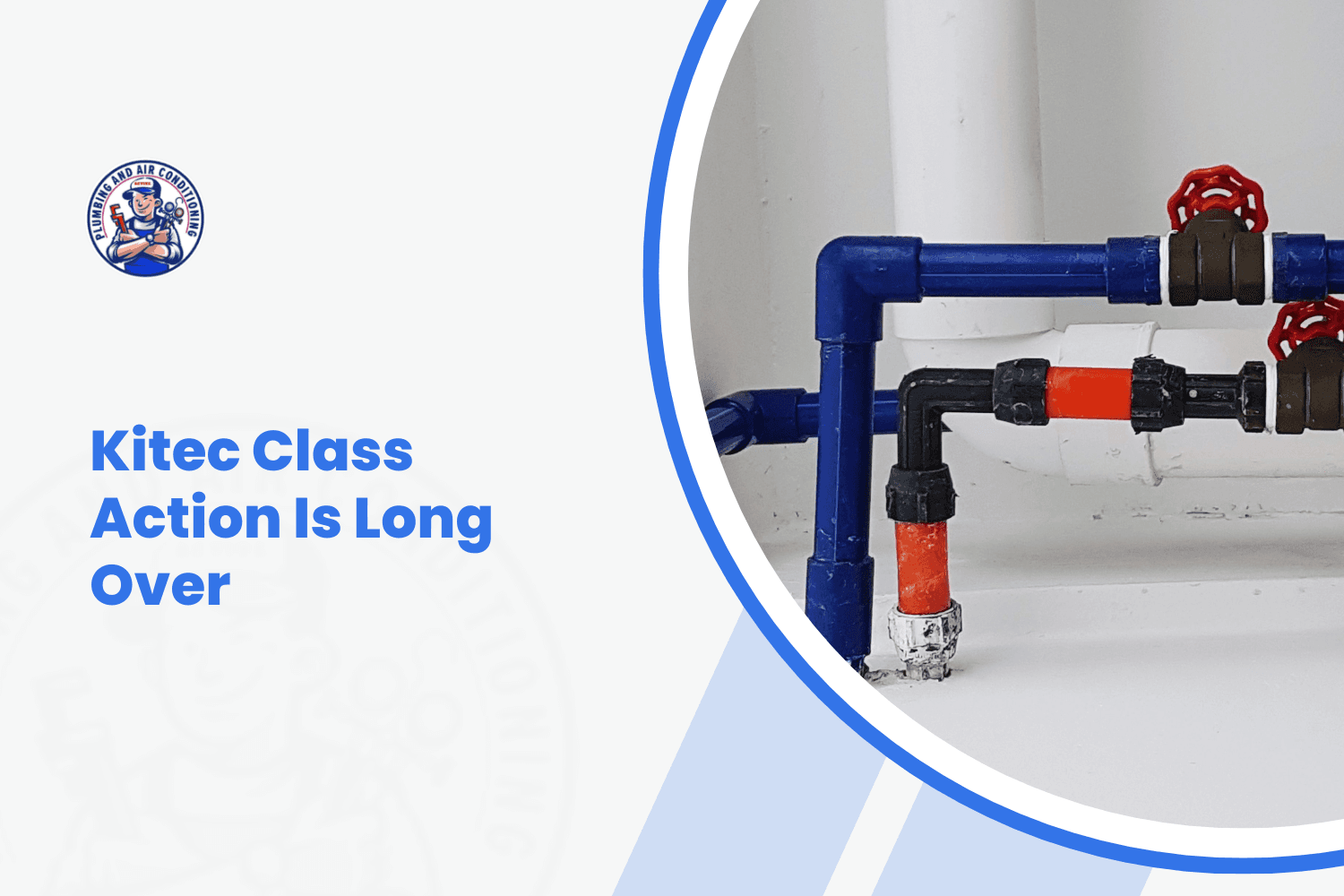
Kitec Class Action Is Long Over - What Las Vegas Owners Can Still Do
The Kitec class action closed its claim window in January 2020. Here is what Las Vegas owners can still do about Kitec pipes in 2026, from inspection to full repipe.
Safety & Prevention
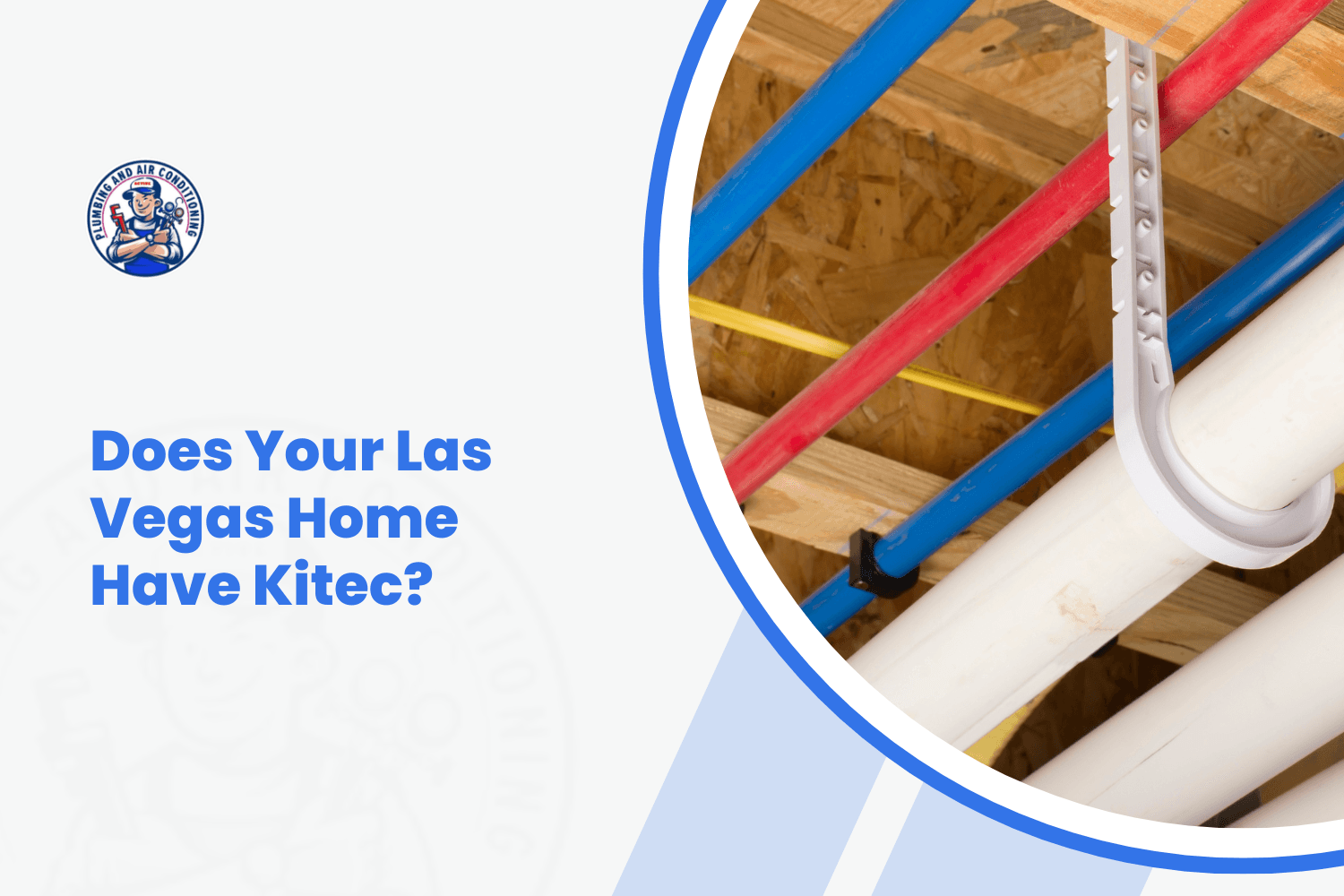
Does Your Las Vegas Home Have Kitec? The 1995-2007 Builds in Summerlin, Green Valley, and Anthem Most Affected
Homes built in Las Vegas between 1995 and 2007 often have failing Kitec plumbing. Learn how to spot it in Summerlin, Green Valley, and Anthem, and how to fix it.

Tips & Advice
Why Kitec Fittings Fail: Dezincification Chemistry Meets Las Vegas Water
Kitec fittings fail fast in Las Vegas because dezincification meets hard, hot valley water. Learn the warning signs, risks, and repipe options.