How-To Guides
Polybutylene vs Kitec vs Early PEX: Identifying What's Actually in Your 80s-2000s Las Vegas Walls
Key Takeaways
- A Las Vegas home's build era hints at its pipe: 1980s tracts often have polybutylene, while 1990s to mid-2000s Summerlin and Henderson homes commonly used Kitec and early PEX.
- Polybutylene is dull gray with a PB2110 stamp and is the highest-risk material because both the pipe and its plastic fittings degrade with chlorine and age.
- Kitec is bright orange and blue with yellow brass fittings that corrode and can fail suddenly, and its class action settlement claim window has closed.
- Most PEX is reliable; the concern is limited to certain high-zinc brass fittings that suffer dezincification and a few recalled early lines.
- Desert heat and hard water from the Las Vegas Valley Water District speed up pipe failure, making early identification and treatment worthwhile.
- Clark County requires a permit and inspection for repipes, and a typical valley home costs roughly 4,000 to 10,000 dollars and takes two to four days.
- Smart shutoff valves, water softeners, and seasonal attic and slab checks reduce water damage risk while a repipe is planned.
In This Article
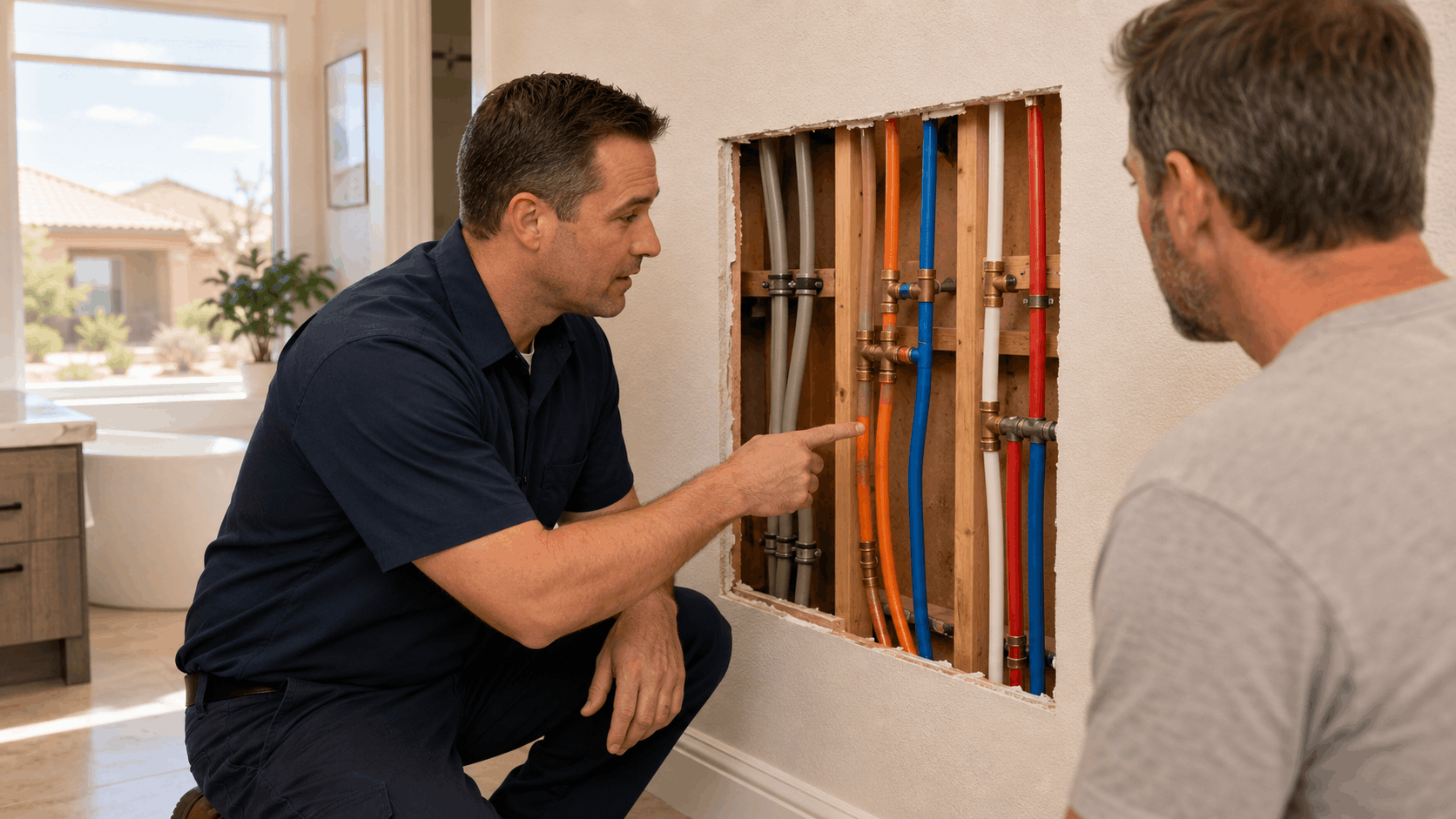
A homeowner in an older Summerlin cul-de-sac calls us on a Saturday morning. Water is seeping through the drywall in a hallway, and when they cut the wall open to find the source, they see something they do not recognize. It is not copper. It is a gray or maybe orange flexible pipe with a strange fitting. They snap a photo and ask the question we hear all the time: what is this stuff, and should they be worried?
That mystery pipe behind the wall is usually one of three materials that ran through Las Vegas homes built from the 1980s through the mid-2000s. Polybutylene, Kitec, and early PEX all look a little alike to an untrained eye, but they carry very different risks. One was banned. One was the subject of a major class action settlement. One is mostly fine unless it has the wrong fittings.
Why the Age of a Las Vegas Home Tells You a Lot About Its Pipes
The build date of a valley home is the single best clue to what is behind its walls. Builders used whatever material was cheap, available, and code-approved at the time, so entire neighborhoods share the same plumbing. When we pull up to a street, the age of the roofline often tells us what to expect before we ever cut drywall.
Here is how Las Vegas home age lines up with likely pipe material history:
- Late 1970s to late 1980s: polybutylene supply lines are common, especially in east valley and early Henderson tracts.
- Early to mid 1990s: a mix of copper, polybutylene tail ends, and the first Kitec systems.
- Late 1990s to mid 2000s: Kitec and early PEX show up heavily in master-planned communities.
- Mid 2000s and newer: modern PEX and copper dominate.
Older homes rarely got a full repipe unless a prior leak forced it. That means the original material is often still doing the job decades later, quietly aging in attic heat and hard water.
The 1980s Building Boom and Polybutylene
The 1980s brought a wave of affordable tract housing to east Las Vegas, older Green Valley, and parts of Sunrise Manor. Builders loved polybutylene because it was cheap, flexible, and fast to install compared to soldering copper. Whole subdivisions went up with gray polybutylene running from the water heater to every fixture.
If a home near Boulder Highway or the older streets off Nellis was framed in that era, there is a strong chance polybutylene is still present somewhere. We often find it feeding the water heater and the hose bibs even when part of the home was later switched to copper. Partial repipes were common, so one house can have two or three materials.
The trouble is that 1980s construction predates what the industry learned about how polybutylene reacts to chlorine and minerals. The pipe that seemed like a bargain then is now the material we replace most often in these neighborhoods. Age plus valley water is a rough combination for this plastic.
Homeowners in these older tracts should treat any gray flexible pipe as a reason to plan ahead. It may not be leaking today, but it is living on borrowed time.
The 1990s to Early 2000s Growth in Summerlin and Henderson
As the valley exploded outward in the 1990s, Summerlin and Henderson filled with new master-planned communities almost overnight. Builders in these years often used Kitec and the earliest PEX runs, marketing them as modern upgrades over older plastics. Peccole Ranch, The Vistas, and Green Valley Ranch all saw heavy use of these newer systems.
Kitec in particular was pitched as a premium product for both potable water and radiant heating. It landed in a lot of 1990s homes and carried into the early 2000s before problems became widely known. Many owners have no idea their upscale home hides a pipe that later triggered a class action.
Early PEX arrived around the same time and mostly performed well, but a few brands and fitting types had issues. The mix of materials in this era makes identification trickier than in the straightforward polybutylene tracts of the 80s. Two houses on the same Summerlin street can hold completely different pipe.
If a home in Summerlin or Henderson dates to this window, checking the pipe material is worth the hour it takes.
How Desert Heat and Hard Water Speed Up Pipe Failure
Las Vegas plumbing ages faster than plumbing in cooler, softer-water regions. Most of the valley draws from the Las Vegas Valley Water District, and that supply carries some of the hardest water in the country. High mineral content scours fittings and leaves scale that stresses joints over time.
Attic heat is the other silent enemy. Summer attic temperatures can top 140 degrees, and pipe routed through those spaces bakes for months every year. Heat accelerates the breakdown of plastics like polybutylene and speeds up corrosion inside Kitec brass fittings.
Chlorine and chloramine used to treat the water also attack certain plastics from the inside. Over years this thins pipe walls and weakens the material until a pinhole or split appears. Pipe corrosion in the desert is not a maybe, it is a matter of when for the riskier materials.
This combination is why a 30-year-old polybutylene system here may fail sooner than the same pipe would in a mild climate. Our water treatment services can slow that wear, but they cannot reverse damage already done.
Where to Find Records on Your Home's Original Plumbing
Homeowners do not have to guess based on age alone. The Clark County building department keeps permit and inspection records that often note original plumbing materials. A quick records search can confirm what a builder installed and whether any repipe permits were pulled later.
Permits filed for later work are especially telling. If a prior owner repiped part of the home, that job usually required a permit and inspection that becomes part of the home records. Seeing a repipe permit from 2010, for example, tells us copper or PEX may have replaced the original plastic.
Real estate disclosures and old inspection reports are another source. Buyers who kept their closing paperwork sometimes find notes about pipe material or past leaks. These documents fill gaps when walls are closed and pipe is not visible.
When records are thin, we combine what the paperwork shows with what we see in accessible spots. That mix of history and hands-on checking gives the clearest picture of what a home is working with.
Get Your Quote
Tell us what's going on and we'll get back to you fast.
How to Identify Polybutylene Pipe in Your Walls
Polybutylene is the pipe we get the most panicked calls about, and for good reason. It was installed in millions of homes before being pulled from the market, and much of it is still in valley walls. Polybutylene identification is usually straightforward once a homeowner knows what to look for.
Here is a quick reference for PB piping traits:
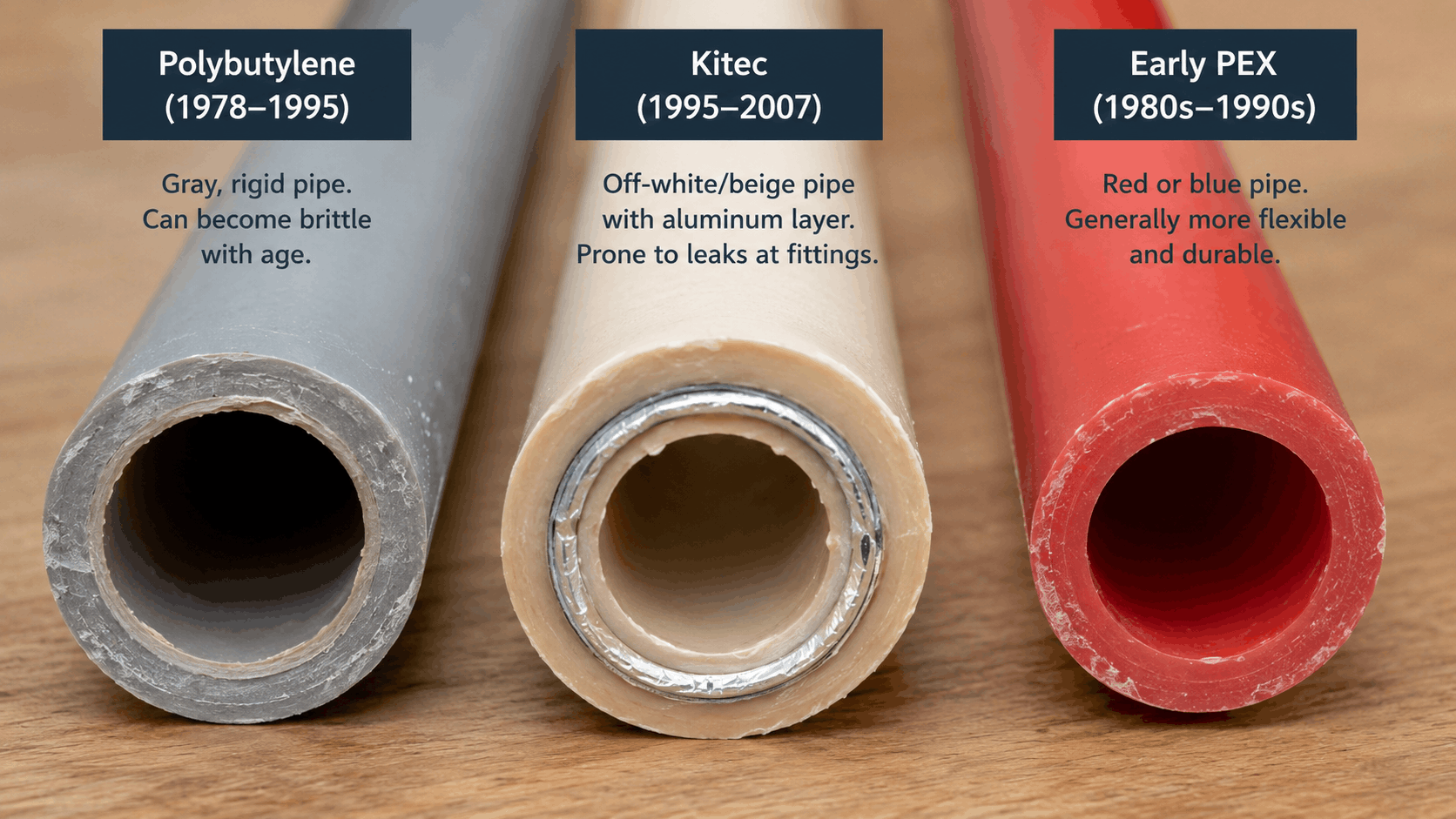
| Trait | What to Look For |
|---|---|
| Color | Gray most common, sometimes blue or black |
| Feel | Flexible, slightly soft plastic |
| Stamp | PB2110 printed along the pipe |
| Fittings | Gray or copper crimp rings, plastic acetal fittings |
| Era | Roughly 1978 to 1995 |
Spotting it early gives homeowners time to plan rather than react to a burst line at 2 a.m.
The Telltale Gray or Blue Color and Stamp Codes
The classic sign is dull gray flexible pipe about half an inch or larger in diameter. It bends easily and feels softer than rigid copper or CPVC. Some outdoor or cold-water runs came in blue, and a few used black, but gray is what we see most in valley homes.
The confirming detail is the stamp. Genuine polybutylene carries a PB2110 code printed at intervals along the pipe. If a homeowner sees that gray pipe and reads PB2110 on it, there is no doubt about what they have.
The stamp can be faded on older pipe, especially in hot attics where sun and heat wore the print away. Wiping the pipe with a damp cloth sometimes reveals lettering that was hard to read. When the stamp is gone, the color, flexibility, and fitting style still point the way.
Anyone unsure after checking these clues can send us a clear photo. We identify pipe from pictures for valley homeowners almost daily.
Common Spots to Check: Water Heater, Under Sinks, and Hose Bibs
The easiest place to start is the water heater connections. Supply lines feeding the heater are usually visible in the garage or a closet, and the original material often shows right there. Gray flexible pipe here is a strong tell for the whole home.
Under sink plumbing is the next best spot. Open the cabinet below a kitchen or bathroom sink and look at the lines running up to the shutoff valves. Homes with polybutylene frequently show it at these stub-outs even when other areas were updated.
Hose bibs and the main shutoff near the front of the house are also worth a look. Exterior spigots sometimes reveal the original pipe just inside the wall. Checking these three areas takes about ten minutes and covers the most common exposure points.
If a home shows copper at the sinks but gray pipe at the heater, that partial-repipe pattern is common in older Henderson and east valley homes. It means the risky material may still hide behind closed walls.
Why Polybutylene Was Banned and What Fails First
Polybutylene lost its code approval in the mid 1990s after widespread failures and a landmark class action. The pipe itself degrades when exposed to chlorine over years, becoming brittle and prone to cracking. Combine that with the plastic acetal fittings used on many installs, and the failure points multiply.
The acetal fittings tend to fail before the pipe body does. These plastic connectors crack at the crimp and let water seep or spray depending on pressure. Metal insert fittings held up better, but many homes got the cheaper plastic version.
According to the U.S. Consumer Product Safety Commission, polybutylene systems were tied to significant leak claims, which drove the material off the market. You can read more about historical plumbing recalls and safety at the Consumer Product Safety Commission. That history is why we treat any surviving polybutylene as a replacement candidate rather than a repair one.
Once one fitting fails, others usually are not far behind, because they all aged under the same water and heat. Spot fixing a system this old often just moves the next leak down the line.
Warning Signs of a Hidden Polybutylene Leak
A slow drop in water pressure across the house is a common early symptom. As fittings weaken and small leaks develop inside walls, flow suffers before anyone sees water. Homeowners often notice showers getting weaker over a season or two.
Staining is another red flag. Brown or yellow discoloration on ceilings, along baseboards, or on drywall points to moisture escaping somewhere behind the finish. In valley homes these stains sometimes appear near the water heater wall or in hallways where pipe runs overhead.
A pinhole leak may show up as a tiny persistent damp spot that never quite dries. On a slab home the first sign can be a warm spot on the floor or an unexplained jump in the water bill. These small clues deserve attention because polybutylene rarely gives a loud warning before a bigger failure.
When any of these signs appear in an older home, our electronic leak detection can pinpoint the source without tearing open every wall.
Need Help in Las Vegas?
Active Plumbing serves Las Vegas and all of Las Vegas Valley.
How to Spot Kitec Plumbing Before It Costs You
Kitec is the sneaky one. It looked modern and premium when installed, so many homeowners assume it is a safe upgrade. In reality Kitec plumbing failed in enough valley homes to trigger a national class action settlement.
Kitec is an aluminum PEX product, meaning it sandwiches a thin aluminum layer between plastic. That construction plus its yellow brass fittings is where the trouble started. Kitec identification comes down to color and the brand stamps on the pipe.
The Orange and Blue Pipe With Brass Fittings
Kitec is easiest to spot by its bright orange and blue coloring. Orange typically marked hot lines and blue marked cold, though it also came in other shades for heating systems. The color is much more vivid than the muted tones of standard PEX.
The pipe feels stiffer than plain PEX because of the aluminum core inside. When bent it tends to hold its shape rather than springing back. That metal layer is part of why it seemed like a quality product at the time.
The real weak point is the yellow brass fittings. These connectors corrode from the inside through a process that clogs and cracks them. In hard valley water that corrosion runs faster, building mineral scale that chokes flow and stresses the joint until it fails.
Orange pipe joined by yellowish brass fittings in a 1990s or early 2000s home is a strong Kitec signature worth investigating further.
Brand Names and Stamps to Look For
Kitec went by several names, which trips up homeowners who look only for the word Kitec. The pipe or fittings may read Kitec, PlumbBetter, IPEX, KERR, KITEC, WarmRite, or AmbioComfort depending on the run and application. Any of these stamps confirms the same problem family.
The IPEX name is common because IPEX manufactured the system. Radiant floor heat versions often carry WarmRite or AmbioComfort branding. Reading the stamp closely matters because these different labels all trace back to the recalled product.
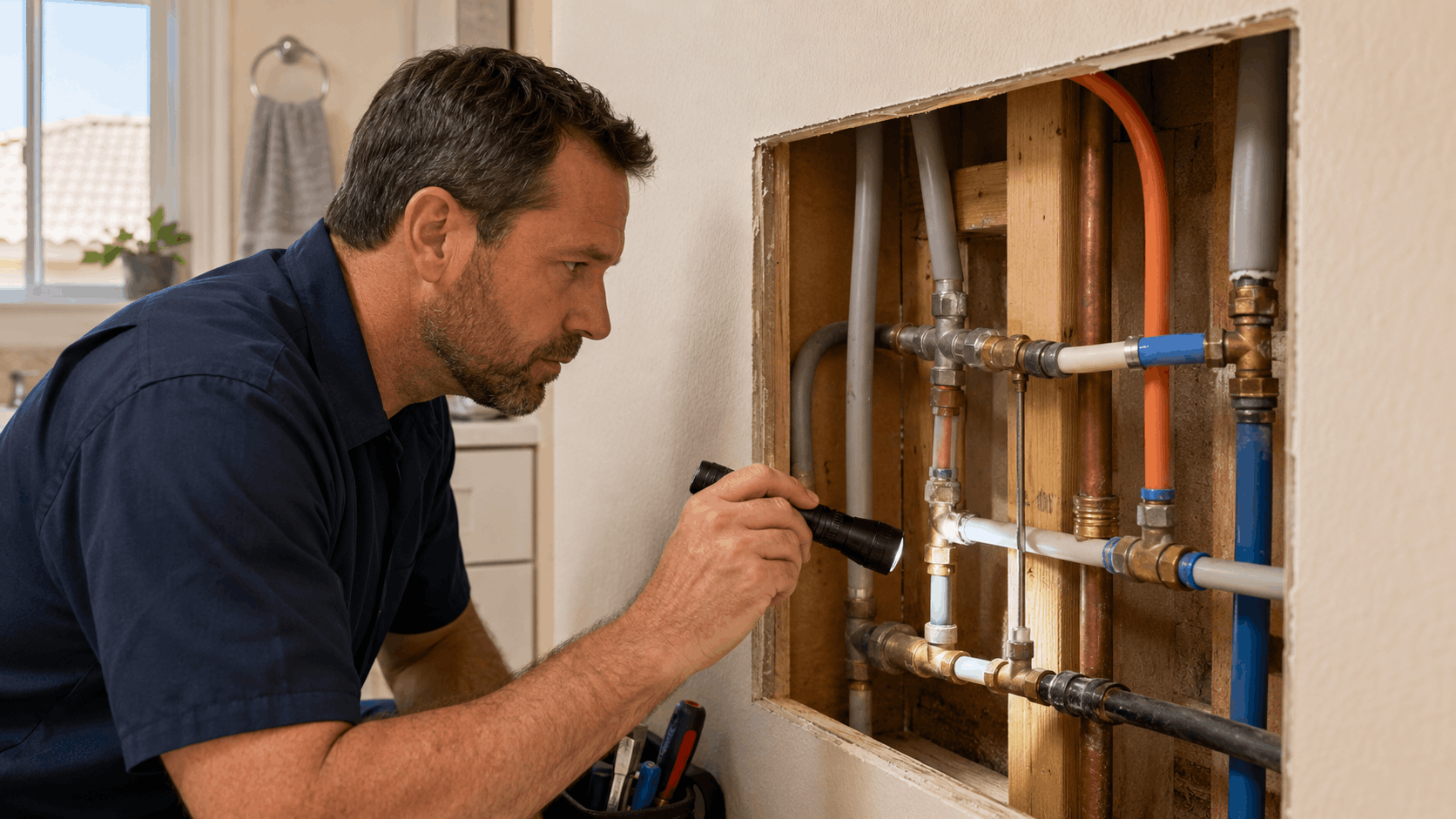
Stamps appear along the pipe body at regular intervals, similar to other plastic piping. In tight spaces a flashlight and a phone camera help capture the small print. Photographing the stamp gives us a clear record to confirm the material.
When any of these brand names show up, homeowners should treat the finding seriously regardless of whether the system has leaked yet.
Why Henderson and Newer Summerlin Homes Are at Higher Risk
Kitec landed heavily in homes built from the late 1990s to the mid 2000s, which is exactly when Henderson and newer parts of Summerlin were booming. Communities around Green Valley Ranch, Anthem, and The Vistas saw plenty of it. The timing lines up almost perfectly with the material's market window.
Upscale builders often chose Kitec for its promise of easy installation and radiant heating support. That means some larger custom and semi-custom homes carry it, not just entry-level tracts. Owners of nicer valley homes are sometimes surprised to learn their premium build has recalled pipe.
The Kitec class action settlement fund was created to help affected homeowners, though the claim window has since closed. That legal history underscores how widespread and serious the failures were. Homes in these communities deserve a careful look.
If a home in Summerlin West or around Whitney Ranch falls in that build window, checking for Kitec is a smart early move.
How Kitec Affects Home Sales and Insurance
Kitec creates real headaches during a home sale. A thorough home inspection will often flag it, and Nevada disclosure rules push sellers to reveal known plumbing issues. Buyers who learn of Kitec frequently ask for a repipe or a price reduction before closing.
Some insurance carriers view Kitec as a higher risk and may raise premiums, exclude related water damage, or decline coverage entirely. That can complicate both financing and long-term ownership costs. A pipe problem quietly becomes a financial one.
Because the failures can be sudden, insurers and inspectors take the material seriously even when it has not leaked. Sellers who address it proactively usually get smoother transactions. A completed repipe with permits removes a major sticking point.
Homeowners planning to sell in the next few years benefit from tackling Kitec on their own timeline rather than under buyer pressure.
Early PEX: The Good, the Bad, and the Recalled Batches
Not all plastic pipe is a problem. PEX became the go-to replacement material for good reasons, and most of it performs well for decades. The catch is that a few early PEX runs and certain brass fittings had defects that caused failures.
Here is how early PEX risk breaks down:
| PEX Factor | Lower Risk | Higher Risk |
|---|---|---|
| Color | Clean red, blue, white | Faded or brittle from heat |
| Fittings | Poly or quality brass | High-zinc yellow brass |
| Markings | Clear ASTM specs printed | Worn or missing print |
| Era | Mid 2000s and newer | Late 1990s early lines |
The goal is separating solid modern PEX from the small share of risky early product.
How PEX Colors and Markings Differ From Kitec
Standard PEX uses a clear color code: red for hot, blue for cold, and white or clear for either. The tones are softer than Kitec's vivid orange and blue. Feel matters too, since PEX bends and springs back without the stiff aluminum core.
PEX also lacks the metal layer, so a cut end shows solid plastic rather than a shiny aluminum ring. That single visual cue separates real PEX from aluminum-lined Kitec in seconds. A plumber can confirm this instantly at any exposed joint.
PEX markings print the brand, size, and ASTM standard along the pipe. Reading those specs tells you the pipe type and rating. Clear, current markings are a reassuring sign compared to the recalled Kitec brand names.
When homeowners describe red and blue pipe that is soft and springy with clean printing, we usually expect standard PEX rather than a problem material.
Problem Fittings and Recalled Early Systems
The main weakness in early PEX systems was not the pipe but certain brass fittings. High-zinc yellow brass can suffer dezincification, where zinc leaches out and leaves the metal weak and crumbly. Hard valley water speeds this process.
A few early PEX brands and fitting lines were subject to recalls or lawsuits over these fitting failures. The pipe held up while the connectors cracked, split, or clogged with corrosion buildup. That is why identifying the fitting metal matters as much as the pipe.
Low-lead or poly fittings resist this problem and are used in quality modern installs. When we open a wall and find high-zinc brass on early PEX, we flag it for closer evaluation. The fix is often replacing fittings rather than the entire system.
Homeowners with early PEX should not panic, but they should get the fittings checked, especially in homes on untreated hard water.
Why Modern PEX Is a Solid Choice in the Desert
Current PEX handles the valley's conditions well, which is why we install it for most repipes. It resists the scale buildup that plagues copper and shrugs off the chlorine that broke down polybutylene. Its flexibility also lets it expand slightly instead of bursting when stressed.
Modern PEX tolerates heat far better than older plastics, an advantage in attic runs that hit brutal summer temperatures. Paired with quality low-lead fittings, it avoids the corrosion issues that sank Kitec. For desert plumbing it is a dependable, long-lasting option.
PEX also installs faster with fewer joints, which means fewer potential leak points inside walls. That reliability is a big reason it replaced the troubled materials of past decades. When we quote a repipe, modern PEX is usually the recommended path.
Homeowners upgrading from polybutylene or Kitec often find the new PEX system quieter and better performing than what it replaced.
How to Confirm What Type of PEX You Have
Start by reading the printed pipe specs at any exposed run, such as near the water heater or under a sink. The print lists brand, size, and ASTM rating. Photographing that text gives a clear starting point for identification.
Next, look at the fittings. Note whether they are plastic or brass and, if brass, whether the color leans bright yellow. Yellow high-zinc brass warrants a closer PEX inspection than duller low-lead or poly fittings.
Because some details are subtle, having a plumber verify the fittings is the safest confirmation. We can test suspicious brass and check for early signs of dezincification. That professional check separates a fine system from one that needs fitting work.
Our team handles this kind of pipe and fixture inspection throughout the valley and can give a straight answer on what a home actually has.

Side-by-Side: Telling These Three Pipe Types Apart
Once a homeowner knows the traits, a quick pipe comparison usually settles the question. Most people can identify plumbing correctly with a flashlight, a photo, and a few minutes. The three pipe types each carry distinct signatures.
| Feature | Polybutylene | Kitec | Early PEX |
|---|---|---|---|
| Color | Gray, sometimes blue | Bright orange and blue | Red, blue, white |
| Feel | Soft, flexible | Stiff, aluminum core | Flexible, springy |
| Stamp | PB2110 | Kitec, IPEX, KERR | Brand plus ASTM spec |
| Fittings | Plastic acetal or copper crimp | Yellow brass | Poly or brass crimp |
| Risk | Highest | High | Low to moderate |
Color and Texture Differences at a Glance
Pipe color is the fastest sorting tool. Dull gray almost always means polybutylene, bright orange usually means Kitec, and clean red or blue points to PEX. The vividness of the color is a strong hint by itself.
Pipe texture confirms it. Polybutylene feels soft and a little slick, PEX feels firmer but still bends and springs back, and Kitec feels the stiffest because of its metal layer. Squeezing and flexing a section tells you a lot.
Cut ends give the final proof when accessible. A shiny aluminum ring inside means Kitec, while solid plastic all the way through means PEX or polybutylene. That single detail resolves most orange-versus-red confusion.
Homeowners who note both color and feel together rarely misidentify their pipe.
Fitting and Connection Clues
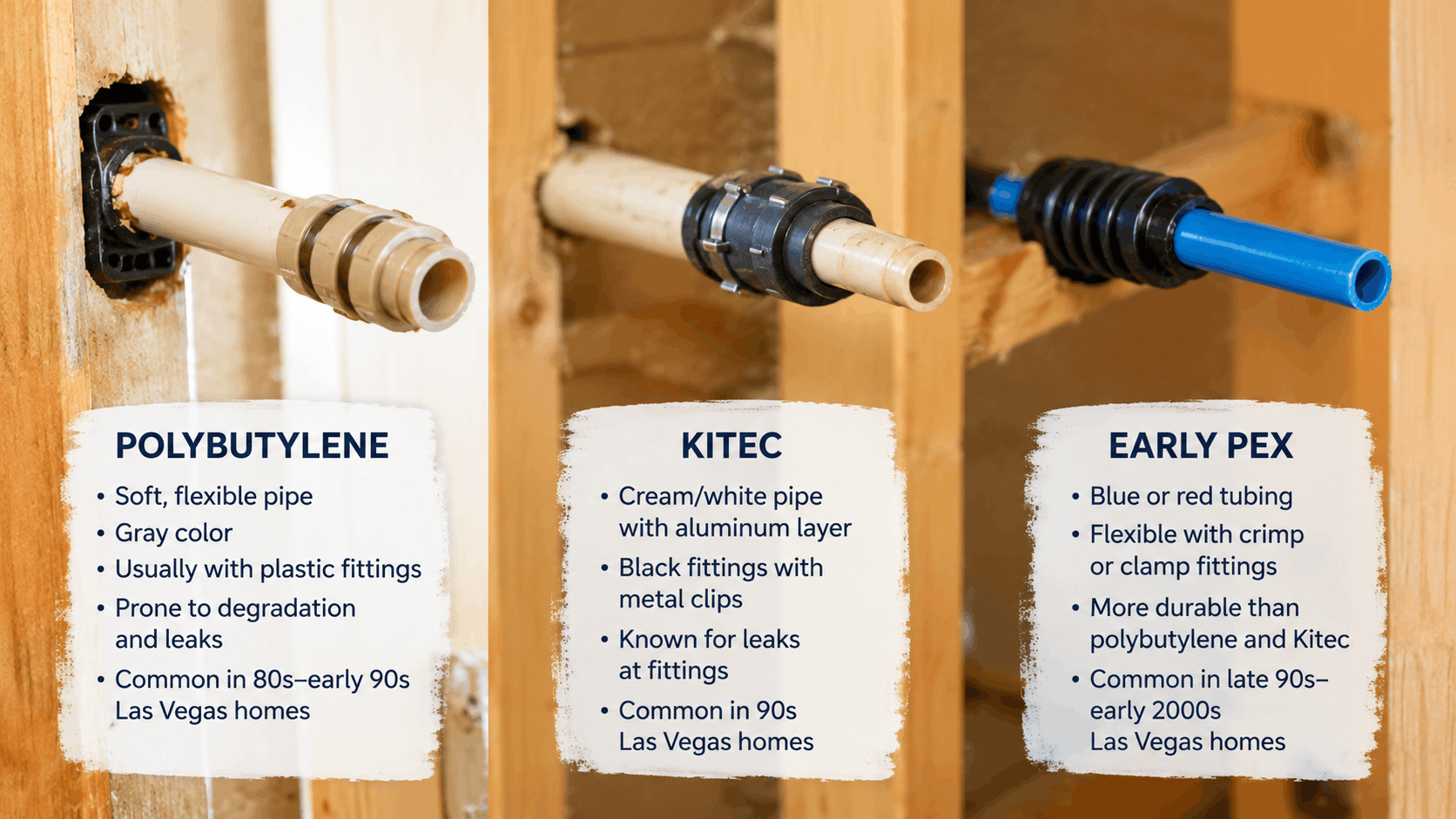
Joints tell as much as the pipe itself. Polybutylene often used gray plastic acetal fittings with metal crimp rings, which look dated and sometimes cracked. Seeing those aging plastic connectors alongside gray pipe is a near-certain polybutylene call.
Kitec relies on yellow brass fittings that stand out against its orange and blue pipe. Those crimp fittings frequently show green or white corrosion where hard water has attacked them. Corroded yellow brass is a classic Kitec pipe connection warning.
Modern PEX uses either poly fittings or cleaner low-lead brass with copper crimp rings or expansion connections. The connections look newer and show less corrosion. Comparing the fitting metal and style clarifies borderline cases.
When fittings and pipe color point to the same material, identification is basically confirmed.
Failure Risk Ranked From Highest to Lowest
Ranking by failure risk helps homeowners prioritize. Polybutylene sits at the top as the most leak-prone pipe because both the material and its fittings degrade with age and chlorine. Any surviving polybutylene should be considered a replacement priority.
Kitec ranks second because its brass fittings corrode and can fail suddenly, sometimes without warning. The pipe may look fine while the connectors quietly deteriorate. In hard valley water this risk climbs.
Early PEX ranks lowest of the three, and most of it is fine. The concern is limited to specific high-zinc fittings and a few recalled early lines. Modern PEX carries very little risk at all.
That ranking guides whether a homeowner monitors, plans, or acts now.
When to Stop Guessing and Call a Plumber
Self identification works well for accessible pipe, but walls hide most of a home's plumbing. When the visible clues are mixed or the stamps are worn away, a professional check clears things up. A plumber inspection also catches problems a homeowner would miss.
Any sign of an active leak means it is time to stop guessing. Staining, pressure drops, or a spiking water bill call for professional help right away. Waiting on a failing polybutylene or Kitec system risks a major flood.
Before buying or selling, an inspection gives everyone a clear record of what is in the walls. That documentation prevents surprises at closing. It also helps a homeowner budget for future work.
Our team offers straight answers after looking at a home, and we serve every corner of the valley from Spring Valley to Henderson.
Need Help in Las Vegas?
Active Plumbing serves Las Vegas and all of Las Vegas Valley.
What to Do If You Find Risky Pipe in Your Home
Finding polybutylene or Kitec is not a reason to panic, but it is a reason to make a plan. The right move depends on the material, its condition, and how long the owner intends to stay. Options run from watchful monitoring to a full repipe.
A calm, informed decision beats a rushed one after a burst line. Knowing the choices helps homeowners weigh cost against risk. Our job is to lay out the tradeoffs honestly.
Spot Repairs Versus a Full Repipe
A spot repair patches a single failure by replacing one section or fitting. It is cheaper up front and makes sense when the rest of the system is a lower-risk material like modern PEX. For an isolated leak on otherwise sound pipe, spot work is reasonable.
With polybutylene and Kitec, spot repairs often just delay the next failure. The whole system aged under the same water and heat, so fixing one leak leaves the rest ready to go. Owners who patch these materials repeatedly usually end up repiping anyway.
A full repipe replaces the entire supply system with modern PEX or copper. It costs more at once but ends the cycle of surprise leaks. For homes full of high-risk pipe, it is the more economical choice over time.
We help owners run those numbers so the decision fits their home and budget.
What a Repipe Costs and How Long It Takes in the Valley
Repipe cost in the valley depends on home size, number of bathrooms, and access. A typical single-story valley home often lands somewhere in the range of 4,000 to 10,000 dollars, with larger two-story or custom homes running higher. Slab access and finish work affect the total.
The repipe timeline for most homes is two to four days of active work. Simpler single-story layouts move faster, while multi-story homes with many fixtures take longer. Water is typically off only during parts of each day.
Drywall patching and paint touch-up add time after the plumbing is finished. We coordinate that so the home is put back together properly. Clear scheduling keeps the disruption predictable.
Every home is different, so we give a firm quote after seeing the layout and pipe.
How Our Team Handles Repipes With Minimal Wall Damage
A minimal damage repipe starts with smart planning of access points. Rather than opening long stretches of wall, we cut small, strategic openings near fittings and runs. That approach keeps drywall repair limited and speeds restoration.
We route new PEX through existing pathways where possible, using attic and cabinet access to reduce cutting. Our crews protect floors and furnishings and keep the work area contained. Cleanliness matters in an occupied home.
Active Plumbing has repiped homes across Summerlin, Henderson, Green Valley, and the older east valley tracts, so our team knows how these houses are framed. That local experience means fewer surprises and tighter, cleaner openings. We restore the wall surfaces so the finished job looks right.
The result is a modern system installed with the least disruption we can manage.
Permits, HOAs, and Inspections to Plan For
A repipe in Clark County requires a plumbing permit and inspection. The repipe permit ensures the work meets code and creates a record that helps at resale. We pull permits and schedule the inspections as part of the job.
Master-planned communities add HOA rules to the mix. Some HOAs in Summerlin, Anthem, and similar areas have requirements around exterior work, contractor access, or scheduling. Checking HOA rules early prevents delays.
Inspections confirm the new system is installed correctly and safely. Passing inspection gives owners documented proof the work was done right. That paperwork is valuable if the home is later sold.
We handle the permit and inspection process so homeowners do not have to chase paperwork themselves.
Protecting an Older Las Vegas Home From Water Damage
While planning repairs, homeowners can take steps that lower risk right now. Water damage prevention is about catching problems early and reducing the stress on aging pipe. A few upgrades and habits go a long way in an older home.
Here are practical protections and what each does:
| Protection | What It Does |
|---|---|
| Smart shutoff valve | Detects leaks and cuts water automatically |
| Water softener | Reduces scale and fitting wear |
| Seasonal attic check | Catches heat-stressed pipe early |
| Whole-home inspection | Documents system condition |
Installing a Leak Detection Shutoff System
A smart shutoff valve watches water flow and shuts the supply when it senses an abnormal pattern. If a pipe bursts while the family is away, the system stops the flood before it ruins floors and drywall. That protection is valuable in homes with aging pipe.
These systems mount on the main line and connect to a phone app for alerts. Owners get a notification the moment something looks wrong. Early warning turns a catastrophe into a minor fix.
For homes still running polybutylene or Kitec, leak detection buys time and safety while a repipe is planned. It is one of the highest-value upgrades an older home can add. We install and configure these systems throughout the valley.
Our whole-home leak detection system service covers selection, install, and setup.
Managing Hard Water With a Softener or Conditioner
Because valley water is so hard, treating it slows the wear that damages pipe and fittings. A water softener removes the minerals that build scale, easing stress on joints and fixtures. Less scale means longer life for the plumbing.
Salt-free conditioners are an option for owners who want scale control without adding sodium. They alter how minerals behave so they do not stick as readily. The right choice depends on the household and preferences.
Hard water treatment also protects the water heater and appliances, cutting maintenance and extending their life. The benefits reach well beyond the pipes. For an older home, it is a sensible layer of protection.
Our water softener installation team can match a system to the home's water use.
Seasonal Checks for Attic and Slab Runs
Attic pipe takes a beating in the desert summer, so a check before and after the hot season pays off. Look for sagging lines, discoloration, or brittleness where heat has done its work. Catching a stressed run early prevents an attic leak that damages ceilings below.
Slab homes deserve attention too. A slab leak often shows as a warm spot on the floor, a running meter with no fixtures on, or an unexplained bill jump. These signs mean water is escaping under the foundation.
A simple seasonal walkthrough covers accessible pipe, the water heater area, and under-sink connections. Homeowners who make it a routine catch small issues before they grow. It takes minutes and can save thousands.
When a check turns up something concerning, we can inspect further and confirm the source.
When to Schedule a Whole-Home Plumbing Inspection
A plumbing inspection makes sense for any home over 20 years old, and especially for those in the polybutylene or Kitec eras. It documents the pipe material, fitting condition, and any early warning signs. That record guides smart planning.
Home buying is another good trigger. Before purchasing an older valley home, an inspection reveals what is behind the walls and what future costs may loom. Sellers benefit too by addressing findings ahead of listing.
We recommend an inspection every few years for aging homes even without symptoms. Conditions change as pipe ages under heat and hard water. Regular checks keep owners ahead of problems.
Scheduling one with our team gives a clear, honest picture of a home's plumbing health.
Need Help in Las Vegas?
Active Plumbing serves Las Vegas and all of Las Vegas Valley.
Final Thoughts
That mystery pipe behind the wall does not have to stay a mystery. Gray pipe with a PB2110 stamp points to polybutylene, bright orange with yellow brass fittings means Kitec, and clean red or blue springy pipe is usually PEX. Knowing which one a home has turns worry into a clear plan.
The build era of a valley home, from the 1980s polybutylene tracts of the east valley to the 1990s Kitec and PEX in Summerlin and Henderson, gives the first clue. Desert heat and hard water make identifying and addressing risky pipe worth doing sooner rather than later.
If a home shows any of the warning signs or hides pipe an owner cannot identify, our team is ready to help. Active Plumbing serves homeowners across Las Vegas, Henderson, Summerlin, and the surrounding valley with honest inspections and clean repipes. Contact us to schedule a consultation and find out exactly what is in your walls.
Frequently Asked Questions
How can I tell if my Las Vegas home has polybutylene pipe?
Look for dull gray flexible pipe near the water heater, under sinks, and at hose bibs. Genuine polybutylene carries a PB2110 stamp printed along its length, though heat can fade it. The pipe feels soft and bends easily, and it often uses gray plastic fittings. If you spot gray pipe with that stamp in a home built between 1978 and 1995, it is almost certainly polybutylene.
Is Kitec plumbing still a problem if it has not leaked yet?
Yes. Kitec fails because its yellow brass fittings corrode from the inside, and that damage builds silently before a sudden failure. A system that looks fine today can leak without warning, especially in our hard valley water. Waiting is risky because a burst joint can flood a home while you are away. Planning a repipe before failure is safer and usually cheaper than emergency cleanup.
Does all early PEX need to be replaced?
No. Most PEX performs well for decades and does not need replacing. The concern is limited to certain high-zinc brass fittings that suffer dezincification and a few recalled early lines. Often the fix is replacing problem fittings rather than the whole system. A plumber can read the pipe specs and check the fittings to tell you whether your PEX is sound or needs attention.
How much does a whole-home repipe cost in Las Vegas?
Cost depends on home size, number of bathrooms, and access. A typical single-story valley home often falls between 4,000 and 10,000 dollars, while larger two-story or custom homes run higher. Slab access and drywall repair affect the total. We provide a firm quote after seeing the layout and pipe material, so you know the price before any work begins.
Will polybutylene or Kitec affect my home sale?
It can. A home inspection usually flags these materials, and Nevada disclosure rules encourage sellers to reveal known plumbing issues. Buyers often request a repipe or a price reduction when they learn of them. Some insurers also treat these pipes as higher risk. Addressing the pipe before listing, with permits in hand, removes a common obstacle and smooths the transaction.
Can I still file a claim under the Kitec settlement?
No. The Kitec class action settlement claim deadline has passed, so new claims are no longer accepted. Homeowners with Kitec now cover repairs or repipes on their own. The good news is that replacing it with modern PEX ends the risk permanently. We can inspect your system, confirm it is Kitec, and lay out repipe options that fit your home and budget.
How long does a repipe take on a typical valley home?
Most homes take two to four days of active work. Single-story layouts move faster, while multi-story homes with many fixtures take longer. Water is usually off only during parts of each day, not the whole time. Drywall patching and paint add a bit more time afterward. Access difficulties and larger square footage are the main factors that extend the schedule.
Does hard water make my pipe fail faster in the desert?
Yes. The Las Vegas Valley Water District supply is very hard, and high mineral content builds scale that stresses fittings and joints. Combined with chlorine that breaks down older plastics and attic heat that bakes pipe, valley plumbing ages faster than in milder regions. Treating the water with a softener or conditioner slows this wear and extends the life of your pipes and fixtures.
Do I need a permit to repipe my house in Clark County?
Yes. A repipe requires a plumbing permit and inspection through the Clark County building department. The permit ensures the work meets code and creates a record that helps at resale. We pull the permit and schedule the inspection as part of the job. Master-planned community HOAs may add their own rules, so we check those early to avoid any delays.
What should I do first if I find a mystery pipe behind my wall?
Take clear photos of the pipe, any stamp printed on it, and the fittings at the joints. Note the color and whether it feels soft, springy, or stiff. Avoid disturbing the pipe further if it is not leaking. Then send the photos to a local plumber for identification. Our team reviews these pictures daily and can tell you what you have and what to do next.
Frequently Asked Questions
- How can I tell if my Las Vegas home has polybutylene pipe?
- Look for dull gray flexible pipe near the water heater, under sinks, and at hose bibs. Genuine polybutylene carries a PB2110 stamp printed along its length, though heat can fade it. The pipe feels soft and bends easily, and it often uses gray plastic fittings. If you spot gray pipe with that stamp in a home built between 1978 and 1995, it is almost certainly polybutylene.
- Is Kitec plumbing still a problem if it has not leaked yet?
- Yes. Kitec fails because its yellow brass fittings corrode from the inside, and that damage builds silently before a sudden failure. A system that looks fine today can leak without warning, especially in our hard valley water. Waiting is risky because a burst joint can flood a home while you are away. Planning a repipe before failure is safer and usually cheaper than emergency cleanup.
- Does all early PEX need to be replaced?
- No. Most PEX performs well for decades and does not need replacing. The concern is limited to certain high-zinc brass fittings that suffer dezincification and a few recalled early lines. Often the fix is replacing problem fittings rather than the whole system. A plumber can read the pipe specs and check the fittings to tell you whether your PEX is sound or needs attention.
- How much does a whole-home repipe cost in Las Vegas?
- Cost depends on home size, number of bathrooms, and access. A typical single-story valley home often falls between 4,000 and 10,000 dollars, while larger two-story or custom homes run higher. Slab access and drywall repair affect the total. We provide a firm quote after seeing the layout and pipe material, so you know the price before any work begins.
- Will polybutylene or Kitec affect my home sale?
- It can. A home inspection usually flags these materials, and Nevada disclosure rules encourage sellers to reveal known plumbing issues. Buyers often request a repipe or a price reduction when they learn of them. Some insurers also treat these pipes as higher risk. Addressing the pipe before listing, with permits in hand, removes a common obstacle and smooths the transaction.
- Can I still file a claim under the Kitec settlement?
- No. The Kitec class action settlement claim deadline has passed, so new claims are no longer accepted. Homeowners with Kitec now cover repairs or repipes on their own. The good news is that replacing it with modern PEX ends the risk permanently. We can inspect your system, confirm it is Kitec, and lay out repipe options that fit your home and budget.
- How long does a repipe take on a typical valley home?
- Most homes take two to four days of active work. Single-story layouts move faster, while multi-story homes with many fixtures take longer. Water is usually off only during parts of each day, not the whole time. Drywall patching and paint add a bit more time afterward. Access difficulties and larger square footage are the main factors that extend the schedule.
- Does hard water make my pipe fail faster in the desert?
- Yes. The Las Vegas Valley Water District supply is very hard, and high mineral content builds scale that stresses fittings and joints. Combined with chlorine that breaks down older plastics and attic heat that bakes pipe, valley plumbing ages faster than in milder regions. Treating the water with a softener or conditioner slows this wear and extends the life of your pipes and fixtures.
- Do I need a permit to repipe my house in Clark County?
- Yes. A repipe requires a plumbing permit and inspection through the Clark County building department. The permit ensures the work meets code and creates a record that helps at resale. We pull the permit and schedule the inspection as part of the job. Master-planned community HOAs may add their own rules, so we check those early to avoid any delays.
- What should I do first if I find a mystery pipe behind my wall?
- Take clear photos of the pipe, any stamp printed on it, and the fittings at the joints. Note the color and whether it feels soft, springy, or stiff. Avoid disturbing the pipe further if it is not leaking. Then send the photos to a local plumber for identification. Our team reviews these pictures daily and can tell you what you have and what to do next.
A
Licensed plumbing professionals serving Las Vegas and Las Vegas Valley.
Licensed in Nevada · License #0047021
Last updated on
Why trust Active Plumbing?
Founded in 1991, Active Plumbing is a licensed and insured plumber serving Las Vegas and Las Vegas Valley. All content is reviewed by our licensed technicians.

Need Help in Las Vegas?
Active Plumbing serves Las Vegas and all of Las Vegas Valley.
Related Articles
Tips & Advice
Kitec Class Action Is Long Over - What Las Vegas Owners Can Still Do
The Kitec class action closed its claim window in January 2020. Here is what Las Vegas owners can still do about Kitec pipes in 2026, from inspection to full repipe.

Safety & Prevention
Does Your Las Vegas Home Have Kitec? The 1995-2007 Builds in Summerlin, Green Valley, and Anthem Most Affected
Homes built in Las Vegas between 1995 and 2007 often have failing Kitec plumbing. Learn how to spot it in Summerlin, Green Valley, and Anthem, and how to fix it.
How-To Guides
Polybutylene Pipe Identification: Which Vegas Neighborhoods Still Have It
Learn how to identify polybutylene pipe, which Las Vegas neighborhoods still have it, why local water makes it fail faster, and what a modern repipe costs.