Cost Guides
Sewer Line Replacement Cost in Las Vegas: Trenchless vs Open-Dig Per Foot in Caliche
Key Takeaways
- Caliche soil is the main reason Las Vegas sewer replacement costs more than national averages, since crews often need breakers or rock saws to dig.
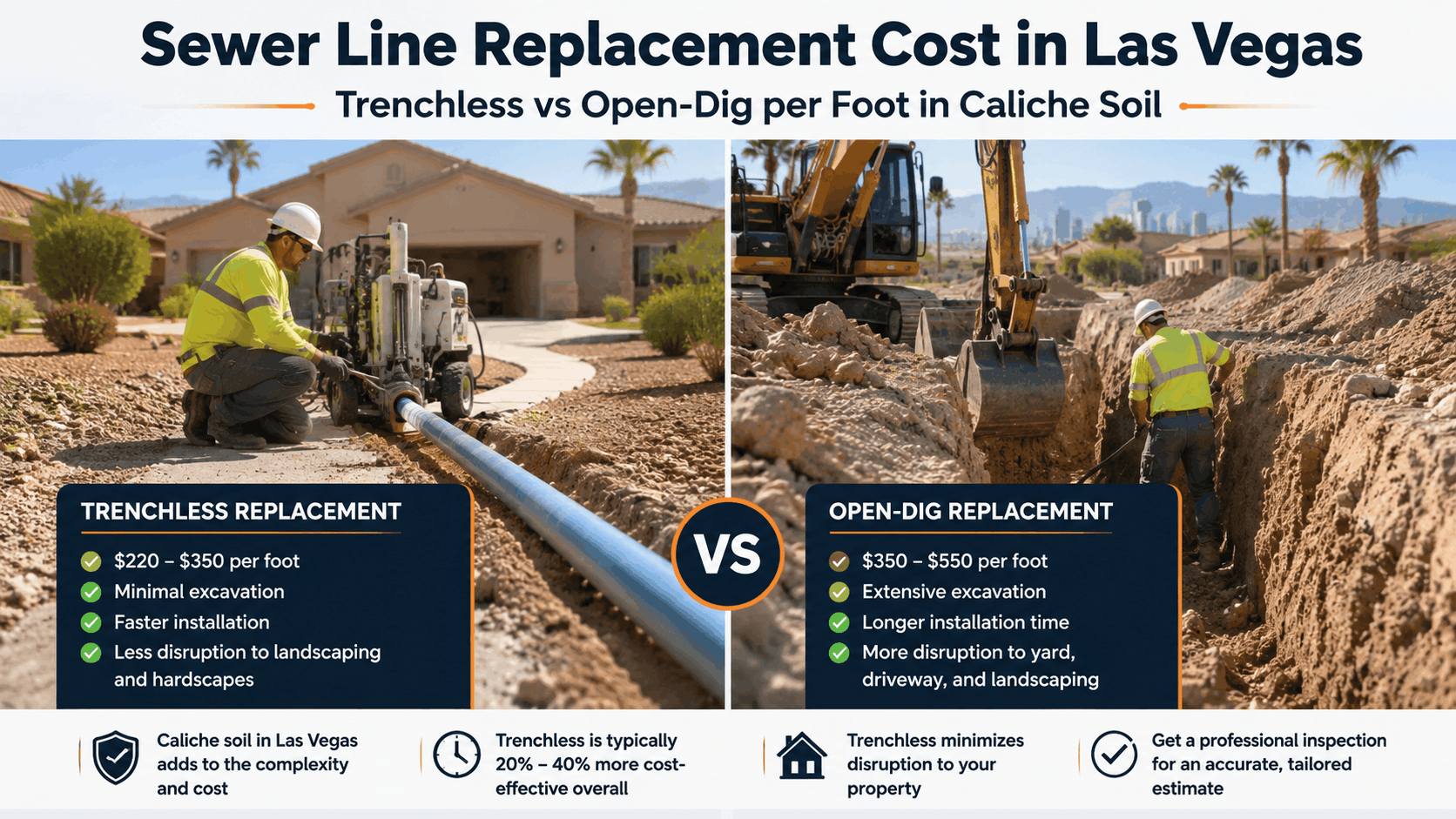
- Open-dig sewer replacement runs about $60 to $250 per foot, with the top of the range driven by heavy caliche, deep lines, and hardscape above the pipe.
- Trenchless methods cost roughly $80 to $250 per foot but often win overall because they skip expensive concrete and landscaping restoration.
- Pipe bursting installs jointless HDPE pipe rated for 50 to 100 years, while CIPP lining reinforces an intact host pipe and lasts 40 to 50 years.
- Trenchless will not work on fully collapsed pipes, bad grade, or belly sections, where open-dig is the only proper fix.
- A camera inspection should come first on every job to set an accurate scope and prevent surprise change orders.
- The City of Las Vegas and Clark County require permits and inspections, which a licensed plumber handles as part of the work.
- Honest quotes list caliche costs, permits, method, pipe length, and restoration, while lowball bids hide these until the trench is open.
In This Article
A backed-up sewer line rarely picks a good moment. One Friday night in the Huntridge district, a homeowner watched their tub gurgle and fill while dinner guests waited in the living room. By Monday, three plumbers had walked the yard, and the quotes ranged from a few thousand dollars to more than fifteen thousand. That spread left the homeowner staring at the numbers, wondering who was honest and who was padding the bill.
Here in the valley, that kind of sticker shock is common, and a big part of it comes from what sits under our feet. The caliche soil beneath most Las Vegas homes turns a routine dig into a slow grind that national price charts never account for. That single factor can swing a quote by thousands of dollars.
Why Sewer Line Replacement Costs More in Las Vegas Than Most Cities?
Sewer work in the valley plays by different rules than the rest of the country. The biggest reason is the caliche soil that sits under most valley homes, but it is not the only one. Permit rules, pipe depth, and restoration all stack on top of the base labor.
Before you read any quote, it helps to know what drives the sewer line replacement cost up. A plumber who works Las Vegas plumbing jobs every day builds these factors into the price. A national outfit or a lowball bidder often leaves them out, then hits you with change orders later.
| Cost Factor | Why It Raises the Price | Typical Impact |
|---|---|---|
| Caliche soil | Hard layer slows digging, needs heavy tools | High |
| Pipe depth | Deeper lines mean more excavation | Medium to High |
| Permits and inspections | Required by city and county | Low to Medium |
| Surface restoration | Concrete, pavers, and landscaping repair | Medium to High |
What Caliche Is and Why It Makes Digging Harder
Caliche is a hard, cement-like layer of calcium carbonate that forms under desert soil over thousands of years. It binds sand and gravel into something close to natural concrete. In parts of the valley, the caliche layer can be inches thick, and in others it runs several feet deep.
Soft-soil crews in other states can trench with a standard backhoe and be done by lunch. Here, that same trench often calls for a jackhammer, a hydraulic breaker, or a rock saw to cut through the hardpan soil. Every one of those tools adds hours and equipment cost to the job.
The harder the caliche, the slower the excavation, and the higher your final bill climbs. We have hit pockets in the northwest where a two-foot dig took most of a day. That is the reality of moving dirt in the Mojave, and it is why local experience matters when someone quotes your line.
Depth of Sewer Lines in Older vs Newer Neighborhoods
Sewer line depth changes a lot depending on when your neighborhood was built. Older areas like Huntridge and the John S. Park district often have shallower lines, sometimes only three to four feet down. Shallow lines can mean less digging, but they also tend to be older clay or cast iron that has cracked or shifted.
Newer builds in Summerlin and Mountain's Edge usually have deeper lines that follow modern grading rules. A deeper line can sit six feet down or more, which means more trench, more caliche to cut, and more spoil to haul away. That depth directly raises the labor and equipment portion of your quote.
The mix of depth and pipe age is why two homes on different streets can get very different numbers. A shallow clay line in a historic district and a deep PVC line in a master-planned community are two separate jobs. Any honest bid should reflect that difference clearly.
Permits and Inspections Through Local Authorities
Replacing a sewer line is not a job you can do off the books. The City of Las Vegas and Clark County both require a sewer permit and a set of inspections before the trench gets backfilled. Permit costs vary, but most homeowners see a few hundred dollars added to the total.
Inspectors check the slope, the connection, and the backfill to confirm the work meets code. If the line ties into a water service area, coordination with the Las Vegas Valley Water District may also come into play. Skipping these steps can cause failed resale inspections and fines down the road.
A licensed plumber pulls the Clark County permit for you and handles the inspection scheduling. That coordination is part of what you pay for with a legitimate contractor. You can review general utility guidance through the Las Vegas Valley Water District to understand how service lines connect in the valley.
Labor, Equipment, and Restoration Add-Ons
Labor hours make up a large slice of any sewer bill, and caliche stretches those hours out. A crew that would finish in a day on soft soil might need two or three days here. That labor cost is not padding - it is the price of cutting through rock-hard ground.
Equipment rental adds another layer. Breakers, saws, excavators, and haul trucks all carry daily rates, and the tougher the soil, the longer those machines stay on site. Fuel and disposal fees for hauling off caliche spoil pile on top.
Then comes surface restoration. If your line runs under a driveway, patio, or mature desert landscaping, someone has to put it back. Concrete replacement, paver resetting, and re-landscaping can add thousands, and this is where many cheap quotes go quiet. A fair bid names these costs up front so the finished yard looks right.
Get Your Quote
Tell us what's going on and we'll get back to you fast.
Open-Dig Sewer Replacement Cost Per Foot in Las Vegas
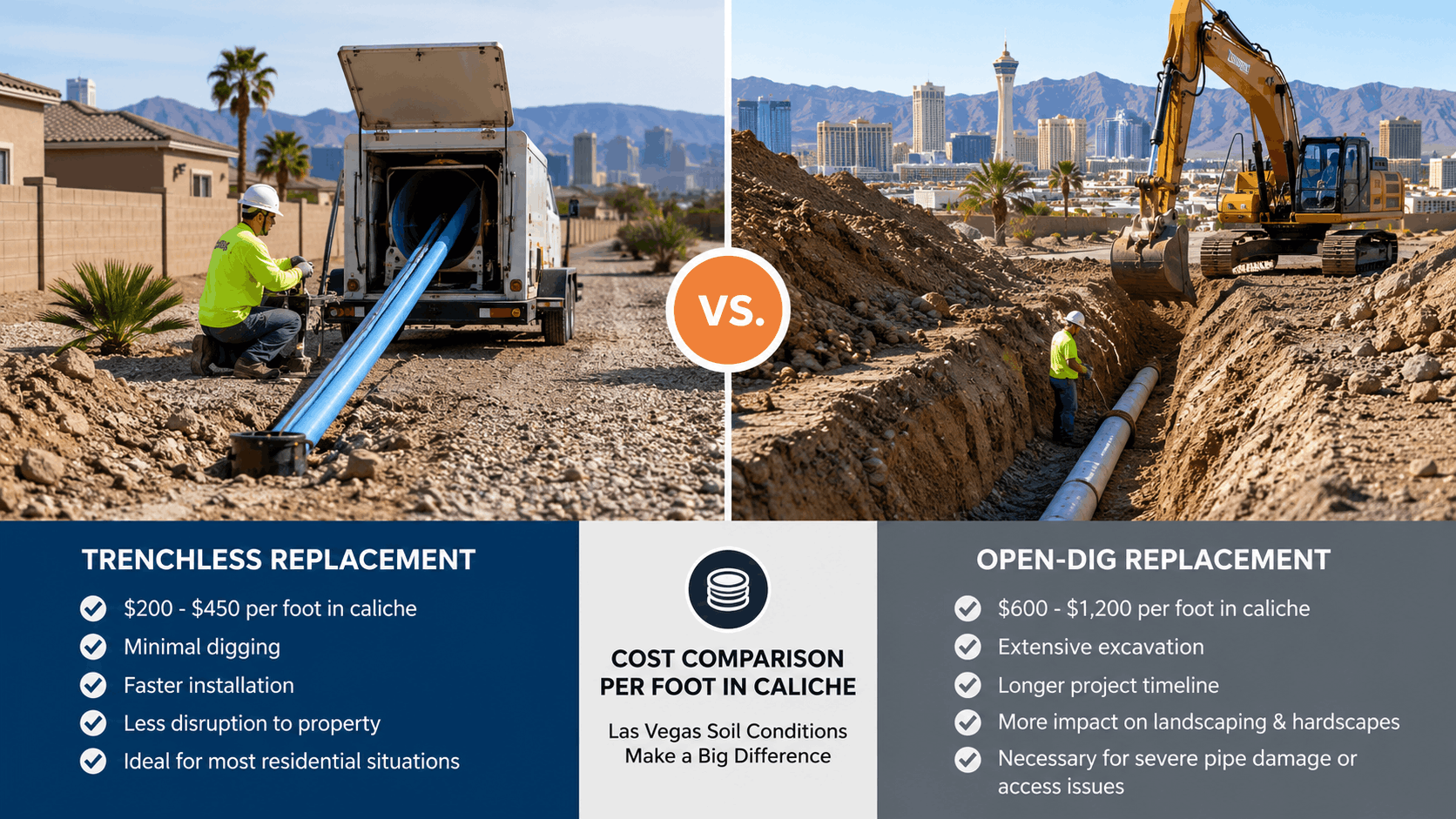
Open-dig, also called trench excavation, is the traditional method most people picture. A crew digs a trench along the full length of the line, pulls the old pipe, lays new pipe, and backfills. It is straightforward, but in caliche ground it can get expensive fast.
The open-dig sewer replacement cost per foot depends on depth, soil hardness, and what sits on top of the line. Below is a realistic range for valley conditions.
| Condition | Cost Per Foot (Open-Dig) |
|---|---|
| Shallow line, easy access, moderate caliche | $60 - $110 |
| Standard depth, typical caliche | $110 - $175 |
| Deep line, heavy caliche, under hardscape | $175 - $250+ |
Typical Per-Foot Price Range for Open Trenching
For most valley homes, open trench cost lands somewhere between $60 and $250 per foot. The wide range comes down to how much caliche the crew has to break and how deep the line sits. A shallow, accessible line in soft yard soil sits at the low end.
Caliche digging pushes the price per foot toward the top of that range. When a crew hits thick hardpan, the pace slows and the labor hours climb. A 50-foot line that would cost one number in California can cost far more here because of that single soil factor.
These are ballpark figures, not promises. The only way to get a true price is an on-site look with a camera and a locate. Our team at Active Plumbing bases every open-dig number on the actual soil and depth we find, not a generic chart.
Extra Costs When the Line Runs Under Driveways or Slabs
The path your sewer line takes matters as much as its length. A line running through open dirt is cheap to reach. A line running under a concrete driveway, a garage slab, or a paver patio is a different story.
Driveway excavation means cutting through concrete, digging, and then pouring a new slab that matches. Slab cut work near a garage or foundation calls for extra care so nothing structural gets damaged. Each of these steps adds both labor and material cost.
Mature desert landscaping adds its own bill. Boulders, established cacti, drip systems, and decorative rock all have to come out and go back. Landscaping restoration on a well-designed yard can run into the thousands, which is why the surface above the line often decides the total.
When Open-Dig Is the Better Choice
Open-dig is not outdated - sometimes it is the right call. A collapsed sewer pipe cannot be relined or burst because there is no clear path left for equipment to follow. In that case, digging is the only way to install a new line.
Severe pipe misalignment or offset joints also favor open excavation. If sections have shifted so far that a bursting head or liner cannot pass, the crew needs eyes on the pipe. Digging gives them full access to correct the grade and set new pipe properly.
Shallow, accessible lines can make open-dig cheaper than trenchless too. If a line sits three feet down in open yard with no hardscape above it, trenching is quick and the restoration is minimal. Our sewer line repair and replacement team weighs these conditions before recommending a method.
Timeline and Yard Disruption to Expect
Open-dig takes longer in caliche than in soft soil. A typical residential job runs two to four days, and heavy hardpan or hardscape can stretch that to a week. The project timeline depends on line length, depth, and how much concrete has to be cut and repoured.
Yard damage is the trade-off with this method. A full-length trench tears up grass, rock, and any hardscape along the path. You should expect an open scar across the yard until the backfill and restoration finish.
Excavation cleanup is part of a proper job. Spoil gets hauled off, the trench gets compacted, and the surface gets restored to match. When you compare quotes, confirm that cleanup and restoration are named line items and not afterthoughts.
Need Help in Las Vegas?
Active Plumbing serves Las Vegas and all of Las Vegas Valley.
Trenchless Sewer Replacement Cost Per Foot in Las Vegas
Trenchless sewer replacement fixes the line with little or no full-length digging. Instead of a long trench, crews work through small pits at each end. In caliche country, this can save a lot on restoration, but the per-foot numbers look different from open-dig.
There are two main trenchless methods homeowners hear about: pipe bursting and CIPP lining. Each has its own cost range and its own best-fit situation.
| Method | Cost Per Foot (Trenchless) | Best For |
|---|---|---|
| Pipe bursting | $100 - $250 | Full pipe replacement, same path |
| CIPP lining | $80 - $200 | Cracked but intact host pipe |
| Access pits | $500 - $2,000 each | Entry and exit points |
Pipe Bursting Cost and How It Works
Pipe bursting pulls a cone-shaped bursting head through the old pipe. The head shatters the old line outward while dragging a new HDPE pipe into place behind it. Pipe bursting cost in the valley usually runs $100 to $250 per foot depending on depth and pit conditions.
This trenchless method works well here because the hard caliche around the pipe actually helps. The surrounding hardpan holds the new pipe path steady as the burst happens. Soft soil sometimes lets the pipe wander, but valley ground keeps it on line.
The new HDPE pipe is fused into one continuous piece with no joints for roots to invade. That single feature is why pipe bursting is popular for older neighborhoods with root problems. It replaces the whole line without a full trench.
CIPP Lining Cost and How It Works
Cured-in-place pipe, or CIPP lining, is a different animal. A felt or fiberglass tube soaked in epoxy resin gets pushed into the old pipe and inflated. It cures against the host pipe wall and forms a new pipe inside the old one.
Pipe relining cost with CIPP usually runs $80 to $200 per foot. The epoxy liner works best when the host pipe is cracked or corroded but still holding its shape. If the old pipe is intact enough to guide the liner, this method avoids most digging entirely.
A liner beats a full replacement when the pipe has surface damage but no collapse. It also shines under driveways and slabs where digging would be costly. Our team runs a camera first to confirm the host pipe can support a liner before we recommend it.
Access Pits and Why Trenchless Still Needs Some Digging
Trenchless does not mean zero digging. Every trenchless job needs an access pit at the entry point and often one at the exit. These small pits let the crew feed equipment into the line.
In caliche, even a small pit takes effort. Breaking through hardpan for a four-foot-square hole still calls for a breaker or saw. That trenchless excavation cost for pits ranges from $500 to $2,000 each depending on depth and soil.
The upside is that two small pits disturb far less than a full trench. A homeowner with a nice paver driveway or mature landscaping usually saves money overall, even after paying for the pits. Fewer holes means less concrete and less re-landscaping.
When Trenchless Is Not an Option
Trenchless has real limits. A fully collapsed line leaves no path for a bursting head or a liner to follow. Once the pipe caves in, digging is the only fix.
Bad grade is another dealbreaker. If the line has lost its proper slope, relining it just locks in the same drainage problem. Trenchless keeps the existing path, so it cannot correct a pipe that runs the wrong direction.
A pipe belly - a low, sagging section that holds standing water - is the most common trenchless limitation we see in the valley. A liner cannot fix a belly because it follows the sag. In those cases, open excavation is the only way to reset the grade and drain the line right.
Trenchless vs Open-Dig: A Side-by-Side Cost Breakdown
Homeowners want a clear trenchless vs open-dig answer, but the honest reply is that it depends on your yard. The two methods differ on price, time, and disruption. A smart cost comparison looks at the full picture, not just the per-foot rate.
Here is how sewer repair Las Vegas jobs stack up when you set the two methods next to each other.
| Factor | Open-Dig | Trenchless |
|---|---|---|
| Per-foot cost | $60 - $250 | $80 - $250 |
| Restoration cost | High | Low |
| Timeline | 2 - 7 days | 1 - 3 days |
| Yard disruption | Heavy | Minimal |
Upfront Price Difference Per Foot
Look at raw per-foot numbers and trenchless often appears pricier. Pipe bursting and lining carry higher base rates than a simple shallow trench. That upfront cost makes some homeowners flinch before they see the full math.
The per foot comparison changes once you add everything up. Open-dig may cost less per foot but requires far more restoration. Trenchless costs more per foot but leaves your yard mostly intact.
The total project cost is what actually matters. A line under a concrete driveway can swing the entire decision toward trenchless once you price the slab work. We always quote both methods so you can see the true numbers side by side.
Restoration Costs That Change the Real Total
Restoration is where the math flips. A trench across a decorative rock yard, a paver patio, or a poured driveway means real hardscape repair. That restoration cost can rival the plumbing itself.
Concrete replacement alone can run several thousand dollars for a driveway crossing. Pavers have to be lifted and reset, and desert landscaping has to be rebuilt boulder by boulder. These hidden costs rarely show up on a bare per-foot quote.
Trenchless skips most of that. With only two small pits, there is far less to put back. For homes with finished yards, the restoration savings often make trenchless the cheaper choice overall even at a higher per-foot rate.
Long-Term Durability of Each Method
Pipe lifespan matters when you are spending this kind of money. New HDPE pipe installed by bursting is fused, jointless, and rated to last 50 to 100 years. Its HDPE durability holds up well in the shifting, mineral-heavy valley soil.
CIPP liners typically last 40 to 50 years, which is strong but shorter than a full HDPE replacement. New PVC installed by open-dig also carries a long life when it is bedded and graded correctly. Each option offers solid long-term value when the work is done right.
The best method for durability depends on the current pipe. Bursting gives you an all-new line. Lining reinforces an existing one. We match the method to your pipe condition so the fix lasts decades, not years.
Which Method Fits Which Neighborhood
Neighborhood conditions steer the choice more than most people expect. On a tight lot in Summerlin with limited yard access and finished hardscape, trenchless usually wins. There is simply no room for a long open trench, and the restoration would be brutal.
Older homes with shallow lines tell a different story. In areas like Rancho Circle, where lines sit shallow and yards are open, open-dig can be quick and affordable. Lot size, hardscape, and pipe depth all feed the decision.
We have worked streets across the valley and learned that no two blocks are the same. A home in Mountain's Edge and one in a historic central district need different plans. The right method comes from reading the actual conditions on your property.
How Caliche Soil Changes the Job for Local Homeowners
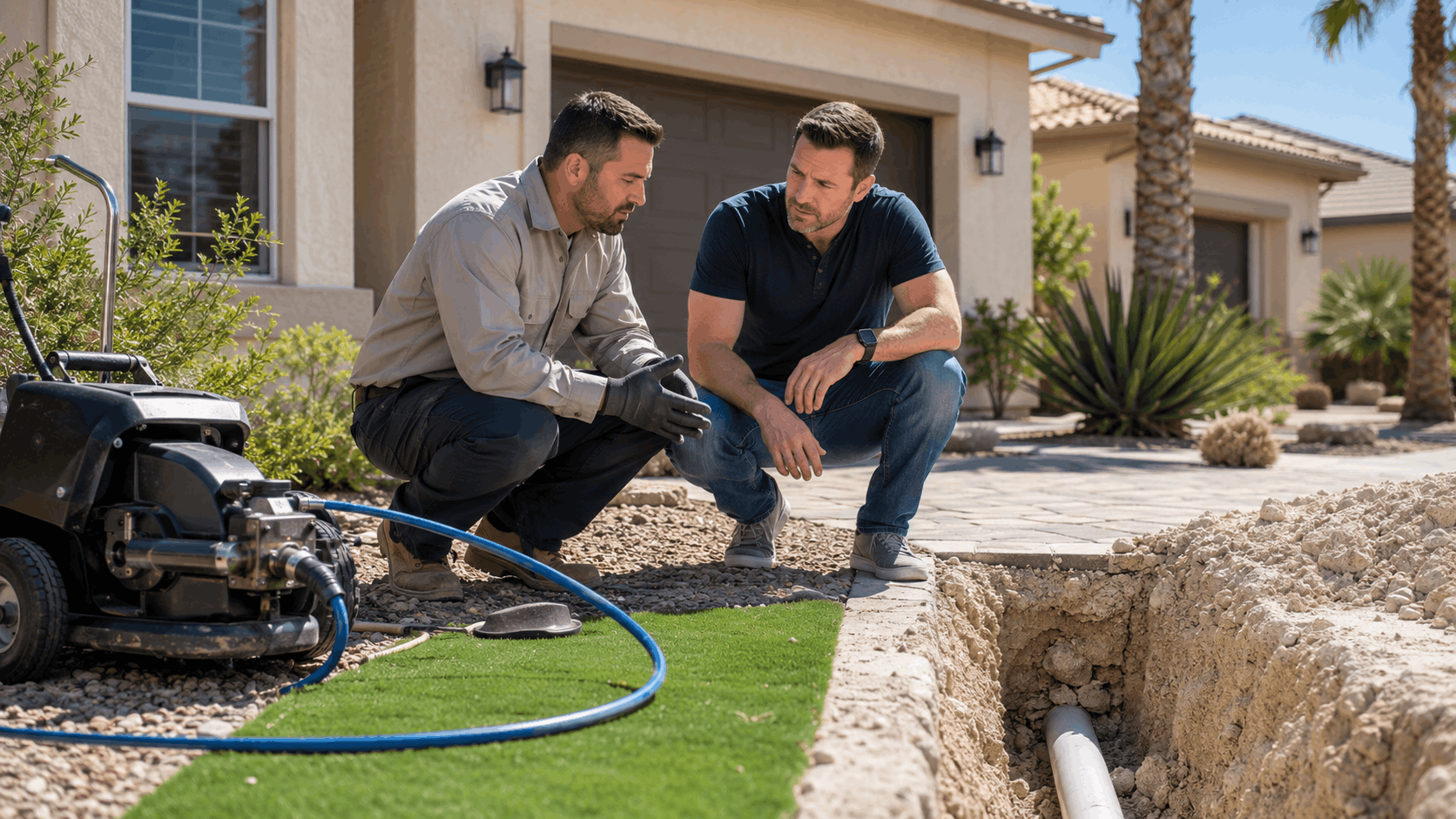
Caliche soil touches every stage of a sewer project, from the first bid to the final backfill. It is the reason valley quotes look nothing like the numbers you find online. Understanding hardpan excavation helps you judge whether a quote is fair.
A Las Vegas sewer job is a different animal than the same repair in Phoenix or Denver. The ground fights back here, and that fight shows up on the invoice.
Why National Cost Estimates Do Not Apply Here
Online cost calculators are built around soft, diggable soil. They assume a backhoe can trench quickly and cleanly. Those tools give a national average that badly underestimates valley work.
When caliche enters the picture, the whole cost estimate shifts upward. A dig that takes two hours in Ohio can take a full day here. The soil conditions, not greed, drive the higher local price.
Homeowners who anchor to an online number often feel blindsided by real quotes. The fix is to get a local estimate based on actual soil. That is the only figure that reflects what your job truly involves.
Areas With the Thickest Caliche Layers
Caliche is not uniform across the valley. Some areas have a thin crust, while others sit on dense, deep hardpan. The northwest near Centennial Hills is known for thick caliche that slows every dig.
The southwest near Enterprise runs heavy too. Crews working these zones plan for extra breaking time and heavier equipment from the start. Thick caliche in these areas can add a full day or more to a project.
Central and older neighborhoods vary block by block. We have hit soft pockets and rock-hard slabs within the same street. Local experience helps us predict what a given area will bring before the first shovel goes in.
How Tree Roots and Old Clay Pipe Add Problems
Older parts of the valley often have clay pipe or cast iron sewer lines. These materials crack, corrode, and shift over decades. Once they fail, patching rarely holds, and full replacement becomes the smart move.
Root intrusion makes it worse. Mature trees in established neighborhoods send roots straight toward the moisture in a cracked line. Those roots pry joints apart and clog the pipe from the inside.
When old clay pipe meets aggressive roots, a spot repair just buys a little time. Our hydro jetting and rooter service can clear roots short term, but a failing line usually needs replacing. A camera inspection shows exactly how far the damage runs.
Seasonal Timing and Summer Heat Considerations
Summer heat in the valley is brutal on excavation crews. Working a trench in 110-degree July sun slows the pace and raises safety concerns. Crews take more breaks and shift start times earlier to beat the worst heat.
Project scheduling gets tighter in peak summer for that reason. The work still gets done, but timelines can stretch. Emergencies do not wait for cooler weather, and our emergency plumbing team handles urgent sewer failures year round.
For planned replacements, fall and spring are the easiest excavation seasons. Milder temps let crews move faster and finish sooner. If your line is failing slowly, scheduling in a cooler window can save time and stress.
Need Help in Las Vegas?
Active Plumbing serves Las Vegas and all of Las Vegas Valley.
How to Read a Sewer Replacement Quote and Avoid Overpaying
A good sewer quote tells you exactly what you are paying for. A bad one hides the real costs until the crew is already digging. Knowing how to read a plumbing estimate is the best way to avoid overpaying.
Here is what to look for and what should make you pause.
Line Items Every Honest Quote Should Include
An itemized quote should spell out each part of the job. Look for these line items before you sign anything:
- Camera inspection to confirm the problem and scope
- Permit fees for the City of Las Vegas or Clark County
- Excavation or trenchless labor with a clear method named
- New pipe material and length in feet
- Surface restoration for concrete, pavers, or landscaping
- Cleanup and haul-off of spoil
When each item is listed, nothing gets buried. You can compare two bids line by line and see where they differ. A vague single-price quote hides too much to trust.
A clear quote also protects you if the job changes. If a surprise shows up, you can see which line it affects. That transparency is a sign of a plumber who works honestly.
Red Flags That Signal a Lowball or Padded Bid
Some quotes look cheap on purpose. Watch for these red flags that signal a lowball or padded bid:
- No caliche or hard-soil cost mentioned anywhere
- Vague per-foot pricing with no depth or method noted
- No camera inspection before the number was given
- Restoration left off entirely or labeled as extra later
- Cash-only pressure or no written contract
A quote that ignores caliche is either inexperienced or planning a change order. Either way, the low number will not hold. Hidden fees tend to appear once the trench is open and you have no leverage.
The safest quotes come from local plumbers who name the soil and the method. If a bid seems far below the rest, ask what it leaves out. There is almost always a reason for the gap.
Why a Camera Inspection Should Come First
A sewer camera inspection sets the scope before anyone bids. It shows the pipe material, the damage, the depth, and any belly or root intrusion. Without it, a plumber is guessing.
That guess turns into change orders once the crew finds the real condition. A camera locates the exact problem so the scope of work is set from day one. It is the single best tool for avoiding surprise costs mid-job.
Our sewer camera inspection service runs the line first on every replacement. We show you the footage so you see exactly what we see. An accurate scope means an accurate price.
Questions to Ask Before Signing
Before you sign any contract, ask a few direct questions:
- Are you a licensed plumber in Nevada, and can I see proof?
- What warranty covers the pipe and the workmanship?
- Does the quote include full restoration of my driveway and landscaping?
- Who pulls the permit and schedules inspections?
- How is cleanup handled when the job is done?
A confident contractor answers these without hesitation. Licensing protects you, and a workmanship warranty shows the plumber stands behind the job. If a contractor dodges any of these, keep looking.
Clear answers up front prevent disputes later. Get the warranty and restoration terms in writing. A trustworthy plumber will put it all on paper.
How Active Plumbing Handles Sewer Line Replacement in Las Vegas
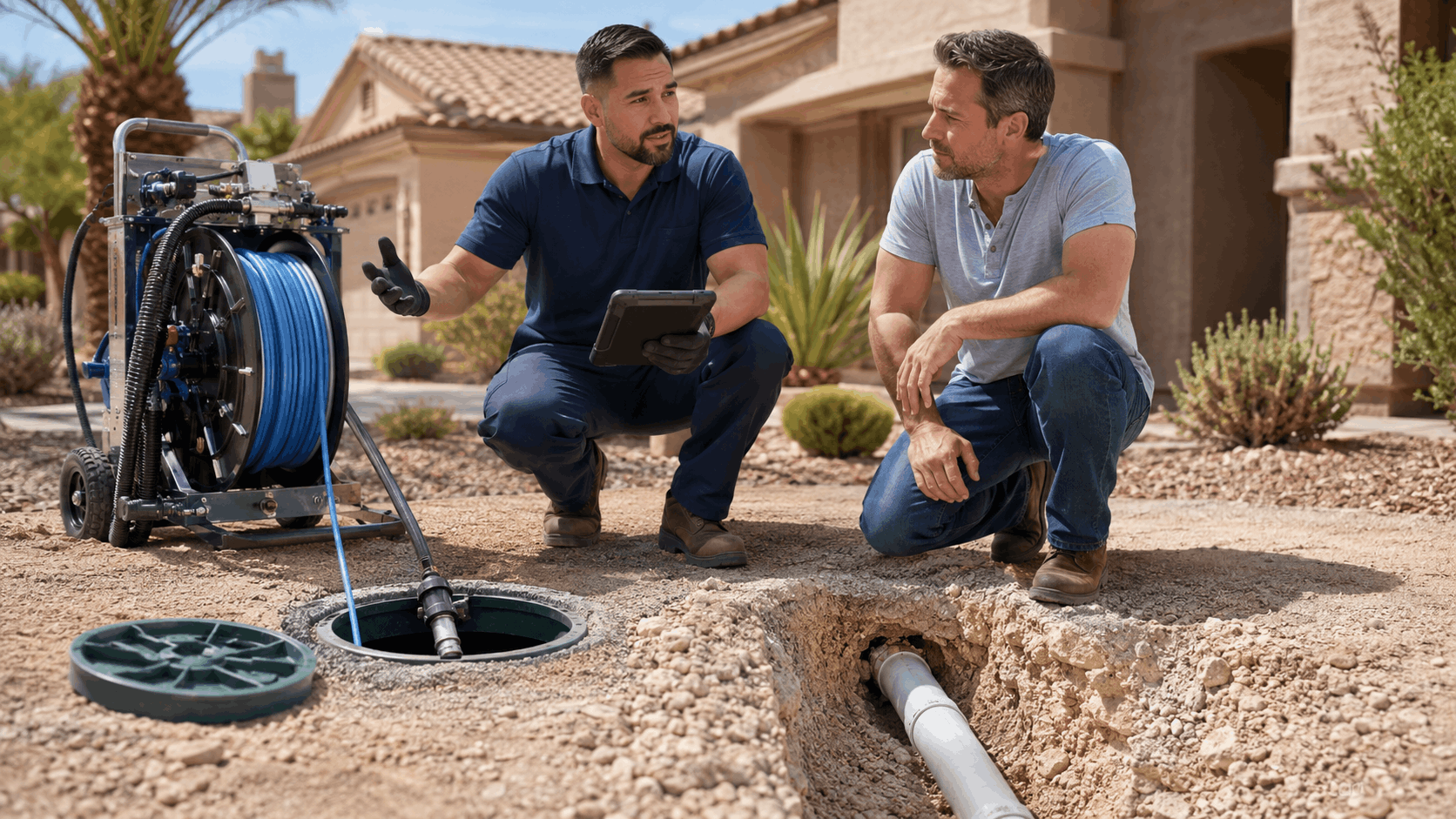
Our team has replaced sewer lines across the valley for years, and we know the caliche well. We treat every job with the same steady process, from the first camera pass to the final restoration. Here is how Active Plumbing approaches sewer line replacement as your local Las Vegas plumbers.
Our Camera Diagnosis and Quote Process
We start every replacement with a camera diagnosis. The team runs a camera line down the sewer, locates the exact problem, and measures the depth and length. That footage tells us the pipe material and whether roots, cracks, or a belly are involved.
From that sewer inspection, we build a flat scope and flat pricing. You get one number that covers the method, the pipe, the permit, and the restoration. No vague per-foot guessing and no surprise add-ons after the dig starts.
We walk you through the footage so you understand the problem yourself. Seeing the cracked clay or root ball on screen makes the quote easy to trust. Then you decide with the full picture in front of you.
Trenchless and Open-Dig Options We Offer
We offer both trenchless repair and open-dig replacement because no single method fits every home. For lines with intact host pipe, CIPP lining keeps the yard whole. For full replacements, pipe bursting pulls in new HDPE with minimal digging.
When a line has collapsed or lost its grade, open-dig is the right call, and we handle that too. Our method selection comes from the actual soil, depth, and pipe condition we find on your property. We explain why we recommend one approach over the other.
Because we run both methods in house, our advice is not tied to selling one product. We pick what saves you money and lasts the longest. That neutral read is what you want from a local crew that knows the ground.
Neighborhoods and Areas We Serve
We work sewer jobs across the whole valley. Our service area covers Henderson, Summerlin, North Las Vegas, Enterprise, Spring Valley, Paradise, and the central historic districts.
From the shallow clay lines of older central neighborhoods to the deep PVC runs in master-planned communities, we know what each area brings. We have broken caliche from Centennial Hills to Lake Las Vegas. That range of experience means fewer surprises on your job.
Wherever your home sits, we bring the right tools for that soil. Local knowledge saves time, and saved time saves you money. You can see our full service area coverage to confirm we reach your street.
Cleanup, Restoration, and Warranty
The job is not done when the pipe is in. We restore concrete, reset pavers, and rebuild desert landscaping so your yard looks right again. Cleanup and haul-off of spoil are part of every quote, never an afterthought.
We back our work with a workmanship warranty so you are covered after we leave. If something related to our install goes wrong, we come back and make it right. That standard is why so many valley homeowners call us again.
Restoration and warranty are written into the scope from the start. You know exactly what your yard will look like and how long the work is protected. That is how a sewer replacement should end - clean, complete, and guaranteed.
Need Help in Las Vegas?
Active Plumbing serves Las Vegas and all of Las Vegas Valley.
Final Thoughts
Sewer line replacement in Las Vegas costs more than national charts suggest, and caliche soil is the main reason. Open-dig runs roughly $60 to $250 per foot, while trenchless lands between $80 and $250, with restoration often deciding the true total. The right method depends on your pipe condition, line depth, and what sits above the line.
A camera inspection first, a clear itemized quote, and a licensed local crew are your best protection against overpaying. If your line is backing up or you are staring at quotes that do not add up, our team is ready to help. Call Active Plumbing or reach out through our contact page for a camera diagnosis and a flat, honest quote built for valley soil.
Frequently Asked Questions
How much does sewer line replacement cost per foot in Las Vegas?
Open-dig sewer replacement usually runs $60 to $250 per foot in the valley, while trenchless methods land between $80 and $250 per foot. Caliche soil pushes both toward the higher end because the hard ground slows digging and needs heavier equipment. Line depth and hardscape above the pipe also affect the number. A camera inspection gives you the only accurate figure for your specific line.
Is trenchless cheaper than open-dig in caliche soil?
Trenchless often costs more per foot upfront, but it can win once restoration is added. Open-dig requires a full trench, which means cutting and replacing concrete, pavers, and landscaping. In caliche, that restoration gets expensive fast. Trenchless uses only small access pits, so for homes with finished yards or driveways over the line, it frequently ends up cheaper overall.
How long does a sewer line replacement take?
Trenchless jobs usually finish in one to three days because there is less digging and restoration. Open-dig takes two to four days for a standard line, and heavy caliche or hardscape can stretch it to a week. Line length, depth, and how much concrete must be cut all affect the timeline. Summer heat can slow crews and add time as well.
Do I need a permit to replace my sewer line?
Yes. The City of Las Vegas and Clark County both require a sewer permit and inspections before the trench is backfilled. Inspectors check slope, connection, and backfill to confirm the work meets code. A licensed plumber pulls the permit and schedules the inspections as part of the job. Skipping this step can cause fines and failed resale inspections later.
Why does caliche make the job cost more?
Caliche is a hard, cement-like calcium layer under valley soil. Standard backhoes cannot cut through it, so crews use jackhammers, hydraulic breakers, or rock saws. That slows the dig and adds labor hours and equipment cost. A trench that takes hours in soft soil can take a full day in thick caliche, which raises the final bill.
How do I know if my sewer line needs replacing or just repair?
Warning signs include repeated backups, slow drains across the whole house, gurgling toilets, and sewage smells in the yard. A sewer camera inspection is the only way to know for sure. It shows whether the pipe has a spot crack that can be lined or repaired, or full collapse and belly issues that require replacement. The footage sets the honest scope.
Does homeowners insurance cover sewer line replacement?
Standard homeowners policies often exclude sewer line replacement, since it is usually treated as normal wear and tear. Some insurers offer a separate service line endorsement that can help cover the lateral between your home and the main. Coverage varies widely, so check your policy and ask your agent directly. Keep the camera footage and quote for any claim.
How long will a new sewer line last?
New HDPE pipe installed by bursting is fused and jointless, rated to last 50 to 100 years. PVC installed by open-dig also carries a long life when bedded and graded correctly. CIPP epoxy liners typically last 40 to 50 years. In valley soil, all three hold up well when the install is done right by a local crew that knows caliche.
Can trenchless work on older homes in central Las Vegas?
Often, yes. Trenchless works on older clay or cast iron lines as long as the host pipe holds its shape and the grade is still correct. Pipe bursting can replace a failing clay line entirely with new HDPE. But a fully collapsed pipe or a bad belly rules trenchless out. A camera inspection confirms which older lines qualify.
Who pays if the sewer damage is between my house and the city main?
The homeowner is usually responsible for the sewer lateral, which is the pipe running from the house to the connection at the city main. The utility maintains the main itself. Where the responsibility line falls can vary, so it is worth confirming with the local authority. A camera locate shows exactly where the damage sits relative to that line.
Frequently Asked Questions
- How much does sewer line replacement cost per foot in Las Vegas?
- Open-dig sewer replacement usually runs $60 to $250 per foot in the valley, while trenchless methods land between $80 and $250 per foot. Caliche soil pushes both toward the higher end because the hard ground slows digging and needs heavier equipment. Line depth and hardscape above the pipe also affect the number. A camera inspection gives you the only accurate figure for your specific line.
- Is trenchless cheaper than open-dig in caliche soil?
- Trenchless often costs more per foot upfront, but it can win once restoration is added. Open-dig requires a full trench, which means cutting and replacing concrete, pavers, and landscaping. In caliche, that restoration gets expensive fast. Trenchless uses only small access pits, so for homes with finished yards or driveways over the line, it frequently ends up cheaper overall.
- How long does a sewer line replacement take?
- Trenchless jobs usually finish in one to three days because there is less digging and restoration. Open-dig takes two to four days for a standard line, and heavy caliche or hardscape can stretch it to a week. Line length, depth, and how much concrete must be cut all affect the timeline. Summer heat can slow crews and add time as well.
- Do I need a permit to replace my sewer line?
- Yes. The City of Las Vegas and Clark County both require a sewer permit and inspections before the trench is backfilled. Inspectors check slope, connection, and backfill to confirm the work meets code. A licensed plumber pulls the permit and schedules the inspections as part of the job. Skipping this step can cause fines and failed resale inspections later.
- Why does caliche make the job cost more?
- Caliche is a hard, cement-like calcium layer under valley soil. Standard backhoes cannot cut through it, so crews use jackhammers, hydraulic breakers, or rock saws. That slows the dig and adds labor hours and equipment cost. A trench that takes hours in soft soil can take a full day in thick caliche, which raises the final bill.
- How do I know if my sewer line needs replacing or just repair?
- Warning signs include repeated backups, slow drains across the whole house, gurgling toilets, and sewage smells in the yard. A sewer camera inspection is the only way to know for sure. It shows whether the pipe has a spot crack that can be lined or repaired, or full collapse and belly issues that require replacement. The footage sets the honest scope.
- Does homeowners insurance cover sewer line replacement?
- Standard homeowners policies often exclude sewer line replacement, since it is usually treated as normal wear and tear. Some insurers offer a separate service line endorsement that can help cover the lateral between your home and the main. Coverage varies widely, so check your policy and ask your agent directly. Keep the camera footage and quote for any claim.
- How long will a new sewer line last?
- New HDPE pipe installed by bursting is fused and jointless, rated to last 50 to 100 years. PVC installed by open-dig also carries a long life when bedded and graded correctly. CIPP epoxy liners typically last 40 to 50 years. In valley soil, all three hold up well when the install is done right by a local crew that knows caliche.
- Can trenchless work on older homes in central Las Vegas?
- Often, yes. Trenchless works on older clay or cast iron lines as long as the host pipe holds its shape and the grade is still correct. Pipe bursting can replace a failing clay line entirely with new HDPE. But a fully collapsed pipe or a bad belly rules trenchless out. A camera inspection confirms which older lines qualify.
- Who pays if the sewer damage is between my house and the city main?
- The homeowner is usually responsible for the sewer lateral, which is the pipe running from the house to the connection at the city main. The utility maintains the main itself. Where the responsibility line falls can vary, so it is worth confirming with the local authority. A camera locate shows exactly where the damage sits relative to that line.
A
Licensed plumbing professionals serving Las Vegas and Las Vegas Valley.
Licensed in Nevada · License #0047021
Last updated on
Why trust Active Plumbing?
Founded in 1991, Active Plumbing is a licensed and insured plumber serving Las Vegas and Las Vegas Valley. All content is reviewed by our licensed technicians.

Need Help in Las Vegas?
Active Plumbing serves Las Vegas and all of Las Vegas Valley.
Related Articles
Cost Guides
Clark County Sewer Permit Costs and Timeline for Bathroom Additions
A clear guide to Clark County sewer permit costs and timelines for bathroom additions, including fees, the permit process, neighborhood factors, and how Active Plumbing helps Las Vegas homeowners.
Cost Guides
Kitec Plumbing Replacement Cost in Las Vegas - and Why Insurers and Buyers Force the Issue
Kitec plumbing replacement cost in Las Vegas explained, plus why insurers and buyers force the issue. Real price ranges, the repipe process, and how to pick a plumber.
Cost Guides
Tankless Water Heater Installation Cost in Las Vegas: Gas Line Upsizing, Venting, and Permit Line Items
A clear breakdown of tankless water heater installation cost in Las Vegas, including gas line upsizing, venting, permits, and hard water factors for valley homes.