Safety & Prevention
Sewage Backing Up Into a Las Vegas Shower - Containment, Health, and the First Call
Key Takeaways
- Sewage in a shower usually signals a main sewer line blockage, since the shower sits at the lowest drain point in the home.
- Stop all water use immediately, contain the area with towels or plastic, cut power to wet rooms, and document damage before cleanup.
- Raw sewage carries bacteria and viruses like E. coli and hepatitis A, so children, elderly, pregnant, and immune-compromised people must stay away.
- Call a licensed plumber first to stop the source, then involve the water district only if the blockage is confirmed in the public main.
- A sewer camera inspection pinpoints roots, cracks, or clogs so the plumber can choose snaking, hydro jetting, or a line repair.
- Older neighborhoods like Huntridge, John S. Park, and Paradise Palms face higher risk from aging clay pipes and mature tree roots.
- Prevent future backups by avoiding wipes and grease, scheduling routine cleaning and camera checks, and installing a backwater valve.
- Local experience with caliche soil, Clark County permits, and valley neighborhoods leads to faster, longer-lasting sewage repairs.
In This Article
It usually starts on an ordinary morning. A homeowner in Huntridge steps into the bathroom, and instead of clean water running down the shower drain, dark and murky water is slowly rising up out of it. The smell hits next, sharp and unmistakable. That moment is scary, and it is also a warning sign that something is wrong deep in the plumbing system.
We have answered hundreds of these calls across the valley, from mid-century homes near John S. Park to newer builds in Summerlin. The pattern is almost always the same. Dirty water in a shower is rarely a shower problem. It points to a blockage further down the line, and how a homeowner reacts in the first hour matters for their health and their home.
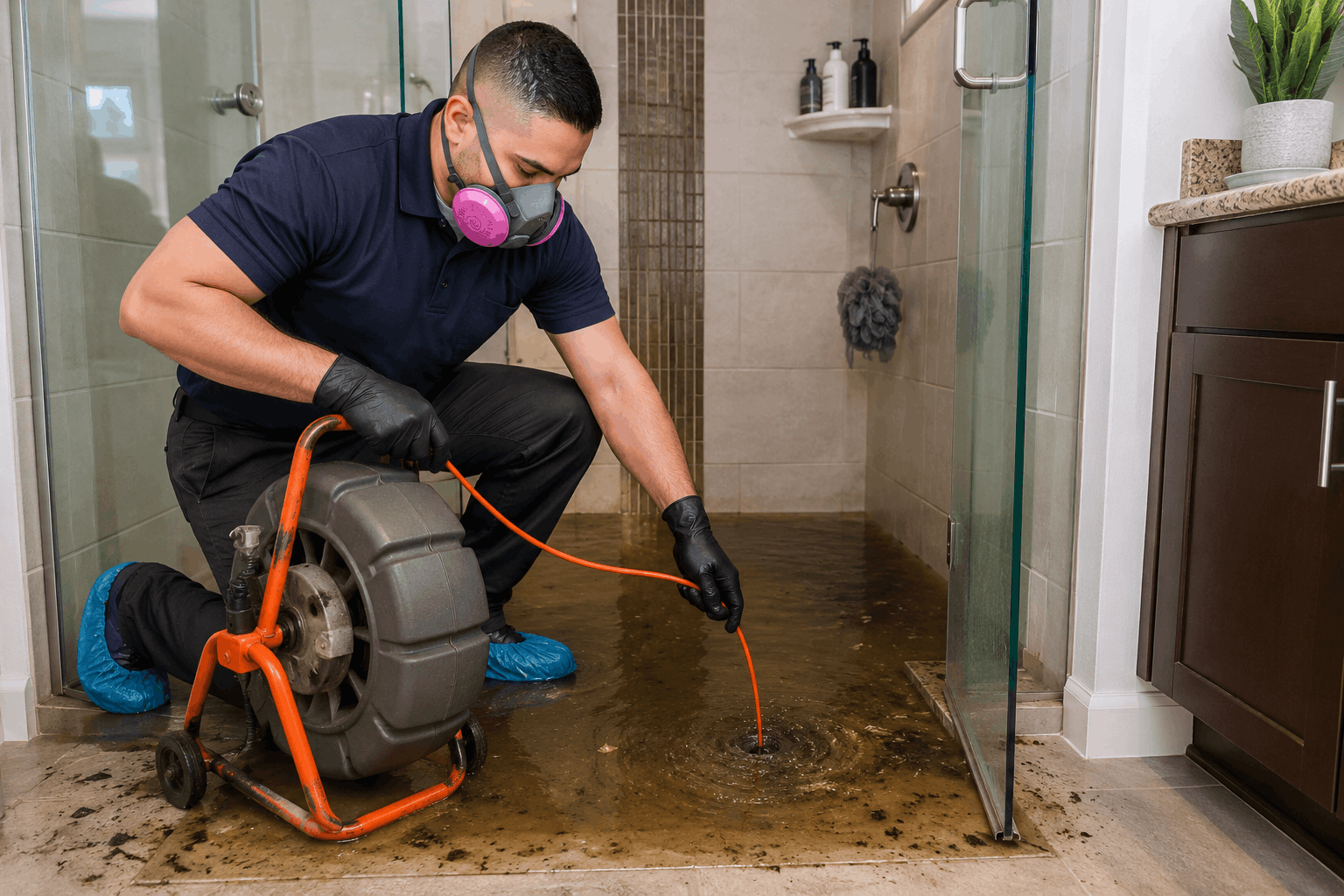
What a Sewage Backup in Your Shower Actually Means?
When wastewater comes up through a drain, it is trying to tell you something. The water is not appearing out of nowhere. It is backing up because it has nowhere else to go, and the shower happens to be the easiest exit.
A true sewage backup is different from a slow sink. It signals a problem with the drain path that carries waste away from the whole house. Learning the difference helps a homeowner know how serious the situation is.
- Sewage backup: contaminated water flowing back into the home through a drain
- Shower drain: often the first fixture to show trouble
- Main line clog: a blockage in the pipe serving the entire house
Why the Shower Is Often the First Place It Shows Up
Water always follows gravity. Inside a home, every drain feeds into larger pipes that slope downward toward the main sewer line. The shower and bathtub sit at the lowest drain point in most houses, usually because they are set right on the slab with almost no lip.
When the main line clogs, wastewater cannot leave the house. It backs up and looks for the lowest opening it can find. A toilet has a higher trap and a raised bowl, and sinks sit up on cabinets, so the shower or tub wins that race almost every time.
This gravity drainage path is why a homeowner may flush a toilet in one room and watch the shower fill in another. The two fixtures are connected through the same buried pipe. Once you understand that the shower is the low spot, the rising water makes a lot more sense.
We tell homeowners to think of the drain system like a funnel tipped sideways. The narrow end is the blocked main line, and the shower is the wide mouth where everything spills out first. That mental picture helps people react faster instead of assuming it is a minor issue.
Clogged Drain Versus a Main Sewer Line Backup
A single slow drain is usually a local problem. If only the bathroom sink drains slowly and everything else works fine, the clog is probably in that one fixture's trap or branch line. That is annoying but not an emergency.
A main sewer line backup behaves very differently. The trouble shows up in more than one place at the same time, and the water is often dark or smells of sewage. This is a whole-house issue, not a single-fixture issue.
Watch for these multiple fixture backup warning signs that point to the main line:
- The shower gurgles when you flush a toilet
- Two or more drains are slow or backing up at once
- Water rises in the tub when the washing machine drains
- A gurgling sound comes from the lowest toilet in the house
- Sewage odor near floor drains or cleanouts
When several fixtures act up together, the odds strongly favor a main sewer line blockage. That kind of problem needs professional drain and sewer help, and our drain and sewer services team handles exactly these situations across the valley.
Common Causes in Las Vegas Homes
The desert creates its own set of plumbing problems. Hard water buildup is one of the biggest. Our valley water carries heavy minerals, and over time scale coats the inside of pipes and narrows the path water can travel.
Grease and so-called flushable wipes are the next major culprits. Grease cools and hardens inside the line, then catches wipes, hair, and hygiene products until a solid plug forms. We pull these clogs out of homes every single week.
Tree roots are a quieter threat. Roots chase the moisture and nutrients inside sewer pipes, and once they find a small crack or loose joint, they grow inside and choke the flow. Older neighborhoods with mature landscaping see this constantly.
Desert soil movement adds one more layer. The ground here shifts and dries, and that motion can create pipe cracks in older clay lines. A cracked pipe lets in dirt and roots and eventually gives way to a full backup.
Older Pipes in Established Valley Neighborhoods
Mid-century neighborhoods carry the highest risk. Homes in John S. Park, Huntridge, and Paradise Palms were built decades ago, often with clay or older cast-iron sewer lines. Those materials simply were not made to last forever.
Aging sewer lines break down in predictable ways. Joints separate, clay cracks, and roots move in through every gap. A pipe that worked fine for forty years can start failing quickly once the first crack forms.
These areas also have the biggest trees. The tall, thirsty shade trees that make Huntridge and John S. Park so charming send roots straight toward the moisture in old sewer pipes. Beauty above ground often means trouble below it.
We keep detailed notes on how homes in each older pocket of the valley tend to fail, which lets us arrive with the right gear the first time. If you live in one of these established areas, treat any repeat slow drain as an early warning, not a fluke.
Get Your Quote
Tell us what's going on and we'll get back to you fast.
First Steps to Contain the Mess Safely
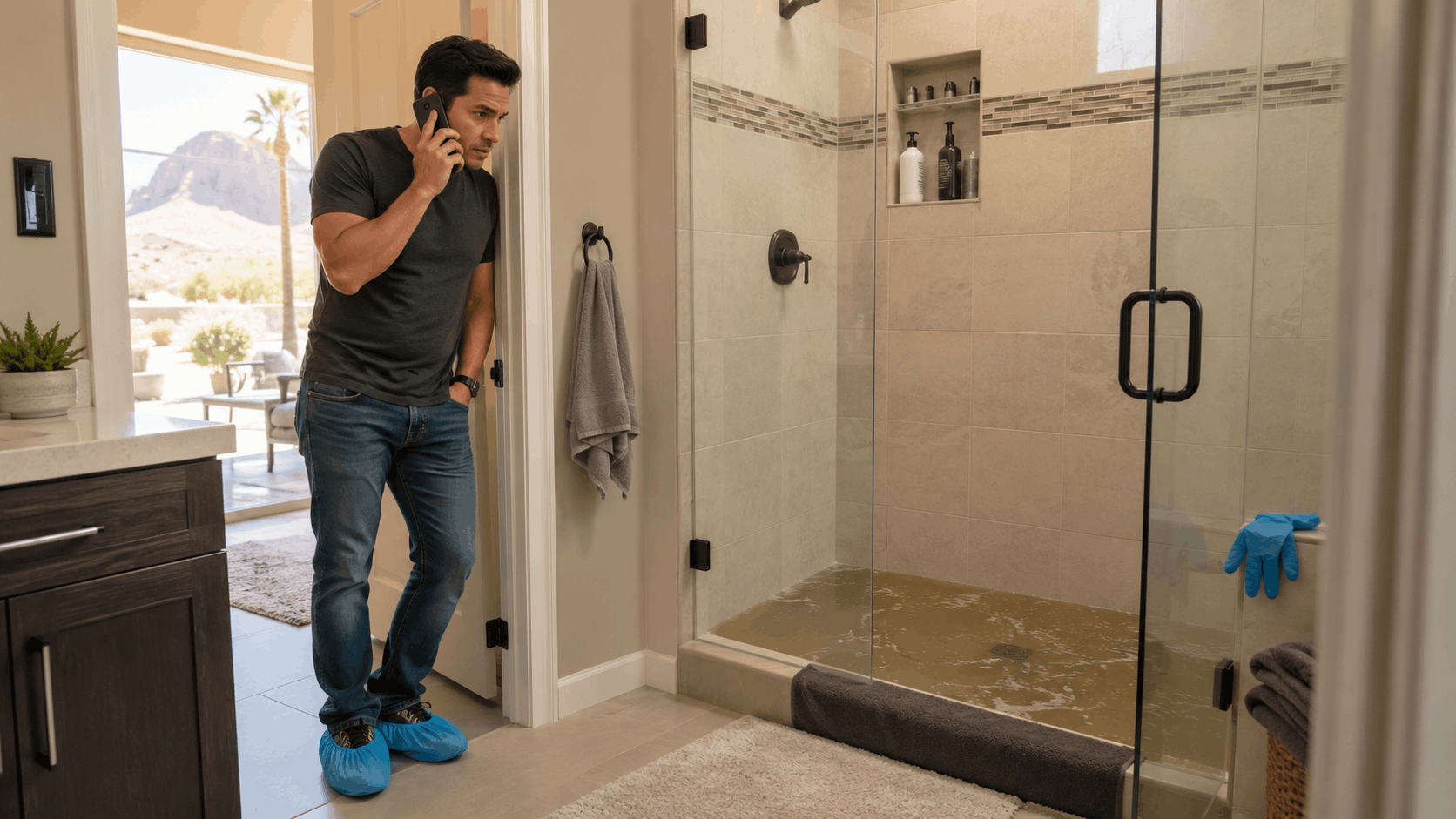
The first hour matters more than most people realize. Fast, calm action limits how far the contaminated water spreads and how much of the home it damages. None of these steps require special tools.
The goal of sewage containment is simple: stop making it worse and keep the mess in one spot. Good water damage prevention in these first minutes can save thousands of dollars in flooring and drywall.
- Stop all water use immediately
- Contain the affected room
- Cut power to wet areas
- Document everything before cleanup
Stop Using Water Right Away
The most important move is to stop water use everywhere in the home. Every flush, faucet, and appliance cycle sends more water toward a line that already cannot drain. That water has only one place to go, and it comes right back up the shower.
Tell everyone in the house to pause. No showers, no dishwasher, no laundry, and no flushing toilets. This single step does more to prevent overflow than anything else a homeowner can do before help arrives.
We have seen a small backup turn into a flooded bathroom because someone ran a load of laundry without thinking. The washer dumps many gallons fast, and all of it hits the blocked line at once. A quiet house buys time until the crew arrives.
If the home has a water shutoff valve that is easy to reach, some families choose to shut it off entirely to remove the temptation. That is a reasonable move when children or many people share the space and cannot easily coordinate.
Block and Contain the Affected Area
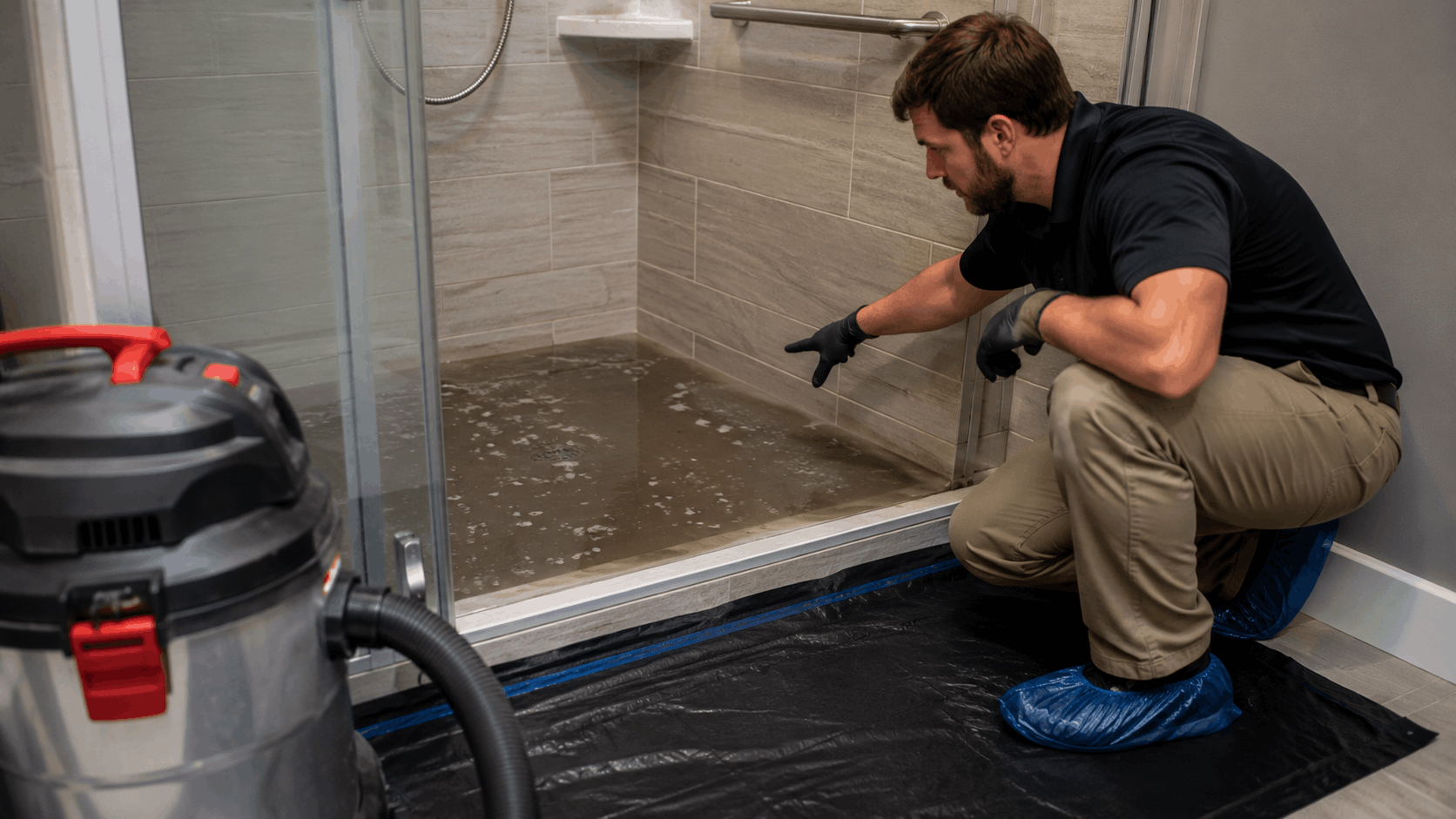
Once water use stops, the next job is keeping the contaminated water from spreading. Old towels, rolled bath mats, and plastic sheeting can build a low barrier at the bathroom doorway. The idea is to hold the water on hard flooring and off carpet or into other rooms.
Sandbags or rolled mats work well as a dam across a threshold. Push them down firmly and layer plastic sheeting behind them so the water pools instead of creeping under the door. Even a bath towel wall slows the spread enough to matter.
Keep children and pets far away from the entire area. Contaminated water carries bacteria that can make anyone sick, and a curious child or dog can track it through the whole house in seconds. Close the door and treat the room as off limits.
Do not try to push the water back down the drain. It has nowhere to go, and stirring it up only spreads pathogens into the air. Simply block the affected area and wait for the source to be cleared.
Turn Off Power to Wet Areas
Water and electricity are a dangerous mix. If backup water reaches an outlet, a plugged-in device, or a nearby appliance, there is a real shock hazard. Electrical safety comes before any cleanup effort.
The safe move is to shut off the breaker for the affected room at the main panel. Look for the breaker labeled for that bathroom or area, flip it off, and confirm the lights and outlets there are dead. Never reach into standing water to unplug something first.
If the panel itself sits in a wet area, or if a homeowner is standing in water, do not touch the panel at all. That is the moment to step back and call for help right away. No fixture is worth a serious injury.
Once the power to the wet zone is off, the space is safer to enter for containment work. Leave it off until a professional confirms the area is dry and the outlets are safe to use again.
Document the Damage for Insurance
Before any cleanup starts, take pictures and video of everything. Capture the standing water, the affected flooring, any wet drywall, and personal items that got soaked. This record becomes the backbone of a homeowner insurance claim later.
Photograph the source too, including the shower drain and any other backed-up fixtures. Timestamps help, so use a phone that records the date automatically. More documentation is always better than less.
Make a written list of damaged items with rough values if you can. Insurance adjusters move faster when the homeowner hands over clear proof rather than a vague description. Good records often mean a larger and quicker payout.
Keep any receipts for emergency supplies, temporary lodging, or professional services related to the backup. When we work a job, we can provide documentation of the cause and the repair that supports the claim. Coordinating this early makes the whole process smoother.
Need Help in Las Vegas?
Active Plumbing serves Las Vegas and all of Las Vegas Valley.
Health Risks From Raw Sewage in the Home
Raw sewage is not just gross. It is a genuine health threat, and treating it casually is how people get sick. The water carries living organisms that cause real illness through contact and through the air.
Understanding the sewage health risks helps a family make smart choices about who stays away and how the cleanup happens. Bacteria exposure is the main concern, but it is far from the only one.
| Exposure Type | Common Source | Possible Effect |
|---|---|---|
| Skin contact | Standing sewage water | Rashes, infected cuts |
| Ingestion | Contaminated hands or surfaces | Stomach illness, diarrhea |
| Airborne | Sewer gas and aerosols | Headaches, breathing trouble |
Bacteria, Viruses, and Parasites in Backup Water
Sewage water is a soup of pathogens. E. coli, salmonella, and hepatitis A are all common, along with viruses and parasites that thrive in human waste. Even a small amount of contact can transfer enough to cause illness.
The routes into the body are simple. Touching the water and then your face, eating without washing, or letting it touch an open cut all invite infection. Children who play on the floor are especially at risk from these surfaces.
Airborne contaminants add another problem. When sewage water is disturbed, tiny droplets and gases rise into the air where people breathe them. That is one reason we tell homeowners not to splash around trying to clean it themselves.
The illnesses range from a few days of stomach trouble to serious infections that need medical care. Nobody should gamble with hepatitis A exposure to save a service call. The safe response is to keep away and let trained crews handle the contamination.
Who Faces the Highest Risk
Some people should never go near backup water at all. Young children, elderly residents, pregnant women, and anyone with a weak immune system face the highest danger. Their bodies fight off these pathogens far less effectively.
For these vulnerable people, even brief exposure can trigger a serious infection. Someone recovering from surgery or living with a chronic illness has an added immune risk that makes sewage contact especially dangerous.
The right move is to move at-risk family members to a clean part of the home right away. Keep them in a room with its own bathroom if possible, well away from the contaminated area and any sewer odor. Fresh air and distance both help.
If anyone in the home starts feeling ill after any exposure, do not wait it out. Call a doctor and mention the sewage contact directly. Early treatment for these infections almost always goes better than a delayed one.
Protective Gear If You Must Enter the Area
Sometimes a homeowner has to step into the room to shut off water or place a barrier. If that is unavoidable, basic protective gear reduces the risk. Rubber gloves, rubber boots, and an N95 mask are the minimum.
Cover as much skin as possible. Long sleeves, long pants, and eye protection help keep splashes off the body. Anything worn in the area should come off before returning to clean parts of the home and get washed separately.
Wash hands and any exposed skin thoroughly with soap right after leaving the area. Do this even if gloves were worn, because gloves tear and slip. A quick rinse is not enough for sewage contact.
This gear is short-term protection for a quick task, not a green light for full DIY cleanup. Real disinfection of a sewage flood needs professional equipment and trained crews. Our sewage backup cleanup team carries the right protection and handles removal safely.
Why Air Quality Matters in Dry Desert Homes
The dry Las Vegas climate changes how sewer problems behave indoors. Homes here stay sealed up and air conditioned for much of the year, so fresh air rarely moves through. That traps sewer gas and odors inside.
Sewer gas contains hydrogen sulfide, which gives off that rotten-egg smell. In low doses it causes headaches, nausea, and irritated eyes. In a closed-up home, the concentration climbs faster than people expect.
Indoor air quality drops quickly once a backup releases these gases. Running the air conditioner just recirculates the smell through the whole house instead of clearing it. Opening windows helps, but it does not fix the source.
We often notice the odor before we even see the water because the smell travels through the return vents. Clearing the blockage and properly venting the line is the only lasting fix. Until then, keep the affected room closed off and get outside air moving if you can do so safely.
Making the First Call: Who to Contact and What to Say
When water is rising, the phone is your best tool. But calling the right people in the right order saves time and money. Many homeowners waste an hour calling the wrong number first.
An emergency plumber in Las Vegas should almost always be the first call for a sewage backup. Making the right first call for a sewage backup gets the source stopped instead of just mopping up the symptom.
| Who to Call | When | What They Handle |
|---|---|---|
| Licensed plumber | Almost always first | Clearing the blockage and repair |
| Water district | If public main is suspected | Their portion of the sewer line |
| HOA or landlord | Rentals and shared lines | Notification and shared costs |
Call a Licensed Plumber Before Anyone Else
A licensed plumber does what a cleanup company cannot. They stop the source of the backup, not just the water on the floor. Clearing the blocked line is what actually ends the flood.
Calling a cleanup crew first often means paying to remove water that keeps coming back. The line is still blocked, so the mess returns with the next drop of water. Fix the plumbing first, then clean up.
Our team provides emergency response for Las Vegas sewage backups day and night, because these problems never wait for business hours. A midnight backup in Paradise Palms gets the same fast attention as a noon call in Summerlin. You can reach our emergency plumbing line any time.
A licensed plumber also diagnoses the real cause so it does not repeat next week. Roots, grease, or a cracked pipe each need a different fix, and only a trained crew can tell which one you have. That expertise is what separates a real repair from a temporary patch.
What Information to Have Ready
A clear description of the problem helps the crew arrive prepared. When you call, be ready to explain how many fixtures are affected and which ones. One slow drain is a different job than three drains backing up at once.
Tell us when it started and whether the water is still rising. A backup that is actively climbing is more urgent than one that has settled. That detail affects how fast we route a truck and what equipment we load.
Mention any recent history too. If drains have been slow for weeks, or if the yard has a soggy spot, that points toward roots or a broken line. If it came on suddenly, a solid clog is more likely.
Note where your cleanout access is if you know, and whether there are mature trees near the sewer path. All of this helps us prepare for the plumber visit and often shortens the time on site. The more you share, the faster we work.
When to Contact the Water District or City
Not every backup is the homeowner's responsibility. The line splits into two parts: the private lateral that you own and the public main that the utility owns. Where the blockage sits decides who pays.
If the problem is in the public main, the Las Vegas Valley Water District or the Clark County Water Reclamation District may need to get involved. A backup affecting several homes on the street is a strong sign the public side is the culprit. You can review sewer service responsibilities on the Clark County Water Reclamation District website.
Usually a plumber is still the first call because they confirm where the blockage sits. A camera inspection shows whether the clog is in your lateral or past the property line in the public main. That evidence tells you exactly who to contact next.
If we find the issue is on the public side, we help the homeowner document it before calling the district. That way the responsibility is clear and the right agency handles their portion of the line.
HOA and Landlord Responsibilities
Renters and residents in managed communities have another call to make. If you rent, notify your landlord or property manager the moment a backup starts. They are usually responsible for the repair, and delaying the call can complicate who pays.
HOA communities like Summerlin and Green Valley often have shared lines that serve multiple units. In those setups, the HOA responsibility may cover the common sewer line while the homeowner covers the portion inside their unit. Check your governing documents to see where the line is drawn.
Landlord notification should be in writing when possible, even a text message with photos. That creates a record showing you reported the problem promptly. It protects the tenant if there is any dispute over damage later.
We work with property managers and HOA boards throughout the valley on these shared-line situations. Clear communication about who owns which section of pipe keeps the repair moving and keeps the cost fair. When everyone knows their part, the job gets done faster.
How a Plumber Finds and Fixes the Real Problem
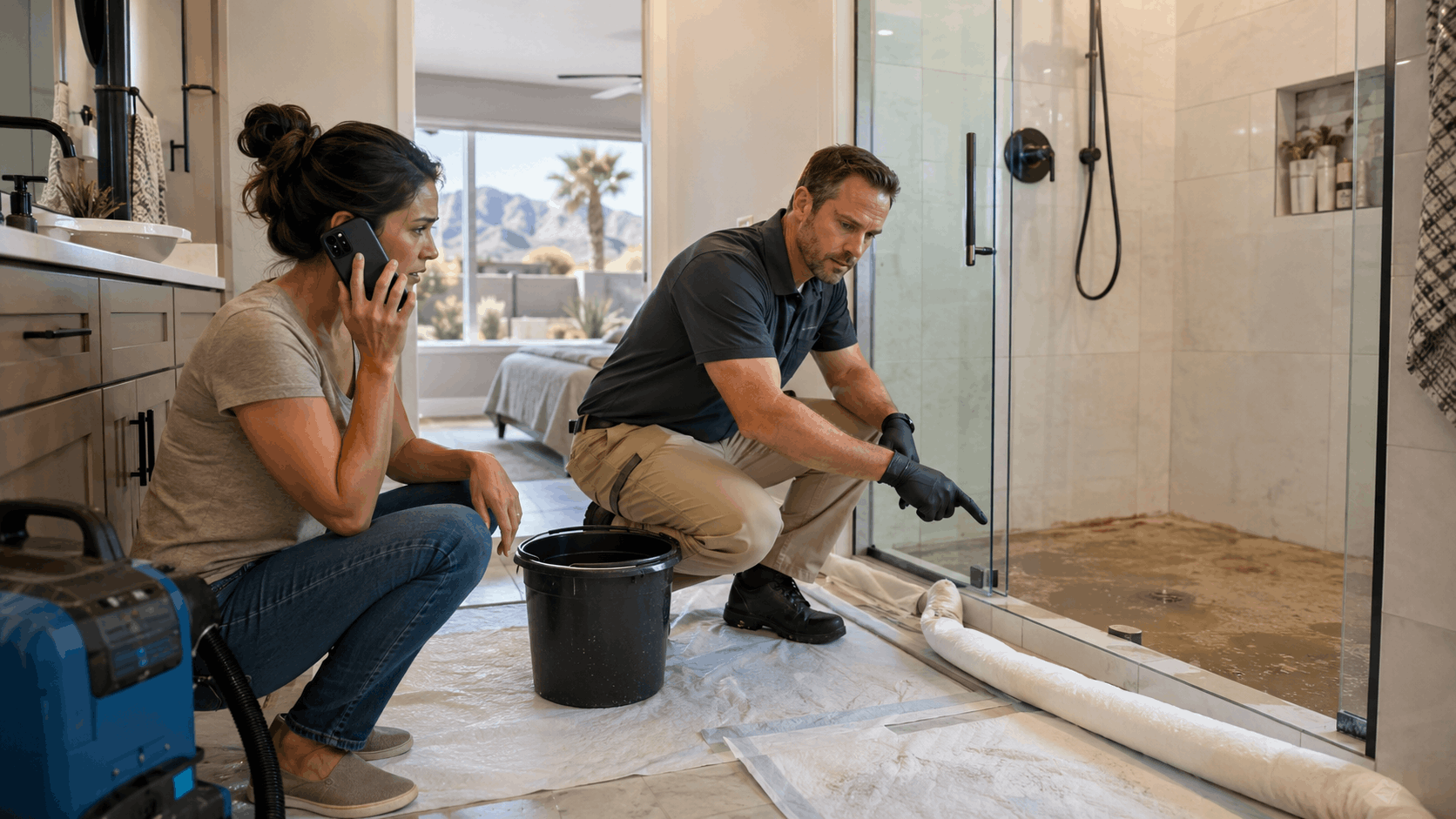
Clearing a sewage backup is more than pushing a snake down a drain. A good plumber finds the true cause first, then picks the right fix. Guessing wastes money and often leaves the problem in place.
The modern approach starts with a sewer camera inspection and moves to targeted drain cleaning. Knowing what to expect during the visit helps homeowners feel in control of a stressful day.
- Camera inspection to locate the problem
- Snaking or hydro jetting to clear it
- Repair or replacement of damaged pipe
- Cleaning and sanitizing after the fix
Camera Inspection of the Sewer Line
A sewer camera is the first tool we reach for on a serious backup. A waterproof camera on a flexible cable travels down the line and sends live video back to a screen. We watch the inside of the pipe in real time.
The line inspection shows exactly what is causing the trouble. Roots look like fine threads or thick masses inside the pipe, cracks show as dark gaps, and clogs appear as solid walls of debris. There is no more guessing about the cause.
The camera also marks the location and depth of the problem. A locator tool on the camera head tells us how far down the line the blockage sits and how deep it is buried. That means we dig in the right spot the first time if digging is needed.
For older homes, this step often reveals a bigger story. What looks like one clog may turn out to be a pipe with several bad joints. Our sewer camera inspection service gives homeowners a clear picture before any major work begins.
Snaking Versus Hydro Jetting
Not every clog needs the same tool. Mechanical snaking, sometimes called rootering, sends a rotating cable down the pipe to break through a blockage. It works well for simple clogs and can chew through light root growth.
Snaking has limits, though. It punches a hole through the blockage but often leaves grease and buildup coating the pipe walls. That means the clog can return in a few months if the underlying gunk stays behind.
Hydro jetting goes further. It blasts water through the pipe at very high pressure, scouring the walls clean of grease, scale, and root debris. For a line packed with grease or heavy roots, this is the method that actually restores full flow.
We match the tool to the problem. A simple hairball in a branch line gets a snake, while a grease-choked main line gets a jetting. Our hydro jetting and rooter service covers both approaches so the fix fits the situation.
Repairing or Replacing Damaged Lines
Sometimes the pipe itself is the problem. When the camera shows cracks, collapses, or major root damage, clearing the clog is only half the job. The damaged section needs repair or replacement.
There are several options. A spot repair fixes a single broken section, trenchless lining installs a new pipe inside the old one with minimal digging, and full replacement swaps out a badly failed line. The right choice depends on how much of the pipe has gone bad.
Las Vegas soil complicates every dig. Our valley sits on caliche soil, a rock-hard natural cement layer that makes excavation slow and tough. Trenchless repair is often attractive here because it limits how much of that stubborn ground has to be opened up.
We walk homeowners through the trade-offs on cost, disruption, and lifespan before choosing a path. For failing lines, our sewer line repair and replacement options include both trenchless and traditional methods matched to the property.
Cleaning and Sanitizing After the Fix
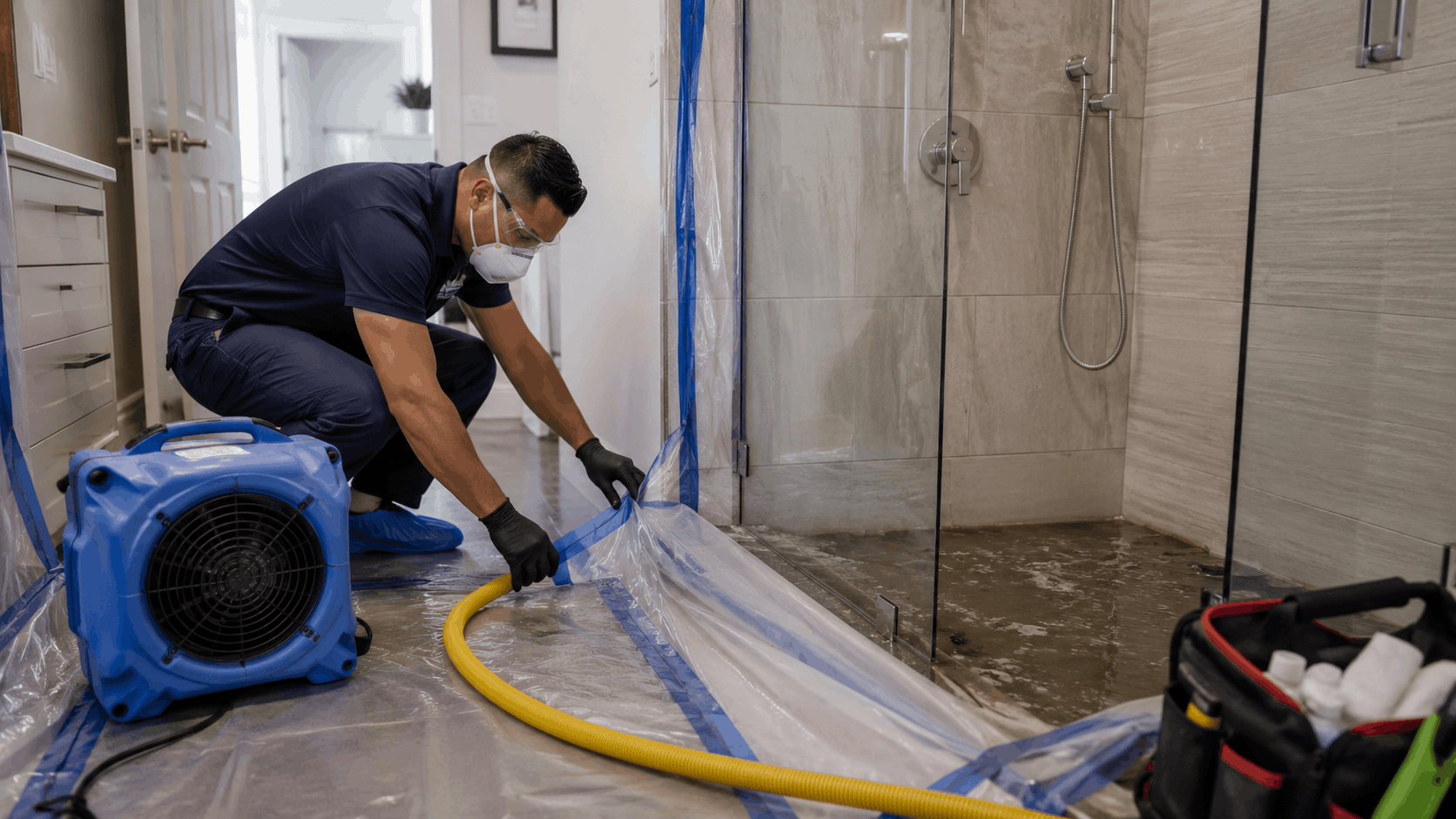
Stopping the source is not the end. Any surface the sewage touched needs proper cleaning and disinfection. Sewage leaves behind bacteria that a household mop and bucket cannot fully kill.
Professional cleanup removes the contaminated water, then sanitizes hard surfaces with the right disinfectants. Porous materials like carpet, padding, and soaked drywall often have to be removed entirely because they cannot be reliably cleaned.
Drying matters just as much. Standing moisture in our climate can still lead to mold behind walls, so proper drying with fans and dehumidifiers protects the home going forward. Skipping this step invites a second problem later.
For heavy damage, we coordinate with restoration crews who handle structural drying and rebuilding. Combining a proper plumbing fix with thorough sanitizing and restoration gets the home truly safe again, not just dry on the surface.
Need Help in Las Vegas?
Active Plumbing serves Las Vegas and all of Las Vegas Valley.
Preventing the Next Backup in Your Las Vegas Home
Once a homeowner lives through one sewage backup, they never want a second one. The good news is that most backups are preventable with a few habits and a little maintenance. Local conditions make some steps more important than others.
The path to prevent sewage backup runs through smart daily choices and regular drain maintenance. A small investment now beats an emergency bill later.
What Never to Flush or Pour Down the Drain
Most clogs we clear were caused by items that never should have gone down the drain. Wipes top the list. Despite the label, flushable wipes do not break down like toilet paper and are a leading cause of main line blockages.
Grease is the other big offender. Cooking grease looks like a liquid when hot, but it cools and hardens inside the pipe into a sticky mass. Pour it into a can and throw it in the trash instead of down the sink.
Hygiene products, paper towels, cotton swabs, and dental floss all cause a grease clog to grow faster. These items snag on rough spots and catch everything that follows. The only things that belong down a toilet are waste and toilet paper.
Teaching everyone in the home these rules prevents most problems. A simple sign by the toilet in a rental or a family home reminds guests too. The cheapest repair is the clog that never forms.
Routine Drain and Sewer Line Cleaning
Older homes benefit from a maintenance schedule. Homes over 30 years old, and any property with big trees nearby, should have the main line cleaned and inspected on a regular cycle. This routine cleaning catches buildup before it turns into a backup.
We suggest a camera check every couple of years for older properties in areas like Huntridge and John S. Park. The camera spots early root intrusion and cracks while they are still small and cheap to address. Waiting until a backup happens always costs more.
Preventive maintenance also includes periodic hydro jetting for homes prone to grease or scale. Clearing the walls of the pipe on a schedule keeps water flowing freely and extends the life of the line. It is the plumbing version of an oil change.
For rental properties and commercial kitchens, this maintenance is even more important because heavy use accelerates buildup. A planned service call is far less disruptive than an emergency shutdown during business hours.
Backwater Valves and Cleanout Access
A backwater valve is one of the best defenses against sewage entering the home. It is a one-way valve installed in the sewer line that lets waste flow out but slams shut if water tries to flow back in. When the public main surges, this valve keeps the mess out of your shower.
These valves are especially useful for homes at low points in the neighborhood or on lines that have backed up before. Installing one is a modest investment compared to the cost of a full sewage cleanup. It buys real protection during a heavy storm or a public main problem.
Easy cleanout access saves time and money on every future service call. A cleanout is a capped access point that lets a plumber reach the main line directly. Homes without one force the crew to work through a toilet or roof vent, which takes longer and costs more.
If your home lacks a proper cleanout or a backwater valve, we can add them during any sewer work. Doing it once makes every future maintenance visit faster and cheaper. Small upgrades like these pay for themselves the first time trouble strikes.
Watching for Tree Roots Near Older Areas
Mature trees are beautiful and dangerous to sewer lines at the same time. Neighborhoods like Rancho Circle and the Historic Westside have tall, old trees whose roots reach deep and wide. Those roots find the moisture inside old sewer pipes and grow right in.
Tree root intrusion is gradual, which is why watching for early signs matters. A drain that starts running slower than usual, or a gurgle after a flush, can be the first hint that roots are moving in. Catching it early means a simple jetting instead of a full excavation.
If large trees sit near the path of your sewer line, treat any repeat slow drain seriously. A camera inspection confirms whether roots are the cause before they choke the line completely. Early action almost always costs less.
We know which older pockets of the valley fight roots the hardest because we service them constantly. That local knowledge lets us recommend the right maintenance interval for each property instead of a one-size guess.
Why Local Experience Matters for Las Vegas Sewage Problems
A plumber who knows the valley handles these jobs differently than one who does not. Local experience shows up in faster diagnosis, smarter digging, and smoother permits. It is the difference between a repair that lasts and one that fails again.
Choosing a local plumber in Las Vegas means hiring real sewer repair experience with our specific soil, codes, and neighborhoods. That knowledge saves homeowners time and money.
Knowledge of Valley Soil and Pipe Conditions
Desert soil is not forgiving. Our caliche layer is hard enough to require special tools, and the surrounding ground shifts as it dries and reabsorbs moisture. Both of those forces wear on buried pipes in ways that gentler soils do not.
Different parts of the valley have different pipe conditions. Older central neighborhoods have clay lines nearing the end of their life, while newer suburbs have PVC that fails for different reasons. A local crew knows what to expect in each area before the truck even arrives.
That knowledge shapes how we plan a dig. We know where caliche runs thick, where soil movement is worst, and how deep the old lines usually sit. Planning around those conditions avoids surprises that stretch a one-day job into three.
We have dug up lines from Sunrise Manor to Spring Valley, and every neighborhood taught us something. That accumulated experience means fewer guesses and a cleaner repair for the homeowner.
Familiarity With Local Permits and Codes
Sewer work often requires permits. Clark County and the City of Las Vegas both have rules about how sewer repairs and replacements must be done and inspected. Skipping the permit can cause big problems when a home is later sold.
Local plumbing codes exist to protect the homeowner. A permitted repair gets inspected, which confirms the work meets standard and will hold up. That paper trail also protects the value of the home and satisfies insurance requirements.
We handle the Clark County permits and inspections as part of the job so the homeowner does not have to chase paperwork. Knowing exactly which department to file with and what they require keeps the timeline tight. You can review permit basics through the Clark County Building and Fire Prevention department.
An unpermitted repair might look fine today but cause a headache during a future sale or claim. Doing it right the first time avoids that entirely. Proper permits are a quiet form of protection.
Fast Response Across the Valley
Sewage does not wait, so speed matters. We cover the whole valley, from Henderson in the southeast to North Las Vegas in the north and Spring Valley in the west. Wherever the call comes from, we aim to get a crew moving fast.
Local routing is part of that speed. Knowing the fastest way across town during rush hour, and which crew is already near a given area, shaves real minutes off arrival time. In an active backup, those minutes limit the damage.
Response time depends partly on location and time of day. A call from a central neighborhood usually sees a crew faster than one from the far edges of the valley, but we work to keep every response quick. Our Henderson service area and other valley communities all have coverage.
Because we live and work here, we are never far away. That local presence is what makes fast emergency response realistic instead of just a promise on a website.
Working With Insurance and Restoration Partners
A big backup often turns into an insurance claim, and coordination matters. We provide clear documentation of the cause and the repair that adjusters need to process a claim. That paperwork speeds up approval for the homeowner.
We also work alongside trusted restoration companies for heavy damage. When flooring and drywall need removal and drying, having a plumber and a restoration crew who communicate keeps the project on track. Nothing falls through the cracks between two companies pointing at each other.
These local partnerships build up over years of working the same neighborhoods. We know which restoration crews respond quickly and do honest work, and we connect homeowners with them. That network turns a chaotic situation into a managed process.
Insurance coordination and restoration handoffs are where local experience quietly pays off. The homeowner deals with one team that manages the whole chain instead of juggling strangers during a stressful week.
Need Help in Las Vegas?
Active Plumbing serves Las Vegas and all of Las Vegas Valley.
Final Thoughts
Sewage backing up into a shower is alarming, but a calm and informed response makes all the difference. Stop using water, contain the area, keep vulnerable people away, and call a licensed plumber first. Those steps protect both the home and the family's health.
The real fix goes beyond mopping up water. A proper diagnosis with a camera, the right cleaning method, and any needed repair are what stop the problem from returning. Prevention through smart habits and maintenance keeps the next backup from ever starting.
Our team has handled these emergencies across every corner of the valley, and we know the local soil, codes, and neighborhoods that shape each job. If your shower is backing up right now, or you want to prevent it from ever happening, reach out through our contact page or call our emergency line. We are ready to help day or night.
Frequently Asked Questions
Why is sewage coming up through my shower drain?
A blocked main line has nowhere to send wastewater, so it backs up through the lowest opening in the home. That is almost always the shower or tub because they sit at the lowest drain point on the slab. A shower drain backup like this points to a main line problem, not a shower problem. It means the whole-house drain path is blocked and needs professional clearing.
Is sewage in the shower dangerous to my health?
Yes, raw sewage carries bacteria, viruses, and parasites like E. coli and hepatitis A that cause real illness. The health risk comes from skin contact, hand-to-mouth transfer, and breathing in airborne droplets and gases. Children, elderly residents, pregnant women, and anyone with a weak immune system should avoid the area completely. Everyone else should limit contact and wear protective gear if they must enter.
What should I do first when sewage backs up?
Start by stopping all water use in the home so no more water hits the blocked line. Next, contain the affected area with towels or plastic sheeting and keep children and pets out. Cut power to the wet room at the breaker if water is near outlets. Then call a licensed plumber right away, because these first steps limit damage until help arrives.
Should I call the city or a plumber first?
A plumber is usually the first call because they can confirm where the blockage sits and stop the source. If the problem is clearly in the public main and affects several homes on the street, the water district or Clark County Water Reclamation District gets involved. A camera inspection shows whether the clog is on your private lateral or the public side, which decides who to call next.
How much does it cost to fix a sewage backup in Las Vegas?
A simple main line clog cleared with a snake or jetting typically runs a few hundred dollars. Costs climb when the line is damaged and needs repair, with spot fixes, trenchless lining, and full replacement ranging much higher. Repair cost depends on the depth, the length of pipe involved, and our tough caliche soil. A camera inspection first gives an accurate estimate before any digging.
Will my homeowners insurance cover the damage?
Coverage varies, and many standard policies exclude sewage backup unless the homeowner added a backup coverage rider. Check your policy for that specific endorsement, since it is often inexpensive to add. Document everything with photos and video before cleanup begins to support the insurance coverage claim. We provide documentation of the cause and repair to help the process along.
Can I clean up sewage myself?
Small splashes can be handled with gloves, a mask, and proper disinfectant, but a large sewage flood is a job for professionals. The health risks from bacteria and airborne contaminants are too high for major DIY cleanup safety. Porous materials like carpet and drywall usually need removal, and proper sanitizing requires equipment most homeowners lack. Professional cleanup also prevents hidden mold from forming later.
How can I stop this from happening again?
The best prevention combines good habits with regular maintenance. Never flush wipes or hygiene products, and never pour grease down the drain. Schedule routine drain and sewer cleaning for older homes and properties near big trees, with periodic camera checks. Installing a backwater valve adds strong protection by blocking sewage from flowing back into the home during a surge.
How fast can a plumber get to my home during an emergency?
Response time depends on your location and the time of day, but we work to reach active backups quickly across the valley. Central neighborhoods often see a crew faster than the far edges near Henderson or North Las Vegas. Local routing and knowing which crew is nearest help shave off minutes during an emergency. Calling with clear details lets us arrive prepared to work right away.
Do older Las Vegas homes have more backup problems?
Yes, mid-century neighborhoods face higher risk because of their pipe age and mature trees. Areas like Huntridge, John S. Park, and Paradise Palms often have clay or old cast-iron lines that crack and let roots in. Those aging sewer lines need more monitoring than newer builds. Regular camera checks and prompt attention to slow drains keep small problems from becoming full backups.
Do not wait for a small backup to become a flooded home. Whether your shower is rising right now or you want a preventive inspection, our licensed team is ready across the entire valley. Call Active Plumbing or reach out through our contact page for a fast response and honest advice from plumbers who know your neighborhood.
Frequently Asked Questions
- Why is sewage coming up through my shower drain?
- A blocked main line has nowhere to send wastewater, so it backs up through the lowest opening in the home. That is almost always the shower or tub because they sit at the lowest drain point on the slab. A shower drain backup like this points to a main line problem, not a shower problem. It means the whole-house drain path is blocked and needs professional clearing.
- Is sewage in the shower dangerous to my health?
- Yes, raw sewage carries bacteria, viruses, and parasites like E. coli and hepatitis A that cause real illness. The health risk comes from skin contact, hand-to-mouth transfer, and breathing in airborne droplets and gases. Children, elderly residents, pregnant women, and anyone with a weak immune system should avoid the area completely. Everyone else should limit contact and wear protective gear if they must enter.
- What should I do first when sewage backs up?
- Start by stopping all water use in the home so no more water hits the blocked line. Next, contain the affected area with towels or plastic sheeting and keep children and pets out. Cut power to the wet room at the breaker if water is near outlets. Then call a licensed plumber right away, because these first steps limit damage until help arrives.
- Should I call the city or a plumber first?
- A plumber is usually the first call because they can confirm where the blockage sits and stop the source. If the problem is clearly in the public main and affects several homes on the street, the water district or Clark County Water Reclamation District gets involved. A camera inspection shows whether the clog is on your private lateral or the public side, which decides who to call next.
- How much does it cost to fix a sewage backup in Las Vegas?
- A simple main line clog cleared with a snake or jetting typically runs a few hundred dollars. Costs climb when the line is damaged and needs repair, with spot fixes, trenchless lining, and full replacement ranging much higher. Repair cost depends on the depth, the length of pipe involved, and our tough caliche soil. A camera inspection first gives an accurate estimate before any digging.
- Will my homeowners insurance cover the damage?
- Coverage varies, and many standard policies exclude sewage backup unless the homeowner added a backup coverage rider. Check your policy for that specific endorsement, since it is often inexpensive to add. Document everything with photos and video before cleanup begins to support the insurance coverage claim. We provide documentation of the cause and repair to help the process along.
- Can I clean up sewage myself?
- Small splashes can be handled with gloves, a mask, and proper disinfectant, but a large sewage flood is a job for professionals. The health risks from bacteria and airborne contaminants are too high for major DIY cleanup safety. Porous materials like carpet and drywall usually need removal, and proper sanitizing requires equipment most homeowners lack. Professional cleanup also prevents hidden mold from forming later.
- How can I stop this from happening again?
- The best prevention combines good habits with regular maintenance. Never flush wipes or hygiene products, and never pour grease down the drain. Schedule routine drain and sewer cleaning for older homes and properties near big trees, with periodic camera checks. Installing a backwater valve adds strong protection by blocking sewage from flowing back into the home during a surge.
- How fast can a plumber get to my home during an emergency?
- Response time depends on your location and the time of day, but we work to reach active backups quickly across the valley. Central neighborhoods often see a crew faster than the far edges near Henderson or North Las Vegas. Local routing and knowing which crew is nearest help shave off minutes during an emergency. Calling with clear details lets us arrive prepared to work right away.
- Do older Las Vegas homes have more backup problems?
- Yes, mid-century neighborhoods face higher risk because of their pipe age and mature trees. Areas like Huntridge, John S. Park, and Paradise Palms often have clay or old cast-iron lines that crack and let roots in. Those aging sewer lines need more monitoring than newer builds. Regular camera checks and prompt attention to slow drains keep small problems from becoming full backups. Do not wait for a small backup to become a flooded home. Whether your shower is rising right now or you want a preventive inspection, our licensed team is ready across the entire valley. Call Active Plumbing or
A
Licensed plumbing professionals serving Las Vegas and Las Vegas Valley.
Licensed in Nevada · License #0047021
Last updated on
Why trust Active Plumbing?
Founded in 1991, Active Plumbing is a licensed and insured plumber serving Las Vegas and Las Vegas Valley. All content is reviewed by our licensed technicians.

Need Help in Las Vegas?
Active Plumbing serves Las Vegas and all of Las Vegas Valley.
Related Articles

Cost Guides
Best Time to Call a Plumber in Vegas to Avoid Emergency Rates
Learn the best time to call a plumber in Las Vegas to avoid emergency rates, plus seasonal tips, neighborhood factors, and how to tell a real emergency from a job that can wait.
Safety & Prevention
Does Your Las Vegas Home Have Kitec? The 1995-2007 Builds in Summerlin, Green Valley, and Anthem Most Affected
Homes built in Las Vegas between 1995 and 2007 often have failing Kitec plumbing. Learn how to spot it in Summerlin, Green Valley, and Anthem, and how to fix it.
Safety & Prevention
Water Heater Leaking From the Bottom in Las Vegas: What to Shut Off in the First 5 Minutes
A water heater leaking from the bottom in Las Vegas? Learn exactly what to shut off in the first 5 minutes, why tanks fail here, and when to repair or replace.