Tips & Advice
Whitney Ranch Henderson Plumber: 2000s-Era Construction Issues
Key Takeaways
- Most Whitney Ranch homes were built in the early-2000s boom with the same crews and materials, so they develop the same plumbing problems on a shared schedule.
- Slab leaks, cracked CPVC and poly fittings, and corroded angle stops are the most common pipe failures near the 20-year mark.
- Original water heaters are well past their 8-to-12-year lifespan, and hard water speeds their failure, making proactive replacement smart.
- Mature trees and shifting desert soil cause root intrusion and pipe bellies in sewer lines, best diagnosed with a camera inspection.
- Henderson's hard water builds scale that narrows pipes and wears out appliances, so a water softener protects older plumbing.
- Spot repairs work for isolated leaks, but repeated failures or polybutylene often justify a full PEX repipe.
- Active Plumbing's local experience with 2000s-era homes allows fast, accurate diagnosis across Whitney Ranch, Whitney, and Green Valley.
- Both emergency and scheduled plumbing services are available around the clock for Whitney Ranch and nearby Henderson neighborhoods.
In This Article
Every month, our phones light up with calls from Whitney Ranch homeowners describing the same handful of problems. A running toilet that never quiets down. A warm spot on the tile floor. A water bill that doubled with no explanation. After working hundreds of homes in this Henderson community, we started noticing a pattern that ties all these calls together: age.
Most of Whitney Ranch went up during the early-2000s housing boom. The same crews, the same materials, and the same builder-grade fixtures went into home after home. Two decades later, those systems are hitting the end of their working life all at once. That is why neighbors on the same street keep calling us about identical issues.
Why Whitney Ranch Homes Share Similar Plumbing Problems
Whitney Ranch did not grow slowly over decades. It filled in fast during a short window in the early 2000s, and that timing left a fingerprint on every house. When homes go up in the same few years, they tend to fail in the same few years too.
Here is why the plumbing problems cluster together across the neighborhood:
- The same building crews installed the same pipe and fitting systems house after house
- Builders bought materials in bulk, so entire streets share identical fixtures and valves
- Every home has aged the same 20-plus years under the same desert conditions
- Whitney Ranch construction followed a tight timeline, limiting variety in methods and parts
Once we know a home's build year and street, we can often predict what we will find before we even open a wall. That kind of pattern recognition comes from years of hands-on work across this Henderson development.
The Early-2000s Building Boom Off Wigwam Parkway
The stretch of homes around Wigwam Parkway and Whitney Ranch Drive went up during one of the busiest housing periods this part of Henderson ever saw. Developers raced to keep up with buyers flooding into the Las Vegas Valley. Speed was the name of the game, and that shaped how these homes were plumbed.
When a builder frames and finishes dozens of homes on a single timeline, they standardize everything. The same plumber roughs in the same layout with the same parts on Monday and repeats it Thursday two streets over. That is efficient for construction, but it means every home carries the same built-in weak points.
The housing boom also pushed crews to work quickly, and quick work sometimes means fittings that were rushed or connections that were not seated as carefully as they should have been. We see the results now, two decades later, in the form of drips and slow leaks that all trace back to that same fast-paced era. Homes near Whitney Ranch Drive tend to share these traits almost house for house.
None of this means the homes were built poorly. It simply means they were built the same way, at the same time, so they wear out on a shared schedule. Knowing that schedule helps our team get ahead of problems.
Common Materials Builders Used at the Time
Builders in the early 2000s leaned on a few specific materials that were popular and affordable at the time. CPVC piping showed up in many Whitney Ranch homes, and some slightly older or transitional builds still carried leftover polybutylene from the prior era. Both have known aging issues.
Polybutylene is the bigger concern. This gray plastic pipe was widely used before builders learned it becomes brittle and cracks over time, especially where it meets metal fittings. If a home still has any poly, we usually recommend planning for replacement rather than waiting for a failure.
CPVC holds up better, but it also grows brittle with age and heat exposure. The plastic can crack at joints and around fittings after 20 years, particularly on hot water lines. Builder-grade fixtures - the basic faucets, valves, and toilets installed to keep costs down - were never meant to last forever, and most are now well past their prime.
When we inspect a 2000s home, we check the pipe material first because it tells us how the rest of the system is likely holding up. Our pipe and fixture services team handles these older materials every week and knows exactly where they tend to give out.
How Las Vegas Valley Water and Soil Affect These Homes
Southern Nevada has some of the hardest water in the country, and Whitney Ranch homes drink it every day. The Las Vegas Valley Water District delivers water loaded with calcium and magnesium, and those minerals coat the inside of pipes and appliances over the years.
Hard water does not damage plumbing overnight. It builds scale slowly, narrowing pipes, gumming up valves, and shortening the life of water heaters and fixtures. On a 20-year-old system, that steady buildup adds up to real wear.
Then there is the ground itself. Desert soil expands and contracts as moisture changes, and that movement shifts everything buried underneath a home. Over two decades, soil movement can stress buried pipes, pull on connections, and create low spots in drain lines. Together, hard water and shifting soil put constant pressure on plumbing that was already built to a budget.
That combination is why we treat Henderson homes differently than we might treat homes in a wetter, milder climate. The local conditions here speed up the aging clock.
Get Your Quote
Tell us what's going on and we'll get back to you fast.
Aging Pipes and Failing Fittings in Whitney Ranch
As Whitney Ranch homes cross the 20-year mark, the pipes and the joints that connect them start showing their age. The pipe itself often has plenty of life left, but the fittings and connections are usually the first to fail.
Here are the failures we run into most often in these homes:
- Slab leaks hidden under the foundation
- Cracked or separated CPVC and poly fittings
- Corroded angle stops and worn braided supply lines
- Pinhole leaks at stressed joints inside walls
Catching these early with proper leak detection saves homeowners from major water damage and mold. The trick is knowing the warning signs before a small drip becomes a soaked drywall or a flooded floor.
Signs of Hidden Slab Leaks
Whitney Ranch homes sit on concrete slabs, and some of the plumbing runs right through or under that concrete. When a pipe under the slab starts leaking, the water has nowhere obvious to go, so the signs can be subtle at first. A slab leak often hides for weeks before a homeowner notices.
The classic clue is a warm spot on the floor, usually from a hot water line leaking under the tile. People tell us one corner of the kitchen or hallway feels warm underfoot for no reason. That warmth is heated water pooling beneath the concrete.
The next tip-off is a water bill spike. If usage jumps and nothing about your household changed, water is escaping somewhere you cannot see. Damp carpet, buckling flooring, a foundation that feels moist, or the faint sound of running water when everything is off are all foundation leak warning signs worth taking seriously.
We use electronic leak detection to pinpoint slab leaks without tearing up the whole floor. Finding the exact spot means we fix only what needs fixing, which saves both time and money.
CPVC and Poly Fitting Weak Points
In 2000s-era plumbing, the pipe runs are usually not the problem. The connections are. Every place a pipe joins a fitting, a valve, or another length of pipe is a potential failure point, and those points take the most stress over time.
CPVC fittings become brittle as the plastic ages, especially where hot water passes through. The glue joints can weaken, and the fittings themselves can crack under normal water pressure. We often find hairline cracks at elbows and tees that slowly weep water into a wall cavity.
Poly fittings are even more prone to trouble. The connection between polybutylene pipe and its metal or plastic fittings was always the weak link, and after 20 years those connections can separate or crack with little warning. A poly fitting failure can go from a slow drip to a full break quickly.
Because the connections fail first, a good repair sometimes means replacing every fitting in a problem area rather than just the one that leaked. If we find repeated fitting failures, that is a strong hint the whole system is due for attention.
Corroded Angle Stops and Supply Lines
Look under any sink or behind any toilet in a Whitney Ranch home and you will find small shutoff valves called angle stops. These little valves let you cut water to a single fixture. After two decades of hard water, they are often crusted with scale and barely functional.
The problem shows up at the worst possible time. A homeowner tries to shut off water to change a faucet or stop an overflowing toilet, and the angle stop is frozen solid or snaps off in their hand. A seized shutoff valve turns a small job into an emergency.
The braided supply lines that run from those angle stops to the fixture also wear out. The rubber inside dries and cracks, and the metal braid can corrode. When a supply line bursts, it can dump water at full pressure until someone finds the main shutoff.
We recommend replacing angle stops and supply lines proactively during any under-sink work, especially in older homes. They are inexpensive parts, and swapping them out prevents a surprise flood down the road.
Need Help in Las Vegas?
Active Plumbing serves Las Vegas and all of Las Vegas Valley.
Water Heater Concerns in 20-Year-Old Homes
If a Whitney Ranch home still has its original water heater, that unit is living on borrowed time. Water heaters simply do not last 20 years, and the hard water here makes matters worse. This is one of the most common calls we get from the neighborhood.
A failing water heater rarely gives much notice before it leaks or quits, so homeowners should know the warning signs and plan ahead. Replacing a tank on your schedule beats replacing it after it floods the garage.
Why Original Tanks Are Now Overdue for Replacement
A standard tank water heater lasts about 8 to 12 years under normal conditions. Do the math on a home built in the early 2000s and it becomes clear that any original tank is now roughly double its expected lifespan. Every day past that window is a gamble.
Hard water shortens that lifespan even further. The minerals in Las Vegas Valley water attack the tank from the inside, wearing down the protective lining and the anode rod meant to slow corrosion. In our experience, Henderson water heaters often reach the end sooner than the label suggests.
When a tank finally goes, it usually leaks from the bottom where corrosion has eaten through the steel. That means gallons of water on the floor, and if the heater sits in a garage or interior closet, the damage can spread fast. Proactive tank replacement avoids that mess entirely.
Our water heater services team can assess whether a tank has life left or should be replaced now. If a unit is 15 or more years old, we usually advise planning the swap before it fails on its own.
Sediment Buildup From Hard Water
Hard water leaves behind mineral sediment that settles at the bottom of the tank. Over the years, that layer of scale grows thick and hard, and it changes how the water heater behaves. Many homeowners notice the symptoms without knowing the cause.
A popping or rumbling noise from the tank is a classic sign of sediment. The sound comes from water bubbling up through the mineral layer as the burner heats it. That trapped sediment also forces the heater to work harder, which drives up energy bills and shortens its life.
Sediment reduces how much hot water the tank can actually hold and deliver. Homeowners often complain that showers turn cold faster than they used to, and mineral deposits are frequently the reason. The buildup takes up space that should hold hot water.
Flushing the tank once a year removes sediment and extends the heater's life, but on a 20-year-old unit, a flush may not be enough to reverse years of buildup. At that point, replacement is often the smarter path forward.
Tankless Upgrade Options for These Homes
When a water heater in a Whitney Ranch home reaches the end, many homeowners ask about switching to tankless. A tankless water heater heats water on demand instead of storing it, so there is no tank to corrode and no sediment layer to worry about. For older homes, that can be an appealing change.
Tankless units also free up space and can lower energy bills since they only run when hot water is needed. In a home where the original tank ate garage space for two decades, reclaiming that footprint is a nice bonus. The energy savings add up over the years, especially for households that watch their bills.
The upgrade does involve some work. Tankless units need proper gas supply and venting, and hard water means the unit should be paired with regular descaling to keep it running well. Our team handles the full tankless water heater installation and can explain what your specific home needs.
We also offer tankless maintenance and descaling to protect the investment. In a hard-water area like Henderson, that upkeep keeps a tankless unit performing for many years.
Sewer and Drain Line Issues Beneath Whitney Ranch Properties
The plumbing you cannot see causes some of the biggest headaches. As Whitney Ranch has matured, the sewer and drain lines buried under yards and slabs have started acting up. Trees have grown, soil has shifted, and old lines are showing their age.
Here are the underground problems we find most often in the neighborhood:
- Tree roots breaking into sewer lines
- Low spots or bellies that trap waste and slow drains
- Cracks and separations from decades of soil movement
- Grease and buildup narrowing older pipes
The good news is that modern tools let us find and fix these problems without digging up an entire yard. A camera inspection tells us exactly what is happening below ground.
Root Intrusion From Landscaping Along Galleria Drive
The trees planted when Whitney Ranch was new are now full grown, and their roots have spread far and wide. Along Galleria Drive and the surrounding streets, we regularly find roots that have pushed their way into sewer lines. Roots chase water, and a sewer line is a steady water source underground.
Roots enter through tiny cracks or loose joints, then grow inside the pipe until they form a dense mat. That mat catches toilet paper and waste, and before long the line backs up. Homeowners often notice multiple slow drains or a gurgling toilet as the first sign of a sewer blockage.
Once roots are in, they come back if the pipe is not properly cleared and the entry point addressed. We use hydro jetting and rooter service to cut through root masses and scour the pipe walls clean. That gives homeowners a fresh start instead of a temporary fix.
For lines with severe root damage, we may recommend repair or spot replacement of the affected section. Catching root intrusion early keeps it from turning into a full line failure.
Line Settling and Belly Formation
Desert soil never stays put. It swells when wet and shrinks when dry, and that constant movement slowly shifts buried pipes. Over 20 years, a sewer line that started with a proper downhill slope can develop a low spot, called a belly, where the pipe dips.
A belly is a problem because waste and water pool in that dip instead of flowing straight to the sewer. Solids settle in the low spot and build up over time, leading to slow drains and repeated clogs. Homeowners often deal with the same recurring backup without knowing a belly is the root cause.
Soil settling can also pull pipe joints apart or crack older lines outright. The stress happens gradually, so the failure sneaks up rather than announcing itself. By the time drains slow noticeably, the underground damage may already be significant.
Fixing a belly means correcting the pipe's slope, which usually requires accessing and re-laying the affected section. Before we do any digging, we confirm exactly where the low spot sits so the repair is precise.
Camera Inspections That Find the Real Problem
Guessing at a sewer problem wastes time and money. That is why we run a camera down the line before recommending any major work. A sewer camera inspection shows us the inside of the pipe in real time, so we see exactly what is wrong and where.
The camera reveals whether the trouble is roots, a belly, a crack, or simple buildup. It also pinpoints the location and depth, which matters a great deal when a repair means digging. Instead of tearing up a whole yard, we can target the exact spot that needs work.
A sewer scope is also smart before buying an older Whitney Ranch home. Many buyers ask us to inspect the line so they know what they are getting into with the underground plumbing. It is a small step that prevents big surprises after closing.
Clear drain diagnosis takes the guesswork out of the whole process. When homeowners can see the problem on screen, the repair decision becomes a lot easier to make.
Fixtures and Valves Reaching the End of Their Life
Beyond the pipes in the walls and the lines underground, the everyday fixtures in a Whitney Ranch home wear out too. Faucets drip, toilets run, and valves stop holding pressure. After 20 years, a lot of these parts are simply worn out.
The question homeowners ask is whether to repair or replace. Sometimes a cheap part fixes the issue, and sometimes the fixture itself is too far gone to be worth saving. We help homeowners make that call based on the specific part and its condition.
Builder-Grade Faucets and Their Failure Points
The faucets that came with these homes were chosen to keep construction costs down, not to last decades. They work fine for years, but eventually the internal parts wear out. A dripping faucet is usually the first complaint.
Most builder-grade faucet leaks trace back to a worn cartridge, the part inside that controls water flow. When the cartridge wears, water sneaks past and the faucet drips even when fully closed. On some faucets a new cartridge fixes the problem, but on cheaper models the part is hard to find or costs nearly as much as a new faucet.
Hard water speeds up faucet failure. Mineral buildup stiffens moving parts and clogs the aerator, reducing flow and stressing the internals. That is why faucets in Henderson tend to wear faster than the manufacturer's estimate.
When a faucet has leaked repeatedly or the finish is corroding, replacement usually makes more sense than another repair. A modern faucet resists scale better and often comes with a stronger warranty.
Toilet Flush Valves and Fill Mechanisms Wearing Out
A running toilet is one of the most common problems we hear about in Whitney Ranch homes. That constant trickle wastes gallons of water and drives up bills. The cause is almost always a worn internal part.
The flush valve and its rubber flapper seal the tank between flushes. Over time the flapper hardens and warps, and it no longer seals tightly, so water leaks into the bowl and the tank keeps refilling. Replacing the flapper or the full flush valve stops the leak.
The fill valve controls how the tank refills after a flush. A worn fill valve can cause weak flushes, slow refills, or water that runs nonstop. These parts are inexpensive, and swapping them out is a quick job that solves the annoyance for years.
After 20 years, we often recommend rebuilding the toilet's internals all at once rather than replacing one part at a time. If the toilet itself is cracked or constantly clogging, a new low-flow model saves both water and hassle.
Pressure-Reducing Valve Problems
Many Whitney Ranch homes have a pressure-reducing valve, or PRV, where the main water line enters the house. This valve keeps incoming water pressure at a safe level for the home's plumbing. Like every other part, it wears out over 20 years.
When a PRV fails, pressure can climb too high, which stresses every pipe, fitting, and appliance in the house. High pressure causes hammering noises, dripping faucets, and premature failures throughout the system. It can even shorten the life of a water heater.
A failing PRV can also swing the other way and let pressure drop too low, leaving weak showers and slow-filling tubs. Scale buildup inside the valve makes the problem worse and less predictable. Either extreme signals the valve needs attention.
Testing water pressure is a simple check, and replacing a worn PRV protects the whole home. If faucets throughout the house suddenly act up, a bad pressure-reducing valve is one of the first things we look at.
Need Help in Las Vegas?
Active Plumbing serves Las Vegas and all of Las Vegas Valley.
Water Quality and Hard Water Damage in Henderson
Hard water is a fact of life in Henderson, and it takes a steady toll on plumbing and appliances. Whitney Ranch homes have soaked in mineral-rich water for two decades, and the effects show up everywhere. Understanding the damage helps homeowners protect what they have.
Here is where hard water does the most harm over time:
- Scale buildup that narrows pipes and cuts water flow
- Faster wear on water-using appliances
- Crusty deposits on faucets, showerheads, and fixtures
- Reduced efficiency in water heaters and tankless units
The right water treatment slows all of this down and adds years to a home's plumbing. For older homes especially, softer water eases the strain on aging pipes.
How Scale Builds Up Inside Older Pipes
Every time hard water flows through a pipe, it leaves behind a thin layer of mineral scale. That layer grows year after year, and in a 20-year-old home it can build up considerably. The pipe's inner diameter shrinks as the scale accumulates.
As pipes narrow, water flow drops. Homeowners notice weaker pressure at faucets and showerheads, and it often develops so slowly that they get used to it. The reduced flow is the scale steadily closing off the pipe.
Scale also creates rough spots inside the pipe where more minerals and debris catch and collect. That accelerates the buildup and can eventually lead to blockages in the worst cases. Hot water lines tend to scale faster because heat speeds up mineral deposits.
Once scale is heavy inside pipes, it is difficult to remove without replacing the affected lines. That is why preventing buildup with treated water beats trying to reverse it later.
Appliance Wear From Untreated Water
Hard water does not stop at the pipes. It reaches every appliance that uses water, and those appliances pay the price. Dishwashers, washing machines, ice makers, and water heaters all wear faster when fed untreated water.
Mineral deposits clog the small passages and valves inside these appliances. A dishwasher may leave spots on dishes, an ice maker may slow down or jam, and a washing machine may need repairs sooner than expected. The hard water stains on glassware and fixtures are the visible tip of a larger problem.
Water heaters take the hardest hit, as the sediment discussion earlier explained. But even the humble ice maker in a refrigerator can fail early when scale clogs its water line. Replacing appliances ahead of schedule adds up to real money over the years.
Softer water keeps these appliances running longer and cleaner. Many homeowners are surprised how much better everything works once the mineral load is reduced.
Water Softener and Filtration Options
A water softener removes the calcium and magnesium that cause scale, protecting pipes, fixtures, and appliances throughout the home. For an older Whitney Ranch home, a softener is one of the best ways to slow further damage. It treats the water before it ever reaches your plumbing.
We install traditional salt-based softeners as well as salt-free water conditioning for homeowners who prefer to skip the salt. Each approach has its strengths, and the right choice depends on the household's needs and preferences. Our water softener installation team walks homeowners through the options.
Whole-home filtration adds another layer of protection by removing sediment and other contaminants. Combined with a softener, filtration gives cleaner, gentler water at every tap. For families concerned about water quality, this is a worthwhile pairing.
Treated water pays for itself over time through fewer repairs and longer-lasting appliances. In a hard-water region like Henderson, that math works in the homeowner's favor.
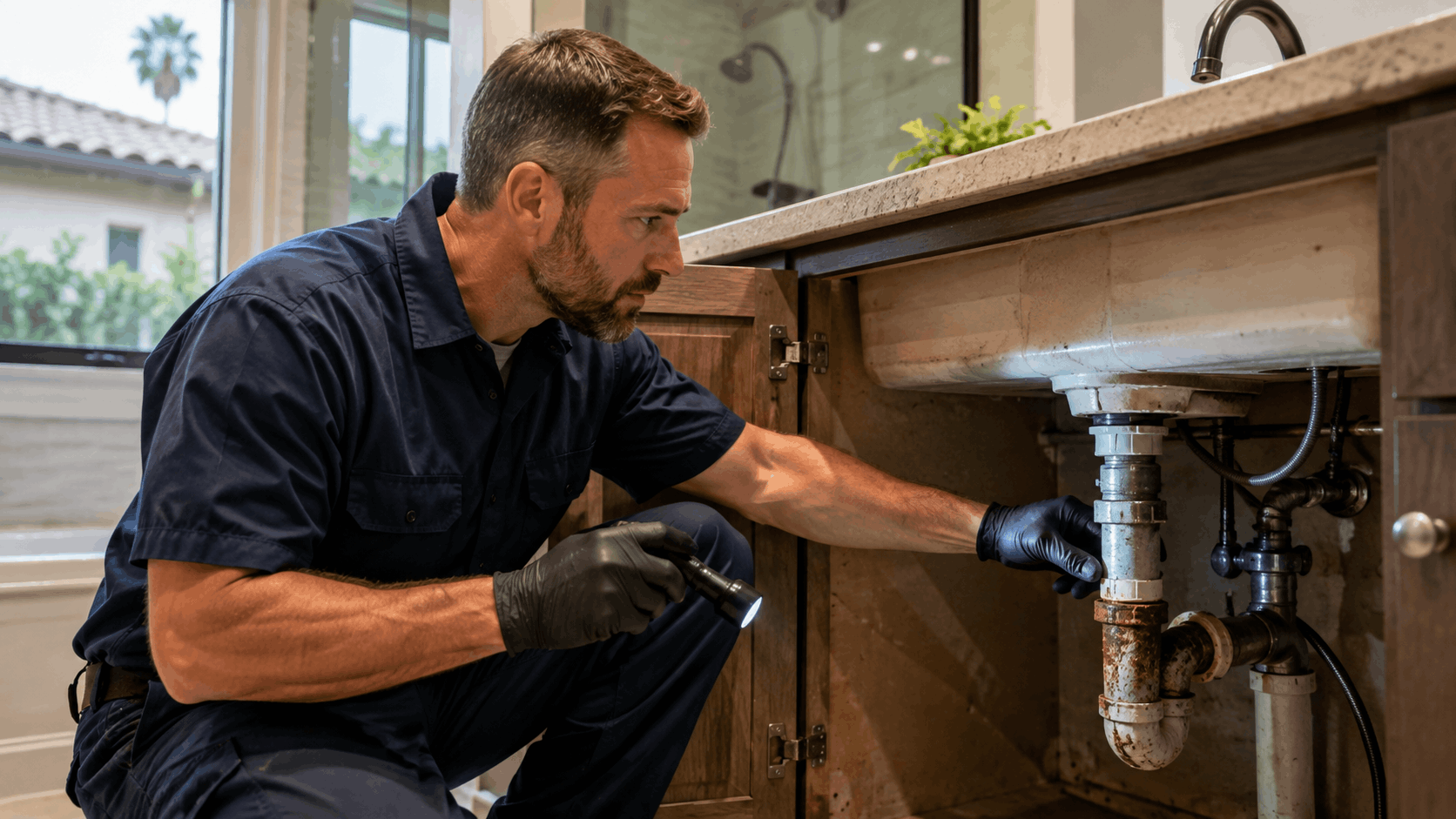
Repiping and Repair Options for Whitney Ranch Homes
At some point, every homeowner with an aging system faces the same choice: keep repairing spot by spot, or replace the plumbing outright. There is no single right answer, and the best move depends on the home's condition and the material in the walls.
We help Whitney Ranch families weigh the options honestly. Sometimes a small repair is all that is needed, and sometimes throwing money at repeated leaks is the more expensive path in the long run.
When Spot Repairs Make Sense
Not every plumbing problem calls for a full repipe. When a home has a single leak in an otherwise sound system, a targeted repair is the smart, affordable choice. We fix the failed section and leave the rest of the plumbing alone.
Spot repairs work well when the pipe material is holding up and the failure is isolated. A cracked fitting under a sink, a single slab leak, or a worn valve are all good candidates for a focused fix. There is no reason to repipe a whole house over one bad joint.
The catch is recognizing when a repair is truly isolated versus the first sign of widespread failure. That is where an experienced eye matters. We look at the surrounding plumbing and the home's history before recommending a simple repair.
For homeowners on a budget, spot repairs keep costs down while addressing the immediate problem. As long as the repairs stay occasional, this approach makes sense.
When a Full Repipe Is the Better Investment
Once repairs start piling up, the math shifts. If a home has had several leaks in a short span, or if it still runs on polybutylene, a whole-home repipe often costs less over time than an endless string of patch jobs. Repeated leaks are the clearest signal.
Old materials that keep failing are telling you something. When one fitting cracks, the others of the same age are not far behind. Chasing them one at a time means paying for repeated access, repairs, and drywall patching over and over.
A full repipe replaces the aging system with modern piping in one project. It ends the cycle of surprise leaks and gives homeowners a fresh start with a warranty. For homes hitting the 20-plus year mark with poly or heavily scaled pipes, it is frequently the wiser investment.
We give homeowners a straight assessment of where their plumbing stands. If a repipe is the better value, we explain why, and if it is not, we say so.
PEX Repiping and What the Process Involves
Modern repipes use PEX, a flexible plastic piping that resists scale, handles hard water well, and installs faster than rigid pipe. For Whitney Ranch homes, PEX is a strong upgrade over the CPVC and poly of the 2000s. It flexes rather than cracking under stress.
A typical repipe takes a few days depending on the home's size and layout. Our crew accesses the pipes through targeted openings, runs the new PEX lines, and connects everything to the fixtures and water heater. We keep the openings as small as practical to limit disruption.
We work to keep water service running as much as possible and clean up thoroughly when the job is done. Families can usually stay in the home during the work with only brief interruptions. Our goal is a smooth process that leaves the home better than we found it.
After the repipe, homeowners get a modern plumbing system built to outlast the original by decades. It is a lasting fix rather than another temporary patch.
How Active Plumbing Serves Whitney Ranch and Nearby Henderson Neighborhoods
We have spent years working the streets of Whitney Ranch and the surrounding Henderson communities. That local experience shapes how we diagnose and fix these 2000s-era homes. We know the patterns because we see them every week.
Here is what our team brings to Whitney Ranch homeowners:
- Deep familiarity with early-2000s construction methods and materials
- Fast response across Whitney Ranch, Whitney, and Green Valley
- Both emergency and scheduled plumbing services
- Honest recommendations based on what the home actually needs
Whether it is a midnight burst pipe or a planned water heater swap, our team knows these homes and stands ready to help.
Familiarity With 2000s-Era Construction
Because we have worked so many homes from this era, we recognize their quirks quickly. When a homeowner describes a symptom, we often have a strong idea of the cause before we arrive. That construction knowledge saves time and money on every visit.
We know which fittings tend to crack, where slab leaks like to hide, and how hard water has aged a given system. That kind of pattern recognition only comes from hundreds of jobs across the same neighborhood. It lets us diagnose problems that might stump a plumber unfamiliar with these homes.
Our local experience also means we can spot trouble before it becomes an emergency. During a routine visit, we often catch aging angle stops, tired water heaters, or early leak signs that a homeowner had not noticed. Catching problems early is always cheaper than cleaning up after them.
Whitney Ranch homeowners appreciate working with a team that already understands their house. There is no learning curve on our end.
Fast Response Across the Whitney Area and Green Valley
We cover Whitney Ranch and the neighboring parts of Henderson, from the Whitney area to Green Valley and beyond. Being local means we can reach most homes quickly when something goes wrong. A fast response limits water damage and stress.
Plumbing emergencies do not wait for business hours. When a supply line bursts or a water heater floods a garage, minutes matter, and our proximity to Whitney Ranch helps us get there fast. We know the routes and the neighborhoods, so we are not fumbling with directions.
Our coverage extends across Henderson and into the greater Las Vegas Valley. Homeowners in and around Whitney Ranch can count on us being nearby. That local footprint is a real advantage when time is short.
For the specific emergency plumbing in Whitney Ranch, our team responds around the clock. Help is closer than many homeowners realize.
Emergency and Scheduled Plumbing Services
We handle the full range of plumbing work these older homes need. That includes emergency plumbing for the sudden disasters and scheduled service for planned upgrades and maintenance. Homeowners can call us for a crisis or plan a project on their own timeline.
Emergency services cover burst pipes, major leaks, sewer backups, and failed water heaters. When water is pouring where it should not be, our 24-hour team responds quickly to stop the damage. We treat every emergency as the urgent situation it is.
On the scheduled side, we handle repipes, water heater replacements, softener installs, fixture swaps, and drain work. These planned jobs let homeowners get ahead of the aging clock instead of reacting to failures. Preventive work almost always costs less than emergency repair.
Whatever a Whitney Ranch home needs, our team is ready. Reach out through our contact page to schedule service or get help right away.
Need Help in Las Vegas?
Active Plumbing serves Las Vegas and all of Las Vegas Valley.
Final Thoughts
Whitney Ranch homes share a build era, and they share the plumbing problems that come with it. Slab leaks, failing fittings, tired water heaters, root-clogged sewers, and hard-water damage all trace back to the same 2000s construction and two decades of desert conditions. Knowing what to expect puts homeowners a step ahead.
The smartest move is addressing these issues before they turn into floods and major repairs. Whether that means a spot repair, a water heater swap, a softener, or a full repipe, our team helps Henderson residents make the right call for their home and budget.
If your Whitney Ranch home is showing any of the signs in this guide, reach out to Active Plumbing. Call us or visit our contact page to schedule an inspection or get emergency help. We know these homes, and we are ready to help you protect yours.
Frequently Asked Questions
What plumbing problems are most common in Whitney Ranch homes?
The most common issues we see are hidden slab leaks, water heaters past their lifespan, cracked or separated CPVC and poly fittings, corroded angle stops, and hard-water scale damage. These problems show up together because most Whitney Ranch homes were built in the early 2000s with similar materials. After 20-plus years under Henderson's hard water and shifting soil, they tend to fail on a shared schedule across the neighborhood.
How long do the original pipes in a 2000s Henderson home last?
It depends on the material. CPVC piping often lasts 20 to 40 years, but it grows brittle with age and heat, so fittings can start cracking around the two-decade mark. Polybutylene is far less reliable and can fail sooner, which is why we recommend replacing it. Henderson's hard water speeds up wear on any material by building scale inside the lines, so local pipes often age faster than the label suggests.
How do I know if I have a slab leak?
Watch for a warm spot on the floor, which usually points to a hot water line leaking under the slab. Other warning signs include a sudden water bill spike with no change in usage, damp or buckling flooring, a moist foundation, and the sound of running water when everything is off. If you notice these signs, call us for electronic leak detection so we can pinpoint the leak without tearing up your floor.
Should I replace my 20-year-old water heater before it fails?
Yes, in most cases. Tank water heaters last about 8 to 12 years, and hard water shortens that further, so a 20-year-old unit is well overdue. When these tanks fail, they usually leak from the bottom and can flood a garage or closet. Replacing the heater on your schedule avoids that water damage and lets you consider upgrades like a tankless unit while you are at it.
Why is my water pressure suddenly too high or too low?
A failing pressure-reducing valve is a common cause. When the PRV wears out, it can let pressure climb too high, which stresses your whole system, or drop too low, leaving weak faucets and showers. Scale buildup inside older pipes also narrows them and reduces flow over time. Testing your water pressure is quick, and we can replace a worn PRV or address scaling to restore normal, safe pressure.
Is a full repipe worth it for my Whitney Ranch home?
A repipe makes sense when you have had several leaks in a short time or your home still runs on polybutylene. Chasing one failing fitting after another means paying for repeated repairs and drywall patching, which adds up fast. A full PEX repipe replaces the aging system in one project and ends the cycle of surprise leaks. For homes with poly or heavily scaled pipes, it is often the better long-term value.
Do tree roots really damage sewer lines in Henderson?
They do. The trees planted when Whitney Ranch was new are now mature, and their roots chase the water inside sewer lines. Roots enter through small cracks or loose joints and grow into dense mats that catch waste and cause backups. Along streets like Galleria Drive, we find this often. A camera inspection confirms root intrusion, and hydro jetting clears the line thoroughly to give you a fresh start.
Will a water softener protect my older plumbing?
Yes. A water softener removes the calcium and magnesium that cause scale buildup, which protects your pipes, fixtures, and appliances. In an older Whitney Ranch home, softer water slows further mineral damage and extends the life of everything the water touches, from the water heater to the dishwasher. We offer both salt-based softeners and salt-free conditioning, and we can help you pick the right fit for your household.
How much does it cost to fix common 2000s-era plumbing issues?
Costs vary with the job. Small repairs like replacing angle stops, supply lines, or toilet internals are usually modest. A water heater replacement runs higher, and tankless upgrades cost more upfront but save on energy. A full repipe is the largest project and depends on home size and layout. We provide clear estimates before any work so you know what to expect. Reach out for a quote specific to your home.
Does Active Plumbing offer emergency service in Whitney Ranch?
Yes. Our team provides 24-hour emergency plumbing across Whitney Ranch and nearby Henderson neighborhoods. Whether it is a burst pipe, a flooding water heater, a sewer backup, or a supply line failure, we respond quickly to stop the damage. Being local to the Whitney area means we can reach most homes fast. Call us anytime an emergency strikes, or schedule planned service through our contact page.
Frequently Asked Questions
- What plumbing problems are most common in Whitney Ranch homes?
- The most common issues we see are hidden slab leaks, water heaters past their lifespan, cracked or separated CPVC and poly fittings, corroded angle stops, and hard-water scale damage. These problems show up together because most Whitney Ranch homes were built in the early 2000s with similar materials. After 20-plus years under Henderson's hard water and shifting soil, they tend to fail on a shared schedule across the neighborhood.
- How long do the original pipes in a 2000s Henderson home last?
- It depends on the material. CPVC piping often lasts 20 to 40 years, but it grows brittle with age and heat, so fittings can start cracking around the two-decade mark. Polybutylene is far less reliable and can fail sooner, which is why we recommend replacing it. Henderson's hard water speeds up wear on any material by building scale inside the lines, so local pipes often age faster than the label suggests.
- How do I know if I have a slab leak?
- Watch for a warm spot on the floor, which usually points to a hot water line leaking under the slab. Other warning signs include a sudden water bill spike with no change in usage, damp or buckling flooring, a moist foundation, and the sound of running water when everything is off. If you notice these signs, call us for electronic leak detection so we can pinpoint the leak without tearing up your floor.
- Should I replace my 20-year-old water heater before it fails?
- Yes, in most cases. Tank water heaters last about 8 to 12 years, and hard water shortens that further, so a 20-year-old unit is well overdue. When these tanks fail, they usually leak from the bottom and can flood a garage or closet. Replacing the heater on your schedule avoids that water damage and lets you consider upgrades like a tankless unit while you are at it.
- Why is my water pressure suddenly too high or too low?
- A failing pressure-reducing valve is a common cause. When the PRV wears out, it can let pressure climb too high, which stresses your whole system, or drop too low, leaving weak faucets and showers. Scale buildup inside older pipes also narrows them and reduces flow over time. Testing your water pressure is quick, and we can replace a worn PRV or address scaling to restore normal, safe pressure.
- Is a full repipe worth it for my Whitney Ranch home?
- A repipe makes sense when you have had several leaks in a short time or your home still runs on polybutylene. Chasing one failing fitting after another means paying for repeated repairs and drywall patching, which adds up fast. A full PEX repipe replaces the aging system in one project and ends the cycle of surprise leaks. For homes with poly or heavily scaled pipes, it is often the better long-term value.
- Do tree roots really damage sewer lines in Henderson?
- They do. The trees planted when Whitney Ranch was new are now mature, and their roots chase the water inside sewer lines. Roots enter through small cracks or loose joints and grow into dense mats that catch waste and cause backups. Along streets like Galleria Drive, we find this often. A camera inspection confirms root intrusion, and hydro jetting clears the line thoroughly to give you a fresh start.
- Will a water softener protect my older plumbing?
- Yes. A water softener removes the calcium and magnesium that cause scale buildup, which protects your pipes, fixtures, and appliances. In an older Whitney Ranch home, softer water slows further mineral damage and extends the life of everything the water touches, from the water heater to the dishwasher. We offer both salt-based softeners and salt-free conditioning, and we can help you pick the right fit for your household.
- How much does it cost to fix common 2000s-era plumbing issues?
- Costs vary with the job. Small repairs like replacing angle stops, supply lines, or toilet internals are usually modest. A water heater replacement runs higher, and tankless upgrades cost more upfront but save on energy. A full repipe is the largest project and depends on home size and layout. We provide clear estimates before any work so you know what to expect. Reach out for a quote specific to your home.
- Does Active Plumbing offer emergency service in Whitney Ranch?
- Yes. Our team provides 24-hour emergency plumbing across Whitney Ranch and nearby Henderson neighborhoods. Whether it is a burst pipe, a flooding water heater, a sewer backup, or a supply line failure, we respond quickly to stop the damage. Being local to the Whitney area means we can reach most homes fast. Call us anytime an emergency strikes, or schedule planned service through our contact page.
A
Licensed plumbing professionals serving Las Vegas and Las Vegas Valley.
Licensed in Nevada · License #0047021
Last updated on
Why trust Active Plumbing?
Founded in 1991, Active Plumbing is a licensed and insured plumber serving Las Vegas and Las Vegas Valley. All content is reviewed by our licensed technicians.

Need Help in Las Vegas?
Active Plumbing serves Las Vegas and all of Las Vegas Valley.
Related Articles

Tips & Advice
Anthem Henderson Plumber: Why Hillside Homes Have Unique Pressure Issues
Anthem hillside homes face unique water pressure issues from elevation, terrain, and the Henderson water system. Learn the causes, tests, and proven fixes.

Tips & Advice
Mountain's Edge Plumber: New Construction Warranty Plumbing Issues
New Mountain's Edge homes can still have plumbing problems. Learn common defects, how builder warranties work, and when to call a local Las Vegas plumber.
Tips & Advice
Peccole Ranch Plumber: 1990s Home Common Pipe Issues
A local plumber's guide to common pipe issues in 1990s Peccole Ranch homes, from polybutylene and copper leaks to slab leaks, sewer roots, and water pressure problems.