Cost Guides
Anode Rod Replacement Cost in Las Vegas: Why It's the Cheapest Insurance Against Our 16+ Grain Water
Key Takeaways
- The sacrificial anode rod corrodes on purpose to protect your water heater's steel tank from rust.
- Las Vegas water runs 16+ grains of hardness, which burns through anode rods in just 2 to 4 years.
- Anode rod replacement costs $150 to $350 with a flush, far less than a $1,200 to $2,800 new heater.
- Inspect your rod every two years locally instead of the standard 3 to 5 year national guideline.
- Rotten egg smell, rusty hot water, and popping sounds signal a worn-out rod that needs attention.
- A water softener helps with scale but can speed rod wear, so you still need regular rod checks.
- Powered anode rods are the best fix for stubborn sulfur odor and can outlast the water heater.
- Ignoring a spent rod can cut a heater's life from 12 years to 6 and cause flooded garages.
In This Article
A homeowner in Summerlin called us last August after her garage flooded overnight. Her water heater was only seven years old, but the bottom of the tank had rusted through and dumped 50 gallons across the floor. The culprit was not a defective heater. It was a forgotten part called the anode rod, worn down to a bare wire by our hard Las Vegas water years before its time.
That story plays out across the valley more often than most people think. Our tap water runs 16 grains of hardness or higher, and that mineral load chews through water heaters faster than almost anywhere else in the country. The good news is that a small, inexpensive part stands between a healthy tank and an early failure.
What an Anode Rod Actually Does in a Las Vegas Water Heater
Before talking dollars, it helps to picture the part sitting quietly inside your tank. Most homeowners have never seen their anode rod and do not know it exists until something goes wrong.
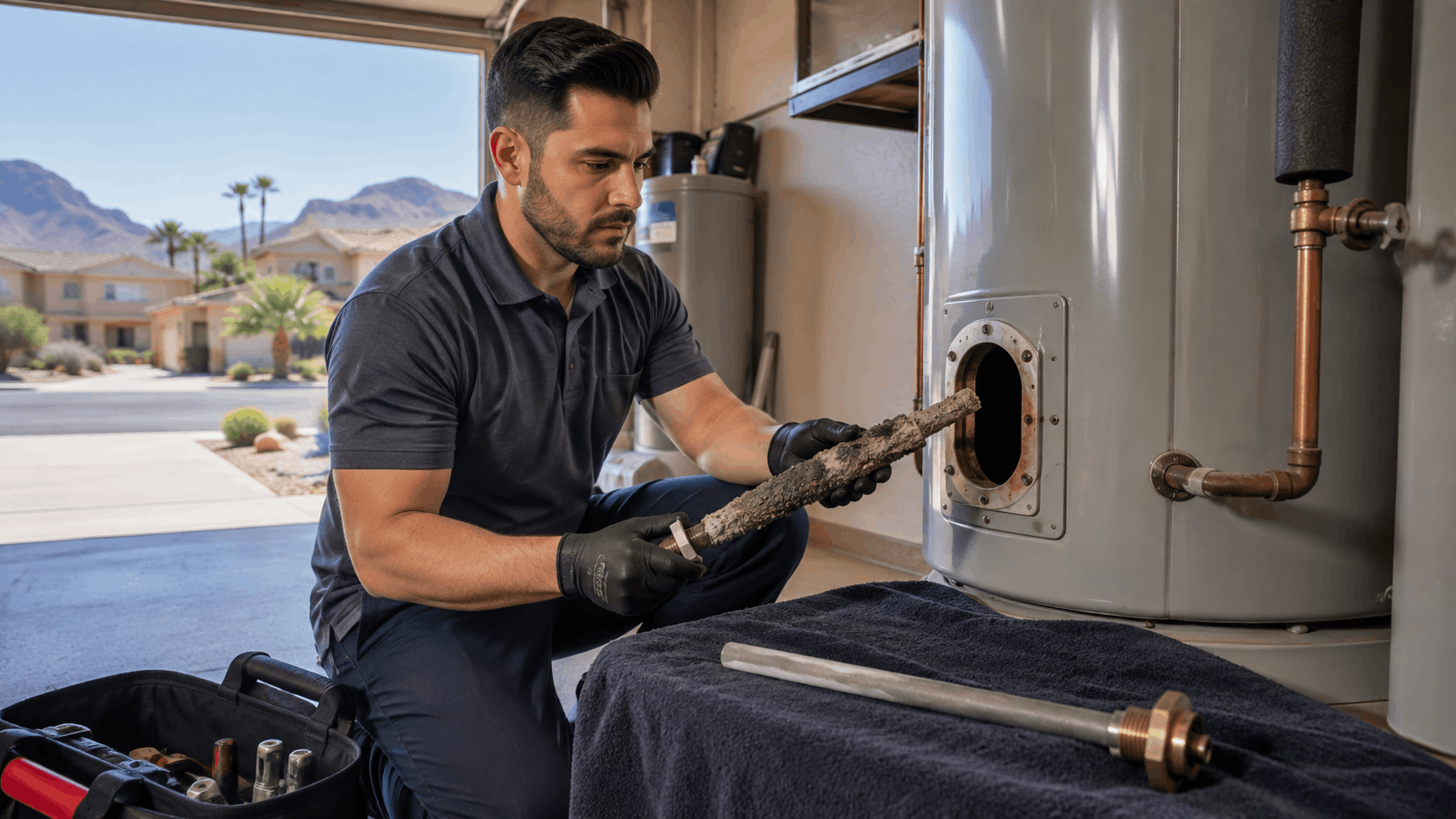
The sacrificial anode rod is a long metal rod threaded into the top of your water heater tank. Its whole job is corrosion protection. It attracts the corrosive elements in the water so the steel tank stays intact.
- It sacrifices itself so your tank does not rust.
- It works through a simple electrochemical reaction.
- It matters far more here than in soft-water cities.
- Once it is gone, the tank becomes the next thing to corrode.
The Sacrificial Metal That Rusts So Your Tank Doesn't
Think of the anode rod as a bodyguard for the steel inside your heater. It is a piece of sacrificial metal that corrodes on purpose. The minerals and oxygen in the water attack the rod first because it is more reactive than the steel wall.
Water heaters are steel tanks with a thin glass-like coating called the tank lining. That lining is never perfect. Tiny gaps and pinholes exist from the day it leaves the factory, and those spots would rust quickly on their own.
The anode rod pulls the corrosion toward itself and away from those weak spots. As long as the rod has metal left to give, the tank stays protected. This is why a neighbor with a 12-year-old heater and a neighbor with a 6-year-old failure often differ by nothing more than a rod that got replaced on time.
Once the rod dissolves down to its steel core wire, the protection stops. From that point, the tank itself becomes the sacrificial metal, and rust starts eating the walls from the inside out.
Magnesium vs. Aluminum vs. Powered Anode Rods
There are three common rod types, and the right one depends on your water and any smell issues. A magnesium anode offers the strongest protection and is the standard rod in most new tanks. It works hard, but in high-mineral water it also burns out the fastest.
An aluminum anode lasts longer in hard water because it corrodes more slowly. Many valley homeowners switch to aluminum for that reason. The trade-off is that aluminum can react with certain water chemistry and sometimes contributes to a rotten egg smell.
A powered anode rod takes a different approach. Instead of sacrificing metal, it uses a small electric current to protect the tank. It never wears out the way sacrificial rods do, and it is the best fix for stubborn sulfur odor problems.
Powered rods cost more up front but can outlast the water heater itself. For homes in areas with recurring smell complaints, that higher cost often pays for itself in comfort and fewer service calls.
Where the Rod Sits and Why Homeowners Never See It
The rod hides where nobody looks. Most units have a hex head rod threaded into a dedicated port on top of the tank, sometimes hidden under a plastic cap or a layer of insulation. You would have to remove a cover to spot it.
Other heaters use a combo rod outlet, where the anode is built into the hot water outlet nipple. That design saves space but makes the rod harder to find without knowing where to look. Either way, the part is out of sight and out of mind.
Because it sits inside a sealed tank, there is no visible warning as it wears down. The rod could be 90 percent gone and the heater still runs fine one day, then fails the next. That hidden decline is exactly why regular inspection beats waiting for symptoms.
A quick check by a plumber who knows where to look takes only minutes. Catching a spent rod early is the difference between a cheap swap and a flooded garage.
Get Your Quote
Tell us what's going on and we'll get back to you fast.
Why 16+ Grain Water in the Valley Eats Water Heaters Fast
Our water is beautiful to drink and brutal on appliances. The mineral load that gives Las Vegas its famous water spots also drives faster corrosion inside every tank in the valley.
The hard water Las Vegas homes deal with is not a minor annoyance. At 16 grain water and above, the constant mineral scale means anode rods and tank walls face heavy wear year-round.
| Water Condition | Grain Hardness | Effect on Anode Rod |
|---|---|---|
| Soft water city | 0-3 grains | Rod lasts 5-7 years |
| Moderately hard | 7-10 grains | Rod lasts 4-5 years |
| Las Vegas Valley | 16+ grains | Rod often gone in 2-4 years |
Where Our Hard Water Comes From: The Colorado River and Lake Mead
Roughly 90 percent of the valley's drinking water comes from Lake Mead, fed by the Colorado River. That river picks up dissolved minerals as it flows through hundreds of miles of rock and desert soil. By the time it reaches your tap, it carries a heavy mineral load.
The Las Vegas Valley Water District treats that water to make it safe and clean, but treatment does not remove hardness minerals like calcium and magnesium. Those minerals are what push our numbers past 16 grains per gallon. You can read more about local water quality directly from the Las Vegas Valley Water District.
For comparison, the U.S. Geological Survey classifies anything above 10.5 grains as very hard. Our valley sits well into that range. That mineral content is exactly what makes anode rod maintenance matter so much here.
The same water that leaves spots on your shower glass is working around the clock inside your water heater. Every gallon that enters the tank brings more minerals to react with the rod.
How Scale and Minerals Speed Up Anode Consumption
Heavy scale buildup does two damaging things inside a tank. First, hard minerals accelerate the electrochemical reaction that consumes the rod. More reactive water means the rod dissolves faster.
Second, calcium magnesium deposits settle to the bottom of the tank as a hard crust. That layer traps heat and creates hot spots that stress the steel and speed corrosion. It also insulates sediment against the anode's protection.
In a soft-water region, a magnesium rod might comfortably last five years. In a valley home pulling 16-grain water, we often find rods fully spent in two to three years. That is why the national replacement guidelines do not fit Las Vegas.
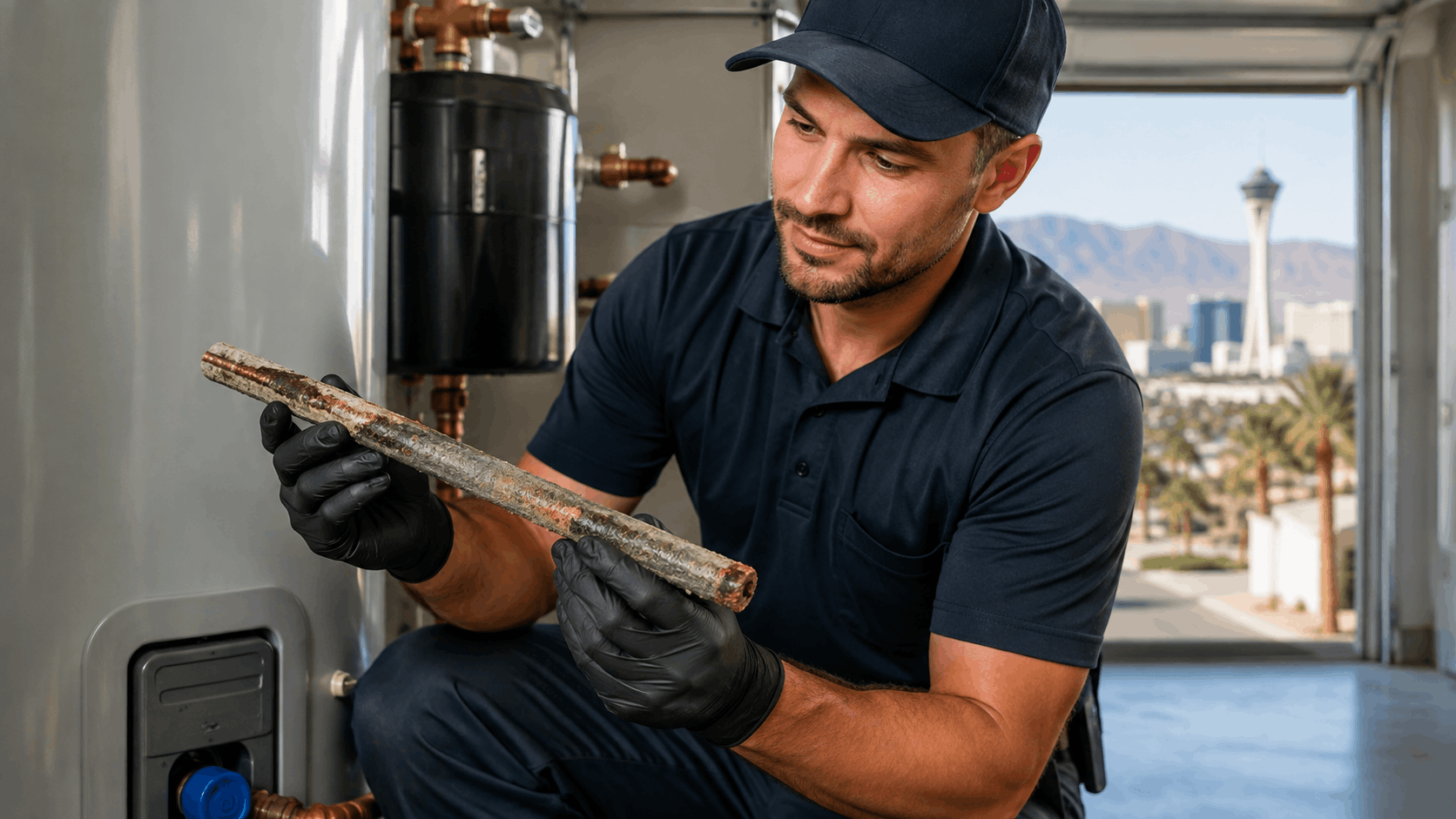
We have pulled rods from four-year-old heaters that were nothing but a bare wire coated in scale. The tank was already showing early rust. That timeline is normal here, not unusual.
Neighborhood Differences: Summerlin, Henderson, and Older Central Vegas Homes
Water hardness is fairly consistent across the metro, but home age and plumbing change the picture. Newer Summerlin homes often have modern tanks and sometimes pre-installed softeners, which can slow rod wear. Even so, the underlying water is still hard.
In Henderson, communities like Green Valley and Whitney Ranch see the same mineral load, and older sections have heaters that have quietly outlived their original rods. We service these areas constantly and see a mix of tank ages. Homeowners in that area can find help through our Whitney Ranch plumbing team.
Older homes near downtown Las Vegas and the Arts District tell a different story. Many have aging heaters, dated plumbing, and rods nobody has touched in a decade. Those tanks are living on borrowed time.
Knowing the neighborhood helps us predict what we will find. A 15-year-old central Vegas home almost always needs a rod check, while a two-year-old Summerlin build usually has more runway.
The High Desert Heat Factor
Most valley water heaters live in the garage, and our summers are punishing. A garage water heater in July can sit in ambient temperatures well above 110 degrees. That heat matters more than people realize.
Corrosion reactions speed up as temperature rises. When the tank is already hot inside and the surrounding air is baking, the whole system runs hotter. That extra heat pushes the anode rod to dissolve faster.
The desert heat also stresses the tank's fittings, connections, and pressure relief valve. A rod that might last four years in a cool basement elsewhere can be spent sooner in a Las Vegas garage. Our climate is a quiet accelerant on top of the hard water.
Homeowners who park in a closed garage with no ventilation see the harshest conditions. Combine that heat with 16-grain water and the case for regular rod service becomes obvious.
Need Help in Las Vegas?
Active Plumbing serves Las Vegas and all of Las Vegas Valley.
Anode Rod Replacement Cost in Las Vegas: Real Numbers
Let us talk honest money. The good news is that this is one of the cheapest services a plumber offers, and it protects one of your home's more expensive appliances.
The anode rod replacement cost stays low compared to most water heater repair Las Vegas jobs. Still, a few factors move the final plumbing price up or down.
| Item | Typical Las Vegas Range |
|---|---|
| Anode rod part (magnesium or aluminum) | $25 - $60 |
| Powered anode rod part | $130 - $200 |
| Professional labor | $100 - $250 |
| Total standard job with flush | $150 - $350 |
Typical Part and Labor Price Ranges
The rod itself is inexpensive. A standard magnesium or aluminum rod runs about $25 to $60 in part cost. A powered rod costs more, usually $130 to $200, because of the electronics involved.
The bigger portion is labor cost. Most professional swaps in the valley run $100 to $250 depending on tank access and how stuck the old rod is. That labor usually includes draining or partially draining the tank and a flush.
Put together, a typical rod replacement with a tank flush lands between $150 and $350. That is a small price against a water heater that can cost well over a thousand dollars to replace. Our water heater services team handles these jobs across the valley.
Prices shift with rod type and job difficulty, but the range holds for most homes. A straightforward swap on an accessible garage tank sits near the low end.
What Makes One Job Cost More Than Another
Not every rod comes out easily. A seized anode rod that has been in place for a decade can require serious force, extra tools, and more time. Rods fused by scale and corrosion are the top reason a simple job climbs in price.
Tank location plays a big part too. A heater tucked into a tight closet or an attic space is harder to work on than one standing in an open garage. Low overhead clearance is a common problem.
A clearance issue above the tank can force a plumber to use a flexible segmented rod instead of a solid one, since there may not be room to slide a full-length rod out. That adds part cost and labor. The rod type you choose also shifts the total.
Homes near downtown with older, cramped installations often cost more than newer builds with roomy garages. We factor all of this when we quote a job so there are no surprises.
Comparing Rod Cost to a Full Water Heater Replacement
Here is where the math gets clear. A full water heater replacement cost in Las Vegas typically runs $1,200 to $2,800 installed, depending on tank size, type, and code upgrades. A tankless upgrade can run higher.
Against that, a rod swap at $150 to $350 is a rounding error. Spending a couple hundred dollars every few years can add five or more years of life to a tank that would otherwise fail early.
The savings compound over the life of the appliance. Replace the rod two or three times over a heater's life and you may avoid buying an entire new unit before its time. If you do eventually need a new tank, our water heater repair and replacement service can walk you through options.
Think of the rod as insurance you actually get to use. It is the cheapest protection available for one of the hardest-working appliances in your home.
Why the Cheapest Job Isn't Always the Best Value
A rock-bottom price sometimes skips the work that makes the service worthwhile. If a plumber swaps the rod but ignores the tank flush, all that settled scale stays in the tank and keeps attacking the new rod and the steel.
Using the wrong rod type is another shortcut that backfires. Dropping a magnesium rod into a home with a sulfur smell problem can make the odor worse. Matching the rod to the water is part of doing it right.
A quality install includes inspecting the old rod for clues, flushing sediment, choosing the correct rod, and checking the tank for early corrosion. That thoroughness costs a little more but delivers real protection.
We would rather do the job once and do it correctly than cut corners and see the customer back in a year. The value is in the full service, not just the part.
How Often Vegas Homeowners Should Replace the Anode Rod
Timing is where local knowledge really pays off. The standard advice online was written for average water, and our water is anything but average.
Because anode rod lifespan runs shorter here, smart water heater maintenance means a tighter replacement schedule than the national norm.
The Standard 3 to 5 Year Rule and Why Vegas Runs Shorter
The common guideline is to replace an anode rod every 3 to 5 years. That range assumes moderately hard water and typical usage. It is a reasonable starting point for much of the country.
In the valley, our 16-grain water pushes rods toward the short end and often past it. We recommend an inspection interval of every two years for most local homes. Many rods here are more than half gone by year three.
Rather than guessing, a quick inspection tells you exactly where the rod stands. If it still has metal, you wait. If it is nearly spent, you swap it before the tank pays the price.
For a busy household on a garage tank in the heat, checking every two years is a safe rhythm. Homes with a softener may stretch that a bit, which we cover below.
Warning Signs the Rod Is Already Gone
Your water often tells you when the rod has failed. A rotten egg smell from the hot water taps is one of the most common signals. That sulfur odor comes from bacteria reacting with a depleted or reactive anode.
Discolored, rusty hot water is another red flag. If your cold water runs clear but the hot side comes out tinted, the tank interior is likely rusting because the rod is no longer protecting it.
Popping or rumbling sounds from the tank point to heavy sediment on the bottom, which usually travels alongside a worn rod and a tank that needs a flush. These noises mean the system needs attention soon.
Any one of these signs is worth a service call. Together, they strongly suggest the rod is spent and the tank is already under attack.
How a Water Softener Changes the Timeline
Many valley homeowners add a water softener to fight scale, and it does help the whole house. Softer water leaves fewer deposits and can reduce some tank sediment. That is a real benefit.
There is a catch, though. Softeners work by sodium ion exchange, swapping hardness minerals for sodium. Softened water is actually more conductive, which can speed up the electrochemical reaction that consumes the anode rod.
So a softener may cut scale buildup while shortening rod life in some cases. The net effect depends on your specific setup. This is a frequent question we get, and the honest answer is that a softener does not let you ignore the rod.
If you are considering a system, our water softener installation team can set up the right unit and advise on rod timing to match. The two work best together.
What Happens When You Ignore a Worn Anode Rod
Skipping this small maintenance item has real consequences, and they are not cheap. Once the rod is gone, the clock on your tank speeds up dramatically.
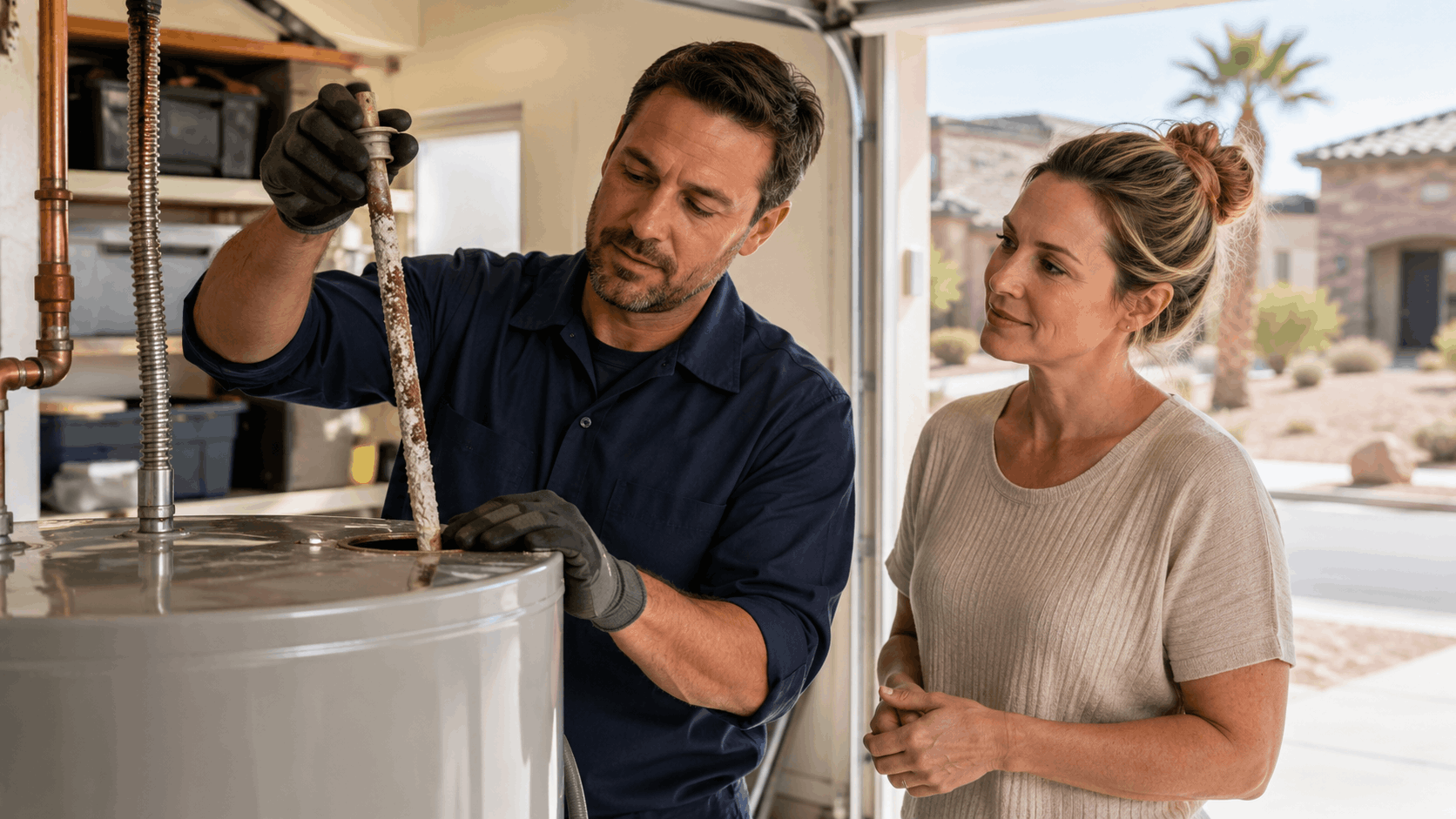
A neglected rod leads to a water heater leak, eventual tank failure, and corrosion damage that no repair can reverse. At that point, the only fix is a new heater.
Rust-Through Leaks and Flooded Garages
When the rod is fully consumed, the tank steel becomes the sacrificial metal. Rust eats through the wall from the inside until a pinhole forms. That pinhole grows into a tank leak.
In most valley homes, the heater sits in the garage, so a rupture floods the garage floor and anything stored there. We have seen boxes, tools, and drywall ruined by a slow leak that went unnoticed for hours. A full rupture can dump the whole tank at once.
Beyond the water damage, there is the cleanup and the emergency replacement, all at once and unplanned. That is a far worse day than a scheduled rod swap. If a tank does let go, our emergency plumbing team responds fast across the valley.
The saddest part is that a rod costing a couple hundred dollars would have prevented the flood damage entirely. Prevention is always cheaper than cleanup.
Discolored, Smelly Hot Water at the Tap
Long before a leak, a dead rod degrades your water quality. Families start noticing discolored water in the shower or a brown tint when filling the tub. It looks unpleasant and it stains fixtures and laundry.
The sulfur smell is the other complaint we hear. That rotten egg odor makes showers unpleasant and has people convinced their whole plumbing system is failing. The real source is often just the anode reaction inside the tank.
These issues connect directly back to the failed rod. Once the protective metal is gone, the tank interior corrodes and the chemistry inside the water changes. The taps are simply reporting what is happening inside the tank.
Swapping to the correct rod usually clears both problems. Waiting only lets the corrosion advance while the family lives with bad water.
Cutting Your Heater's Life From 12 Years to 6
A well-maintained water heater in the valley can reach 10 to 12 years. Ignore the rod and that appliance lifespan can drop to six years or less. Hard water plus a spent rod is a fast road to premature failure.
Look at the cost over time. Replacing a heater every six years instead of every twelve roughly doubles what you spend on the appliance across the decades. That is thousands of dollars in avoidable replacements.
Meanwhile, the rod maintenance to reach that longer lifespan is minor. A few hundred dollars every couple of years is far less than a second full heater. The math strongly favors keeping the rod fresh.
We have replaced heaters that should have had years left, simply because nobody ever touched the rod. Those failures are almost always preventable with basic upkeep.
Need Help in Las Vegas?
Active Plumbing serves Las Vegas and all of Las Vegas Valley.
DIY vs. Hiring a Licensed Las Vegas Plumber
Some homeowners are handy and want to tackle this themselves, and that is fair. It helps to know what the job really involves before deciding.
A DIY anode rod swap is possible, but a licensed plumber Las Vegas brings tools and speed that matter, especially with a seized rod. Here is an honest look at the trade-offs before booking water heater service.
| Factor | DIY | Licensed Plumber |
|---|---|---|
| Typical cost | $25 - $60 part only | $150 - $350 with flush |
| Time | 1 - 3 hours (longer if stuck) | Often under an hour |
| Seized rod | Major obstacle | Handled with proper tools |
| Warranty risk | Possible if done wrong | Protected with correct install |
Tools and Skills a DIY Swap Actually Requires
The right tools make or break this job. You need a 1 1/16 socket to fit the hex head, though some rods use different sizes. A standard ratchet often is not enough leverage.
For a rod that has been in place for years, you will likely need a breaker bar for the extra torque, and sometimes an impact wrench. You also have to shut off power or gas, turn off the cold water supply, and relieve tank pressure before you start.
Draining part of the tank, breaking the rod loose, and threading in a new one sounds simple until the rod refuses to budge. In our hard water, rods often seize tight against the threads from years of corrosion. That is where many DIY attempts stall.
If you have the tools, the strength, and the patience, it is doable on an accessible garage tank. If the rod is stuck or the space is tight, the job gets frustrating fast.
Common Mistakes That Void Warranties
A few errors can turn a small project into a bigger problem. Draining the tank incorrectly, cross-threading the new rod, or overtightening can create leaks. A leak at the rod port can drip onto controls and the tank top.
Installing the wrong rod type is another mistake. Some manufacturers specify a particular anode, and using the wrong one or damaging the tank during install can lead to a warranty void. Read your heater's documentation before buying a rod.
Manufacturers also sometimes require that certain service be performed or documented to keep coverage active. A botched DIY job that causes damage may leave you with no warranty support. That risk is worth weighing against the labor savings.
A licensed plumber installs the correct rod and does it in a way that supports your coverage rather than jeopardizing it. That protection has real value on a newer tank.
When Our Team Handles It in Under an Hour
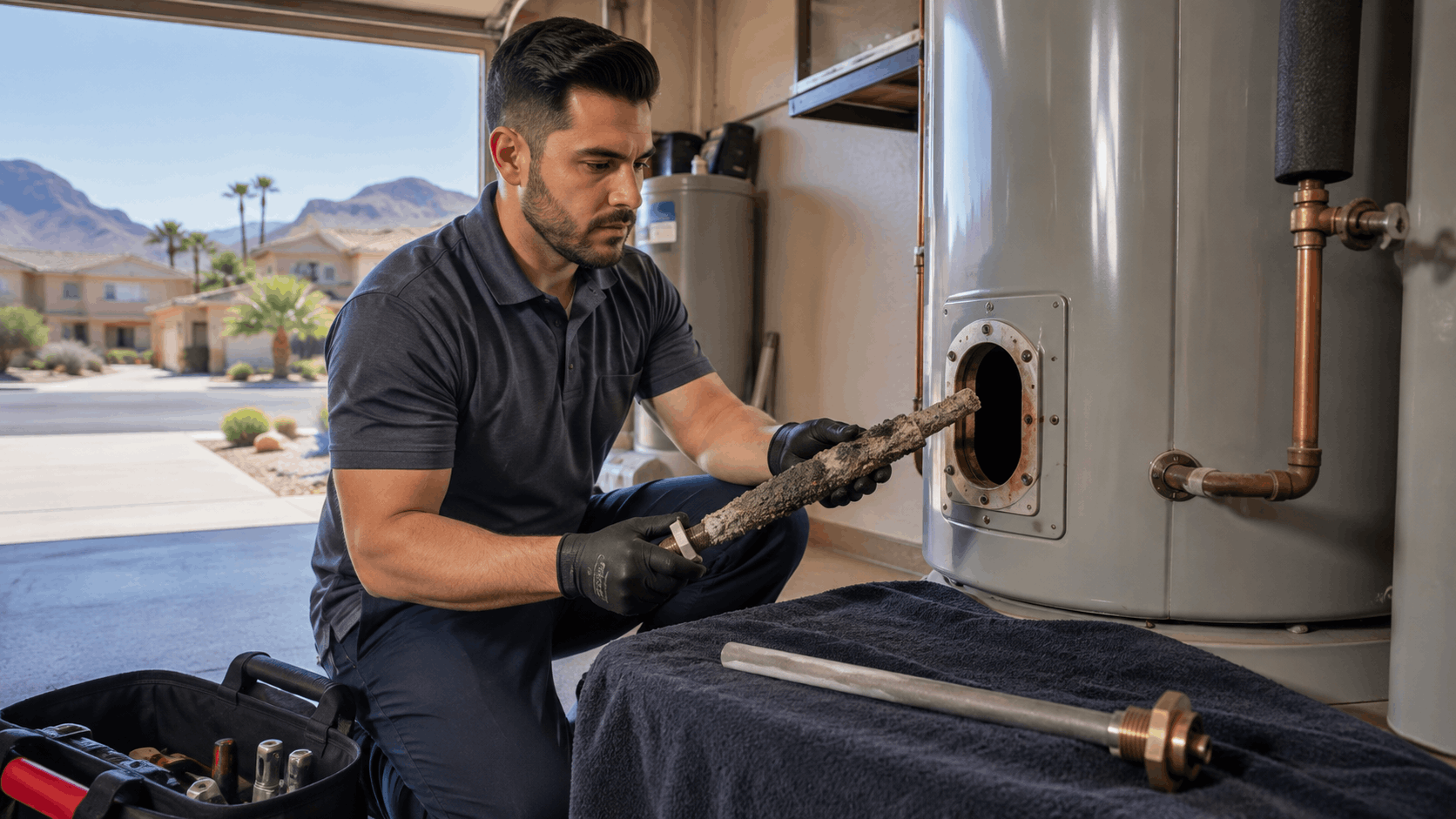
With the right equipment, this is a quick job for us. Our professional service trucks carry the sockets, breaker bars, and multiple rod types needed to handle almost any tank on the spot.
A standard visit includes breaking the old rod loose, flushing the tank of sediment, and installing the correct rod for your water. Most jobs wrap up in under an hour when access is good. Even a seized rod rarely slows us down.
We also perform a same visit inspection of the tank, connections, and pressure relief valve while we are there. That catches other small issues before they grow. You get the rod handled and a health check in one stop.
For homeowners who would rather not fight a stuck rod in a hot garage, hiring it out is an easy call. The convenience and the included flush make it worth the price for most people.
How Active Plumbing Handles Anode Rod Service Across the Valley
We work in these neighborhoods every day, and that local familiarity shapes how we handle every tank. Here is how our process runs.
The Active Plumbing Las Vegas approach to water heater maintenance is straightforward, and being a true local plumber means we know the water street by street.
- We inspect the current rod and tank condition first.
- We flush sediment before installing anything new.
- We match the rod to your water and any smell issues.
- We cover the whole metro with familiar drivers.
Areas We Cover: Summerlin, Henderson, North Las Vegas, and Spring Valley
Our team services the full valley, from Spring Valley on the west side to North Las Vegas up north. We know the shortcuts and the traffic patterns, so we get to homes without wasting your time. Communities like Spring Valley near West Sahara are on our regular routes.
We run the 215 Beltway daily to reach Summerlin, Henderson, and Enterprise. That familiarity means faster arrival times and drivers who actually know your neighborhood. From Aliante to Lake Las Vegas, we cover the metro.
Whether you are in a newer Summerlin build or an older central Vegas home, we have worked on tanks like yours nearby. Homeowners can find their area through our service locations page.
Knowing local water and home age helps us arrive prepared with the right parts. We rarely need a second trip.
Our Inspection, Flush, and Replacement Process
Every visit follows the same reliable steps. We start with a rod inspection, pulling the anode to see how much metal is left and what the wear tells us about the tank.
Next comes the tank flush. We drain and rinse out the calcium and magnesium sediment that collects on the bottom, which protects the new rod and improves heating efficiency. Skipping this step shortens the life of everything.
Then we install the correct rod, seal it properly, refill the tank, and confirm there are no leaks. We restore power or gas and verify the heater runs as it should before we leave. You get a clear report on what we found.
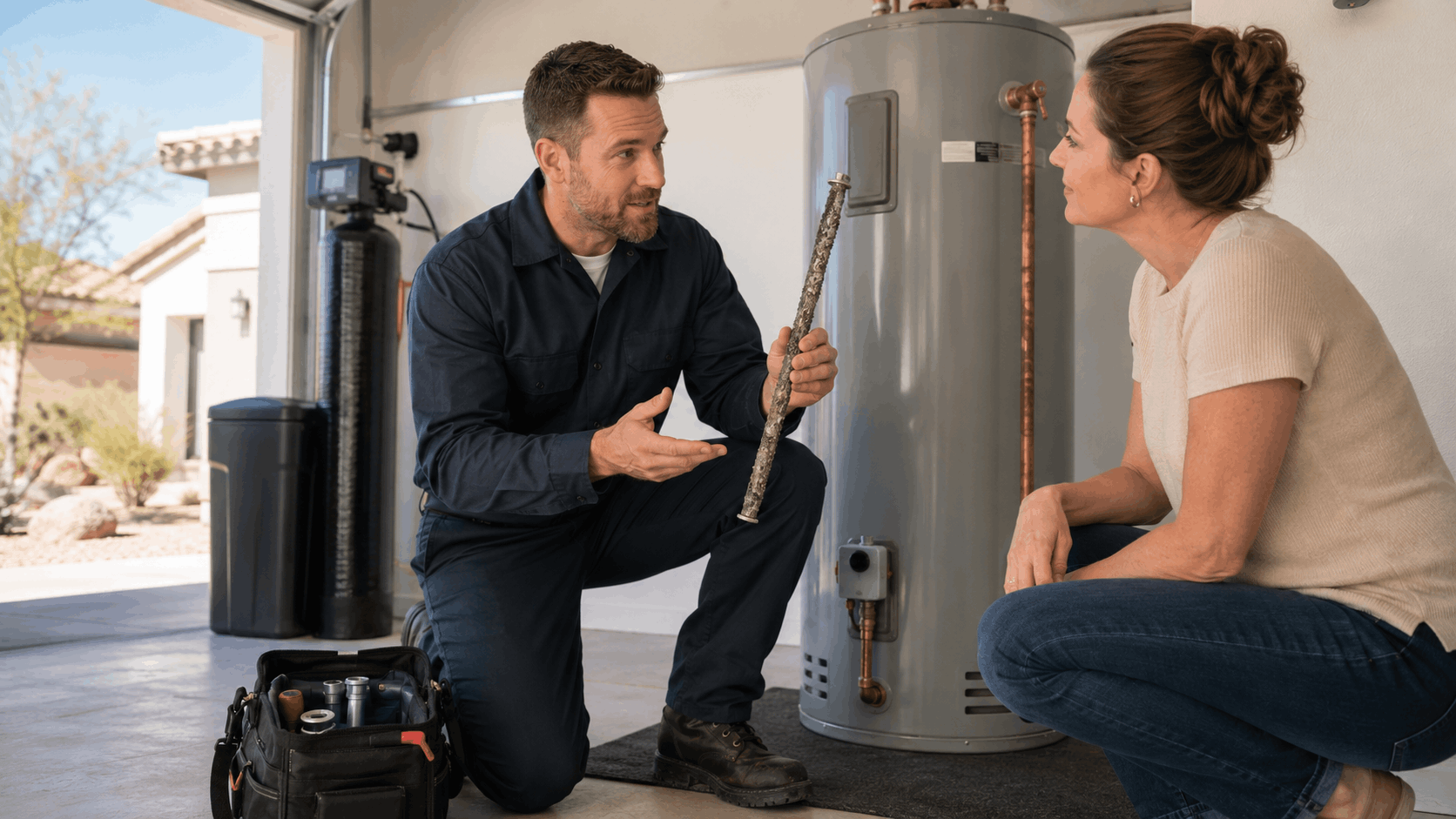
The whole process is transparent, and we explain the rod's condition so you understand your timeline for the next check. No guesswork and no surprises.
Choosing the Right Rod for Your Home's Water and Smell Issues
Rod choice is where experience matters. In homes battling a rotten egg smell, we often recommend a powered anode because it protects the tank without feeding the odor-causing reaction. It is the most reliable sulfur odor fix we offer.
For a typical home without smell complaints, an aluminum rod often makes sense in our hard water because it lasts longer than magnesium. We weigh your water, your tank, and your history before recommending one.
As a practical example, a Henderson family kept getting sulfur odor even after two magnesium rod swaps. We installed a powered rod and the smell was gone for good, with no rod to replace down the line. That is the kind of match we look for.
The right rod depends on your specific situation, and we make that call based on what we see in your tank and hear from your household. One size does not fit every home.
Need Help in Las Vegas?
Active Plumbing serves Las Vegas and all of Las Vegas Valley.
Final Thoughts
The anode rod is the cheapest insurance a valley homeowner can buy against our 16-grain water. For a couple hundred dollars every few years, you protect an appliance that costs thousands to replace.
Our hard water, garage heat, and older housing stock all speed up rod wear, so checking it every two years makes sense here. Catch a spent rod early and you avoid rusty water, rotten egg smells, and flooded garages.
If you are not sure when your rod was last replaced, it is worth a look. Contact our team or reach out through our contact page to schedule an inspection and keep your water heater running for years to come.
Frequently Asked Questions
Here are the questions valley homeowners ask us most about anode rods, cost, and our hard water. Use this FAQ to guide your anode rod questions.
How much does anode rod replacement cost in Las Vegas?
A standard anode rod replacement in Las Vegas usually runs $150 to $350 with a tank flush included. The rod part itself costs $25 to $60 for magnesium or aluminum, while labor makes up the rest. Powered rods cost more, adding $130 to $200 for the part. Seized rods, tight clearance, and hard-to-reach tanks can push the price toward the higher end.
How often should I replace the anode rod with our hard water?
The national guideline is every 3 to 5 years, but our 16-grain valley water runs that timeline shorter. We recommend inspecting the rod every two years for most local homes. Many rods here are more than half gone by year three because of heavy calcium and magnesium plus garage heat. A quick inspection tells you whether to swap now or wait.
What are the signs my anode rod is worn out?
Watch for a rotten egg or sulfur smell from your hot water taps, which points to a depleted or reactive rod. Rusty or discolored hot water is another strong sign the tank interior is corroding. Popping or rumbling from the tank means heavy sediment that often travels with a worn rod. Any of these deserves a service call before the tank fails.
Is replacing the rod really cheaper than a new water heater?
Yes, and the difference is large. A rod swap runs $150 to $350, while a full water heater replacement in Las Vegas costs $1,200 to $2,800 installed. Replacing the rod every few years can add five or more years to your tank's life. Over the decades, that maintenance can save you from buying an entire extra heater.
Does a water softener mean I can skip the anode rod?
No. A softener reduces scale, which helps, but softened water uses sodium ion exchange that makes it more conductive. That higher conductivity can actually speed up the reaction consuming your anode rod. So a softener may cut sediment while shortening rod life in some cases. You still need the rod, and regular checks remain the safe move.
Why does my hot water smell like rotten eggs?
That sulfur smell usually comes from a reaction between a depleted or reactive anode rod, water chemistry, and bacteria in the tank. A magnesium rod can feed this reaction in certain water. Switching to an aluminum rod, or better yet a powered anode rod, typically clears the odor for good. We diagnose the cause and match the right rod to your home.
Can I replace the anode rod myself?
It is possible on an accessible garage tank if you have the tools. You will need a 1 1/16 socket, a breaker bar for leverage, and the ability to shut off power, water, and pressure safely. The catch is that our hard water often seizes rods tight, and a wrong install can cause leaks or void a warranty. Many homeowners find a pro faster and safer.
How long does a professional rod replacement take?
A standard visit with a tank flush usually takes under an hour when the tank is accessible. Our trucks carry the sockets, breaker bars, and multiple rod types needed to handle most tanks on the spot. Even a seized rod rarely slows us much. We also inspect the tank and connections during the same visit so you get a full check in one stop.
Will replacing the rod void my water heater warranty?
Done correctly, replacing the rod supports your warranty rather than voiding it. Anode maintenance is part of keeping a tank healthy, and many manufacturers expect it. Problems arise only from improper installs, wrong rod types, or damage caused during a botched swap. A licensed plumber installs the correct rod in a way that protects your coverage.
Do you service my area in the Las Vegas Valley?
We cover the full metro, including Summerlin, Henderson, North Las Vegas, Spring Valley, Enterprise, Paradise, and central Las Vegas. Our drivers run the 215 Beltway daily and know these neighborhoods street by street. From Aliante to Lake Las Vegas, we arrive prepared with the right parts. Contact us to confirm coverage for your address and schedule an inspection.
Frequently Asked Questions
- How much does anode rod replacement cost in Las Vegas?
- A standard anode rod replacement in Las Vegas usually runs $150 to $350 with a tank flush included. The rod part itself costs $25 to $60 for magnesium or aluminum, while labor makes up the rest. Powered rods cost more, adding $130 to $200 for the part. Seized rods, tight clearance, and hard-to-reach tanks can push the price toward the higher end.
- How often should I replace the anode rod with our hard water?
- The national guideline is every 3 to 5 years, but our 16-grain valley water runs that timeline shorter. We recommend inspecting the rod every two years for most local homes. Many rods here are more than half gone by year three because of heavy calcium and magnesium plus garage heat. A quick inspection tells you whether to swap now or wait.
- What are the signs my anode rod is worn out?
- Watch for a rotten egg or sulfur smell from your hot water taps, which points to a depleted or reactive rod. Rusty or discolored hot water is another strong sign the tank interior is corroding. Popping or rumbling from the tank means heavy sediment that often travels with a worn rod. Any of these deserves a service call before the tank fails.
- Is replacing the rod really cheaper than a new water heater?
- Yes, and the difference is large. A rod swap runs $150 to $350, while a full water heater replacement in Las Vegas costs $1,200 to $2,800 installed. Replacing the rod every few years can add five or more years to your tank's life. Over the decades, that maintenance can save you from buying an entire extra heater.
- Does a water softener mean I can skip the anode rod?
- No. A softener reduces scale, which helps, but softened water uses sodium ion exchange that makes it more conductive. That higher conductivity can actually speed up the reaction consuming your anode rod. So a softener may cut sediment while shortening rod life in some cases. You still need the rod, and regular checks remain the safe move.
- Why does my hot water smell like rotten eggs?
- That sulfur smell usually comes from a reaction between a depleted or reactive anode rod, water chemistry, and bacteria in the tank. A magnesium rod can feed this reaction in certain water. Switching to an aluminum rod, or better yet a powered anode rod, typically clears the odor for good. We diagnose the cause and match the right rod to your home.
- Can I replace the anode rod myself?
- It is possible on an accessible garage tank if you have the tools. You will need a 1 1/16 socket, a breaker bar for leverage, and the ability to shut off power, water, and pressure safely. The catch is that our hard water often seizes rods tight, and a wrong install can cause leaks or void a warranty. Many homeowners find a pro faster and safer.
- How long does a professional rod replacement take?
- A standard visit with a tank flush usually takes under an hour when the tank is accessible. Our trucks carry the sockets, breaker bars, and multiple rod types needed to handle most tanks on the spot. Even a seized rod rarely slows us much. We also inspect the tank and connections during the same visit so you get a full check in one stop.
- Will replacing the rod void my water heater warranty?
- Done correctly, replacing the rod supports your warranty rather than voiding it. Anode maintenance is part of keeping a tank healthy, and many manufacturers expect it. Problems arise only from improper installs, wrong rod types, or damage caused during a botched swap. A licensed plumber installs the correct rod in a way that protects your coverage.
- Do you service my area in the Las Vegas Valley?
- We cover the full metro, including Summerlin, Henderson, North Las Vegas, Spring Valley, Enterprise, Paradise, and central Las Vegas. Our drivers run the 215 Beltway daily and know these neighborhoods street by street. From Aliante to Lake Las Vegas, we arrive prepared with the right parts. Contact us to confirm coverage for your address and schedule an inspection.
A
Licensed plumbing professionals serving Las Vegas and Las Vegas Valley.
Licensed in Nevada · License #0047021
Last updated on
Why trust Active Plumbing?
Founded in 1991, Active Plumbing is a licensed and insured plumber serving Las Vegas and Las Vegas Valley. All content is reviewed by our licensed technicians.

Need Help in Las Vegas?
Active Plumbing serves Las Vegas and all of Las Vegas Valley.
Related Articles
Cost Guides
40 vs 50-Gallon Water Heater Cost in Las Vegas: Real Installed Prices and When the Bigger Tank Pays Off
Real installed prices for 40 vs 50-gallon water heaters in Las Vegas, plus how to pick the right size for your household, energy costs, and hard water.
Cost Guides
Hot Water Recirculation Pump Cost in Las Vegas: Instant Hot Water in Big Summerlin Floor Plans
Hot water recirculation pump cost in Las Vegas explained, plus how these pumps deliver instant hot water in big Summerlin floor plans. Real prices, install details, and expert tips.
Cost Guides
Tankless Water Heater Installation Cost in Las Vegas: Gas Line Upsizing, Venting, and Permit Line Items
A clear breakdown of tankless water heater installation cost in Las Vegas, including gas line upsizing, venting, permits, and hard water factors for valley homes.