Tips & Advice
Drain and Sewer Service in Henderson Green Valley: Slab-Era ABS and Root Barriers
Key Takeaways
- Many Green Valley homes built in the 1980s and 1990s use black ABS drain pipe buried under a concrete slab, which now faces cracking, joint separation, and pipe bellies as it ages.
- Some ABS batches from that era were defective and crack along the pipe wall, making full replacement smarter than patching for affected homes.
- Henderson's expansive desert soil and mature trees like mesquite, olive, and ash drive repeat root intrusion into aging sewer lines.
- Root barriers steer roots away from the pipe and can last a decade or more, but they work best paired with a sound line and routine camera checks.
- A sewer camera inspection and electronic locating find problems precisely, avoiding costly guesswork and unnecessary slab digging.
- Repair options range from hydro jetting and spot repairs to trenchless lining, pipe bursting, and above-slab rerouting.
- Most sewer work in Henderson requires a city permit, HOA coordination, and call-before-you-dig utility marking before excavation.
- Smart tree placement, routine inspections, and avoiding grease and wipes help prevent future backups in slab-era lines.
In This Article
A slow kitchen drain in an older Green Valley home rarely stays a small problem for long. One week the sink near Sunset Road drains a little sluggish, and the next the whole line backs up during Sunday dinner. Many of these houses were built decades ago with black ABS drain pipe buried under a concrete slab, and that changes everything about how a clog or leak needs to be handled.
We have worked on hundreds of homes across Green Valley, from the streets off Green Valley Parkway to the pockets near Warm Springs Road. The pattern is familiar: aging ABS lines, shifting desert soil, and thirsty tree roots all working against the plumbing at the same time.
Why Green Valley Homes Have Unique Drain and Sewer Challenges?
Green Valley in Henderson has a character all its own, and so do its plumbing problems. The neighborhoods here share a rough age, a common construction style, and a shared battle with desert conditions. That combination produces drain and sewer issues that show up again and again on the same streets.
Here are the main forces working against drain lines in this part of Henderson:
- Homes built during a specific construction era with similar pipe materials
- Slab foundation designs that bury drain lines under concrete
- Expansive desert soil that shifts with heat and moisture changes
- Decades-old trees with root systems reaching toward the sewer line
The Building Boom of the 1980s and 1990s
Much of Green Valley took shape during a fast-moving housing push in the 1980s and 1990s. Whole tracts near Green Valley Parkway and Warm Springs went up in just a few years, using the standard building practices of that time. Those choices made sense then, but the plumbing installed back then is now 30 to 40 years old.
The 1980s homes in this area often share identical floor plans and identical drain layouts. When we service one house on a block, we frequently find the same pipe routing and the same weak spots next door. That predictability actually helps us diagnose problems faster, since we already know where the trouble tends to hide.
Pipe materials from that era were considered modern and reliable at installation. Four decades of hot summers, ground movement, and daily use have tested those materials in ways the original builders never planned for. The result is a wave of aging drain and sewer lines all reaching the end of their comfortable service life around the same time.
Slab-on-Grade Foundations and Buried Pipes
Most Green Valley homes sit on a slab-on-grade foundation, meaning the house rests on a poured concrete pad. The drain lines run underneath that slab, encased in soil and covered by inches of concrete. That design keeps floors flat and construction affordable, but it hides the plumbing where nobody can see it.
An under-slab drain problem is far harder to reach than a pipe in a basement or crawl space. When a line cracks or clogs beneath the concrete, the water has nowhere obvious to go. It can pool under the slab, seep into the soil, or eventually surface as a damp spot on the floor.
Because access is limited, guessing at the problem gets expensive fast. Breaking open a slab in the wrong spot wastes money and creates a mess. That is exactly why camera inspection and electronic locating matter so much for these homes, a point we cover in detail later on.
Desert Soil and Ground Movement
Henderson sits on expansive desert soil that swells when wet and shrinks when dry. Our climate swings from long dry stretches to sudden monsoon storms, and the ground responds by moving. That constant expansion and contraction pushes and pulls on anything buried in it, including sewer pipe.
Ground movement stresses pipe joints and can create low spots in a line over time. A pipe that started out with a steady downhill slope can develop sags as the soil beneath it settles unevenly. Those sags trap waste and slow the flow, which sets the stage for repeat clogs.
The dry heat also bakes the soil around shallow lines, making it more brittle and prone to sudden shifts after a rain. We see this pattern across older Henderson neighborhoods, where a line held up fine for years and then failed within a single wet season. The soil here never really stops working against buried plumbing.
Mature Landscaping and Tree Roots
Drive along Green Valley Parkway and you will notice how tall the trees have grown since the neighborhoods were new. Mature landscaping is one of the things that makes this area feel established and shady. It also means large, aggressive root systems are now living right next to buried sewer lines.
Trees planted 30 years ago as small saplings now have roots stretching many feet in every direction. In a dry climate, those roots hunt hard for water, and a sewer line offers a steady supply. The older the landscaping, the more likely roots have already found the pipe.
We regularly clear root intrusions from homes where the offending tree sits 20 or more feet from the house. Homeowners are often surprised that a tree that far away could reach their line at all. Roots do not respect property lines or garden beds, and in Green Valley they have had decades to spread.
Get Your Quote
Tell us what's going on and we'll get back to you fast.
What Slab-Era ABS Pipe Means for Your Home
If your Green Valley home was built in the 1980s or 1990s, there is a strong chance your drain lines are ABS pipe. Slab-era plumbing of this type has some real strengths, but it also carries specific risks as it ages. Knowing what you have under your floor helps you plan ahead instead of reacting to an emergency.
Here is what matters most about ABS drain pipe in older homes:
- What the material is and why builders relied on it
- The failure points that show up as ABS pipe gets older
- A known defect issue with some batches from that era
- The warning signs that trouble is brewing under the slab
What ABS Pipe Is and Why Builders Chose It
ABS stands for acrylonitrile butadiene styrene, which is a rigid black plastic pipe used for drain, waste, and vent lines. You can spot it by its dark color, since it looks very different from white PVC. Builders across the valley used it heavily in the 1980s and 1990s.
The appeal was simple. ABS pipe was lightweight, quick to install, and joined with a single-step cement rather than the primer-and-glue process PVC requires. For a fast-moving housing boom, that speed saved real time and labor on every house.
ABS also handled the warm indoor drain temperatures well and resisted many common household chemicals. For decades it did its job quietly beneath thousands of Henderson slabs. The problems only become clear once the pipe has aged and the ground around it has shifted.
Common Failure Points in Aging ABS
Aging ABS tends to fail in a few predictable ways. Joints where two pieces of pipe were cemented together can separate as the material grows brittle and the soil moves. Once a joint pulls apart even slightly, waste leaks out and roots find their way in.
Another common issue is a pipe belly, which is a low sagging section where the line has lost its proper slope. Bellies form when the soil under the pipe settles, letting a section drop below the level it needs to drain. Waste and water pool in that dip, causing slow drains and repeat clogs no amount of snaking fully fixes.
We also see cracked joints and hairline splits along older ABS runs, especially near the slab edge where movement concentrates. These cracks may start tiny and grow over years. Left alone, an ABS failure of this kind eventually turns into a full backup or an under-slab leak that damages flooring.
The Defective ABS Recall Issue
Not all ABS pipe from that era was created equal. Some batches manufactured during the late 1980s and early 1990s were later identified as defective, prone to cracking along the pipe wall rather than just at the joints. This became a widely reported pipe recall matter affecting homes built during the boom.
The defective ABS problem traced back to certain production runs where the plastic was not blended to spec. Pipe from those batches can fail even when installed perfectly and treated gently. For a homeowner, that means a line can develop leaks through no fault of anything you did.
Because Green Valley was built squarely in the affected window, we treat every older ABS line with a careful eye. A camera inspection can reveal the telltale longitudinal cracks that point to a bad batch. If we find them, replacement usually makes more sense than patching, since the whole run may share the same flaw. You can read more about consumer product recalls through the U.S. Consumer Product Safety Commission.
Warning Signs Under a Slab Home
Under-slab trouble rarely announces itself loudly at first. The earliest sign is often slow drains that seem to affect more than one fixture at once. A tub, sink, and toilet all draining sluggishly points to a problem deeper in the main line rather than a single clogged fixture.
Gurgling sounds from drains or toilets are another early warning. That noise means air is being pulled through standing water in the line, usually because flow is partly blocked. Foul smells rising from drains suggest waste is sitting somewhere it should not be.
The most serious clue is a warm or damp spot on the floor, which can indicate an under-slab leak from a hot water or drain line. If you notice a patch of flooring that stays warm or a section of carpet that feels wet without cause, call for an inspection quickly. Catching these signs early keeps a small repair from becoming a torn-up slab. Our drain and sewer services team handles exactly this kind of diagnosis for Green Valley homes.
Need Help in Las Vegas?
Active Plumbing serves Las Vegas and all of Las Vegas Valley.
How Tree Roots Invade Sewer Lines in Henderson
Root intrusion is one of the most common calls we run in Green Valley, and it is almost always tied to the older landscaping. Understanding how roots find and enter a line helps homeowners see why the problem keeps coming back. It also explains why simply snaking the line once rarely solves it for good.
Why Roots Are Drawn to Sewer Pipes
In a desert climate like Henderson, water is scarce and roots know it. Tree roots grow toward any reliable source of moisture, and a sewer line carries a constant flow of water and nutrients. Even a tiny crack or loose joint releases enough vapor to signal roots that something worthwhile is nearby.
The moisture that escapes a small pipe flaw acts like a beacon underground. Roots detect the humidity in the surrounding soil and grow steadily in that direction. Once they reach the pipe, they probe for any opening they can exploit.
Warm waste water inside the line makes the target even more attractive during cooler months. The pipe becomes a warm, moist, nutrient-rich zone in an otherwise dry environment. For a thirsty desert tree, that is an ideal place to send roots year after year.
Trees That Cause the Most Trouble Locally
Certain trees show up over and over in our root intrusion calls around Green Valley. Mesquite is a frequent offender, with tough roots that travel long distances hunting for water. Its root system can extend well beyond the visible canopy.
Olive trees, once common in valley landscaping, also send out aggressive roots that seek moisture. Ash trees planted along many older streets grow fast and put down thick, invasive root systems. All three of these are common in the neighborhoods off Green Valley Parkway and nearby.
The trouble is that these trees were often planted decades ago without thought to where the sewer line ran. A tree that looked harmless as a sapling now sits directly over the pipe path. We frequently trace a repeat backup straight back to one of these mature, aggressive-rooted trees.
How Roots Damage Joints and Fittings
Roots almost always enter a line at its weakest point, which is usually a joint or fitting. These connections have small gaps that widen slightly as the pipe ages and the ground shifts. A hair-thin root finds that gap and pushes through.
Once inside, the root keeps growing, thickening from a thread into a rope over time. As it expands, it pries the joint wider and lets more roots follow. Eventually a dense root ball forms inside the pipe, catching waste and paper until flow slows to a trickle.
The pressure of a growing root can also crack the pipe wall outright. What began as joint damage becomes a structural break in the line. At that stage, clearing the roots alone will not hold, because the opening they used is now permanent.
Signs Roots Are Already in Your Line
The clearest sign of root intrusion is a backup that keeps returning no matter how many times the line is cleared. If you snake a drain, get a few weeks of relief, and then back up again, roots are the likely cause. That cycle points to something regrowing inside the pipe.
Slow drainage across multiple fixtures at once is another root symptom. When the tub, toilet, and sink all struggle together, the blockage sits in the shared main line. A toilet that gurgles when you run water elsewhere signals the same deeper problem.
You might also notice waste backing up into the lowest drain in the house, often a shower or floor drain. That is the line telling you it cannot move waste past an obstruction. When these repeat backups show up, a camera inspection can confirm roots before more damage occurs.
Root Barriers and How They Protect Your Sewer Line
Once roots have been a problem, homeowners naturally want to keep them out for good. Root barriers are one of the better tools for that job, especially on properties with mature trees near the line. They will not perform miracles, but used correctly they buy years of protection.
What a Root Barrier Actually Does
A root barrier is a system that steers tree roots away from your sewer line rather than killing the tree. The goal is root deflection, guiding growth around the pipe instead of into it. Barriers come in physical and chemical forms, and each works differently.
Physical barriers block roots with a solid panel buried in the soil between the tree and the pipe. Chemical barriers rely on root-inhibiting compounds that discourage growth in a treated zone. Both aim to protect the pipe without harming the landscaping you want to keep.
The right choice depends on the tree, the soil, and how close the roots already are to the line. In many Green Valley yards, we combine the approach with repair work so the barrier protects a freshly sound pipe. A barrier over a still-cracked line only delays the next intrusion.
Physical Barriers vs Chemical Treatments
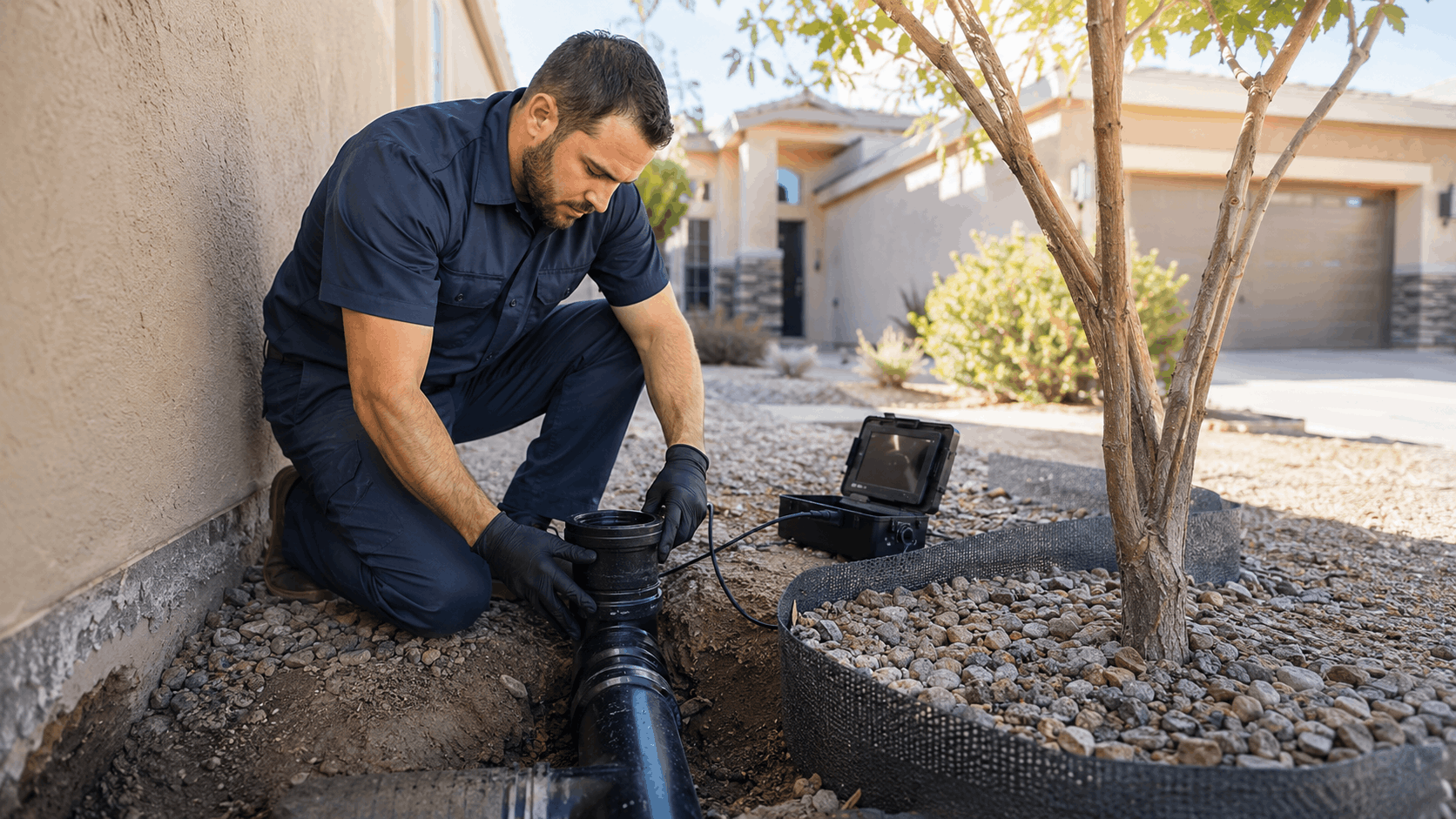
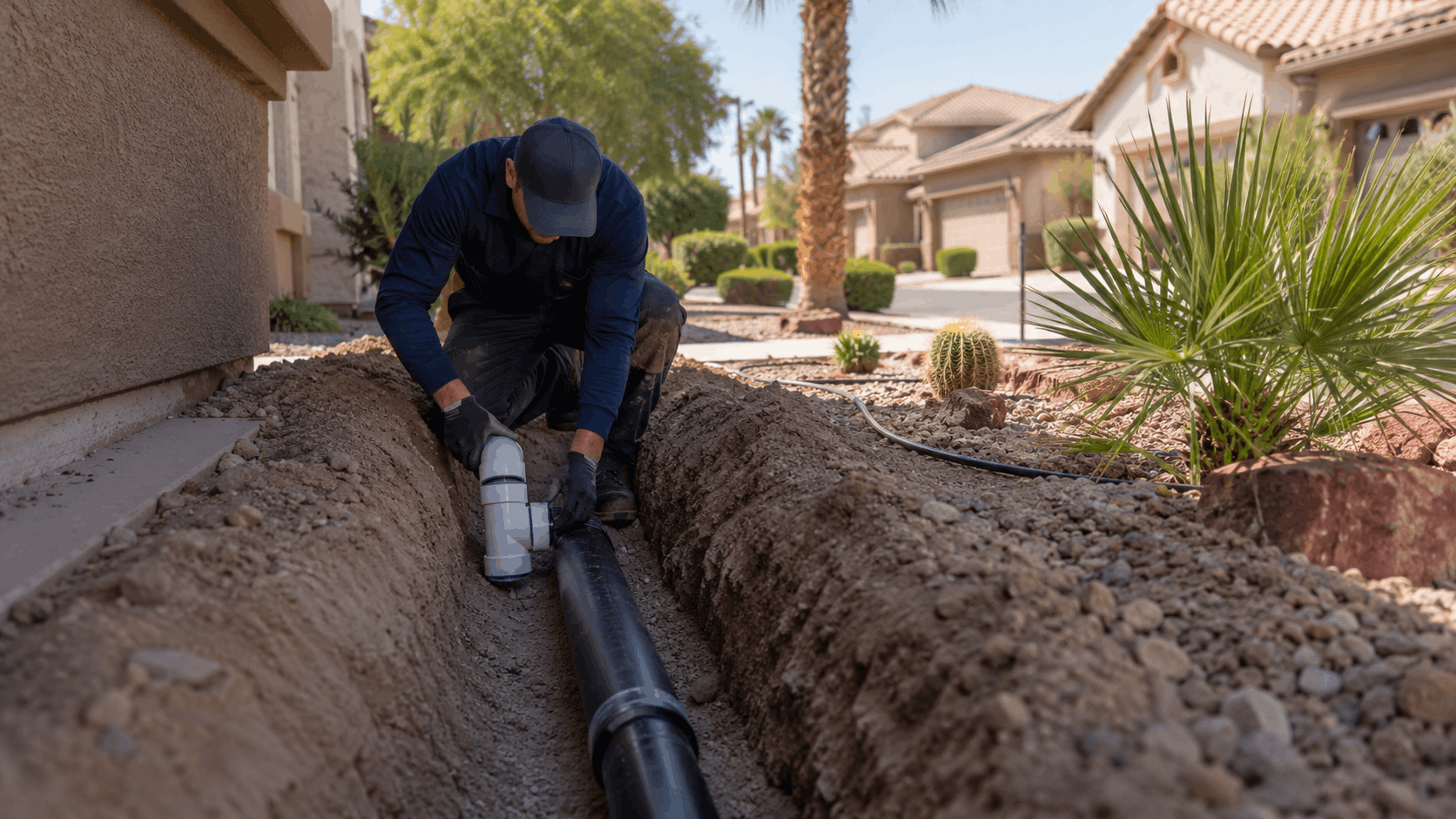
A physical barrier is a rigid panel, often made of plastic or coated fabric, set vertically in a trench between the roots and the pipe. It forces roots to grow downward and around rather than straight across. Physical barriers work well where you have room to trench and a clear line between tree and pipe.
Chemical root control uses slow-release compounds, sometimes copper-based or growth-inhibiting, placed in the soil zone near the line. These treatments create an area roots avoid without killing the tree outright. They fit spots where trenching is difficult or the tree is too valuable to disturb.
Each method has trade-offs. Physical barriers last longer but require more digging to install, while chemical treatments are less invasive but need periodic reapplication. We often recommend a physical barrier for the worst root offenders and chemical control as a supporting measure.
Where Barriers Work Best in Green Valley Yards
Barrier planning starts with knowing exactly where the line runs and where the roots come from. In a typical Green Valley yard, the sewer line runs from the house toward the street cleanout, often passing near front-yard trees. Mapping that path tells us where a barrier will do the most good.
Yard layout matters a great deal. A tree sitting directly over the line needs a different approach than one offset to the side. The distance between the trunk, the roots, and the pipe shapes how deep and how long the barrier needs to be.
We look at the whole picture before placing anything. That includes the tree species, its age, the soil type, and any hardscape in the way. Getting barrier placement right the first time saves the cost of redoing it later.
How Long Root Barriers Last
A well-installed physical root barrier can last 10 years or more before it needs attention. Its lifespan depends on the material quality, the depth of installation, and how aggressive the nearby roots are. Mesquite and olive roots test a barrier harder than most.
Chemical treatments have a shorter working window, often needing reapplication every few years. The compounds break down or wash through the soil over time, so a single application is not permanent. Regular maintenance keeps the protected zone effective.
No barrier is truly set-and-forget. We recommend a periodic camera check of the line even after a barrier goes in, just to confirm roots have not found a new path. Pairing a barrier with routine inspection gives the longest reliable protection.
Camera Inspections and Locating Under-Slab Lines
Modern diagnostics changed how we handle slab-era plumbing. Instead of guessing and breaking concrete, we can see inside the pipe and pinpoint the problem first. That single step saves Green Valley homeowners real money and mess.
| Diagnostic Step | What It Does | Homeowner Benefit |
|---|---|---|
| Sewer camera inspection | Sends a video camera through the line | Shows the exact condition inside |
| Electronic locating | Marks the pipe location and depth | Pinpoints where to dig, if needed |
| Footage review | Identifies roots, bellies, and cracks | Confirms the real problem |
| Diagnosis report | Documents findings with video | Supports smart repair decisions |
How a Sewer Camera Reveals the Problem
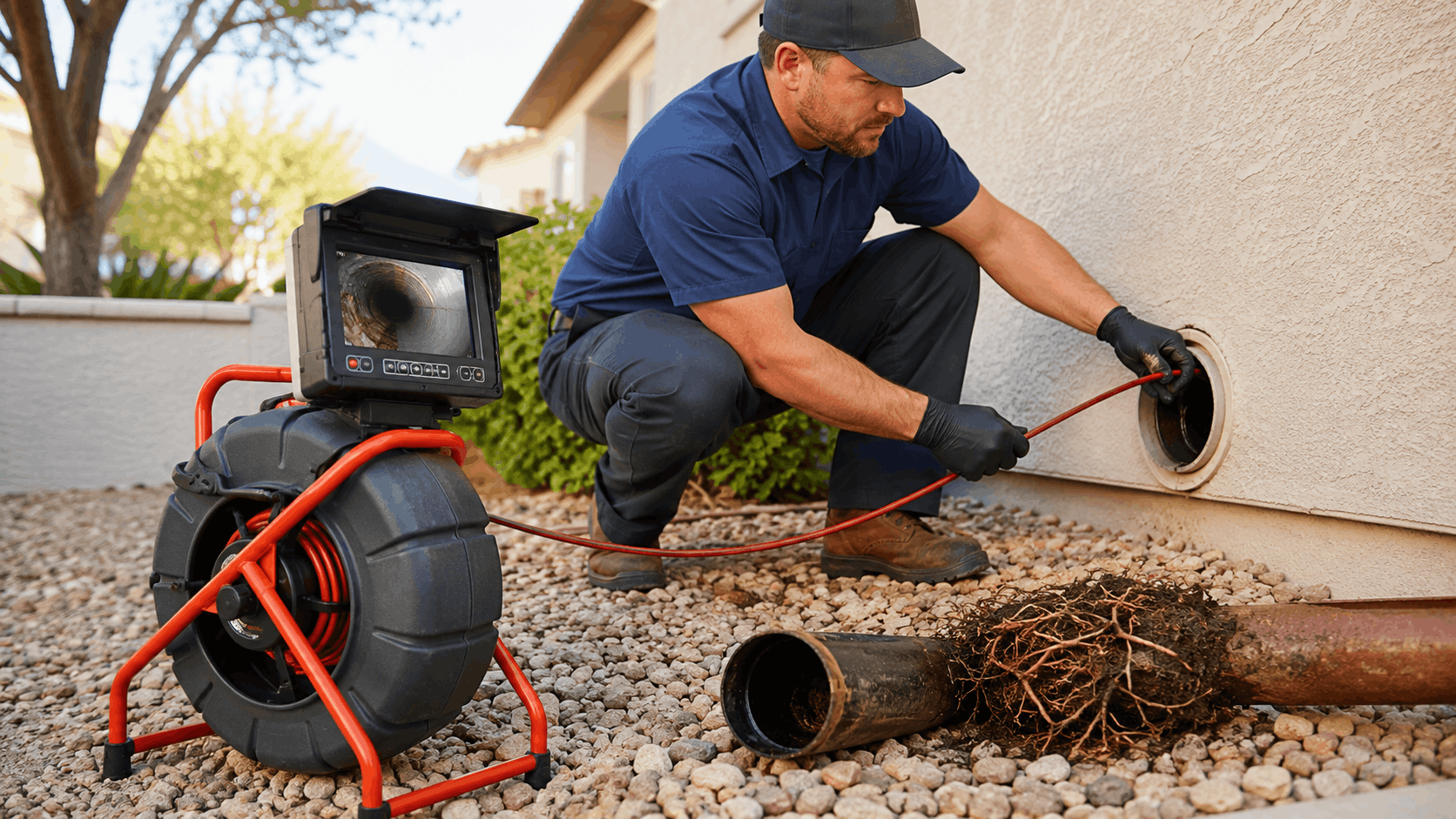
A sewer camera is a small waterproof video head on a flexible cable that feeds through the drain line. As it travels, it sends live video back to a screen so the technician can watch the inside of the pipe in real time. Nothing gets torn open to run it.
The technician looks for standing water, root masses, cracks, and buildup as the camera moves. Each of these tells a different story about what is going wrong. A section that holds water usually marks a belly, while a wall of fine roots signals intrusion at a joint.
Video inspection also confirms the pipe material and its overall condition. On older ABS, we watch for the longitudinal cracks tied to defective batches. Seeing the problem directly removes the guesswork that used to drive costly exploratory digging. Our sewer camera inspection service is the first step we take on nearly every slab-home call.
Pinpointing a Blockage or Break
Finding the problem on video is only half the job. We also need to know exactly where along the pipe it sits and how deep. That is where electronic locating comes in.
The camera head carries a transmitter, and a handheld locator above ground tracks its signal. By following the signal, the technician marks the pipe location on the slab or in the yard. A depth reading tells us how far down the pipe runs at that point.
This blockage location work means that if digging is ever required, it happens in one precise spot. There is no trial-and-error breaking of concrete across the room. For under-slab lines especially, pinpoint pipe locating is the difference between a small opening and a demolished floor.
Reading the Footage for Roots and Bellies
Reading inspection footage takes experience. A root ball looks like a dense tangle blocking part or all of the pipe, often at a joint. Knowing whether that root mass sits at a cracked joint or an intact one shapes the repair plan.
A pipe belly shows up as a stretch where water pools and the camera appears to dip below the waterline. That sagging section will keep collecting waste no matter how often it is cleared. Spotting a belly early tells us snaking alone will not solve the repeat clogs.
Cracks in ABS appear as dark lines along the pipe wall or gaps at fittings. Footage review lets us grade how serious each defect is. We share this footage with homeowners so they can see the same evidence we base our recommendation on.
Why an Inspection Saves Money
The temptation with a backed-up line is to just start clearing or digging. That approach often costs more in the long run. Without accurate diagnosis, you might jackhammer a slab only to find the real problem sits three feet away.
A camera inspection avoids that waste by confirming the exact issue and its location first. You spend money fixing the actual problem, not chasing symptoms. For under-slab lines, avoiding unnecessary digging alone can save thousands.
An inspection also reveals whether a clog is a one-time event or a sign of a failing line. That knowledge lets you choose between a simple cleaning and a lasting repair. Making the decision with real information almost always ends up cheaper.
Need Help in Las Vegas?
Active Plumbing serves Las Vegas and all of Las Vegas Valley.
Repair and Replacement Options for Slab-Era Lines
Once we know what is wrong, the next question is how to fix it. Slab-era lines offer several repair paths, from simple clearing to full replacement. The right choice depends on the pipe's condition, the location, and the budget.
| Option | Best For | Disruption Level |
|---|---|---|
| Hydro jetting and root cutting | Sound pipe with clogs or roots | Low |
| Spot repair | One isolated break | Moderate |
| Full line replacement | Widespread failure or defective pipe | High |
| Trenchless lining or bursting | Failing line, limited access | Low to moderate |
| Above-slab re-pipe | Costly under-slab access | Moderate |
Hydro Jetting and Root Cutting
When the pipe itself is still sound, clearing the blockage may be all that is needed. Hydro jetting uses high-pressure water to scour the inside of the line, cutting through roots, grease, and buildup. It leaves the pipe walls far cleaner than a standard snake.
Root cutting attachments shear through root masses that have grown inside the line. Combined with jetting, this restores full flow to a pipe that was choked but not broken. For lines with minor root intrusion at an intact joint, this often solves the immediate problem.
The catch is that clearing does not fix the opening roots used to enter. On a cracked line, roots will return. That is why we pair jetting with a camera check to confirm the pipe can hold up. Our hydro jetting and rooter service restores flow when the line is worth keeping.
Spot Repairs vs Full Line Replacement
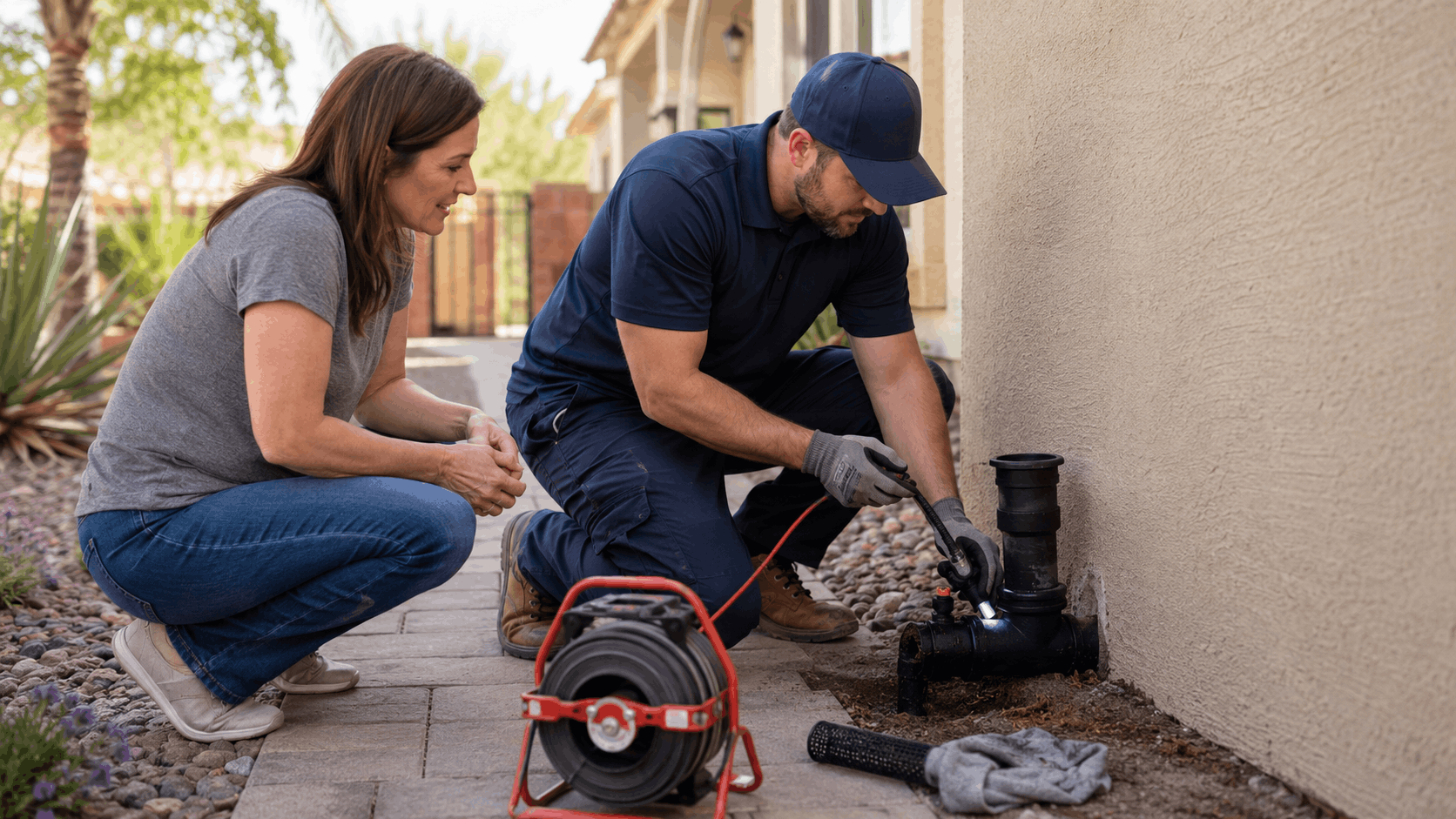
A spot repair replaces just the damaged section of pipe. If a camera shows one broken joint or a single crack with the rest of the line in good shape, a targeted fix makes sense. We dig to that one location, replace the bad piece, and close it up.
Full replacement swaps out the entire run of pipe. This becomes the smarter option when the line shows failure in multiple places or when it is defective ABS prone to cracking anywhere. Patching one spot on a bad batch just delays the next call.
The choice comes down to how much of the pipe is compromised. A single fault points to a spot repair, while widespread damage points to replacement. The camera footage guides that decision honestly, since we can see how much of the run is affected. Our sewer line repair and replacement options cover both paths.
Trenchless Pipe Lining and Bursting
Trenchless methods repair or replace a line with minimal digging. Pipe lining inserts a resin-coated liner into the old pipe, which cures in place to form a new pipe within the old one. It seals cracks and blocks root entry without excavating the whole run.
Pipe bursting pulls a new pipe through the path of the old one while breaking the old pipe outward. This works when the existing line is too damaged to line. Both methods need only small access points at each end rather than a long trench.
For slab homes, trenchless lining can be a strong fit because it avoids tearing up floors along the whole line. Not every situation qualifies, since access points and pipe condition matter. When it works, it saves the yard and the floor from major demolition.
Re-Piping Above the Slab
Sometimes reaching the under-slab line is simply too costly or destructive. In those cases we can reroute the drain line above the slab, running new pipe through walls, ceilings, or the attic. This abandons the buried pipe rather than fighting to access it.
An above-slab re-pipe avoids breaking concrete entirely for the affected run. It suits homes where the old line sits under finished flooring or a room that would be expensive to open. The new routing gives you fresh pipe with easy future access.
Rerouting takes careful planning to keep proper slope and meet code. The path has to stay hidden and functional without disrupting the living space more than needed. For the right layout, it turns a dreaded slab dig into a manageable project.
Permits, HOA Rules, and Local Requirements in Henderson
Drain and sewer work in Green Valley comes with rules beyond the plumbing itself. The City of Henderson, local utilities, and neighborhood HOAs all have a say. Getting these right protects you and keeps the project legal.
City of Henderson Building and Fire Permits
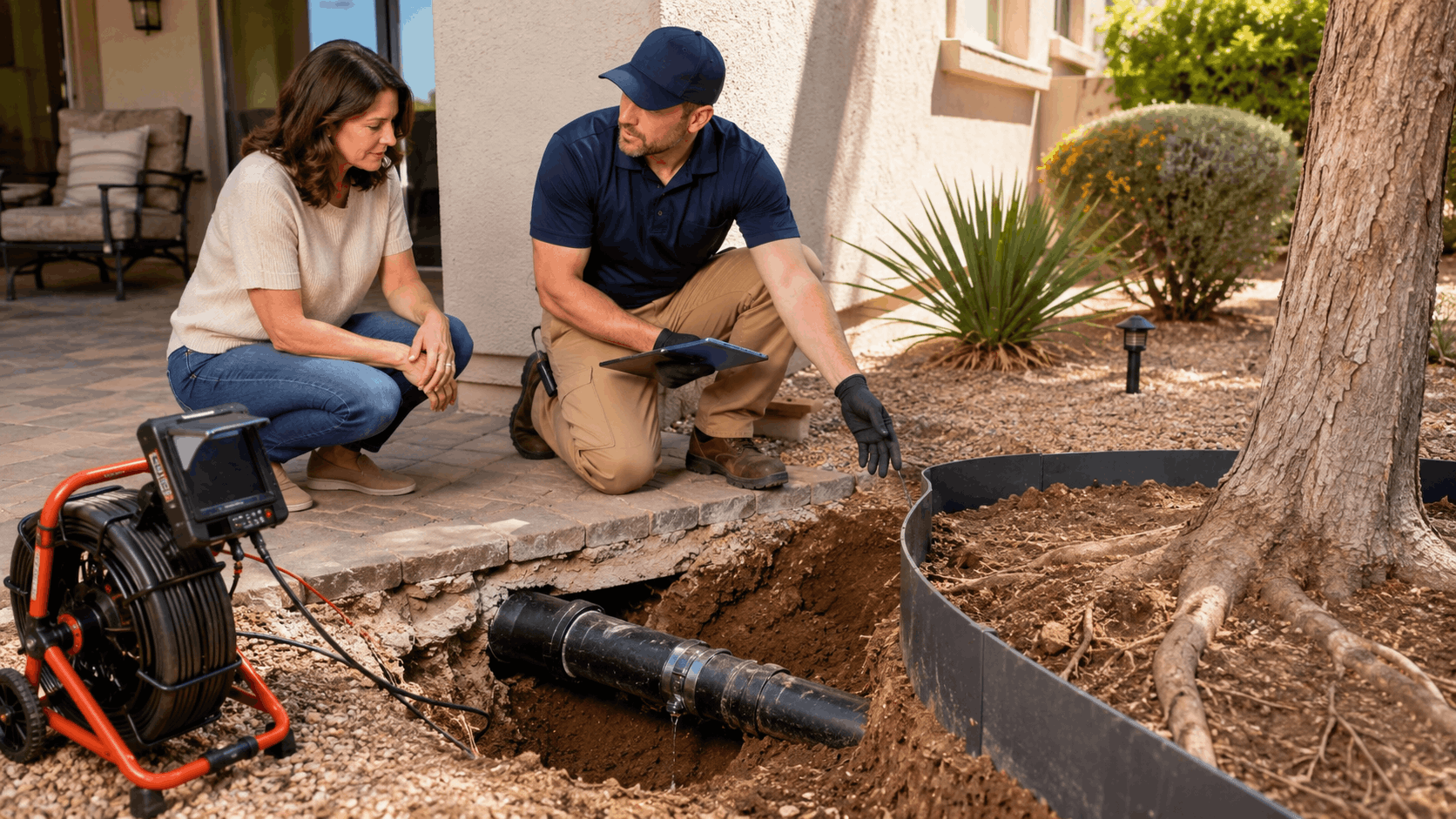
Many sewer and drain repairs in Henderson require a plumbing permit before work begins. Replacing a sewer line, rerouting drains, or opening a slab generally triggers this requirement. Simple clearing usually does not, but structural repair almost always does.
The Henderson building department reviews the permit to confirm the work meets local code. This step matters because it puts a professional standard on the repair. Skipping it can create problems when you sell the home or file an insurance claim.
We handle permit filing as part of our repair work so homeowners do not have to chase paperwork. You can review permit requirements directly through the City of Henderson Building Safety division. Pulling the right permit up front keeps the whole project on solid footing.
Working With Green Valley HOA Communities
Green Valley is full of HOA communities, from The Fountains to Green Valley Ranch. Many of these associations have rules about yard digging, landscaping changes, and how quickly a torn-up yard must be restored. Ignoring those rules can bring fines.
Before we trench a front yard, we check whether the HOA requires notice or approval. Some communities have specific standards for restoring sod, rock, and plantings after underground work. Green Valley Ranch HOA guidelines, for example, often address exactly how disturbed landscaping must be returned to condition.
We plan repairs with landscaping restoration in mind from the start. That means keeping excavation tight and putting the yard back the way the community expects. Coordinating with the HOA early avoids conflict and keeps neighbors happy.
Coordinating With Utilities Before Digging
No responsible dig happens without calling for utility marking first. Nevada's call-before-you-dig process brings out crews to mark gas, water, power, and communication lines. Hitting one of those during a sewer dig is dangerous and expensive.
The service is free and required. Utility marking uses color-coded paint and flags to show where lines run underground. Once the yard is marked, we know exactly where it is safe to excavate.
You can start the process at Call811, the national call-before-you-dig resource. We handle this step as part of any excavation job. It protects your property, the crew, and the whole neighborhood's utilities.
Inspections and Sign-Off
When permitted work wraps up, the city sends an inspector to review it. This final inspection confirms the repair meets code before the slab or trench is closed permanently. Passing it means the work was done to standard.
A documented sign-off protects the homeowner in real ways. It proves the repair was legitimate and code-compliant if you ever sell or file a claim. Without that paper trail, a buyer or insurer may question the work.
We schedule and meet the inspector so the job closes out cleanly. The signed permit becomes part of your home's record. Code compliance is not just a formality, it is proof the job was done right.
Preventing Future Drain and Sewer Problems
The best sewer call is the one you never have to make. A few smart habits keep aging Green Valley lines flowing and cut down on emergencies. Prevention costs far less than a slab dig.
Smart Planting Away From the Line
Where you plant new trees makes a huge difference. Keep aggressive-rooted species like mesquite, olive, and ash well away from the sewer path. A good rule is to plant large trees at least as far from the line as their expected mature height.
Before planting, find out where your sewer line runs from the house to the street. Placing a tree directly over that path invites future root trouble. Smaller shrubs and slow-rooting plants are safer choices near the line.
Root prevention starts before the shovel goes in the ground. Thoughtful tree placement now saves years of repeat backups later. If you are unsure where the line runs, a quick locate can map it before you plant.
Routine Camera Checkups
Older ABS lines benefit from periodic camera checkups even when nothing seems wrong. A routine inspection every two to three years catches roots and small cracks early. Finding a problem while it is minor keeps the repair small.
For homes near known root-heavy streets or with mature trees over the line, more frequent checks make sense. A preventive camera run is far cheaper than an emergency backup during a holiday. It gives you a clear picture of how the line is holding up.
We keep records of past footage so we can compare changes over time. Watching how a line ages helps us predict when replacement will be needed. That kind of planning turns a surprise emergency into a scheduled project.
What Not to Put Down Your Drains
Drain habits matter a lot in slab-era lines. Grease is the biggest culprit, since it cools and hardens inside the pipe, then catches everything else. Never pour cooking oil or bacon grease down the sink.
So-called flushable wipes are another major cause of clogs. They do not break down like toilet paper and easily snag on roots or rough spots inside old ABS. Coffee grounds, eggshells, and fibrous food scraps also build up fast.
Clog prevention comes down to keeping the line clear of anything that does not dissolve. Scrape plates into the trash and use a sink strainer. These simple habits protect an aging line more than most homeowners realize.
Scheduling Service With Active Plumbing
Our team serves Green Valley and the surrounding Henderson neighborhoods every day, from the streets off Sunset Road to the communities near Whitney Ranch and Lake Las Vegas. We know these homes, their slab layouts, and their aging ABS lines. That local knowledge speeds up every diagnosis.
Whether you need a camera inspection, root clearing, a root barrier, or a full line replacement, we handle the whole job. We pull the permits, coordinate with your HOA, and put the yard back in shape. You get one team from diagnosis to sign-off.
Reach out through our contact page or call to schedule service across Henderson. We are ready to help keep your slab-era plumbing flowing for years to come.
Need Help in Las Vegas?
Active Plumbing serves Las Vegas and all of Las Vegas Valley.
Final Thoughts
Green Valley's older homes carry a shared plumbing story: slab-era ABS pipe, shifting desert soil, and mature trees all pressing on the sewer line at once. The good news is that none of it has to catch you by surprise. A camera inspection reveals the real condition, and modern repair methods fix problems with far less digging than before.
Root barriers, smart planting, routine checkups, and better drain habits keep those aging lines working. When repair is needed, options range from simple hydro jetting to trenchless lining and above-slab rerouting. Knowing your choices puts you in control of the outcome and the cost.
If your Green Valley home shows slow drains, gurgling, or repeat backups, do not wait for a full failure. Contact our team for a camera inspection and an honest assessment. We will help you protect your slab-era plumbing with a plan that fits your home and your budget.
Frequently Asked Questions
What is slab-era ABS pipe and why does it fail?
Slab-era ABS pipe is the black acrylonitrile butadiene styrene drain pipe builders used heavily in 1980s and 1990s Green Valley homes, buried under the concrete slab. It fails as it ages through joint separation, pipe bellies from settling soil, and cracks. Some batches from that era were defective and crack along the wall. Decades of ground movement and daily use add to the wear on these older lines.
How do I know if tree roots are in my sewer line?
The strongest sign is a sewer backup that keeps returning after clearing, since roots regrow into the pipe. Watch for slow drainage across several fixtures at once, toilets that gurgle when you run other water, and waste rising in the lowest drain. Foul smells can also appear. A camera inspection confirms root intrusion and shows exactly where the roots enter the line.
How much does a sewer camera inspection cost in Henderson?
A sewer camera inspection in Henderson typically runs a few hundred dollars, depending on line length, access, and whether locating is included. The service sends a video camera through the line so you and the technician can see the pipe's condition, spot roots or cracks, and pinpoint any problem. The cost is small compared to the money saved by avoiding unnecessary slab digging.
Do root barriers really stop roots for good?
Root barriers do not stop roots permanently, but they buy years of strong protection when installed correctly. A well-placed physical barrier can last a decade or more, while chemical treatments need reapplication every few years. Their effectiveness depends on the tree species, soil, and how close roots already are. Pairing a barrier with a sound, repaired pipe and periodic camera checks gives the best long-term result.
Can a sewer line under a slab be fixed without breaking the floor?
Often yes. Trenchless pipe lining inserts a resin liner that cures into a new pipe inside the old one, sealing cracks without opening the floor along the whole run. When the existing line is too damaged, above-slab rerouting runs new pipe through walls or the attic. Both methods limit floor damage. A camera inspection determines which under-slab fix suits your home.
Do I need a permit for sewer work in Green Valley?
Most repair and replacement work does require a Henderson plumbing permit, including line replacement, rerouting, or opening a slab. Simple drain clearing usually does not. The permit lets the city confirm the work meets code and protects you during a sale or insurance claim. Our team pulls the permit and schedules the final inspection so the sewer work is documented and compliant.
How often should older Green Valley homes get their lines checked?
For aging ABS lines, a camera inspection every two to three years catches problems early. Homes with mature trees over the sewer path or a history of backups should check more often. Regular inspection of these older pipes reveals roots, bellies, and cracks while they are still small and cheap to address. Consistent checkups turn surprise emergencies into planned, manageable repairs.
Is hydro jetting safe for old ABS pipe?
Hydro jetting is safe for old ABS pipe when the line is still structurally sound, which a camera inspection confirms first. On a solid pipe, jetting clears roots, grease, and buildup thoroughly. If the pipe is already cracked, severely bellied, or from a defective batch, high-pressure jetting may worsen the damage. That is why we inspect before jetting to make sure the line can handle it.
How long does a sewer line replacement take?
Timeframes vary by method and access. A spot repair often finishes in a day, while a full traditional line replacement can take two to four days including excavation and restoration. Trenchless lining or bursting frequently wraps up in a day or two with less digging. Permit approval, inspection scheduling, and HOA coordination can add time to the overall project.
Does Active Plumbing service all of Green Valley and Henderson?
Yes. Our team serves all of Green Valley and the wider Henderson area, along with nearby communities across the valley. We handle drain and sewer work, camera inspections, root barriers, and full line replacement for slab-era homes. Reach us through our contact page or by phone to schedule service. We know these neighborhoods and their aging plumbing well.
Frequently Asked Questions
- What is slab-era ABS pipe and why does it fail?
- Slab-era ABS pipe is the black acrylonitrile butadiene styrene drain pipe builders used heavily in 1980s and 1990s Green Valley homes, buried under the concrete slab. It fails as it ages through joint separation, pipe bellies from settling soil, and cracks. Some batches from that era were defective and crack along the wall. Decades of ground movement and daily use add to the wear on these older lines.
- How do I know if tree roots are in my sewer line?
- The strongest sign is a sewer backup that keeps returning after clearing, since roots regrow into the pipe. Watch for slow drainage across several fixtures at once, toilets that gurgle when you run other water, and waste rising in the lowest drain. Foul smells can also appear. A camera inspection confirms root intrusion and shows exactly where the roots enter the line.
- How much does a sewer camera inspection cost in Henderson?
- A sewer camera inspection in Henderson typically runs a few hundred dollars, depending on line length, access, and whether locating is included. The service sends a video camera through the line so you and the technician can see the pipe's condition, spot roots or cracks, and pinpoint any problem. The cost is small compared to the money saved by avoiding unnecessary slab digging.
- Do root barriers really stop roots for good?
- Root barriers do not stop roots permanently, but they buy years of strong protection when installed correctly. A well-placed physical barrier can last a decade or more, while chemical treatments need reapplication every few years. Their effectiveness depends on the tree species, soil, and how close roots already are. Pairing a barrier with a sound, repaired pipe and periodic camera checks gives the best long-term result.
- Can a sewer line under a slab be fixed without breaking the floor?
- Often yes. Trenchless pipe lining inserts a resin liner that cures into a new pipe inside the old one, sealing cracks without opening the floor along the whole run. When the existing line is too damaged, above-slab rerouting runs new pipe through walls or the attic. Both methods limit floor damage. A camera inspection determines which under-slab fix suits your home.
- Do I need a permit for sewer work in Green Valley?
- Most repair and replacement work does require a Henderson plumbing permit, including line replacement, rerouting, or opening a slab. Simple drain clearing usually does not. The permit lets the city confirm the work meets code and protects you during a sale or insurance claim. Our team pulls the permit and schedules the final inspection so the sewer work is documented and compliant.
- How often should older Green Valley homes get their lines checked?
- For aging ABS lines, a camera inspection every two to three years catches problems early. Homes with mature trees over the sewer path or a history of backups should check more often. Regular inspection of these older pipes reveals roots, bellies, and cracks while they are still small and cheap to address. Consistent checkups turn surprise emergencies into planned, manageable repairs.
- Is hydro jetting safe for old ABS pipe?
- Hydro jetting is safe for old ABS pipe when the line is still structurally sound, which a camera inspection confirms first. On a solid pipe, jetting clears roots, grease, and buildup thoroughly. If the pipe is already cracked, severely bellied, or from a defective batch, high-pressure jetting may worsen the damage. That is why we inspect before jetting to make sure the line can handle it.
- How long does a sewer line replacement take?
- Timeframes vary by method and access. A spot repair often finishes in a day, while a full traditional line replacement can take two to four days including excavation and restoration. Trenchless lining or bursting frequently wraps up in a day or two with less digging. Permit approval, inspection scheduling, and HOA coordination can add time to the overall project.
- Does Active Plumbing service all of Green Valley and Henderson?
- Yes. Our team serves all of Green Valley and the wider Henderson area, along with nearby communities across the valley. We handle drain and sewer work, camera inspections, root barriers, and full line replacement for slab-era homes. Reach us through our contact page or by phone to schedule service. We know these neighborhoods and their aging plumbing well.
A
Licensed plumbing professionals serving Las Vegas and Las Vegas Valley.
Licensed in Nevada · License #0047021
Last updated on
Why trust Active Plumbing?
Founded in 1991, Active Plumbing is a licensed and insured plumber serving Las Vegas and Las Vegas Valley. All content is reviewed by our licensed technicians.

Need Help in Las Vegas?
Active Plumbing serves Las Vegas and all of Las Vegas Valley.
Related Articles
Cost Guides
Plumber in Green Valley Henderson: Service Costs and Response Times for Sun City Anthem Area
Real plumbing service costs, response times, and local conditions for Sun City Anthem, Green Valley, and the wider Henderson area from Active Plumbing.
Tips & Advice
Sewer Line Repair in Paradise and Winchester: 60s-70s Clay Pipe Root Intrusion Capital of the Valley
Paradise and Winchester's 60s-70s clay pipes are root intrusion magnets. Learn the warning signs, camera inspection, repair options, and costs from Active Plumbing.
Tips & Advice
Water Heater Replacement in Green Valley Henderson: High Water Pressure and PRV Pairing
High street pressure quietly kills water heaters in Green Valley Henderson. Learn why pairing a new unit with a PRV protects your investment, warranty, and home.