Safety & Prevention
Emergency Plumber in Downtown Las Vegas and Huntridge: Galvanized-Era Homes and What Fails at 2am

Key Takeaways
- Post-war homes near Huntridge, John S. Park, and Maryland Parkway were built with galvanized steel pipe that has outlived its 40 to 50 year lifespan.
- Galvanized pipe corrodes from the inside out, and Las Vegas hard water speeds up scale buildup that narrows and weakens the lines.
- The most common 2am failures are burst wall lines, flooding water heaters, sewer backups, and seized shutoff valves.
- Watch for rusty water, dropping pressure, damp spots and musty smells, and higher water bills as early warning signs.
- In an emergency, shut off the main water valve first, cut power near standing water, contain the leak, then call a 24-hour plumber.
- Repiping with copper or PEX ends the cycle of repeat leaks, and permits through the City of Las Vegas are required.
- Annual inspections, upgraded shutoff valves, water softening, and timely water heater replacement prevent most nighttime disasters.
- Active Plumbing offers around-the-clock emergency service across Downtown and Huntridge with experience in historic galvanized-era homes.
In This Article
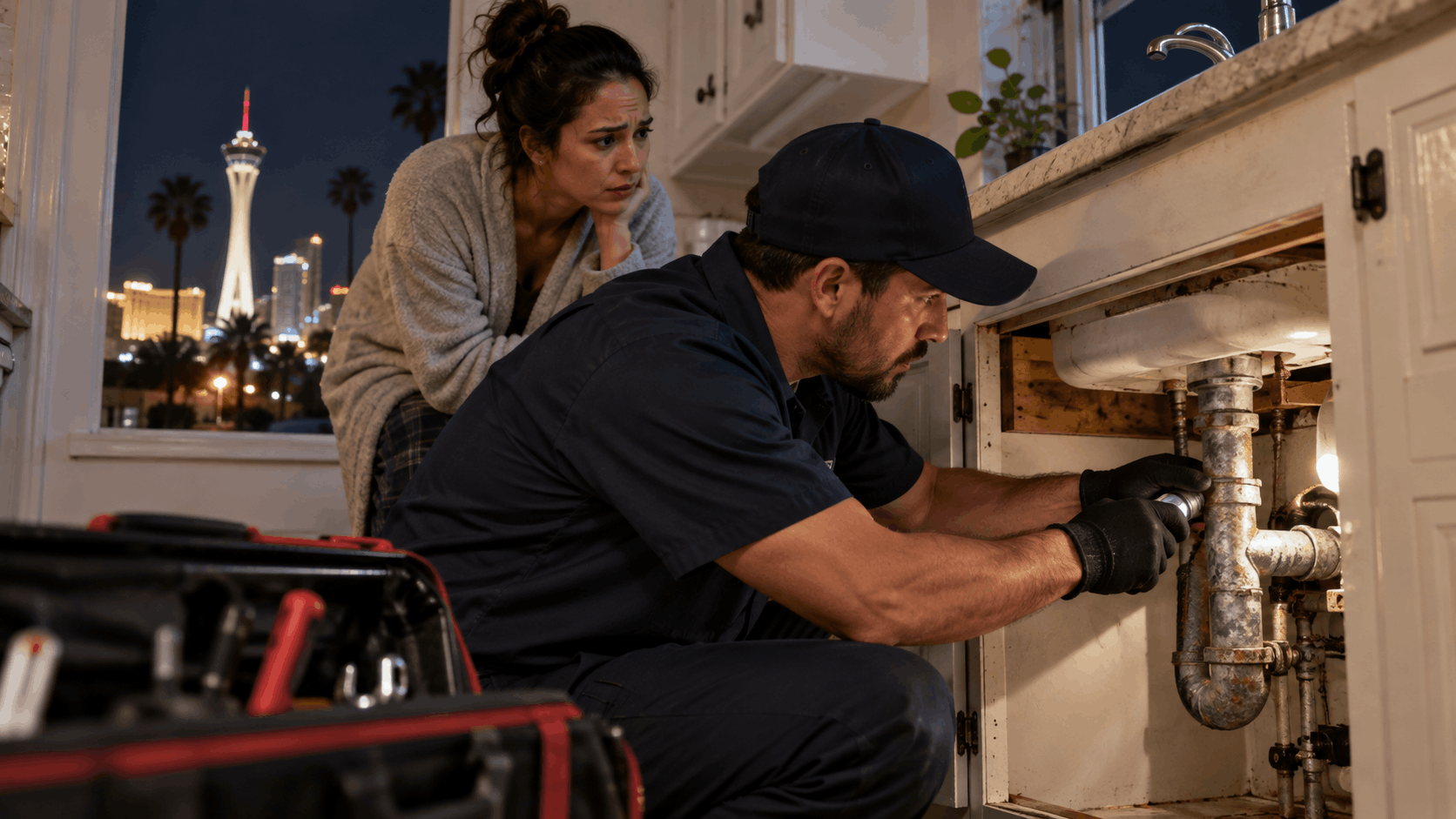
It is 2am in a Huntridge bungalow off Maryland Parkway. A homeowner wakes up to a hiss behind the bathroom wall, then the sound of water hitting the floor. By the time they find the light switch, the hallway carpet is soaked and the ceiling below is starting to bulge. This is one of the most common calls our team gets, and it almost always happens in an older home with original galvanized plumbing.
Downtown Las Vegas and Huntridge are full of charming post-war homes. The problem is that the plumbing inside those walls is often 70 or 80 years old. Galvanized steel pipe was never built to run that long, and when it finally lets go, it tends to do it in the middle of the night when no one is watching.
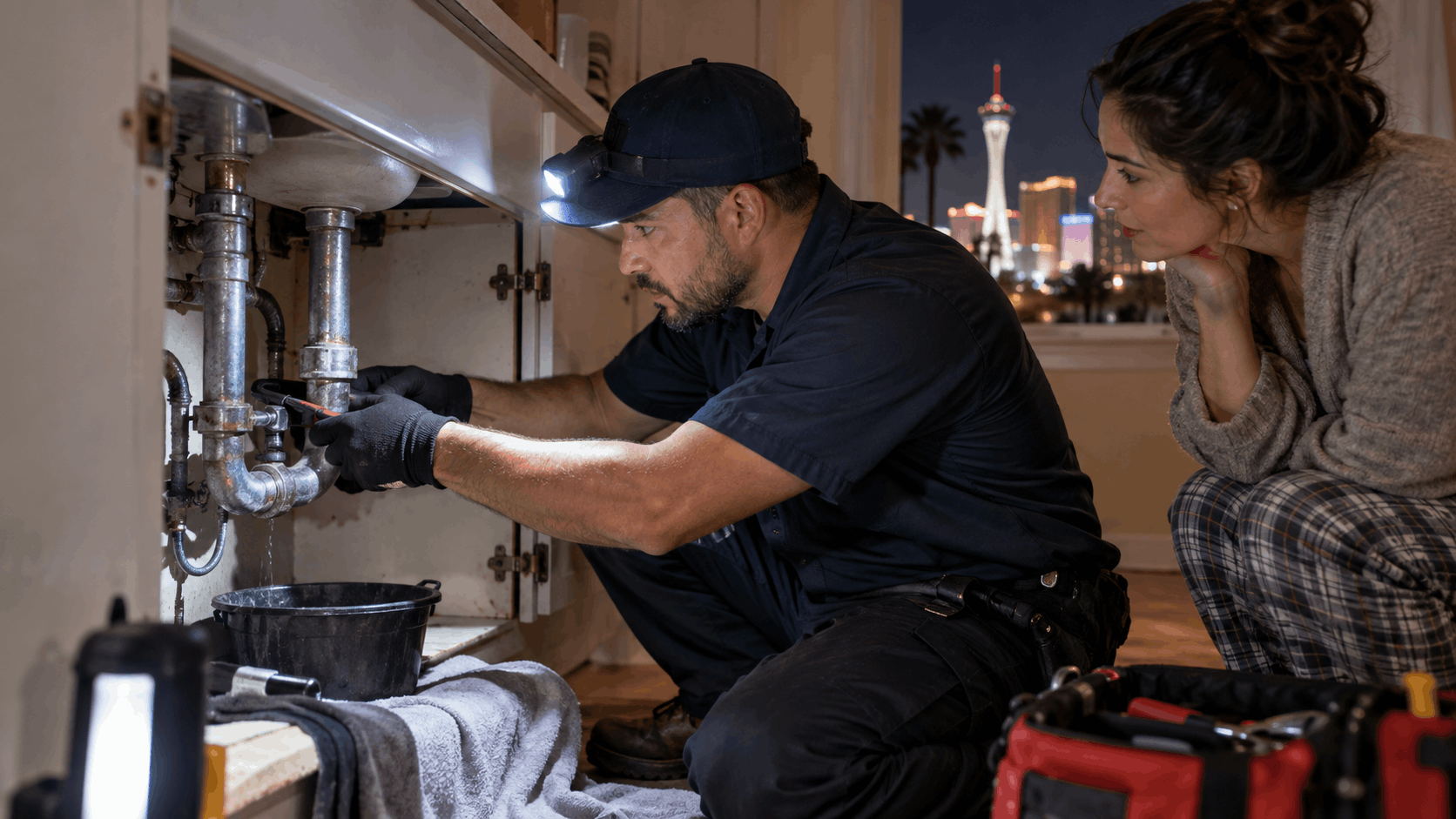
Why Galvanized-Era Homes in Downtown and Huntridge Break Down?
The homes that give these neighborhoods their character also carry plumbing that has reached the end of its life. Most of the housing near Downtown Las Vegas and Huntridge went up decades ago, and the galvanized pipes buried in those walls have been quietly corroding the entire time. When old plumbing meets Las Vegas hard water, the clock speeds up.
We have crawled under and inside hundreds of Huntridge homes, and the story rarely changes. The original galvanized steel supply lines are rusted, narrowed, and brittle. Owners often have no idea what is behind their plaster until a leak forces the issue.
The 1940s and 1950s Building Boom Near Maryland Parkway
After World War II, Las Vegas grew fast, and the tracts around Huntridge and the John S. Park neighborhood filled in quickly. Developers built simple, affordable ranch homes and bungalows for returning service members and workers. That post-war housing wave gave the area its tight street grid and consistent architecture.
The plumbing standard of that era was galvanized steel supply lines. It was strong when new and cheap to install, so nearly every home near Maryland Parkway got it. Nobody expected those homes to still be standing and occupied 75 years later.
Galvanized pipe was designed with a realistic service life of roughly 40 to 50 years. Many John S. Park and Huntridge homes have blown well past that mark. The pipe did its job for decades, but it was living on borrowed time long before the current owners moved in.
That is why age alone is a red flag. If a home near Downtown has never been repiped, the odds are high that the original galvanized runs are still in the walls, waiting to fail.
How Galvanized Steel Corrodes From the Inside Out
Galvanized pipe is steel coated with a layer of zinc to slow rust. The zinc coating works for years, but it slowly wears away as water flows through the line every day. Once the zinc is gone, the bare steel underneath starts to corrode.
That corrosion builds up on the inside of the pipe where nobody can see it. Rust buildup forms rough scabs and flakes that cling to the pipe wall. Over decades, that layer grows thicker and thicker.
As the buildup grows, the inner diameter of the pipe shrinks. A half-inch line can narrow to the width of a pencil, then to the width of a straw. This is why old homes get weak water flow and why pressure spikes strain the thinnest spots.
Eventually the pipe wall gets so thin and pitted that it cannot hold pressure anymore. A small overnight surge is all it takes to rupture the weakest section. The failure starts on the inside, which is exactly why owners never see it coming.
Las Vegas Hard Water and Mineral Scale
Water in the valley comes from the Colorado River through the Las Vegas Valley Water District, and it is some of the hardest water in the country. It carries a heavy load of calcium and magnesium minerals. Those minerals do real damage to old plumbing over time.
As hard water moves through galvanized pipe, it leaves behind mineral scale on the interior walls. That scale stacks on top of existing rust buildup, making the blockage worse and faster. The combination chokes the pipe from two directions at once.
Scale also collects at fittings, valves, and the base of water heaters. It hardens into a crust that traps moisture against the metal and speeds corrosion. In many Downtown homes, we find valves so scaled over that they no longer turn.
A water treatment system can slow this process in newer plumbing, but for aging galvanized lines the mineral load simply accelerates the end. Hard water is a big reason Las Vegas homes fail faster than the same homes would in a soft-water city.
Mixed Repairs From Past Owners
Very few older homes have their original plumbing fully intact. Over the years, owners and handymen made patch repairs, swapping out bad sections with whatever was on hand. That usually means galvanized joined to copper, or galvanized tied into PEX.
The trouble starts where two different metals meet. When galvanized steel touches copper, galvanic corrosion sets in at the connection. One metal sacrifices itself to the other, and the joint corrodes far faster than the surrounding pipe.
These mixed pipe materials create weak points scattered all over the home. A repair that looked fine ten years ago can be the exact spot that lets go at 2am. We often find three or four generations of patch work in a single Huntridge house.
Each patch also means a fitting, and every fitting is another place for scale and rust to collect. The more mismatched repairs a home has, the more unpredictable the whole system becomes. Piecemeal fixes buy time, but they rarely solve the root problem.
Get Your Quote
Tell us what's going on and we'll get back to you fast.
What Actually Fails at 2am in These Older Homes
Plumbing does not really care about the clock, but certain failures show up at night far more often. Water pressure in the valley tends to climb overnight when neighborhood demand drops. That extra pressure pushes on already weak galvanized lines, which is why so many of our emergency plumbing calls come in after midnight.
Here is what breaks most often when the phone rings at 2am in Downtown and Huntridge homes. Knowing these patterns helps owners react faster when it happens to them.
Burst Supply Lines Behind Walls
The most damaging failure is a burst pipe hidden inside a wall. Thin, corroded galvanized supply lines cannot handle the overnight water pressure spike, and the weakest spot ruptures. Because the line is under constant pressure, water sprays out fast.
These wall leaks tend to hit behind kitchen and bathroom walls where the pipe runs are longest and oldest. A burst line there can push gallons per minute into the framing. By morning, drywall, insulation, and flooring can all be ruined.
What makes these so costly is how long they run before discovery. A pipe that fails at 2am might soak a home for hours before anyone wakes up. That is why fast shutoff and a quick call for burst pipe repair matter so much.
Our team locates the rupture, cuts out the failed section, and stops the water. From there we talk through whether a spot repair or a larger fix makes more sense for the age of the system.
Failing Water Heaters and Tank Leaks
Old water heaters in garages and hallway closets are another common overnight flood source. The tank sits full of water 24 hours a day, and the steel slowly rusts from the inside. When it finally rusts through, the whole tank empties onto the floor.
Tank failures often happen at night simply because that is when the tank has cooled and expanded and contracted through its cycle. A weak seam gives way and 40 or 50 gallons hit the floor at once. In a garage that slopes toward the house, that water heads straight indoors.
We see this constantly in homes where the heater is 12 or more years old. Sediment and mineral scale settle at the bottom and cook against the steel, thinning it out. Once corrosion wins, no repair will save the tank.
When a heater floods, the fix is replacement, and we handle same-night water heater service when possible. Owners planning ahead often switch to a modern unit before the old one fails on its own schedule.
Clogged and Backed-Up Sewer Lines
Not every night emergency is a leak. Older Downtown homes often have cast iron drain stacks and clay sewer laterals running out to the street. Both of those materials break down and clog over the decades.
Cast iron corrodes and gets rough inside, catching grease and waste. Clay laterals crack and let tree roots grow in through the joints. Either way, the line slowly closes off until it backs up.
The backup usually gets noticed at night, when a family runs the dishwasher or takes a late shower and waste water comes up into the tub or a floor drain instead of going down. It is an alarming thing to wake up to. A sewer backup is also a health hazard that needs prompt attention.
Our crews clear these with a cabling machine or hydro jetting, then run a sewer camera inspection to find the real cause. If the clay lateral is broken, we go over sewer line repair and replacement options.
Failed Shutoff Valves and Angle Stops
The small angle stops under sinks and toilets are quiet troublemakers in old homes. These shutoff valves sit untouched for years and slowly corrode. Scale locks them in place and eats at the fitting.
When a supply line starts to drip, the natural move is to reach under and close the angle stop. In many older homes, the valve either will not turn or snaps off in your hand. A tiny drip suddenly becomes an open line pouring water.
This is why we tell owners to test their shutoff valves once in a while rather than assume they work. A corroded fitting that cannot close is useless in an emergency. Finding out at 2am is the worst time.
Replacing old angle stops with modern quarter-turn valves is a small job that pays off big during a crisis. It gives you a reliable way to stop water at a single fixture without shutting down the whole house.
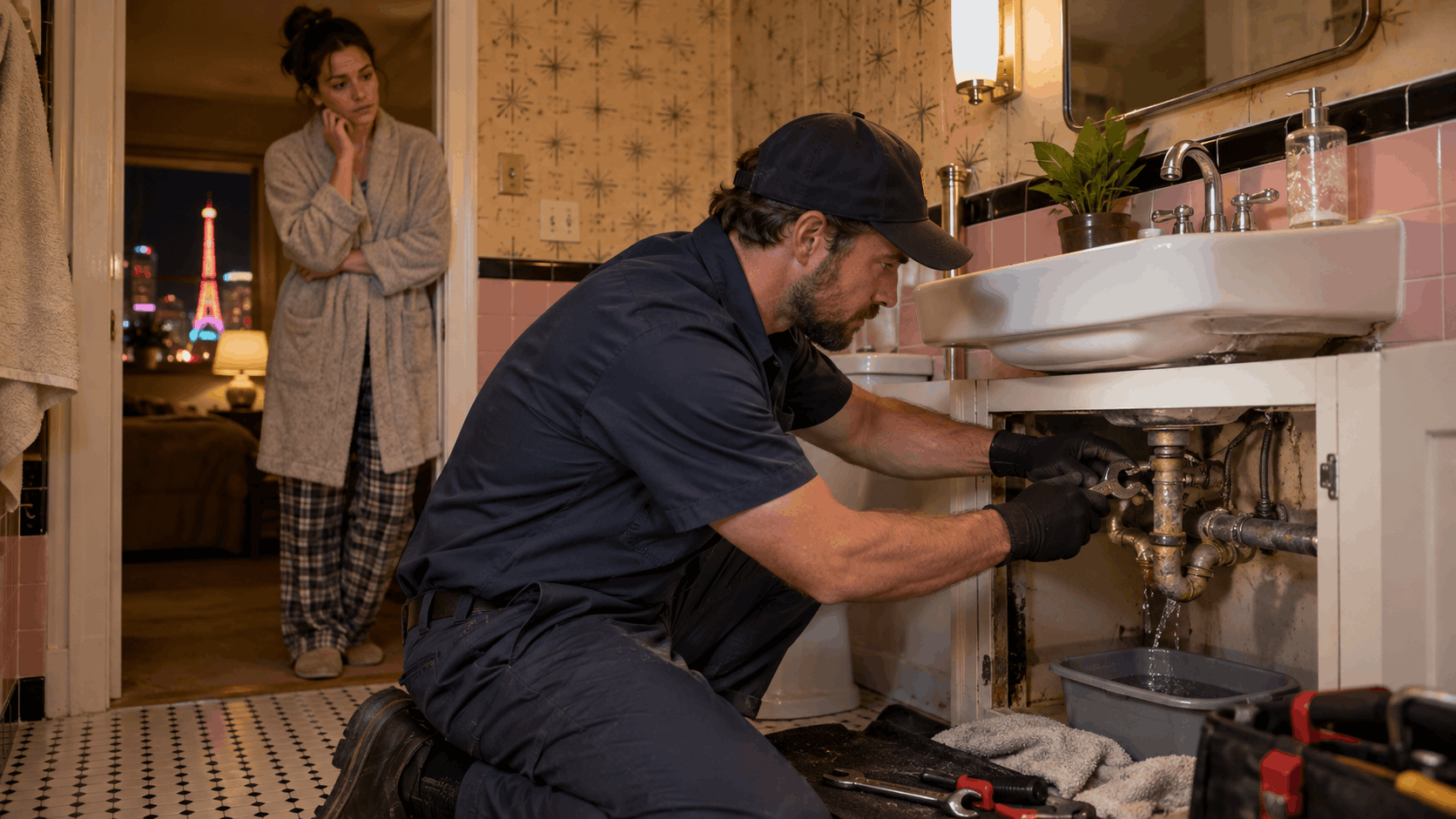
Need Help in Las Vegas?
Active Plumbing serves Las Vegas and all of Las Vegas Valley.
Warning Signs Before the Middle-of-Night Emergency
Galvanized systems rarely fail without warning. They send out plumbing warning signs for months or even years before the big break. Owners who learn to read those clues can act during business hours instead of scrambling at 2am.
Here are the symptoms we tell every older-home owner near Downtown and Huntridge to watch for:
- Discolored water that runs brown or rusty from the tap
- Low water pressure that has gotten worse over the years
- Damp spots and musty smells that hint at a hidden leak
- Higher water bills with no change in how much you use
Brown or Rusty Water From the Tap
When water comes out brown or tinted orange, that color is rust. It means the inside of your galvanized supply lines is corroding and shedding particles into the water. Fresh homes with newer pipe do not do this.
The discoloration is often worst first thing in the morning or after the water has sat unused for a while. That is when loose rust has had time to settle and mix in. Running the tap may clear it briefly, but the underlying corroded pipes are still there.
Rusty water is more than a nuisance. It tells you the pipe walls are thinning from the inside, which is the exact condition that leads to a burst. Consistent brown water is a strong signal to plan a repipe before failure.
If only the hot water is discolored, the water heater tank may be the culprit instead. Either way, it is worth having our team check which pipes are involved.
Dropping Water Pressure Over Time
Weak showers and slow-filling faucets are classic signs of pipe narrowing. As rust buildup and mineral scale close off the inside of galvanized lines, less water can pass through. The result is weak flow throughout the home.
Owners often adjust to this slowly and do not notice how bad it has gotten. A shower that once had strong pressure now barely rinses shampoo out. Running two fixtures at once makes both trickle.
Low water pressure is not just annoying. It shows the pipe interior has shrunk dramatically, which means the walls are also thin and fragile. A narrowed pipe is a stressed pipe, and stressed pipes rupture.
If pressure has dropped across the whole house rather than at one faucet, the supply lines themselves are the problem. That is a system-wide issue that a single repair will not fix.
Damp Spots, Stains, and Musty Smells
Long before a pipe fully bursts, it often weeps a slow hidden leak. Those small leaks show up as water stains on ceilings, warped baseboards, or bubbling paint. A musty, moldy smell in a room is another giveaway.
These clues mean water is escaping somewhere inside the structure. Even a slow drip inside a wall feeds mold and rots framing over time. The damage grows quietly until it becomes visible.
In older Huntridge homes with original plaster, stains can be tricky to spot against textured walls. We recommend checking under sinks, around toilet bases, and along ceilings below bathrooms regularly. Catching a slow leak early prevents the bigger overnight break.
A electronic leak detection service can pinpoint a hidden leak without tearing open every wall. That saves both money and mess when tracking down the source.
Higher Water Bills With No Change in Use
A water bill that jumps for no clear reason often means water is leaking somewhere you cannot see. If the household has not added people or changed habits, that extra usage is going somewhere. A hidden leak is the usual answer.
Slab leaks are a particular concern in homes built on concrete. A galvanized line running under the slab can leak for weeks, quietly wasting water and undermining the foundation. The bill is sometimes the only early sign.
Owners can test for a leak by turning off every fixture and watching the water meter. If it keeps moving, water is escaping somewhere in the system. That is a good time to call before the leak turns into a flood.
Rising bills paired with any of the other warning signs paint a clear picture. Together they say the galvanized system is failing and needs attention soon.
What to Do the Moment a Pipe Fails at Night
When water is spraying at 2am, the first few minutes decide how bad the damage gets. Knowing your emergency steps ahead of time keeps a bad night from becoming a disaster. Here is the burst pipe response we walk homeowners through on the phone.
Stay calm, work in order, and get the water stopped first. Everything else can wait until the flow is under control.
Find and Shut Off the Main Water Valve
The fastest way to stop flooding is closing the main water valve. In older Downtown homes, the main shutoff is often outside near the front hose bib, in a box near the street, or in the garage. Knowing where yours is before an emergency saves precious minutes.
Turn the valve clockwise until it stops to shut off all water to the house. A round handle may need several turns, while a lever handle turns a quarter turn. Once it is closed, the spray inside should slow to a stop.
We tell every owner to locate and test their main shutoff on a calm day. Some old valves are seized and need replacement, which is far better to learn now than during a flood. If the main will not close, shutting off at the meter is the backup.
The water meter box near the street has a valve you can turn with a meter key or a wrench. That is the last-resort water shutoff when nothing in the house will close.
Kill Power to Flooded Areas
Water and electricity are a dangerous mix. If water has reached outlets, appliances, or is spreading across a floor near electrical panels, shut off power to that area. Electrical safety comes before cleanup.
Go to your circuit breaker panel and switch off the breakers feeding the flooded rooms. If the panel itself is in a wet area or you cannot reach it safely, do not risk it. Stay out of standing water that may be energized.
Never step into a flooded room with live power if you are unsure. A charged puddle can cause serious injury. When in doubt, wait for the professionals and keep everyone clear.
Once power is off and the water is stopped, the area is safer to work in. Only then should you start moving belongings and soaking up water.
Contain and Drain the Water
With the main off, there is still water sitting in the lines that will drain out. Open the lowest faucets in the house and any outside spigots to relieve pressure. This pulls remaining water down and away from the burst area.
Grab towels, buckets, and a mop to contain the water damage. Move furniture and boxes off the wet floor and lift anything valuable. Pull back soaked rugs so the floor underneath can start drying.
If water came through a ceiling, place buckets under the drips and poke a small hole at the lowest sag to let it drain in one spot. That controls where the water goes and can save the rest of the ceiling. It sounds counterintuitive, but a controlled drain beats a collapse.
Fans and open windows help start the drying process. The faster you dry things out, the less chance mold takes hold in the days after.
Call a 24-Hour Emergency Plumber
Once the water is off and contained, call a 24-hour plumber. A burst galvanized line, a flooding water heater, or a sewer backup is beyond a DIY fix in an old home. Trying to patch corroded pipe yourself usually makes it worse.
Calling an overnight emergency service saves money because it limits how long the damage spreads. Every hour water sits leads to more ruined drywall, flooring, and framing. A quick professional stop is cheaper than days of repair.
Our team at Active Plumbing answers emergency plumbing calls around the clock across Downtown and Huntridge. We come prepared for old galvanized systems, not just modern pipe. That experience matters when your walls are 75 years old.
When you call, tell us what failed and what you have already shut off. That helps us bring the right parts and reach you ready to work.
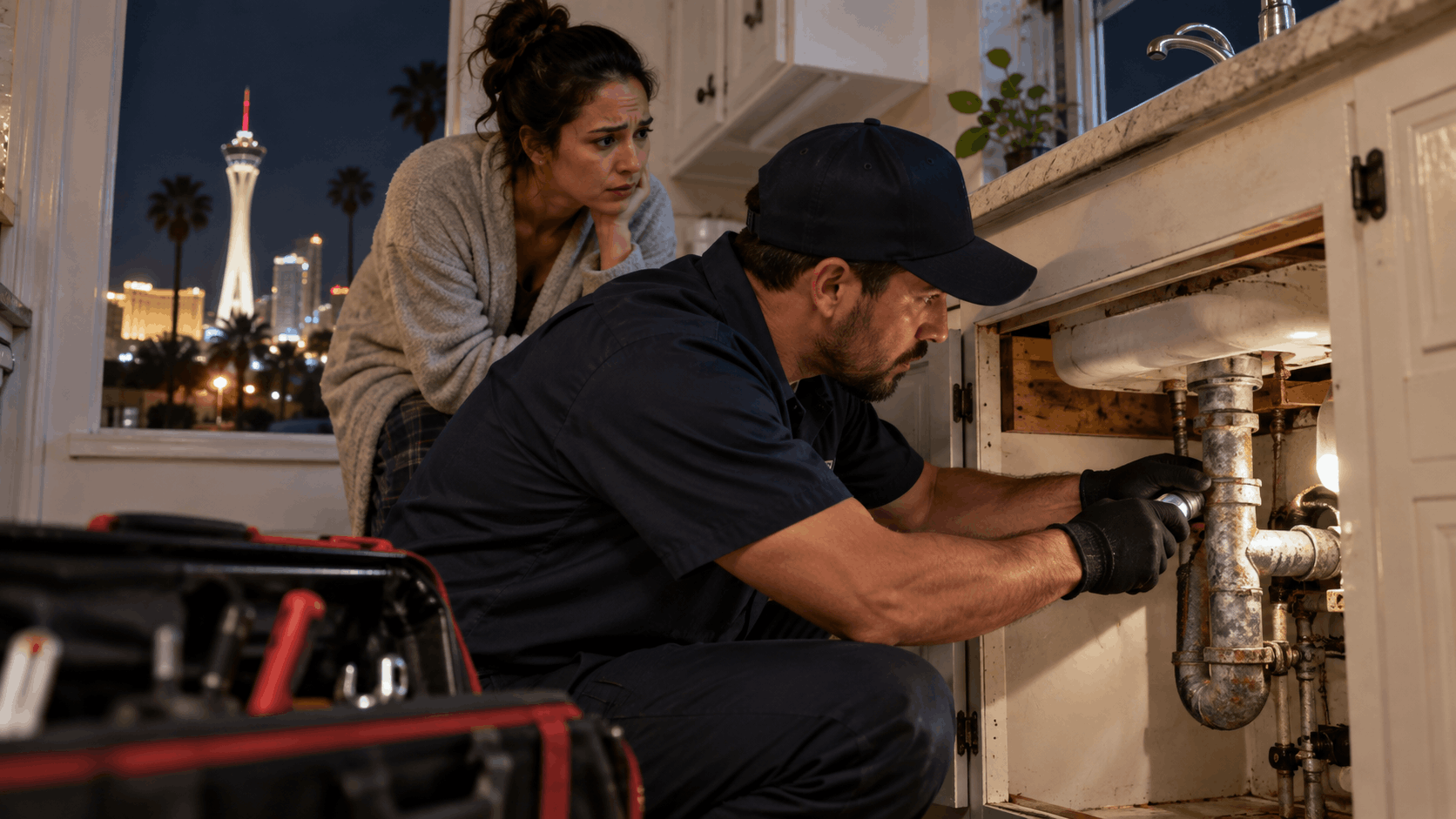
How Active Plumbing Handles Late-Night Calls in Downtown Las Vegas
Serving as an emergency plumber in Las Vegas means knowing the old neighborhoods as well as the new ones. Downtown plumbing comes with quirks that a crew unfamiliar with historic homes will fumble. Our 24-hour service is built around getting to these homes fast and diagnosing them right.
We have worked hundreds of homes across these historic streets, so we know what to expect behind the walls before we arrive. That saves time when every minute counts.
Fast Routes Through Downtown and Huntridge
At night, traffic is light and we know the fastest ways in. Charleston Boulevard cuts straight across the area and gives us quick access to most of Huntridge and John S. Park. Fremont Street and Maryland Parkway fill in the rest of the grid.
Because the streets Downtown follow a tight, predictable layout, our quick response times are strong in this part of the valley. We are not hunting for winding cul-de-sacs like in some newer tracts. That grid works in your favor at 2am.
Our trucks stage close to the urban core, which keeps us near these older homes overnight. When a call comes in from near the Arts District or Huntridge, we are usually only minutes away. Location and route knowledge make the difference between fast help and a long wait.
We serve the whole Las Vegas area, but the historic core is where our old-home experience really shows.
Diagnosing Old Systems Without Guesswork
Old homes hide their plumbing in strange places, and guessing wastes time. We use leak detection tools to find the exact spot water is escaping without tearing open every wall. That keeps the repair area small.
For drain and sewer trouble, we run a camera inspection down the line to see the real condition of cast iron and clay. The camera shows cracks, root intrusion, and corrosion clearly. No more guessing at what is wrong underground.
Locating hidden galvanized runs behind plaster is its own skill. We trace the original supply routes so we know what we are dealing with before cutting. That planning prevents surprises mid-repair.
Accurate diagnosis means we fix the actual problem, not just the symptom. In an old home, that distinction saves owners from repeat failures.
Temporary Fixes vs. Permanent Repairs
The first job at 2am is stopping the emergency. We make a solid temporary repair to get the water off and your home safe for the night. That might be replacing a burst section or capping a failed line.
Once the crisis is handled, we talk honestly about what comes next. A patch on 75-year-old galvanized pipe is a short-term fix, and we say so. Another section is likely to fail before long.
For homes with widespread corrosion, a permanent fix means repiping. We lay out the options and costs so owners can decide on their own timeline. There is no pressure, just straight information.
Some owners choose a full repipe right away, while others do it in stages. Either path is fine, and we plan the work around what fits your budget and situation.
Working Within Historic Home Constraints
Historic homes in John S. Park and Beverly Green have original plaster, tile, and layouts worth protecting. We treat those features with care during every repair. Cutting into plaster is not the same as cutting into modern drywall.
Our crews open access points thoughtfully and keep the damage contained to what is truly needed. We work around original tile and trim wherever possible. The goal is a fixed pipe and a home that still looks like itself.
These older layouts also mean tight, cramped wall cavities and unusual pipe routing. Experience with historic homes tells us where lines are likely to run. That knowledge lets us reach the problem with minimal cutting.
Respecting the character of these homes matters to the owners who chose them. We work the same way we would on our own historic property.
Need Help in Las Vegas?
Active Plumbing serves Las Vegas and all of Las Vegas Valley.
Repiping Options for Galvanized-Era Homes
Once galvanized plumbing starts failing, repeat leaks are a matter of when, not if. Repiping ends the cycle by replacing the tired old steel with modern materials. The two main choices are copper pipes and PEX, and both beat aging galvanized by a wide margin.
Here is how to think through the options for an older Downtown or Huntridge home.
Replacing Galvanized With Copper
Copper has been the trusted upgrade from galvanized for decades. It resists corrosion far better than steel and holds up well against Las Vegas water when installed correctly. A copper repipe can last 50 years or more.
Copper is rigid, so it looks clean and professional in exposed runs like a garage or basement. It handles heat well and does not sag over time. Many owners like knowing it is a proven, long-lasting material.
The tradeoff is cost. Copper is more expensive than PEX, both in material and in the labor to solder each joint. A whole-home copper repipe in an older home typically runs several thousand dollars depending on size and access.
For owners who plan to stay long-term and want maximum durability, the copper investment often makes sense. We help weigh that against the alternatives during the estimate.
PEX Repiping for Faster, Cleaner Installs
PEX is a flexible plastic pipe that has become the go-to for repipes in older homes. Its flexibility lets it snake through tight historic wall cavities without cutting as many access holes. That means less damage to plaster and tile.
Because PEX comes in long runs with fewer joints, installs go faster and cost less than copper. That affordable option appeals to owners on a budget. It also resists scale buildup better than steel.
PEX handles the freeze-thaw swings and hard water of the valley well. It has decades of proven use now and meets code across the region. For most Huntridge homes, it is a practical, cost-effective choice.
The flexible pipe does need proper support and protection from UV light, which we handle during install. Done right, a PEX repipe removes the galvanized headache for good.
Whole-Home vs. Section-by-Section Replacement
Some owners want the whole home repiped at once, while others can only tackle part of it now. A whole-home repipe solves everything in one project and is the most cost-efficient per foot. It also means no more surprise failures from old sections left behind.
Section-by-section replacement targets the worst runs first and spreads the cost over time. This partial approach works when a budget is tight or one area is clearly failing. It buys reliability where you need it most.
The downside of partial repipes is that the untouched galvanized sections can still fail later. You may pay for access twice by opening walls again down the road. We help owners plan the phases to minimize that overlap.
Budget planning is a real conversation, and we lay out the numbers honestly. There is a right answer for every situation, and it depends on the home and the owner's plans.
Permits and City of Las Vegas Requirements
Repiping a home requires a plumbing permit through the City of Las Vegas building department. The permit makes sure the work meets current code and passes inspection. Skipping it can cause problems when you sell the home later.
For historic homes, code compliance still applies even though the structure is old. New pipe must meet today's standards regardless of the home's age. Inspectors check the materials, connections, and support.
Our team handles the permit process as part of a repipe project. We pull the paperwork, schedule the inspection, and make sure the work passes. Owners do not have to figure out the city process alone.
You can review general permit information through the City of Las Vegas building department. Doing the job by the book protects your investment and your resale value.
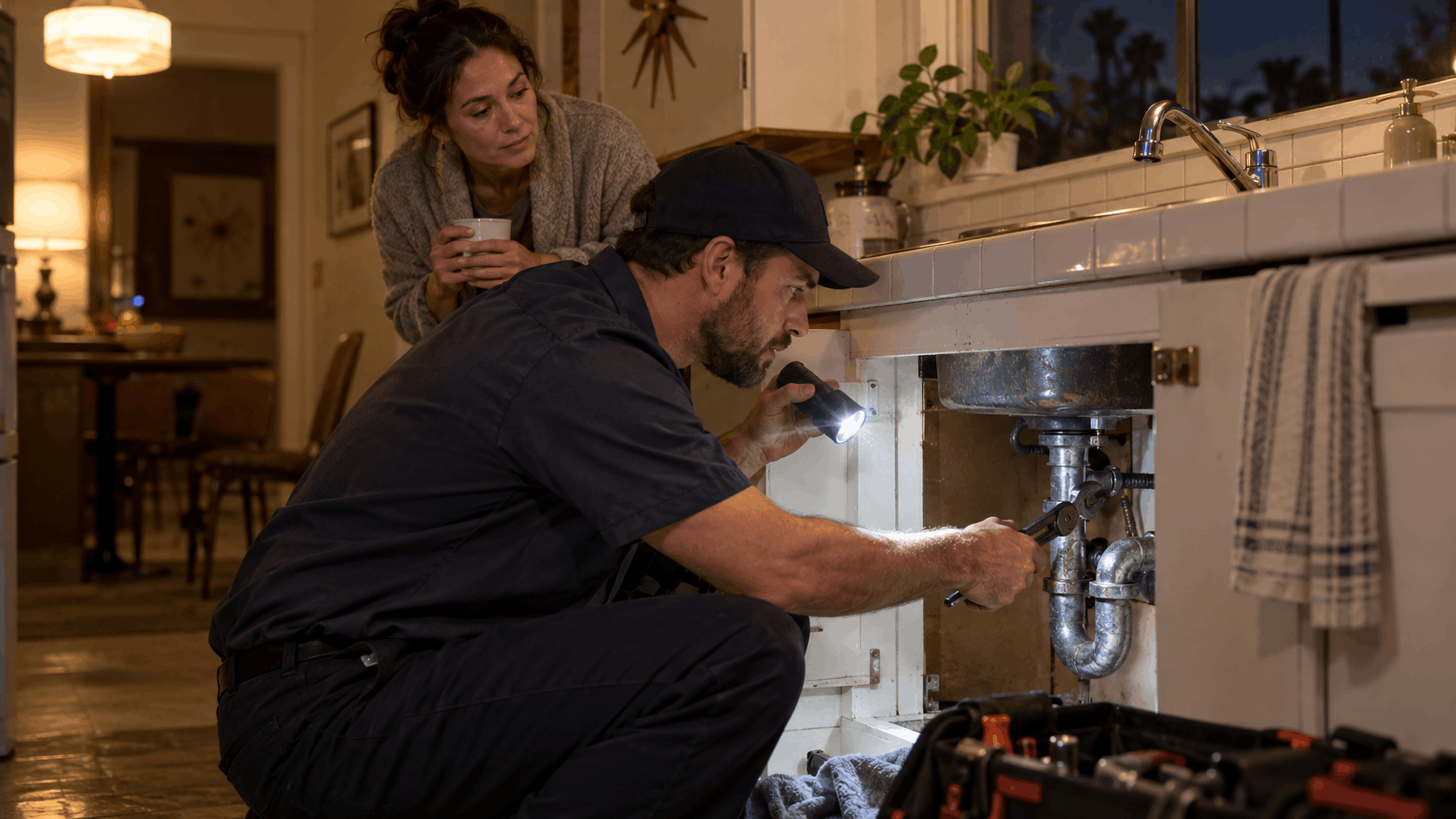
Preventing the Next 2am Plumbing Disaster
The best emergency is the one that never happens. A little plumbing maintenance goes a long way toward stopping a nighttime failure in an older home. Prevention and regular pipe inspection cost far less than the water damage from a burst line.
Here is what we recommend for owners of galvanized-era homes near Downtown and Huntridge.
Annual Inspections for Aging Pipes
Homes over 60 years old deserve a yearly plumbing checkup. An annual inspection covers water pressure, valve condition, and the state of visible pipe. Catching a weak spot early lets you fix it on your schedule.
During a preventive check, we look for early corrosion, drips at fittings, and signs of hidden leaks. We test that shutoff valves actually turn. Small issues get flagged before they grow into emergencies.
For old galvanized systems, the inspection also tells you how much life the pipe has left. That helps with planning a future repipe rather than being caught off guard. Knowledge lets owners budget instead of panic.
Think of it like a yearly physical for your plumbing. A short visit once a year prevents the costly surprises that hit at 2am.
Upgrading Shutoff Valves Before They Fail
Old angle stops and main valves are cheap to replace and priceless in a crisis. Swapping corroded shutoff valves for modern quarter-turn versions gives you fast control when a leak starts. That single upgrade can save a room from flooding.
We recommend replacing the main valve if it is stiff, seized, or leaking. A working main shutoff means you can kill water to the whole house in seconds. In an old home, that is worth every penny.
Under-sink and toilet angle stops should turn smoothly by hand. If they do not, they are failing and should be replaced. It is a small job that pays off the first time a supply line drips.
Doing these upgrades during a calm scheduled visit is far easier than in the middle of an emergency. Owners who prepare this way ride out failures with much less damage.
Managing Hard Water Damage
Since Las Vegas hard water speeds up scale and corrosion, controlling it protects your pipes. A water softener or conditioning system reduces the mineral load reaching your plumbing. Less scale means slower buildup and longer pipe life.
A water softener installation makes a real difference in how fast new pipe and fixtures degrade. It also helps water heaters last longer by cutting the sediment that cooks against the tank. The whole system benefits.
For owners who prefer not to use salt, a salt free water conditioning option can slow scale too. Either way, treating the hard water is smart scale prevention in this valley. It is one of the better long-term protections for any home.
Softer water also means cleaner fixtures and less soap scum, which owners notice right away. The plumbing benefits are the bigger prize.
Water Heater Replacement Timing
A standard tank water heater lasts about 8 to 12 years in Las Vegas, and hard water can shorten that. Replacing it before it fails avoids the nighttime flood from a rusted-through tank. Timing the swap is smart prevention.
Watch for rust at the base, rumbling sounds, or water that never gets hot enough. Those signs mean the tank is near the end. Once you see them, plan the replacement rather than gambling on more time.
Owners upgrading their heater sometimes choose a tankless water heater that has no tank to rust through and flood. It saves space and lasts longer. For many older homes it is a strong choice.
Whatever you pick, replacing on your terms beats a 2am tank failure every time. A planned swap is quick and clean compared to an emergency flood cleanup.
Need Help in Las Vegas?
Active Plumbing serves Las Vegas and all of Las Vegas Valley.
Final Thoughts
The homes near Downtown Las Vegas and Huntridge are worth loving, but their galvanized plumbing is on borrowed time. Rust, hard water, and decades of patch repairs set the stage for a failure that almost always seems to come at 2am. The good news is that the warning signs come early and the fixes are well understood.
Watch for rusty water, weak pressure, damp spots, and rising bills. Know where your main shutoff is and test it. And when a pipe finally lets go, stop the water, cut power near it, and call a plumber who knows old homes.
If you own a galvanized-era home and want a plan before the next emergency, our team is ready to help. Reach out to contact Active Plumbing for an inspection or repipe consultation, or call any time you have a leak in the middle of the night. We know these neighborhoods and these old homes, and we are here around the clock.
Frequently Asked Questions
How do I know if my Huntridge home still has galvanized pipes?
Look at any exposed pipe in the garage, under sinks, or in a crawl space. Galvanized steel has a dull gray color and threaded fittings rather than smooth soldered joints. Hold a magnet to it, since a magnet sticks to galvanized steel but not to copper. If the pipe scratches to reveal silver-gray metal and the magnet grips, it is very likely original galvanized plumbing that needs watching.
Why do pipes seem to burst more often at night?
Water pressure in the valley tends to rise overnight because neighborhood demand drops while everyone sleeps. That extra pressure pushes harder on already thin, corroded galvanized lines. Temperature shifts as the house cools also make old metal contract and stress at its weakest points. Combine higher pressure with fragile pipe and no one awake to catch a leak, and 2am becomes the classic failure hour.
How much does an emergency plumber cost in Downtown Las Vegas?
After-hours service calls generally start higher than daytime rates because of the overnight response. A basic emergency visit and diagnosis often runs a few hundred dollars, while the actual repair depends on what failed. A burst pipe fix, a water heater swap, or a sewer clearing each carries its own price. We give clear pricing before starting work so there are no surprises on the bill.
How fast can a plumber reach my home overnight?
For Downtown and Huntridge addresses, overnight response is usually quick because traffic is light and the street grid is easy to move through. We stage trucks near the urban core, so many calls in the historic neighborhoods see us arrive within a short window. Sharing your cross streets and what failed helps us bring the right parts and reach you ready to work.
What should I do before the plumber arrives?
First, shut off the main water valve to stop the flooding. Next, cut power to any flooded area at the breaker panel if you can do it safely, and stay out of standing water near outlets. Then contain the water with towels and buckets, open low faucets to drain the lines, and move valuables to a dry spot. Those steps limit damage while help is on the way.
Is it worth repiping an older home or just fixing leaks?
If your home still has original galvanized plumbing and you have had more than one leak, repiping usually makes sense. Repeat spot repairs add up fast, and each patch leaves the rest of the failing pipe in place. A full repipe with copper or PEX ends the cycle and protects the home for decades. We help you compare the running cost of repairs against a one-time repipe.
How long does a repipe take in a historic home?
A whole-home repipe typically takes two to five days depending on the size and layout of the house. Historic homes with plaster walls and tight cavities can take a bit longer because we open access carefully to protect original features. We work in phases to keep water available where possible during the job. You get a firm timeline before we begin so you can plan around it.
Will my homeowners insurance cover a burst pipe?
Sudden, accidental bursts are often covered because the damage happens quickly and unexpectedly. Slow, long-term leaks that went unnoticed are frequently denied, since insurers view them as a maintenance issue. Coverage varies by policy, so read yours and document the damage with photos. Prompt action to stop the water and a professional repair record both help support a claim.
Can hard water really damage my plumbing that fast?
Yes, Las Vegas water carries a heavy mineral load that speeds up scale and corrosion in older pipe. The calcium and magnesium leave deposits that stack on top of existing rust, narrowing the pipe and stressing fittings. Over the years this shortens the life of galvanized lines, water heaters, and valves noticeably. A softener or conditioning system slows the process and protects your system.
Do I need a permit to replace plumbing in Las Vegas?
Yes, repiping and major plumbing work require a permit through the City of Las Vegas building department. The permit makes sure the work meets current code and passes inspection, which matters when you sell the home. Our team pulls the permit, schedules the inspection, and handles the paperwork as part of the project. You do not have to deal with the city process on your own.
Frequently Asked Questions
- How do I know if my Huntridge home still has galvanized pipes?
- Look at any exposed pipe in the garage, under sinks, or in a crawl space. Galvanized steel has a dull gray color and threaded fittings rather than smooth soldered joints. Hold a magnet to it, since a magnet sticks to galvanized steel but not to copper. If the pipe scratches to reveal silver-gray metal and the magnet grips, it is very likely original galvanized plumbing that needs watching.
- Why do pipes seem to burst more often at night?
- Water pressure in the valley tends to rise overnight because neighborhood demand drops while everyone sleeps. That extra pressure pushes harder on already thin, corroded galvanized lines. Temperature shifts as the house cools also make old metal contract and stress at its weakest points. Combine higher pressure with fragile pipe and no one awake to catch a leak, and 2am becomes the classic failure hour.
- How much does an emergency plumber cost in Downtown Las Vegas?
- After-hours service calls generally start higher than daytime rates because of the overnight response. A basic emergency visit and diagnosis often runs a few hundred dollars, while the actual repair depends on what failed. A burst pipe fix, a water heater swap, or a sewer clearing each carries its own price. We give clear pricing before starting work so there are no surprises on the bill.
- How fast can a plumber reach my home overnight?
- For Downtown and Huntridge addresses, overnight response is usually quick because traffic is light and the street grid is easy to move through. We stage trucks near the urban core, so many calls in the historic neighborhoods see us arrive within a short window. Sharing your cross streets and what failed helps us bring the right parts and reach you ready to work.
- What should I do before the plumber arrives?
- First, shut off the main water valve to stop the flooding. Next, cut power to any flooded area at the breaker panel if you can do it safely, and stay out of standing water near outlets. Then contain the water with towels and buckets, open low faucets to drain the lines, and move valuables to a dry spot. Those steps limit damage while help is on the way.
- Is it worth repiping an older home or just fixing leaks?
- If your home still has original galvanized plumbing and you have had more than one leak, repiping usually makes sense. Repeat spot repairs add up fast, and each patch leaves the rest of the failing pipe in place. A full repipe with copper or PEX ends the cycle and protects the home for decades. We help you compare the running cost of repairs against a one-time repipe.
- How long does a repipe take in a historic home?
- A whole-home repipe typically takes two to five days depending on the size and layout of the house. Historic homes with plaster walls and tight cavities can take a bit longer because we open access carefully to protect original features. We work in phases to keep water available where possible during the job. You get a firm timeline before we begin so you can plan around it.
- Will my homeowners insurance cover a burst pipe?
- Sudden, accidental bursts are often covered because the damage happens quickly and unexpectedly. Slow, long-term leaks that went unnoticed are frequently denied, since insurers view them as a maintenance issue. Coverage varies by policy, so read yours and document the damage with photos. Prompt action to stop the water and a professional repair record both help support a claim.
- Can hard water really damage my plumbing that fast?
- Yes, Las Vegas water carries a heavy mineral load that speeds up scale and corrosion in older pipe. The calcium and magnesium leave deposits that stack on top of existing rust, narrowing the pipe and stressing fittings. Over the years this shortens the life of galvanized lines, water heaters, and valves noticeably. A softener or conditioning system slows the process and protects your system.
- Do I need a permit to replace plumbing in Las Vegas?
- Yes, repiping and major plumbing work require a permit through the City of Las Vegas building department. The permit makes sure the work meets current code and passes inspection, which matters when you sell the home. Our team pulls the permit, schedules the inspection, and handles the paperwork as part of the project. You do not have to deal with the city process on your own.
A
Licensed plumbing professionals serving Las Vegas and Las Vegas Valley.
Licensed in Nevada · License #0047021
Last updated on
Why trust Active Plumbing?
Founded in 1991, Active Plumbing is a licensed and insured plumber serving Las Vegas and Las Vegas Valley. All content is reviewed by our licensed technicians.

Need Help in Las Vegas?
Active Plumbing serves Las Vegas and all of Las Vegas Valley.
Related Articles

Cost Guides
Best Time to Call a Plumber in Vegas to Avoid Emergency Rates
Learn the best time to call a plumber in Las Vegas to avoid emergency rates, plus seasonal tips, neighborhood factors, and how to tell a real emergency from a job that can wait.
How-To Guides
Pipe Repair in Downtown Las Vegas Historic Homes: Galvanized-to-PEX Conversions That Preserve Plaster
How galvanized-to-PEX conversions fix rusty water and low pressure in Downtown Las Vegas historic homes while protecting original plaster, trim, and tile.
Safety & Prevention
Why Las Vegas Homes Built Before 1990 Need a Full Plumbing Inspection
Las Vegas homes built before 1990 face unique plumbing challenges from aging materials, desert conditions, and outdated construction practices that can lead to catastrophic failures.