Cost Guides
Emergency Shutoff Valve Replacement Cost in Las Vegas - Main, Angle Stops, and Gate-to-Ball Upgrades
Key Takeaways
- Hard water from the Las Vegas Valley Water District and desert conditions cause valves to seize and fail faster than in most areas.
- Main shutoff valve replacement in Las Vegas typically costs $300 to $600, more with corroded pipe, buried valves, or tight access.
- Angle stops run $100 to $200 each, and bundling all sink and toilet valves in one visit lowers the per-valve price.
- Gate-to-ball upgrades cost little more than a like-for-like gate valve swap and deliver a far more reliable quarter-turn shutoff.
- Upgrade the main valve and water heater shutoff first, and pair valve swaps with a repipe or water heater install to save on labor.
- Test your main valve on a calm day, keep a meter key handy, and know the meter box shutoff as a backup.
- Scheduling replacement before a valve fails avoids costly after-hours emergency rates during a flood.
- Active Plumbing offers valve replacement and emergency service across Las Vegas, Henderson, North Las Vegas, and the wider valley.
In This Article
It usually happens at the worst time. A pipe under the kitchen sink lets go on a Sunday night, water spreads across the floor, and the homeowner runs to shut off the valve only to find the handle frozen solid. That stuck valve is one of the most common calls we get across the Las Vegas Valley, from older bungalows near Charleston to newer builds out in Centennial Hills.
The hard truth is that shutoff valves in this valley wear out faster than in most parts of the country. Our mineral-heavy water and desert conditions take a real toll. When the valve you counted on will not turn, a small leak can turn into flooded drywall and warped floors in minutes.
Why Shutoff Valves Fail in Las Vegas Homes
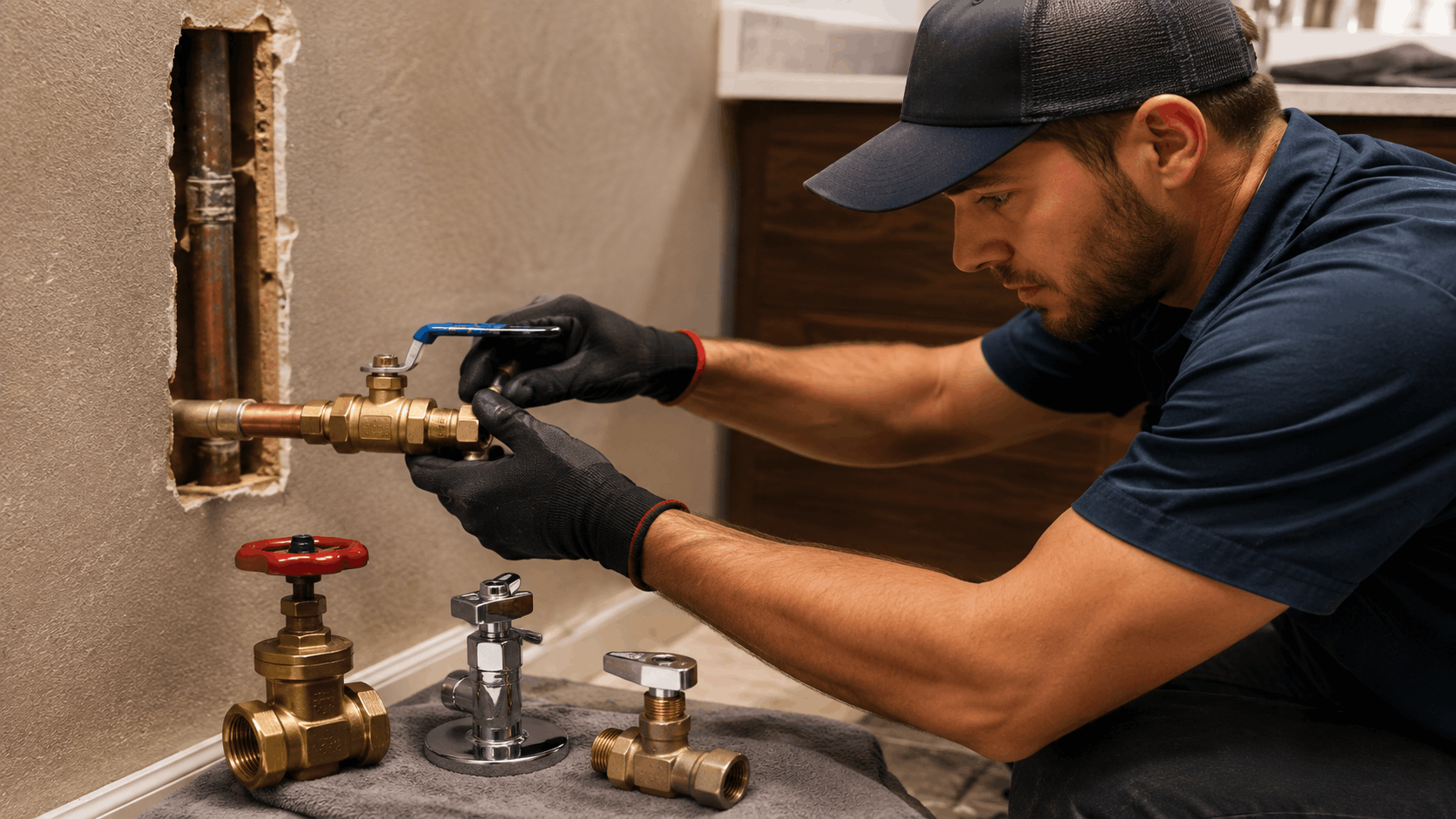
Valves fail here for reasons tied directly to the valley. Between the water chemistry, the age of many homes, and the desert climate, our team replaces stuck and leaking valves almost every week. It is one of the most routine repairs in local plumbing.
A few local conditions push valves toward early failure:
- Extremely hard water that leaves mineral scale inside the valve body
- Decades-old original valves in older neighborhoods
- Slab foundations and dry soil that shift and stress supply lines
- Summer heat that expands and contracts pipe connections
- Valves that go years without ever being turned, then seize up
Once a homeowner understands these factors, shutoff valve failure stops being a surprise and starts being something to plan for.
Hard Water Buildup From Valley Water Sources
Most of the water in this area comes through the Las Vegas Valley Water District, and it is some of the hardest water in the nation. That water carries heavy loads of calcium and magnesium. Over time those minerals settle out and cake onto the internal parts of a valve.
Inside a gate valve, that mineral buildup collects on the stem and the gate itself. The deposits act like cement and lock the moving parts in place. A valve that turned freely five years ago can become impossible to budge without the handle snapping off.
This is why so many valve calls involve hard water scale rather than a broken part. The valve is often mechanically fine, just frozen by minerals. Homeowners who install a water softener often see slower buildup across every valve and fixture in the house.
Water heater shutoffs and angle stops suffer the same fate. The mineral buildup never sleeps, and it targets the exact parts that need to move during an emergency. That is a big reason valve replacement is such a common repair in this valley.
Aging Homes in Older Neighborhoods
Las Vegas has a lot of housing built in the 1950s through the 1970s. Areas like Huntridge and John S. Park, along with the streets near Charleston Boulevard, are full of homes with original plumbing. Many of those homes still run on the old gate valves the builders installed decades ago.
An old gate valve was never meant to last fifty or sixty years, especially in hard water. The internal parts corrode, the stem seizes, and the rubber seals dry out. By the time the current owner needs to shut the water off fast, the valve simply will not respond.
We see this pattern constantly in the older cores of the city. A homeowner in a mid-century Huntridge home discovers during a leak that the main valve was frozen the whole time. What looked like a simple shutoff turns into an emergency call for emergency plumbing service.
Homes in these neighborhoods are prime candidates for proactive valve replacement. Swapping tired gate valves before they fail saves a lot of stress and water damage down the road.
Heat, Slab Movement, and Desert Conditions
The desert climate is rough on plumbing in ways people do not always expect. Summer heat regularly pushes past 110 degrees, and that heat cycles pipes and fittings through expansion and contraction all season long. Every cycle adds a little stress to valve connections.
Most valley homes sit on a concrete slab foundation. When the dry soil underneath shifts and settles, it can tug on supply lines running through or under the slab. That supply line stress travels straight to the valves connected at each end.
Low humidity also dries out any rubber or fiber seals inside older valves. Once those seals crack, the valve starts to weep at the stem or fails to seal fully when closed. The combination of heat, movement, and dryness works against every valve in the home.
These conditions are unique enough that valve wear here does not match national averages. A valve that might last decades in a milder climate can give out much sooner in the valley.
Signs a Valve Needs Replacing Now
The clearest warning sign is a stuck valve. If the handle will not turn, or it takes so much force you worry about breaking it, the valve is already failing. Forcing a frozen valve often snaps the handle or cracks the body, turning a slow problem into a fast flood.
Another red flag is a leaking valve. Drips or dampness around the stem or the base mean the seals have failed. Even a slow drip signals the valve is on its way out and should be replaced before it lets go completely.
Watch for a valve that will not fully stop the flow of water. If the fixture still trickles after the valve is closed all the way, the internal gate or seat is worn out. A valve that cannot deliver a full shutoff is useless in a real emergency.
Any of these warning signs is a reason to act. Replacing a questionable valve on a scheduled visit is far cheaper than dealing with water damage after it fails.
Get Your Quote
Tell us what's going on and we'll get back to you fast.
The Three Main Types of Shutoff Valves
Homeowners deal with a handful of valve types, and knowing which is which helps a lot before calling a plumber. Each valve plays a different role, from stopping water to the whole house down to a single toilet. Here is a quick overview before we get into the details.
| Valve Type | Where It Is | What It Controls |
|---|---|---|
| Main shutoff | Near the meter or where the line enters the home | Water to the entire house |
| Angle stop | Under sinks and behind toilets | One fixture at a time |
| Gate or ball valve | Main line, water heater, branch lines | Depends on location |
Once a homeowner can name the valve they are dealing with, the whole conversation about repair and cost gets easier.
Main Water Shutoff Valves
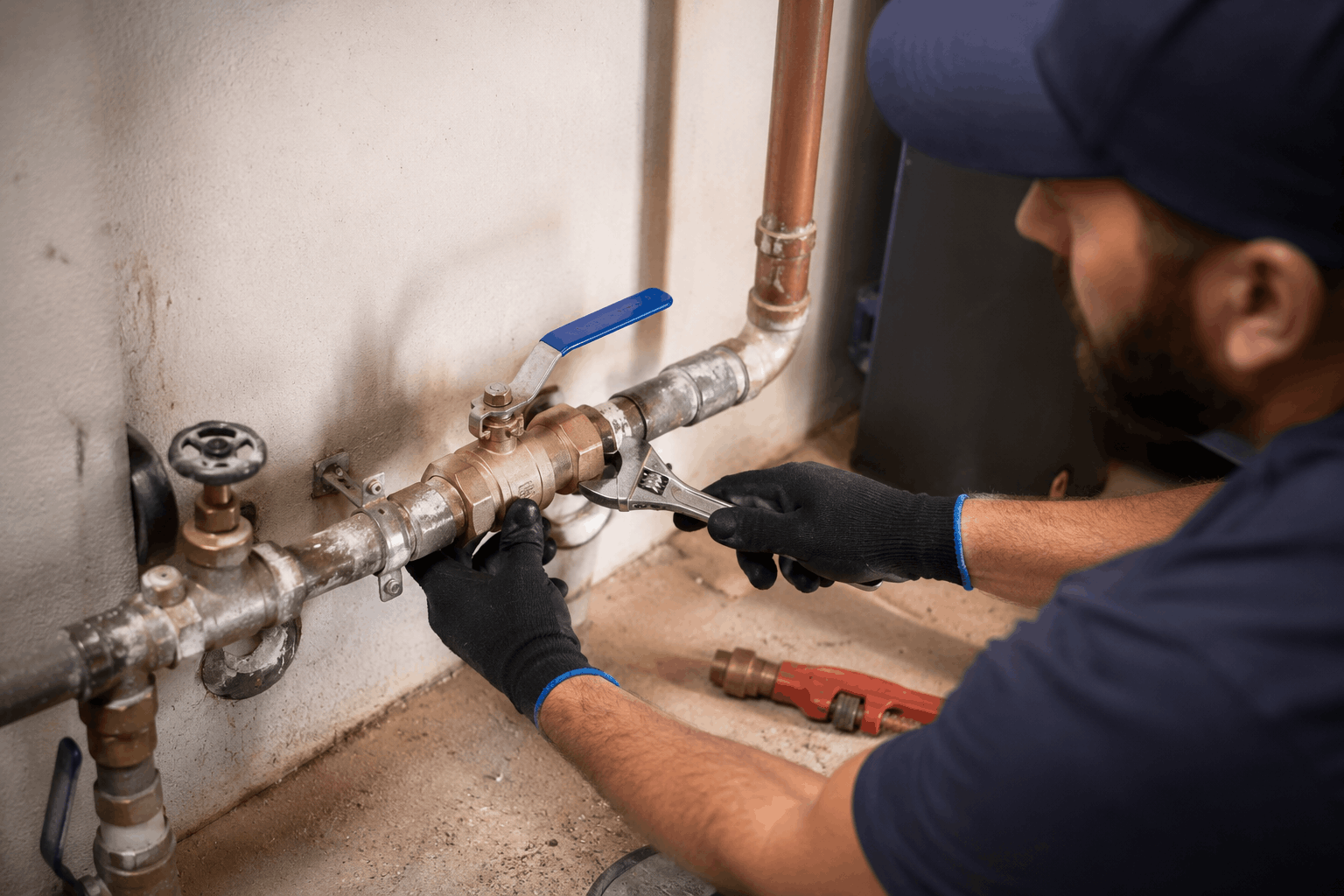
The main shutoff is the most important valve in the house. It usually sits near the water meter at the curb, or where the supply line enters the home, often in the garage or an exterior wall on the street-facing side. This is the whole-house shutoff that stops all water at once.
During any serious leak, this is the valve a homeowner runs to first. Turning it off cuts water to every fixture, giving the family time to stop the flooding and call for help. If it fails, the only backup is the meter valve or the water district.
Because it controls everything, the main water valve gets the most attention when it seizes up. A frozen main is the difference between a quick shutoff and standing water spreading through the house. That is why we push homeowners to test and, when needed, replace this valve first.
In many valley homes the main is still an old gate valve. Upgrading it delivers the single biggest safety improvement of any valve in the house.
Angle Stops Under Sinks and Toilets
Angle stops are the small valves you see under a sink or behind a toilet. Each one is a fixture shutoff that controls water to just that one spot. They let a plumber or homeowner work on a faucet or toilet without shutting off the whole house.
The problem is that these valves almost never get used. A toilet valve might sit untouched for ten years, and in that time mineral buildup quietly cements it in place. When someone finally tries to turn it, it either will not budge or it starts to leak.
We replace seized angle stops constantly, often while doing other pipe and fixture work. A stop that will not turn defeats the whole purpose of having a fixture shutoff. When one fails during a repair, the whole-house water has to come off instead.
Because angle stops are small and relatively cheap, they are a smart thing to replace preventively. Fresh quarter-turn stops make every future repair faster and safer.
Gate Valves vs Ball Valves
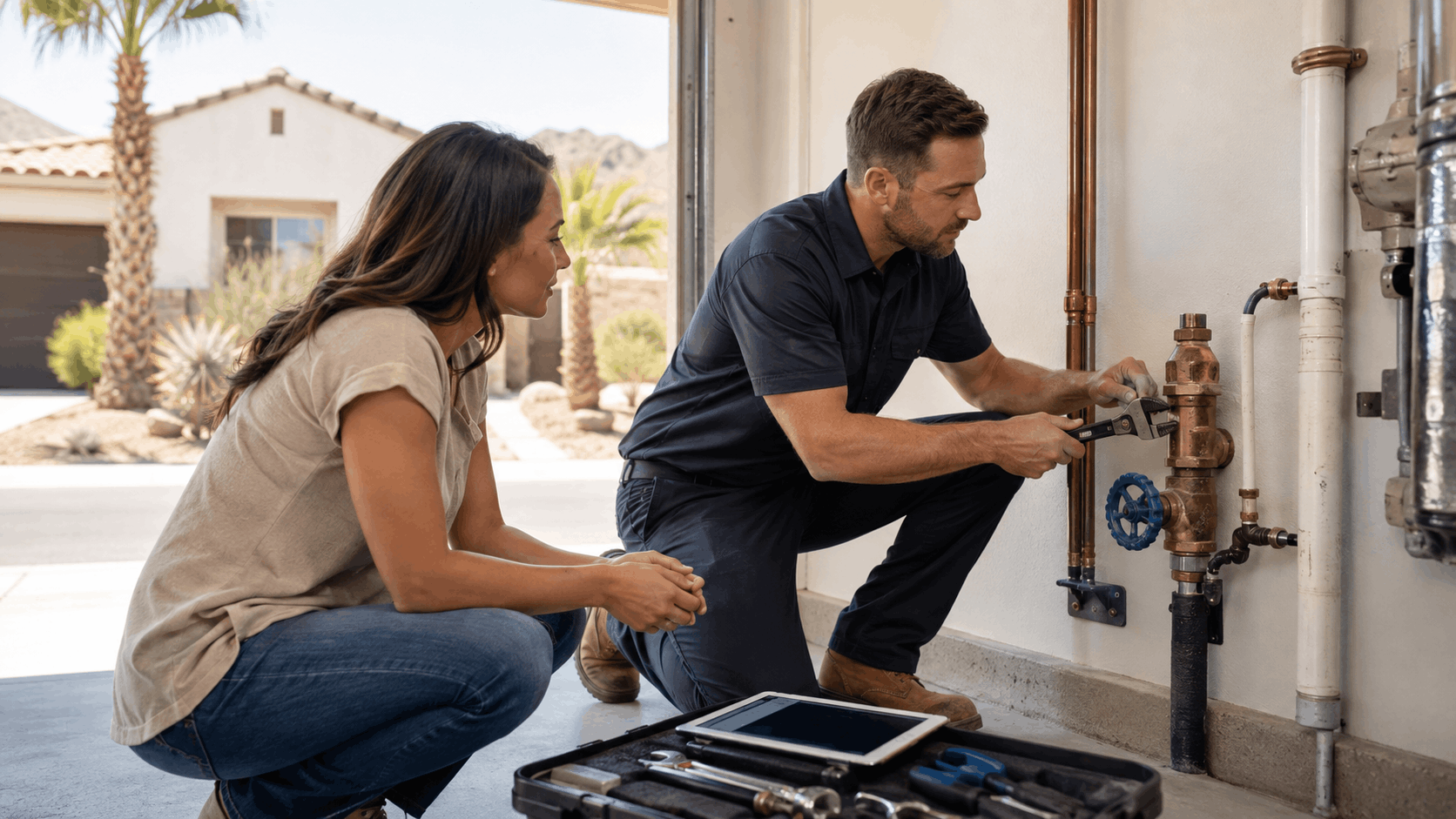
The older design is the gate valve, which uses a round wheel handle you spin many times to raise or lower an internal gate. Gate valves have more moving parts and more chances to fail, especially in hard water. Over the years the gate corrodes or the stem seizes.
The modern design is the ball valve, which uses a lever handle you turn a quarter turn from open to closed. A quarter-turn valve has fewer parts, seals more reliably, and rarely gets stuck the way a gate valve does. It gives a full, clean shutoff every time.
This difference is why so many homeowners choose to upgrade. A ball valve simply outlasts a gate valve in valley conditions and works when it is needed most. The reliability gap is large enough that we recommend the swap on nearly every old gate valve we see.
The upgrade is straightforward and often costs only a little more than replacing the gate valve with another gate valve. That small difference buys years of dependable service.
How to Identify Which Valves You Have
Telling the two apart is easy once you know the trick. A gate valve has a round wheel handle, the kind you grip and spin around several times. If turning the water off means cranking a wheel, that is a gate valve.
A ball valve has a straight lever handle. You move it a quarter turn, and the water is off. If the handle is a single lever that flips from parallel to perpendicular, that is a ball valve.
For valve identification at the fixtures, look under the sink. Older compression angle stops often have small oval or football-shaped handles, while newer quarter-turn stops have a short lever. Knowing the difference helps the homeowner describe the setup when they call.
A quick walk through the house to note wheel handles versus lever handles gives our team a head start. It also tells the homeowner exactly which valves are the old, failure-prone kind worth upgrading.
Need Help in Las Vegas?
Active Plumbing serves Las Vegas and all of Las Vegas Valley.
Main Shutoff Valve Replacement Cost in Las Vegas
The main valve is the one worth budgeting for carefully, since it protects the whole house. Pricing depends on the pipe, the access, and whether the job is planned or an after-hours emergency. Here is a realistic look at the numbers for local homes.
| Scenario | Typical Range |
|---|---|
| Standard main valve replacement | $300 - $600 |
| Corroded or galvanized pipe involved | $500 - $1,000+ |
| Buried or hard-to-access valve | $600 - $1,200+ |
| After-hours emergency work | Add $150 - $400 |
These figures give a starting point, but every home is a little different. A quick look at the setup gives a firm number.
Typical Price Range for Main Valve Work
For a standard main shutoff replacement, most homeowners in the valley spend somewhere between $300 and $600. That price range covers a straightforward job where the valve is accessible and the pipe is in good shape. It reflects both labor and parts for a like-for-like swap.
A basic job includes shutting the water off at the meter, cutting out the old valve, and installing a new one with proper connections. The plumber then pressures the system back up and checks for leaks. On a clean install, the work often takes an hour or two.
The main valve cost can land at the lower end when the valve sits in an open, easy spot like a garage wall. When the plumber can reach it without cutting drywall or digging, labor stays minimal. That keeps the total closer to the bottom of the range.
Every quote we give spells out labor and parts separately so homeowners can see exactly what they are paying for. There are no surprise fees hiding in the total.
Factors That Raise the Cost
Several things push a main valve job above the basic range. Corroded pipe is a big one, since a plumber cannot always cut clean threads or make a solid connection on rusted metal. Extra work to reach good pipe adds time and material.
Pipe material matters too. Old galvanized pipe is heavy, corroded, and slow to work with, while copper requires soldering or press fittings. Both add labor compared to a simple modern setup, and galvanized often reveals more problems once it is opened up.
Access is the other major cost factor. A valve buried in a wall, tucked behind cabinets, or set low in a tight crawl space takes longer to reach. Sometimes the plumber has to open drywall or clear space just to get a wrench on the fitting.
None of these factors are unusual in older valley homes. We flag them during the quote so the price reflects the real scope of the job from the start.
When the Water District Must Get Involved
Not every valve belongs to the homeowner. The main shutoff inside or at the edge of the property is the owner's, but the curb stop and meter valve out at the street belong to the Las Vegas Valley Water District. Those are on the district side of the line.
If the failing valve is the district's meter valve or curb stop, the homeowner cannot legally have a private plumber replace it. The district handles that work, and it affects both who pays and how the job gets scheduled. In those cases we help the homeowner coordinate the call.
Sometimes the district needs to shut the water at the curb so we can safely replace the home-side main valve. That coordination is routine, but it can add a step to the timeline. Knowing where the property line falls helps set the right expectations.
When the responsibility is split, our team explains clearly which part we handle and which part the district owns. That keeps the homeowner from paying for work that is not theirs to pay for.
Emergency vs Scheduled Replacement Pricing
Timing has a real effect on price. A scheduled service call during normal hours is the cheapest way to replace a valve. When the work is planned, the plumber comes prepared and the rate stays at the standard level.
An after-hours emergency rate is higher, often adding $150 to $400 to the total for nights, weekends, and holidays. That premium covers the immediate response when water is actively flooding a home. It is worth every penny when the alternative is hours of damage.
The lesson is that homeowners save real money by acting before a valve fails. Replacing a stuck or leaking valve on a planned visit avoids the emergency plumbing rate entirely. Preventive work is almost always the cheaper path.
Of course, when a valve gives out at midnight, we are available across the valley for urgent calls. But the best deal is always the appointment you book before the crisis.
Angle Stop Replacement Cost and What to Expect
Angle stops are far cheaper than main valves, which makes them easy to tackle before they cause trouble. The real savings come from bundling several at once. Here is what the job usually runs.
| Angle Stop Job | Typical Range |
|---|---|
| Single angle stop replacement | $100 - $200 |
| Each additional stop, same visit | $75 - $150 |
| Stop plus new supply line | Add $15 - $40 |
| Whole-house stop replacement | $400 - $900 |
Doing them together is where the value really shows up, as the next sections explain.
Per-Valve Pricing Ranges
A single angle stop replacement usually runs between $100 and $200. That per-valve cost includes the new quarter-turn stop and the labor to swap it. The valve part itself is inexpensive, so most of the price is the plumber's time and the trip.
Very often the supply line gets replaced at the same time. Those flexible braided lines wear out and can fail on their own, so it makes sense to install a fresh one while the stop is off. Adding a new supply line only adds a small amount to the total.
The angle stop pricing reflects how quick the actual work is once the plumber is on site. The real driver on a single valve is simply getting a licensed plumber to the house. That is exactly why doing more than one at a time pays off.
When a homeowner has just one seized toilet valve, we handle it fast. But we always mention the savings of grouping valves together.
Replacing Multiple Stops at Once
The smart move is bulk replacement. A typical home has a couple of sink stops in each bathroom, a kitchen valve pair, and a toilet valve for every toilet. Replacing them all in one visit spreads the trip charge across every valve.
Instead of paying full price for each separate visit, the homeowner pays one service call and a reduced rate per additional stop. A whole-house angle stop replacement often lands between $400 and $900 depending on how many fixtures there are. That is a strong value compared to piecemeal work.
Bundling also means every bathroom valve and kitchen valve in the house gets refreshed at the same time. From then on, any future faucet or toilet repair goes smoothly because the stops all work. There is no scramble to find one that turns.
We recommend this approach for older homes where the original stops are all the same age. If one has failed, the others are usually not far behind.
Compression vs Push-Fit Stops
Angle stops come in a few connection styles. A compression fitting uses a small ring squeezed onto the pipe, which is reliable and standard on copper stub-outs. It takes a bit more time to install because the plumber has to seat the ring correctly.
A push-fit valve slides directly onto the pipe and locks in place without tools. These are faster to install and work on several pipe types, which can trim labor time. Many plumbers still prefer compression or soldered connections for a permanent, long-term install.
Whatever the connection, we recommend a quarter-turn stop over the old multi-turn compression style. The quarter-turn design seals better and rarely seizes, just like the ball valve upgrade on larger lines. It is the same reliability principle at the fixture level.
The choice of fitting affects labor time a little, but the bigger win is moving to a modern quarter-turn valve. That upgrade is what keeps the stop working years down the line.
Common Fixture Issues in Local Homes
Builder-grade valves are a frequent culprit in the valley. Many production homes and condos went in with the cheapest stops available, and those fail early under hard water. We see this in busy households where the plumbing gets constant use.
Condos and townhomes near the Strip, along with tract homes in Summerlin, often have these original builder-grade valves still in place. A decade of mineral buildup leaves them frozen stops that will not turn when a leak hits. The owner discovers the problem at the worst moment.
High-occupancy homes wear their fixtures harder, so their stops seize sooner from the mineral load. A rental with four people and heavy water use pushes those cheap valves past their limit. Replacing them removes a recurring headache.
When we work in these communities, we often find every stop in the unit is the same failing type. Swapping them as a group solves the problem for good.
Gate-to-Ball Valve Upgrades Explained
The gate-to-ball upgrade is one of the best-value moves a homeowner can make. It trades an unreliable old valve for one that works every time, usually for very little extra money. Here is why the swap makes sense and what it involves.
Why Ball Valves Outlast Gate Valves
A ball valve uses a simple quarter-turn design. Inside is a metal ball with a hole through it, and turning the lever rotates the ball to open or block the flow. There are far fewer moving parts than in a gate valve, so there is less to corrode or seize.
Gate valves rely on a threaded stem that raises and lowers a gate. In hard water, that stem gums up with scale and the gate corrodes against its seat. Over the valve lifespan those parts fail, which is why old gate valves so often refuse to turn.
The ball valve delivers a reliable shutoff every single time. When the lever moves, the water stops, with no guessing about whether it fully closed. That certainty is exactly what a homeowner needs during a leak.
Because the design has fewer failure points, a ball valve lasts far longer in valley conditions. It is a straightforward mechanical advantage that pays off for years.
Cost of a Gate-to-Ball Conversion
A gate-to-ball conversion on a main line usually runs in the same ballpark as a plain gate valve replacement, roughly $300 to $600. The upgrade price is barely different because the labor is nearly identical. The plumber is already cutting out the old valve, so the only change is which valve goes back in.
The ball valve install itself is quick once the old valve is out. On accessible lines the whole job wraps up in an hour or two. For a small difference in part cost, the homeowner gets a dramatically more reliable valve.
Smaller ball valves on branch lines or water heater connections cost even less. The conversion cost there is modest, and the reliability gain is the same. There is rarely a good reason to put another gate valve back in.
Given how little more it costs, we almost always recommend the ball valve when replacing an old gate valve. The value is hard to argue with.
Best Locations to Upgrade First
If a homeowner upgrades just a few valves, the main valve should be first. It controls the whole house, so a dependable main valve upgrade gives the biggest safety payoff. This is the valve that stands between a small leak and a flooded home.
The water heater shutoff is the next priority. Water heaters need service and eventual replacement, and a working shutoff makes that easy. A frozen shutoff there can turn a routine water heater service into a bigger job.
After those two, branch line shutoffs for major fixtures are worth doing. Bathrooms and the kitchen benefit from reliable quarter-turn valves. These priority upgrades cover the spots where failures cause the most damage.
Starting with the main and the water heater gives the most protection for the money. Everything after that is a bonus.
Pairing Upgrades With Other Plumbing Work
Timing the swap with other work saves on labor. When a plumber is already installing a new water heater, adding a fresh ball valve on that line costs almost nothing extra. The water is off and the plumber is right there.
A repipe is an even bigger opportunity. If a home is getting new supply lines, upgrading every gate valve to a ball valve during that project makes sense. The combined labor means the valve upgrades ride along on work that is already happening.
The same goes for a tankless water heater installation, where new connections are being made anyway. Slipping in a valve upgrade at that point is efficient and cheap. It is the kind of thing our team suggests when the opportunity comes up.
Bundling valve upgrades with planned work is one of the simplest ways to modernize a home's plumbing without paying for extra trips. We watch for these chances on every job.
Need Help in Las Vegas?
Active Plumbing serves Las Vegas and all of Las Vegas Valley.
What Affects Your Final Price
Every valve quote comes down to a handful of variables. Knowing them helps a homeowner read their quote and understand where the number comes from. Here is the checklist we work through on each job.
Pipe Material and Age
The pipe feeding the valve shapes the whole job. Galvanized pipe is old, heavy, and usually corroded inside, which makes clean connections harder and slower. Working with it often reveals more rust once the plumber opens the line.
Copper pipe is cleaner to work with but requires soldering or press fittings, which takes skill and time. It is common in homes from certain eras across the valley. The connection method affects both labor and the final valve replacement price.
CPVC and modern PEX are the easiest to handle, with quick fittings and no corrosion. Homes with newer plastic supply lines usually see the lowest labor cost. The pipe material alone can move a quote noticeably.
We always note the pipe type during the quote so the homeowner understands why one home costs more than another. Age and material tell most of the story.
Access and Shutoff Location
Where the valve sits matters as much as the valve itself. A stop tucked deep behind a packed cabinet takes longer to reach and work on. Tight valve access means slower, more careful labor.
Crawl space valves add real time, since the plumber has to get into a cramped, dusty area to do the work. Comfort aside, the awkward position makes every connection harder. That extra effort shows up in the quote.
A buried valve is the toughest case. If the main is underground near the meter, the plumber may need to dig to expose it before any replacement can happen. Excavation adds both labor and time to the job.
Good access keeps prices low, while difficult access raises them. We factor location into every estimate so there are no surprises once work begins.
Permits and Local Code
Some valve work is simple enough that no permit is needed, but larger jobs are different. A straightforward valve swap usually does not require one. A repipe or major water service work often does.
Clark County sets the rules on when a plumbing permit applies. For bigger projects, an inspection may be part of closing out the permit. Those steps protect the homeowner by confirming the work meets plumbing code.
Permit and inspection fees factor into the total price when they apply. We handle the paperwork and coordinate any required inspection so the homeowner does not have to. It keeps everything above board.
Anyone unsure about permit rules can check with local building authorities or review resources from the EPA WaterSense program for general guidance on plumbing standards. Our team knows the local requirements and applies them on every job that needs them.
Neighborhood-Specific Conditions
Local conditions vary a lot across the valley. Older lines near Downtown Las Vegas and the Arts District often involve galvanized pipe and decades of corrosion. Those homes take more time and care, which affects the price.
Newer construction in areas like Peccole Ranch and out in Centennial Hills usually has modern plastic supply lines. Those valves are quicker to service, so labor tends to run lower. The contrast between old and new neighborhoods is real.
We also see different challenges in master-planned communities with HOA rules and shared walls, like many condos and townhomes. Access and shutoff arrangements can differ from a standalone house. Knowing the neighborhood helps us plan the job correctly.
Because we work every corner of the valley, from the historic core to the newest subdivisions, we know what to expect at each address. That local knowledge keeps quotes accurate.
How to Prepare for a Valve Emergency
A little preparation turns a plumbing scare into a manageable event. Homeowners who know their shutoffs and have a few tools ready stop leaks fast. Here are the steps we recommend to every valley homeowner.
Locate and Test Your Main Valve
The first step is finding the main shutoff before there is ever a problem. Check the garage, an exterior wall on the street-facing side, or the water meter box near the curb. Knowing the main shutoff location saves precious minutes during a leak.
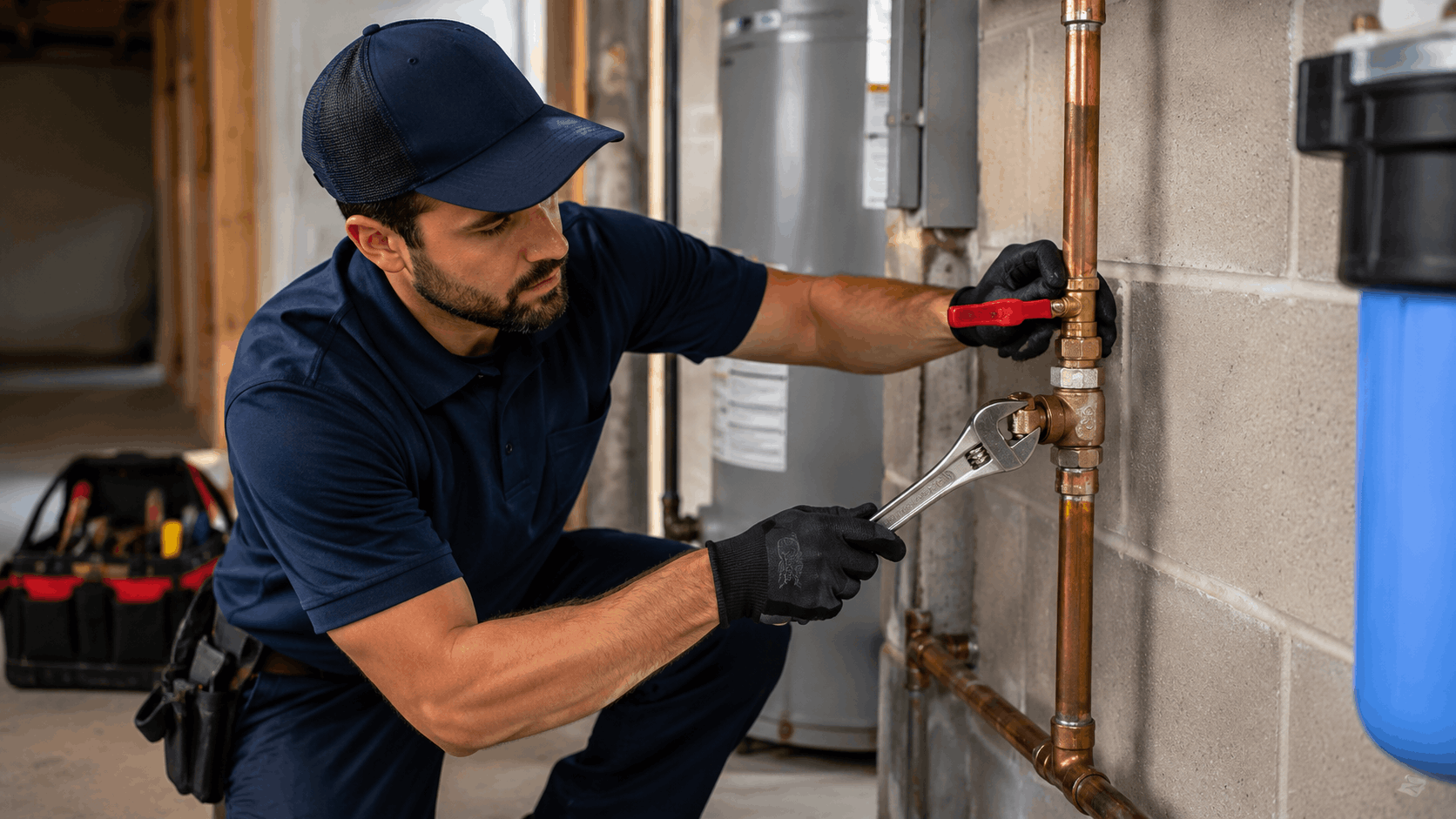
Once found, test the valve by turning it off and back on. It should move without extreme force and stop the water fully. A valve that will not budge or leaves water running is a warning to replace it now.
Do this test on a calm day, not during a flood. If the valve turns freely, the homeowner has confidence it will work when it counts. If it sticks, that is the time to call for a planned replacement.
Also locate the meter valve inside the water meter box as a backup. Knowing both gives two ways to stop the water in an emergency.
Keep a Basic Shutoff Kit Ready
A small set of tools makes a big difference. The most useful item is a meter key, the long tool that turns the valve at the meter box. Without one, that curb-side valve is nearly impossible to operate by hand.
A pair of channel-lock pliers and an adjustable wrench round out a basic emergency kit. These handle stubborn angle stops and loose fittings in a pinch. Keeping them together means no scrambling when water is spreading.
Store the shutoff tools somewhere easy to grab, like a labeled bin in the garage near the door. Everyone in the household should know where they are. Fast access to the meter key can save a floor.
A flashlight and a few towels in the same bin help too. Preparation like this turns panic into a quick, calm response.
Know When to Call a Pro Versus DIY
Some valve tasks are fine for a handy homeowner, and some are not. Turning a valve off, swapping a supply line, or replacing a simple push-fit angle stop are within reach for many people. Those are low-risk DIY plumbing jobs.
Main valve work is a different story. Cutting into the main line, soldering copper, or dealing with corroded galvanized pipe calls for a licensed plumber. A mistake there can flood the house or damage the water service.
Anytime the pipe is old, the valve will not come apart cleanly, or the water district is involved, it is time to call. The cost of a professional is small next to the cost of a botched repair. Knowing when to call keeps a small job from becoming a disaster.
Our team is happy to advise over the phone on which category a problem falls into. When in doubt, a quick call sorts it out.
Scheduling Service With Active Plumbing
Active Plumbing serves homeowners across the entire valley, from Henderson to North Las Vegas and everywhere between. Our licensed team handles valve replacement, upgrades, and urgent leaks in Las Vegas and the surrounding communities. Wherever the home is, we can get there.
A typical service call starts with a look at the valve and the pipe around it. The plumber explains the options, gives a clear price up front, and does the work once the homeowner approves. There are no hidden charges tacked on later.
For urgent leaks, our whole-home leak detection and emergency response help stop damage fast. We show up prepared to handle the problem in one visit whenever possible. Speed matters when water is flowing.
Booking a planned valve replacement is the easiest way to avoid an emergency later. A quick call to our team gets a Las Vegas plumber on the schedule.
Need Help in Las Vegas?
Active Plumbing serves Las Vegas and all of Las Vegas Valley.
Final Thoughts
Shutoff valves in the valley wear out faster than most homeowners expect, thanks to hard water, aging homes, and desert conditions. Knowing the difference between a main valve, an angle stop, and a gate versus ball valve puts a homeowner in control. It also makes any quote easier to understand.
Main valve replacements typically run $300 to $600, angle stops run $100 to $200 each with savings for bundling, and gate-to-ball upgrades cost little more than a plain swap. Acting before a valve fails always beats paying emergency rates during a flood. A working shutoff is the cheapest insurance in the house.
Our team is ready to help across the valley, whether it is a planned upgrade or a late-night leak. Reach out to Active Plumbing to schedule a valve inspection or replacement, and turn a stuck valve into one you can trust.
Frequently Asked Questions
How much does it cost to replace a main shutoff valve in Las Vegas?
Most main shutoff valve replacements in Las Vegas run between $300 and $600 for a standard job with good access and sound pipe. The total climbs when the plumber finds corroded or galvanized pipe, a buried valve, or tight access behind cabinets or in a crawl space. After-hours emergency work adds a premium. A quick look at the setup gives a firm quote.
What is the difference between a gate valve and a ball valve?
A gate valve uses a round wheel handle you spin several times to raise or lower an internal gate, and it has more parts that corrode or seize in hard water. A ball valve uses a lever handle you turn just a quarter turn, with fewer moving parts and a more reliable shutoff. Ball valves last much longer in valley conditions, which is why so many homeowners upgrade.
How much do angle stops cost to replace per fixture?
A single angle stop replacement usually costs $100 to $200, which covers the new quarter-turn valve and the labor. Replacing several at once cuts the per-valve price, since one trip charge spreads across every stop. A whole-house angle stop replacement often lands between $400 and $900 depending on the number of fixtures. Bundling sink and toilet valves in one visit is the best value.
Why won't my water shutoff valve turn?
The most common cause in the valley is mineral buildup from our very hard water. Calcium and magnesium deposits cake onto the valve stem and gate over years, cementing the parts in place. Corrosion on older metal valves adds to the problem. Forcing a stuck valve can snap the handle or crack the body, so a frozen valve should be replaced rather than muscled.
Is a gate-to-ball valve upgrade worth the money?
For nearly every homeowner, yes. Since the labor is almost identical to a plain gate valve replacement, the upgrade often costs only a little more in part price. In return you get a valve that gives a reliable shutoff every time and rarely seizes in hard water. Over years of service, that small added cost pays for itself in reliability and avoided water damage.
Do I need a permit to replace a valve in Clark County?
A simple like-for-like valve swap usually does not require a permit. Larger projects, such as a repipe or major water service work, often do, and may include an inspection to confirm the work meets plumbing code. Clark County sets the rules on when a permit applies. Our team handles the paperwork and any required inspection so the homeowner does not have to.
How long does a valve replacement take?
An angle stop replacement is quick, often 20 to 45 minutes per valve once the plumber is on site. A standard main valve swap with good access usually takes one to two hours. Jobs involving corroded pipe, soldering, buried valves, or excavation take longer. Bundling several angle stops into one visit is efficient since the plumber is already set up.
Can I shut off my water without the main valve working?
Yes. Every home also has a meter valve inside the water meter box near the curb, which you can operate with a meter key. Turning that valve stops water to the whole property even when the home's main is frozen. If you cannot get the meter valve to work, call the Las Vegas Valley Water District, who owns and can operate the curb-side shutoff.
How often should shutoff valves be replaced?
There is no fixed schedule, but in the valley's hard water, older gate valves often need attention after 15 to 25 years, and sometimes sooner. Watch for warning signs like a handle that will not turn, drips at the stem, or a valve that will not fully stop flow. Any of those means it is time to replace the valve before it fails during a leak.
Does Active Plumbing offer emergency valve service in Las Vegas?
Yes. Active Plumbing provides emergency valve service across the valley, including Las Vegas, Henderson, North Las Vegas, Summerlin, Spring Valley, and surrounding communities. When a valve fails during a leak, our licensed team responds to stop the water and make the repair, often in a single visit. For urgent leaks, call us right away, or schedule a planned replacement to avoid the emergency altogether.
Frequently Asked Questions
- How much does it cost to replace a main shutoff valve in Las Vegas?
- Most main shutoff valve replacements in Las Vegas run between $300 and $600 for a standard job with good access and sound pipe. The total climbs when the plumber finds corroded or galvanized pipe, a buried valve, or tight access behind cabinets or in a crawl space. After-hours emergency work adds a premium. A quick look at the setup gives a firm quote.
- What is the difference between a gate valve and a ball valve?
- A gate valve uses a round wheel handle you spin several times to raise or lower an internal gate, and it has more parts that corrode or seize in hard water. A ball valve uses a lever handle you turn just a quarter turn, with fewer moving parts and a more reliable shutoff. Ball valves last much longer in valley conditions, which is why so many homeowners upgrade.
- How much do angle stops cost to replace per fixture?
- A single angle stop replacement usually costs $100 to $200, which covers the new quarter-turn valve and the labor. Replacing several at once cuts the per-valve price, since one trip charge spreads across every stop. A whole-house angle stop replacement often lands between $400 and $900 depending on the number of fixtures. Bundling sink and toilet valves in one visit is the best value.
- Why won't my water shutoff valve turn?
- The most common cause in the valley is mineral buildup from our very hard water. Calcium and magnesium deposits cake onto the valve stem and gate over years, cementing the parts in place. Corrosion on older metal valves adds to the problem. Forcing a stuck valve can snap the handle or crack the body, so a frozen valve should be replaced rather than muscled.
- Is a gate-to-ball valve upgrade worth the money?
- For nearly every homeowner, yes. Since the labor is almost identical to a plain gate valve replacement, the upgrade often costs only a little more in part price. In return you get a valve that gives a reliable shutoff every time and rarely seizes in hard water. Over years of service, that small added cost pays for itself in reliability and avoided water damage.
- Do I need a permit to replace a valve in Clark County?
- A simple like-for-like valve swap usually does not require a permit. Larger projects, such as a repipe or major water service work, often do, and may include an inspection to confirm the work meets plumbing code. Clark County sets the rules on when a permit applies. Our team handles the paperwork and any required inspection so the homeowner does not have to.
- How long does a valve replacement take?
- An angle stop replacement is quick, often 20 to 45 minutes per valve once the plumber is on site. A standard main valve swap with good access usually takes one to two hours. Jobs involving corroded pipe, soldering, buried valves, or excavation take longer. Bundling several angle stops into one visit is efficient since the plumber is already set up.
- Can I shut off my water without the main valve working?
- Yes. Every home also has a meter valve inside the water meter box near the curb, which you can operate with a meter key. Turning that valve stops water to the whole property even when the home's main is frozen. If you cannot get the meter valve to work, call the Las Vegas Valley Water District, who owns and can operate the curb-side shutoff.
- How often should shutoff valves be replaced?
- There is no fixed schedule, but in the valley's hard water, older gate valves often need attention after 15 to 25 years, and sometimes sooner. Watch for warning signs like a handle that will not turn, drips at the stem, or a valve that will not fully stop flow. Any of those means it is time to replace the valve before it fails during a leak.
- Does Active Plumbing offer emergency valve service in Las Vegas?
- Yes. Active Plumbing provides emergency valve service across the valley, including Las Vegas, Henderson, North Las Vegas, Summerlin, Spring Valley, and surrounding communities. When a valve fails during a leak, our licensed team responds to stop the water and make the repair, often in a single visit. For urgent leaks, call us right away, or schedule a planned replacement to avoid the emergency altogether.
A
Licensed plumbing professionals serving Las Vegas and Las Vegas Valley.
Licensed in Nevada · License #0047021
Last updated on
Why trust Active Plumbing?
Founded in 1991, Active Plumbing is a licensed and insured plumber serving Las Vegas and Las Vegas Valley. All content is reviewed by our licensed technicians.

Need Help in Las Vegas?
Active Plumbing serves Las Vegas and all of Las Vegas Valley.
Related Articles
Cost Guides
Anode Rod Replacement Cost in Las Vegas: Why It's the Cheapest Insurance Against Our 16+ Grain Water
Anode rod replacement costs $150-$350 in Las Vegas and protects your water heater from our brutal 16+ grain water. Learn timing, warning signs, and local tips.
Cost Guides
Emergency Plumber Cost Las Vegas: After-Hours Pricing Breakdown
A clear breakdown of emergency plumber cost in Las Vegas, including after-hours pricing, fees, neighborhood factors, and smart ways to lower your bill.
Cost Guides
Kitec Plumbing Replacement Cost in Las Vegas - and Why Insurers and Buyers Force the Issue
Kitec plumbing replacement cost in Las Vegas explained, plus why insurers and buyers force the issue. Real price ranges, the repipe process, and how to pick a plumber.