Cost Guides
Water Heater Replacement in Aliante and North Las Vegas - Builder-Grade Unit Failures at Year 10
Key Takeaways
- Builder-grade water heaters installed during the Aliante housing boom typically fail around the 10-year mark due to thin linings, short warranties, and hard water.
- Watch for rusty hot water, popping or rumbling noises, pooling at the base, and shorter hot water supply as early failure signs.
- Standard tank replacements run roughly $1,300 to $2,800, while tankless installs range from $3,500 to $6,000 including gas and venting work.
- Hard valley water causes sediment in tanks and scale in tankless heat exchangers, making a water softener or conditioner a smart pairing.
- North Las Vegas requires a permit and city inspection for water heater replacements, along with pans, straps, and proper venting.
- Yearly tank flushing and timely anode rod replacement can push a new unit well past the 10-year cliff.
- Emergency replacements after a burst tank cost far more than planning a swap ahead of failure.
- Active Plumbing serves Aliante, Tule Springs, Elkhorn, and the wider North Las Vegas area with same-day service and upfront pricing.
In This Article
Somewhere around the ten-year mark, a familiar call starts coming in from homes across Aliante. A neighbor near Aliante Parkway wakes up to a cold shower, or turns on the hot tap and gets brown, rusty water instead of clear. By the time they check the garage, there is often a small puddle spreading under the tank.
This is not bad luck. Whole streets in North Las Vegas were built during the mid-2000s housing boom, and the builder-grade water heaters that came with those homes were never made to last. They cluster their failures on a predictable schedule, and our hard valley water pushes them over the edge even faster.
Why Builder-Grade Water Heaters Fail Around Year 10 in North Las Vegas
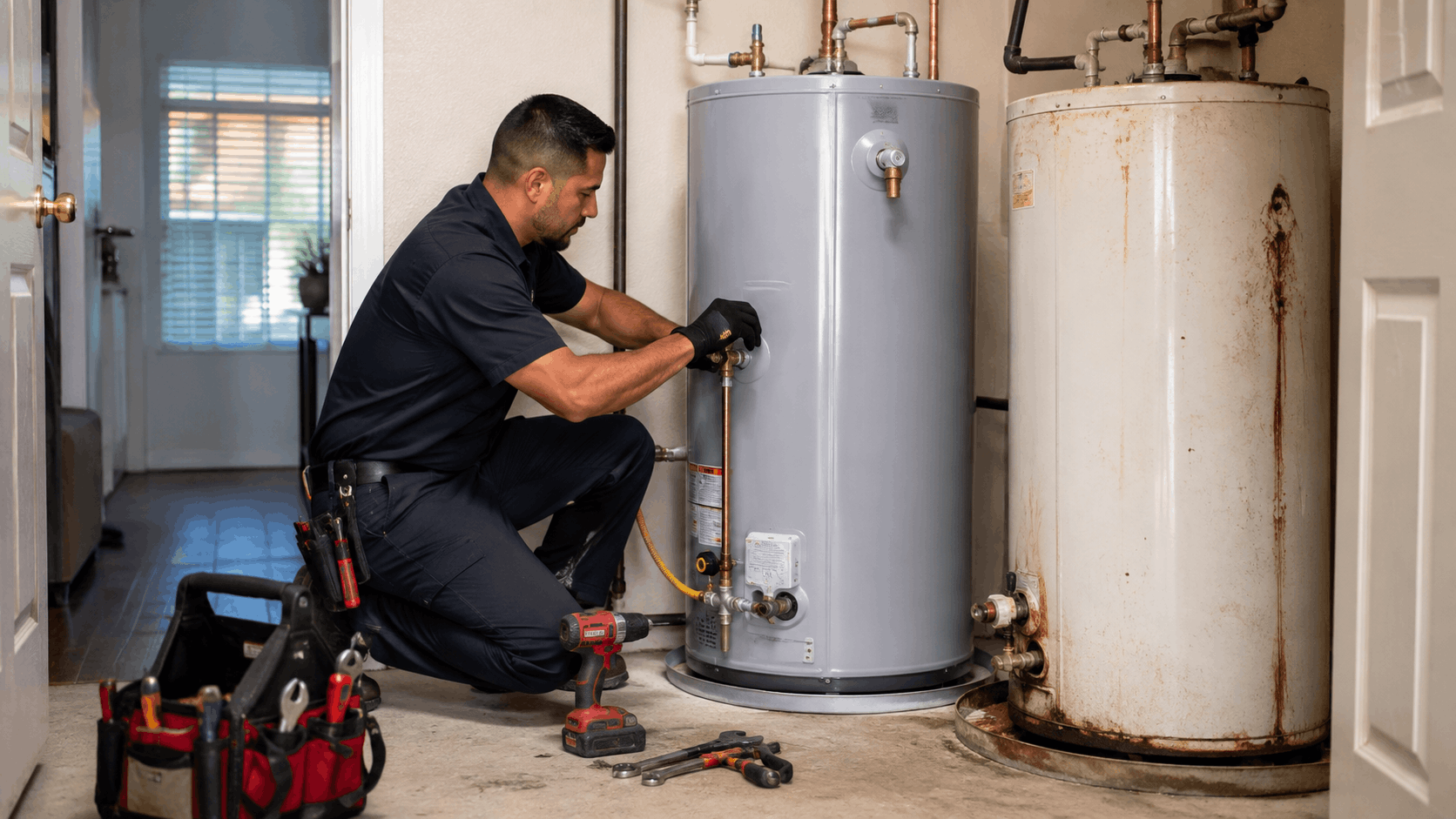
When a subdivision goes up fast, the water heater is one of the first places a builder cuts cost. The units that landed in most Aliante garages were the cheapest models that met code, not the ones a homeowner would pick for themselves.
Combine that with some of the hardest water in the country and you get a very repeatable failure pattern. Below is a quick look at why a builder-grade water heater rarely outlives its neighbors.
| Factor | Effect on Lifespan |
|---|---|
| Thin glass tank lining | Cracks and lets water reach steel sooner |
| Small sacrificial anode rod | Wears out fast, leaving the tank unprotected |
| Hard valley water | Heavy sediment and mineral scale speed corrosion |
| Skipped maintenance | No flushing means sediment bakes onto the bottom |
| Same install year across a street | Whole neighborhoods reach failure age together |
The Low-Cost Tanks Builders Chose During the Aliante Boom
During the mid-2000s buildout of Aliante subdivisions, developers ordered water heaters by the pallet. These were the entry-level models, chosen because they hit the lowest price point that still passed inspection.
A builder-grade tank usually ships with a thin glass lining and a short 6-year warranty. That warranty number tells you a lot. The manufacturer is quietly saying the unit is built to make it through the warranty period and not much longer.
The internal parts follow the same logic. The anode rod is smaller, the insulation is thinner, and the gas valve or heating element is a basic version. None of it is dangerous when new, but none of it is built for a long haul in a demanding climate.
We see these same models in home after home along Aliante Parkway and the surrounding streets. When one builder-grade tank in a neighborhood fails, its twins next door are usually not far behind.
How Hard Water From the Valley Speeds Up Corrosion
Water in the Las Vegas Valley is loaded with calcium and magnesium. That high mineral content is what makes our water hard, and it is rough on any tank it flows into.
As water heats, those minerals drop out and settle as sediment at the bottom of the tank. Over the years that layer thickens, traps heat against the steel, and forces the burner or element to work harder. The extra heat stress cracks the glass lining from the inside.
The anode rod is the tank's built-in defense. It is a sacrificial metal rod that corrodes first so the steel tank does not. In softer-water regions that rod might last close to a decade, but here it can be eaten away in half that time.
Once the anode rod is gone, corrosion turns straight to the tank walls. That is the moment a builder-grade unit starts its final countdown, and hard water is the reason it happens so early in North Las Vegas.
Why the 10-Year Mark Is So Predictable
Aliante did not grow one house at a time. Large phases went up together, which means dozens of identical homes got identical water heaters installed within the same few months.
Fast forward a decade and those units share the same water heater age, the same wear, and the same worn-out anode rods. So when tank failure starts, it does not stay on one property. It moves down the block.
We have had weeks where three replacement calls came from the same phase of a subdivision. The homeowners had never spoken to each other, but their water heaters were on the same clock.
If a home is around ten years old and still has its original unit, the 10-year mark is a fair warning. Planning a replacement before the tank leaks is far cheaper than reacting to a flooded garage.
Common Failure Points We See on Service Calls
On gas models, the gas valve is a frequent first casualty. When a gas valve failure happens, the burner will not fire correctly and the water stays cold or lukewarm even though everything looks fine.
On electric units, a burned-out heating element is the usual culprit. Sediment buildup often surrounds the lower element, cooks it, and shortens its life well before the tank itself gives out.
The dip tube is another weak spot. When it cracks, cold incoming water mixes with the hot at the top and homeowners suddenly notice lukewarm showers that used to be hot.
The failure nobody wants is a rusted tank. Once the steel corrodes through, no repair will help. At that point a full water heater replacement is the only safe fix.
Get Your Quote
Tell us what's going on and we'll get back to you fast.
Warning Signs Your Aliante Home Needs a New Water Heater
A water heater rarely dies without warning. It usually sends a few clear signals first, and catching them early is the difference between a planned swap and an emergency cleanup.
Here are the water heater warning signs we tell every Aliante homeowner to watch for, and what each one means inside the tank.
| Warning Sign | What It Usually Means |
|---|---|
| Rusty or brown hot water | Tank interior is corroding |
| Popping or rumbling sounds | Hardened sediment on the tank bottom |
| Water pooling at the base | Fitting leak or a cracked tank |
| Hot water runs out fast | Sediment has stolen tank capacity |
Rusty or Discolored Hot Water
When brown or metallic water shows up only on the hot side, the tank is usually the source. Cold water that runs clear points the finger straight at the water heater rather than the pipes.
Rusty water means the steel inside is corroding and shedding into the supply. The glass lining has failed and the anode rod is no longer holding tank corrosion back.
Some folks notice it first as stained laundry or a faint rusty tint in a bathtub. Others catch a metallic taste when they brush their teeth with hot water.
Once discoloration starts, the tank is on borrowed time. A flush might buy a little while, but rust from the tank walls is a signal that replacement is coming soon.
Popping, Rumbling, and Banging Noises
If the water heater sounds like a kettle full of gravel, that is sediment talking. The popping noise comes from water trapped under a hardened mineral layer, boiling and bubbling its way out.
Valley hard water builds that sediment layer faster than almost anywhere. The more it builds, the louder the tank rumbling gets over the months.
Those sounds are more than an annoyance. The sediment forces the burner to overheat the steel, which stresses the tank and shortens its remaining life.
A yearly flush keeps the noise and the damage down. If the rumbling has been going on for years without a flush, the tank is likely worn well past its prime.
Water Pooling Around the Base
Any water on the garage floor around a heater deserves a close look. The good news is that not every leak means replacement.
Sometimes a water heater leak comes from a loose fitting, a valve, or the temperature relief line. Those are repairable, and a quick water heater repair can put things right.
The bad news is a tank crack. When the steel body itself splits, water seeps from the bottom and no seal or fitting will stop it.
Pooling water from a cracked tank only gets worse and can flood a garage overnight. If the base of the unit is the source, plan on a replacement rather than a patch.
Running Out of Hot Water Faster Than Before
A shower that used to stay hot for twenty minutes but now goes cold in eight is a classic decline sign. Nothing in the household changed, yet there is suddenly not enough hot water.
The reason is sediment. As the mineral layer grows on the tank floor, it takes up space that used to hold hot water, cutting the reduced capacity you can actually use.
A 50-gallon tank packed with an inch of sediment might behave like a 40-gallon unit. Families in two-story Aliante homes feel this quickly during back-to-back morning showers.
When capacity keeps shrinking, the tank is telling you its useful days are ending. It is a good moment to price out a replacement before the unit quits entirely.
Need Help in Las Vegas?
Active Plumbing serves Las Vegas and all of Las Vegas Valley.
Tank vs. Tankless: Choosing a Replacement for North Las Vegas Homes
Once a homeowner accepts that a replacement is coming, the next question is which type. The two main paths are a standard tank water heater and a tankless water heater, and each fits certain homes better than others.
Here is a side-by-side look to frame the water heater replacement decision for a typical North Las Vegas home.
| Feature | Tank | Tankless |
|---|---|---|
| Upfront cost | Lower | Higher |
| Lifespan | 8 to 12 years | 15 to 20 years |
| Space used | Large footprint | Wall-mounted, compact |
| Hot water supply | Limited by tank size | Endless on demand |
| Hard water sensitivity | Sediment in tank | Scale in heat exchanger |
Standard Tank Units and Who They Suit
A straight tank swap is the simplest and most affordable route. For many families, replacing an old tank water heater with a new one is the practical choice.
A 50-gallon tank handles most three and four bathroom homes across Aliante without any changes to the gas line or venting. That keeps labor and cost down.
Most homes here run a gas water heater because it heats water faster and costs less to operate than electric. The install is familiar, and parts are easy to source.
If a household has a tight budget or just wants a reliable like-for-like replacement, a modern tank is a solid answer. It will not match a tankless on lifespan, but the entry cost is far lower.
Tankless Systems in Desert Homes
Tankless units are earning fans across North Las Vegas, and for good reason. A tankless water heater heats water only when a tap opens, delivering on-demand hot water without storing gallons all day.
Space is a real perk in Aliante builds. Many garage utility closets are cramped, and a wall-mounted tankless frees up floor space that a bulky tank hogs. A clean garage install often opens room for storage or shelving.
These systems also last longer, commonly 15 to 20 years, and they never run out mid-shower. For a busy two-story home with morning traffic, that endless supply is a genuine upgrade.
The tradeoff is a higher upfront cost and, in some homes, added gas line or venting work. Our team handles tankless water heater installation and can tell a homeowner quickly whether their setup is a good fit.
How Hard Water Affects Each Option
Hard water is tough on both types, just in different spots. In a tank, minerals settle as sediment on the bottom. In a tankless, they form hard water scale inside the narrow heat exchanger.
Scale in a heat exchanger is the biggest long-term risk for tankless owners here. Left alone, it chokes flow, drops efficiency, and can trigger error codes that shut the unit down.
That is why treated water matters so much in the valley. Pairing either unit with a water softener cuts scale and protects the investment.
For tankless owners, we also recommend routine descaling maintenance. A yearly flush clears mineral buildup before it damages the heat exchanger.
Right-Sizing for Your Household
Buying the right size beats buying the biggest. Water heater sizing depends on how many people live in the home and how many bathrooms run at once.
For tank units, look at the first hour rating. That number tells you how much hot water the unit can deliver in the busiest hour, like weekday mornings when several showers overlap.
A typical two-story North Las Vegas home with three or four people usually lands well with a 50-gallon tank. Larger families or homes with soaking tubs may want more, or a tankless to skip the limit entirely.
Matching capacity to real household demand avoids cold surprises and wasted energy. Our team measures usage before recommending a size, so nobody pays for more than they need.
What Water Heater Replacement Costs in Aliante and North Las Vegas
Cost is the first question most homeowners ask, and honest ranges help with planning. Water heater replacement cost depends on the type of unit, the labor involved, and any code items the job triggers.
Here is a general breakdown of water heater price ranges in North Las Vegas. Exact numbers vary by home, but these figures give a realistic starting point.
| Type of Job | Typical Range |
|---|---|
| 40 to 50 gallon electric tank | $1,300 - $2,200 |
| 40 to 50 gallon gas tank | $1,600 - $2,800 |
| Tankless install | $3,500 - $6,000 |
| Code upgrades (pan, expansion tank, straps) | $200 - $700 |
| Emergency or after-hours | Add 15% - 30% |
Typical Price Ranges for Tank Replacement
A standard tank replacement is the most predictable job we do. Tank replacement cost for a 40 or 50 gallon electric unit usually falls between roughly $1,300 and $2,200 installed.
Gas water heater price runs a bit higher, often $1,600 to $2,800, because the gas connection and venting add labor. The exact figure depends on the model and whether the existing setup meets current code.
Those numbers include the new unit, removal and disposal of the old one, and standard fittings. A like-for-like swap in an accessible Aliante garage sits at the lower end.
Homes that need line rework or fresh venting move toward the top of the range. A clear quote before the work starts keeps surprises off the final bill.
Tankless Installation Costs and Payback
Tankless cost is higher up front, commonly $3,500 to $6,000 depending on the model and the home. The installation cost climbs when a job needs a larger gas line or new venting to feed the unit.
Our team often handles a gas line upsize as part of a tankless project. Tankless burners fire hotter and need more fuel flow than an old tank ever did.
The payback comes from energy savings and lifespan. A tankless only heats water on demand, so it wastes less energy than a tank that reheats stored water all day.
Stretch those savings across 15 to 20 years and the higher upfront price starts to even out. For homeowners planning to stay put, tankless often makes long-term financial sense.
Extra Costs That Catch Homeowners Off Guard
The unit price is only part of the story. Current plumbing code requires safety items that older installs may be missing, and those add to the total.
An expansion tank is a common one. It absorbs pressure as water heats and protects the system, and many older Aliante homes never had one.
A drain pan under the heater, proper seismic straps, and updated venting may also be required. Permit cost is another line item, since the city requires one for a legal swap.
None of these code upgrades are optional if the job is done right. Building them into the quote up front means the price a homeowner hears is the price they pay.
Why Emergency Replacements Cost More
Waiting until a tank bursts is the most expensive path. An emergency replacement carries rush charges and often after-hours labor on top of the unit cost.
A burst tank does not stop at the water heater. It can flood a garage, soak drywall, ruin stored belongings, and cause water damage that costs far more than the heater itself.
When a tank lets go overnight, homeowners need help fast, and our emergency plumbing team responds around the clock. That speed keeps damage down but comes at a premium.
Planning a replacement before failure avoids all of it. Swapping a tired ten-year-old unit on a normal weekday is always cheaper than reacting to a flood.
Local Codes, Permits, and Installation Details in North Las Vegas
A water heater is a permitted job in North Las Vegas, and for good reason. Proper installation protects the home from gas leaks, fire, and water damage, and it keeps the work legal.
Here is what homeowners should know about the local process and requirements.
- A water heater permit is required for replacements in North Las Vegas
- Gas and electric setups follow different code rules
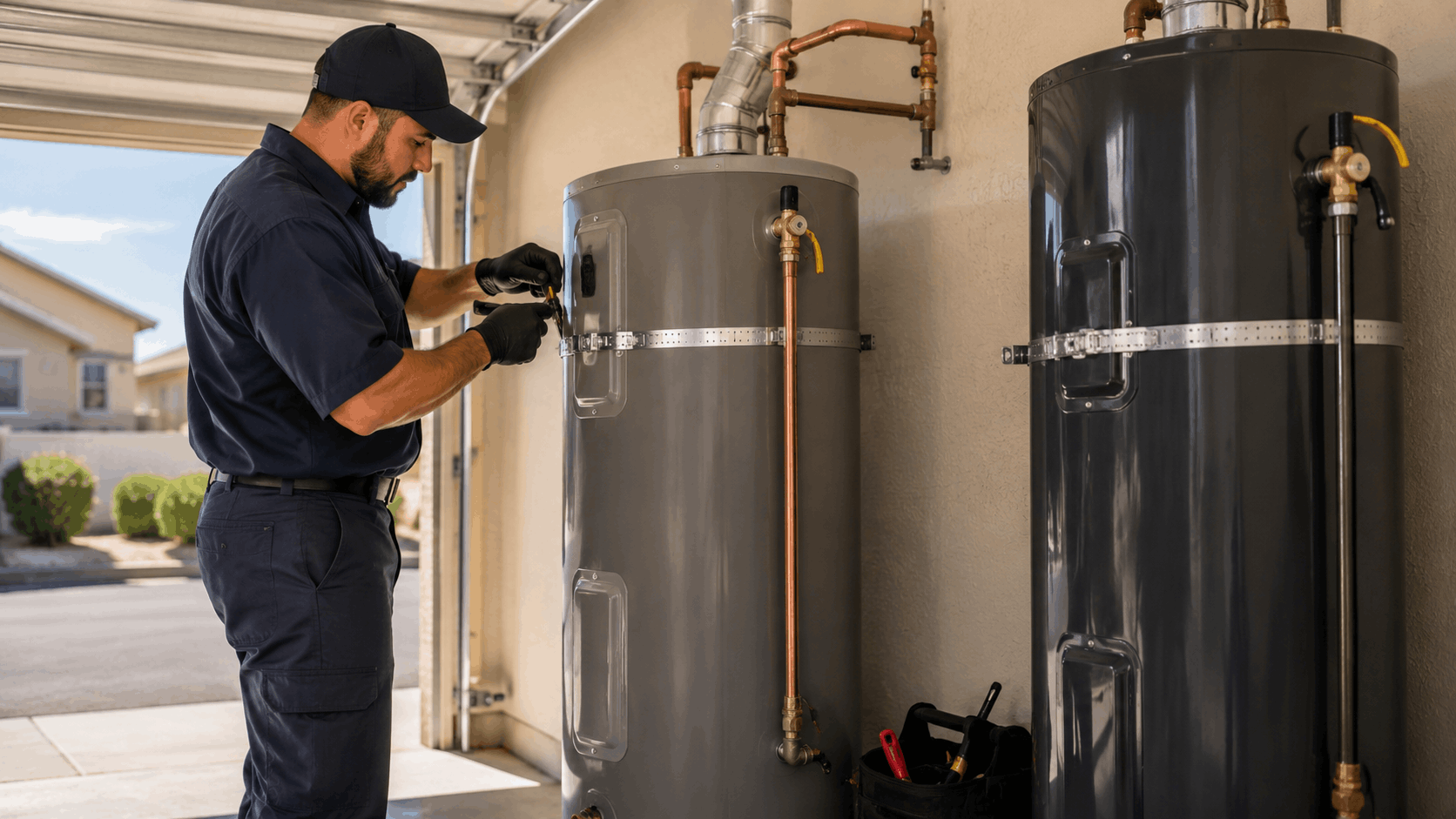
- Safety hardware like pans, venting, and straps is mandatory
- Local water pressure and quality affect the install
Permits and Inspections Through the City
The North Las Vegas building department requires a permit for a water heater swap. The permit process protects the homeowner by putting the work in front of an inspector.
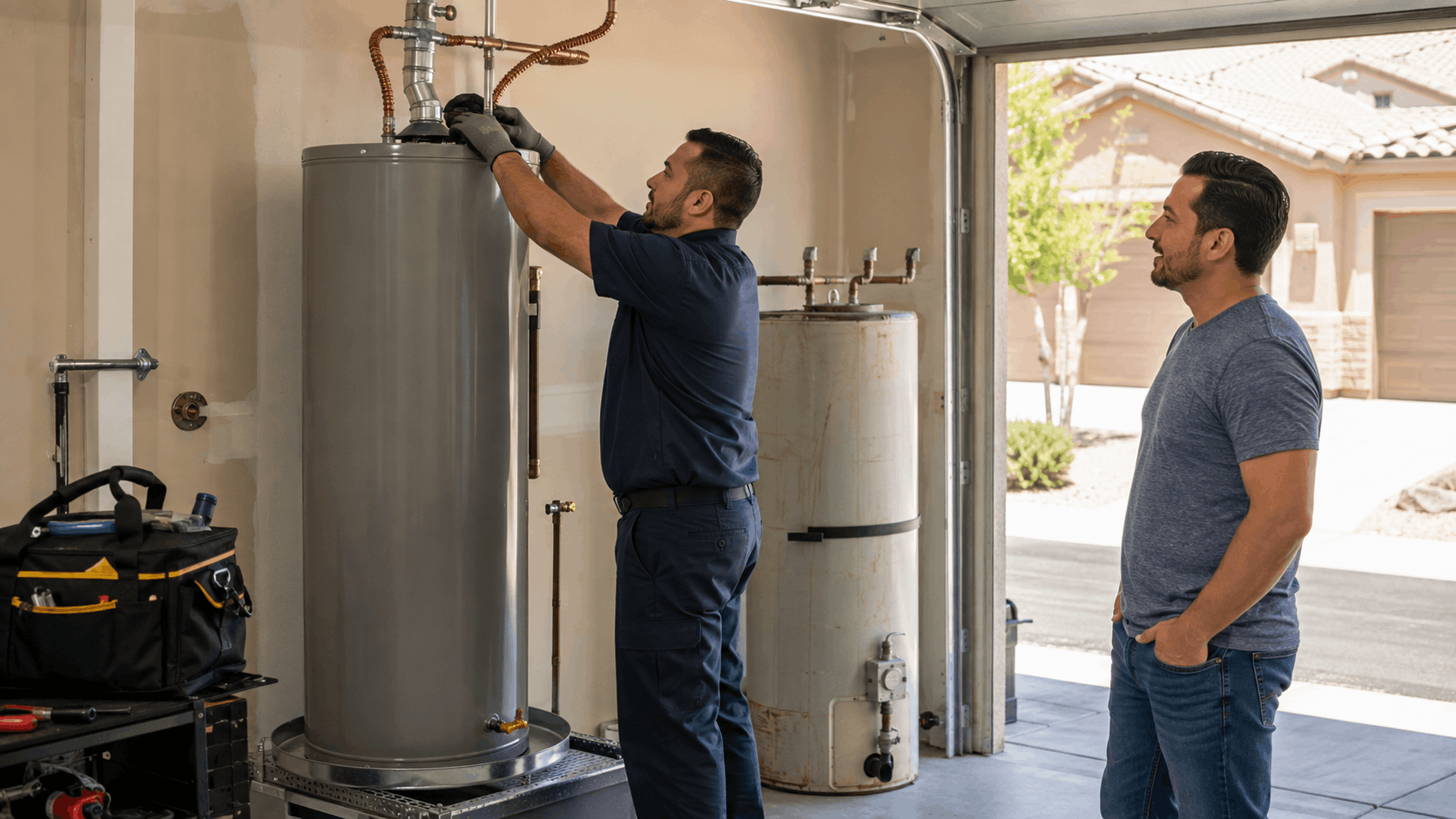
A licensed plumber pulls the permit, completes the install to code, and schedules the inspection. That step confirms the venting, connections, and safety hardware all meet current standards.
Skipping the permit might seem cheaper, but it can create problems at resale and void insurance if something fails. An uninspected install also hides mistakes that could turn dangerous.
Our team handles the permit and inspection start to finish. Homeowners in Aliante and beyond do not have to deal with the paperwork or the city on their own.
Gas vs. Electric and Utility Considerations
Most North Las Vegas homes run gas water heaters fed by Southwest Gas. A gas install has to account for line size, proper connections, and safe combustion air in the garage.
Electric units connect to NV Energy service and depend on the home's panel capacity. Some older homes need an electrical check before a larger electric unit goes in.
When a tankless upgrade needs more fuel, the gas line often has to be reworked. Our gas line services cover the sizing and rerouting these projects require.
Getting the utility side right is part of a safe install. A gas line that is too small starves a tankless, and an undersized panel can trip breakers on an electric unit.
Venting, Drain Pans, and Earthquake Straps
Safety hardware is not filler. Proper venting carries combustion gases out of the home, and a blocked or wrong vent can push carbon monoxide back inside.
A drain pan under the tank catches leaks and routes water away before it damages the garage. In many Aliante homes the heater also needs to sit elevated off the floor for gas models.
A seismic strap secures the tank so it cannot tip or shift. Even in the desert, code calls for straps to keep a heavy tank stable.
These details separate a quick install from a correct one. We build every one of them into the job so the unit passes inspection the first time.
Water Quality Rules From the Local District
The Las Vegas Valley Water District supplies most homes in the area, and its hard water shapes every install choice. High mineral content is exactly why treatment and maintenance matter here.
Water pressure is another factor. Pressure that runs too high strains the tank, fittings, and connections, and speeds up wear across the whole system.
A pressure regulator keeps incoming pressure in a safe range, usually between 50 and 70 psi. Many homes benefit from one, especially if fittings keep failing.
We check pressure and water quality as part of a replacement. Addressing both at install time helps the new unit avoid the early failure that took out the old one.
Need Help in Las Vegas?
Active Plumbing serves Las Vegas and all of Las Vegas Valley.
How to Make a New Water Heater Last Longer in the Valley
A new unit does not have to repeat the ten-year cliff. With a little water heater maintenance, homeowners can extend lifespan well past what the old builder-grade tank managed.
The habits below are built specifically for our hard water climate. A few of them are simple DIY tasks, and the rest are quick service visits worth scheduling.
Annual Tank Flushing to Beat Sediment
A tank flush is the single best habit for valley homeowners. Draining the tank once a year clears the mineral sediment that hardens on the bottom.
Sediment removal keeps the burner or element from overheating the steel. That protects the lining and keeps hot water capacity where it should be.
The process is straightforward. Shut off the power or gas, connect a hose to the drain valve, and flush until the water runs clear.
Because our water is so hard, a once-a-year maintenance schedule is the minimum. Homes with heavy use may benefit from flushing every six months.
Replacing the Anode Rod on Schedule
The anode rod is the part most homeowners have never heard of, yet it decides how long a tank survives. This sacrificial rod corrodes on purpose so the tank steel stays intact.
In the valley's hard water, that corrosion protection wears out fast. A rod that might last a decade elsewhere can be spent in three to five years here.
Checking the rod every few years and swapping it when it is mostly gone can add years to a tank's life. It is a cheap part compared to a full replacement.
Most homeowners have us inspect the rod during an annual visit. Catching a worn rod early is one of the best ways to dodge the ten-year failure.
Adding a Water Softener or Whole-Home Filter
Treating the water before it ever reaches the heater helps every fixture in the house. A water softener pulls out the calcium and magnesium that cause scale.
For a tank, softer water means less sediment and slower corrosion. For a tankless, it means a heat exchanger that stays clean and efficient, which is scale prevention where it counts most.
Some homeowners prefer a salt-free conditioner or a whole-home filter instead of a traditional softener. Either approach cuts the mineral load that shortens appliance life.
The math is simple. Spending on water treatment now protects a water heater, dishwasher, and washing machine down the road.
Setting the Right Temperature and Pressure
The right settings reduce strain and stretch a unit's life. A temperature setting of 120 degrees is safe, comfortable, and easy on the tank.
Running the thermostat hotter than needed wastes energy and accelerates mineral buildup. It also raises the risk of scalding, especially with kids in the home.
Water pressure matters just as much. Keeping pressure between 50 and 70 psi protects the tank and fittings from constant stress.
If a home has no pressure regulator or the setting drifts high, that is worth correcting. Small adjustments here pay off in fewer leaks and a longer service life.
Why Aliante and North Las Vegas Homeowners Call Active Plumbing
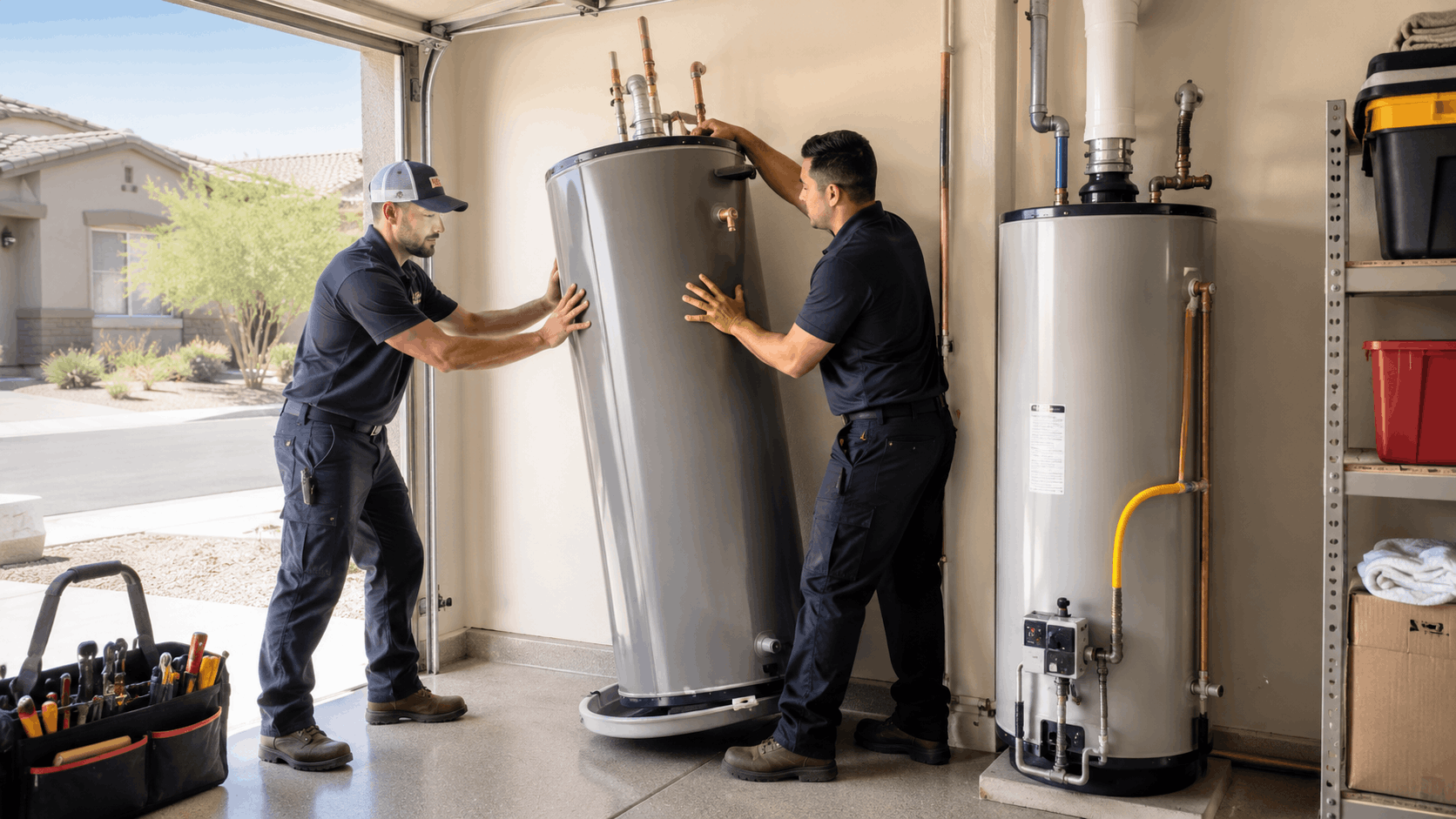
When a tank fails, homeowners want a crew that knows the area and can move fast. Active Plumbing handles water heater installation across Aliante and the wider North Las Vegas community every week.
Here is what working with a local plumber who knows these neighborhoods looks like.
Familiar With the Neighborhood Floor Plans
We have worked in enough Aliante homes to know the floor plans by heart. The garage water heater setups, the utility closet dimensions, and the common gas line runs are all familiar to our crew.
That knowledge carries into nearby communities too. Homes around Tule Springs and the Eldorado area share many of the same builder-era quirks and tight utility spaces.
Knowing the layout means fewer surprises on the job. We show up ready for the space we are walking into rather than guessing on site.
Homeowners in Aliante and Tule Springs get a faster, cleaner install because we already understand their homes.
Same-Day and Emergency Replacement Service
A dead water heater cannot wait. When a tank quits or bursts, we offer same-day service so a family is not left without hot water for days.
Our emergency plumber team responds around the clock for the worst cases. A burst tank flooding a garage at midnight gets a fast answer, not a next-week appointment.
Speed matters most when water is spreading across a floor. Stopping the flow and getting a new unit in quickly keeps damage and cost down.
Whether it is a planned swap or a middle-of-the-night failure, restoring hot water fast is our goal. Nobody should have to shower cold while they wait.
Upfront Pricing and Proper Permitting
Surprise charges have no place on a water heater job. We give clear, upfront pricing that spells out the unit, labor, and any code items before the work begins.
As a licensed plumber, our team handles permit handling and the city inspection for every install. That keeps the job legal and protects the homeowner at resale.
Doing it right the first time means passing inspection without a redo. We build the required pans, straps, and venting into the plan from the start.
Homeowners know the price and the process before we lift a wrench. No guesswork and no add-ons after the fact.
Service Across North Las Vegas Communities
Our coverage stretches across the North Las Vegas service area and the neighborhoods within it. From homes near Aliante Parkway to properties around Craig Ranch and the North 5th corridor, we are close by.
That local footprint means shorter drive times and faster arrivals. When a homeowner calls, our crew is usually not far away.
We also serve nearby areas like Elkhorn and the broader North Las Vegas region. The same knowledge of local water and code applies across all of them.
Wherever a home sits in the valley's north side, we bring the same familiarity with the water, the builders, and the failure patterns.
Need Help in Las Vegas?
Active Plumbing serves Las Vegas and all of Las Vegas Valley.
Final Thoughts
Builder-grade water heaters across Aliante were never built to outlive their neighborhoods. Cheap tanks, thin linings, and worn-out anode rods, combined with the valley's hard water, put most of them on a ten-year clock.
The good news is that homeowners have real choices. A right-sized tank or a longer-lasting tankless, paired with water treatment and yearly maintenance, can break the ten-year cycle for good.
If a home is nearing that mark, or already showing rusty water and cold showers, do not wait for the flood. Contact Active Plumbing for a straightforward quote and a replacement done to code the first time.
Frequently Asked Questions
How long do builder-grade water heaters last in North Las Vegas?
Most builder-grade water heaters last 8 to 12 years, but the valley's hard water pushes them toward the low end. Heavy mineral sediment and a quickly worn anode rod speed up corrosion far faster than in softer-water regions. Many original Aliante units start failing right around the ten-year mark, which is why we recommend planning a replacement before the tank leaks.
How much does water heater replacement cost in Aliante?
A standard tank replacement usually runs about $1,300 to $2,200 for electric and $1,600 to $2,800 for gas, installed. Tankless installs range from roughly $3,500 to $6,000 depending on gas line and venting work. Code items like an expansion tank, drain pan, and permit add a few hundred dollars. A clear quote up front covers all of it before work begins.
Should I repair or replace a 10-year-old water heater?
Repair makes sense for a younger unit with a single failed part like a heating element or a leaking fitting. At ten years old with rusty water or a cracked tank, replacement is almost always the smarter call. Sinking money into an aging tank that will fail soon rarely pays off. Our team gives an honest recommendation after inspecting the unit.
Do I need a permit to replace a water heater in North Las Vegas?
Yes, a water heater permit is required for replacements in North Las Vegas. A licensed plumber pulls the permit, completes the install to code, and schedules a city inspection to confirm the venting, connections, and safety hardware are correct. We handle the entire permit and inspection process, so homeowners do not have to deal with the paperwork or the building department themselves.
Is a tankless water heater worth it in the desert?
For many homeowners, yes. A tankless water heater lasts 15 to 20 years, never runs out of hot water, and saves energy by heating only on demand. The main concern here is hard water scale inside the heat exchanger, which yearly descaling and a softener prevent. If a household plans to stay put, the long-term savings often justify the higher upfront cost.
What are the first signs my water heater is failing?
The earliest signs are rusty or brown hot water, popping or rumbling noises, and hot water that runs out faster than it used to. Water pooling around the base is a more serious warning, especially if it comes from the tank itself. Any of these means the unit is declining. Catching them early lets a homeowner plan a replacement before a burst tank floods the garage.
How often should I flush my water heater here?
Because valley water is so hard, we recommend flushing the tank at least once a year. Homes with heavy hot water use may benefit from flushing every six months. Regular flushing clears the mineral sediment that hardens on the tank bottom, which protects the lining, keeps capacity up, and quiets the rumbling that hard water sediment causes over time.
Can hard water really shorten my water heater's life?
Absolutely. Hard water damage is a leading cause of early failure in North Las Vegas. The calcium and magnesium in local water settle as sediment in tanks and form scale inside tankless heat exchangers. That buildup corrodes steel, overheats the burner, and clogs narrow passages. Treating the incoming water with a softener or conditioner is the best way to protect any unit.
How long does a water heater replacement take?
A straightforward tank swap in an accessible garage usually takes about two to three hours. A tankless installation runs longer, often four to six hours or more, since it can involve new venting and gas line work. If the home needs code upgrades or unexpected repairs, the timeline stretches a bit. We give a realistic estimate before starting.
What size water heater does my home need?
Water heater size depends on household size and how many bathrooms run at once. A typical two-story North Las Vegas home with three or four people usually fits a 50-gallon tank well. Larger families or homes with soaking tubs may need more capacity or a tankless to avoid running out. Our team checks real usage and the first hour rating before recommending a size.
Ready to replace an aging unit or worried a tank is on its last year? Contact Active Plumbing today for upfront pricing, proper permitting, and a water heater installation done right the first time across Aliante and North Las Vegas. You can also learn more about our full water heater services and schedule a consultation with our local team.
For more on choosing an efficient unit, the U.S. Department of Energy water heating guide and the EPA WaterSense program offer helpful background. Water quality details for our area are available from the Las Vegas Valley Water District.
Frequently Asked Questions
- How long do builder-grade water heaters last in North Las Vegas?
- Most builder-grade water heaters last 8 to 12 years, but the valley's hard water pushes them toward the low end. Heavy mineral sediment and a quickly worn anode rod speed up corrosion far faster than in softer-water regions. Many original Aliante units start failing right around the ten-year mark, which is why we recommend planning a replacement before the tank leaks.
- How much does water heater replacement cost in Aliante?
- A standard tank replacement usually runs about $1,300 to $2,200 for electric and $1,600 to $2,800 for gas, installed. Tankless installs range from roughly $3,500 to $6,000 depending on gas line and venting work. Code items like an expansion tank, drain pan, and permit add a few hundred dollars. A clear quote up front covers all of it before work begins.
- Should I repair or replace a 10-year-old water heater?
- Repair makes sense for a younger unit with a single failed part like a heating element or a leaking fitting. At ten years old with rusty water or a cracked tank, replacement is almost always the smarter call. Sinking money into an aging tank that will fail soon rarely pays off. Our team gives an honest recommendation after inspecting the unit.
- Do I need a permit to replace a water heater in North Las Vegas?
- Yes, a water heater permit is required for replacements in North Las Vegas. A licensed plumber pulls the permit, completes the install to code, and schedules a city inspection to confirm the venting, connections, and safety hardware are correct. We handle the entire permit and inspection process, so homeowners do not have to deal with the paperwork or the building department themselves.
- Is a tankless water heater worth it in the desert?
- For many homeowners, yes. A tankless water heater lasts 15 to 20 years, never runs out of hot water, and saves energy by heating only on demand. The main concern here is hard water scale inside the heat exchanger, which yearly descaling and a softener prevent. If a household plans to stay put, the long-term savings often justify the higher upfront cost.
- What are the first signs my water heater is failing?
- The earliest signs are rusty or brown hot water, popping or rumbling noises, and hot water that runs out faster than it used to. Water pooling around the base is a more serious warning, especially if it comes from the tank itself. Any of these means the unit is declining. Catching them early lets a homeowner plan a replacement before a burst tank floods the garage.
- How often should I flush my water heater here?
- Because valley water is so hard, we recommend flushing the tank at least once a year. Homes with heavy hot water use may benefit from flushing every six months. Regular flushing clears the mineral sediment that hardens on the tank bottom, which protects the lining, keeps capacity up, and quiets the rumbling that hard water sediment causes over time.
- Can hard water really shorten my water heater's life?
- Absolutely. Hard water damage is a leading cause of early failure in North Las Vegas. The calcium and magnesium in local water settle as sediment in tanks and form scale inside tankless heat exchangers. That buildup corrodes steel, overheats the burner, and clogs narrow passages. Treating the incoming water with a softener or conditioner is the best way to protect any unit.
- How long does a water heater replacement take?
- A straightforward tank swap in an accessible garage usually takes about two to three hours. A tankless installation runs longer, often four to six hours or more, since it can involve new venting and gas line work. If the home needs code upgrades or unexpected repairs, the timeline stretches a bit. We give a realistic estimate before starting.
- What size water heater does my home need?
- Water heater size depends on household size and how many bathrooms run at once. A typical two-story North Las Vegas home with three or four people usually fits a 50-gallon tank well. Larger families or homes with soaking tubs may need more capacity or a tankless to avoid running out. Our team checks real usage and the first hour rating before recommending a size. Ready to replace an aging unit or worried a tank is on its last year? Contact Active Plumbing today for upfront pricing, proper permitting, and a water heater installation done right the first time across Aliante and North Las Vegas.
A
Licensed plumbing professionals serving Las Vegas and Las Vegas Valley.
Licensed in Nevada · License #0047021
Last updated on
Why trust Active Plumbing?
Founded in 1991, Active Plumbing is a licensed and insured plumber serving Las Vegas and Las Vegas Valley. All content is reviewed by our licensed technicians.

Need Help in Las Vegas?
Active Plumbing serves Las Vegas and all of Las Vegas Valley.
Related Articles

Maintenance
Tankless Water Heater Scale Buildup: Why Vegas Units Fail at 5 Years Without Descaling
Las Vegas hard water causes scale buildup that fails tankless units at five years. Learn the warning signs, descaling schedule, and treatment options to protect yours.
Maintenance
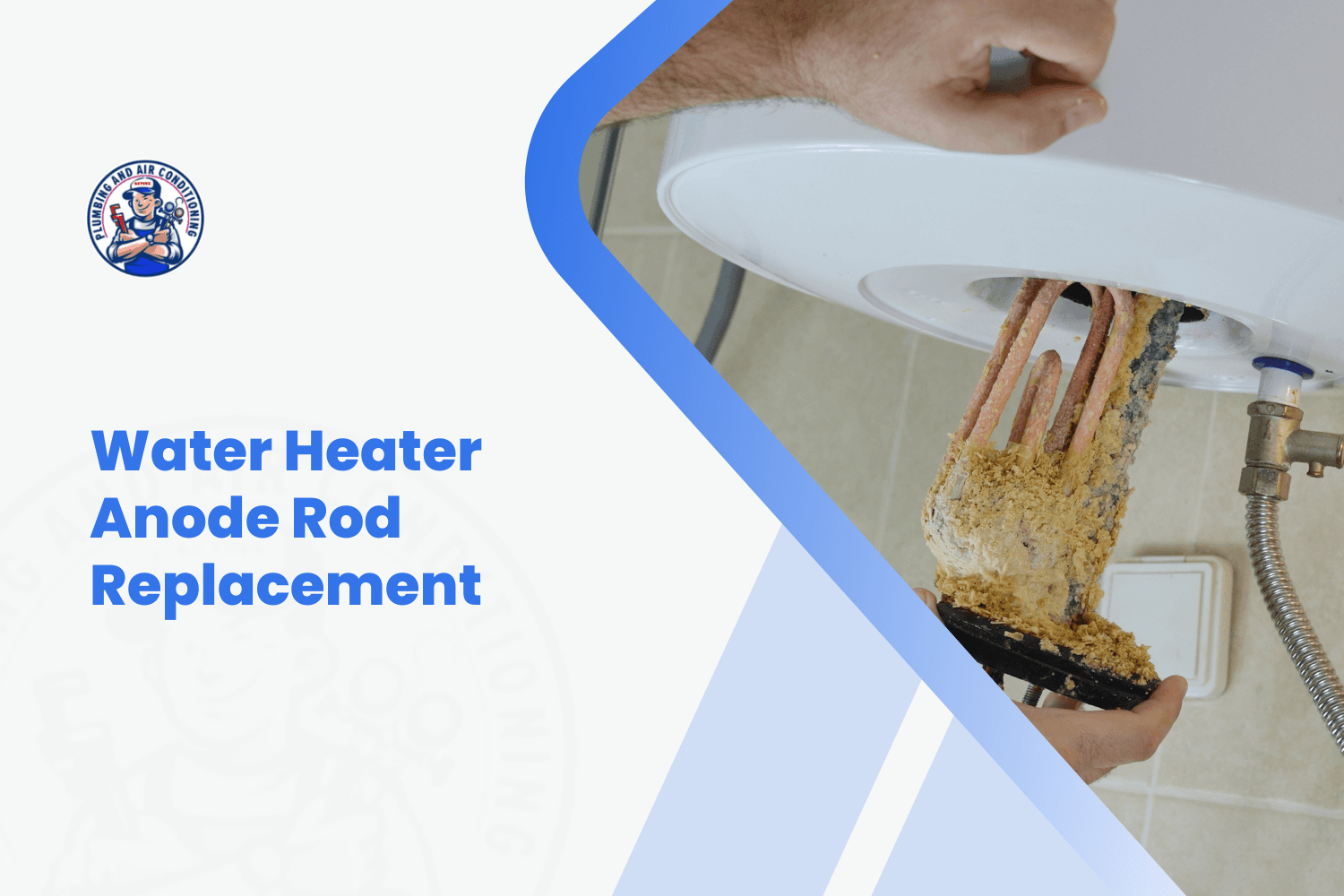
Water Heater Anode Rod Replacement: Why Vegas Hard Water Eats Them in 18 Months
Las Vegas hard water destroys anode rods in 18 months instead of years. Learn the warning signs, replacement costs, and how to protect your water heater long term.
Cost Guides
Water Heater Repair vs Replace in Las Vegas: The Price Math at Years 6, 8, and 10 in Our Hard Water
Repair or replace your water heater in Las Vegas? See the real price math at years 6, 8, and 10, plus how hard water shortens tank life across the valley.