Maintenance
How Often to Flush a Water Heater in Las Vegas: The 16-Grain Hardness Schedule
Key Takeaways
- Las Vegas water runs around 16 grains per gallon, more than double typical hardness, so tanks collect sediment fast.
- Flush most tank water heaters every 6 months instead of the standard once-a-year advice.
- A water softener stretches the flush interval to about once a year but does not eliminate it.
- Watch for popping sounds, shorter hot showers, cloudy or rusty water, and rising utility bills as signs a flush is overdue.
- Check the sacrificial anode rod during each flush, since hard water wears it out in about three years here.
- Skipping flushes can cut a tank's life from 10-12 years down to 5-7 and risks a costly burst.
- Tankless units need descaling every 6 to 9 months in local water to protect the heat exchanger.
- Active Plumbing offers flush, inspection, and 16-grain maintenance plans across Summerlin, Henderson, Spring Valley, and North Las Vegas.
In This Article
Anyone who has lived in the Las Vegas Valley for a few years knows the sound. A water heater in the garage starts popping and rumbling like a kettle full of gravel. That noise is not random. It is the direct result of some of the hardest water in the country baking mineral deposits onto the bottom of the tank.
Our team has crawled through hundreds of garages and utility closets from Summerlin to Henderson, and the story is almost always the same. A tank that should have lasted twelve years fails in six because nobody flushed it. The culprit is our local water, which runs around 16 grains per gallon of hardness.
Why Las Vegas Water Is So Hard on Your Water Heater
Las Vegas hard water is not a minor annoyance. It is one of the biggest reasons water heaters fail early across the valley. The minerals dissolved in our tap water settle out fast once the water gets hot, and they pile up at the bottom of the tank.
Compared to cities with soft water, our tanks take a beating. A homeowner in Seattle might flush once a year and never think about it. Here in the desert, that same schedule leaves a tank half full of sediment before the next visit. Here is what makes local water so tough on equipment:
- High mineral content around 16 grains per gallon, which puts us in the "very hard" category
- Water heater sediment that builds far faster than in softer-water regions
- Hot, dry conditions that push heaters to run longer and harder
- Older plumbing in many valley homes that traps and holds scale
Because of all this, the flush schedule for Las Vegas has to be more aggressive than what the manufacturer's manual suggests. Local conditions demand it.
Where the 16-Grain Number Comes From
Most of the valley's tap water is delivered through the Las Vegas Valley Water District, and roughly 90 percent of it comes from the Colorado River by way of Lake Mead. That river water picks up huge amounts of dissolved calcium and magnesium as it flows through mineral-rich terrain. By the time it reaches a home in Spring Valley or Henderson, it is loaded.
The hardness typically measures around 16 grains per gallon, though it can swing between about 12 and 18 depending on the season and the source blend. Grains per gallon is just a way to measure how much mineral is dissolved in the water. Anything above 10.5 grains is considered very hard.
To put 16 grains in plain terms, imagine dumping roughly 278 milligrams of dissolved rock into every liter of water. That mineral does not vanish when the water heats up. It drops out and clings to the inside of the tank. The Environmental Protection Agency does not regulate hardness as a health concern, but for appliances it is a slow wrecking ball.
How Calcium and Magnesium Turn Into Tank Sediment
When hard water gets heated, a chemical change happens. The dissolved calcium and magnesium become less soluble and start falling out of the water as solid particles. Those particles settle to the bottom of the tank where the burner or heating element sits.
Over months, that loose grit hardens into a crusty layer of scale. Calcium buildup acts like an insulating blanket between the flame and the water above it. The heater has to work longer and hotter to push heat through that mineral deposits layer, which wastes energy and stresses the tank.
On gas units, the sediment traps small pockets of water against the tank floor. When those pockets flash to steam, they cause the popping and rumbling homeowners hear. On electric units, scale coats the heating element and can burn it out completely. Either way, the deposits shorten the life of the machine.
Neighborhoods That See the Worst Buildup
Not every home ages the same way, but a few areas stand out. Newer master-planned communities like Summerlin still deal with the full 16-grain load, so even five-year-old tanks show heavy sediment when we open them up. Buyers there are often surprised how fast scale appears.
Down in Henderson's Green Valley, we see a mix of homes from the 1990s and early 2000s with original or first-replacement tanks that never got flushed. Those units are frequently packed with hardened mineral by the time we arrive. If you live in that area, our Henderson plumbing team handles a steady stream of these.
The older homes near Charleston Boulevard and toward downtown are the real trouble spots. Decades of hard water combined with aging galvanized pipe means scale collects everywhere, not just the tank. These properties often need more frequent attention than the six-month baseline.
Get Your Quote
Tell us what's going on and we'll get back to you fast.
The 16-Grain Flushing Schedule Explained
A water heater flush schedule only works if a homeowner can actually stick to it. The good news is that the 16-grain schedule is simple. It is built around how fast our specific water lays down sediment, not a generic national guess.
Below is the flush frequency our team recommends based on the equipment and the household. Use it as a starting point and adjust for older homes or heavy water use.
| Water Heater Type | Softener Installed? | Recommended Flush Interval |
|---|---|---|
| Standard tank (gas or electric) | No | Every 6 months |
| Standard tank | Yes | Every 12 months |
| Tankless | No | Every 6 to 9 months |
| Tankless | Yes | Every 12 months |
| Any tank in a pre-1990 home | No | Every 4 to 6 months |
The theme is clear. At 16 grains per gallon, twice a year is the safe target for most valley homes without a softener.
Why Every 6 Months Beats the Standard Yearly Advice
Most manufacturer manuals and national guides say to flush once a year. That advice was written for average water conditions somewhere around 3 to 7 grains per gallon. Las Vegas water is more than double that hardness, so the standard annual flush simply does not keep up.
When we open a tank that was flushed only once a year, we usually find several inches of packed sediment at the bottom. That layer already started insulating the burner and cutting efficiency long before the yearly appointment came around. A twice a year flush cuts that buildup roughly in half between visits.
Think of it like changing oil in a car that tows heavy loads in the desert. The severe-duty schedule exists for a reason. Our hard water frequency of every six months is that severe-duty schedule for water heaters, and it pays off in years of extra tank life.
Tank vs. Tankless Flushing Timelines
A traditional tank water heater holds 40 to 50 gallons, so sediment has plenty of room to collect at the bottom. That is why the six-month flush matters so much for tanks. The draining process pulls loose grit out before it hardens into a permanent crust.
A tankless water heater is a different animal. It has no storage tank, but hard water still coats the heat exchanger with scale. Descaling a tankless unit means circulating a cleaning solution through it, usually every six to nine months in our water. Skipping it triggers error codes and slashes the flow rate.
Our team handles both. For storage models we do a full drain and rinse, and for on-demand units we offer tankless maintenance and descaling that keeps the heat exchanger clean. Matching the method to the equipment is what protects the investment.
How a Water Softener Changes Your Schedule
A whole-home water softener removes most of the calcium and magnesium before water ever reaches the heater. With soft water feeding the tank, sediment forms much slower. That is why the schedule stretches from every six months to about once a year for softened homes.
The reduced sediment also protects the anode rod, the heating element, and every fixture downstream. Homeowners who install a softener often notice softer laundry, cleaner glassware, and fewer spots on the shower door. Those are all signs the mineral load dropped.
Still, a softener is not a free pass to ignore the tank forever. Salt bridges can form in the brine tank, and settings can drift, letting hard water slip through. We recommend an annual flush plus a softener checkup, and our water softener installation team can set the whole system up correctly.
Adjusting the Schedule for Older Homes
Homes built before the 1990s near downtown Las Vegas and the Historic Westside often have plumbing that predates newer codes. Galvanized steel pipe and older tank designs collect scale faster and hold it longer. For these properties, we push the flush interval to every four to six months.
Aging plumbing also means sediment does not only live in the tank. It settles in horizontal pipe runs and at fixture valves, so a flush sometimes needs to be paired with a broader cleaning. We often find rusty valves that seize up the moment they are touched.
If a home has original plumbing and the water heater is more than eight years old, extra caution is smart. The team may recommend replacing a stubborn drain valve or checking supply lines during the same visit. Older systems reward a little more attention with a lot more reliability.
Need Help in Las Vegas?
Active Plumbing serves Las Vegas and all of Las Vegas Valley.
Warning Signs Your Tank Needs a Flush Now
Sediment does not announce itself politely. It creeps up until the water heater starts sending clear signals that it is overloaded. Learning these water heater warning signs helps a homeowner act before a small problem becomes a flooded garage.
If any of the following sediment symptoms show up, the flush is overdue. Here is what to watch, listen, and feel for:
- Popping, banging, or rumbling from the tank
- Hot water running out sooner than it used to
- Cloudy or rust-colored water at the faucet
- Sediment flecks in the bathtub or sink
- A slow creep upward in the monthly power or gas bill
- A hot water tap that sputters or spits
None of these signs improve on their own. They get worse until the tank is either flushed or replaced.
Popping and Rumbling Sounds
The most common call we get starts with "my water heater sounds like it is boiling rocks." That popping noise is trapped water. Sediment settles into a layer on the tank floor, and water gets caught underneath it near the burner.
When the burner fires, that trapped water superheats and blasts through the sediment as steam bubbles. Each pop is a little burst of steam fighting through the crust. A rumbling water heater is the same process happening on a larger scale across the whole bottom of the tank.
The noise itself will not flood a house, but it is a warning. It means the burner is fighting through a thick mineral layer, wasting fuel and overheating the steel. A flush clears the sediment and usually silences the tank within a day.
Running Out of Hot Water Faster
A tank rated for 50 gallons only delivers 50 gallons of hot water when it is empty of sediment. As mineral builds on the bottom, it steals usable volume. A few inches of scale can turn a 50-gallon tank into the equivalent of a 40-gallon one.
Homeowners notice this as shorter showers. The last person in the family gets cold showers, or a load of dishes runs cool halfway through. The hot water capacity did not really shrink, but the sediment is taking up space that water used to fill.
There is also a reduced efficiency angle. The insulating scale slows heat transfer, so the tank reheats slower between uses. If a household suddenly feels like it is fighting over hot water, sediment is often the reason.
Cloudy or Rusty Water at the Tap
Turn on a hot tap and watch the first few seconds of flow. If the water looks cloudy, has a rusty tint, or carries tiny gritty flecks, sediment is escaping the tank. Rusty water in particular points to corrosion starting inside the unit.
Cloudy water can also come from air, but if it clears from the bottom up in a glass, that is air. If it stays hazy or leaves grit at the bottom, that is sediment at the tap. Either way it is worth investigating.
Rust-colored hot water often means the anode rod is spent and the steel tank has begun to corrode. Once corrosion reaches that stage, a flush alone may not save it. Catching discoloration early gives a homeowner the best chance to act.
Higher Power or Gas Bills
Sediment quietly raises utility costs long before it causes a visible failure. As scale insulates the burner or element, the heater burns more fuel or draws more electricity to reach the same temperature. That extra work shows up on the monthly bill.
Many valley homeowners see NV Energy statements creep higher and blame the air conditioner or the season. Sometimes the real culprit is a sediment-choked water heater running longer cycles. A neglected tank can lose a noticeable slice of its efficiency loss to scale.
If energy bills climb with no change in habits, the water heater deserves a look. A flush restores efficiency by removing the insulating layer. It is one of the cheapest fixes for a rising utility bill in a hard-water home.
How to Flush a Water Heater Step by Step
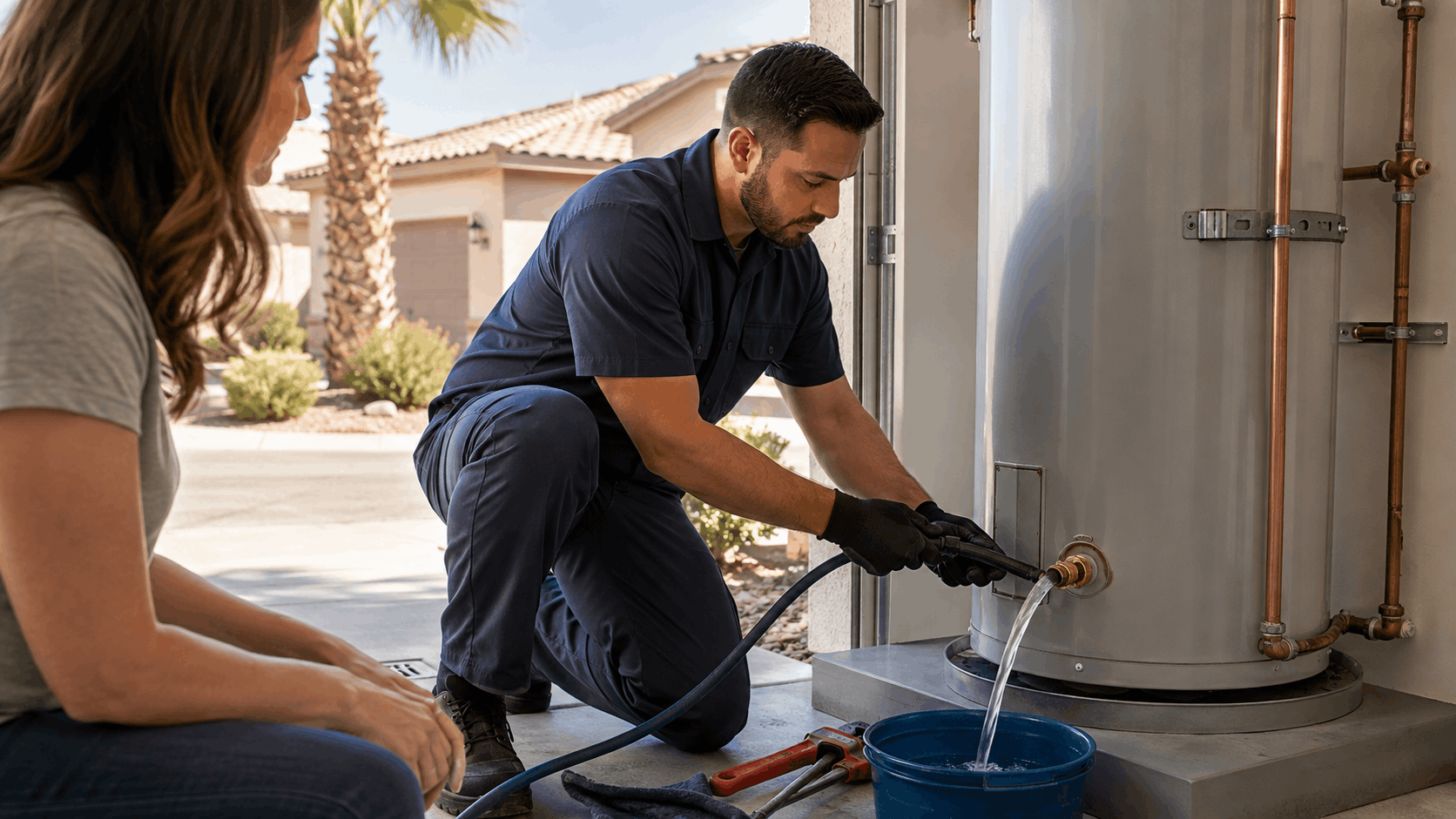
Plenty of Las Vegas homeowners handle a DIY flush themselves, and it is a reasonable weekend job on a healthy tank. The most important rule is safety first. Knowing how to flush a water heater the right way protects both the person and the equipment.
Here is the process at a glance before we cover each stage in detail.
| Step | Action | Approx. Time |
|---|---|---|
| 1. Prep | Shut off power/gas, gather tools | 10 min |
| 2. Cool | Let water cool, close cold supply | 30-60 min |
| 3. Drain | Attach hose, open drain valve | 20-30 min |
| 4. Rinse | Cycle cold supply until clear | 15 min |
| 5. Refill | Close valve, refill, bleed air | 15 min |
| 6. Restart | Restore power or relight burner | 5 min |
Budget about an hour and a half start to finish for a first-timer. It goes faster once a homeowner has done it a few times.
Tools and Prep Before You Start
The main tool needed is a standard garden hose long enough to reach a floor drain, driveway, or the yard. Have a flathead screwdriver, a bucket, and heat-resistant gloves ready too. A pair of channel-lock pliers helps if the drain valve is stiff.
Safety comes before anything else. On an electric unit, shut off power at the breaker labeled for the water heater. On a gas unit, turn the gas valve or control dial to the "pilot" or "off" setting so the burner will not fire during the flush.
Next, close the cold water supply valve at the top of the tank. Let the water cool for at least half an hour before draining, since a full tank sits near 120 to 140 degrees. Rushing this step is how people get scalded, so patience matters here.
Draining and Rinsing the Tank
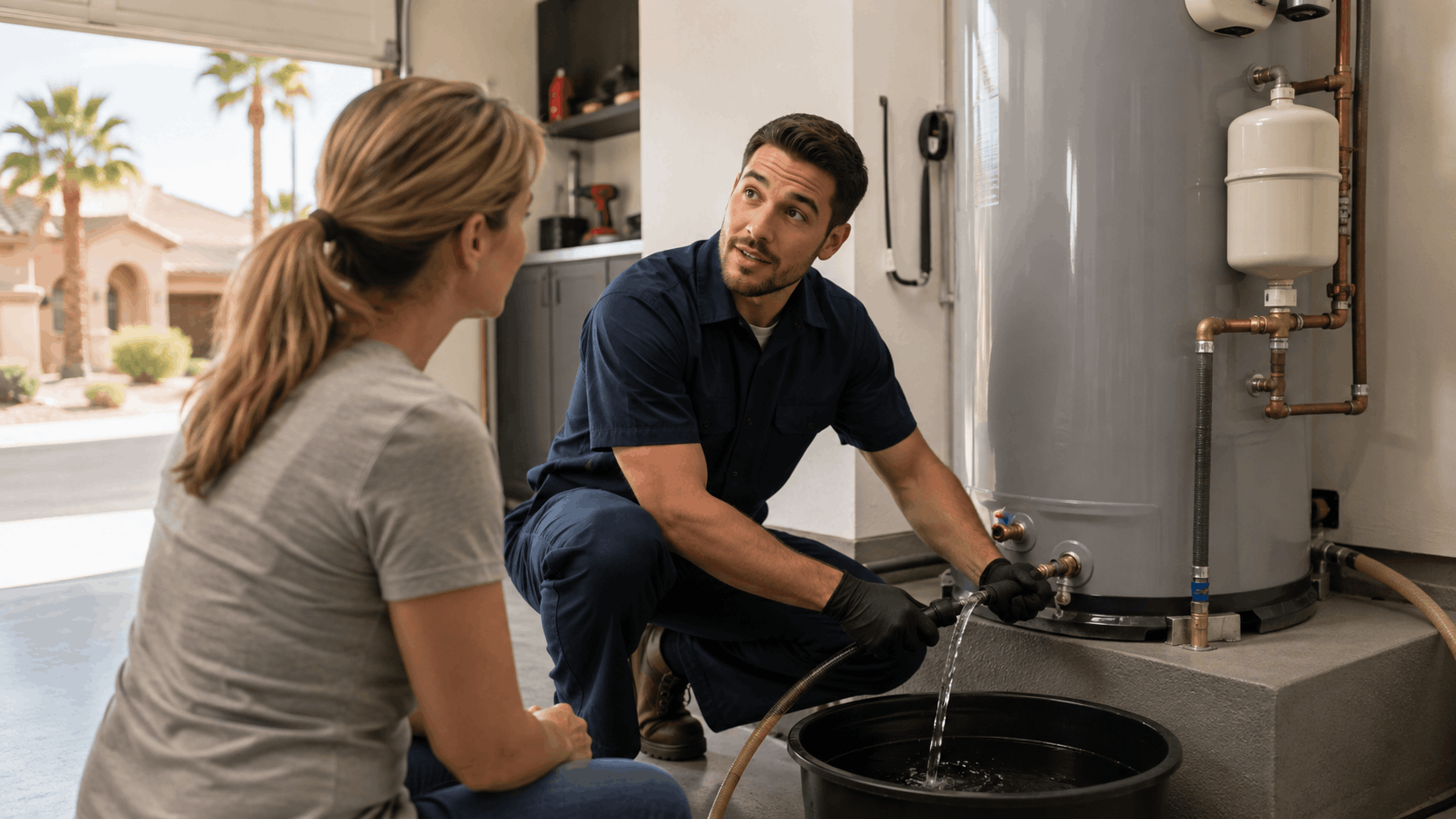
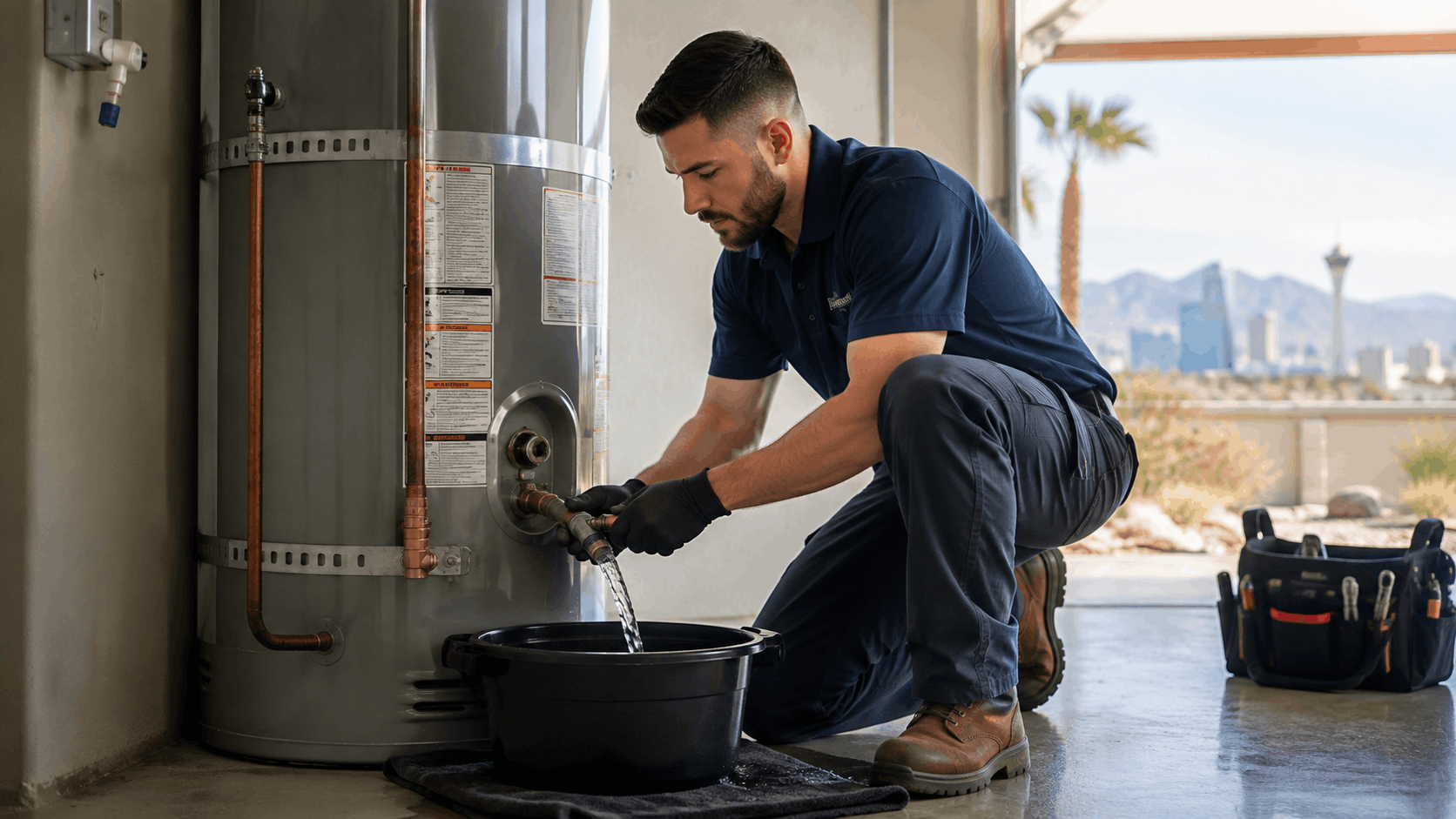
Screw the garden hose onto the drain valve at the bottom of the tank and run the other end somewhere safe. Open a hot water faucet somewhere in the house to break the vacuum and let the tank drain freely. Then open the drain valve.
The water will come out murky, often with visible grit and mineral chunks. Let the tank drain completely. To stir up settled sediment, briefly open the cold water supply in short bursts, which swirls the tank floor and pushes debris out the hose.
Keep cycling the cold water supply on and off until the water running from the hose comes out clear. In a heavily scaled Las Vegas tank, this can take several rounds. Do not stop until the flush runs clean, because leftover grit just settles right back down.
Refilling and Restarting Safely
Once the water runs clear, close the drain valve tightly and remove the hose. Turn the cold water supply back on fully to refill the tank. Leave that upstairs hot faucet open so air can escape as the tank fills.
Air bleed is the part beginners forget. When water flows steadily and smoothly from the open faucet with no sputtering, the tank is full and the air is out. Only then is it safe to restore heat, because firing an element in a partly empty tank can burn it out.
For an electric heater, flip the breaker back on. For a gas heater, follow the label to relight the pilot or return the control to its normal setting. Give it 30 to 60 minutes to reheat, then check for hot water and inspect the drain valve for drips.
When to Stop and Call a Pro
Some situations mean a homeowner should stop and call in help rather than force the issue. A stuck drain valve that will not open, or one that will not close again afterward, is the most common trigger. Forcing an old plastic valve can crack it and cause a real leak.
Other red flags include a tank that keeps draining cloudy no matter how long you rinse, water pooling around the base, or any sign of a leaking tank seam. These point to corrosion that a flush cannot fix. Rusty water that never clears is another signal.
When any of that shows up, our water heater services team can take over. We carry replacement valves, anode rods, and the tools to handle a seized fitting without turning a maintenance job into a flood. For a sudden leak, our emergency plumbing crew is available around the clock.
The Anode Rod: The Part Everyone Forgets
Almost nobody thinks about the anode rod, yet it is one of the most important parts inside a tank water heater. In our 16-grain water, it wears out faster than most people expect. Tying a rod check into the flush routine can add years to a tank.
What the Anode Rod Actually Does
The anode rod is a long metal bar, usually magnesium or aluminum, threaded into the top of the tank. It exists to corrode on purpose. That is why it is called a sacrificial anode.
Corrosive elements in the water attack the anode rod instead of the steel tank walls. The rod essentially takes the hit so the tank does not. This is the same corrosion protection principle used on boat hulls and buried pipelines.
As long as a working anode rod is present, the tank steel stays protected. Once the rod is fully eaten away, the corrosion moves to the tank itself. From that point the clock on the tank lifespan starts ticking fast.
How Fast Hard Water Wears It Out
In average water, an anode rod might last five or six years. Under Las Vegas hard water damage, we routinely find rods that are more than half gone at the three-year mark. The heavy mineral load speeds up the electrochemical reaction that consumes the rod.
That is why anode replacement matters so much here. A rod that costs a modest amount can be the difference between a tank that lasts a decade and one that rusts through in six years. It is cheap insurance against a costly failure.
We suggest checking the rod for rod wear every year, and sooner in homes with no softener. If more than half the rod is gone or the steel core wire is exposed, it is time to swap it. A fresh rod resets the protection clock.
Pairing Rod Checks With Your Flush
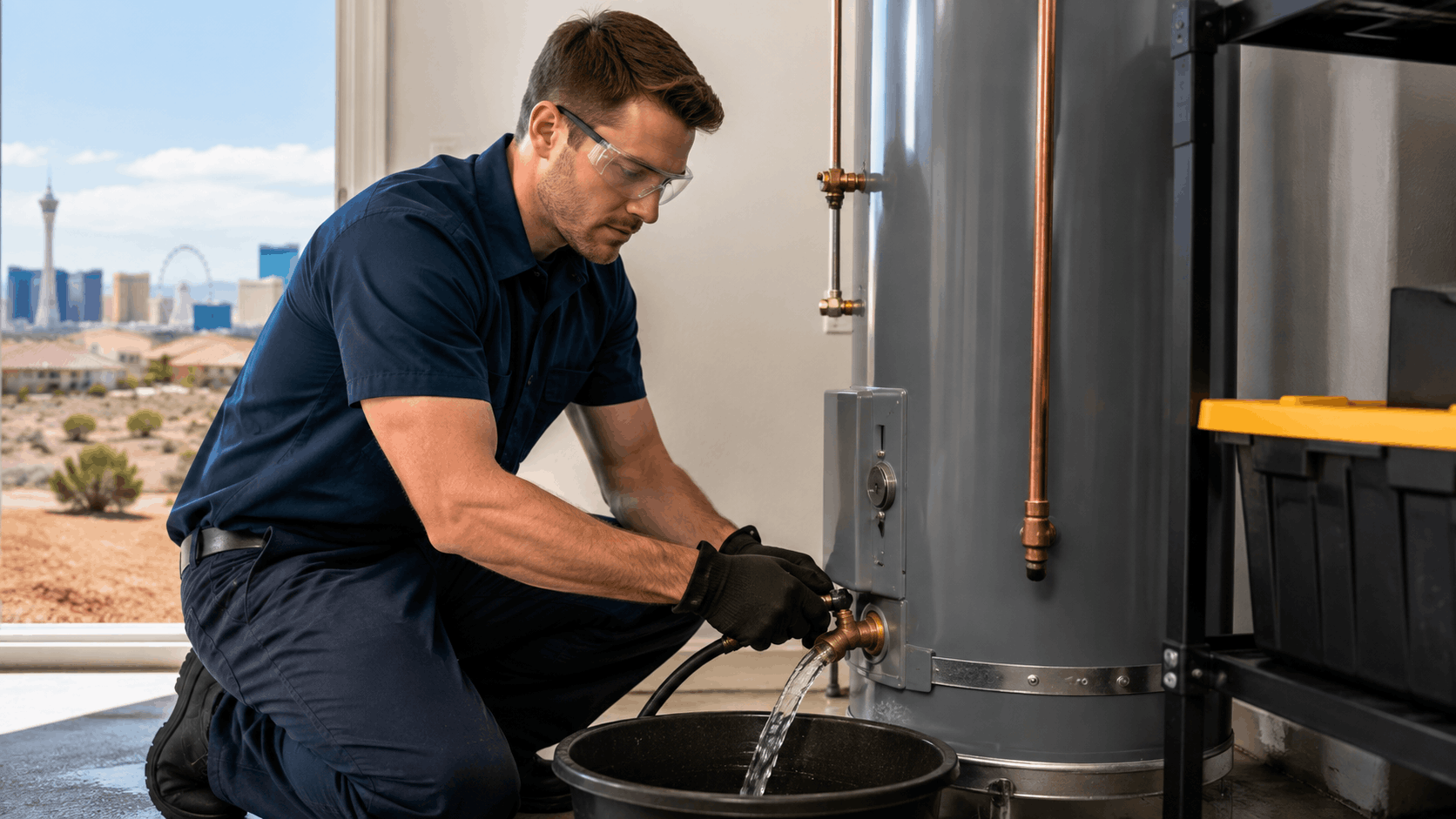
The smart move is to inspect the anode rod during the same visit as a flush. The tank is already drained and the top is easy to reach, so a rod inspection adds only a few minutes. It is the most efficient maintenance combo there is.
Checking the rod while the tank is open means no second appointment and no extra drain-down later. If the rod needs replacing, it happens right then. This one-visit approach saves homeowners time and money.
When our technicians perform a flush, a rod check is part of the standard process. Pairing the two protects the tank longevity from both angles at once. Sediment removal keeps efficiency up while a healthy rod keeps corrosion at bay.
Need Help in Las Vegas?
Active Plumbing serves Las Vegas and all of Las Vegas Valley.
What Skipping Flushes Costs Valley Homeowners
Maintenance feels optional until the day a tank fails. In a hard-water city, skipping flushes carries a real dollar cost that shows up as shorter water heater lifespan, surprise repair cost, and premature failure. The math strongly favors staying on schedule.
Here is a rough comparison of what neglect costs versus routine care in the valley.
| Scenario | Typical Outcome | Estimated Cost Impact |
|---|---|---|
| Flushed twice a year | Tank lasts 10-12 years | Lowest lifetime cost |
| Flushed once a year | Tank lasts 7-9 years | Moderate |
| Never flushed | Tank lasts 5-7 years | Highest, plus efficiency loss |
| Sudden tank burst | Flooding and emergency call | Repair plus water damage |
A little maintenance spread over years costs far less than one emergency replacement.
Shortened Tank Lifespan in Las Vegas
In softer-water regions, a quality tank often runs 12 to 15 years. In Las Vegas, hard water wear routinely cuts that to 6 to 10 years even with some care. Skip maintenance entirely and a tank may only give five years.
That gap is entirely about sediment and a spent anode rod. The mineral load accelerates every failure mode inside the tank. Premature replacement means buying two heaters in the time a maintained one would last.
Regular flushing pushes the tank lifespan back toward the top of the range. It is the single best thing a homeowner can do to protect the investment. The units we see reach the ten-year mark are almost always the ones that got flushed on schedule.
Emergency Failures and Water Damage
The worst-case outcome is a tank leak that turns into a full rupture. A corroded tank can split at a seam and dump 40 or more gallons onto the floor in minutes. In a garage that damages drywall, stored belongings, and sometimes the home's foundation edge.
These failures never happen at convenient times. They tend to strike overnight or during a holiday when an emergency plumbing call costs more. The water damage cleanup often dwarfs the price of the heater itself.
Sediment is a direct cause here because it accelerates the corrosion that leads to a burst. A tank that was flushed and had its rod maintained rarely fails this dramatically. If a leak does start, our burst pipe and leak repair team can respond fast.
Lost Efficiency and Rising Utility Bills
Between failures, sediment quietly drains money every month. The efficiency loss from an insulating scale layer means the heater burns more fuel to do the same job. Over years that adds up to real money on utility bills.
A gas unit with heavy sediment can lose a meaningful chunk of its efficiency, and an electric unit fares no better as scale coats the element. Homeowners rarely connect the slow rise in bills to the water heater. The energy waste hides in plain sight.
A flush restores the direct contact between the burner and the water, cutting run times. The saved energy over a couple of years often covers the cost of the maintenance itself. It is one of the few home fixes that partly pays for itself.
How Active Plumbing Handles Water Heater Maintenance
Active Plumbing has worked in this valley long enough to know exactly what our water does to tanks. Our water heater service is built around the 16-grain reality, not a generic checklist. As a local Las Vegas plumber, our team treats every flush like it matters, because here it does.
- Full drain, sediment flush, and rinse until clear
- Anode rod inspection and replacement when needed
- Drain valve and supply line checks
- Tankless descaling for on-demand units
- Efficiency and safety review of the whole unit
Every visit ends with a straight answer about the tank's condition and how much life it has left.
Our Flush and Inspection Visit
A professional flush from our team starts with shutting the unit down safely and draining it completely. We cycle the cold supply to lift settled mineral and rinse until the water runs clean. On a heavily scaled tank that can take several passes, and we do not cut it short.
While the tank is open, we handle the inspection. That means checking the anode rod, testing the drain valve, looking at the burner or element, and scanning for any early corrosion or leaks. Small issues get caught before they become failures.
The maintenance visit wraps with the refill and restart done correctly, air bled and heat restored. The homeowner gets a clear report on findings. If a repair is warranted, our water heater repair team can address it on the spot.
Areas We Serve Across the Valley
Our crews cover the whole valley and know the water conditions in each area. From Summerlin in the west to Spring Valley in the center, we handle flushes and repairs daily. We work the newer builds and the decades-old homes alike.
We also serve Henderson, Paradise, Winchester, Whitney, Sunrise Manor, and Enterprise. Up north, our North Las Vegas team covers Aliante, Elkhorn, and the historic districts. No matter the neighborhood, the 16-grain schedule applies.
Knowing the local streets and housing stock helps us plan the visit. An older home near Charleston needs a different approach than a five-year-old build in Summerlin West. That local knowledge is what a valley homeowner gets from a crew that works here every day.
Setting Up a 16-Grain Maintenance Plan
The hardest part of any schedule is remembering it. Our maintenance plan takes that off a homeowner's plate with scheduled service and reminders timed to the six-month interval. No more guessing when the last flush happened.
A plan can bundle the flush, the anode rod check, and a softener review into combined visits. That saves trips and keeps every part of the system on the same clock. Homes with tankless units get their descaling folded into the same schedule.
Setting up the reminder program is simple. We match the plan to the equipment and the home's age, then handle the timing. To get started, homeowners can reach out through our contact page and we will build a schedule that fits.
Need Help in Las Vegas?
Active Plumbing serves Las Vegas and all of Las Vegas Valley.
Final Thoughts
Las Vegas water is hard on water heaters, and the numbers back it up. At roughly 16 grains per gallon, our tanks collect sediment about twice as fast as homes in softer-water cities. The standard yearly flush advice simply does not keep pace here.
Flushing every six months, checking the anode rod along the way, and watching for popping sounds or fading hot water are what stretch a tank from six years to twelve. A softener helps, but it does not end the need to flush entirely. The math on maintenance beats the math on emergency replacement every time.
Whether a homeowner wants to flush the tank themselves or hand it to a crew that does it daily, staying on the 16-grain schedule is the goal. To set up a flush, an inspection, or a full maintenance plan, reach out to Active Plumbing and let our team keep the hot water flowing.
Frequently Asked Questions
How often should a water heater be flushed in Las Vegas?
For most valley homes without a water softener, flush the tank every six months. This flush frequency matches our roughly 16 grains per gallon hardness, which is more than double what a standard annual flush schedule assumes. Homes with a softener can stretch to once a year, while older homes with aging plumbing may need attention every four to six months. The 16-grain schedule is the safe baseline.
What does 16 grains of hardness mean?
Grains per gallon measures how much dissolved calcium and magnesium is in the water. Anything above 10.5 grains is considered very hard, and Las Vegas sits around 16. In plain terms, that is a heavy mineral load that drops out and forms scale the moment water gets heated. On the water hardness scale, our valley ranks near the top nationally, which is exactly why tanks here need more frequent flushing.
Can I flush the water heater myself?
Yes, a DIY flush is a reasonable job on a healthy tank. A homeowner needs a garden hose, basic tools, and the patience to shut off power or gas and let the water cool first. Call for professional help if the drain valve is stuck, the water never runs clear, the tank leaks, or rusty water keeps coming through. Those signs point to corrosion a flush cannot fix.
How long does a water heater last in Las Vegas?
With regular flushing and anode rod care, a quality tank lasts about 10 to 12 years here. Without maintenance, hard water wear commonly cuts that to 5 to 7 years. That gap comes entirely from sediment and a spent anode rod speeding up corrosion. Softer-water cities see 12 to 15 years routinely, so staying on the flush schedule is how a valley homeowner closes that gap.
Does a water softener mean I never have to flush?
No, but it stretches the interval a lot. A softener removes most calcium and magnesium before water reaches the tank, so sediment forms far slower. That lets the flush interval move from every six months to about once a year. A softener can still let hard water through if a salt bridge forms or settings drift, so an annual flush and a softener checkup are still smart.
What happens if I never flush my water heater?
Sediment buildup keeps piling on the tank floor until it insulates the burner, wastes energy, and steals hot water capacity. Over time that scale accelerates corrosion and can lead to tank failure, sometimes a sudden burst that floods a garage. A never-flushed tank in our water often fails years early. The efficiency loss also quietly raises utility bills the entire time it goes ignored.
How long does a professional flush take?
A standard professional flush and inspection usually takes about 45 minutes to an hour and a half. Heavily scaled tanks that need several rinse cycles take longer, and pairing the flush with an anode rod replacement adds a little more time. Tankless descaling runs on a similar timeline. Our technicians never rush the rinse, because stopping before the water runs clear defeats the purpose of the visit.
Do tankless water heaters need flushing too?
Yes. A tankless unit has no storage tank, but hard water still coats the heat exchanger with scale. In our water, that means descaling every six to nine months without a softener, or about once a year with one. Skipping it triggers error codes and drops the flow rate. Our team circulates a cleaning solution through the unit to clear the buildup and keep it running at full output.
Why is my water heater making a popping sound?
That popping noise is trapped water under a layer of sediment on the tank floor. When the burner fires, the water caught beneath the mineral crust superheats and bursts through as steam, creating the pop or rumble. It is a clear sign the tank has significant sediment buildup and is overdue for a flush. Draining the tank usually clears the grit and quiets the noise within a day.
How much does professional water heater maintenance cost?
A standard flush and inspection in the valley typically runs in a modest service range, and adding an anode rod replacement or a tankless descaling costs a bit more. Exact pricing depends on the equipment, its condition, and whether repairs are needed. A maintenance plan often lowers the per-visit cost. For a current quote on service in your neighborhood, reach out to our team and we will give you a straight number.
Frequently Asked Questions
- How often should a water heater be flushed in Las Vegas?
- For most valley homes without a water softener, flush the tank every six months. This flush frequency matches our roughly 16 grains per gallon hardness, which is more than double what a standard annual flush schedule assumes. Homes with a softener can stretch to once a year, while older homes with aging plumbing may need attention every four to six months. The 16-grain schedule is the safe baseline.
- What does 16 grains of hardness mean?
- Grains per gallon measures how much dissolved calcium and magnesium is in the water. Anything above 10.5 grains is considered very hard, and Las Vegas sits around 16. In plain terms, that is a heavy mineral load that drops out and forms scale the moment water gets heated. On the water hardness scale, our valley ranks near the top nationally, which is exactly why tanks here need more frequent flushing.
- Can I flush the water heater myself?
- Yes, a DIY flush is a reasonable job on a healthy tank. A homeowner needs a garden hose, basic tools, and the patience to shut off power or gas and let the water cool first. Call for professional help if the drain valve is stuck, the water never runs clear, the tank leaks, or rusty water keeps coming through. Those signs point to corrosion a flush cannot fix.
- How long does a water heater last in Las Vegas?
- With regular flushing and anode rod care, a quality tank lasts about 10 to 12 years here. Without maintenance, hard water wear commonly cuts that to 5 to 7 years. That gap comes entirely from sediment and a spent anode rod speeding up corrosion. Softer-water cities see 12 to 15 years routinely, so staying on the flush schedule is how a valley homeowner closes that gap.
- Does a water softener mean I never have to flush?
- No, but it stretches the interval a lot. A softener removes most calcium and magnesium before water reaches the tank, so sediment forms far slower. That lets the flush interval move from every six months to about once a year. A softener can still let hard water through if a salt bridge forms or settings drift, so an annual flush and a softener checkup are still smart.
- What happens if I never flush my water heater?
- Sediment buildup keeps piling on the tank floor until it insulates the burner, wastes energy, and steals hot water capacity. Over time that scale accelerates corrosion and can lead to tank failure, sometimes a sudden burst that floods a garage. A never-flushed tank in our water often fails years early. The efficiency loss also quietly raises utility bills the entire time it goes ignored.
- How long does a professional flush take?
- A standard professional flush and inspection usually takes about 45 minutes to an hour and a half. Heavily scaled tanks that need several rinse cycles take longer, and pairing the flush with an anode rod replacement adds a little more time. Tankless descaling runs on a similar timeline. Our technicians never rush the rinse, because stopping before the water runs clear defeats the purpose of the visit.
- Do tankless water heaters need flushing too?
- Yes. A tankless unit has no storage tank, but hard water still coats the heat exchanger with scale. In our water, that means descaling every six to nine months without a softener, or about once a year with one. Skipping it triggers error codes and drops the flow rate. Our team circulates a cleaning solution through the unit to clear the buildup and keep it running at full output.
- Why is my water heater making a popping sound?
- That popping noise is trapped water under a layer of sediment on the tank floor. When the burner fires, the water caught beneath the mineral crust superheats and bursts through as steam, creating the pop or rumble. It is a clear sign the tank has significant sediment buildup and is overdue for a flush. Draining the tank usually clears the grit and quiets the noise within a day.
- How much does professional water heater maintenance cost?
- A standard flush and inspection in the valley typically runs in a modest service range, and adding an anode rod replacement or a tankless descaling costs a bit more. Exact pricing depends on the equipment, its condition, and whether repairs are needed. A maintenance plan often lowers the per-visit cost. For a current quote on service in your neighborhood, reach out to our team and we will give you a straight number.
A
Licensed plumbing professionals serving Las Vegas and Las Vegas Valley.
Licensed in Nevada · License #0047021
Last updated on
Why trust Active Plumbing?
Founded in 1991, Active Plumbing is a licensed and insured plumber serving Las Vegas and Las Vegas Valley. All content is reviewed by our licensed technicians.

Need Help in Las Vegas?
Active Plumbing serves Las Vegas and all of Las Vegas Valley.
Related Articles
Maintenance
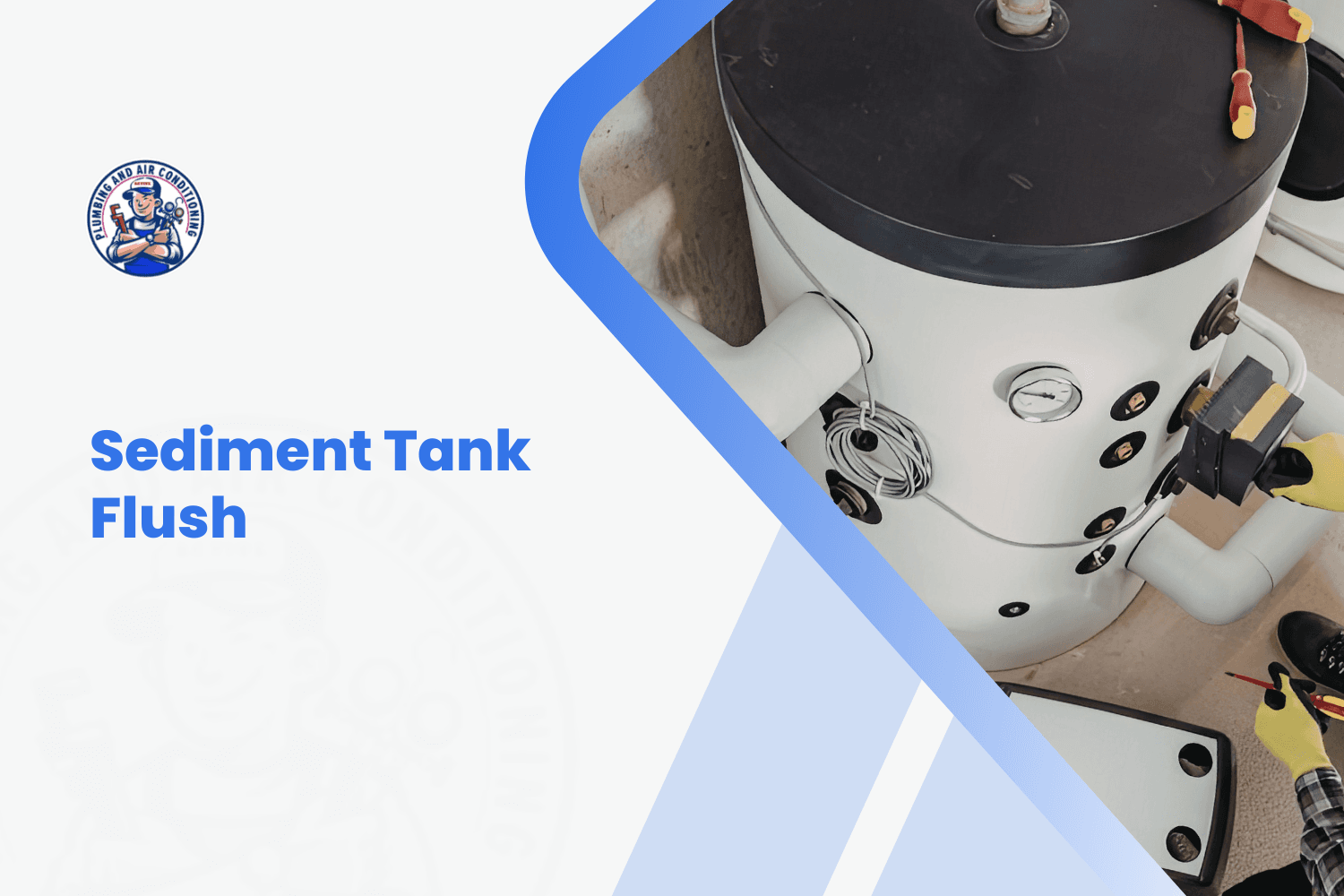
Sediment Tank Flush: Why Vegas Water Heaters Need It Every 18 Months
Las Vegas hard water causes rapid sediment buildup in water heaters. Learn why an 18-month flush schedule protects your tank, saves energy costs, and prevents expensive failures in the desert.
Maintenance
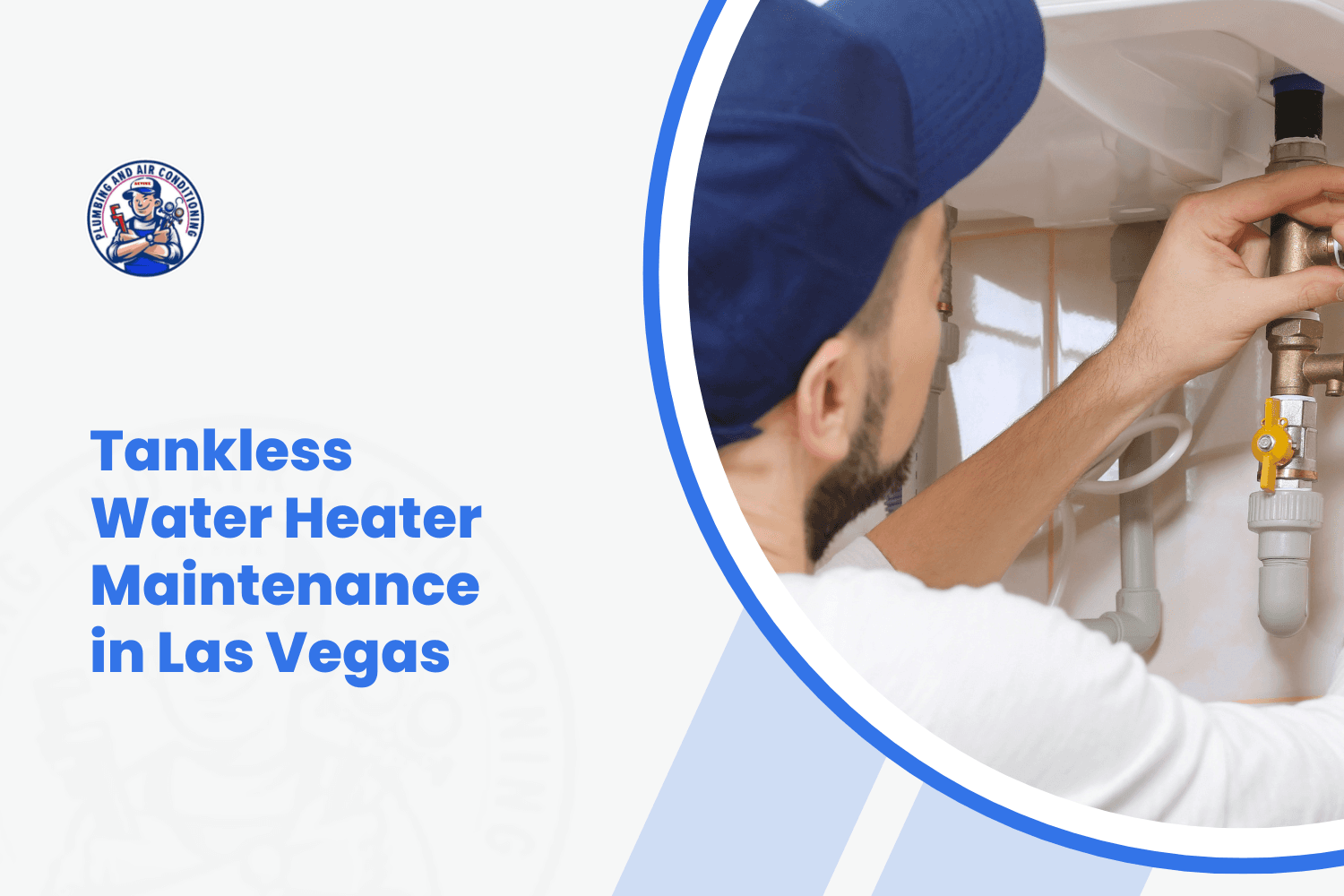
Tankless Water Heater Maintenance in Las Vegas: Why Hard Water Makes It Critical
Las Vegas hard water from Lake Mead builds scale fast inside tankless heaters. Learn the warning signs, real maintenance steps, and how often valley homes need service.
Maintenance
Water Heater Anode Rod Replacement: Why Vegas Hard Water Eats Them in 18 Months
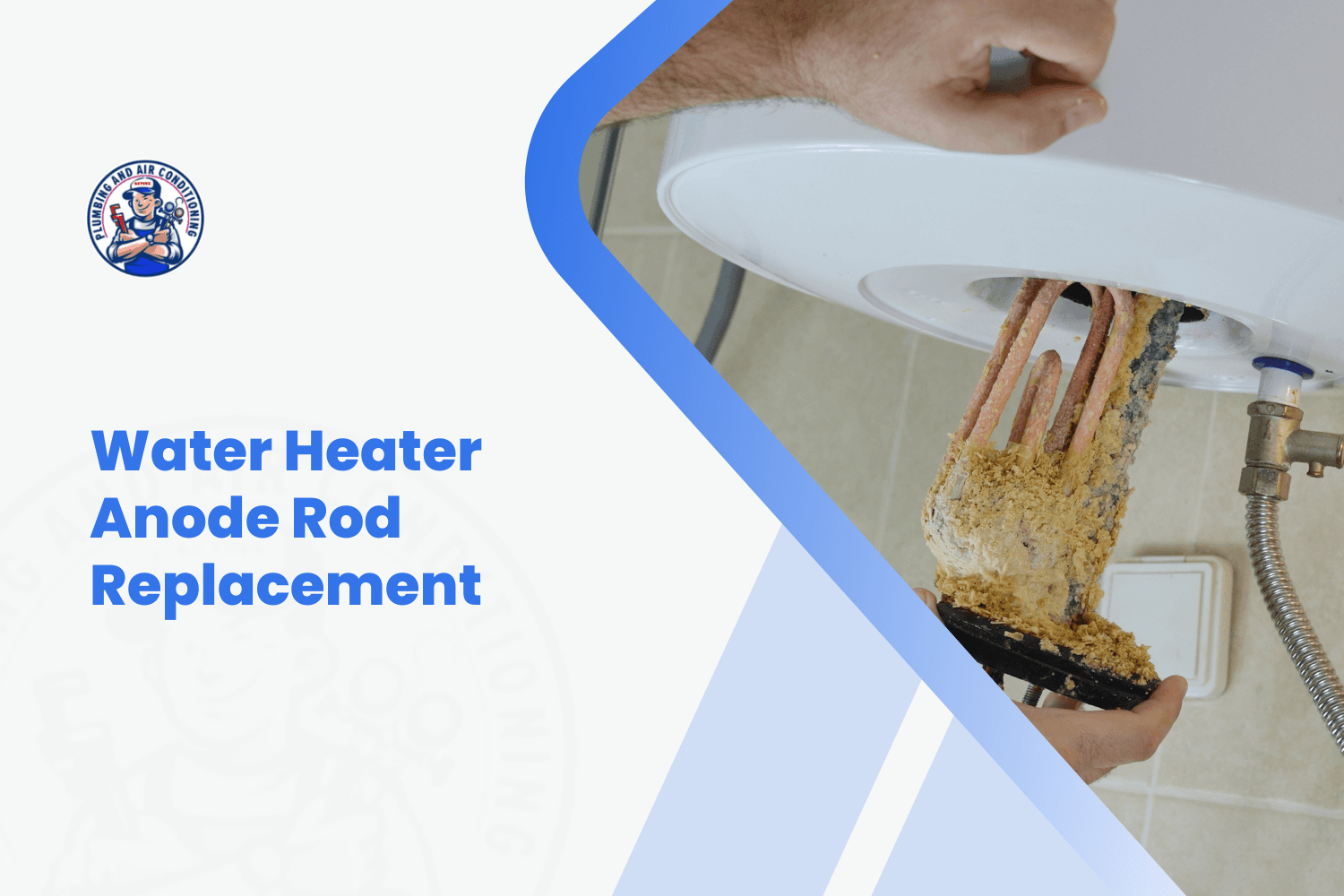
Las Vegas hard water destroys anode rods in 18 months instead of years. Learn the warning signs, replacement costs, and how to protect your water heater long term.