How-To Guides
How to Identify Kitec in 10 Minutes: Orange/Blue Pipe, Brass Fittings, and Water Heater Connections

Key Takeaways
- Kitec is PEX-AL-PEX pipe with an aluminum core and brass fittings that corrode and fail suddenly, leading to a 2005 recall and class-action settlement.
- Homes built roughly 1995 to 2007 across Green Valley, Spring Valley, and early-2000s Summerlin are most likely to have Kitec.
- A 10-minute check with a flashlight, phone, and gloves at the water heater, under sinks, and main shutoff reveals most Kitec.
- Orange usually marks hot lines and blue marks cold lines, but color alone is not proof since standard PEX also comes colored.
- Confirm Kitec by pairing colored pipe with brass fittings and printed brand names like Kitec, IPEX, PlumbBetter, or WarmRite.
- Las Vegas hard water, hot supply lines, and desert attic heat speed up brass fitting corrosion and make local failures happen faster.
- A whole-home repipe with PEX or copper is the lasting fix, since patching one fitting does not stop the others from failing.
- Document findings with photos, plan for permits and HOA rules, and call Active Plumbing for a local inspection and quote.
In This Article
A homeowner near Summerlin West called our team last spring after opening the cabinet under her kitchen sink. She spotted strange orange and blue flexible pipe running to her shutoff valves and had no idea what it was. That pipe is called Kitec, and finding it early can save a home from serious water damage.
Her house was built in 2003, right in the window when builders across the valley used this product. Kitec was marketed as a modern alternative to copper, but it turned out to have a hidden flaw that leads to sudden pipe failure. Homes near Green Valley, Spring Valley, and older parts of Henderson are especially likely to have it.
The good news is that any homeowner can run a fast 10-minute check with a flashlight and a phone. In this guide, we walk through exactly what Kitec looks like, where it hides, and how to confirm it at the water heater, under the sink, and near the main shutoff. If you find it, we also explain the smart next steps for a repipe here in Las Vegas.
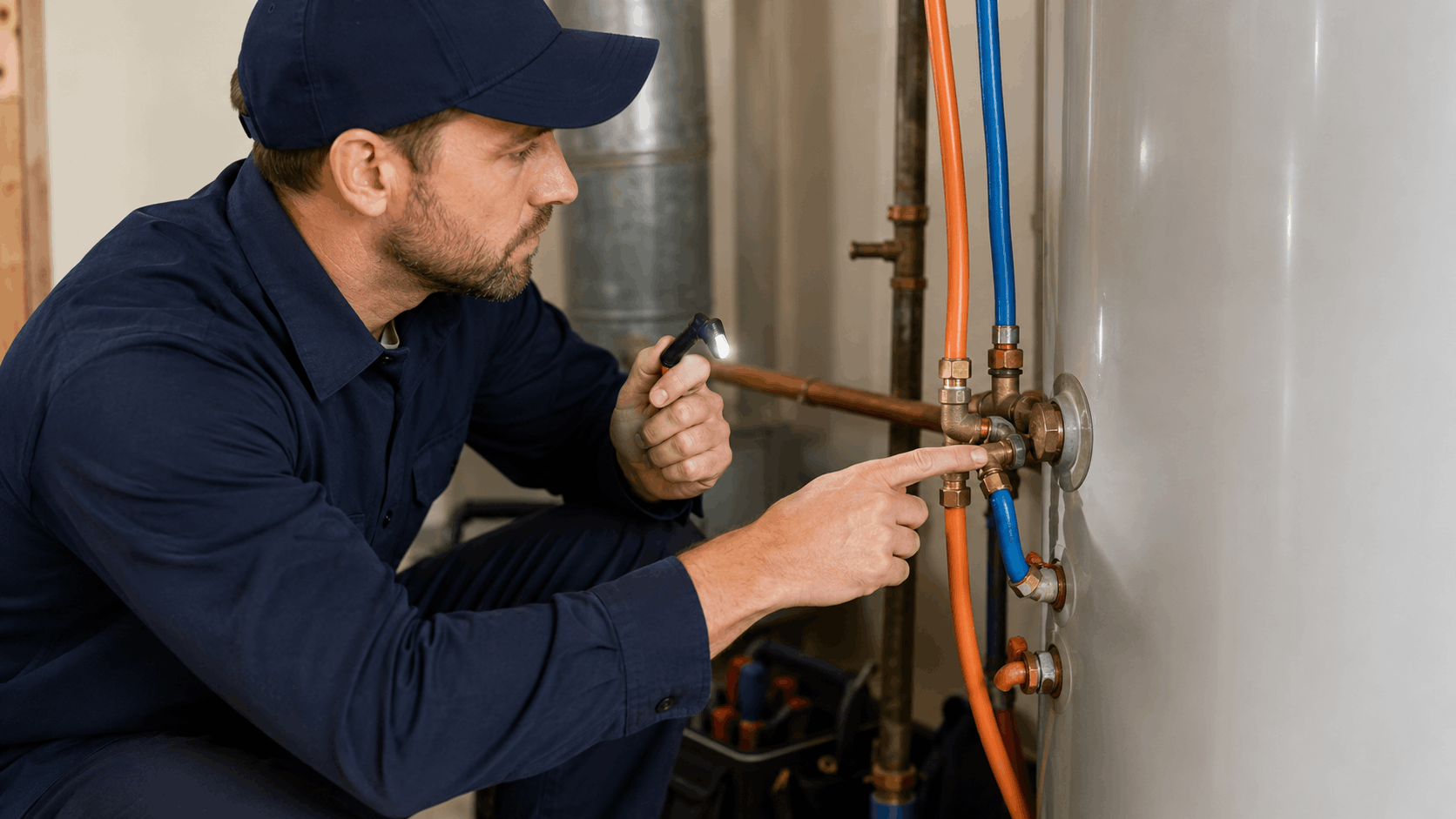
What Kitec Plumbing Is and Why It Fails?
Kitec is a brand of flexible plumbing pipe installed in homes from the mid 1990s into the mid 2000s. It looked like a smart upgrade at the time, easy to bend and quick to install. The problem is that Kitec plumbing has a design that breaks down faster than anyone expected.
Homeowners in older valley neighborhoods should care because pipe failure often happens with little warning. One day the pipe is fine, and the next a fitting cracks and floods a room. That is why this product ended up in a major plumbing recall and class-action settlement.
- It was installed in millions of homes across North America.
- The fittings corrode from the inside where you cannot see it.
- Failures often start at hot water lines and the water heater.
- Insurance companies now treat Kitec homes as higher risk.
The Basic Design of Kitec Pipe
Kitec is what the industry calls PEX-AL-PEX pipe. That means it has an aluminum core sandwiched between two layers of plastic. The aluminum gives the pipe its shape and lets it hold a bend, while the plastic protects it from water on both sides.
This aluminum core pipe connects to the rest of the plumbing using brass fittings. The fittings are crimped or screwed onto the ends of the tubing at every joint, elbow, and connection point. Each fitting is a spot where two different metals meet water under pressure.
For a homeowner, the simple version is this. You have a soft plastic-coated pipe joined together by yellow-gold brass parts. That combination is the exact thing that leads to trouble down the road.
The pipe itself rarely bursts along its length. Instead, the weak spot sits at the fittings where the brass reacts with the water flowing through it. That is where most failures begin.
Why It Was Recalled
Kitec was pulled from the market and became the subject of a large class-action lawsuit that settled in 2005. The settlement set aside funds to help homeowners who had the pipe replaced. The U.S. Consumer Product Safety Commission and building officials flagged it as a real risk.
The core issue is brass fitting corrosion. The brass used in many Kitec fittings had a high zinc content, and hot water pulls zinc out of the metal over time. This process is called dezincification, and it slowly eats the fitting from within.
As the brass weakens, it can crack, clog, or blow apart under normal water pressure. The Kitec recall happened because these failures were unpredictable and often caused major flooding. High water temperature and mineral-heavy water both speed the damage.
Once a fitting starts to fail, patching one spot does not solve the problem. The same corrosion is usually happening at every other fitting in the house at the same time. That is why a full replacement is the standard fix.
When Las Vegas Homes Most Likely Have It
The install window for Kitec runs roughly from 1995 to 2007. Homes built 1995-2007 across the valley are the ones most likely to have it hiding in the walls. If a house went up during the early-2000s building boom, it is worth a look.
Green Valley in Henderson saw heavy construction during those years, and many of those homes used Kitec. Spring Valley off Rainbow Boulevard and parts of central Las Vegas fall into the same range. Newer Summerlin villages and older east-valley pockets can also have it.
Las Vegas plumbing from this era often used flexible pipe because it was cheap and fast for builders working on large tracts. That speed came at the cost of long-term reliability. Knowing your build year is the first clue about whether to check.
If you are unsure when your home was built, check your county property records or the original permit. A build date in that 12-year band means a quick inspection is a smart move.
Get Your Quote
Tell us what's going on and we'll get back to you fast.
The Fast 10-Minute Kitec Check
You do not need to be a plumber to spot Kitec. With a flashlight and about ten minutes, most homeowners can find the telltale signs on their own. The trick is knowing where to look first so you do not waste time.
This 10 minute check focuses on three high-value spots where the pipe is usually exposed. A quick plumbing inspection at these points will tell you whether you need to dig deeper. If you want to identify Kitec fast, start here.
- Grab your tools and set aside ten quiet minutes.
- Check the water heater, under-sink cabinets, and the main shutoff.
- Look for colored pipe joined by brass fittings.
- Photograph anything suspicious for a closer look later.
Tools You Need Before You Start
You only need a few basic items for this check. A good flashlight is the most useful tool since most plumbing hides in dark cabinets and utility closets. Your phone flashlight works, but a handheld light lets you aim it while you look.
Bring your phone camera along too. It lets you snap photos of faded printing and zoom in later without straining your eyes in a cramped space. Photos also help if you want a plumber to review what you found.
A pair of gloves rounds out the list of home plumbing tools. Cabinets under sinks can be dirty, and older pipe near water heaters may have mineral crust or grime. Gloves keep your hands clean and give you a better grip.
That is really all it takes. No special meters or fancy gear are needed for a first pass. If you find something questionable, that is when a professional can bring the right diagnostic equipment.
The Three Spots to Look First
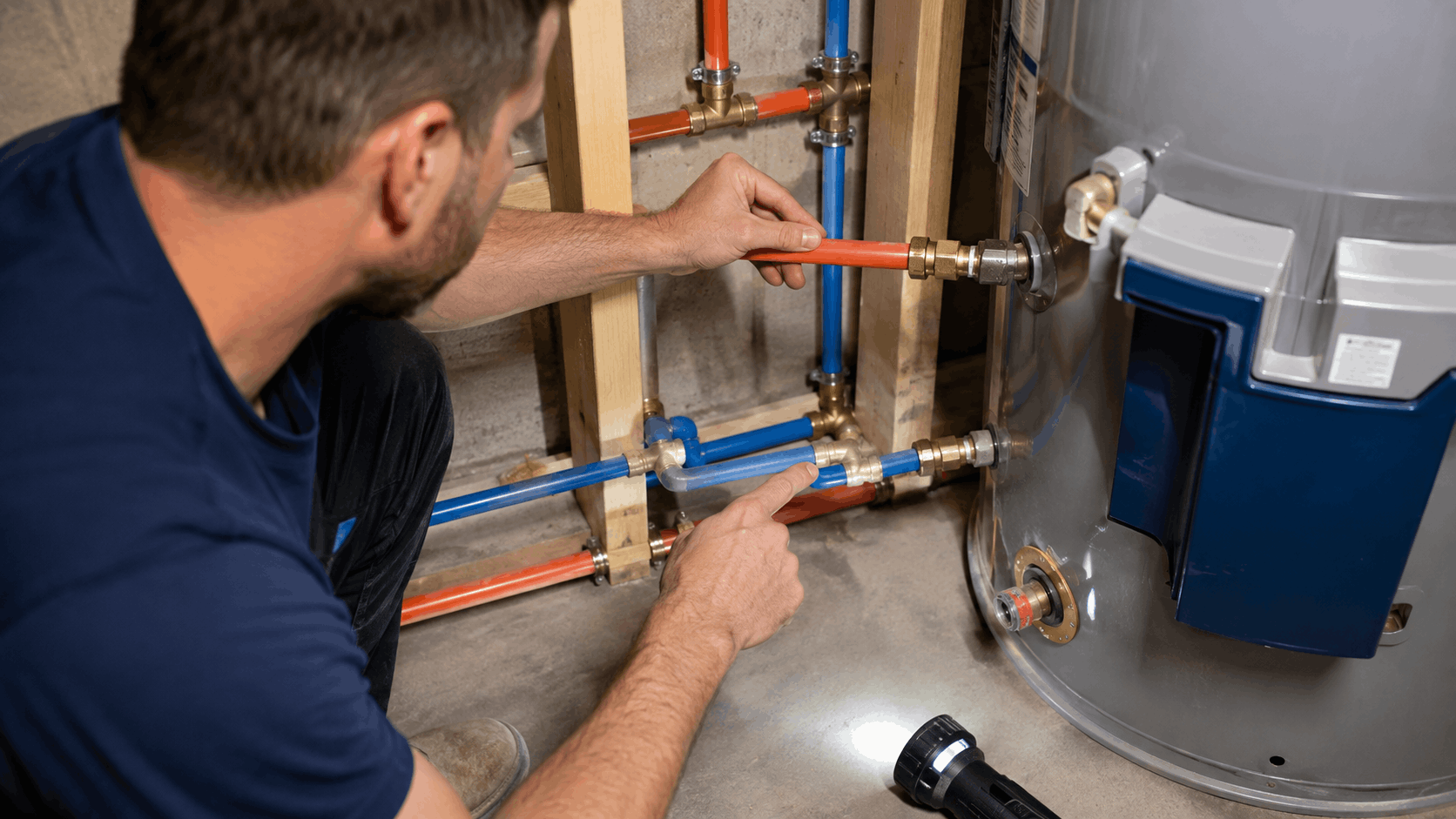
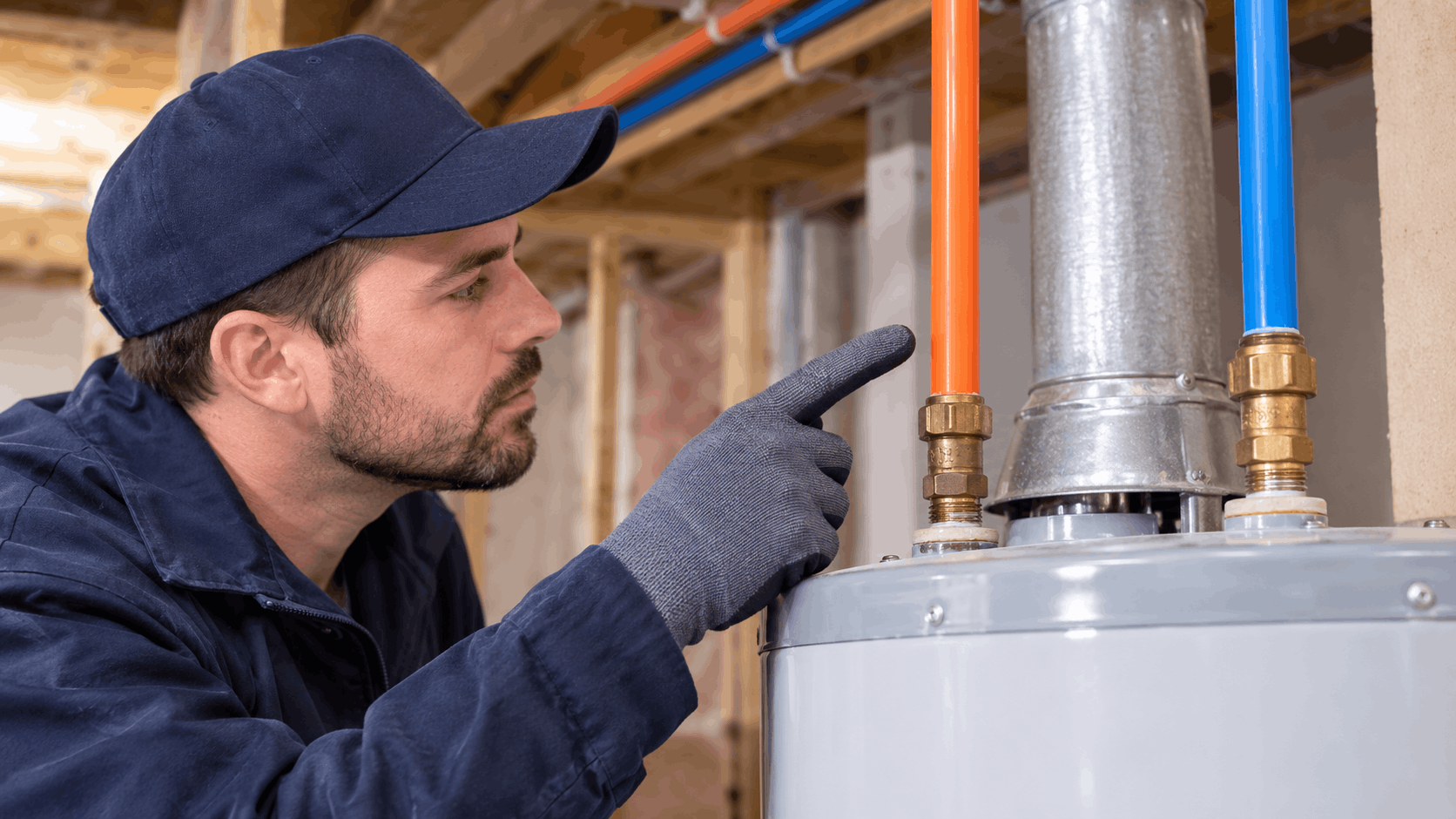
Start at the water heater because Kitec connections often sit right at the top of the tank. The pipe frequently runs straight into the hot and cold ports where it is easy to see. This is the single fastest reveal point in most homes.
Next, open the cabinets under your kitchen and bathroom sinks. Look for under sink pipe leading to the shutoff valves. This is where the Summerlin homeowner we mentioned earlier first spotted her orange and blue lines.
Finally, find the main shutoff valve, often in the garage or near the water heater. The main line and manifold in that area may show the same colored tubing and brass fittings. These three water heater connections and access points cover the most likely locations.
Working through these spots in order keeps the whole check under ten minutes. If all three are clear, your home probably used copper or standard PEX. If any show colored pipe with brass, keep reading.
What a Positive Match Looks Like
A true Kitec confirmation needs two things together. First, you see flexible colored pipe, usually orange and blue. Second, that pipe connects using brass fittings with a distinct yellow-gold color.
The colored pipe alone is not enough to confirm it, because other products use color too. But when you pair colored pipe with branded brass fittings, the odds jump way up. That combination is the classic Kitec signature.
Look closely for printed text along the pipe as well. Brand names and codes stamped on the tubing seal the identification. We cover those exact markings in a later section.
If you spot colored pipe, brass fittings, and printed branding all together, you have a positive match. At that point, documenting it and calling for an inspection are the right moves.
Need Help in Las Vegas?
Active Plumbing serves Las Vegas and all of Las Vegas Valley.
Spotting the Orange and Blue Pipe
The most obvious clue is the flexible orange and blue tubing itself. Once you know what to look for, it stands out against copper and white PVC. This Kitec tubing has a soft, bendable feel that copper never does.
The color coding follows a simple logic, though it is not perfect. Understanding where the pipe runs helps you find it faster during your check. Let us break down the colors and the paths they follow.
Why the Colors Are Orange and Blue
The colors are not random. Orange usually marks the hot line and blue marks the cold line. This color coding helped installers keep hot and cold runs straight during the build.
So if you see an orange pipe feeding into the top of your water heater, that tracks with a hot output line. A blue pipe on the cold inlet side follows the same rule. The pattern makes it easier to trace which line goes where.
That said, the colors can vary from home to home. Some installs used different shades or even gray tubing depending on the product line. The orange-and-blue combo is the most common, but it is not the only one.
Use the colors as a starting signal, not final proof. When you see the classic hot line orange and cold line blue pairing near your water heater, take a closer look at the fittings next.
Where the Pipe Usually Runs
Kitec water lines tend to appear in predictable spots. The area around the water heater is the top location because both hot and cold connections gather there. You will often see several colored lines meeting in that space.
Many homes also used a central plumbing manifold, a hub where multiple lines branch out to different fixtures. This manifold is often in the garage, a utility closet, or a wall cavity. It looks like a bank of pipes fanning out from one point.
Behind wall access panels is another common path. Builders sometimes left small removable panels near tubs and showers for future repairs. Popping one open can reveal the same orange and blue tubing running through the wall.
Under sinks and behind toilets round out the usual runs. Anywhere a fixture connects to the supply, the flexible colored pipe may show itself. Following the water lines from fixture to source helps you map the whole system.
Colors That Can Fool You
Here is where people get tripped up. Standard PEX pipe also comes in red and blue, and sometimes orange. So color by itself does not prove you have Kitec.
The PEX vs Kitec difference comes down to construction. Regular PEX is solid plastic all the way through, while Kitec has that hidden aluminum core. You cannot always tell them apart by color alone from the outside.
This pipe color confusion is why we push homeowners to check two more things. Look at the fittings and read the printing on the pipe. Those details separate a harmless PEX system from a risky Kitec one.
If you only glance at the color and stop there, you might scare yourself over normal PEX or miss real Kitec. Take the extra minute to confirm with the brass fittings and stamped text before drawing a conclusion.
Reading the Brass Fittings and Printed Markings
The clearest proof comes from the brass fittings and the text printed on the pipe. Color hints at Kitec, but these details confirm it. This is the part of the check that removes the guesswork.
Every few feet, manufacturers stamp Kitec markings along the tubing. The brass fittings also carry their own look and telltale signs of corrosion. Learning to read both gives you a solid answer.
Brand Names Printed on the Pipe
Kitec was sold under several brand names, which trips up homeowners who only look for the word Kitec. The pipe printing may say Kitec, but it could also read IPEX, the parent company. Both point to the same product family.
Other Kitec brand names to watch for include PlumbBetter, Kerr Controls, WarmRite, and AmbioComfort. Seeing any of these stamped along the pipe is a strong signal. The naming changed across regions and product lines over the years.
The text usually runs in a line down the length of the tubing. It often includes the brand, a size, and a code or standard number. Reading the whole line gives you the fullest picture.
If you spot IPEX pipe branding or any of those other names, treat it as a likely match. Combined with the colored tubing and brass fittings, the identification is nearly certain at that point.
How the Brass Fittings Corrode
The brass fittings tell their own story through corrosion. Dezincification leaves a white or chalky buildup on and around the fitting. This powdery residue is a warning sign that the brass is breaking down.
You may also see a corroded brass fitting with a greenish or bluish stain from the reaction. In worse cases, the fitting looks pitted or has visible cracks. Any of these signs mean failure risk is climbing.
Sometimes the fitting looks swollen or distorted compared to a fresh one. That bulging happens as corrosion products build up inside and push outward. It is a late-stage sign that a break could be near.
If you see chalky white deposits, cracks, or staining on your brass fittings, do not wait. That corrosion is the exact mechanism behind sudden Kitec floods. A professional should evaluate it soon.
Using Your Phone to Read Faded Print
Old pipe printing often fades, especially in hot or damp spots. When the text is hard to read, your phone camera solves the problem. Take a close-up photo with the flash on and zoom in on the image afterward.
This trick lets you read pipe markings without pressing your face into a dark cabinet. The camera captures detail your eyes miss in poor light. You can pinch to zoom and rotate the image for a clearer view.
A phone camera check also creates a record you can share. Send the photo to a plumber and they can often identify the pipe from the image alone. That saves a trip and speeds up your answer.
If the print is worn off entirely, focus on the fittings and pipe construction instead. A plumber can cut a small sample to check for the aluminum core. Either way, your photos give them a strong head start.

Checking the Water Heater Connections
The water heater is the best single spot to confirm Kitec quickly. The pipe often connects right at the top of the tank where it is easy to see. If Kitec is anywhere in the house, it usually shows here.
Heat makes this area both the fastest reveal point and the most common failure zone. Understanding why helps you check it with care. Let us walk through what to look for and how to stay safe.
Why Kitec Shows Up at the Water Heater
Kitec at water heater connections is common because that is where hot and cold lines meet the tank. The water heater pipe runs straight into the hot output and cold inlet ports. Both are usually exposed and easy to spot.
This spot also sees the most heat and pressure in the whole system. The hot line carries water straight from the tank at high temperature. That constant heat speeds up the dezincification we talked about earlier.
Because of that, builders and inspectors check the water heater first when hunting for Kitec. It is the highest-odds location for both finding the pipe and finding early damage. Our team always starts here on a Kitec inspection.
If you plan to update your tank, this is a natural time to address the pipe too. Our water heater services often reveal Kitec connections during routine work. Catching it during a heater job can save a second visit.
Signs of Heat Damage on the Connections
Heat damage shows up in a few clear ways. Look for warped or slightly melted-looking tubing near the hot connections. The plastic layer can distort when it sits against too much heat for years.
Discoloration is another sign. The pipe may darken or yellow where heat has stressed it over time. A hot line that looks different from the cold line often points to heat trouble.
In our valley, hard water buildup makes things worse. Mineral crust cakes onto fittings and connections in homes across the Las Vegas Valley. That white, crusty buildup is common wherever hard water meets brass.
Warped tubing, discoloration, and heavy mineral deposits together mean the connections are under strain. A home with these signs is closer to a failure than one with clean, straight pipe. Treat any of them as a reason to call for a look.
Safety Tips Before You Look
Water heater safety comes first before you touch anything. The pipes at the top of the tank can be hot enough to burn. Keep your hands off the hot lines and use your flashlight to look, not your fingers.
If you need to move anything or get close, turn the water heater off first. For a gas unit, set it to pilot or off, and for an electric unit, switch off the breaker. This plumbing safety step protects you from burns and shock.
Never try to loosen or open a fitting yourself during this check. You are only looking, not repairing. Opening a corroded Kitec fitting can cause the exact flood you are trying to prevent.
If anything feels unsafe or you smell gas, stop and step away. Our team handles inspections around live water heaters every day and can check it safely. Some situations call for our emergency plumbing help right away.
Need Help in Las Vegas?
Active Plumbing serves Las Vegas and all of Las Vegas Valley.
Kitec Risks Specific to Las Vegas Homes
Kitec fails everywhere, but Las Vegas conditions make it worse. Our hard water and desert heat both attack the pipe and fittings. That combination raises the Kitec failure risk for local homes above the national average.
Certain valley neighborhoods carry more of these homes than others. Knowing the local factors helps you gauge your own risk. The table below sums up the main pressures our homes face.
| Local Factor | Effect on Kitec | Where It Hits Hardest |
|---|---|---|
| Hard water minerals | Speeds brass fitting corrosion | Valley-wide supply |
| High hot water temps | Accelerates dezincification | Water heater lines |
| Attic and summer heat | Stresses pipe and fittings | Attic and garage runs |
| Early-2000s build boom | More homes with Kitec | Green Valley, Spring Valley |
How Valley Hard Water Speeds Failure
Las Vegas has some of the hardest water in the country. The Las Vegas Valley Water District draws heavily from the Colorado River, which is loaded with dissolved minerals. That mineral content is rough on plumbing of all kinds.
For Kitec, hard water corrosion is a direct threat. The extra minerals react with the zinc in the brass fittings and speed up dezincification. What might take fifteen years elsewhere can happen faster here.
Mineral scale also builds up inside the fittings and narrows the water path. That buildup adds pressure and stress at the weakest points. Over time it pushes a marginal fitting toward failure.
Managing hard water helps protect your whole system, Kitec or not. A water softener installation cuts the mineral load reaching your pipes. It will not save failing Kitec, but it protects the pipe that replaces it.
Neighborhoods With Common Kitec Installs
Some valley areas have far more Kitec than others because of when they were built. Homes near Summerlin that went up in the early 2000s often used it, especially in the villages built during that boom. Our crews find it regularly on the west side.
Green Valley in Henderson is another hotspot. The area grew fast during the Kitec era, and many of those homes still have the original pipe. If you own a home there from that period, a check is worth your time.
Spring Valley off Rainbow Boulevard rounds out the list. That corridor saw heavy tract construction in the same years. We regularly help homeowners across Spring Valley and Summerlin West confirm and replace Kitec.
These are not the only spots, just the most common. Central Las Vegas and parts of the east valley have it too. Build year matters more than the exact neighborhood, so check yours either way.
Desert Heat and Pipe Stress
Our desert heat adds another layer of stress. Summer attic temperatures in the valley can push past 140 degrees. Any Kitec running through the attic bakes in that heat for months every year.
Attic pipe stress speeds up the same breakdown that hot water causes. The plastic layers soften and the fittings work harder under the heat. Lines in unconditioned attics and garages face the toughest conditions.
The daily swing between hot days and cooler nights also matters. Pipe expands and contracts with every cycle, and that movement fatigues the connections. Over years, this desert heat plumbing cycle loosens and weakens fittings.
Combine attic heat with hard water and hot supply lines, and you have three forces working against the pipe at once. That is why valley Kitec homes often fail sooner than homes in milder climates. Local conditions stack the odds against the product.

What to Do After You Find Kitec
Finding Kitec is not a reason to panic, but it is a reason to plan. The pipe can last a while longer or fail next month, and no one can predict which. Smart next steps protect your home and your wallet.
The path forward runs from documenting what you found to planning a repipe with a local plumber. Getting ahead of a failure beats cleaning up after one. Here is how we guide homeowners through it.
Document Everything With Photos
Start by photographing everything you found. Capture the colored pipe, the brass fittings, and any printed brand names. These document Kitec records help with quotes and claims later.
Take wide shots that show the layout and close-ups that show the printing and corrosion. Note where each photo was taken, such as the water heater or the kitchen sink. A clear photo set tells the whole story at a glance.
Insurance photos matter because some carriers ask about Kitec directly. Having proof of the pipe and its condition supports your case either way. Save the images somewhere you can find them easily.
These photos also let a plumber give you an accurate estimate without a long site visit. The more detail you capture, the smoother the next steps go. A few minutes of photos now saves time down the road.
Why a Full Repipe Is Often the Answer
Patching a single failed fitting rarely solves anything. The corrosion affecting one fitting is happening at every other fitting in the house. Fix one, and the next one fails a few months later.
That is why a whole home repipe is usually the right call. Replacing all the pipe at once ends the cycle of surprise leaks for good. It also removes the insurance headache that comes with Kitec.
Most homeowners choose a PEX replacement or copper for the new system. Modern PEX is a proven, reliable product without the aluminum core flaw. Copper is another solid choice with a long track record.
A full repipe costs more upfront than a patch, but it pays off. You trade one larger project for years of freedom from Kitec worries. Our pipe and fixture services cover the full replacement.
How Active Plumbing Handles Kitec Repipes
Our team runs Kitec repipe service across the valley from start to finish. We begin with a thorough inspection to confirm the pipe and map every line. That inspection shows exactly what needs to be replaced.
Next, we provide a clear quote with no surprises. We explain your options between PEX and copper and answer every question. You know the scope and price before any work begins.
During the repipe, our crews work to keep disruption low. We plan the job to limit the time your water is off and protect your home as we work. Most homeowners are surprised how tidy the process can be.
Active Plumbing has repiped homes from Henderson to Summerlin, so we know local building patterns well. Reach out through our contact page to set up an inspection. We treat your home the way we would treat our own.
Getting a Local Inspection and Permit
A proper repipe needs a plumbing permit from the local building department. Clark County and the cities of Las Vegas and Henderson each handle their own permits. We pull the right permit for your address as part of the job.
The permit ensures the new work meets code and passes inspection. That protects you when you sell the home later. A permitted repipe is a documented upgrade that buyers and appraisers respect.
Many valley communities also have HOA requirements to consider. Some HOAs want notice before exterior work or want the job done by a licensed contractor. We help homeowners understand what their community expects.
Handling permits and HOA notification correctly keeps the whole project clean. We manage the paperwork so you can focus on getting your water flowing safely. It is one less thing on your plate.
Need Help in Las Vegas?
Active Plumbing serves Las Vegas and all of Las Vegas Valley.
Final Thoughts
Kitec is a hidden risk in thousands of valley homes built between 1995 and 2007. The orange and blue pipe joined by corroding brass fittings can fail without warning and flood a room. A quick 10-minute check at the water heater, under the sinks, and near the main shutoff tells you whether your home has it.
If you find colored pipe with brass fittings and printed brand names, document it and plan your next move. A full repipe with PEX or copper ends the worry for good. Our team knows the neighborhoods, the hard water, and the desert heat that make local Kitec fail faster.
If you spotted something during your check or want a professional inspection, our crew is ready to help. Call Active Plumbing or reach out through our contact page to schedule a Kitec inspection and honest quote. We serve homeowners across Las Vegas, Henderson, Summerlin, Spring Valley, and the rest of the valley.
Frequently Asked Questions
What does Kitec pipe look like?
Kitec is a flexible pipe, usually orange for hot lines and blue for cold lines, joined together with yellow-gold brass fittings. Every few feet, the tubing carries printed brand names like Kitec, IPEX, or PlumbBetter. The pipe bends easily and feels soft compared to rigid copper. The clearest identification comes from seeing colored pipe, brass fittings, and printed branding together in one spot.
Is all orange and blue pipe Kitec?
No. Standard PEX pipe also comes in red, blue, and sometimes orange, so color alone does not confirm Kitec. The real difference is the hidden aluminum core inside Kitec that regular PEX does not have. To be sure, check the brass fittings and read the printed text along the pipe. Brand names and the classic brass fitting combination separate risky Kitec from harmless PEX.
Can I check for Kitec myself in 10 minutes?
Yes. Grab a flashlight, your phone, and gloves, then check three spots. Start at the water heater, where the pipe often connects right at the top of the tank. Next, open the cabinets under your sinks to look for colored supply lines. Finally, check the main shutoff, usually in the garage. Look for colored pipe joined by brass fittings, and photograph anything questionable for a closer look.
Why is Kitec plumbing a problem?
Kitec fails because its brass fittings corrode from the inside through a process called dezincification. Hot water pulls zinc out of the brass, weakening the fittings until they crack or blow apart under normal pressure. These failures often happen suddenly and cause serious flooding. The product was recalled and settled in a 2005 class-action lawsuit. Once one fitting fails, the others are usually corroding too.
Do Las Vegas homes commonly have Kitec?
Yes, especially homes built roughly 1995 to 2007 during the valley's building boom. Neighborhoods like Green Valley in Henderson, Spring Valley off Rainbow Boulevard, and early-2000s Summerlin villages often have it. Central and east valley tract homes from that era can have it too. If your home was built in that 12-year window, a quick inspection is worth the time to know for sure.
Does Kitec affect home insurance in Nevada?
It can. Some insurers now ask directly about Kitec plumbing and may raise rates or deny coverage until the home is repiped. Because the pipe is known for sudden, costly failures, carriers treat these homes as higher risk. Documenting a full repipe with photos and a permit helps you show insurers the problem is solved. Replacing Kitec often makes coverage easier to obtain and keep.
How much does it cost to replace Kitec in Las Vegas?
A whole-home repipe in the valley generally runs from around 4,000 to 15,000 dollars, depending on the home. Factors that change the price include square footage, number of bathrooms, pipe material chosen, and how easy the lines are to reach. Single-story homes with accessible plumbing cost less than large two-story homes. We provide a clear, itemized quote after inspecting your specific home so you know the real number.
How long does a Kitec repipe take?
Most valley homes take about two to four days for a full repipe. Smaller single-story homes may finish faster, while larger homes with many bathrooms take longer. The timeline includes running new pipe, connecting fixtures, patching access points, and passing inspection. We plan the work to keep your water off for as little time as possible. Your quote will include an estimated schedule for your specific home.
What material replaces Kitec pipe?
The two common replacements are PEX and copper. Modern PEX is flexible, affordable, resists mineral buildup, and installs quickly without the aluminum core flaw that dooms Kitec. Copper is rigid, proven over decades, and handles heat well, though it costs more and takes longer to install. Both are reliable long-term choices. We help you weigh cost, home layout, and preference to pick the right material for your repipe.
Who should I call to inspect Kitec in Las Vegas?
Our team at Active Plumbing inspects and replaces Kitec across the valley, from Henderson and Summerlin to Spring Valley and central Las Vegas. We confirm the pipe, map every line, and give an honest quote with your material options explained. We handle the permit and any HOA steps too. Call us or reach out through our contact page to schedule a local inspection and get straight answers.
Frequently Asked Questions
- What does Kitec pipe look like?
- Kitec is a flexible pipe, usually orange for hot lines and blue for cold lines, joined together with yellow-gold brass fittings. Every few feet, the tubing carries printed brand names like Kitec, IPEX, or PlumbBetter. The pipe bends easily and feels soft compared to rigid copper. The clearest identification comes from seeing colored pipe, brass fittings, and printed branding together in one spot.
- Is all orange and blue pipe Kitec?
- No. Standard PEX pipe also comes in red, blue, and sometimes orange, so color alone does not confirm Kitec. The real difference is the hidden aluminum core inside Kitec that regular PEX does not have. To be sure, check the brass fittings and read the printed text along the pipe. Brand names and the classic brass fitting combination separate risky Kitec from harmless PEX.
- Can I check for Kitec myself in 10 minutes?
- Yes. Grab a flashlight, your phone, and gloves, then check three spots. Start at the water heater, where the pipe often connects right at the top of the tank. Next, open the cabinets under your sinks to look for colored supply lines. Finally, check the main shutoff, usually in the garage. Look for colored pipe joined by brass fittings, and photograph anything questionable for a closer look.
- Why is Kitec plumbing a problem?
- Kitec fails because its brass fittings corrode from the inside through a process called dezincification. Hot water pulls zinc out of the brass, weakening the fittings until they crack or blow apart under normal pressure. These failures often happen suddenly and cause serious flooding. The product was recalled and settled in a 2005 class-action lawsuit. Once one fitting fails, the others are usually corroding too.
- Do Las Vegas homes commonly have Kitec?
- Yes, especially homes built roughly 1995 to 2007 during the valley's building boom. Neighborhoods like Green Valley in Henderson, Spring Valley off Rainbow Boulevard, and early-2000s Summerlin villages often have it. Central and east valley tract homes from that era can have it too. If your home was built in that 12-year window, a quick inspection is worth the time to know for sure.
- Does Kitec affect home insurance in Nevada?
- It can. Some insurers now ask directly about Kitec plumbing and may raise rates or deny coverage until the home is repiped. Because the pipe is known for sudden, costly failures, carriers treat these homes as higher risk. Documenting a full repipe with photos and a permit helps you show insurers the problem is solved. Replacing Kitec often makes coverage easier to obtain and keep.
- How much does it cost to replace Kitec in Las Vegas?
- A whole-home repipe in the valley generally runs from around 4,000 to 15,000 dollars, depending on the home. Factors that change the price include square footage, number of bathrooms, pipe material chosen, and how easy the lines are to reach. Single-story homes with accessible plumbing cost less than large two-story homes. We provide a clear, itemized quote after inspecting your specific home so you know the real number.
- How long does a Kitec repipe take?
- Most valley homes take about two to four days for a full repipe. Smaller single-story homes may finish faster, while larger homes with many bathrooms take longer. The timeline includes running new pipe, connecting fixtures, patching access points, and passing inspection. We plan the work to keep your water off for as little time as possible. Your quote will include an estimated schedule for your specific home.
- What material replaces Kitec pipe?
- The two common replacements are PEX and copper. Modern PEX is flexible, affordable, resists mineral buildup, and installs quickly without the aluminum core flaw that dooms Kitec. Copper is rigid, proven over decades, and handles heat well, though it costs more and takes longer to install. Both are reliable long-term choices. We help you weigh cost, home layout, and preference to pick the right material for your repipe.
- Who should I call to inspect Kitec in Las Vegas?
- Our team at Active Plumbing inspects and replaces Kitec across the valley, from Henderson and Summerlin to Spring Valley and central Las Vegas. We confirm the pipe, map every line, and give an honest quote with your material options explained. We handle the permit and any HOA steps too. Call us or reach out through our contact page to schedule a local inspection and get straight answers.
A
Licensed plumbing professionals serving Las Vegas and Las Vegas Valley.
Licensed in Nevada · License #0047021
Last updated on
Why trust Active Plumbing?
Founded in 1991, Active Plumbing is a licensed and insured plumber serving Las Vegas and Las Vegas Valley. All content is reviewed by our licensed technicians.

Need Help in Las Vegas?
Active Plumbing serves Las Vegas and all of Las Vegas Valley.
Related Articles
How-To Guides
Clark County Water Heater Permit Requirements: What Inspectors Flag in Garage Installs
Clark County requires a permit for garage water heater installs. Learn the rules, the top inspector flags, and how to pass the first time in Las Vegas.
How-To Guides
Garage Water Heater Code in Clark County: 18-Inch Stands, Drain Pans, and Seismic Straps
Clark County garage water heaters need 18-inch stands, drain pans, and seismic straps. Learn the code rules, permit process, and how Active Plumbing keeps Las Vegas installs compliant.
How-To Guides
Water Heater Venting Types in Las Vegas Homes: Atmospheric, Power Vent, and Direct Vent
A local guide to atmospheric, power vent, and direct vent water heaters in Las Vegas homes, covering safety, cost, code, and how to pick the right one.