Main Line Backups in Southern Highlands and What a Camera Finds First
Key Takeaways
- Several fixtures backing up at once, a toilet bubbling when the washer drains, and water rising in a lower shower all point to the main line, not one fixture.
- In slab-on-grade homes, a garage or laundry floor drain backing up is the first warning that the main line is restricted.
- Southern Highlands was built from the late 1990s on cut and fill slopes, so settling backfill pulls exterior lines out of grade and creates bellies where waste collects.
- A sewer camera usually finds grease, scale and soft clogs first, then roots at joints, then standing water from a belly, with offset joints, cracks and collapse as the most serious finds.
- The camera and its locator mark the exact spot and depth, which keeps any dig small in caliche and on these slopes.
- Grease, scale and soft blockages often clear with cabling or hydro-jetting, but a belly, offset or crack needs a targeted repair or replacement.
- Southern Highlands is unincorporated Enterprise, so permits run through Clark County, and visible exterior work can need separate association approval under NRS Chapter 116.
- Active Plumbing diagnoses with a camera first, gives a written price before work starts, arrives in 30 to 60 minutes across the valley, and is licensed under NSCB #0047021 since 1991.
In This Article
Picture a Southern Highlands owner standing in the hallway, listening to every drain in the house gurgle at once. The kitchen sink burps when the washing machine drains. A toilet bubbles on its own. Then water starts creeping up through the lowest shower on the ground floor. That is not one clog in one fixture. That is the main line talking, and it is worth understanding what it is saying before anyone picks up a shovel.
Main line backups behave differently than a slow sink. They affect the shared pipe that carries waste from the whole house out to the sewer, so the symptoms show up in several places at once. In a community built from the late 1990s on graded slopes, with very hard water and caliche underfoot, there are specific local reasons these backups happen when a home passes the two-decade mark.
Let's walk through how to tell a main line backup from a simple clog, why they show up in Southern Highlands in particular, and what a sewer camera inspection reveals first before anyone digs up a yard or breaks a slab. The camera decides the whole job, so knowing what it finds puts an owner in control of the conversation.
How to Tell a Main Line Backup From a Simple Clog?
The fastest way to know what you are dealing with is to watch where the trouble shows up. A single slow fixture points to that fixture. Several fixtures acting up together point to the main line they all share. The signs people describe on the phone are usually enough to tell the two apart before a technician ever arrives.
A main line backup means the pipe that carries everything out of the house is restricted or blocked. When that happens, waste has nowhere to go, so it backs up at the lowest and weakest points first. A sewer line clog in a branch, by contrast, stays local to one room. The table below lines up the signs side by side.
| Symptom | Points to the Main Line | Points to a Local Clog |
|---|---|---|
| How many fixtures affected | Several at once | Just one |
| Drain gurgling elsewhere when one runs | Yes, air pushed through the system | No |
| Water rising in a lower fixture | Common | Rare |
| Clears on its own | No | Sometimes |
| Floor drain involved | Often first | Usually not |
Signs That Point to the Main Line, Not One Drain
The clearest giveaway is multiple drains backing up at the same time. If the kitchen sink, a bathroom tub and a toilet all slow down or back up together, the problem is downstream of all of them, in the pipe they share. One fixture failing is local. Several failing together is structural to the main.
Watch what happens when a large volume of water hits the system. When the washing machine drains, a toilet nearby may start bubbling. That toilet bubbling is air being forced back up through the trap because the water cannot move freely down a restricted main. It is the pipe telling you the exit is partly closed off.
Another reliable sign is water rising in a lower shower or tub when a toilet flushes on the same level. The flush sends water down toward the blockage, and with nowhere to go, it rises through the next-lowest opening it can find. When waste comes up somewhere other than where it went in, the main line is involved, not a single branch.
These cross-fixture signs matter because they change the whole approach. A plunger on one toilet does nothing for a restricted main. The right next step is a camera down the main run to find where the restriction sits, which is the only way to know whether it is something a cable clears or something that needs a repair.
When It Is Just a Local Clog Instead
Not every slow drain is a crisis. One sink that drains slowly, or one tub that backs up and then clears on its own, usually has a branch line clog. That is a blockage in the smaller pipe serving that one fixture, upstream of where it joins the main. Hair, soap, grease and buildup collect in these branches over time.
The tell is that the problem stays put. Run the other fixtures in the house and they drain fine. Only the one sink or tub is slow, and nothing bubbles anywhere else. A single drain slow on its own, with no sympathy symptoms elsewhere, almost always lives in that branch.
These are often cleared with a plunger, a hand auger or a short cable run through the fixture's own trap or cleanout. There is no need to put a camera down the main run for a problem that never reaches the main. Matching the fix to the actual location keeps the job small and the cost down.
If a branch clog keeps coming back after it is cleared, that is worth a second look. Repeated clogs in the same branch can mean a bigger buildup feeding it, or a fixture that drains into a restricted section further along. At that point a professional drain cleaning and a camera check make sense even if the symptom looks local.
The Floor Drain and Lowest Fixture Warning
Homes in Southern Highlands are slab-on-grade, which changes where main line trouble shows up first. In a slab home the plumbing runs under the concrete, and the lowest openings tend to be a floor drain in the garage or laundry, or the ground-floor shower. When the main backs up, that is where sewage surfaces before anywhere else.
A garage or laundry floor drain backing up is a loud warning in these homes. That drain sits low in the system by design, so it is the first to overflow when the main cannot carry the load. If dark water or waste appears there, the restriction is in the main line and it is already near capacity.
Because the lines run under the slab, you cannot simply open a wall and look. The failure point is not accessible without either breaking concrete or finding another path to it. That is exactly why diagnosis matters so much here, and why the camera is the tool that decides what happens next.
Treat a backing-up floor drain as an early alarm, not a nuisance to mop up. The sooner the main is checked, the smaller the mess and the more repair choices stay open. Waiting until sewage reaches living space turns a drain-cleaning conversation into a cleanup-and-repair conversation.
What to Do Before the Plumber Arrives
The first move is to stop running water. Every gallon that goes down a drain while the main is blocked has to go somewhere, and with the exit restricted, it pushes back up through the lowest fixtures. Turning off the dishwasher, the washing machine and any running taps stops feeding the backup.
Avoid flushing toilets, especially on the lower level. A flush sends a surge of water toward the blockage, and that surge is what lifts waste up into showers and floor drains. If one toilet already drains slowly, leave it alone until the main is cleared.
Keep people off the fixtures on the lowest floor. In a two-story Southern Highlands home, the upstairs can sometimes still drain for a short while because it sits above the backup line, but using it only adds water to a system that cannot move it. The goal is to keep the volume low so sewage does not keep pushing up while the problem is diagnosed.
For sewage backup safety, avoid contact with the water that comes up, keep children and pets away, and do not try to force the blockage with chemical drain openers, which can sit in standing water and create a hazard. Call a licensed plumber and let the diagnosis happen before any water goes back down the line.
Get Your Quote
Tell us what's going on and we'll get back to you. We're open 24/7.
Why Main Line Backups Happen in Southern Highlands?
Main line backups are not random. In this community they trace back to a handful of local conditions: the age of the lines, the graded slopes they were laid across, the very hard water running through them, and the caliche they were trenched into. Each one adds a predictable kind of trouble to a main line over time.
Southern Highlands sits in unincorporated Enterprise, part of Clark County rather than the City of Las Vegas, so the systems here were built and inspected under county oversight. Understanding why a sewer line failure happens in this specific place helps an owner read the symptoms and know whether a cleaning will hold or whether something structural is going on underground.
Twenty-Plus-Year-Old Lines on a Community Built From the Late 1990s
Southern Highlands was developed from the late 1990s, rising onto the slopes below the Spring Mountains around its golf club. That means the production tract housing on the flatter ground has carried two decades of daily use, and the semi-custom homes are not far behind. Twenty-plus years is enough time for the slow problems to become real ones.
An aging sewer line does not fail overnight. It accumulates. Scale builds on the pipe wall, grease and solids find rough spots to catch on, and the ground around the pipe settles bit by bit. None of that is visible, so the first clue an owner gets is often the backup itself.
Production tract homes here tend to share a straightforward system: one main run out to the sewer, laid by the original builder to the standard of the day. That consistency is useful, because the failures tend to follow a pattern a local plumber recognizes. The build era tells us roughly where to look even before the camera goes in.
The pipe still has to be confirmed on site, because the year a tract was built points to a likely material and layout but does not prove it. A camera takes the guesswork out, showing the actual condition of the actual line rather than what the records suggest should be there.
Graded Slopes, Cut and Fill, and Bellies in the Line
This community climbs. The lots rise onto the slopes below the Spring Mountains, and to build on a slope you cut into high ground and fill over low ground to make level pads. Exterior sewer and yard lines then run across that mix of cut and fill soil, which does not all behave the same way under a pipe.
Fill that was not compacted tightly keeps settling for years after the house is finished. As it settles, it drops away from under the pipe in spots, and the pipe sags into the gap. That sag is a pipe belly: a low section where the line dips below the grade it needs to drain properly.
A belly is a problem because waste water slows down and pools in the low spot instead of flowing straight through. Solids drop out of the slow water and collect there, and over time that collection narrows the pipe until it blocks. Settlement over two decades is exactly the timeline that turns a small dip into a recurring backup.
This is why a backup that comes right back after a cleaning is a signal, not bad luck. A cable or jet can clear what collected in a belly, but it cannot lift the pipe back to grade. The belly is still there, ready to fill again, which the camera confirms by showing standing water that will not drain away.
Very Hard Water and Scale Inside the Line
The Southern Nevada Water Authority reports the valley's water at 280 parts per million, about 16 grains per gallon, categorized as very hard. That hardness is calcium and magnesium, and it leaves scale on everything the water touches. Inside a sewer line, that scale builds up on the pipe wall year after year.
Scale matters in two ways. It narrows the bore of the pipe, so the same amount of waste has less room to move through. And the scaled surface is rough rather than smooth, which gives grease and solids something to catch on instead of sliding past. A rough, narrowed pipe clogs far more easily than a clean one.
Many homes of this era were plumbed with a stubbed softener loop in the garage. An owner who never connected a water treatment system is running every drop through untreated very hard water, which accelerates scale throughout the house, drains included. Treatment will not undo scale already in the main, but it slows new buildup across the whole system.
When the camera shows scale coating the inside of the main, high-pressure water does more than a cable can. Hydro-jetting scours the pipe wall and strips the scale along with the grease it was holding, leaving a cleaner bore behind. That is the difference between poking a hole through a blockage and actually cleaning the pipe.
Caliche and What It Does to Exterior Runs
Caliche is a cemented calcium-carbonate hardpan found across much of the valley, and it runs under many Southern Highlands lots. It is hard, and it is abrasive. Trenching through it is slow and expensive, and bedding a pipe into it evenly is difficult because the surface does not give or shape the way softer soil does.
Where a line runs through caliche, the hardpan can abrade the buried pipe over the years as the pipe and ground move slightly against the rough surface. That abrasion wears on the pipe from the outside, which is one more reason exterior runs in this community deserve a careful look rather than an assumption that they are fine.
On the higher lots, rock is a genuine factor in any exterior work. The trench that would be a half-day job in soft soil becomes a slower, dearer job when a crew hits caliche and rock. That cost reality is a real part of the conversation about repairing an exterior line here.
It is worth being precise about what caliche does and does not do. It makes digging harder and it abrades pipe, but it does not swell, shift or crack lines. Expansive clay and settling fill are what pull pipes out of grade. Keeping those two apart helps an owner understand which problem the camera is actually showing.
Monsoon Storms and Yard Drains
Late-summer monsoon storms bring short, intense rainfall to the valley. The ground is hard and does not absorb water quickly, so a heavy storm can dump more water than the drainage can carry in a few minutes. That surge overwhelms yard drains and floor drains, and water backs up where it normally would not.
An owner can easily mistake a storm-driven yard drain backup for a sewer problem. The water comes up through a drain, which looks exactly like the thing a main line backup does. The difference is timing and source: a storm backup happens during and right after heavy rain, from surface water, not from the sanitary sewer.
The codes here keep rain, surface and subsurface water out of the sanitary sewer, and combined storm and sewer systems are not allowed in Southern Nevada. So the two systems are separate by design, but on the surface a backing-up yard drain still sends an owner reaching for the phone the same way a sewer backup does.
A quick diagnosis sorts it out. If the backup lines up with a monsoon storm and clears as the water drains, it is surface water overwhelming the drainage. If it happens with no rain and several fixtures are involved, the main line is the culprit. The camera and the circumstances together give the answer.
Need Help in Las Vegas?
Active Plumbing serves Las Vegas and all of Las Vegas Valley.
What a Sewer Camera Finds First Down the Main?
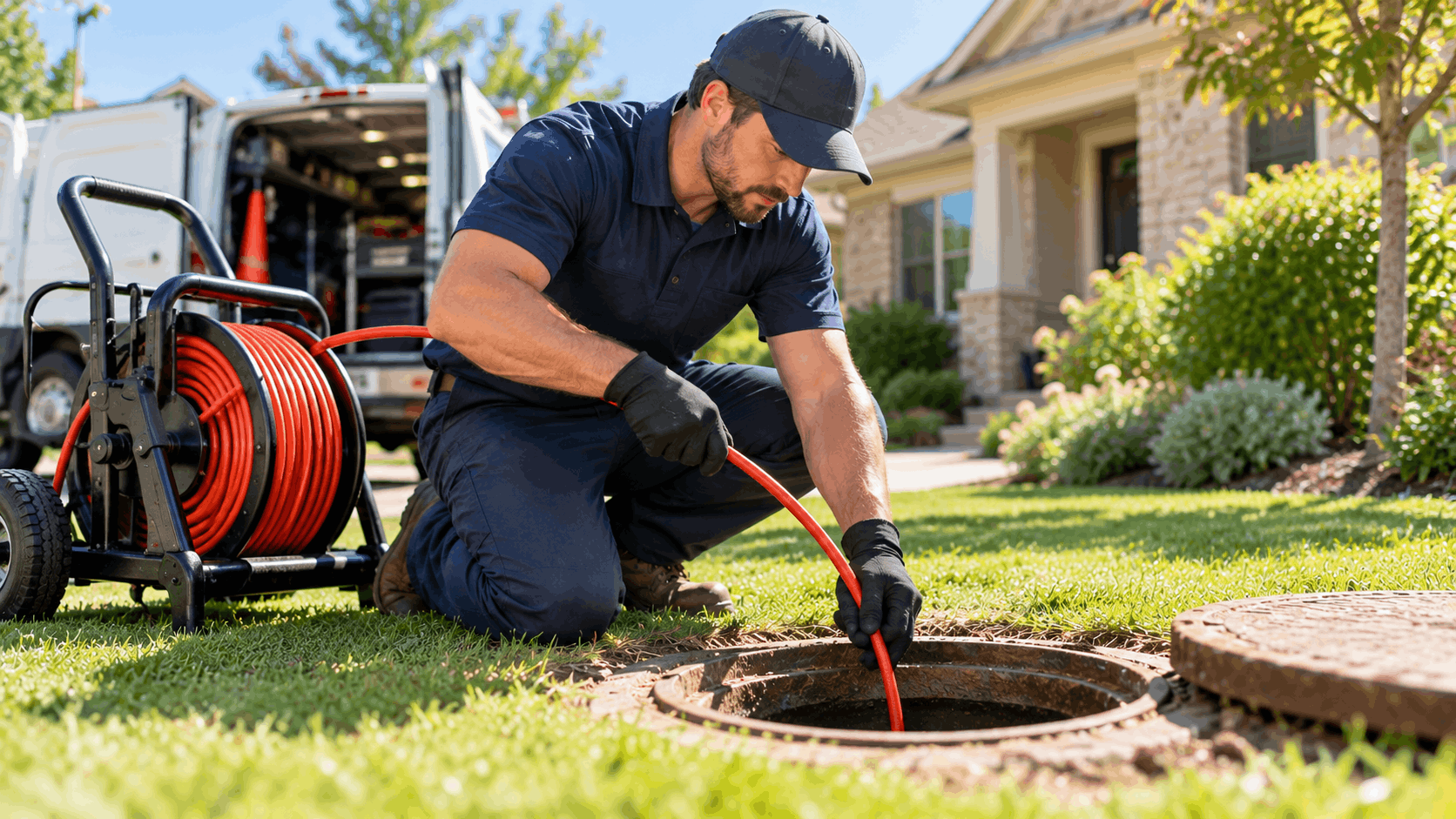
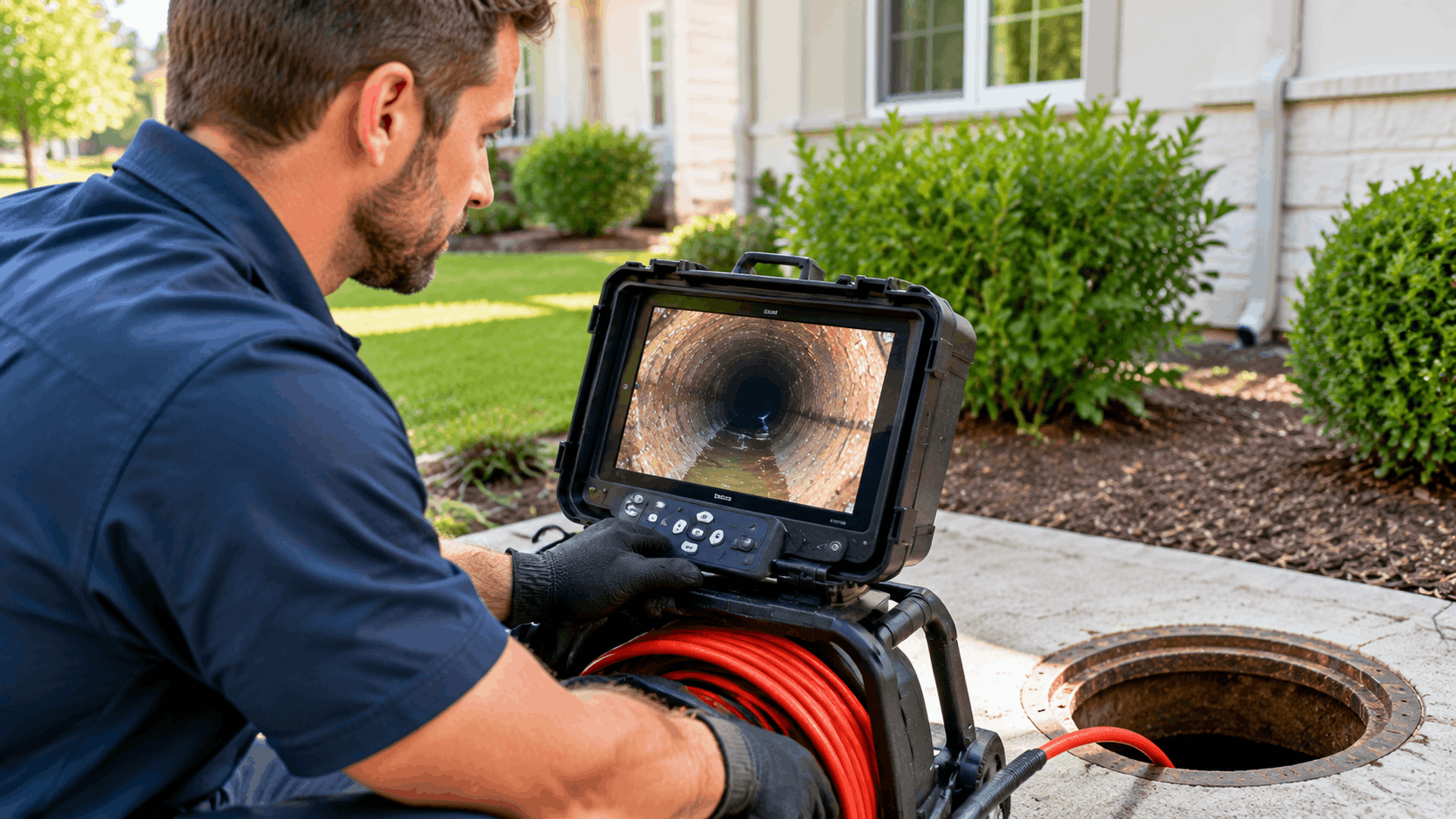
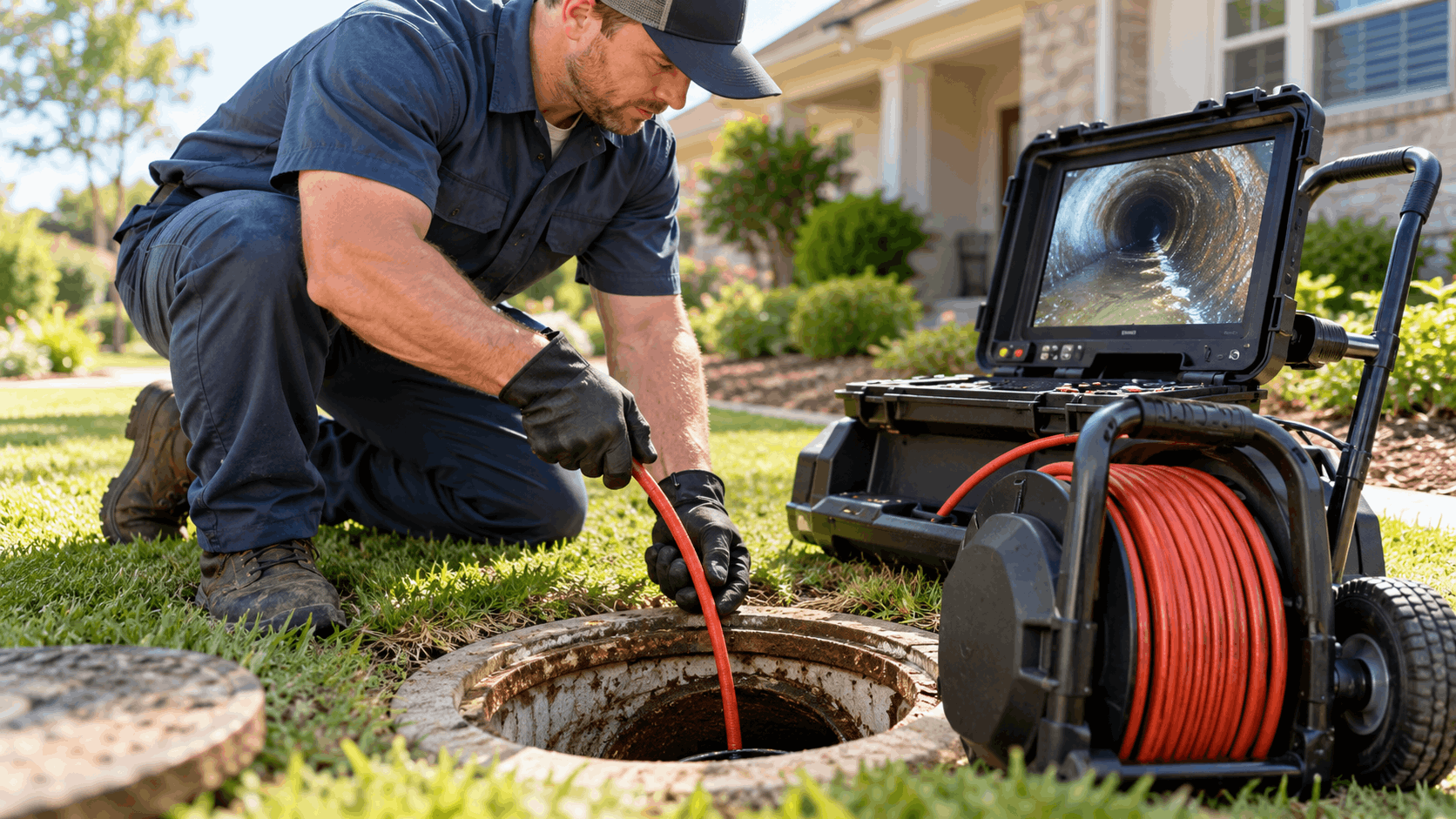
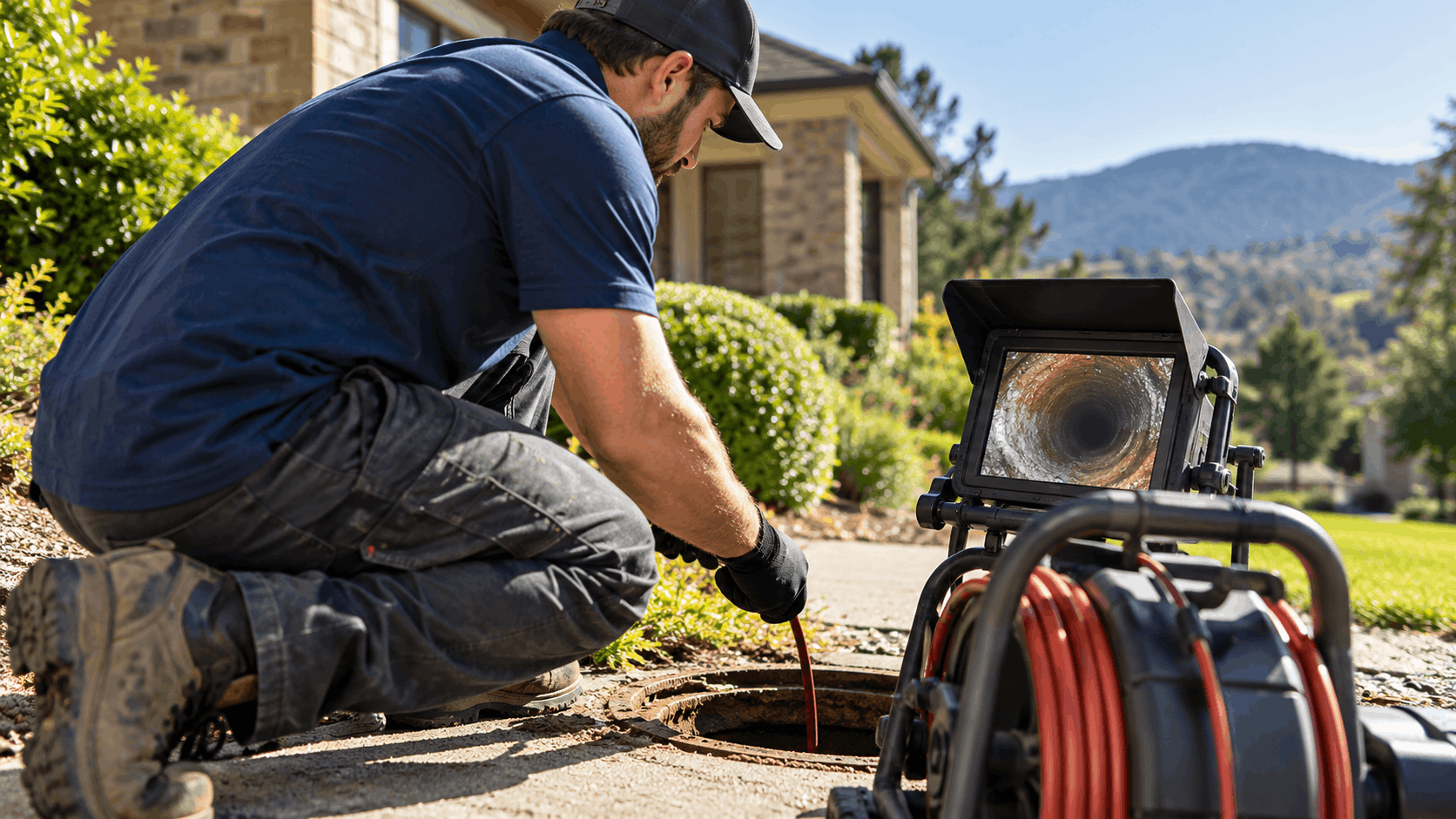
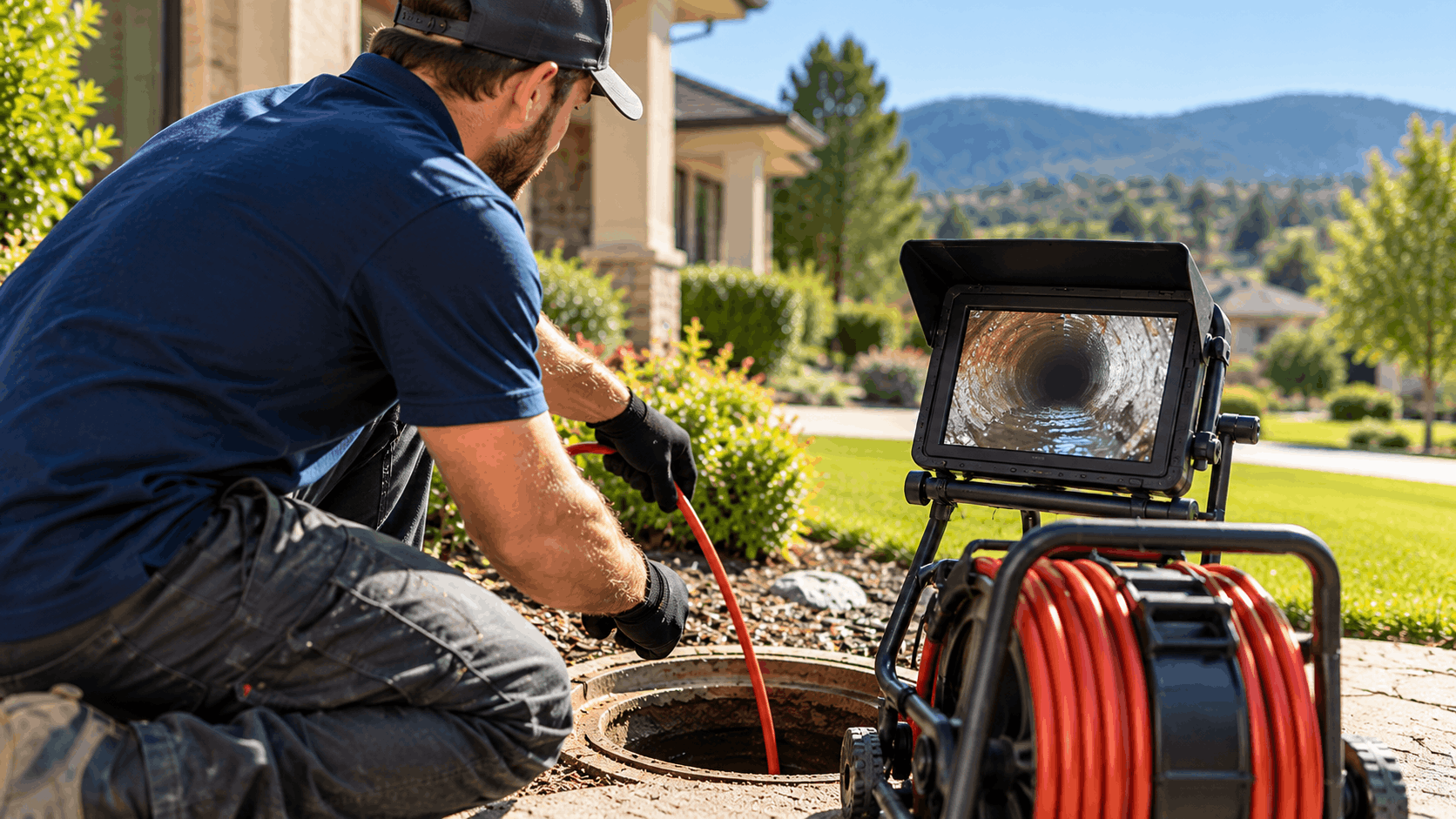
A sewer camera is a small waterproof head on a flexible cable, pushed down the main line from a cleanout. It sends back a live picture of the inside of the pipe, so a plumber can see the actual condition rather than guess from the symptoms. What it finds, and in what order, tells the whole story of the backup.
The camera usually travels from the easiest problems near the start of the line to the more serious ones deeper in. Knowing the sequence helps an owner follow the main line diagnosis as it happens and understand why one find means a cleaning and another means a repair.
Grease, Scale and Soft Blockages First
The camera usually meets the easy stuff first. Grease that has cooled and stuck to the pipe wall, hard water scale coating the bore, and soft blockages of wipes, paper or waste are the common early finds. These are the clogs that a cable or hydro-jet can clear without any digging.
Grease is the most familiar. Warm grease pours down a kitchen drain as liquid, then cools and congeals on the pipe wall downstream. Layer by layer it narrows the pipe until waste can no longer pass. The camera shows it as a glossy, lumpy coating closing in the opening.
Scale buildup looks different, more like a crusty mineral lining, and it is the fingerprint of the valley's very hard water. It roughens the pipe and shrinks the bore, and it often appears alongside grease because the rough scale gives the grease a grip. Together they make a clog where a smooth pipe would have carried the same waste cleanly.
A soft clog of flushed wipes or a wad of paper and waste is the most straightforward of all. The camera shows a mass sitting in the pipe with water backed up behind it. This is the best-case find, because clearing it with a cable or a jet usually restores the line without any further work.
Root Intrusion at Joints
Where landscape sits near a sewer line, roots go looking for water, and a sewer pipe carries exactly what they want. Roots push in at the joints between pipe sections, because the seams are the one spot where a tiny gap or moisture can invite them. The camera shows root masses growing in at the seams.
Early root intrusion looks like fine strands reaching into the pipe at a joint. Left alone, those strands thicken into a mat that catches everything flowing past, so grease, paper and solids pile up against the roots and the line blocks. The roots did not fill the pipe; they became the net that everything else stuck to.
Southern Highlands has extensive private landscape, especially on the larger lots, so there are plenty of trees and shrubs whose roots can reach a line. A root problem tends to come back on a schedule as the roots regrow, which is why the camera finding roots changes the plan from a one-time clear to a longer-term fix.
Finding roots at a joint also tells the plumber something about the joint itself. Roots get in where there is an opening, so a root intrusion is often a sign of a joint that is no longer sealed as tightly as it should be. That is useful information when the next step is deciding between repeated cleanings and a targeted repair.
Bellies, Low Spots and Standing Water
When the camera reaches a section where water is sitting still and not draining away, that is the signature of a belly or low spot. A properly graded pipe drains clear behind the camera; a bellied section holds a pool of standing water in the dip. The camera shows the water line partway up the pipe with nowhere to go.
A belly comes from settlement, which ties straight back to the cut and fill ground this community was built on. The pipe sagged into soil that dropped away beneath it, and now it holds water in the sag. This is a grade problem, meaning the pipe is no longer at the right slope to drain.
A cleaning will not fix a belly. A cable or jet can clear whatever collected in the low spot, and the line will flow again for a while, but the dip is still there and will fill back up. That is the honest limit of cleaning, and the camera is what makes it visible so an owner is not surprised by a repeat backup.
Spotting a belly early changes the economics. If the camera catches a developing low spot before it is fully blocking, an owner can plan a repair on their own timeline rather than reacting to sewage on the floor. The camera turns a surprise into a scheduled decision.
Offset Joints, Cracks and Collapse
The most serious finds come deeper and look structural. An offset joint is where two pipe sections no longer line up, leaving a lip that catches waste and lets ground in. A cracked pipe shows a visible split in the wall. A partial collapse shows the pipe caved in, choking the line down to a fraction of its size.
These are the finds that point past cleaning toward repair or replacement. You cannot cable away a crack or jet a collapse back into shape. Where the pipe is physically damaged, the fix has to restore the pipe itself, not just clear what is caught inside it.
Ground movement is a common cause of an offset joint here. As cut and fill soil settles unevenly, it can shove one pipe section slightly out of line with the next. Caliche abrasion over the years can also wear a buried pipe until it cracks. Both trace back to the local ground conditions rather than to anything the owner did.
A collapsed sewer line is the worst case and usually the most urgent, because the line is nearly or fully closed. The camera shows how far the damage runs, which decides whether a short section can be repaired or a longer stretch needs replacement. Seeing it is what keeps the repair sized to the actual problem.
Locating the Problem and Marking the Depth
The camera head carries a locator, a signal that a receiver on the surface can track. So once the camera finds the trouble, the plumber walks the yard with the receiver and marks the exact spot above the problem, along with how deep it sits. That mark is the whole point of the inspection when a dig is coming.
On these slopes, depth is not constant. A line running across a graded lot can be shallow in one spot and well below grade in another, so knowing the real depth at the trouble point tells the crew what the dig actually involves. Guessing the depth on a sloped lot is how a small repair turns into a large excavation.
In caliche, the cost of a wrong dig is even higher. Opening hardpan is slow and expensive, so digging in the wrong place or over too wide an area wastes real money. Pinpointing the exact spot with the locator keeps the trench small and the cost contained, which matters most on the higher lots where rock is in play.
The locate also tells an owner whether the problem is on their side of the line or out toward the public main. That boundary affects who is responsible for the repair, so marking where the trouble sits is useful information well beyond planning the dig itself.
Why a Camera Before Digging Matters in These Homes?
Running a camera before any excavation is not an upsell in Southern Highlands. It is what keeps a repair from becoming a demolition. In slab-on-grade homes with finished floors, caliche in the ground and slopes that change the depth of a line, digging blind is how costs run away. The camera turns a guess into a plan.
The point of the camera before digging is simple: find the exact problem, find the exact spot, and choose the exact fix before breaking anything. That order saves money and mess in homes where the wrong opening is expensive to make and expensive to repair.
Slab-On-Grade Means an Under-Slab Line Is Not Accessible
Every home here is built on a concrete slab, with the plumbing running underneath it. When a line fails under the slab, you cannot simply reach it. The pipe is encased in concrete, and getting to it means either breaking that concrete open or finding a way around the damaged section entirely.
That is a very different situation from a home with a crawl space or basement, where a plumber can get under the house and work on the pipe directly. Under a slab, the failure is sealed away, and the only way to know what is wrong and where is to send a camera down the line.
The camera decides the fundamental question: is the fix breaking the slab to reach the pipe, or is it a sewer line reroute that runs a new line around the problem? That choice depends on where the damage sits, how long the damaged section is, and what is above it. None of that is knowable without seeing inside the pipe first.
This is the same logic that applies to a water supply failure under a slab. Whether the trouble is a drain or a pressure line, the slab makes the pipe inaccessible, so slab leak detection and camera work exist to locate the exact spot before any concrete comes out.
Protecting Stone and Hardwood Floors in the Estates
In the custom estates up on the higher lots, the floors are often stone or hardwood, laid over the slab at real expense. Breaking the slab to reach a sewer line means cutting through that finished floor first, and matching stone or wood back afterward is difficult and costly, sometimes impossible to do invisibly.
That changes the math. In a finished estate, rerouting a line around the damaged section often beats cutting the slab, because a reroute can run the new pipe through a path that avoids the expensive floor altogether. The repair that disturbs the least finished surface usually wins, and the camera is what shows whether that option exists.
The camera and locator together map where the problem sits relative to the finished rooms above. If the damage falls under a stone entry or a hardwood great room, that pushes the decision toward a reroute. If it falls under an unfinished or easily restored area, breaking the slab there may be the simpler fix.
These estates come with other expectations too: protected finishes, kept appointments and a written price before anyone starts. The camera supports all of that by giving a clear picture of the job up front, so the plan and the price are set before a tool touches the floor.
Caliche and Slope Make the Wrong Dig Expensive
Caliche makes exterior excavation slower and dearer than it would be in soft soil, and rock on the higher lots adds to the cost on top of that. Every foot of trench through hardpan takes more time and more equipment, so the size of the dig is directly tied to the final bill.
That is exactly why pinpointing the problem matters so much here. A dig placed precisely over the damage, sized just to reach it, is far cheaper than an exploratory trench chasing a line through caliche. The locator keeps the trench small by removing the guesswork about where to open the ground.
Slope adds another layer. Because the lines run across cut and fill at varying depths, the dig at one point on a lot can be shallow while a few feet away it is deep. Knowing the real depth at the marked spot means the crew arrives ready for the actual conditions rather than discovering them halfway through.
Put together, the camera and locate protect an owner from the most expensive mistake in exterior sewer work here: digging in the wrong place, or digging wider than needed, in ground that fights back. Spending a little time on diagnosis saves a lot on excavation.
Confirming Cleaning Actually Fixed It
A camera is not only for before the work. Running it again after a cleaning confirms the line is genuinely clear, not just punched through. A cable can bore a hole in a soft blockage and restore flow for a day, while the bulk of the clog is still there. The follow-up camera catches that.
The post-cleaning camera also answers whether anything structural is still present. If the backup was really a belly or a crack, cleaning cleared the symptom but left the cause, and the camera shows that standing water or that crack still sitting there. The owner learns now, not when the backup returns in a month.
This verification step is what separates a lasting fix from a temporary one. It is the difference between telling an owner the line is clear and showing them a clean pipe from end to end. On a recurring problem, that proof is worth having.
It also sets a baseline. A clear camera run after a cleaning gives an owner a record of the line's condition, which is useful if symptoms come back or when the home is sold. Knowing the real state of the main is information worth keeping.
Repair Choices After the Camera Report
Once the camera has found the problem and marked the spot, the repair follows what it found. A soft blockage is a cleaning. A single crack is a spot repair. A belly along a long stretch is a replacement. Matching the fix to the find is how an owner avoids both overpaying and under-fixing.
The table below lines up what the camera typically shows against the repair that fits it, so the path from diagnosis to decision is clear.
| What the Camera Shows | Typical Repair | Digging Needed |
|---|---|---|
| Grease, scale, soft clog | Cabling or hydro-jetting | No |
| Roots at a joint | Jetting, then repair the joint | Sometimes |
| Single offset or crack | Targeted spot repair | Small dig |
| Under-slab failure | Reroute or break slab | Depends |
| Belly or repeated collapse | Section replacement | Yes |
Drain Cleaning and Hydro-Jetting for Grease and Scale
Where the camera shows grease, scale or a soft blockage, the line is cleared rather than repaired. A cable, or rooter, physically cuts and pulls the blockage out, which works well for soft clogs and root strands. For grease and scale, high-pressure water usually does a better job.
Hydro-jetting sends water through the line at high pressure, which scours the pipe wall rather than just boring a hole through the blockage. That matters with the valley's very hard water, because jetting strips the hard water scale off the pipe along with the grease stuck to it. A cable pokes through; a jet cleans.
Jetting leaves a cleaner bore behind, which buys more time before the next buildup. On a line that has been scaling for twenty years, restoring something close to the full bore makes a real difference in how the main carries waste going forward. It is the closest thing to resetting the pipe without replacing it.
Cleaning is the right call only when the camera confirms the problem is buildup, not structure. That is the whole reason the camera comes first. Jetting a bellied or cracked line clears it for a while but does not fix it, so the diagnosis decides whether cleaning is a solution or just a delay.
Spot Repair for a Single Offset or Crack
When the camera finds a single offset joint or one crack at a known depth, the fix can be a targeted spot repair rather than replacing the whole run. The locator marks exactly where the damage sits, which makes a small, precise dig possible instead of opening a long trench.
A spot repair means excavating just to the damaged section, replacing or repairing that piece, and backfilling. In caliche and on a slope, keeping the dig small is what keeps the job affordable, so the ability to pinpoint one bad spot is what makes this option work here.
This path depends on the rest of the line being sound. If the camera shows one clear failure with good pipe on either side, a spot repair addresses the actual problem and leaves the healthy pipe alone. There is no reason to replace fifty feet of good line to fix two feet of bad.
The decision between a spot repair and something larger comes straight from the camera report. One offset with good pipe around it is a spot repair. Multiple failures along the run, or a long belly, point toward replacing a section instead. The camera draws that line.
Reroute Versus Breaking the Slab
For an under-slab failure, the two honest choices are breaking the slab to reach the pipe or rerouting a new line around the damaged section. Which one fits depends on where the damage sits, what floors are above it, and how accessible the path is.
Breaking the slab makes sense when the damaged spot is reachable without destroying expensive finishes, or when a reroute would be impractical. The crew cuts the concrete over the marked spot, repairs the pipe, and patches the slab. In a tract home with a tile or vinyl floor, this can be the straightforward route.
A reroute abandons the damaged under-slab section and runs a new line around it, often overhead or through a wall and out a new path. In an estate with stone or hardwood over the slab, a reroute that avoids cutting the finished floor is frequently the better value even though it is more pipe.
The camera and locator decide between them by showing exactly where the damage is and what sits above it. Without that, the choice is a guess. With it, an owner can weigh the cost and disruption of each path against the actual location of the problem.
Full Sewer Line Replacement
When the camera shows a belly running along a long stretch, or repeated collapse in more than one spot, replacing the run is the honest answer. Cleaning a line that is structurally failing along its length only buys days, and each repeat cleaning costs money without solving anything.
A belly is a grade problem, so fixing it means relaying the pipe at the correct slope, not patching a point. If the low spot runs for many feet, there is no single point to repair; the section has to be replaced and set back to grade. A long belly is a replacement, not a spot fix.
Repeated collapse tells the same story from a different angle. If the pipe has failed in more than one place, the material or the conditions around it are no longer holding, and chasing one collapse after another with spot repairs becomes more expensive than replacing the run once and being done.
Replacement is the biggest of these jobs, so it is the one where the camera evidence matters most. An owner should see for themselves why the run needs replacing rather than take it on faith, and a clear camera report showing the belly or the repeated damage is what justifies the decision.
Need Help in Las Vegas?
Active Plumbing serves Las Vegas and all of Las Vegas Valley.
What Camera Inspection and Main Line Work Typically Cost
Cost depends entirely on what the camera finds, so these figures are typical ranges for the Las Vegas Valley, not a quote for any one job. A soft clog and a collapsed line are very different numbers. The written price for a specific job comes before any work starts, based on what the camera actually shows.
The table below groups the relevant jobs with their typical area ranges so an owner knows roughly what to expect at each outcome.
| Job | Typical Las Vegas Valley Range |
|---|---|
| Drain cleaning | $150 to $350 |
| Hydro-jetting (residential) | $300 to $600 |
| Cleanout installation | $250 to $600 |
| Sewer line repair | $1,500 to $5,000 |
| Full sewer line replacement | $4,000 to $12,000 |
| Sewage backup cleanup | $500 to $3,000 |
| After-hours service fee | $150 to $300 plus repair costs |
Inspection and Cleaning Ranges
Camera work is usually part of diagnosing the line rather than a standalone product, and the cleaning that follows a soft-blockage find falls into predictable ranges. Drain cleaning runs $150 to $350 as a typical area range, which covers cabling a line to clear a soft clog or roots.
Hydro-jetting for residential lines runs $300 to $600, reflecting the extra equipment and the more thorough result. Jetting costs more than cabling because it scours the pipe rather than boring through the blockage, which is what you want on grease and hard water scale.
If the main lacks a proper access point, a cleanout installation runs $250 to $600. A cleanout gives the camera and the cleaning tools a direct path into the main, and on homes without one, adding it makes every future inspection and cleaning easier and cheaper.
These are typical ranges for the area, not quotes. The actual number depends on the line, the access and what the camera finds, which is why the real price is put in writing before work begins rather than estimated over the phone.
Repair and Replacement Ranges
When the camera shows structural damage, the ranges step up. Sewer line repair runs $1,500 to $5,000 as a typical area range, which covers a targeted spot repair on a single offset or crack through more involved work depending on depth and access.
Full sewer line replacement runs $4,000 to $12,000, reflecting the length of the run, the depth, and the ground it passes through. A belly along a long stretch or repeated collapse falls into this range, because the fix relays the line rather than patching a point.
If the backup reached living space, sewage backup cleanup runs $500 to $3,000 depending on how far it spread and what it touched. That is a separate cost from the plumbing repair itself, which is one more reason to stop using water and call early when a backup starts.
As with cleaning, these are area ranges. A spot repair on an accessible line sits at the low end of the repair range, while a deep replacement through caliche on a higher lot moves toward the top. The camera report is what places a specific job within the range.
What Pushes the Price Up on These Lots
Three things reliably move the number up in Southern Highlands. The first is caliche and rock, especially on the higher lots, which make any excavation slower and dearer. Opening hardpan takes more time and equipment than digging soft soil, and that time shows up in the cost.
The second is finished floors in the estates. If a repair means protecting or cutting stone or hardwood over a slab, the care and the restoration add to the job. This is exactly why a reroute that avoids the finished floor is often the better value, and why the camera's role in choosing the path matters financially.
The third is timing. After-hours emergency calls carry a service fee of $150 to $300 plus repair costs. A main line backup pushing sewage into a lower floor often cannot wait for business hours, so that fee is part of the honest picture when the call comes in at night or on a weekend.
Depth and length factor in across all of these. A shallow spot repair near a cleanout is at the low end of its range; a deep replacement on a sloped, rocky lot moves toward the high end. The camera and locate are what let these factors be priced accurately before the dig.
Why You Get a Written Price First
Active Plumbing gives the customer a written price before work starts. The camera report and the quote arrive together, so an owner sees what is wrong and what the fix costs before any digging decision is made. The diagnosis drives the price, not the other way around.
That order protects the owner. Seeing the camera footage and the written number side by side means the decision to clean, repair or replace is made with full information. There is no committing to a dig and then discovering the scope, because the scope is established first.
It also keeps the options honest. When the camera shows a soft clog, the written price is for a cleaning, not a replacement. When it shows a long belly, the price reflects the replacement the line genuinely needs. The fix is matched to the find, and the price reflects the fix.
For the estates where protected finishes and kept appointments are expected, the written price up front is part of how the job is run from the first call. The owner knows the number, the scope and the plan before the work begins.
Permits, Associations and Access in Southern Highlands
Main line work here comes with practical hurdles beyond the plumbing itself. The right permit office, the association approval tracks, guard-gated access and who actually authorizes the work all need sorting before a crew starts. Knowing these in advance keeps the job moving.
None of these are optional extras. They are part of how work gets done in a master-planned, partly gated community in unincorporated Clark County, and getting them lined up at booking saves delays on the day.
Clark County Governs This Address
Southern Highlands sits in unincorporated Enterprise, part of Clark County rather than the City of Las Vegas. That means permits, plan check and inspections run through the Clark County Department of Building and Fire Prevention, even though residents often describe the area as Las Vegas.
The distinction matters because the City of Las Vegas and Clark County run separate permit counters with their own processes. Filing with the wrong authority wastes time, so confirming that a Southern Highlands address is a county address is a routine first step before any permitted sewer work.
Sewer work that reaches the public main or involves replacing a line generally needs a permit, and the county is the authority that issues and inspects it. For more routine sewer and drain jobs, the permit position should be confirmed for the specific address, because what is required depends on the scope.
Clark County is also the authority for the unincorporated townships around Southern Highlands, so the same county oversight applies across this part of the southwest valley. A local plumber who files with the county as a matter of course for these addresses keeps the permitting straightforward.
Master and Sub-Association Approval
The community runs under a master association with sub-associations beneath it, governed under Nevada Revised Statutes Chapter 116. Architectural standards cover exterior appearance, so visible exterior work can require approval while interior line work does not.
For a main line repair, this usually matters when the work is outside and visible. A trench in a front yard, a new exterior cleanout on a street-facing elevation, or any change to the exterior appearance can fall under architectural review. An under-slab repair inside the footprint typically does not.
Importantly, association approval and a county permit are separate tracks. Getting the county permit does not satisfy the association, and association approval does not replace the permit. Where both apply, both have to be handled, sometimes with two sets of documents for one change.
Because two sub-associations can layer under the master, the exact approval path depends on the specific enclave. An owner should confirm what their own association requires for the work in question, since the rules and timelines are set by the association and can change.
Guard-Gated Access and Appointments
Several enclaves in Southern Highlands are guard-gated, and in those communities contractor access is authorized in advance through the homeowner rather than arranged at the gate. A crew cannot simply show up and expect to be let in; the owner has to clear the visit beforehand.
Some associations also keep vendor or insurance records, meaning a contractor may need to be on file before access is granted. This is worth checking at booking, because discovering it at the gate on the day of the job costs everyone time.
The practical step is to confirm access when the appointment is booked. The owner arranges clearance, the crew knows the gate procedure, and the job starts on schedule. For a main line backup that cannot wait, sorting access up front keeps the response quick.
This is one more reason the first phone call matters. Establishing the enclave, the gate procedure and any vendor requirement at booking means the crew arrives ready to work rather than waiting to be admitted.
Who Calls and Who Authorizes the Work
Southern Highlands is mostly owner-occupied, but it includes second homes and managed rentals in the gated enclaves, so the person in the house is not always the one who can authorize the repair. In the surrounding Enterprise area, more than a third of homes are rented, which shifts the decision maker on many jobs.
When a tenant calls about a backup, the repair usually has to be authorized by the owner or the property manager. Sorting out who signs off early avoids a crew arriving and being unable to proceed, and it keeps the tenant from being stuck between the plumber and the landlord.
An unoccupied or seasonally occupied home raises the value of a shut-off check. A leak or a slow backup in an empty house can run for weeks before anyone notices, so knowing where the main shut-off is and confirming it works is worth doing for a second home.
For managed properties, routing the diagnosis and the written price to the right decision maker keeps things moving. The camera report gives the manager or owner the information to approve the fix even when they are not on site, which matters for out-of-town owners.
Need Help in Las Vegas?
Active Plumbing serves Las Vegas and all of Las Vegas Valley.
How Active Plumbing Handles a Main Line Backup
Our approach to a main line backup is built around the camera. We diagnose before we recommend, we put the price in writing before we start, and we size the fix to what the line actually shows. For the full scope of this work, see our drain and sewer services.
Camera Diagnosis Before a Recommendation
We run the camera down the main first, so the recommendation is based on what the line actually shows rather than on a guess from the symptoms. The camera tells us whether we are looking at a soft clog, roots, a belly or a structural failure, and that determines everything that follows.
Once the camera finds the trouble, we locate and mark the exact spot on the surface and note the depth. On these slopes and in caliche, that mark is what keeps any dig small and placed precisely over the problem instead of chasing a line through hard ground.
Only then do we recommend a path. A soft blockage gets a cleaning, a single crack gets a spot repair, a long belly gets a replacement. We do not open a slab or a trench to find out what is wrong, because the camera already told us.
This order protects an owner from paying for more than the problem needs. The recommendation follows the evidence, and the owner can see the same footage we based it on.
A Written Price Before Work Starts
The customer gets a written price before work begins. The actual price for a specific job is given in writing based on what the camera found, so the number and the diagnosis arrive together before any digging decision is made.
That means no committing to a dig and then learning the scope. The camera report establishes what the line needs, the written price reflects that scope, and the owner decides with both in front of them.
Because the price is in writing up front, there are no running surprises as the job unfolds. The scope is set by what the camera showed, and the price is set with it.
For the estates where protected finishes and kept appointments are the standard, this up-front clarity is part of how we run the job from the first call to the last.
Response Window Across the Valley
Our technicians arrive in 30 to 60 minutes anywhere in the Las Vegas Valley. When a main line backup is pushing sewage toward a lower floor, that response window is what keeps a mess from spreading while the problem waits.
A backing-up main is time-sensitive. Every hour the line stays blocked with water still in the system is another hour sewage can keep rising, so reaching the home quickly and getting the camera in is the first step toward containing it.
For backups that hit at night or on a weekend, our emergency plumbing service covers the valley, with the after-hours service fee noted up front. A main line backup rarely picks a convenient time.
The same response applies across Southern Highlands and the surrounding Enterprise township, so an owner in a gated enclave or on the flatter tract ground gets the same window once gate access is arranged.
Licensed and Local Since 1991
Active Plumbing is a fourth-generation family business that has served the Las Vegas Valley since 1991. We hold Nevada license NSCB #0047021, verifiable free at nvcontractorsboard.com, where classification, status, bond and workers compensation are all public record.
Plumbing work in Nevada is licensed through the Nevada State Contractors Board, and permitted work has to be done by an appropriately licensed contractor. An owner is entitled to ask for a license number and to verify it, and in a market with a real unlicensed trade problem, that verification is worth doing.
Three decades across the valley means we know how the lines in communities like Southern Highlands were built, where they tend to fail, and what the camera is likely to show on a home of a given age. That local read speeds up the diagnosis.
For broader guidance on water quality, hardness and treatment that affect these systems, the Southern Nevada Water Authority publishes the valley's water facts, and county permitting is handled through Clark County.
Get the Main Line Checked Before Anyone Digs
A gurgling, backing-up main is a problem the camera solves before a shovel ever comes out. Call Active Plumbing at (702) 438-3357 and we will run the camera, locate and mark the trouble, and give you a written price before any work starts. You can also reach us through our contact page to book an inspection for your Southern Highlands address.
Frequently Asked Questions
- What are the first signs of a main line backup?
- The clearest signs are several fixtures backing up at once, a toilet bubbling when the washing machine or another drain runs, and water rising in the lowest shower or floor drain when a toilet flushes. Those point past any single fixture to the shared main line. One slow sink that clears on its own is usually a local branch clog, not the main.
- What does a sewer camera find first in a blocked main line?
- The camera usually meets the easy stuff first: grease, hard water scale on the pipe wall, and soft blockages of wipes or waste that a cable or hydro-jet can clear. Then it tends to find root masses growing in at joints. Deeper in, standing water signals a belly, and the most serious finds are offset joints, cracks or partial collapse that point toward repair rather than cleaning.
- How much does a sewer camera inspection cost in the Las Vegas Valley?
- Camera work is usually part of diagnosing a line rather than a standalone charge. The related jobs run as typical area ranges: drain cleaning $150 to $350 and hydro-jetting for residential lines $300 to $600. These are typical ranges for the area, not a quote. The actual price for a specific job is given in writing before work starts, based on what the camera finds.
- Why does Southern Highlands get main line problems after about twenty years?
- The community was developed from the late 1990s on graded slopes below the Spring Mountains. Exterior lines run across cut and fill soil, and poorly compacted backfill settles under a pipe over two decades, pulling it out of grade and creating bellies where waste collects. At the same time, the valley's very hard water at 280 ppm leaves scale that narrows the pipe. Together those make backups more likely as a home ages.
- Can a main line backup be fixed without digging up my yard?
- Often, yes. Grease, scale and soft blockages usually clear with cabling or hydro-jetting and no dig at all. Jetting also scours the hard water scale off the pipe wall. But a belly, an offset joint or a crack is a grade or structural problem that cleaning cannot fix. Those need a targeted spot repair or a replacement, which the camera and locator keep as small and precise as possible.
- Why is digging more expensive on the higher Southern Highlands lots?
- Caliche is a cemented hardpan that is slow to trench through and hard to bed a pipe into evenly, and on the higher lots rock adds to the cost. Opening hardpan takes more time and equipment than digging soft soil, so the size of the trench drives the price. That is why we pinpoint the exact spot and depth with the locator before digging, keeping the trench as small as the repair allows.
- Do I need HOA approval to fix a sewer line in Southern Highlands?
- Interior line work usually does not need architectural approval, but visible exterior work can, because the community's architectural standards under NRS Chapter 116 cover exterior appearance. Association approval and a Clark County permit are separate tracks, so where both apply, both have to be handled. Since a master association and sub-associations can layer here, confirm what your own association requires for the specific address and the specific work.
- Who issues the permit for sewer work in Southern Highlands?
- Southern Highlands sits in unincorporated Enterprise, which is part of Clark County rather than the City of Las Vegas. Permits, plan check and inspections for sewer work go through the Clark County Department of Building and Fire Prevention. Residents often call the area Las Vegas, but the permitting authority is the county. Confirming that at the start keeps the paperwork filed with the right office.
- What should I do the moment sewage starts backing up?
- Stop running water right away, including the dishwasher and washing machine, and avoid flushing toilets, especially on the lower level. Keep people off the ground-floor fixtures so the backup does not keep pushing up. Do not pour chemical drain openers into standing water. Then call a licensed plumber so the main can be checked with a camera before the backup spreads into living space.
- How fast can a plumber reach my home in Southern Highlands?
- Our technicians arrive in 30 to 60 minutes anywhere in the Las Vegas Valley, which matters when a main line backup is pushing sewage toward a lower floor. For homes in the guard-gated enclaves, access is authorized in advance through the homeowner, so confirming the gate procedure when you book the appointment keeps the response quick once we reach the community.
Licensed plumbing professionals serving Las Vegas and Las Vegas Valley.
Licensed in Nevada · License #0047021
Last updated on
Why trust Active Plumbing?
Founded in 1991, Active Plumbing is a licensed and insured plumber serving Las Vegas and Las Vegas Valley. All content is reviewed by our licensed technicians.

Need Help in Las Vegas?
Active Plumbing serves Las Vegas and all of Las Vegas Valley.
Related Articles
All Drains Slow at Once in Henderson - Main Line vs Branch Diagnosis You Can Do
When every drain in your Henderson home slows at once, learn how to tell a main line clog from a branch problem, which tests to run, and when to call for help.
Main Line Clogs in East Valley Golf Pockets of Stallion Mountain and What a Camera Finds
Why main lines clog in Stallion Mountain's gated 1980s-90s golf community, what a sewer camera finds before breaking a slab, who owns the pipe, and valley cost ranges.
Which Plumbing Work Needs HOA and Design Review Approval in Southern Highlands
Interior plumbing in Southern Highlands rarely needs HOA approval, but visible or street-facing changes usually do. Here is the full breakdown, plus county permits and costs.