How-To Guides
All Drains Slow at Once in Henderson - Main Line vs Branch Diagnosis You Can Do
Key Takeaways
- Slow drains happening all at once usually mean a shared pipe problem, not a single clogged fixture.
- A branch line serves one or two fixtures, while the main sewer line carries waste from the whole home to the city sewer.
- Watch the lowest fixtures, listen for gurgling in multiple drains, and run the toilet test to spot a main line clog.
- Open the outdoor cleanout to check for standing water, a full cleanout means the main line is blocked and a dry one points to a branch.
- Skip chemical drain cleaners and stop running water once a drain backs up, since both can make the problem worse.
- Hard water, aging clay or cast iron lines, tree roots, and shifting desert soil make Henderson drains prone to clogs.
- Snaking a branch runs $100 to $300, while main line jetting runs $400 to $900 and pipe repair costs more.
- Sewage backups, overflowing fixtures, and cleanout overflows call for same-day emergency service.
In This Article
It usually starts on a normal morning in Henderson. Someone flushes the toilet in the hall bathroom, and a few seconds later the shower drain in the master starts bubbling. The kitchen sink is holding water too, and the laundry drain smells off. When every drain in the house slows down at the same time, it feels like the whole home turned against you all at once.
Here is the good news. That pattern actually tells our team a lot. When drains act up together, the problem is rarely one clogged sink trap. It usually points to a shared pipe somewhere deeper in the system, and knowing whether it sits in a branch line or the main sewer line changes everything about the fix.
What It Means When Every Drain Slows Down Together?
When one sink drains slow, it is almost always a local problem in that fixture. When every drain in the home crawls at the same time, the story changes. Water from the whole house shares certain pipes on the way out, and when those shared pipes get restricted, everything upstream feels it.
Think of your drain system like a set of small roads feeding into one highway. A branch line is a small road. The main line is the highway to the city sewer. A stalled car on a small road slows one neighborhood. A wreck on the highway backs up every road behind it.
Here is what simultaneous slow drains usually mean:
- The blockage sits in a pipe that serves more than one fixture
- Water has nowhere to go, so it backs up into the lowest openings first
- A single fixture clog is unlikely because too many drains are affected at once
- The trouble is often either a branch line serving one zone or the main line serving the whole house
Sorting out which one you have is the whole game. It decides how urgent the repair is, how big the job gets, and roughly what it costs.
The Difference Between a Main Line and a Branch Line
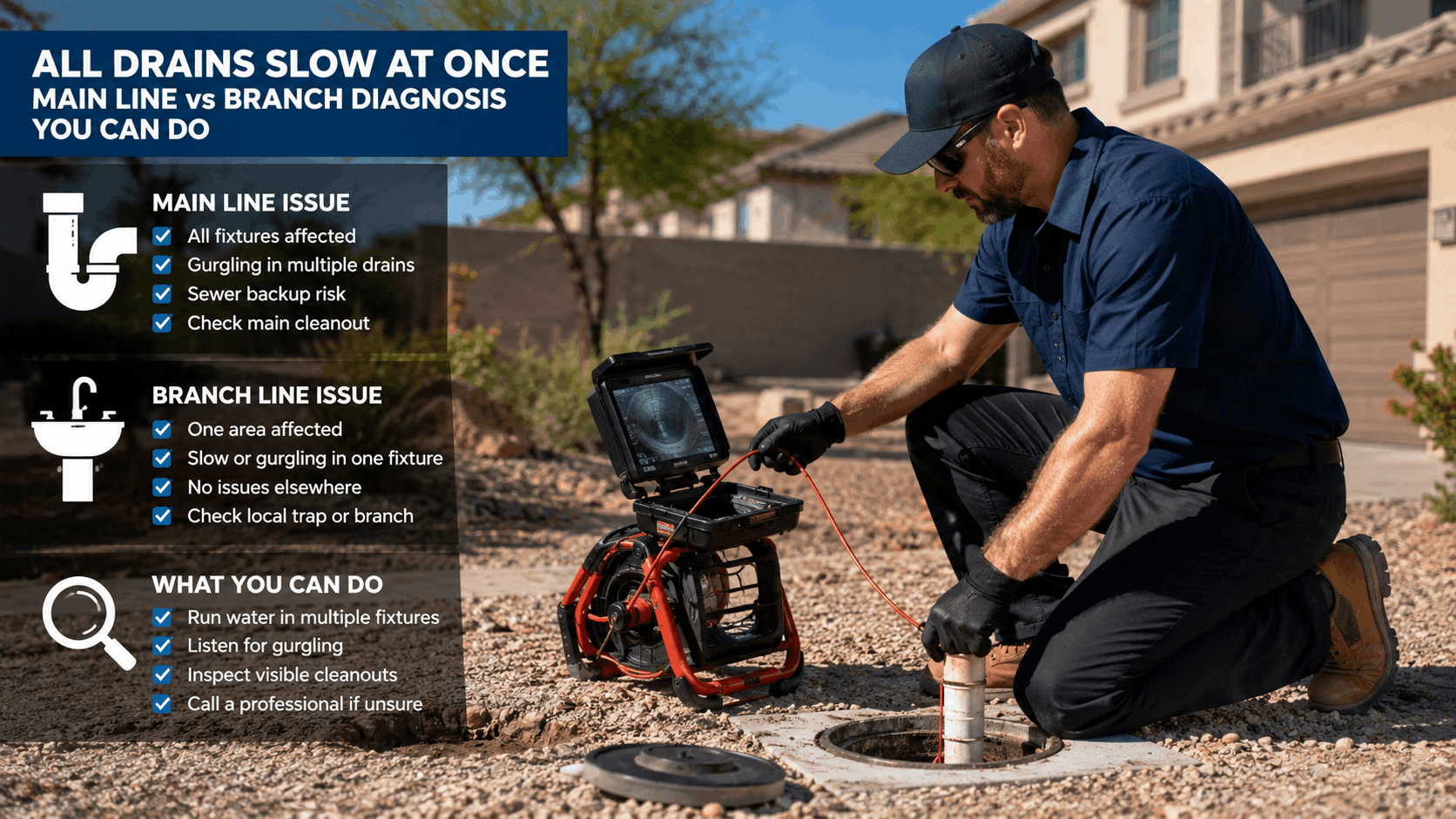
A branch drain is a smaller pipe that serves one or two fixtures nearby. The pipe under a single bathroom that carries the sink, tub, and toilet is a branch line. So is the line running from your kitchen sink and dishwasher. These pipes are usually 1.5 to 2 inches wide and only handle water from that little cluster of fixtures.
The main sewer line is the big one. Every branch in the house eventually dumps into it, and it carries all that waste out to the city sewer connection near the street. In most Henderson homes that main line runs 3 to 4 inches wide and slopes downhill from the house toward the tap.
The difference matters because of scale. A branch problem affects a small group of fixtures and is often a quick clear. A main line problem can shut down the entire house at once, since there is no path to the sewer for any of it.
When we diagnose a call, the first thing our team wants to know is how many fixtures are affected and where they sit. That single answer usually tells us whether we are dealing with a branch drain or the main sewer line before we even open a cleanout.
Why One Clog Can Affect the Whole House
Gravity runs your drain system. Water and waste flow downhill through the branches and into the main line, then out to the sewer. When a blockage forms low in that chain, everything above it has nowhere to drain.
Picture a clog in the main line about ten feet past the house. Every toilet, sink, and shower still sends water down toward that spot. The water piles up behind the blockage and starts rising back up the pipes, which is why a whole house backup can hit several rooms at the same moment.
The lowest fixtures feel it first. A basement floor drain, a first-floor shower, or a ground-level toilet will fill or gurgle before the upstairs sinks do. That is simple physics, since water always seeks the lowest exit it can find.
This is the signature of a shared drain problem. One blockage in a common pipe creates symptoms all over the house, which is exactly why simultaneous slow drains point downstream instead of at any single fixture.
Common Triggers in Henderson Homes
Our team sees the same handful of causes over and over across the valley. Grease is a big one. Cooking oil poured down the kitchen sink cools, hardens, and coats the inside of the pipe until the opening shrinks to nothing.
Hard water is the quiet troublemaker here. Southern Nevada water carries heavy minerals, and over years those minerals build a rough scale on pipe walls that catches debris and narrows the flow. We see this on homes all over Henderson, from newer builds to older stock.
Tree roots cause the worst repeat clogs in established neighborhoods. In older areas around Green Valley and Whitney Ranch, mature landscaping sends roots hunting for water, and they slip into tiny cracks or joints in the sewer line. If you own an older home in Whitney Ranch, roots are a common reason drains slow every few months.
Other triggers include flushed wipes, feminine products, and heavy paper. None of that breaks down the way it should, and it snags on any rough spot already forming inside the pipe.
Get Your Quote
Tell us what's going on and we'll get back to you fast.
Signs That Point to a Main Line Problem
Certain symptoms almost always mean the main sewer line is involved, not just one branch. Learning to read these main line symptoms helps a homeowner know how serious the situation is before we arrive. A true sewer backup is a health issue, not just an inconvenience.
The pattern is what matters. A main line clog produces trouble in several places at once, and it tends to show up in the lowest and closest fixtures to the sewer exit. Here is a quick reference for the most common signs.
| Sign | What It Looks Like | How Strongly It Points to the Main Line |
|---|---|---|
| Backup in lowest fixtures | Tub or floor drain fills when a toilet flushes | Very strong |
| Gurgling across drains | Multiple fixtures bubble when one is used | Strong |
| Sewage smell outside | Odor near yard or outdoor cleanout | Strong |
| Toilet level changes | Toilet rises or drops when a sink runs | Very strong |
If two or more of these show up together, treat it as a main line issue and limit water use until it is checked.
Water Backing Up in the Lowest Fixtures
The clearest main line sign is a lowest fixture that fills when you use something else. Flush an upstairs toilet and watch the first-floor shower or tub. If water rises in that lower drain, waste is backing up because it cannot pass the main line clog.
The reason is drainage geography. A floor drain backup happens at the lowest point in the system because that is where backed-up water pools first. The pipe fills from the blockage upward, and the lowest opening overflows before anything higher does.
We see this a lot in single-story Henderson homes with a hallway bathroom near the sewer exit. The tub becomes the release valve for the whole house whenever the main line is restricted.
If you notice the lowest fixture gurgling, filling, or overflowing when other drains run, stop using water. Every flush and every load of laundry adds to the backup and pushes dirty water closer to your floors.
Gurgling Sounds Across Multiple Drains
Gurgling drains happen when trapped air gets pushed around inside the pipes. In a healthy system, air moves freely through the vents on your roof. When a blockage builds, water pushing past it forces air backward, and that air escapes through the nearest drain as a bubbling gurgle.
One gurgling drain can be a small vent or trap issue. Gurgling in several fixtures at once is a different animal. When the sink burps while the toilet flushes, or the tub bubbles when the washer drains, the trapped air is coming from a shared pipe downstream.
The location of the gurgle helps map the problem. If the bubbling shows up all over the house, the restriction sits low, likely in the main line. If it stays in one bathroom, the issue is more likely a branch.
Homeowners often describe this as the drains talking to each other. That is a good instinct. When several drains react to a single fixture being used, they are all connected to the same blocked pipe.
Sewage Smell in the Yard or Cleanout
A sewage smell outside is a strong main line clue. When waste sits in a blocked main line, gas has to escape somewhere, and it often vents out near the outdoor cleanout or from soft spots in the yard over the sewer path.
The cleanout is a capped pipe, usually white or black, sticking up near the foundation or along the side yard. If you catch a foul odor around it, or notice the cap seeping, the main line below is likely holding sewage it cannot move.
This shows up often in older Henderson pockets like Pittman and Townsite, where aging lines and settled soil let odors escape more easily. Homes near Water Street with original sewer pipe are especially prone to this pattern.
A wet or unusually green patch of lawn following the sewer route can also signal a cracked line leaking underground. If you smell sewage in the yard, that points at the main line, and it is worth a professional look through our drain and sewer services.
The Toilet Test That Reveals a Main Line Clog
There is a quick toilet test that confirms a main line clog without any tools. Turn on the bathroom sink closest to a toilet and let it run for thirty seconds. Watch the toilet bowl water the whole time.
If the toilet water rises, bubbles, or drops as the sink drains, the two fixtures are fighting over the same blocked pipe. In a healthy system the toilet should not react at all when a sink runs. Any movement means air and water are being pushed back through a shared, restricted line.
You can push the test further by running the sink and then flushing. If the flush is sluggish and the sink drain gurgles or backs up in response, the main line is almost certainly involved.
Run this in more than one bathroom if you can. When the toilet reacts to a sink in several rooms, you have strong proof the trouble is in the main sewer line and not any single branch.
Need Help in Las Vegas?
Active Plumbing serves Las Vegas and all of Las Vegas Valley.
Signs That Point to a Branch Line Problem
Not every whole-home symptom means the main line is the culprit. A branch line clog can also affect a few drains at once if those drains share the same branch. The difference is that a branch problem stays contained to one zone of the house.
A localized clog is usually a smaller, faster fix. Knowing you have a branch issue instead of a main line failure can save real money and stress. Watch for these signs that the problem is limited to one section of pipe:
- Only fixtures in one bathroom or the kitchen are slow
- Drains on the other side of the house run fine
- The outdoor cleanout stays clear with no standing water
- The lowest fixtures in the home drain normally
- No sewage smell shows up in the yard
If your trouble lives in one part of the house while the rest behaves, you are likely looking at a branch, and our pipe and fixture services can usually clear it quickly.
Only One Side of the House Is Affected
The strongest branch sign is a problem stuck in one area. If the bathroom drains on the north end of the house are slow while everything on the south end runs clean, the blockage is in the branch serving that north bathroom.
The kitchen drain is its own common story. Kitchen lines take the most grease and food waste, so they clog on their own more than any other branch. When only the kitchen sink and dishwasher back up while every bathroom is fine, the main line is off the hook.
Grouping is the clue to watch. Fixtures that share a wall or sit close together usually share a branch line, so they clog and clear as a group. Fixtures far apart that all fail at once point back toward the main line instead.
Walk the house and note which drains are slow and where they sit. If they cluster in one room or one side, you are dealing with a branch, and that is a much smaller job than a full main line clear.
Other Fixtures Drain Normally
Fixture testing is the fastest way to confirm a branch problem. Run water in every sink, tub, and shower in the house, one at a time, and note which ones drain well and which struggle. A working fixture in one area proves the main line below is open.
The logic is simple. Everything drains through the main line on the way out. If some fixtures empty quickly and cleanly, the main line has to be clear, so any slow drains are stuck behind a local, isolated blockage.
Pay attention to fixtures at the lowest point of the home. If those drain normally, that is your best proof the main line is fine, since the lowest fixtures are the first to fail in a real main line backup.
Write down what you find before you call us. Telling our team that the kitchen backs up while all three bathrooms drain fine lets us arrive ready to clear a branch instead of hunting the whole system.
No Backup at the Cleanout
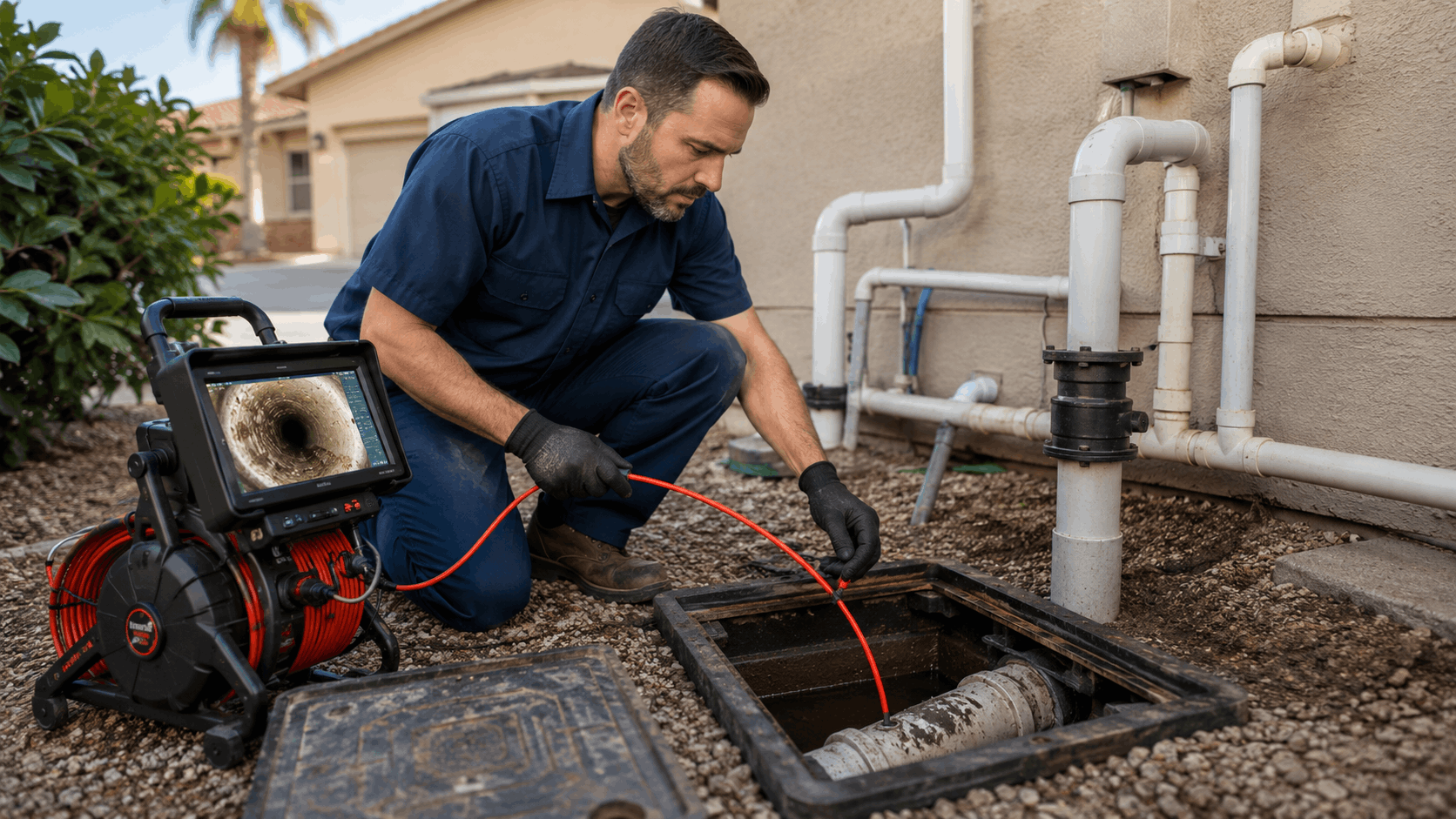
The cleanout check settles a lot of arguments. Open the outdoor cleanout cap and look inside. If you see standing water or sewage sitting in the pipe, the main line is blocked. If the cleanout is dry and clear, the main line is flowing.
A clear cleanout paired with a slow drain inside means the branch blockage sits between that fixture and where the branch joins the main line. The waste never reaches the main line because the branch stops it first.
This is one of the most useful tests a homeowner can run. It splits the whole diagnosis in two, since a dry cleanout rules out the most expensive scenario and points straight at a branch blockage.
Open the cap slowly and stand upwind. If any water starts to rise toward the opening when you loosen it, close it back up and treat it as a main line issue that needs same-day attention.
Simple Checks Homeowners Can Do First
Before calling anyone, a homeowner can run a few safe tests to understand the problem. Good drain diagnosis at home saves time and helps our team show up prepared. None of these require tools you do not already own.
The goal of a DIY plumbing check is not to fix the clog. It is to figure out where the clog lives and how urgent it is. Here is the order we recommend running your checks:
- Locate and open the outdoor cleanout to look for standing water
- Run the multi-fixture test to map which drains are affected
- Decide whether drains are slow or fully blocked
- Avoid the moves that make a backup worse
Work through these in order and you will know far more about your situation than when you started.
Finding and Opening Your Outdoor Cleanout
Most Henderson homes have an outdoor cleanout within a few feet of the foundation or along the side yard on the path toward the street. Look for a short capped pipe, often white PVC, sometimes hidden in a shrub bed or under a light layer of dirt.
Once you find it, twist the cap off slowly with a wrench. Stand to the side and upwind while you do it. If water or waste has backed up in the line, it may sit right at the opening, and a slow open keeps it from splashing out.
Standing water in the cleanout is a clear signal. A full or overflowing cleanout means the main line is blocked downstream toward the sewer. An empty, dry cleanout means the main line is open and your problem is inside a branch.
If you cannot find the cleanout at all, older properties sometimes have it inside a garage or buried. Do not dig blindly. Note that it is missing and let our crew locate it during the visit.
Running the Multi-Fixture Test
The multi-fixture test maps your problem in a few minutes. Turn on two or three fixtures in different parts of the house at the same time, then watch which drains back up and which stay clear.
Try running the kitchen sink, a far bathroom sink, and a tub together. Flush a toilet in the middle of it. Drain mapping works by loading the system and seeing where the weak point shows itself under pressure.
If everything backs up together no matter which fixtures you run, the main line is the shared choke point. If only one cluster struggles while the rest handle the extra water fine, that cluster sits on the blocked branch.
Keep a simple note of the results. Room by room, mark each drain as fast, slow, or backing up. That map is the single most helpful thing you can hand our team when we arrive.
Checking for Slow vs Fully Blocked Drains
There is a big difference between a slow drain and a full stoppage, and it changes how fast you need help. A slow drain still moves water, just lazily. A full stoppage holds water with no movement at all, or pushes it back up.
Test it by filling a sink and pulling the stopper. If the water swirls down over a minute or two, you have a partial clog with some room left. If the water sits and refuses to drop, or rises into another fixture, the pipe is fully blocked.
A slow drain gives you a little time to schedule service on your terms. A full stoppage in the main line is urgent, since the next use of any fixture can send sewage onto your floor.
Note the difference for each affected drain. Slow branches can often wait a day, but a fully blocked main line calls for same-day help before it overflows.
What Not to Do Before a Plumber Arrives
The biggest mistake is reaching for a chemical drain cleaner. Those harsh products rarely clear a real branch or main line clog, and the caustic liquid pools on top of the blockage where it can eat at older pipe and burn anyone who opens the line later.
Skip the chemicals entirely. On a main line clog they do nothing but create a dangerous puddle our crew has to deal with before starting the actual clearing work. To avoid mistakes, keep those bottles in the cabinet.
Also stop flushing and running water once you know a drain is backing up. Every flush adds volume behind the blockage and raises the odds of an overflow onto your floors.
Do not repeatedly plunge a toilet that is already backing up from a main line issue. Plunging pushes waste around but cannot clear a deep main line clog, and it often forces backed-up water out of the lowest fixture faster.
Why Henderson Homes See These Problems More Often
Local conditions load the deck against Henderson drains. Between the mineral-heavy water, the age of some neighborhoods, and the desert soil, our crews stay busy with the same drain trouble year-round. Henderson plumbing has a personality shaped by this environment.
Knowing why it happens here helps homeowners plan ahead. These are the three biggest local reasons drains clog and back up across the area:
- Hard water buildup that narrows pipes from the inside
- Older sewer lines in established neighborhoods
- Shifting desert soil that stresses buried pipe
Each one plays out a little differently depending on where you live in the valley.
Hard Water and Mineral Buildup in Local Pipes
Water across the Las Vegas Valley is famously hard, loaded with calcium and magnesium. As it flows through your pipes, those minerals leave a rough mineral scale on the walls, and that scale keeps growing thicker over the years.
The rough surface is the problem. Smooth pipe lets waste slide by, but scaled pipe grabs grease, hair, and paper and holds them until a clog forms. A pipe that started at two inches wide can effectively shrink to an inch of usable space.
This is why homes with no history of trouble suddenly start clogging after a decade or two. The buildup crosses a threshold and the drain that used to handle everything now snags on the smallest debris.
A water softener slows this down by pulling the minerals before they reach your pipes. Our water softener installation is one of the better long-term defenses against repeat mineral clogs in Henderson.
Older Sewer Lines in Established Neighborhoods
Established Henderson neighborhoods carry older sewer line materials. Homes built decades ago often have clay or cast iron main lines, and both age poorly. Clay cracks and separates at the joints, while cast iron rusts and roughens on the inside.
Those weak spots invite root intrusion. Around Pittman and near Water Street, mature trees send roots straight into any crack or loose joint chasing moisture. Once inside, the roots grow into a mesh that catches everything and blocks the line.
An old sewer line with root intrusion is the classic repeat-clog situation. You clear it, drains flow for a few months, then the roots grow back and it slows again. Cleaning alone treats the symptom, not the cracked pipe letting roots in.
For homes with recurring root problems, a camera inspection followed by sewer line repair or replacement is often the real cure. It seals out the roots for good instead of buying a few months at a time.
Ground Movement and Shifting Soil
Desert soil moves more than people expect. Dry ground shifts and settles, and that movement drags on the buried pipe running under and around your home. Over time it can crack a line or pull a joint out of alignment.
Newer builds are not immune. In fast-growing communities like Inspirada and Cadence, fresh grading and settling soil can offset a pipe within the first several years. An offset joint creates a lip inside the line where waste catches and clogs form.
Shifting soil also creates low spots called bellies in a pipe run. Water pools in the sag instead of flowing through, and solids drop out and collect there until the drain slows across the whole house.
These issues do not fix themselves. If your drains slow again after a good cleaning, ground movement may have created a defect in the line that only a camera inspection can confirm.
Need Help in Las Vegas?
Active Plumbing serves Las Vegas and all of Las Vegas Valley.
When to Call a Professional and What Happens Next
Home checks tell you a lot, but some situations need professional drain service right away. Knowing when to stop testing and pick up the phone protects your floors, your health, and your wallet. A backed-up main line only gets worse the longer it waits.
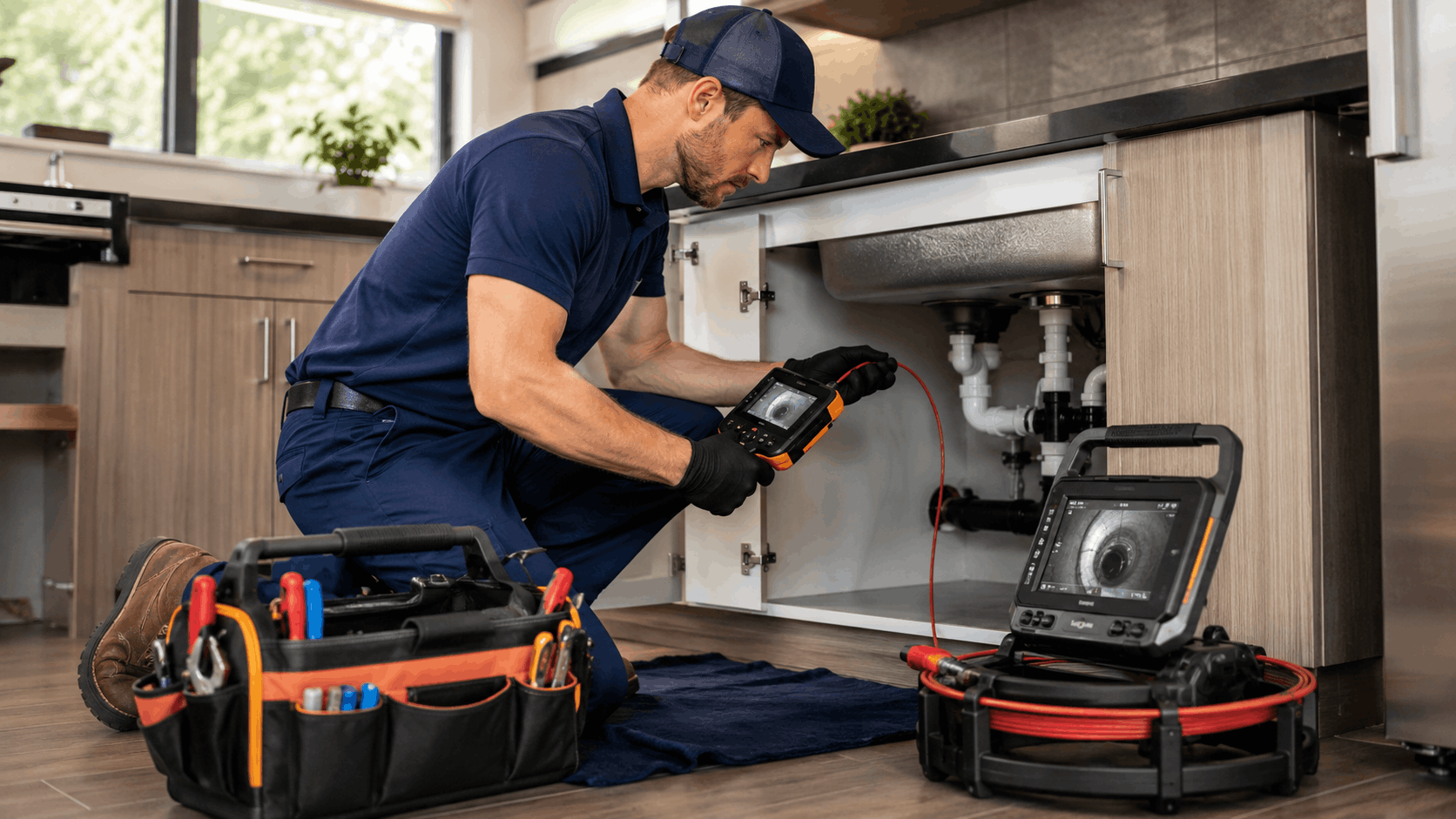
When our team arrives, the process is straightforward. We confirm the pattern, open the cleanout, and often run a sewer camera to see exactly what is happening inside the line before we choose a clearing method.
Warning Signs You Should Not Wait On
Some symptoms mean call today, not tomorrow. A sewage backup coming up through a floor drain, tub, or toilet is the clearest one. Raw sewage in the home is a health hazard and needs same-day attention.
Multiple fixtures overflowing at once is another red flag. If flushing a toilet pushes water out of the shower, or several drains are spilling over, the main line is blocked and every drop of water added makes it worse.
A cleanout that overflows when you open it, or a strong sewage smell filling the house, both call for immediate help. These point to a full main line stoppage that will not resolve on its own. Our emergency plumbing team handles these calls day and night.
When in doubt, shut off water use and call. It is far cheaper to clear a main line than to clean up sewage that has soaked into flooring and drywall.
How a Camera Inspection Pinpoints the Blockage
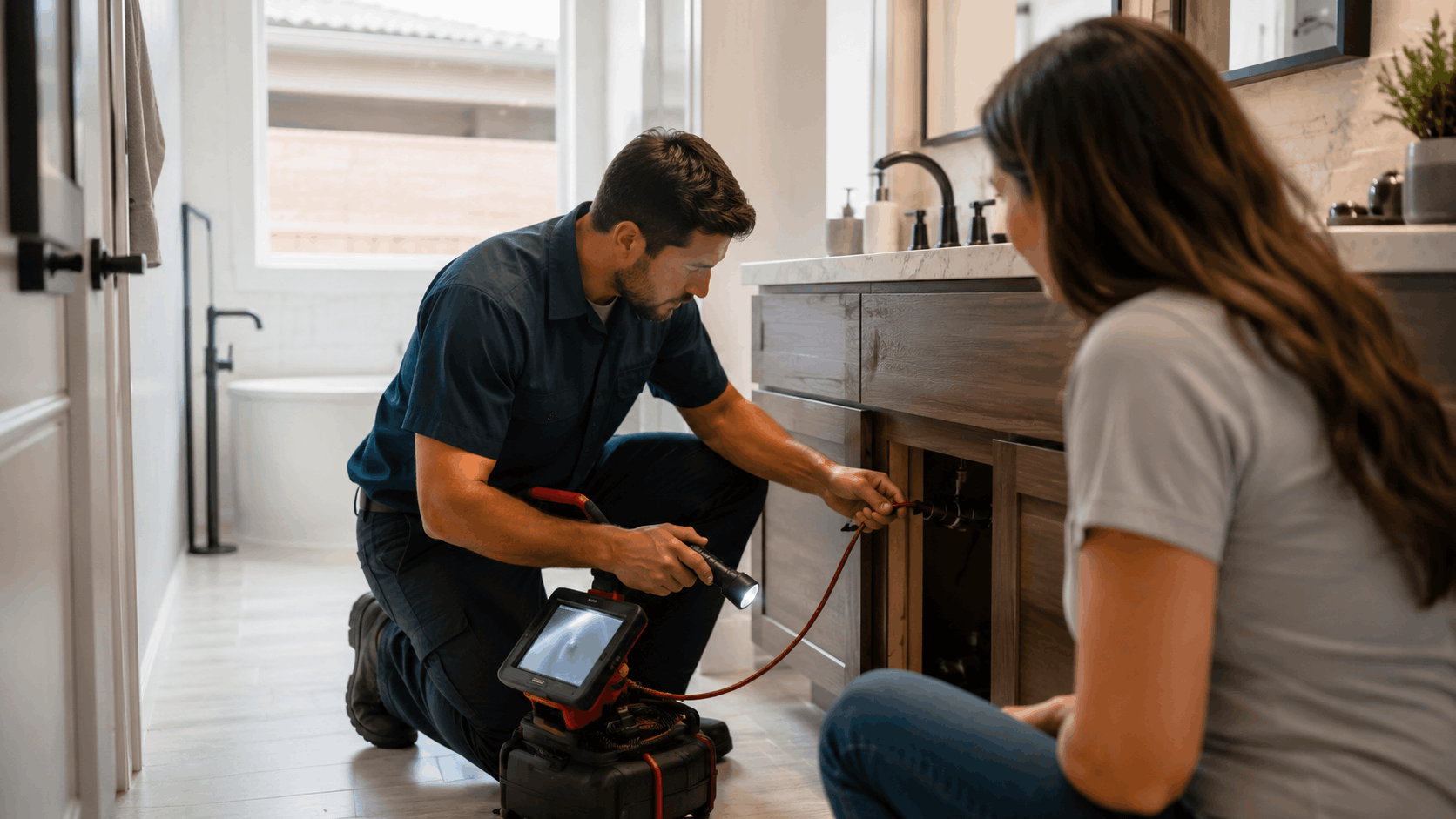
A sewer camera takes the guesswork out of diagnosis. We feed a waterproof camera on a flexible cable down the cleanout and into the line, watching a live screen as it travels toward the sewer. Nothing hides from it.
The camera shows the exact clog location and what caused it. We can see a root mass, a grease plug, a collapsed section, or an offset joint, and measure how far down the line it sits. That tells us whether snaking, jetting, or repair is the right move.
Pinpointing the blockage saves money. Instead of digging or guessing, we know precisely where and what the problem is before any repair starts. Our sewer camera inspection is often the smartest first step on a repeat clog.
The footage also gives you a record. If you are buying or selling a Henderson home, a camera pass through the main line documents its real condition better than any guess.
How Active Plumbing Serves Henderson Neighborhoods
Our team works across Henderson every day, from Green Valley Ranch to Anthem to Seven Hills. We know the housing stock in each area, the common pipe materials, and the drain trouble each neighborhood tends to see.
In Green Valley Ranch we handle a mix of hard water buildup and the occasional root issue in older sections. Up in Anthem and Seven Hills, the terrain and newer construction bring their own settling and grading challenges that show up in the sewer line.
On a typical visit, we confirm the symptoms with you, open the cleanout, run the toilet and multi-fixture checks if needed, and camera the line when the picture is not clear. Then we lay out the fix and the cost before doing any work.
You can reach our team through the contact page or see everything we cover across the region on our Henderson service area page.
Fixes and Costs for Main Line vs Branch Problems
Once we know where the clog lives, the repair path becomes clear. Drain repair cost depends heavily on whether the problem is a simple branch clog or a main line issue that needs hydro jetting or pipe work. Here is a rough breakdown so you can plan.
| Fix | Best For | Typical Cost Range | Time |
|---|---|---|---|
| Snaking a branch line | Single clogged branch | $100 - $300 | 1 hour |
| Snaking the main line | Soft main line clog | $200 - $500 | 1 to 2 hours |
| Hydro jetting | Grease, roots, heavy buildup | $400 - $900 | 2 to 4 hours |
| Pipe repair or replacement | Cracked or collapsed line | $1,500 - $8,000+ | 1 to 3 days |
These are general ranges for the Henderson area. The exact number depends on access, depth, and how bad the blockage or damage turns out to be.
Snaking a Branch Line
Snaking is the go-to for a single branch clog. We feed a motorized cable, called a drain snake or auger, into the affected line and spin it through the blockage to break it up and pull it out.
For a straightforward branch clog cost usually lands in the $100 to $300 range, and the job often takes under an hour. A kitchen drain packed with grease or a bathroom line clogged with hair clears quickly this way.
Drain snaking works best on soft, localized clogs. It punches a hole through the blockage and restores flow, though it may leave some buildup clinging to the pipe walls behind it.
If a branch clogs again soon after snaking, that is a sign the pipe has heavy scale or a defect. At that point a camera look or a jetting pass makes more sense than snaking it a third time.
Hydro Jetting a Main Sewer Line
Hydro jetting is the heavy hitter for main line cleaning. We send a specialized hose down the line that blasts water at very high pressure, scouring the pipe walls clean of grease, roots, and years of mineral scale.
Unlike a snake that pokes a hole through a clog, jetting clears the pipe wall to wall. That makes it the right call for a main line packed with grease or invaded by fine roots, and the results last far longer than snaking alone.
Main line jetting in the Henderson area generally runs $400 to $900 depending on line length and severity. Our hydro jetting and rooter service handles the toughest whole-house backups.
Jetting is also a strong maintenance tool. For homes with a history of root or grease problems, a periodic jetting keeps the main sewer line open and heads off the next emergency.
Repairing or Replacing Damaged Pipe
Sometimes the line is broken, not just clogged. A camera might reveal a cracked section, a collapsed pipe, or a joint the roots have destroyed. Cleaning cannot fix a physical defect, so the damaged section needs repair or replacement.
Traditional replacement means digging a trench to expose and swap the pipe. Trenchless repair is often the better option, using methods like pipe lining or pipe bursting that fix the line with far less digging in your yard.
Pipe replacement cost varies widely, from around $1,500 for a short accessible repair to $8,000 or more for a full main line under a driveway. The camera inspection tells us which scenario you are facing before you commit.
Trenchless repair usually costs more per foot than open digging but saves your landscaping, patio, and driveway from being torn up. On a long or deep run, that trade often comes out ahead.
Preventing Repeat Backups
The cheapest clog is the one that never happens. Good drain maintenance habits keep Henderson pipes flowing between service visits and stretch the years between clogs. Small changes make a big difference.
Keep grease out of the kitchen sink entirely. Wipe greasy pans with a paper towel and toss it in the trash, since even warm grease hardens once it hits the cooler pipe. Use strainers in every drain to catch hair and food scraps before they get in.
Only flush toilet paper. Wipes labeled flushable do not break down and are a leading cause of branch clogs in local homes. A water softener also cuts the mineral scale that narrows pipes over time.
For homes with a root history, schedule a jetting or camera check every year or two to prevent backups before they start. A little planned maintenance beats an emergency call every time.
Need Help in Las Vegas?
Active Plumbing serves Las Vegas and all of Las Vegas Valley.
Final Thoughts
When every drain in your Henderson home slows at once, the pattern is doing you a favor. It tells you the trouble sits in a shared pipe, and a few simple checks can point you toward a branch line or the main sewer line before anyone shows up.
Run the toilet test, watch the lowest fixtures, and open the cleanout to look for standing water. Skip the chemical cleaners, stop adding water once a drain backs up, and note which fixtures fail and where. That information turns a stressful backup into a solvable problem.
When the signs point to a main line clog or a repeat problem you cannot beat, our team is ready. Call Active Plumbing or reach out through our contact page for a diagnosis, a camera inspection, and a clear plan to get your drains flowing again.
Frequently Asked Questions
Why are all my drains slow at the same time?
Simultaneous slow drains almost always point to a shared pipe problem rather than one clogged fixture. Usually the blockage sits in the main line that carries waste from the whole house to the sewer. When that pipe restricts, water from every fixture piles up behind it, so many drains act up at once. It rarely means a dozen separate clogs formed on the same day.
How can I tell if it is a main line or branch line clog?
Run a few quick tests. Turn on a sink and watch a nearby toilet, a main line clog makes the toilet bubble or change level. Then run fixtures in different rooms. If everything backs up, suspect the main line. If only one bathroom or the kitchen struggles while the rest drain fine, it is a branch. A dry, clear cleanout also points to a branch problem.
Where is my sewer cleanout in a Henderson home?
Most Henderson homes have the cleanout within a few feet of the foundation or along the side yard on the path toward the street. Look for a short capped pipe, often white PVC, sometimes tucked in a shrub bed or lightly buried. Some older properties keep it inside the garage or hidden underground. If you cannot find it, our crew will locate it during a visit.
Are chemical drain cleaners safe to use?
We advise against them. Harsh chemical drain cleaners rarely clear a real main line or heavy branch clog, and the caustic liquid pools on top of the blockage. There it can corrode older pipe and burn anyone who opens the line later. On a main line clog the chemicals do nothing useful and only create a dangerous puddle. Mechanical clearing like snaking or jetting is safer and more effective.
How much does it cost to clear a clogged main line?
In the Henderson area, snaking a main line generally runs $200 to $500, while hydro jetting for grease, roots, or heavy buildup usually lands between $400 and $900. The exact cost depends on line length, how bad the blockage is, and access to the cleanout. If a camera finds a cracked or collapsed pipe, repair costs run higher and depend on the method used.
Can tree roots really block my sewer line?
Yes, and they are a top cause of repeat clogs in older Henderson neighborhoods like Pittman and areas near Water Street. Roots from mature trees seek moisture and slip into small cracks or loose joints in aging clay or cast iron lines. Once inside, they grow into a mesh that catches waste and blocks flow. Cleaning clears them for a while, but sealing the pipe is the real fix.
Is a slow drain an emergency?
It depends on the severity. A single slow drain that still moves water can usually wait for a scheduled visit. But if multiple fixtures are backing up, a toilet or tub is overflowing, or sewage is coming up through a floor drain, treat it as an emergency and stop using water. Those signs point to a fully blocked main line that will only get worse.
How long does a drain diagnosis and repair take?
A diagnosis with a camera inspection usually takes 30 to 60 minutes. Snaking a branch line often finishes within an hour, and clearing a main line runs one to two hours. Hydro jetting takes two to four hours depending on the buildup. Larger repairs, like replacing a cracked or collapsed pipe, can take one to three days depending on the method and depth.
Does a camera inspection cost extra?
A camera inspection is often used when the problem is unclear, keeps coming back, or when we suspect a break in the line. In many cases the inspection is folded into the overall service, especially when it guides a repair. We explain any camera charge up front before we run it, so you always know the cost before work begins.
How can I keep my drains from clogging again?
Keep grease out of the sink, use strainers to catch hair and food, and flush only toilet paper. A water softener slows the mineral scale that narrows Henderson pipes over time. If your home has a history of root problems, schedule a jetting or camera check every year or two. These small habits prevent most repeat backups and save you from emergency calls.
Frequently Asked Questions
- Why are all my drains slow at the same time?
- Simultaneous slow drains almost always point to a shared pipe problem rather than one clogged fixture. Usually the blockage sits in the main line that carries waste from the whole house to the sewer. When that pipe restricts, water from every fixture piles up behind it, so many drains act up at once. It rarely means a dozen separate clogs formed on the same day.
- How can I tell if it is a main line or branch line clog?
- Run a few quick tests. Turn on a sink and watch a nearby toilet, a main line clog makes the toilet bubble or change level. Then run fixtures in different rooms. If everything backs up, suspect the main line. If only one bathroom or the kitchen struggles while the rest drain fine, it is a branch. A dry, clear cleanout also points to a branch problem.
- Where is my sewer cleanout in a Henderson home?
- Most Henderson homes have the cleanout within a few feet of the foundation or along the side yard on the path toward the street. Look for a short capped pipe, often white PVC, sometimes tucked in a shrub bed or lightly buried. Some older properties keep it inside the garage or hidden underground. If you cannot find it, our crew will locate it during a visit.
- Are chemical drain cleaners safe to use?
- We advise against them. Harsh chemical drain cleaners rarely clear a real main line or heavy branch clog, and the caustic liquid pools on top of the blockage. There it can corrode older pipe and burn anyone who opens the line later. On a main line clog the chemicals do nothing useful and only create a dangerous puddle. Mechanical clearing like snaking or jetting is safer and more effective.
- How much does it cost to clear a clogged main line?
- In the Henderson area, snaking a main line generally runs $200 to $500, while hydro jetting for grease, roots, or heavy buildup usually lands between $400 and $900. The exact cost depends on line length, how bad the blockage is, and access to the cleanout. If a camera finds a cracked or collapsed pipe, repair costs run higher and depend on the method used.
- Can tree roots really block my sewer line?
- Yes, and they are a top cause of repeat clogs in older Henderson neighborhoods like Pittman and areas near Water Street. Roots from mature trees seek moisture and slip into small cracks or loose joints in aging clay or cast iron lines. Once inside, they grow into a mesh that catches waste and blocks flow. Cleaning clears them for a while, but sealing the pipe is the real fix.
- Is a slow drain an emergency?
- It depends on the severity. A single slow drain that still moves water can usually wait for a scheduled visit. But if multiple fixtures are backing up, a toilet or tub is overflowing, or sewage is coming up through a floor drain, treat it as an emergency and stop using water. Those signs point to a fully blocked main line that will only get worse.
- How long does a drain diagnosis and repair take?
- A diagnosis with a camera inspection usually takes 30 to 60 minutes. Snaking a branch line often finishes within an hour, and clearing a main line runs one to two hours. Hydro jetting takes two to four hours depending on the buildup. Larger repairs, like replacing a cracked or collapsed pipe, can take one to three days depending on the method and depth.
- Does a camera inspection cost extra?
- A camera inspection is often used when the problem is unclear, keeps coming back, or when we suspect a break in the line. In many cases the inspection is folded into the overall service, especially when it guides a repair. We explain any camera charge up front before we run it, so you always know the cost before work begins.
- How can I keep my drains from clogging again?
- Keep grease out of the sink, use strainers to catch hair and food, and flush only toilet paper. A water softener slows the mineral scale that narrows Henderson pipes over time. If your home has a history of root problems, schedule a jetting or camera check every year or two. These small habits prevent most repeat backups and save you from emergency calls.
A
Licensed plumbing professionals serving Las Vegas and Las Vegas Valley.
Licensed in Nevada · License #0047021
Last updated on
Why trust Active Plumbing?
Founded in 1991, Active Plumbing is a licensed and insured plumber serving Las Vegas and Las Vegas Valley. All content is reviewed by our licensed technicians.

Need Help in Las Vegas?
Active Plumbing serves Las Vegas and all of Las Vegas Valley.
Related Articles
How-To Guides
No Hot Water in Henderson This Morning - Gas vs Electric Triage Before You Call
No hot water in Henderson this morning? Learn how to tell gas from electric, run safe triage checks, and know when to call Active Plumbing for help.
How-To Guides
Repiping a Las Vegas Home While Living In It - The Real 3-5 Day Timeline, Walls, and Dust
The honest 3-5 day timeline for repiping a Las Vegas home while living in it - which walls open, how dust is controlled, and how families keep water running.
How-To Guides
Whole-House Repipe in Green Valley Henderson: Two-Story Logistics and HOA Parking
A local guide to whole-house repiping in Green Valley Henderson, covering two-story pipe logistics, HOA parking rules, timelines, costs, and how to choose a crew.