How Much Does a Repipe Cost in Sun City Summerlin?

Looking for a Plumber? Contact Us Now
Open 24/7. Written price before work starts.
Get Your Quote
Tell us what's going on and we'll get back to you. We're open 24/7.

Key Takeaways
- A whole-house repipe in the Las Vegas Valley typically runs $4,000 to $15,000, with the final figure given in writing after seeing the home.
- Home size, number of bathrooms and fixtures, supply runs, and wall access are the main drivers that move the price within that range.
- Del Webb built the earliest Sun City Summerlin phases from 1989 with copper, which now develops pinhole leaks on hot lines and under-slab runs.
- One leak is a repair, but repeat pinholes across the same copper mean the pipe has aged out and a repipe stops the cycle.
- Very hard water at 280 ppm, about 16 grains per gallon, adds scale that narrows pipe and clogs fixtures over the years.
- Interior repipe work usually needs no HOA review, but exterior-visible work can, and the building permit depends on whether the address sits in the City of Las Vegas or Clark County.
- Older homeowners should verify any contractor's license free at nvcontractorsboard.com, demand a written price, and never decide on the doorstep.
- Active Plumbing is a fourth-generation family business licensed since 1991, NSCB #0047021, arriving in 30 to 60 minutes across the valley.
In This Article
Imagine a couple who moved into one of the earliest Del Webb phases of Sun City Summerlin back when the community was brand new. Thirty-five years later, they are on their third water heater, and now a damp spot has appeared on the hall ceiling. The copper that was fine for decades has started to weep, and a plumber has mentioned the word repipe. The first question they ask is always the same: what is this going to cost?
A whole-house repipe in the Las Vegas Valley typically runs $4,000 to $15,000. Where a specific home lands inside that range depends on its size, how many bathrooms and fixtures it has, how many supply runs need replacing, and how easy it is to reach the pipe behind finished walls. That is a typical area range, not a quote. The real number comes after someone looks at the home.
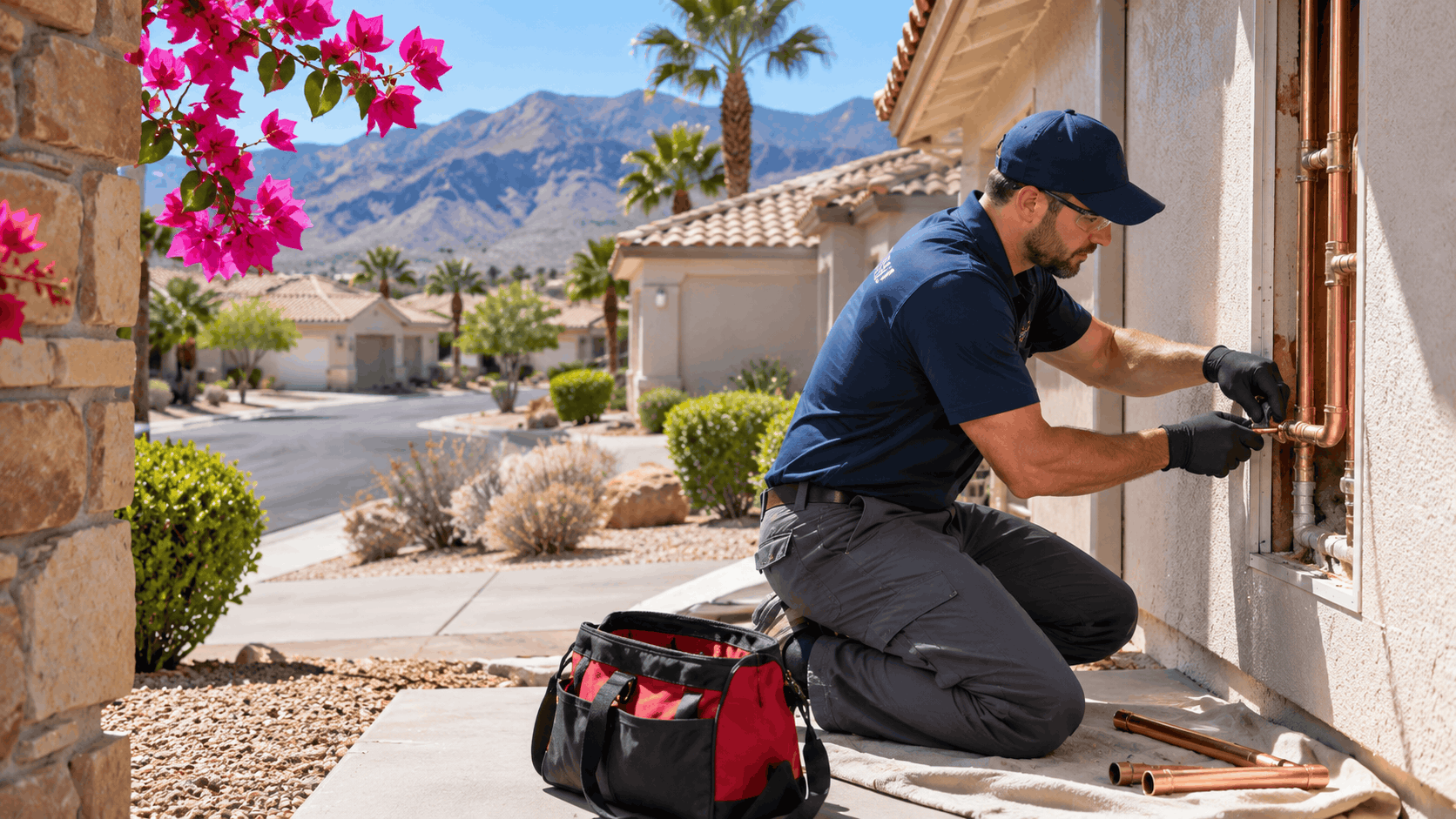
What a Repipe Costs in Sun City Summerlin?
A repipe replaces the supply piping that carries water through a home, from the point it enters to each fixture. On an older Sun City Summerlin house, that usually means swapping out original copper for new pipe run through the walls and attic. The price moves within a known range depending on the house itself.
Below is how the typical whole-house repipe range breaks down against the factors that move it. Treat these as area ranges, not a fixed figure for any one home.
| Factor | Pushes Toward Low End | Pushes Toward High End |
|---|---|---|
| Home size | Single story, smaller footprint | Larger floor plan, long runs |
| Bathrooms and fixtures | One or two bathrooms | Multiple baths, extra fixtures |
| Supply runs | Fewer lines to replace | Many separate runs |
| Access | Open attic, easy wall access | Finished walls and ceilings |
| Restoration | Minimal patching | Extensive drywall and paint |
The Typical Whole-House Repipe Range
For a full repipe across the Las Vegas Valley, the typical range is $4,000 to $15,000. That span exists because homes are not the same. A compact single-story house with two bathrooms sits near the lower figure, while a larger home with several baths and long pipe runs climbs toward the upper figure.
This is a typical market range for the area, not a fixed price from our team and not a quote. We publish it so a resident knows the ballpark before anyone comes out. It helps a homeowner tell the difference between a fair conversation and a number that is far outside what the work should cost.
Sun City Summerlin homes tend to share a build era and a construction style, which narrows the guesswork somewhat. Still, two houses on the same street can price differently once you account for fixtures and access. Our whole-house repipe service is priced after we see the home, not before.
What Puts a Home at the Low End vs the High End
The number of bathrooms is one of the biggest drivers. Each bathroom adds supply lines to the sink, toilet and shower or tub, and more lines mean more pipe, more fittings and more labor. A home with one full bath is a very different job from one with three.
Total fixture count matters too. Kitchen sinks, laundry connections, utility sinks, outdoor hose bibbs and any extra wet bar or secondary kitchen all add runs. Longer distances between the water entry and the far corners of the house also add material and time.
Access is the quiet factor that surprises people. An open attic with clear routes lets a crew run new pipe quickly. Finished walls, tiled bathrooms and ceilings that have to be opened and then patched push the job toward the higher end because restoration becomes part of the total.
Why a Written Price Beats a Phone Estimate
No honest repipe price comes over the phone. Until someone walks the home, counts the fixtures, checks the attic access and confirms what pipe is actually in the walls, any number is a guess. Two homes that sound identical on a call can price hundreds or thousands apart once seen.
Active Plumbing gives a written price before any work starts. For an older couple in Sun City Summerlin, that written price can be read at leisure, set on the kitchen table and talked through with family before a decision is made. That matters more here than almost anywhere.
A written, itemized price also protects the homeowner. It shows what is included, so there are no surprises when the invoice arrives. It is the difference between a real plan and a verbal figure pushed to get a signature on the spot.
Get Your Quote
Tell us what's going on and we'll get back to you. We're open 24/7.
Why Original Copper in Sun City Summerlin Reaches the End of Its Life?
Repipes come up in this community for a specific reason. Del Webb built the earliest phases from 1989 with copper supply lines, and copper of that age starts to develop pinhole leaks. Once the metal thins in one spot, it tends to thin in others, because the whole system has lived the same years in the same water.
Copper is a good, long-lasting material, which is why it was used across so many valley homes in the middle decades. But no supply pipe lasts forever. After thirty-five years, the hot lines and the runs under the slab are where thinning shows up first, and a single pinhole is often the opening act.
A 35-Year-Old Community and What That Does to Pipe
Sun City Summerlin is the oldest part of Summerlin by a clear margin. While newer Summerlin villages date from the 2000s and 2010s, the earliest Del Webb phases are thirty-five years old. That makes this the Summerlin address where original equipment and fittings have genuinely aged out.
Pipe does not fail on a calendar date, but age sets the stage. Copper that has carried very hard water for decades has seen constant internal wear. The fittings, the solder joints and the thinner sections of tube all reach the end of their useful life around the same window.
This is why repipes cluster in communities like this one rather than in tracts built fifteen years ago. The homes in Summerlin span many build eras, but the original Sun City phases are the ones where the plumbing has done its full tour of duty.
Slab-on-Grade and Under-Slab Supply Runs
Homes here are slab-on-grade, which means the house sits on a concrete slab poured on the ground, with some supply lines running beneath it. When copper fails below the slab, that is a distinct repair category, not a simple wall patch. The leak is under concrete, so detection and access both take more work.
Once an under-slab line is confirmed to be leaking, there are two common paths. One is to break through the slab to reach and repair the line in place. The other is to abandon that under-slab run and reroute a new line overhead through the walls and attic.
On an aging copper system, rerouting overhead often makes more sense than opening the slab for a single spot, because the next pinhole may be a few feet away. Our slab leak detection and repair team pinpoints the failure first so the homeowner can weigh breaking the slab against rerouting.
How Very Hard Water Wears on the System
The Southern Nevada Water Authority states the valley's water is 280 parts per million, or 16 grains per gallon, categorized as very hard. That hardness is minerals, mainly calcium and magnesium, carried in the water that most valley homes receive from Lake Mead through SNWA treatment.
Over years, those minerals deposit as scale. Scale narrows the inside bore of supply lines, which chokes flow a little at a time. It clogs aerators and shower heads, and it builds up in the small passages inside mixing valves and faucet cartridges.
On a system that is already decades old, hard water adds strain on top of age. It does not cause copper pinholes by itself, but it does leave an older house with weaker flow, scaled fixtures and a water heater working harder than its rated life. Treatment reduces that burden, which is why many repipe conversations include a water treatment discussion.
Where Pinhole Leaks Show Up First
Hot water lines tend to fail before cold lines, because heat accelerates the chemistry inside the pipe. Under-slab runs are the other common early failure point, since they are harder to inspect and sit in constant contact with the ground. A homeowner often hears the first pinhole before seeing it, as a hiss or a higher water bill.
The first leak gets patched, and that is reasonable. The problem starts when a second and third pinhole appear on the same copper within months. At that point, the system is telling you the metal has thinned broadly, not in one unlucky spot.
That is the moment the repipe-versus-patch decision becomes real. Chasing individual leaks across a failing system costs more over time than replacing the supply piping once. Repeat leaks on aging copper are the signal that patching has stopped paying off.

Need Help in Las Vegas?
Active Plumbing serves Las Vegas and all of Las Vegas Valley.
Signs a Sun City Summerlin Home Needs a Repipe
Deciding between one repair and a whole-house repipe comes down to a few signals we check on older homes in this community. Any one of them can be a simple fix. Several of them together, on a thirty-five-year-old copper system, point to a pipe at the end of its life.
Here is a quick way to read the signs, from a single repair to a system that has aged out.
| What You Notice | Likely Meaning | Next Step |
|---|---|---|
| One pinhole leak | Isolated repair | Patch and monitor |
| Second or third pinhole | Pipe aging out | Consider repipe |
| Low flow at several fixtures | Scale or regulator | Check pressure and aerators |
| Discolored water | Corrosion inside pipe | Inspect the system |
| Pressure drops when two taps run | Narrowed bore or regulator | Pressure check |
Repeat Pinhole Leaks on the Same System
One leak is a repair. Copper can develop a single weak point for local reasons, and fixing that one spot is the right call. We patch it, confirm the line holds and move on.
A second or third pinhole on the same copper is a different story. When leaks start repeating across the system, the metal has thinned broadly from decades of service, not in one bad patch. The next failure is usually waiting a short distance away.
For a homeowner, repeat leaks are the clearest sign the pipe has reached the end of its service life. At that point, spending on another spot repair is money chasing a problem that keeps moving. A repipe stops the cycle.
Pressure and Flow Problems Across the House
Weak flow at the showers and faucets is a common complaint in older homes. When scale narrows the inside of the supply lines over years, less water gets through, and the pressure feels soft even when the city supply is fine. Clogged aerators and shower heads make it worse.
Discolored water is another warning. A rusty or cloudy tint can mean corrosion inside the pipe, which tracks with an aging system. It is worth having the system looked at rather than ignored.
Pressure that drops sharply when more than one fixture runs is telling too. If the shower loses pressure the moment someone starts the kitchen faucet, the bore may be narrowed by scale, or a worn pressure regulator may be the culprit. Sorting out which one it is comes next.
The Incoming Pressure Check That Belongs on Every Visit
A two-minute incoming pressure check belongs on every visit to an older home. We put a gauge on an outside hose bibb and read the pressure coming into the house. That single reading tells us a lot about whether the problem is the pipe or the regulator.
Pressure regulators wear out over time. They can creep high, which stresses the whole system and fixtures, or they can drop, which leaves the house with weak flow everywhere. A worn regulator mimics a pipe problem, so checking it first saves a homeowner from an unneeded repipe.
If the incoming pressure and regulator are fine but flow is still poor across the house, the narrowing is inside the pipe itself. That points back toward scale and aging copper. The check is quick, cheap and keeps the diagnosis honest.
When to Consider Cheap Before Expensive
For a resident weighing cost, especially on a fixed income, the honest order is cheap before expensive. Start by cleaning the aerators and shower heads, since scale there is a frequent and free-to-fix cause of weak flow. It is the first thing to rule out.
Next, check the incoming pressure and the regulator, and flush the water heater if it has not been done. A tank left unflushed in this water works harder and fails earlier than its rated life, so flushing is a small step with real payoff. These moves cost little and solve many complaints.
Only move to a repipe when leaks keep returning across the system. If the cheap steps fix the issue, there is no need for the expensive one. If pinholes keep coming back after the easy checks, the pipe is the problem, and a repipe is the fix that lasts.
What Drives the Repipe Price Up or Down?
Once a repipe is the right call, the price lands somewhere inside the typical $4,000 to $15,000 range based on a handful of practical factors. Understanding them helps a homeowner read their quote and see what it is built on. None of these are mysteries, and a good plumber will walk through each one.
The main drivers are home size and fixtures, access and restoration, the chosen pipe route, and the permit steps. Each one moves the number up or down.
Home Size, Fixtures and Number of Runs
More bathrooms, more fixtures and longer supply runs all mean more pipe and more labor. That is the single biggest reason two homes on the same street can price differently even when they look similar from the curb. One may have an extra bath or a wet bar the other does not.
Every fixture is a destination the water has to reach. Each sink, toilet, shower, tub, laundry hookup and outdoor bibb adds a run, fittings and connections. The crew has to route, secure and test each one, so the labor scales with the count.
Distance adds up as well. A sprawling single-story floor plan can carry longer runs than a compact two-story, and longer runs mean more material and more time in the walls and attic. This is why fixture count and footprint sit at the top of the cost list.
Access, Drywall and Restoration
Open attic access is a cost saver. When the crew can move freely above the ceilings and route new pipe without opening much drywall, the labor stays lower. Many single-story homes in this community offer reasonable attic routes.
Finished walls and ceilings raise the price. Where pipe has to cross a tiled bathroom wall or a finished ceiling, those surfaces have to be opened to run the new line. That adds labor on the front end and restoration on the back end.
Patching and painting the drywall after the repipe is part of the total cost picture, and it should be in the written price. A repipe is not finished when the water flows again. It is finished when the walls are closed up and the home looks right. Our pipe and fixture work accounts for that restoration from the start.
Repiping Overhead vs Breaking the Slab
On a slab-on-grade home, there are two common routes for new supply lines. The first is rerouting overhead, running fresh pipe up through the walls and across the attic to each fixture, which leaves the slab untouched. The second is opening the slab to replace lines in their original path.
Rerouting overhead is often the less disruptive choice. It avoids jackhammering concrete, keeps the mess higher up and lets the crew abandon failing under-slab copper rather than trying to resurrect it. For many older homes here, that is the practical path.
Breaking the slab has its place, but it adds disruption and cost, since concrete has to be cut, removed and later restored. The right route depends on where the lines run and what the home allows. We lay out both options with their cost and disruption before any pipe is cut.
Permits and Inspection
Permitted work adds permit and inspection steps that affect timing, with fees set by the jurisdiction for the address. A repipe that requires a permit will include a scheduled inspection, which has to be worked into the calendar. Confirm the current fees and steps with the building department for the address.
Work requiring a permit must be performed by an appropriately licensed contractor. A homeowner is entitled to ask for a license number and verify it. The permit and inspection exist to confirm the work meets the local plumbing code, which is the Southern Nevada Amendments to the Uniform Plumbing Code as codified by the governing jurisdiction.

HOA Approval and Permits in Sun City Summerlin
A repipe in this community can involve two separate tracks. One is the community association review, which applies to anything visible on the exterior. The other is the building permit from the jurisdiction that governs the address. They are different processes, and where both apply, each runs on its own.
Sorting out which tracks apply before work starts saves time and avoids a trip to the wrong counter. For an interior repipe with no exterior change, the picture is simpler than many residents expect.
Confirming City of Las Vegas vs Clark County
Summerlin spans both the City of Las Vegas and unincorporated Clark County, and the boundary is not obvious from the street. The applicable building department depends on the address, not on the community name. Going to the wrong permit counter loses time.
The Sun City Summerlin community association map shows the village within City of Las Vegas limits, bounded by the 215 Beltway on the north, Lake Mead Boulevard on the south, North Rampart Boulevard on the east and Summerlin Parkway on the west. For most addresses inside those boundaries, the City of Las Vegas is the permit authority.
Even so, the right step is to confirm the jurisdiction for the specific address before quoting permitted work. We establish that first on every job in Las Vegas, so the permit position is confirmed for the home rather than assumed from the neighborhood name.
When Association Review Applies
Interior repipe work generally does not need association review. Replacing supply lines inside the walls and attic changes nothing a neighbor can see, so the architectural standards usually do not come into play for the piping itself.
Review applies to what shows on the outside. The community association governs under Nevada Revised Statutes Chapter 116 with architectural standards covering exterior appearance. Anything visible on a street-facing elevation, such as exterior reroute piping or a visible treatment system, can require approval under those standards.
Golf course frontage on many lots adds yard and irrigation considerations alongside the house system, since Golf Summerlin runs three courses here. If a repipe touches anything on the exterior of a street-facing or course-facing elevation, it is worth checking the architectural standards before the work goes in.
Two Separate Tracks, Two Separate Timelines
Association approval and a building permit are separate processes where both apply. One does not substitute for the other. An exterior change might need the association's sign-off and the city's permit, each on its own schedule.
Because the two tracks run independently, their timelines are independent too. Association review can add time on top of the permit process, so planning for both matters when a project touches the exterior. Interior-only work typically keeps to the permit track alone.
The practical move is to confirm the current steps with the community association and with the building department for the address. Rules and timelines change, so checking both before scheduling keeps the project on track and avoids a stalled job.
Need Help in Las Vegas?
Active Plumbing serves Las Vegas and all of Las Vegas Valley.
Related Costs Worth Planning For
A repipe rarely travels alone on an older Sun City Summerlin home. While the walls are open and the system is being worked on, several related jobs often make sense to handle at the same time. Budgeting for the whole picture avoids surprises, and these are typical area ranges, not quotes.
Here are the related jobs that commonly come up, with the typical ranges so a homeowner can plan.
| Related Work | Typical Range |
|---|---|
| Slab leak detection | $150 to $300 |
| Slab leak repair | $500 to $3,000 |
| Tank water heater installation | $800 to $1,500 |
| Water heater repair | $150 to $500 |
| Water softener installation | $800 to $2,500 |
| Salt-free water conditioning | $800 to $2,500 installed |
| Fixture installation | $150 to $400 |
Slab Leak Detection and Repair
Slab leak detection typically runs $150 to $300, and slab leak repair runs $500 to $3,000. Detection comes first, because finding exactly where an under-slab line is leaking determines what the repair involves. The spread in the repair range reflects how deep the fix goes.
On an aging copper system, a slab leak is often what starts the repipe conversation in the first place. Once a line has failed under the slab, the homeowner has to decide between chasing that one spot and replacing the supply piping. Detection gives them the facts to choose.
Our electronic leak detection pinpoints the leak without guesswork, so the repair is targeted. When repeat slab leaks show up, that detection work feeds directly into the repipe decision.
Water Heater, Expansion Tank and Shut-Off Valve
Tank water heater installation typically runs $800 to $1,500, and water heater repair runs $150 to $500. Many homes in this community are already on a second or third water heater, because original units are long gone. A tank left unflushed in this hard water works harder and fails earlier than its rated life.
Thermal expansion tanks fail silently and are routinely missed. A dripping relief valve on the water heater is frequently an expansion tank problem rather than a faulty valve. Checking the expansion tank while the system is open can head off a slow, hidden failure.
The main shut-off valve deserves attention too. A thirty-five-year-old valve that has never been turned often will not close when it is finally needed, and an older resident may not be able to force it. Replacing a seized main shut-off with one that operates easily is a small job with disproportionate value, and the water heater work and shut-off are natural to pair with a repipe.
Water Treatment to Protect New Pipe
Water softener installation typically runs $800 to $2,500, and salt-free water conditioning runs $800 to $2,500 installed. With water at 280 ppm, treatment reduces scale buildup on fixtures, in aerators and inside the water heater after a repipe. New pipe stays cleaner longer when the water going through it is treated.
A softener removes the hardness minerals, while a salt-free conditioner changes how the minerals behave so they are less prone to deposit as scale. Both cut the maintenance burden on an aging household, which matters where cleaning scaled fixtures is a recurring chore.
The honest framing is that treatment extends equipment life rather than being an optional luxury in this valley. After spending on a repipe, protecting the new system with treatment is a reasonable next step, especially if a water heater has already failed early once.
Accessibility Upgrades During the Same Visit
Fixture installation typically runs $150 to $400 per fixture. With the plumbing already being worked on and walls potentially open, it is a sensible time to add accessibility upgrades. Residents aging in place often take the opportunity.
Common additions include comfort-height toilets that are easier to sit and stand from, lever handles and single-lever mixers that arthritic hands can operate, and grab bars where plumbing is involved. Anti-scald protection and thermostatic mixing valves help where a resident is at risk of burns.
Doing this work during the repipe saves a second disruption later. Family members researching on a parent's behalf often ask about these upgrades, and they fit naturally into a project that already has the system open. Our fixture installation team can handle these alongside the repipe.

Protecting Yourself From Repipe Scams
Older homeowners are disproportionately targeted by unlicensed operators and high-pressure upselling. A repipe is a large job, which makes it a favorite of operators looking for a big ticket. The counter to that is concrete and simple, and residents of this community deserve it stated plainly.
Three protections cover most situations: verify the license, demand a written price before work starts, and refuse to decide on the doorstep. Each one is a right the homeowner already has.
Ask for the License Number and Verify It
Plumbing contractors in Nevada are licensed by the Nevada State Contractors Board. A customer is entitled to ask any plumber for the license number before agreeing to work. A legitimate contractor hands it over without hesitation.
That license is verified free at nvcontractorsboard.com, where classification, status, bond and workers compensation are all public record. A few minutes on that site tells a homeowner whether the company is real, current and covered for the work.
Verifying the license is the single strongest defense against the unlicensed trade. An operator who cannot or will not provide a number that checks out is a reason to stop. This valley has a significant unlicensed trade problem, which is exactly why the step matters here.
A Written Price Before Work Starts
A legitimate repipe comes with an itemized written price. That price can be read at leisure, set aside, and discussed with family before any decision. A written number is something a resident can compare, question and trust.
Compare that to a verbal figure pushed on the doorstep. A spoken number can change, can hide what is included, and leaves nothing to check later. The written price is the paper trail that protects the homeowner.
For an older household in particular, the written price is worth more than a fast verbal quote. It respects the way careful people make big decisions, by reading, thinking and talking it over. That is how a repipe this size should be handled.
No Decision Needed on the Doorstep
No honest plumber needs a decision made on the spot. A real repipe is planned work, scheduled after a proper look at the home, not something that must be signed before the plumber leaves. Anyone insisting otherwise is applying pressure for a reason.
High-pressure tactics are a reason to pause, not to sign. Phrases like a price that is only good today, or a problem that must be fixed this minute, are classic signs of an upsell. A genuine emergency is a leak to shut off, not a contract to rush.
Residents here talk to each other constantly through clubs and recreation centers, which is itself a defense. A contractor who does right by one household gets referred across the neighborhood, and one who pressures or overcharges gets talked about just as fast. Take the time the decision deserves.
Need Help in Las Vegas?
Active Plumbing serves Las Vegas and all of Las Vegas Valley.
How Active Plumbing Handles a Repipe in Sun City Summerlin
How a repipe is handled matters as much as the price, especially in an age-restricted community where clear work and kept promises get noticed. We work this community regularly and understand what residents expect from a plumber in their home.
Our approach starts with an honest diagnosis, runs through respectful work in the home, and rests on being local and licensed. Here is how that plays out on a Sun City Summerlin repipe.
On-Site Diagnosis and a Written Price
We confirm the pipe on site rather than assuming from the build year alone. The earliest Del Webb phases used copper, but the only way to be sure what is behind a given wall is to look. That confirmation shapes the whole plan.
Part of that visit is a check of the incoming pressure and the pressure regulator. If a worn regulator is behind weak flow, a homeowner should know that before committing to a full repipe. We would rather find the cheaper fix if it solves the problem.
Once the diagnosis is clear, we give a written price before any work starts. That price lays out the scope so a resident can read it, set it aside and talk it over with family. Nothing gets cut into before that number is understood and agreed.
Working Respectfully in an Age-Restricted Community
Scheduling that is actually kept matters here, because a resident may have arranged their whole day around the appointment. We treat the scheduled window as a commitment, not a suggestion. Showing up when we said we would is the baseline.
Clear explanation beats technical shorthand. We walk through what the work involves in plain language, without condescension, so the homeowner understands the plan and the choices. Family members helping with the decision get the same clarity.
Identification, tidiness and protecting floors are noticed and talked about in this well-networked community. We protect the home as we work and clean up after. Residents refer each other constantly, so doing the job right the first time is how trust spreads across the neighborhood.
Local, Licensed and Responsive
Active Plumbing is a fourth-generation family business that has served the Las Vegas Valley since 1991. We hold Nevada plumbing license NSCB #0047021, which anyone can verify free at nvcontractorsboard.com, along with the certifications required for the work we perform.
Our technicians arrive in 30 to 60 minutes anywhere in the Las Vegas Valley. For a single-occupant older household facing a leak, that response window is the difference between a managed problem and a flooded floor. Being local means we are not driving in from another county.
We know the loop roads like Del Webb Boulevard and Sun City Boulevard, the recreation centers at Mountain Shadows and Desert Vista, and the slab-on-grade homes that make up this community. That familiarity means less time orienting and more time solving the problem.
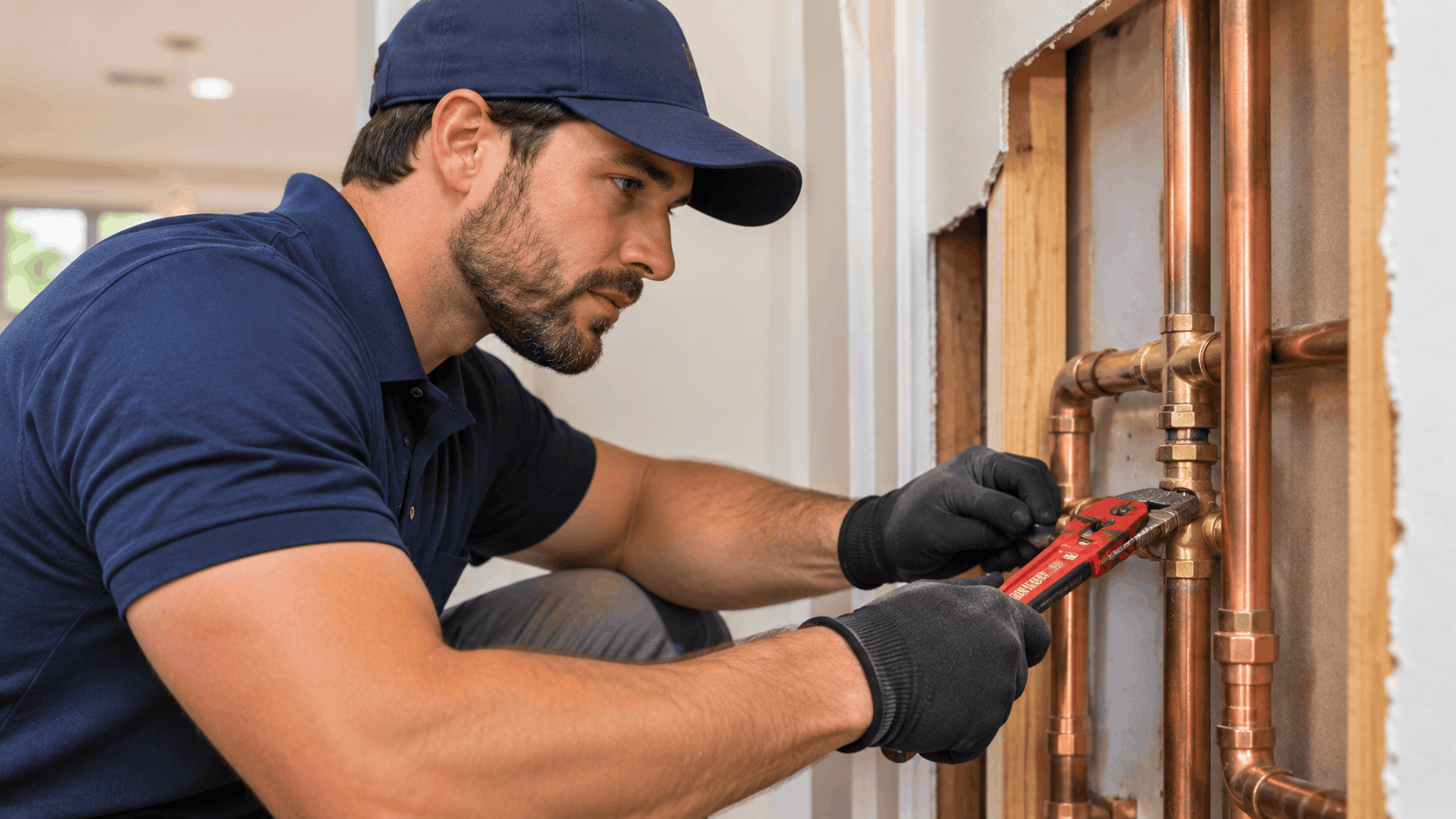
Planning Your Repipe With Active Plumbing
A repipe starts with an on-site look at the home, where we confirm the pipe, check the incoming pressure and give a written price before any work begins. If you are seeing repeat pinhole leaks or weak flow in an original Sun City Summerlin home, that is the time to call.
Reach Active Plumbing at (702) 438-3357 to schedule an assessment, or use our contact page. Our technicians cover the entire Las Vegas Valley and arrive in 30 to 60 minutes.
Frequently Asked Questions
- How much does a whole-house repipe cost in Sun City Summerlin?
- A whole-house repipe typically runs $4,000 to $15,000 across the Las Vegas Valley. Where a specific home lands depends on its size, number of bathrooms and fixtures, how many supply runs need replacing, and how easy the walls and attic are to access. That is a typical area range, not a quote. The actual price is given in writing after we see the home and confirm the pipe and the access.
- Why do copper pipes fail in older Sun City Summerlin homes?
- The earliest Del Webb phases date from 1989 and were built with copper supply lines. Copper of that age develops pinhole leaks, especially on hot water lines and under-slab runs where heat and ground contact speed the thinning. Very hard water at 280 ppm adds scale inside the pipe over the years, straining an already aging system. Once pinholes start repeating, the copper has usually reached the end of its service life.
- How long does a repipe take?
- It depends on the home size, the number of fixtures and how easy the access is. A compact single-story home with open attic access goes faster than a larger home with finished walls and tiled bathrooms that have to be opened. Finished walls also add restoration time, since drywall has to be patched and painted after. The exact timeline comes with the on-site assessment, once we have seen the layout and access.
- Do I need an HOA approval or permit for a repipe here?
- Interior repipe work generally does not need community association review, since nothing changes on the exterior. Exterior-visible work, like reroute piping or a treatment system on a street-facing elevation, can require approval under the architectural standards. A building permit comes from the jurisdiction for the address. Summerlin spans the City of Las Vegas and unincorporated Clark County, so confirm which department governs the specific home before quoting permitted work.
- Should the plumber break the slab or reroute the pipes?
- On a slab-on-grade home, both are options. Rerouting through the walls and attic avoids opening the slab and is often less disruptive, especially on an aging system where the next leak may be nearby. Breaking the slab replaces lines in their original path but means cutting and restoring concrete. The right choice depends on where the lines run and what the home allows, which we assess on site before any pipe is cut.
- Can I repair instead of repipe?
- A single leak is a repair, and we are happy to patch one isolated spot. But repeat pinholes across the same copper usually mean the pipe is at the end of its life, not that one spot was unlucky. When leaks keep returning, spot repairs stop paying off, because the next failure is already forming elsewhere. At that point a repipe stops the cycle and costs less over time than chasing moving leaks.
- Will a water softener help after a repipe?
- Yes. With valley water at 280 ppm, about 16 grains per gallon, a softener or scale reduction system cuts scale buildup and maintenance on new pipe, fixtures and the water heater. Treated water keeps aerators, shower heads and valves cleaner and reduces the strain on equipment. Water softener installation typically runs $800 to $2,500 , and salt-free water conditioning runs $800 to $2,500 installed .
- How do I check that a repipe contractor is licensed?
- Plumbing contractors in Nevada are licensed by the Nevada State Contractors Board. You can verify any license free at nvcontractorsboard.com, where the classification, status, bond and workers compensation are all public record. Ask for the license number before agreeing to work, and check it yourself. Active Plumbing holds Nevada license NSCB #0047021, which you are welcome to verify there.
- Does Active Plumbing give a price before starting?
- Yes. We give a written price before work begins, after confirming the pipe on site and checking the system, including the incoming pressure. That written price lays out the scope so a resident can read it at leisure and discuss it with family before deciding. Nothing is cut into until the number is understood and agreed. It is a business practice, not a guarantee.
- How fast can a plumber reach Sun City Summerlin?
- Our technicians arrive in 30 to 60 minutes anywhere in the Las Vegas Valley. For a single-occupant older household facing a leak, that response window matters, because a failing pipe or a seized shut-off valve becomes a situation quickly when one or two people are managing it alone. Knowing where the main shut-off is, and that it actually closes, buys time until we arrive.
Licensed plumbing professionals serving Las Vegas and Las Vegas Valley.
Licensed in Nevada · License #0047021
Last updated on
Why trust Active Plumbing?
Founded in 1991, Active Plumbing is a licensed and insured plumber serving Las Vegas and Las Vegas Valley. All content is reviewed by our licensed technicians.
Need Help in Las Vegas?
Active Plumbing serves Las Vegas and all of Las Vegas Valley.
Related Articles
How Much Does a Repipe Cost in The Hills or The Trails, Summerlin?
A whole-house repipe in Summerlin typically runs $4,000 to $15,000. Learn what drives the price, how village age shapes the job, and why the permit depends on the exact address.
Repipe and Fixture Upgrades in Sun City Summerlin: 55+ Community Scheduling and Code Updates
A local guide to repipes and fixture upgrades in Sun City Summerlin, covering warning signs, PEX vs copper, HOA scheduling, Clark County code, and real cost ranges.

Water Heater Replacement Cost in Sun City Summerlin for Late 1980s and 1990s Homes
What water heater replacement really costs in Sun City Summerlin homes from 1989 to the 1990s, shaped by unit type, the 2024 code, hard water, and City of Las Vegas permits.