Maintenance
Short-Term Rental Plumbing in Las Vegas: The Maintenance Schedule That Prevents Guest Disasters
Key Takeaways
- Las Vegas hard water from the LVVWD scales up fixtures and water heaters far faster than softer supplies, so descaling and water treatment matter more here.
- A five-minute turnover check of faucets, toilets, drains, and under-sink connections catches most small issues before the next guest arrives.
- A monthly routine covers the water heater, shut-off valves, unused fixture traps, and the water bill to catch hidden leaks early.
- Seasonal prep protects against summer heat on water heaters and condensate lines and guards exposed pipes during the few winter freezing nights.
- A yearly professional inspection with a water heater flush, sewer camera run, and pressure test is the backbone of the whole schedule.
- Most guest-caused disasters come from flushed wipes, disposal jams, and hair clogs, all reduced with good fixtures, signage, and a stocked plunger.
- A single mid-stay failure can cost a full refund, a bad review, and lost bookings that far exceed the cost of routine prevention.
- Active Plumbing builds recurring maintenance plans and keeps records for hosts across Summerlin, Henderson, Spring Valley, and the whole Las Vegas valley.
In This Article
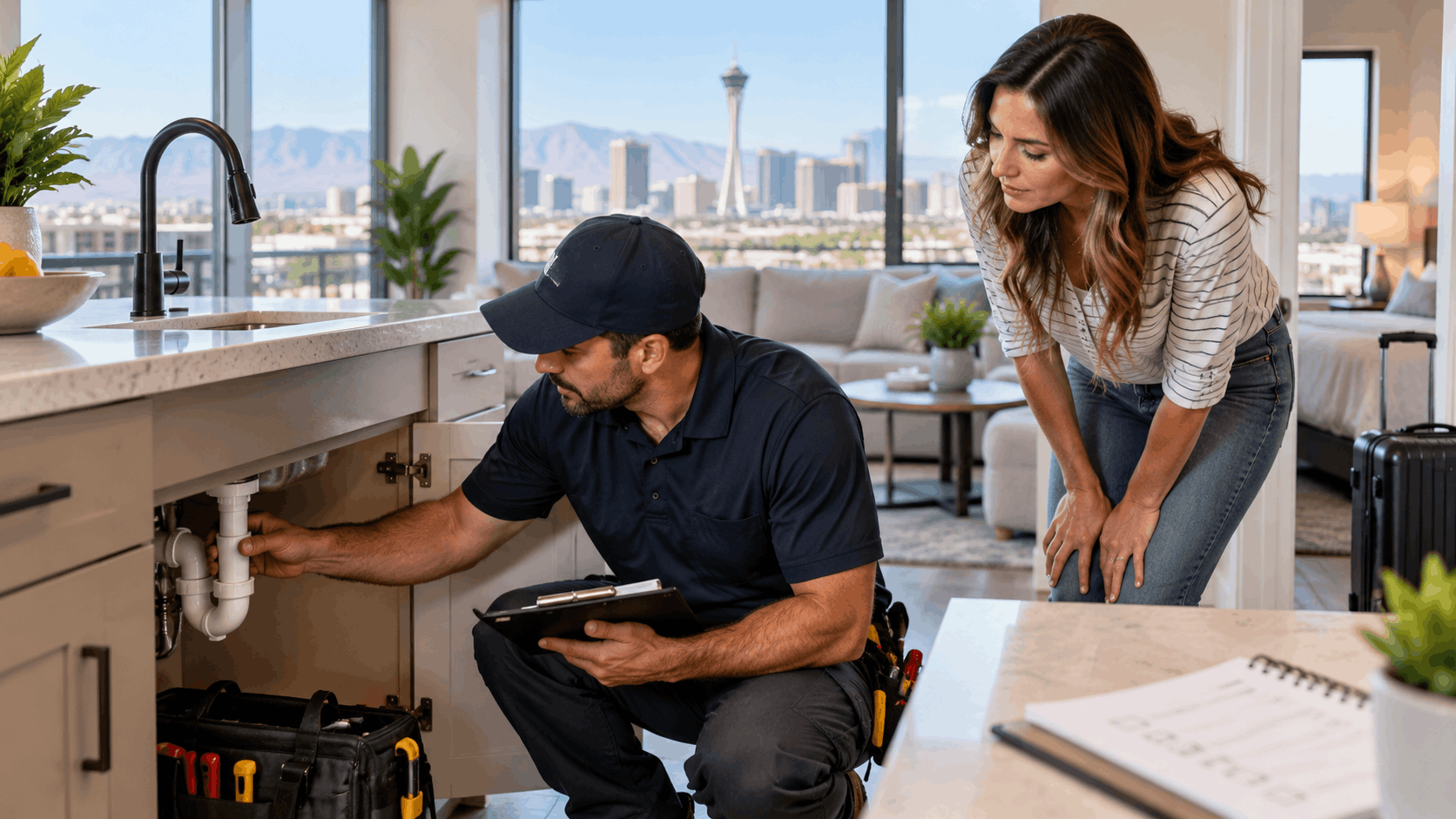
It was almost 2 a.m. when a host with a two-bedroom rental just off Koval Lane, a short walk from the Strip, got the call every owner dreads. A guest was standing in an inch of water, the bathroom floor was soaked, and the ceiling in the unit below was starting to stain. The supply line under the toilet had let go, and nobody had checked it in months.
That single failure cost the host a full refund, a one-star review, and two cancelled bookings while the drywall dried out. The frustrating part is that a five-minute check between guests would have caught the loose connection long before it burst. In a city where reviews drive revenue, a small drip can wipe out a whole month of profit.
Why Las Vegas Rentals Face Unique Plumbing Risks?
Plumbing in a Las Vegas rental takes a beating that a normal family home never sees. The desert climate, the mineral-heavy water, and constant guest turnover all pile on at once. A house that would coast for a decade elsewhere can show real wear here in a couple of years.
That is why a written schedule matters more in this valley than almost anywhere else. Owners who treat a rental like a personal home get blindsided by failures they never saw coming. The table below shows how the local risks stack up against a standard household.
| Risk Factor | Regular Home | Las Vegas Short-Term Rental |
|---|---|---|
| Water hardness | Scales fixtures over years | Scales fixtures in months from heavy use |
| Guest turnover | One family, steady use | Dozens of guests, hard random use |
| Summer heat stress | Moderate | 110-degree strain on water heaters |
| Failure cost | Inconvenience | Refunds, bad reviews, lost bookings |
Hard Water and Mineral Buildup From the LVVWD Supply
Water from the Las Vegas Valley Water District comes out of the tap loaded with calcium and magnesium. That Las Vegas hard water leaves a chalky white crust on faucets, shower heads, and glass. Guests notice it right away, and it makes a clean rental look neglected.
The bigger problem is what mineral scale does inside the pipes and appliances. It coats the heating element in a water heater, so the unit works harder and burns out sooner. It also narrows aerators and clogs shower heads until the pressure drops to a trickle.
We see hard water damage cut the life of fixtures nearly in half compared to homes on softer supplies. A water heater that should last a decade may start failing in six or seven years here. Installing a water softener is one of the smartest moves a host can make to slow that scale down.
Regular descaling and a treatment system keep the mineral load in check across the whole property. That protects the investment and keeps guest reviews from mentioning weak showers or spotty glass. Our water treatment team sizes systems to match how heavy each rental gets used.
High Turnover Means Fixtures Get Hammered
A single family flushes a toilet a set number of times a day and knows how their own disposal behaves. A rental sees back-to-back guests who treat the place like a hotel and do not think twice about wear. That guest turnover speeds up fixture wear in ways that surprise most owners.
Every new group tests the faucets, cranks the shower valves, and jams whatever they cooked down the disposal. Handles loosen, cartridges leak, and flappers wear out from constant cycling. Rental plumbing wear happens two to three times faster than in an owner-occupied home.
Hidden failures are the real danger because they build up quietly between stays. A toilet fill valve that starts to whine, a faucet base that weeps, a slow drain that gets slower - none of it shows until a guest is standing in it. That is exactly why a turnover check catches problems before they become emergencies.
We tell hosts to think of fixtures as high-mileage parts, not lifetime installs. Budgeting for faster replacement keeps a small repair from becoming a mid-stay disaster. Planning for that wear is part of running a rental in this city.
Extreme Summer Heat and Older Pipe Materials
Summer in the valley runs past 110 degrees for weeks at a time, and that heat pushes water heaters to their limit. Incoming water is already warm, tanks work overtime, and pressure relief valves get stressed. Summer heat plumbing failures spike right when a rental is fully booked.
Older homes near Downtown, the east side, and parts of Sunrise Manor add another layer of risk. Some were built with dated pipe materials that grow brittle over decades. Polybutylene pipes in particular were common in certain era builds and are known to crack without warning.
When aging pipes meet high street pressure and constant use, a joint can give out on a busy weekend. We have replaced lines in properties along Charleston and Fremont that failed the moment occupancy jumped. A pipe that held for years finally lets go under a full house of guests.
Knowing what is behind the walls helps a host plan repairs on their own schedule. Upgrading old pipes and fixtures before they fail beats scrambling during a stay. Our team can identify risky materials during an inspection and lay out a replacement plan.
The Real Cost of a Mid-Stay Plumbing Failure
A backed-up drain or burst line during a booking does not just cost the repair bill. The host usually owes a partial or full refund, which can run several hundred dollars per night. Then the calendar takes a hit while the unit dries out and gets fixed.
A single bad review over a flooded bathroom can drag a listing down for months. Search ranking drops, booking rates fall, and the refund cost stacks on top of lost nights. One 2 a.m. emergency can erase the profit from an entire busy season.
Compare that to prevention, which costs a fraction of a single failure. A turnover check is free, a monthly routine takes an hour, and an annual inspection is a small flat fee. The prevention savings show up every month the rental keeps earning without interruption.
We have watched hosts go from constant panic calls to a quiet, predictable operation just by following a schedule. The math is simple: routine care is cheap, and emergencies are not. Protecting the guest experience protects the revenue.
Get Your Quote
Tell us what's going on and we'll get back to you fast.
The Turnover Plumbing Checklist Between Every Guest
The cleaning window between guests is the best chance to catch small plumbing issues. A cleaner is already in every bathroom and the kitchen, so a few extra minutes covers the whole property. This turnover checklist turns each cleaning into a quick health check.
None of these steps need a plumber or any special tools. They are simple watch-and-listen checks that anyone on the cleaning crew can run. Done every stay, they keep a rental guest ready and catch drips before the next check-in.
Test Every Faucet, Toilet, and Shower
Start by running every faucet in the unit and watching the water go down. A slow drain that pools around the stopper is an early warning of a building clog. Weak flow or sputtering points to aerator scale or a pressure problem worth flagging.
Flush every toilet and listen for the tank to fill and shut off cleanly. A running toilet that never stops wastes water and shows up as a spike on the bill. If the handle sticks or the fill drags on, note it for a quick part swap.
Turn on each shower and check the water pressure and how fast the drain clears. Hair and soap from back-to-back guests build up fast, so a sluggish shower drain is common. A five-minute run-and-watch pass through each bathroom catches most of these issues before a guest ever does.
Write down anything that seems off so it does not get forgotten between stays. A small note today saves a panic call at midnight. These quick checks are the front line of the whole schedule.
Look Under Sinks and Behind Toilets for Drips
Open the cabinet under every sink and feel the supply lines and the trap for moisture. A tiny supply line leak often shows as a damp spot or a slow bead of water. Catching it now stops a drip from soaking the cabinet floor.
Reach behind each toilet and check the connection where the supply line meets the tank and the wall. That under sink drip or a weeping toilet valve is exactly what flooded the Koval Lane rental in our opening story. A minute of feeling for wetness prevents a ceiling collapse in a multi-story building.
In condos and stacked units, water damage travels straight down to the neighbor below. A slow leak in an upstairs bath can rot drywall and ruin another owner's ceiling before anyone notices. That turns a small fix into a large claim and an angry HOA.
If a cleaner finds any moisture, the host should get a photo and a plumber should look right away. Our electronic leak detection finds hidden water inside walls and floors. Stopping a leak early is far cheaper than repairing water damage.
Clear Hair, Wipes, and Grease Before They Clog
Pull the drain screens in the showers and tubs and clear out any hair caught there. Guests shed a surprising amount, and it knots up fast with soap. A clean drain screen keeps the water moving and prevents a backup mid-stay.
So-called flushable wipes are the single biggest cause of guest-caused clogs we see in Las Vegas rentals. They do not break down like toilet paper and snag on any rough spot in the line. A clog from wipes can back up a toilet and flood a bathroom in minutes.
In the kitchen, grease is the quiet killer of drain lines. Guests pour bacon fat and cooking oil down the sink, where it cools and hardens into a plug. Reminding guests to trash grease and keeping screens in place cuts down on kitchen backups.
When a drain does clog past a plunger, a professional cleaning clears it fast. Our hydro jetting service scours grease and buildup out of the line. Regular clearing keeps small clogs from becoming full backups.
Stock the Right Supplies for Guests
Every unit should have a good plunger stored somewhere guests can find it. Most minor toilet clogs clear with a plunger, and a guest who can fix it themselves never calls at 2 a.m. It is the cheapest insurance a host can put in a bathroom.
Keep extra toilet paper stocked so guests are not tempted to flush paper towels or tissues. Running out is a common trigger for the wrong things going down the toilet. A well-stocked bathroom quietly prevents a lot of clogs.
Leave a simple laminated card that shows where the main shut-off valve is and how to turn it. If a supply line lets go, a guest who can stop the water saves the whole property. Clear shut-off valve instructions turn a flood into a puddle.
These small guest supplies cost almost nothing and prevent a huge share of emergency calls. A plunger, spare paper, and a shut-off guide handle the everyday issues. That keeps both the guest and the host calm when something goes wrong.
Need Help in Las Vegas?
Active Plumbing serves Las Vegas and all of Las Vegas Valley.
The Monthly Plumbing Maintenance Routine
Turnover checks catch the fast, visible stuff, but some problems build slowly. That is where a monthly plumbing maintenance routine comes in. Once a month, a host or property manager should walk the property with a slightly deeper eye.
This routine focuses on rental upkeep that a quick cleaning pass would miss. It targets the water heater, the shut-off valves, unused fixtures, and the water bill. Thirty minutes a month is real leak prevention.
Check Water Heater Temperature and Pressure
Set the water heater around 120 degrees for safe, comfortable water that will not scald a guest. Too hot risks burns and complaints, too cool can leave a cold shower during a full house. Check the setting monthly since dials get bumped.
Look at the pressure relief valve on the side of the tank for any drip or crust. A failing valve can weep or, worse, let go and dump water across the floor. Any moisture around that valve means it is time for a professional look.
Listen for popping or rumbling from the tank, which signals sediment buildup from hard water. That sediment forces the heater to work harder and shortens its life. Our water heater services handle flushing and valve replacement to keep the unit safe.
A water heater check every month gives early warning before a full failure. Nobody wants to explain to a guest why there is no hot water on a busy weekend. Catching a bad valve early avoids a soaked garage and a big repair.
Inspect Visible Pipes and Angle Stops
Walk the property and look at every exposed pipe under sinks, behind the water heater, and in the garage. Green or white crust on a joint is a sign of a slow leak or heavy mineral pipe corrosion. Rust stains under a fitting mean water is escaping somewhere.
Test each angle stop, the small shut-off valve under sinks and behind toilets. These valves seize up when they sit unused for months. A guest or plumber needs them to turn freely in an emergency, and a stuck one wastes precious minutes during a leak.
Turn each shut-off valve gently to make sure it moves and does not drip afterward. If a valve is frozen or leaks when touched, it should be replaced before it is needed. A working shut-off valve is the difference between a quick stop and a flooded room.
Note any corrosion or stiff valve so a plumber can address it on the next visit. These small parts are cheap to replace and cause big trouble when they fail. Keeping them in working order is basic monthly upkeep.
Run Water in Rarely Used Fixtures
Every rental has a fixture that barely gets touched - a guest bath, a utility sink, a second shower. When the trap under that drain sits dry, sewer gas floats up into the room. A dry P-trap is a common source of a mystery sewer smell that ruins a stay.
Run water in every unused fixture for a minute or two each month to refill the trap. That water seal blocks the gas from coming back up the line. It is the simplest fix for a smell that guests will absolutely mention in a review.
Do not forget floor drains in laundry rooms and garages, which dry out fastest. A quick pour of water down each one keeps the seal intact. This one-minute habit prevents an odor problem that is hard to diagnose after the fact.
If a smell lingers even after refilling traps, there may be a deeper venting or line issue. Our drain and sewer team can track down the source. A fresh-smelling rental keeps ratings high.
Watch the Water Bill for Hidden Leaks
Compare each month's water usage against how booked the property was. A quiet month with a high bill is a red flag for a hidden leak. The LVVWD statement is one of the best leak detectors a host has.
A running toilet, a slab leak, or a dripping line can waste thousands of gallons before anyone sees water. Usage monitoring catches that waste on paper long before it shows up as damage. A sudden water bill spike deserves a same-week investigation.
Keep a simple log of gallons used per month next to booking counts. Over time the pattern makes an odd spike obvious. That habit has saved our clients from slab leaks that would have gone unnoticed for months.
When the numbers do not add up, a whole-home leak detection system pinpoints the problem. Finding a hidden leak early protects both the structure and the water budget. The bill tells the story if a host reads it.
Seasonal Plumbing Tasks for the Las Vegas Valley
The desert climate throws different challenges at plumbing depending on the season. Summer heat and the rare winter freeze both demand specific prep. Matching seasonal plumbing tasks to the calendar keeps a rental ahead of trouble.
Most hosts think Las Vegas has no seasons worth worrying about. In truth, the summer strain and the handful of freezing nights each year both cause real failures. A little freeze protection and summer prep go a long way.
Summer: Protect the Water Heater and AC Condensate Lines
Peak summer demand pushes water heaters hard while incoming water is already warm. Guests run more laundry, longer showers, and more loads during hot stays. A summer water heater that was borderline can fail right at the worst time.
The AC condensate drain is the sneaky one in summer. When it clogs, water backs up and overflows, soaking ceilings and floors in properties from Summerlin to Henderson. We get calls every July about water stains that turn out to be a plugged condensate drain, not a plumbing leak.
Clear and check the condensate line at the start of summer before the AC runs nonstop. A cup of the right cleaner and a quick flush keep it draining freely. That one task prevents a surprising amount of water damage in the hot months.
Hosts with rentals in Summerlin or Henderson should schedule summer prep before the heat peaks. A stressed water heater and a clean condensate line both matter when the unit is fully booked. Getting ahead of summer beats reacting to a flood in August.
Winter: Guard Against the Occasional Freeze
Las Vegas only sees a handful of freezing nights each winter, but that is enough to burst a pipe. Owners get complacent because most days are mild. Then a cold snap hits and an exposed line splits.
The pipes most at risk sit on north-facing walls, in unheated garages, and along exterior runs. These frozen pipes have no insulation and no warm air around them. When the water inside freezes and expands, the pipe cracks and floods as soon as it thaws.
Simple pipe insulation on those exposed runs costs a few dollars and prevents a disaster. A foam sleeve over a garage line or an outdoor spigot cover does the job. It is cheap insurance for the two or three coldest weeks of the year.
On the coldest nights, leaving a faucet at a slow drip keeps water moving and reduces freeze risk. A little planning before the first cold front keeps a winter freeze from turning into a burst line. Our team wraps and protects vulnerable pipes before the temperature drops.
Spring and Fall: Deep Clean Drains and Descale Fixtures
Twice a year is the right rhythm for a deeper drain and fixture cleaning. Spring and fall are ideal since occupancy often dips a little between peak seasons. Use that window to get ahead of the mineral load.
Descale the shower heads and faucet aerators by soaking them in vinegar or replacing the worst ones. Hard water crust chokes off flow and leaves the ugly white buildup guests notice. Clean fixtures restore good pressure and make the whole rental look cared for.
Flush the main drains to clear the slow buildup that turnover checks cannot reach. Grease, hair, and mineral scale collect deep in the lines over months. A twice-yearly drain flushing keeps the whole system flowing and prevents backups during busy runs.
Aerator cleaning and descaling take only an hour but make a real difference in guest experience. Combined with a drain flush, they reset the plumbing to near-new performance. Our tankless descaling service handles the same job for tankless units running on hard water.
Handling Higher Usage During Big Event Weekends
Big events pack Las Vegas rentals to full capacity, and plumbing use spikes right along with them. Conventions, holiday stays, and F1 Las Vegas weekend near the Strip all drive high occupancy. A unit that houses eight guests instead of two sees eight times the flushing and showering.
Before a full booking run, run every check on the turnover and monthly lists at once. Clear the drains, test the water heater, and make sure every shut-off works. A property going into an event weekend at capacity has no room for a surprise.
Stock extra supplies since a packed unit burns through toilet paper and stresses every fixture. Make sure the plunger is in place and the shut-off guide is visible. A prepared rental handles a crowd without a midnight call.
We tell hosts to treat event weekends like the busiest test of the year. A little prep before F1 weekend or a big convention keeps the reviews glowing. Full houses are great for revenue only if the plumbing holds up.

The Annual Professional Plumbing Inspection
All the turnover and monthly checks in the world cannot see inside the sewer line or test the whole system. That is the job of a yearly annual plumbing inspection by a licensed plumber. It is the backbone that holds the entire schedule together.
A professional inspection catches the slow, hidden problems that owners simply cannot spot. Sediment in the tank, roots in the sewer, high street pressure - none of it is visible from the surface. One yearly visit keeps small issues from becoming closed-listing emergencies.
Water Heater Flush and Anode Rod Check
Hard Las Vegas water dumps sediment into the bottom of every water heater tank. That layer of grit makes the unit run hot and inefficient and eventually leads to failure. An annual water heater flush clears the sediment buildup and restores performance.
The anode rod is the sacrificial part that corrodes so the tank does not. On our water, it wears out faster than most owners realize. Checking and replacing the anode rod during the yearly visit adds years to the tank.
A flushed tank with a fresh anode rod can outlast a neglected one by several years. On hard water, that difference is the gap between replacing a heater every seven years or every eleven. The small yearly cost pays for itself in a delayed replacement.
For hosts running tankless water heaters, the equivalent is a yearly descaling. Either way, the water heater deserves professional attention once a year. It is the appliance a guest notices fastest when it fails.
Sewer Line Camera Inspection
A camera run down the main line shows exactly what is happening underground. Root intrusion, cracks, and offsets all appear on the screen. A sewer camera inspection turns a guessing game into a clear picture.
Older neighborhoods near Downtown and out in the east valley are prone to root intrusion in the main line. Mature trees send roots toward the moisture in the pipe, and they crack their way in. A backup during a stay is often the first sign, unless a camera catches it early.
Finding a crack or a root ball early means a targeted repair instead of an emergency dig. Our sewer camera inspection maps the whole line so nothing stays hidden. Knowing the condition of the main line lets a host plan repairs on their own terms.
When the camera reveals real damage, a planned sewer line repair beats a raw sewage backup during a booking. The inspection itself is quick and non-invasive. It is one of the most valuable parts of the annual visit for older rentals.
Whole-Home Pressure and Regulator Test
High street pressure wears out fixtures fast and can rupture a weak line. Some parts of the valley run pressure higher than a home's fixtures are rated for. A whole-home test measures the actual pressure at the property.
The water pressure regulator is what keeps street pressure from hammering the fixtures inside. When it fails, pressure climbs and faucets, valves, and the water heater all suffer. A worn regulator quietly shortens the fixture life across the entire rental.
Testing the regulator each year confirms it is holding the right pressure. If it has drifted high, replacing it protects every fixture in the house. That single part guards the whole system from constant high pressure.
Our plumbers check pressure at multiple points and swap a failing regulator on the spot. Catching high pressure early prevents a cascade of leaks and burst lines. It is a simple test with a big payoff for fixture longevity.
How Active Plumbing Builds a Rental Maintenance Plan
Busy hosts do not have time to track every date and task across their properties. Active Plumbing sets up recurring visits so the schedule runs itself. We handle the annual inspections and seasonal work on a calendar the host never has to babysit.
Our team works across every corner of the valley, from Spring Valley to the northwest and out to the east side. We know which neighborhoods have older pipes and which face the worst hard water. That local knowledge shapes the maintenance plan for each property.
We keep records of every visit, repair, and part so a host has a full history for each unit. That paperwork helps with warranties, resale, and planning replacements. It also means nothing gets skipped between visits.
A rental maintenance plan from a trusted Las Vegas plumber turns plumbing from a worry into a background service. Hosts get to focus on their guests while we handle the pipes. Reach out to set up a recurring schedule for your rentals.
Need Help in Las Vegas?
Active Plumbing serves Las Vegas and all of Las Vegas Valley.
The Most Common Guest-Caused Plumbing Disasters
Some plumbing problems come from wear, but many come straight from guests. People treat a rental with less care than their own home. Knowing the common guest plumbing damage helps a host head it off.
The good news is that most guest-caused disasters are preventable with the right fixtures and clear signs. A few simple steps cut the odds of a clogged toilet or emergency plumbing call way down. Here are the ones we see most often:
- Overflowing toilets and flushed foreign objects - Guests flush wipes, paper towels, feminine products, and even food. A reliable, strong-flushing toilet handles more, and a small toilet signage card politely asking guests to flush only toilet paper cuts down on foreign object clogs. Pair that with a plunger and most overflowing toilet incidents never reach the host.
- Garbage disposal jams and kitchen backups - Guests dump pasta, rice, fibrous vegetables, and grease into the disposal, causing a garbage disposal jam. A sign near the sink listing what not to put down the disposal prevents most kitchen backups. When a disposal does jam, knowing where the reset button is saves a service call.
- Shower and tub drain clogs from heavy use - Multiple guests showering back to back load a drain with hair and soap far faster than one family. A drain screen in every shower and tub catches hair before it forms a shower drain clog. Regular screen cleaning at turnover keeps the tub drain flowing.
- Setting up fast emergency response - Even with prevention, emergencies happen. Having a trusted emergency plumber on call and clear guest instructions turns a disaster into a quick fix. On-call plumbing plus a shut-off guide means a guest can stop the water and a pro is on the way fast.
Clear guest instructions do a lot of quiet work behind the scenes. When a guest knows how to plunge a toilet or shut off a valve, small issues never reach the host. Combine good fixtures, simple signs, and a plumber on call, and most guest disasters shrink to minor bumps.
The EPA notes that so-called flushable wipes are a leading cause of residential clogs nationwide. That matches exactly what we see in Las Vegas rentals. A single sign about wipes prevents more calls than almost any other step.
Building a Year-Round Schedule That Actually Works
All these timeframes only help if they live in one clear calendar. A plumbing maintenance schedule a host can hand to cleaners and managers keeps nothing from slipping. This section pulls the turnover, monthly, seasonal, and annual work into a single plan.
A written rental calendar removes the guesswork for everyone involved. Cleaners know their checks, managers know the monthly walk, and the plumber knows the yearly and seasonal visits. Good property management runs on a schedule, not on memory.
Assigning Tasks to Cleaners Versus Plumbers
Cleaners handle the fast, visible checks at every turnover. Running faucets, flushing toilets, clearing drain screens, feeling for drips, and refilling traps are all cleaner tasks. None of it needs tools or training beyond a quick guide.
Licensed plumber tasks are the ones that need real skill and equipment. Water heater flushes, sewer camera runs, pressure tests, and pipe repairs all fall here. Trying to DIY these usually costs more than hiring the pro in the first place.
Spelling out the task assignment prevents the hard parts from getting skipped. When everyone knows their lane, the annual inspection never gets forgotten and the turnover checks never get dropped. Clear roles keep the whole system honest.
Give cleaners a simple laminated checklist and give the plumber a recurring calendar. That split covers every level of the schedule without overlap or gaps. It is the structure that makes the plan actually work month after month.
Keeping Records for Multiple Properties
Hosts with several units cannot keep the details straight in their heads. Logging each visit protects owners running properties across Spring Valley, Henderson, and the northwest. Maintenance records show what was done, when, and what needs attention next.
A simple shared spreadsheet or an app works fine for tracking multiple properties. Note each turnover flag, monthly walk, and professional visit per unit. Over time the log reveals which properties need more attention.
Records also help at resale or with warranty claims on water heaters and fixtures. A documented history proves the property was cared for. That paperwork adds real value when it is time to sell or refinance.
Our team keeps its own records for every property we service, so hosts get a clean history. That shared documentation makes managing a portfolio far easier. Nothing falls through the cracks when it is all written down.
Budgeting for Repairs and Replacements
Fixtures do not last forever, so a host should set money aside before they fail. A water heater on hard Las Vegas water lasts roughly six to eleven years depending on care. Budgeting for that fixture lifespan avoids a scramble when it goes.
Rough ranges help hosts plan. A water heater replacement often runs a few thousand dollars installed, faucets and fixtures a few hundred each, and a sewer repair can climb higher depending on the damage. Setting aside a small monthly reserve covers these before they hit.
Faucets and toilet parts in a high-use rental wear faster, so budget for replacement every few years. Building that repair budget into the operating cost keeps a failure from wrecking a month's profit. Planned replacements are always cheaper than emergency ones.
We give hosts realistic lifespans and cost ranges during the annual visit. That lets them plan replacements on a calendar instead of reacting to a breakdown. A funded reserve turns a big repair into a routine expense.
When to Call in Local Professional Help
Some signs mean it is time to stop DIY and call a pro. Repeated clogs, water stains on ceilings, a spiking bill, low pressure across the whole house, or any sewage smell all warrant a professional. Knowing when to call a plumber saves a small problem from growing.
A burst pipe, a backed-up sewer line, or a failing water heater during a stay is an emergency, full stop. Those need immediate help, not a hardware-store fix. Waiting on those turns a repair into water damage and lost bookings.
Active Plumbing serves hosts across the entire Las Vegas valley with both scheduled and emergency work. When a check turns up something beyond a quick fix, our team is a call away. Professional help at the right moment protects both guests and property.
The official government resources on tenant and short-term rental safety remind owners that plumbing failures carry real liability. A trusted local plumber keeps a rental safe and compliant. Contact our team the moment DIY stops being enough.
Need Help in Las Vegas?
Active Plumbing serves Las Vegas and all of Las Vegas Valley.
Final Thoughts
A short-term rental in Las Vegas takes more plumbing abuse than almost any home, between hard water, constant turnover, and desert heat. The hosts who thrive here run a simple schedule instead of hoping for the best. Turnover checks, a monthly routine, seasonal prep, and a yearly professional inspection cover every risk.
Every one of those steps costs a fraction of a single mid-stay disaster. A five-minute check under a sink or a card telling guests not to flush wipes prevents the 2 a.m. flood that tanks a review. Prevention protects the guest experience, and the guest experience protects the revenue.
Our team knows this valley street by street, from Summerlin to Henderson to the older homes near Downtown. We build recurring maintenance plans that run in the background so hosts can focus on their guests. Call Active Plumbing or reach out through our contact page to set up a schedule that keeps your rental running and your reviews high.
Frequently Asked Questions
How often should a Las Vegas short-term rental get a plumbing inspection?
Book a full professional inspection once a year with a licensed plumber. That annual inspection covers the water heater, sewer line, and whole-home pressure. Between those, run monthly self-checks on the water heater, valves, and water bill, plus quick plumbing checks at every guest turnover. This layered inspection frequency catches slow problems and guest-caused issues before either becomes an emergency during a booking.
Why does hard water damage rental plumbing so fast?
Water from the Las Vegas Valley Water District carries heavy calcium and magnesium. That mineral scale coats water heater elements, clogs aerators, and crusts up shower heads much faster than softer water. In a high-use rental, the damage stacks up quickly and can cut fixture and water heater life nearly in half. A water softener and regular descaling slow the hard water damage across the whole property.
What plumbing checks should cleaners do at every turnover?
Cleaners should run every faucet and watch for slow drains, flush each toilet to catch a running tank, and test shower pressure and drainage. They should feel under sinks and behind toilets for any drip, clear hair from drain screens, and refill traps in unused fixtures. This turnover check takes only a few minutes per bathroom. A cleaner plumbing routine catches most small issues before the next guest arrives.
How can hosts stop guests from clogging toilets and drains?
Clog prevention starts with reliable, strong-flushing toilets and drain screens in every shower and tub. Add polite guest signage asking people to flush only toilet paper and keep grease and food out of the disposal. Stock a plunger in each unit so guests can clear minor clogs themselves. These simple steps cut down guest-caused backups dramatically and reduce midnight emergency calls to the host.
Do Las Vegas rentals really need freeze protection?
Yes, even though the valley only sees a handful of freezing nights each winter. That is enough to burst an exposed pipe on a north-facing wall, in an unheated garage, or along an outdoor run. Simple pipe insulation and covering outdoor spigots provide cheap freeze protection. On the coldest nights, letting a faucet drip keeps water moving. Neglecting winter pipes leads to a costly burst.
How much does a burst pipe or mid-stay backup cost a host?
A burst pipe or backup during a stay often costs a full refund of several hundred dollars per night, plus the repair bill. Water damage repairs can run into the thousands once drywall and ceilings are involved. Add lost bookings while the unit dries out and a bad review that drags down future revenue. Prevention through routine maintenance costs a small fraction of a single emergency.
How long does a water heater last on Las Vegas water?
On hard Las Vegas water, a standard tank water heater typically lasts six to eleven years. The wide range comes down to care. An annual water heater flush that clears sediment plus an anode rod replacement can push the lifespan toward the higher end. A neglected tank scaled with minerals fails much sooner, often at the worst possible time during a busy booking.
What should a host do when a guest reports a plumbing emergency?
First, guide the guest to shut off the water, either at the fixture's angle stop or the main shut-off valve. A clear shut-off guide in each unit makes this quick. Keep the guest calm and away from any flooding, then call a local emergency plumber right away. Fast action on a plumbing emergency limits water damage and turns a potential disaster into a manageable repair.
Can one plumber handle several rental properties on a schedule?
Yes. Active Plumbing sets up recurring service across multiple properties on a single calendar. We schedule annual inspections and seasonal work for each unit across Las Vegas neighborhoods and keep records of every visit and repair. That means a host with several rentals gets consistent care without tracking dates themselves. One trusted plumber managing the whole portfolio keeps every property on the same reliable schedule.
Does Active Plumbing serve all Las Vegas valley areas?
Active Plumbing covers the entire Las Vegas valley. Our service area includes Summerlin, Henderson, Spring Valley, North Las Vegas, Sunrise Manor, Enterprise, Paradise, and the surrounding communities. We know the local pipe conditions and hard water challenges in each neighborhood. Whether a rental sits near the Strip or out in the northwest, our team is ready for scheduled maintenance and emergency calls.
Frequently Asked Questions
- How often should a Las Vegas short-term rental get a plumbing inspection?
- Book a full professional inspection once a year with a licensed plumber. That annual inspection covers the water heater, sewer line, and whole-home pressure. Between those, run monthly self-checks on the water heater, valves, and water bill, plus quick plumbing checks at every guest turnover. This layered inspection frequency catches slow problems and guest-caused issues before either becomes an emergency during a booking.
- Why does hard water damage rental plumbing so fast?
- Water from the Las Vegas Valley Water District carries heavy calcium and magnesium. That mineral scale coats water heater elements, clogs aerators, and crusts up shower heads much faster than softer water. In a high-use rental, the damage stacks up quickly and can cut fixture and water heater life nearly in half. A water softener and regular descaling slow the hard water damage across the whole property.
- What plumbing checks should cleaners do at every turnover?
- Cleaners should run every faucet and watch for slow drains, flush each toilet to catch a running tank, and test shower pressure and drainage. They should feel under sinks and behind toilets for any drip, clear hair from drain screens, and refill traps in unused fixtures. This turnover check takes only a few minutes per bathroom. A cleaner plumbing routine catches most small issues before the next guest arrives.
- How can hosts stop guests from clogging toilets and drains?
- Clog prevention starts with reliable, strong-flushing toilets and drain screens in every shower and tub. Add polite guest signage asking people to flush only toilet paper and keep grease and food out of the disposal. Stock a plunger in each unit so guests can clear minor clogs themselves. These simple steps cut down guest-caused backups dramatically and reduce midnight emergency calls to the host.
- Do Las Vegas rentals really need freeze protection?
- Yes, even though the valley only sees a handful of freezing nights each winter. That is enough to burst an exposed pipe on a north-facing wall, in an unheated garage, or along an outdoor run. Simple pipe insulation and covering outdoor spigots provide cheap freeze protection. On the coldest nights, letting a faucet drip keeps water moving. Neglecting winter pipes leads to a costly burst.
- How much does a burst pipe or mid-stay backup cost a host?
- A burst pipe or backup during a stay often costs a full refund of several hundred dollars per night, plus the repair bill. Water damage repairs can run into the thousands once drywall and ceilings are involved. Add lost bookings while the unit dries out and a bad review that drags down future revenue. Prevention through routine maintenance costs a small fraction of a single emergency.
- How long does a water heater last on Las Vegas water?
- On hard Las Vegas water, a standard tank water heater typically lasts six to eleven years. The wide range comes down to care. An annual water heater flush that clears sediment plus an anode rod replacement can push the lifespan toward the higher end. A neglected tank scaled with minerals fails much sooner, often at the worst possible time during a busy booking.
- What should a host do when a guest reports a plumbing emergency?
- First, guide the guest to shut off the water, either at the fixture's angle stop or the main shut-off valve. A clear shut-off guide in each unit makes this quick. Keep the guest calm and away from any flooding, then call a local emergency plumber right away. Fast action on a plumbing emergency limits water damage and turns a potential disaster into a manageable repair.
- Can one plumber handle several rental properties on a schedule?
- Yes. Active Plumbing sets up recurring service across multiple properties on a single calendar. We schedule annual inspections and seasonal work for each unit across Las Vegas neighborhoods and keep records of every visit and repair. That means a host with several rentals gets consistent care without tracking dates themselves. One trusted plumber managing the whole portfolio keeps every property on the same reliable schedule.
- Does Active Plumbing serve all Las Vegas valley areas?
- Active Plumbing covers the entire Las Vegas valley. Our service area includes Summerlin, Henderson, Spring Valley, North Las Vegas, Sunrise Manor, Enterprise, Paradise, and the surrounding communities. We know the local pipe conditions and hard water challenges in each neighborhood. Whether a rental sits near the Strip or out in the northwest, our team is ready for scheduled maintenance and emergency calls.
A
Licensed plumbing professionals serving Las Vegas and Las Vegas Valley.
Licensed in Nevada · License #0047021
Last updated on
Why trust Active Plumbing?
Founded in 1991, Active Plumbing is a licensed and insured plumber serving Las Vegas and Las Vegas Valley. All content is reviewed by our licensed technicians.

Need Help in Las Vegas?
Active Plumbing serves Las Vegas and all of Las Vegas Valley.
Related Articles
Maintenance
How Often to Flush a Water Heater in Las Vegas: The 16-Grain Hardness Schedule
Las Vegas water runs about 16 grains hard, so tanks need flushing every 6 months. Learn the 16-grain schedule, warning signs, DIY steps, and pro maintenance.
Maintenance
How to Prevent Water Heater Failure in Las Vegas (Hard Water Maintenance Plan)
Learn how Las Vegas hard water destroys water heaters faster and follow our comprehensive maintenance plan to extend your unit's lifespan from 4-6 years to 8-12 years.
Maintenance
Tankless Water Heater Maintenance in Las Vegas: Why Hard Water Makes It Critical
Las Vegas hard water from Lake Mead builds scale fast inside tankless heaters. Learn the warning signs, real maintenance steps, and how often valley homes need service.