How Spring Valley Homeowners Deal with Aging Galvanized Pipes
Key Takeaways
- Many Spring Valley homes built before the 1970s still have original galvanized steel pipes that rust from the inside out.
- Las Vegas hard water speeds up corrosion and mineral buildup, shortening the lifespan of galvanized plumbing.
- Common warning signs include brown or rusty water, low water pressure, pinhole leaks, water stains, a metallic taste, and noisy pipes.
- Old galvanized lines connected to lead service lines can trap and release lead, so a water test is worth doing.
- A proper diagnosis uses visual checks, pressure testing, camera inspections, and full system mapping before recommending a fix.
- Spot repairs work for isolated problems, but a whole-home repipe with copper or PEX often saves money when corrosion is widespread.
- A typical Spring Valley repipe costs roughly 4,000 to 15,000 dollars and takes two to five days, with permits handled through Clark County.
- Water softeners, routine checkups, and monitoring pressure and temperature help new pipes last for decades.
In This Article
It usually starts on a quiet morning. A Spring Valley homeowner turns on the bathroom faucet to brush their teeth and out comes water tinted brown or orange. A few minutes later the shower feels weak, like the pressure just gave up. These small annoyances often trace back to one thing that hides inside the walls of older homes: aging galvanized pipes.
Galvanized plumbing was standard for decades, and plenty of homes around Spring Valley still run on it. Over time these steel pipes rust from the inside out, and that rust shows up in your water, your pressure, and eventually your walls. The good news is that homeowners have clear options once they know what they are dealing with.
Why So Many Spring Valley Homes Still Have Galvanized Pipes?
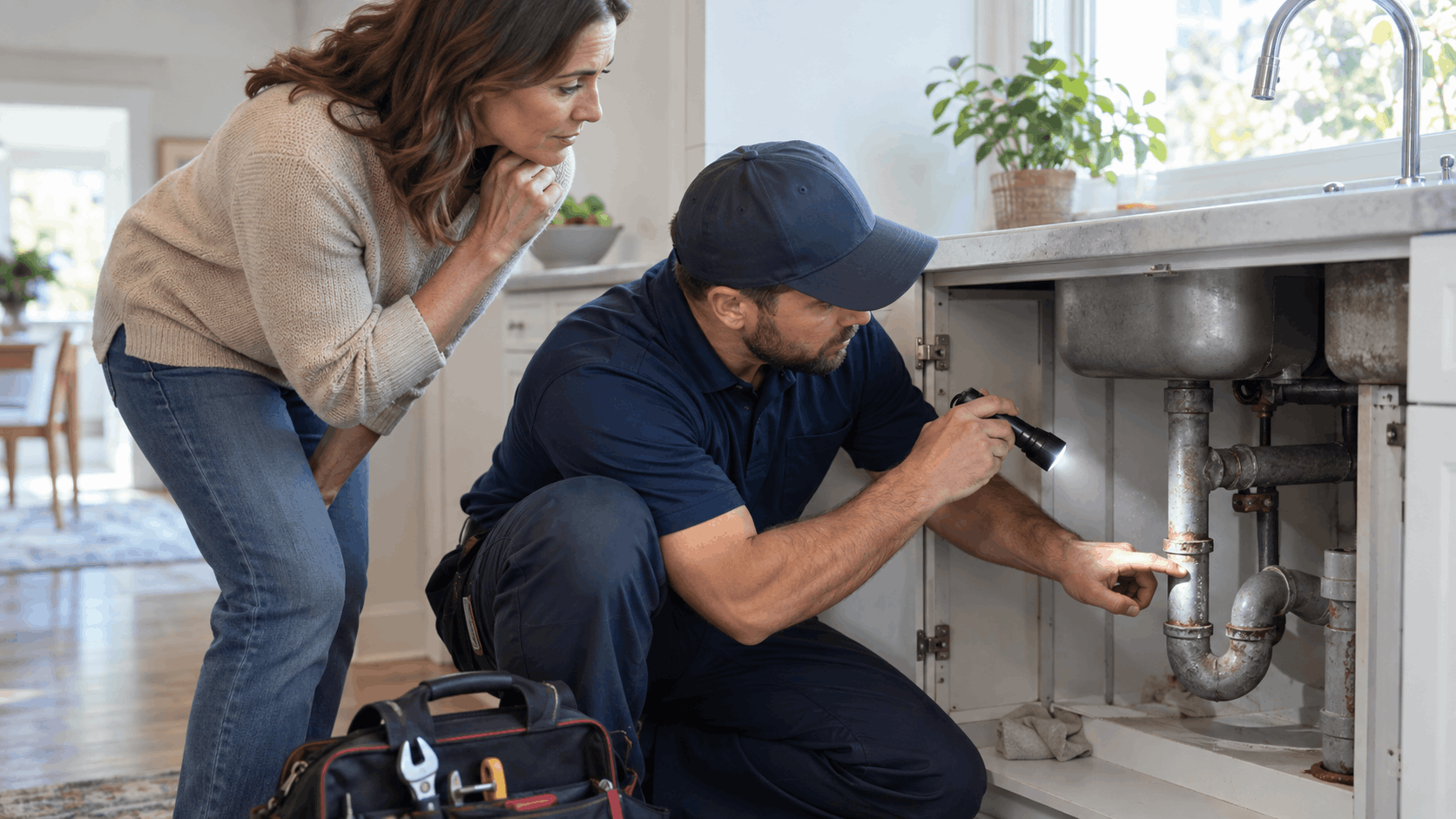
Spring Valley grew fast, and a big share of its housing stock went up when galvanized steel was the go-to plumbing material. Homeowners today did not choose these pipes. They inherited them along with the house.
Galvanized pipes were built to last, but nobody expected them to sit in the ground and behind walls for 50 or 60 years. In older homes, that is exactly what happened. Understanding where they came from helps explain why so many local families still deal with them.
The Building Eras Behind These Pipes
Many homes near Jones Boulevard and Rainbow Boulevard were built before the 1970s, back when galvanized steel was the default choice for water lines. Builders liked it because it was strong, widely available, and cheaper than copper at the time. Plastic piping had not taken over yet, so steel filled the gap.
Galvanized steel is regular steel coated with a layer of zinc. That zinc coating was supposed to protect the pipe from rust and corrosion for a long time. On paper it worked well, and for a couple of decades it held up fine in pre-1970s homes across the valley.
The problem is that the zinc does not last forever. Once it wears away, the raw steel underneath is exposed to water day after day. That is when the slow rusting begins, and it happens from the inside where no one can see it.
By the time these homes changed hands two or three times, the pipes were already decades into their life. Today those same lines are often past their useful years, which is why so many Spring Valley owners run into trouble at the same time.
How Las Vegas Water Speeds Up Corrosion
Las Vegas is famous for hard water, and that hardness plays a direct role in how fast galvanized pipes break down. The water served by the Las Vegas Valley Water District carries a heavy load of dissolved minerals like calcium and magnesium. Those minerals cling to the inside of pipes over the years.
Inside a galvanized line, mineral buildup and rust feed off each other. Scale forms a rough surface, that surface traps more debris, and the corrosion spreads more quickly than it would in softer water. It is a cycle that shrinks the usable space inside the pipe.
Hard water also reacts with the exposed steel once the zinc coating is gone. The result is a thick, crusty buildup mixed with rust that narrows the water path. In some old pipes we cut open, the opening is barely the width of a pencil.
This is why galvanized pipes in Spring Valley often fail sooner than the same pipes would in a region with soft water. The desert supply is tough on old metal plumbing, and it shows.
Which Neighborhoods See This Most
Older tracts scattered around Spring Valley tend to share this problem. Homes off Twain Avenue and in the pockets near Chinatown were built during the era when galvanized plumbing was standard. Many of them still carry their original lines.
Areas closer to the older parts of the valley, including sections near Decatur and Spring Mountain Road, also show aging plumbing issues on a regular basis. When a house was built matters more than the exact street, but these zones line up with the galvanized era.
Our crews cover these neighborhoods often. If you live in one of the established parts of Spring Valley, there is a real chance your home has at least some original galvanized piping still in service.
Homeowners in the newer subdivisions on the western edge usually have copper or PEX. It is the mid-century and older homes closer to the center of town that carry the heaviest galvanized load, and those are the ones we get the most calls about.
Get Your Quote
Tell us what's going on and we'll get back to you. We're open 24/7.
Warning Signs That Galvanized Pipes Are Failing
Failing galvanized pipes rarely give up all at once. They send small signals for months or years before a real problem hits. Knowing the warning signs helps homeowners act before a slow leak turns into water damage.
Here are the water problems that usually point to pipe failure in older homes:
- Brown or rusty water from the tap
- Low water pressure across the house
- Pinhole leaks and water stains
- Uneven flow between fixtures
- A metallic taste in drinking water
- Rattling or noisy pipes
Brown or Rusty Water From the Tap
Discolored water is one of the more common calls we get. A homeowner turns on the faucet first thing in the morning and the water runs brown or yellow for a few seconds before clearing up. That happens because water sat still in the pipes overnight and picked up loose rust.
The rust itself is corroded steel flaking off the inside of the pipe wall. When water moves through the line, it carries those particles to your faucet. The color tells you the pipe is actively breaking down inside.
Some homeowners only notice rusty water at certain taps, like an outdoor spigot or a laundry line. Others see it throughout the house. Either way, discolored water is a clear sign that the galvanized lines are aging and shedding material.
If the brown water keeps coming back after you run the tap for a while, the corrosion has likely spread through a good portion of the system. That points toward a bigger fix rather than a quick patch.
Low Water Pressure Throughout the House
Weak pressure is another classic symptom. Showers feel like a trickle, filling a pot takes forever, and running two fixtures at once cuts the flow to nothing. This usually comes from mineral buildup inside the pipes.
As rust and scale collect on the inside walls, the opening the water flows through gets smaller and smaller. Think of a straw that keeps narrowing until only a thin stream fits through. That is what happens inside old galvanized lines.
Low water pressure that affects the whole house, not just one faucet, usually means the buildup is widespread. A single clogged aerator only hits one fixture, but shrinking pipes drag down pressure everywhere.
We often confirm this during an inspection by checking pressure at different points. When the numbers are low across the board and the home has galvanized pipes, the cause is almost always internal corrosion.
Leaks, Stains, and Uneven Flow
As galvanized pipes reach the end of their life, they start to leak. Pinhole leaks are small holes that form where the pipe wall has rusted through. They may drip slowly for weeks before anyone notices.
Water stains on walls, ceilings, or floors often show up before you find the actual leak. A yellow or brown ring on the drywall, a soft spot in the floor, or a musty smell can all point to a hidden pinhole leak inside a wall or under the slab.
Uneven flow between fixtures is another later-stage sign. One bathroom runs fine while another barely produces water. That difference tells us the corrosion is worse in certain branches of the plumbing than others.
Once leaks and stains appear, the system has moved past minor issues. At this point spot repairs may buy time, but the whole network is usually close to needing replacement.
Rattling Pipes and Metallic Taste
Some clues are easy to miss. A metallic taste in your drinking water is one of them. When the steel inside the pipe corrodes, tiny amounts of iron and other metals mix into the water, giving it that faint metal flavor.
Noisy pipes are another quiet warning. Rattling, banging, or knocking sounds when you turn water on or off can signal buildup inside the lines or loose sections weakened by corrosion. Old galvanized systems tend to get louder as they age.
These corrosion signs often show up alongside the more obvious ones. A homeowner might mention both a metal taste and occasional brown water in the same call. Together they paint a clear picture of pipes wearing out.
None of these signs mean you need to panic. They mean it is time to have someone look at the system before a slow decline turns into an emergency leak.

Need Help in Las Vegas?
Active Plumbing serves Las Vegas and all of Las Vegas Valley.
The Health and Safety Concerns Homeowners Ask About
Once people see rust in their water, the next question is almost always about safety. Is this water safe to drink? What about the kids? These are fair questions, and they deserve honest answers.
Old galvanized plumbing raises a few real concerns around water quality, lead, and hidden property damage. Here is what homeowners should know.
Rust and Sediment in Drinking Water
The rust particles you see are corroded iron from the pipe walls. In small amounts, iron is not considered a serious health hazard, but it affects the taste, smell, and look of your water. Most people find rusty water unpleasant to drink and cook with.
Sediment from failing pipes also causes trouble around the house. It clogs faucet aerators, stains laundry, and settles inside water heaters and appliances. Over time that grit shortens the life of anything water touches.
A water test gives you real answers instead of guesses. It can measure iron levels, check for other contaminants, and tell you whether the problem is your pipes or the incoming supply. Our team can help arrange testing and explain the results in plain terms.
If you want to address taste and quality at the same time as the pipes, our water treatment services can filter out sediment and improve what comes from the tap.
Lead Exposure From Older Connections
Lead is the concern people worry about most, and rightly so. In some older homes, galvanized pipes were connected to lead service lines or joined with lead-based solder and fittings. Those older connections are where the risk comes from.
Here is the tricky part. Galvanized pipes can trap lead particles from upstream sources over the years. Even after a lead line is replaced elsewhere, the galvanized pipe can keep releasing trapped lead into the water. The EPA explains how lead gets into drinking water in more detail.
There is no safe level of lead exposure, especially for children and pregnant women. If your home is old enough to have galvanized lines, it is worth finding out what your service line and connections are made of.
A professional inspection can identify lead-related risks and a water test confirms whether lead is present. Replacing old galvanized and lead connections removes the source of the problem for good.
Hidden Water Damage Behind Walls
The damage you cannot see is often the most expensive. Slow leaks from failing galvanized pipes can run inside walls, under floors, or above ceilings for a long time before anyone notices. By then, the harm is done.
Constant moisture feeds mold growth, which spreads behind drywall and creates air quality problems. Wood framing can rot and weaken, and in some cases the structural damage requires major repairs well beyond the plumbing itself.
Hidden leaks also drive up water bills without any obvious cause. A jump in your monthly usage with no change in habits sometimes traces back to a leak nobody has found yet. Catching it early saves both water and money.
Our electronic leak detection pinpoints hidden leaks without tearing open every wall. Finding the source fast limits the damage and keeps repair costs down.
Inspecting and Diagnosing Galvanized Pipe Problems
Before anyone talks about fixing or replacing pipes, a proper inspection has to come first. Guessing leads to wasted money and repeat problems. A good plumber evaluates the whole system and shows you what is really going on.
Our diagnosis process combines visual checks, pressure testing, and camera work to give homeowners a clear picture. Here is how it works.
Visual and Pressure Testing
The first step is a hands-on look at everything we can reach. We check exposed pipes in the garage, under sinks, near the water heater, and anywhere else the plumbing is visible. Rust on the outside, corroded fittings, and past repairs all tell a story.
Visual inspection also covers the joints and connections where galvanized pipes tend to fail first. Threaded fittings collect corrosion more quickly than straight runs, so we pay close attention there. Signs of moisture or staining around a joint point to a slow leak.
Pressure testing measures how well the system holds up. We check the water pressure at several points and watch how it behaves when multiple fixtures run. Low or dropping pressure confirms that buildup is choking the lines.
Together, the visual and pressure checks give us a strong baseline. They tell us whether the problem is limited to a few spots or spread through the entire home.
Camera Inspections of the Lines
What we can see from outside only tells part of the story. The real damage happens inside the pipe where rust and scale build up. A camera inspection lets us look right into the lines.
We feed a small waterproof camera on a flexible cable through the pipe, and it sends live video back to a screen. This pipe scope shows the interior buildup, rust, and narrowing in real time. Homeowners can watch along and see exactly what we see.
This step matters most for the lines that carry your daily water. A camera inspection of drain and sewer lines through our sewer camera inspection service also reveals problems that hide underground.
Seeing the inside of the pipe removes the guesswork. Instead of estimating how bad things are, we know, and that lets us recommend the right fix with confidence.
Mapping the Whole System
A single bad section does not tell the whole story. To make a smart recommendation, we trace the full plumbing layout of the home. That means mapping where the lines run, which fixtures they feed, and how old each section is.
System mapping shows us whether the corrosion is isolated or widespread. Sometimes one branch is failing while the rest holds up. Other times the whole network is on its last legs and a patch would only postpone the inevitable.
This full-system view is what separates a lasting fix from a short-term band-aid. We would rather spend the extra time mapping than have a homeowner call back in six months with a new leak in a different spot.
Once we understand the entire layout and its condition, we sit down with the homeowner and lay out the honest choices. That conversation leads straight into the repair versus repipe decision.
Repair Versus Full Repipe Options
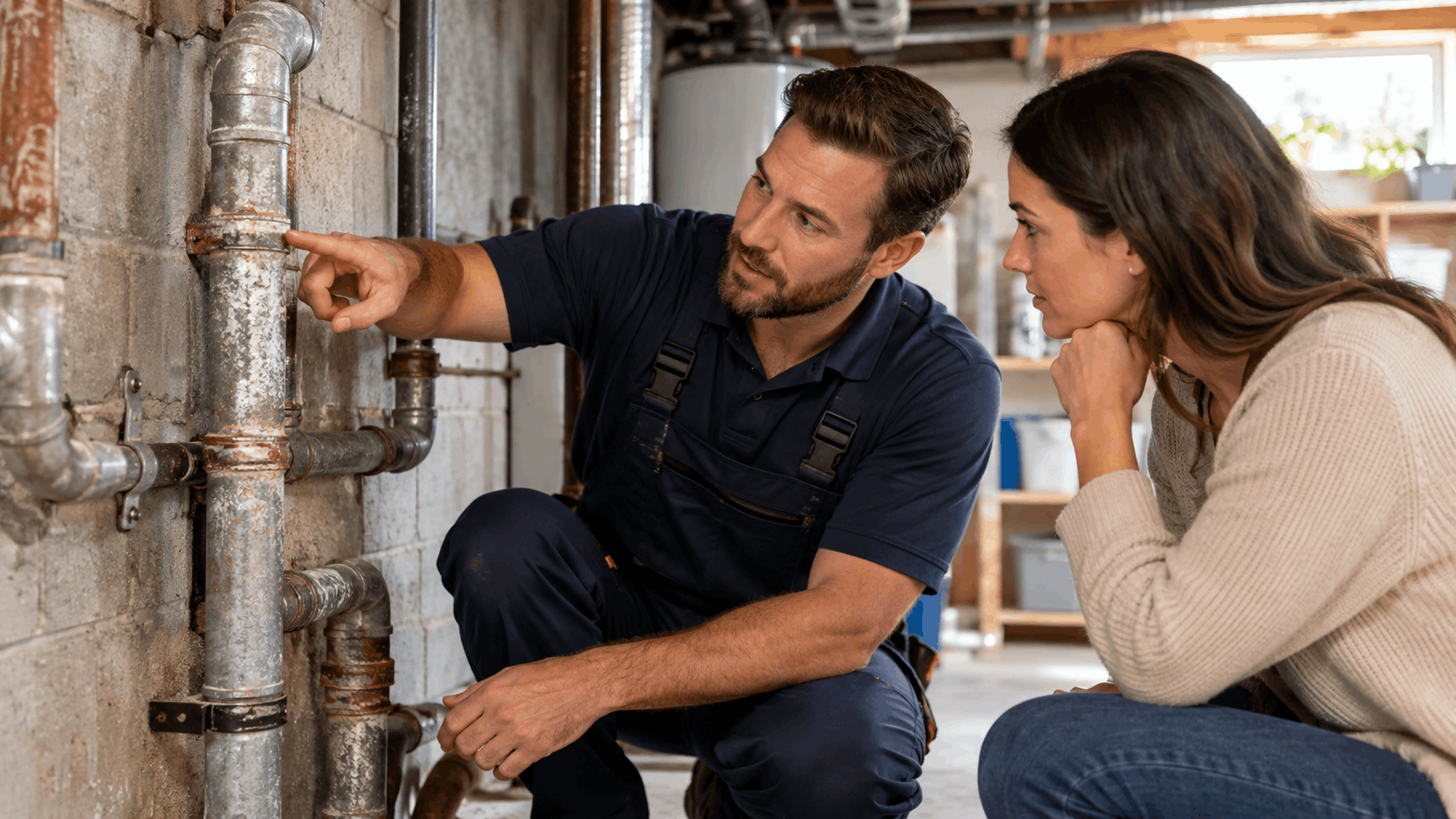
The big question every homeowner faces is whether to patch the problem or replace everything. There is no single right answer. It depends on how far the corrosion has spread and how long you plan to stay in the home.
Both spot repair and a full repipe have their place. The goal is to match the fix to the actual condition of your pipes.
When Spot Repairs Make Sense
Sometimes replacing one failing section is the right call. If a single pipe develops a pinhole leak but the rest of the system tests clean, a section replacement solves the problem without a big project. This works best in homes where the galvanized lines are not too far gone.
Spot repairs also help in emergencies. When a pipe bursts and you need water restored fast, fixing the broken section gets the house running again. Our burst pipe repair service handles those urgent situations day or night.
The trade-off is that patching old galvanized pipe often just delays a bigger problem. If the rest of the system is corroded, fixing one spot means the next leak is only a matter of time. You end up paying for repair after repair.
We are honest about this. If a spot repair makes sense, we say so. If it is throwing good money after bad, we explain why a fuller fix will serve you better.
Why Whole-Home Repipes Are Often Better
When corrosion has spread through most of the system, a whole-home repipe is usually the smarter investment. Instead of chasing leaks one at a time, you replace all the aging pipe at once and start fresh.
The math often favors repiping. Homeowners who patch repeatedly can spend more over a few years than a single repipe would have cost. A repipe also ends the brown water, the low pressure, and the constant worry about the next leak.
A full repipe adds value too. Buyers see new plumbing as a major plus, and a home free of galvanized pipe is easier to sell. It removes a problem that would otherwise show up in every inspection report.
For homes where the corrosion is clearly widespread, repiping is the fix that actually solves the problem instead of managing it. It costs more upfront but saves money and stress over the long run.
Choosing Copper or PEX Piping
When you repipe, you choose a new material. The two main options are copper and PEX, and both stand up far better to Las Vegas hard water than old galvanized steel. Each has strengths.
Copper piping has a long track record. It resists corrosion well, handles heat, and can last for decades. The downsides are a higher price and the fact that very hard water can, over many years, cause some scaling. Many homeowners still prefer copper for its durability.
PEX is a flexible plastic piping that has become popular for repipes. It resists scale buildup, installs more quickly with fewer joints, and costs less than copper. PEX also handles the mineral load in local water without corroding, which makes it a strong choice here.
There is no universal winner. We walk each homeowner through the pros and cons of copper and PEX based on their budget, their home, and how long they plan to stay. Both are a huge upgrade over galvanized.
How Active Plumbing Handles Repipes in Spring Valley
Our repipe process is built to keep disruption low. We start with the full inspection and mapping, then lay out a clear plan showing which lines get replaced and how the work will flow through the house.
During the repipe, we open only the wall sections we need to reach the pipes, and we protect floors and furniture along the way. Our crews work efficiently to keep the house livable, restoring water each day so families are not left without service overnight.
Because we work throughout Spring Valley and the West Sahara area, we know the local homes and how their plumbing tends to be laid out. That familiarity helps us plan repipes more quickly and with fewer surprises.
After the new pipes are in, we handle patching, testing, and cleanup so the home is left in good shape. Our pipe and fixture services cover the whole job from start to finish.
Need Help in Las Vegas?
Active Plumbing serves Las Vegas and all of Las Vegas Valley.
What a Galvanized Pipe Replacement Costs and How Long It Takes
Cost and timeline are the details every homeowner wants upfront. Nobody likes a vague answer. While every home is different, we can share realistic ranges so you can plan your budget.
Several factors drive the final number, and the timeline follows the size and complexity of the job. Here is a breakdown.
Cost Ranges for Spring Valley Homes
For a typical single-family home in Spring Valley, a whole-home repipe often falls in the range of roughly 4,000 to 15,000 dollars. That is a wide span because the number depends heavily on the home.
The main factors that move the estimate are home size, the number of bathrooms, the pipe material you choose, and how accessible the lines are. A one-story home with an open crawl space costs less to repipe than a two-story home with pipes buried in slab and finished walls.
Material choice matters too. PEX generally comes in lower than copper because it costs less and installs more quickly. Copper runs higher but appeals to homeowners who want its long lifespan. We give a firm estimate after the inspection, not a guess over the phone.
We provide a written price so you know what you are paying before any work starts. No surprise charges show up at the end of the job.
How Long a Typical Repipe Takes
Most single-family repipes in Spring Valley take somewhere between two and five days. The exact project duration depends on the size of the home and how the plumbing is laid out.
A common timeline looks like this. Day one covers running the new pipe lines and making connections. The following day or two handle testing, pressure checks, and switching everything over to the new system. The final stage is patching the wall openings and cleanup.
We keep water running for the household as much as possible during the work. There may be short shutoff periods while we make key connections, but families are rarely left without water for long.
Larger or more complex homes take longer, and we tell you the expected timeline before we begin. That way you can plan around the work with no surprises.
Permits and Local Requirements
Repiping a home requires permits, and that is a good thing. Permits mean the work gets inspected and meets code, which protects you and future buyers. In our area, that process runs through Clark County Building and Fire Prevention.
We handle the permit paperwork and coordinate the inspections for our customers. Homeowners do not have to figure out the county process on their own. We schedule the inspection and make sure the finished work passes.
Permits also give you documentation that the repipe was done right. If you sell the home later, that paper trail shows buyers the plumbing was replaced properly and to code.
Skipping permits to save time or money is a mistake we never recommend. Unpermitted work can cause problems at resale and leaves you without proof the job was done correctly.

Protecting New Pipes and Preventing Future Problems
New pipes are a big investment, and a little care keeps them healthy for decades. The desert climate and hard water put stress on plumbing, so a few smart habits go a long way.
Here are the steps we recommend to Spring Valley homeowners after a repipe or anytime they want their plumbing to last.
Managing Hard Water With Softeners
Hard water is the same force that wore out your galvanized pipes, and it works on new plumbing too, just slower. A water softener removes the calcium and magnesium that cause scale buildup inside pipes and appliances.
Softened water keeps the inside of your new copper or PEX lines cleaner over the years. It also protects your water heater, extends the life of fixtures, and cuts down on spotting and residue around the house.
Installing a softener at the same time as a repipe is a smart pairing. You start fresh with clean pipes and give them the best chance to last. Our water softener installation service handles the setup.
For homeowners who want the benefits without adding salt, our salt-free water conditioning is another option that reduces scale. Either way, treating hard water helps new pipes last longer in Spring Valley.
Routine Plumbing Checkups
A simple maintenance schedule catches small problems before they grow. We suggest having your plumbing looked over once a year, similar to a checkup for your car. It takes little time and prevents big surprises.
During a checkup we look for early signs of leaks, check water pressure, inspect fittings, and test the water heater. Catching a loose fitting or a slow drip early costs far less than repairing water damage later.
Homeowners can do their own quick checks between visits. Watch for damp spots under sinks, listen for running water when no taps are on, and keep an eye on your water bill for unexplained jumps.
A consistent maintenance schedule keeps your whole plumbing system in good shape. It is the cheapest insurance against the kind of emergency that ruins a weekend.
Watching Pressure and Temperature
Water pressure and heater temperature both affect how long new pipes last. Very high pressure stresses joints and fixtures over time. Most homes run best between 40 and 60 psi, and a pressure regulator keeps it in that range.
Heater settings matter too. Water that is too hot puts extra strain on pipes and raises the risk of scale forming more quickly. Keeping the water heater at a reasonable temperature protects both the pipes and your energy bill.
Monitoring these two things is easy and pays off. A simple pressure gauge from the hardware store lets you check pressure yourself, and a quick look at the heater dial confirms the temperature.
If your pressure runs high or your heater needs attention, our water heater services can adjust or repair the system. Protecting your new copper or PEX lines starts with keeping these numbers in check.
Need Help in Las Vegas?
Active Plumbing serves Las Vegas and all of Las Vegas Valley.
Why Spring Valley Homeowners Call Active Plumbing
Plenty of plumbers work in Las Vegas, but local experience with galvanized pipe makes a difference. Our team has spent years in Spring Valley homes, so we know the housing eras, the water conditions, and the common problems before we even walk in.
Here is what homeowners can expect when they call us for aging pipe work.
Local Knowledge of Spring Valley Homes
We know the homes near Flamingo Road, Durango Drive, and the older tracts that make up much of Spring Valley. When a homeowner describes brown water or weak pressure, we often have a good idea of the age and layout before we arrive.
That local knowledge saves time. We understand how plumbing was run in the different building eras and where galvanized lines tend to fail in these houses. It helps us diagnose more quickly and recommend the right fix.
Every neighborhood has its quirks. The older sections near the center of Spring Valley carry more galvanized pipe, while newer edges lean toward copper and PEX. We adjust our approach based on where you live and when your home was built.
This familiarity is something a plumber from out of the area simply cannot match. We have worked on hundreds of homes across the valley, and that experience shows in the quality of our advice.
Upfront Estimates and Honest Advice
Nobody likes surprise bills. We give a written price so you know the cost before work begins. Our estimates spell out what is included.
We are also honest about what your home actually needs. If a spot repair will hold and save you money, we tell you. If the corrosion is widespread and a repipe is the smarter move, we explain why instead of pushing the biggest job.
That honest approach has built our reputation across Las Vegas. Homeowners trust advice that puts their interests first, and repeat customers and referrals are the result. You can read more about our team on our about page.
Our goal is a fix that lasts, not the most expensive option on the menu. Clear pricing and straight talk are how we do business.
Fast Response Across the Valley
Plumbing problems do not wait for business hours. A burst pipe or major leak needs attention right away, and our location in Las Vegas lets us reach Spring Valley quickly for emergencies.
We keep crews ready for urgent calls. When water is running where it should not be, fast response limits the damage and saves you money on repairs. Our emergency plumbing service is there when you need it.
Because we cover the whole valley from a central base, we can get to Spring Valley, Summerlin, Enterprise, and the surrounding areas without long delays. Quick arrival matters most when a pipe fails at the worst possible time.
Whether it is a scheduled repipe or a middle-of-the-night emergency, we treat every call with the same care. Getting your home back to normal fast is what we aim for.
Final Thoughts
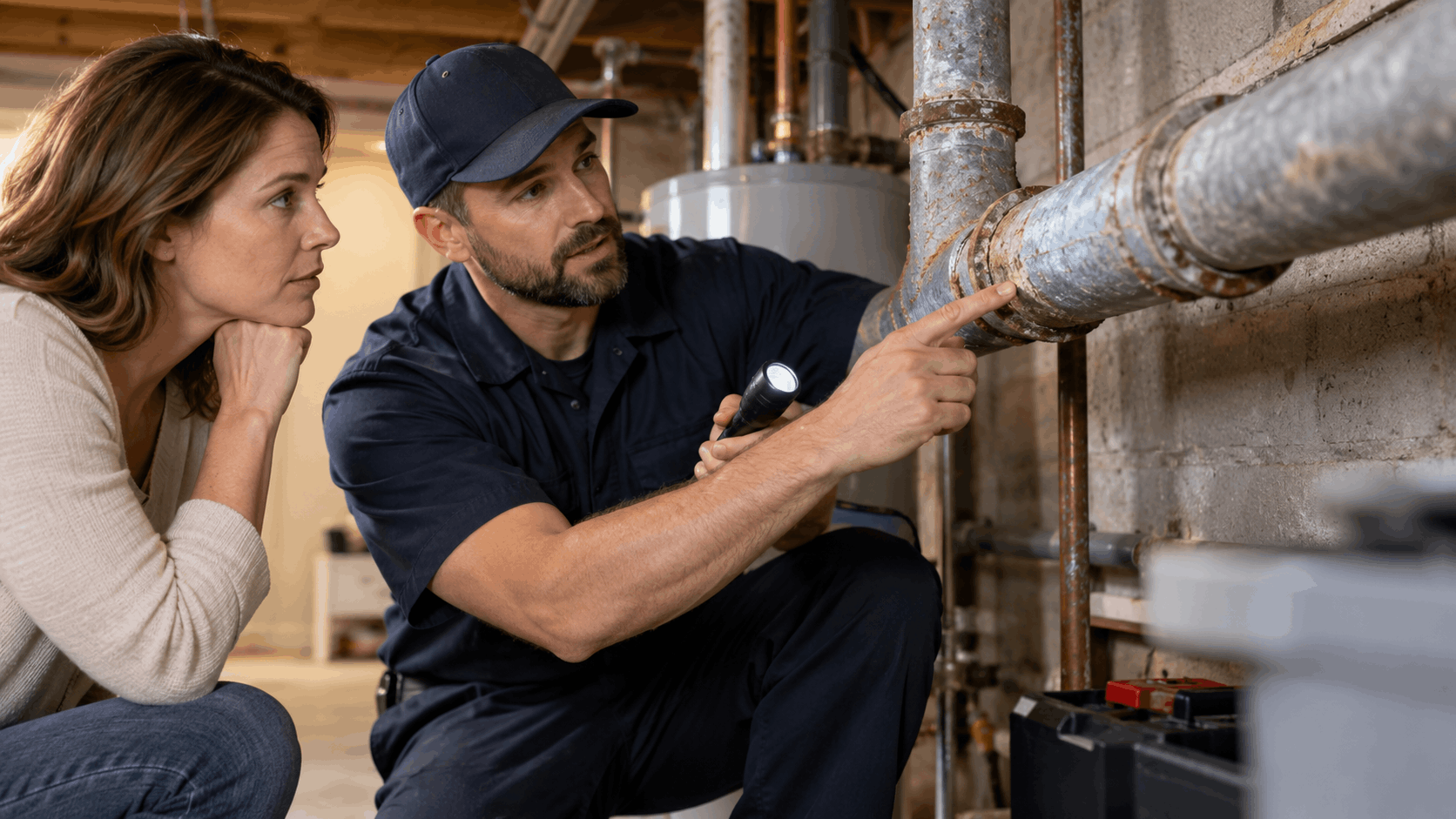
Aging galvanized pipes are a common story in older Spring Valley homes, and the signs are usually clear once you know what to watch for. Brown water, weak pressure, leaks, and a metallic taste all point to steel pipe corroding from the inside. Las Vegas hard water only speeds the process up.
The right fix depends on your home. Spot repairs work for isolated problems, while a whole-home repipe with copper or PEX solves widespread corrosion for good. A proper inspection tells you which path makes sense.
If you are dealing with any of these warning signs, our team at Active Plumbing is ready to help. Contact us for an inspection and honest estimate, and let us help you get clean, strong water flowing through your Spring Valley home again.
Frequently Asked Questions
- What are galvanized pipes and why do they fail?
- Galvanized pipes are steel pipes coated with a protective layer of zinc. The zinc guards against rust for a while, but it wears away over the decades. Once it is gone, the raw steel underneath is exposed to water and begins to rust from the inside out. Hard water speeds this up, which is why these pipes eventually clog, leak, and shed rust into your water.
- How long do galvanized pipes usually last?
- Galvanized pipes typically last around 40 to 60 years under normal conditions. In Las Vegas, the hard water served across the valley shortens that lifespan by driving more quickly mineral buildup and corrosion inside the lines. Many homes near Jones Boulevard and Rainbow are well past that window. If your home was built before the 1970s with original piping, the pipes are likely near or beyond the end of their useful life.
- Is rusty water from old pipes safe to drink?
- The rust particles themselves are iron and not usually a major health threat in small amounts, but they affect taste and can stain fixtures and laundry. The bigger concern is what else might be in the water, such as lead from older connections. We recommend a water test to know for sure. If lead or high contaminant levels show up, replacing the pipes and connections removes the source.
- How much does it cost to replace galvanized pipes in Spring Valley?
- A whole-home repipe in Spring Valley generally runs between roughly 4,000 and 15,000 dollars. The final price depends on home size, number of bathrooms, whether you choose copper or PEX, and how easy the pipes are to reach. A one-story home with accessible lines costs less than a two-story home with pipes in the slab. We give a firm estimate after inspecting the system.
- Should I repair or fully repipe my home?
- Spot repairs make sense when a single section fails and the rest of the system tests clean. If corrosion is widespread, repairs only delay the next leak and you end up paying repeatedly. A full repipe costs more upfront but solves the problem for good and adds value to the home. Our inspection shows which option fits your situation, and we give honest advice either way.
- Is copper or PEX better for replacement?
- Both stand up to Las Vegas hard water far better than galvanized steel. Copper has a long track record, resists corrosion, and lasts for decades, though it costs more. PEX is flexible, resists scale, installs more quickly with fewer joints, and costs less. Neither is a wrong choice here. We help each homeowner pick based on budget, the home, and how long they plan to stay.
- How long does a whole-home repipe take?
- Most single-family repipes in Spring Valley take two to five days. A common timeline runs new lines on the first day, handles testing and switchover over the next day or two, then finishes with wall patching and cleanup. Larger or more complex homes take longer. We keep water running for the household as much as possible and tell you the expected timeline before starting.
- Do I need a permit to replace pipes in Clark County?
- Yes, repiping a home requires a permit, which ensures the work is inspected and meets code. The process runs through Clark County Building and Fire Prevention. We handle the permit paperwork and coordinate the inspections for our customers, so you do not have to deal with the county yourself. Permits also give you documentation that proves the work was done properly, which helps at resale.
- Will a water softener help my new pipes last longer?
- Yes. Hard water is what wore out your galvanized pipes, and it works on new plumbing too. A water softener removes the calcium and magnesium that cause scale buildup inside pipes, water heaters, and fixtures. Softened water keeps new copper or PEX lines cleaner over the years and extends the life of your whole system. Installing a softener along with a repipe is a smart pairing in Spring Valley.
- Does Active Plumbing serve all of Spring Valley?
- Yes, we cover all of Spring Valley and the surrounding Las Vegas areas, including neighborhoods near Flamingo Road, Durango Drive, Twain Avenue, and West Sahara. Our central Las Vegas base lets us reach local homes quickly for both scheduled work and emergencies. Whether you need an inspection, a spot repair, or a full repipe, our team works throughout the valley and can be at your home when you need us.
Licensed plumbing professionals serving Las Vegas and Las Vegas Valley.
Licensed in Nevada · License #0047021
Last updated on
Why trust Active Plumbing?
Founded in 1991, Active Plumbing is a licensed and insured plumber serving Las Vegas and Las Vegas Valley. All content is reviewed by our licensed technicians.

Need Help in Las Vegas?
Active Plumbing serves Las Vegas and all of Las Vegas Valley.
Related Articles
How Caliche Soil Shapes Every Underground Pipe Decision in the Las Vegas Valley
Caliche soil shapes every buried pipe decision in the Las Vegas Valley. Learn how this hardpan affects trenching, pipe materials, sewer and water lines, and cost.
Emergency Plumbing in Spring Valley and the Chinatown Corridor: Restaurant After-Hours Failures
A local guide to emergency plumbing for restaurants in the Spring Valley and Chinatown corridor, covering after-hours kitchen failures, real costs, fast response, and prevention.
What Henderson Homeowners in Green Valley Should Know About Aging Pipes
Green Valley homes from the 1980s and 1990s are hitting the age where pipes fail. Learn the warning signs, pipe materials, and repair options for aging Henderson plumbing.