Water Damage Claims in Spring Valley and What Insurance Covers on a Burst Pipe
Key Takeaways
- Most policies cover sudden, accidental water damage from a burst pipe but usually not the repair of the pipe itself or a long-running leak denied as maintenance.
- Adjusters ask how long the water was running because a sudden burst is covered while a gradual leak is often denied, so documenting the sudden cause matters.
- Many policies cover tear-out to reach a failed line, which matters on slab-on-grade homes, but that is often a separate coverage line to confirm with your carrier.
- Central Spring Valley tract housing falls in the polybutylene window of roughly 1978 to 1995 and has copper at pinhole age; very hard water at about 280 ppm speeds the wear.
- Spring Valley is unincorporated Clark County, so permits and inspections run through the county, confirmed from the parcel, and permitted work needs a licensed contractor.
- Typical valley ranges are burst pipe repair $200 to $800, slab leak detection $150 to $300, slab leak repair $500 to $3,000, and whole-house repipe $4,000 to $15,000.
- The homeowner's real out-of-pocket is usually the deductible plus the uncovered pipe repair, so a small loss near the deductible may be cheaper to pay directly.
- Active Plumbing, licensed since 1991 as NSCB #0047021, arrives in 30 to 60 minutes, documents the cause for the claim, and gives a written price before work starts.
In This Article
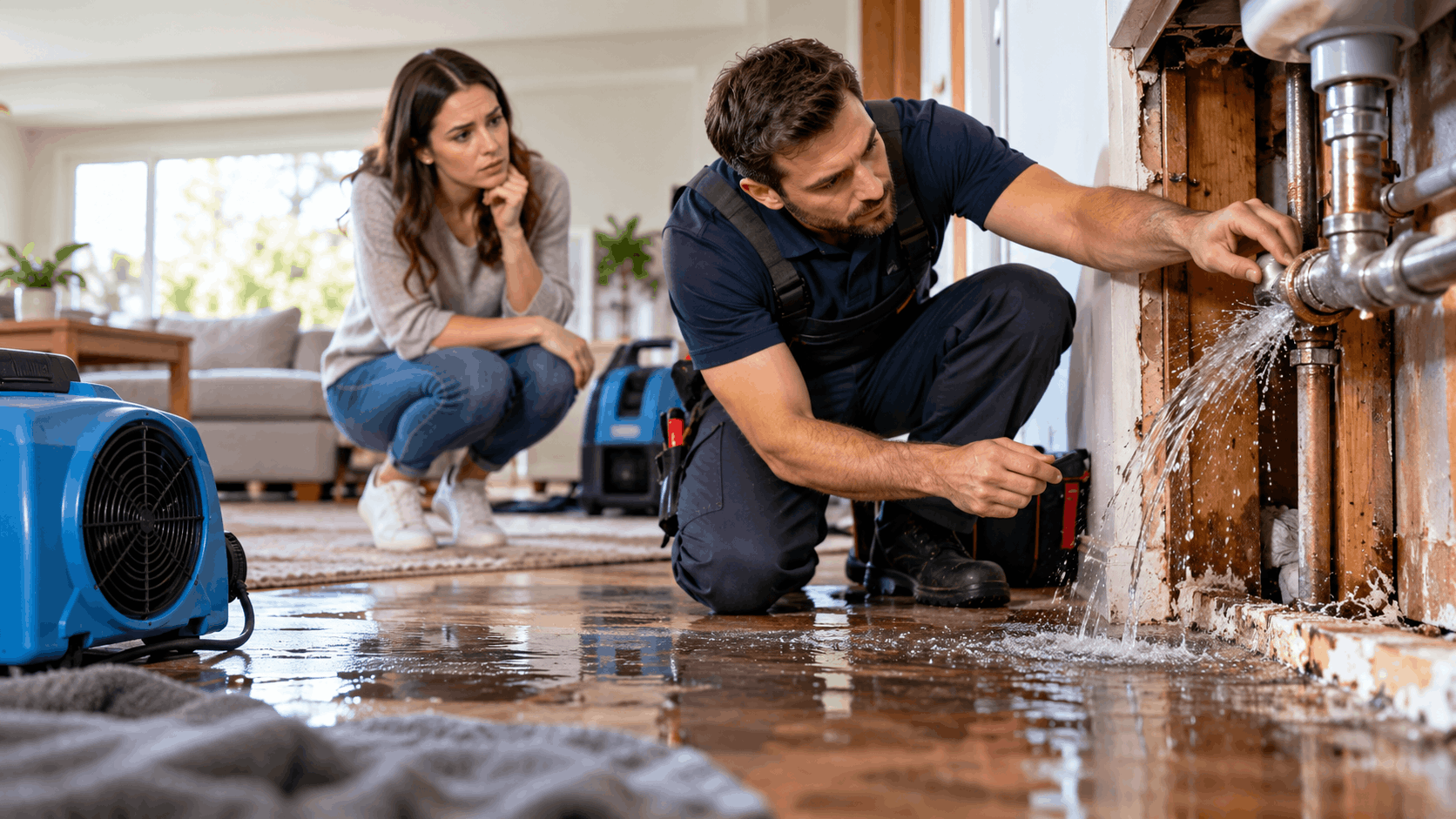
A homeowner near Rainbow and Flamingo walks into the kitchen and finds water running down a wall or spreading across the floor. The first thought is not about plumbing. It is about money, and whether insurance will pay for any of this. The short answer is that most homeowner policies cover sudden, accidental water damage from a burst pipe, meaning the ruined drywall, flooring and cabinets. What they usually do not cover is the repair of the broken pipe itself, and they almost always deny a slow leak that has been dripping for months.
That one distinction decides how most of these claims go. Insurance is built to pay for a disaster that happens all at once, not for wear that a homeowner was supposed to maintain. A pipe that lets go overnight is a very different claim from a fitting that has been weeping behind a cabinet since last spring.

What a Standard Homeowner Policy Usually Covers on a Burst Pipe?
Most burst pipe insurance coverage follows a predictable split, though the exact terms live in your own policy. The resulting water damage to the home is generally covered. The repair of the pipe that failed is generally not. That surprises people, because they assume a water damage claim pays for everything connected to the water.
The reason comes down to how policies define a covered loss. Insurers pay for sudden and accidental events, not for the upkeep of the plumbing system. The pipe is yours to maintain. The damage the water caused to your floors and walls is the covered event. Keeping those two ideas separate is the biggest thing a homeowner can learn before they ever file.
| Item | Usually Covered | Usually Not Covered |
|---|---|---|
| Water damage to drywall, flooring, cabinets | Yes, if sudden and accidental | - |
| Drying and water extraction | Yes | - |
| Repair of the broken pipe itself | - | Often the homeowner's cost |
| Tear-out to reach the pipe | Often covered, confirm with carrier | - |
| Slow leak over months | - | Often denied as maintenance |
| Sewer or drain backup | - | Often needs a separate rider |
Treat the table as general policy practice, not a Spring Valley rule. Your declarations page and your carrier are the final word on what applies to your loss.
Sudden and Accidental Damage Versus Gradual Leaks
The line most policies draw is between sudden and accidental damage and gradual damage. A pipe that bursts without warning is the classic covered event. A slow drip that ran for months before anyone noticed is usually treated as a maintenance problem, and maintenance is the homeowner's job.
That is why the adjuster asks how long the water had been running. The answer changes the outcome of the claim. If a fitting has been weeping behind a wall long enough to stain and soften the drywall, an adjuster can argue the loss was gradual and avoidable. If a line split overnight and flooded a room, the sudden and accidental argument holds.
Gradual leak denial is common because the evidence is visible in the damage itself. Rusty staining, layered mineral buildup, and widespread mold all point to a long-running problem. A clean break with fresh water points to a sudden one. The physical signs tell the adjuster a story whether the homeowner wants them to or not.
This is also why acting fast matters beyond just saving the house. The sooner a homeowner reports and documents a burst, the easier it is to show the loss was sudden rather than something that built up over time. Delay works against the claim.
Damage to the Home Versus Repairing the Pipe Itself
Here is the point most homeowners misunderstand. A water damage claim commonly pays to replace the soaked drywall, warped flooring and swollen cabinets. It does not usually pay to fix the broken pipe that caused all of it.
Think of the pipe as the cause and the wet floor as the covered result. The policy responds to the property damage. The plumbing repair that stops the water is considered part of maintaining your own system. That split catches people off guard when the restoration check arrives and the plumbing invoice is not in it.
In practice this means a burst pipe claim often has two bills. One is the restoration work, which the carrier may cover after the deductible. The other is the plumbing repair, which the homeowner often pays directly. Knowing this up front keeps the final numbers from feeling like a surprise.
It also explains why a clear plumbing diagnosis matters so much. The faster the broken line is found and stopped, the less water spreads, and the smaller the covered damage portion becomes. A well-documented repair supports the claim even though the repair itself may not be reimbursed.
Access Costs: Tearing Open a Wall or Slab to Reach the Leak
Reaching a failed line often means opening something up. On an under-slab failure, that can mean cutting into concrete. On a wall or ceiling leak, it means tearing out drywall. Many policies cover the cost of opening and closing that structure to get to the broken line, which matters a great deal on slab leaks.
This tear-out coverage frequently shows up as its own line in the policy rather than being folded into the general water damage coverage. That is worth checking, because slab leak access can be a significant part of the job. Confirm with your carrier how access costs are handled on your policy.
The distinction people miss is that covering the access does not mean covering the pipe. A policy might pay to open the slab and close it back up while leaving the actual pipe repair to the homeowner. Access and repair are separate questions.
For Spring Valley homes built on slab-on-grade foundations, this coverage line can make a real difference. A leak under the floor is one of the harder and costlier failures to reach, and whether the carrier helps with the tear-out changes the homeowner's out-of-pocket math considerably.
Deductibles, Limits and Water Backup Riders
Every claim runs through the deductible. The homeowner pays that amount first, and the policy covers the covered loss above it. On a small water damage claim, the deductible can eat most or all of the payout, which is why a minor loss near the deductible may not be worth filing at all.
Policy limits cap what the carrier pays for the covered loss. Most burst pipe damage falls well within those limits, but it is still worth knowing where the ceiling sits before a major loss. The declarations page lists both the deductible and the limits.
Sewer and drain backup is a separate matter. It is often a water backup endorsement that a homeowner has to add, not something included in a standard policy. A floor drain backing up during a summer monsoon storm is a different event from a supply line bursting, and the coverage can be different too.
Before filing, a homeowner should weigh the full damage against the deductible plus the uncovered pipe repair. If the total is close to the deductible, paying directly is often the smarter move. If a room is flooded and cabinets are ruined, a claim usually makes sense.
Get Your Quote
Tell us what's going on and we'll get back to you. We're open 24/7.
Why Pipes Burst in Spring Valley Homes?
Coverage questions make more sense once a homeowner understands what actually fails here. Spring Valley grew in distinct waves, and the pipe in the ground reflects the decade a home went up. The build era behind the walls is the single best predictor of what is likely to let go.
Local conditions pile on from there. Very hard water, slab-on-grade construction, desert heat and the occasional freeze all put stress on aging plumbing. These are the real burst pipe causes in Spring Valley plumbing, and each one affects how a claim plays out.
The Build Era Behind the Walls in Central Spring Valley
Central Spring Valley, roughly between Rainbow, Jones, Flamingo and Tropicana, is the large body of tract housing from the late 1970s, 1980s and early 1990s. Production builders delivered it in phases, and that window lines up almost exactly with the polybutylene era of roughly 1978 to 1995. Polybutylene is the gray plastic supply pipe that is now a standard repipe candidate because it fails at the fittings.
When polybutylene lets go, it often does so suddenly at a fitting, which is the kind of failure that fits the sudden and accidental definition. That same central Spring Valley window is also where copper has reached pinhole age. Copper does not last forever, and decades of very hard water working through it eventually produces pinhole leaks that can turn into a burst.
South Spring Valley, toward the Rhodes Ranch corridor and the Enterprise boundary, is a decade or more newer, built through the 1990s and 2000s. That construction largely postdates polybutylene, but it sits inside the Kitec window of about 1995 to 2007. Kitec fittings appear in some of this later construction and are another known trouble spot.
None of this should be assumed from the build year alone. A home in the polybutylene window may have already been repiped, and the only way to know what is behind the walls is to confirm it on site. The build era tells us where to look, not what we will find.
Very Hard Water and Fixture Failures
The Southern Nevada Water Authority reports the valley's water hardness at about 280 parts per million, or roughly 16 grains per gallon, which is categorized as very hard. That number explains more plumbing failures here than almost anything else. Hard water deposits calcium and magnesium scale throughout a system over the years.
Scale narrows the bore of supply lines, clogs aerators and shower heads, and builds up inside the small passages of mixing valves and cartridges. Over a long enough time, that buildup stresses older pipe and the fixtures attached to it. A line already thinned by age and scale has less margin before it fails.
The connection to burst pipes is indirect but real. Hard water does not blow a pipe apart on its own, but it accelerates the wear that eventually lets an old copper or aging system give way suddenly. The same mineral load that leaves white crusting on fixtures is working inside the pipe where no one can see it.
This is why water heater flushing and whole-house water treatment are standard responses in this valley. They are not luxuries here. They slow the scale that shortens the life of water heaters, fixtures and supply lines.
Slab-on-Grade Construction and Under-Slab Line Failures
Most of the valley, Spring Valley included, is built slab-on-grade. The supply lines run under a concrete floor rather than through an accessible basement or crawlspace. That makes under-slab supply line failures their own category of problem, and a difficult one.
A slab leak is hard to spot because the water is hidden beneath the floor. Homeowners often notice it only when a section of floor feels warm underfoot, when a water bill jumps for no reason, or when they hear water running with every fixture off. By then the leak has usually been going for a while.
Because reaching the pipe means cutting into the slab, these failures tie directly back to access and tear-out coverage. The cost of opening and closing the concrete can rival the cost of the pipe repair itself. This is exactly the situation where confirming your policy's tear-out coverage pays off.
When a slab leak is suspected, slab leak detection and repair pinpoints the failure before anyone starts breaking concrete. Finding the exact spot keeps the opening small and the documentation clear for the adjuster.
Winter Freezes and Summer Heat on Exposed Lines
Residents assume the desert never freezes, and that assumption causes burst pipes. Winter nights in the valley can still drop below freezing, and exposed or poorly insulated lines and hose bibbs are the first to go. A line that freezes, expands and splits produces a sudden break, which is the kind of failure that fits the sudden and accidental question squarely.
Summer brings the opposite stress. Intense heat and UV degrade exposed exterior lines over time. Hose bibbs, irrigation backflow assemblies and any line running along a sunbaked wall take a beating that softer-climate plumbing never sees.
Both extremes hit the same vulnerable spots: anything outdoors, in the garage, or in an unconditioned space. These are the lines a homeowner can actually see and protect, which makes them worth attention before each season turns.
A frozen line that bursts is generally a strong candidate for a covered claim because the event is clearly sudden. The adjuster will still want to know the cause, which is one more reason to document the failure and have a plumber confirm what happened.
Need Help in Las Vegas?
Active Plumbing serves Las Vegas and all of Las Vegas Valley.
The First Hour After a Pipe Bursts: Steps That Protect Your Claim
The first hour decides a lot. Fast, calm action protects both the home and the eventual claim. The goal is to stop the water, capture evidence, limit further damage, and get a licensed plumber on the cause.
- Stop the water at the main shutoff first. Everything else waits until the flow is off.
- Kill power to affected areas safely if water is near outlets or electrical panels.
- Photograph and film everything before you move or dry a single thing.
- Begin limiting damage by moving belongings and starting to dry out, without making permanent repairs.
- Call a licensed plumber to find, stop and document the failed pipe.
Shut Off the Water and Stop the Source
The main water shutoff is the most important valve in the house during a burst. Finding it fast and closing it stops the source, and that single act often decides whether this becomes a small claim or a large one. Every minute the water runs, more flooring and drywall soak through.
In most Spring Valley homes the main shutoff is near where the water line enters the house or at the meter near the curb. It is worth locating it before an emergency, because hunting for it while water pours out costs the exact minutes that matter most.
Once the water is off, shut power to the affected areas if there is any chance water has reached outlets, fixtures or the panel. Water and electricity together are a serious hazard, so if there is any doubt, stay clear and call for help rather than wading in.
Stopping the water quickly is the single best thing a homeowner can do for the claim. A contained leak means less covered damage, a smaller restoration bill, and a cleaner sudden and accidental story for the adjuster.
Document Everything Before You Clean Up
Before the mop comes out, the camera does. Photograph and film the standing water, the source, the soaked materials and any ruined belongings from several angles. This is the evidence that supports a water damage claim, and it cannot be recreated once the cleanup starts.
Note the time you discovered the leak and what you saw. A short written record of when the water appeared and where it came from backs up the proof of loss and helps establish that the failure was sudden rather than long-running.
Save ruined items rather than throwing them out right away. An adjuster may want to see the damaged property, and photos plus the actual items make a stronger case than a verbal description. Set them aside where they will not cause more damage.
Good claim evidence protects the sudden and accidental argument. The clearer the record that this happened all at once, the harder it is for a carrier to reclassify the loss as gradual maintenance.
Mitigate Damage Without Over-Repairing
Homeowners have a duty to mitigate, meaning they must take reasonable steps to prevent further damage once a loss occurs. That includes moving belongings out of the water, starting to dry the area, and extracting standing water. A carrier can push back if a homeowner let avoidable damage pile up after the fact.
There is a limit, though. Mitigation is not the same as permanent repair. Do not rebuild walls, replace flooring or reinstall cabinets before the adjuster has seen the damage, because once it is fixed the evidence of the loss is gone.
Drying the area quickly matters more here than in many places. Standing water in warm Las Vegas conditions grows mold fast, and the same hard water that scales pipes does nothing to slow that. The quicker the extraction and drying start, the lower the mold risk.
The balance is to stop the damage from spreading while preserving the scene. Dry it out, move what you can, document as you go, and leave the permanent work until the claim is squared away.
Call a Licensed Plumber to Stop and Diagnose the Leak
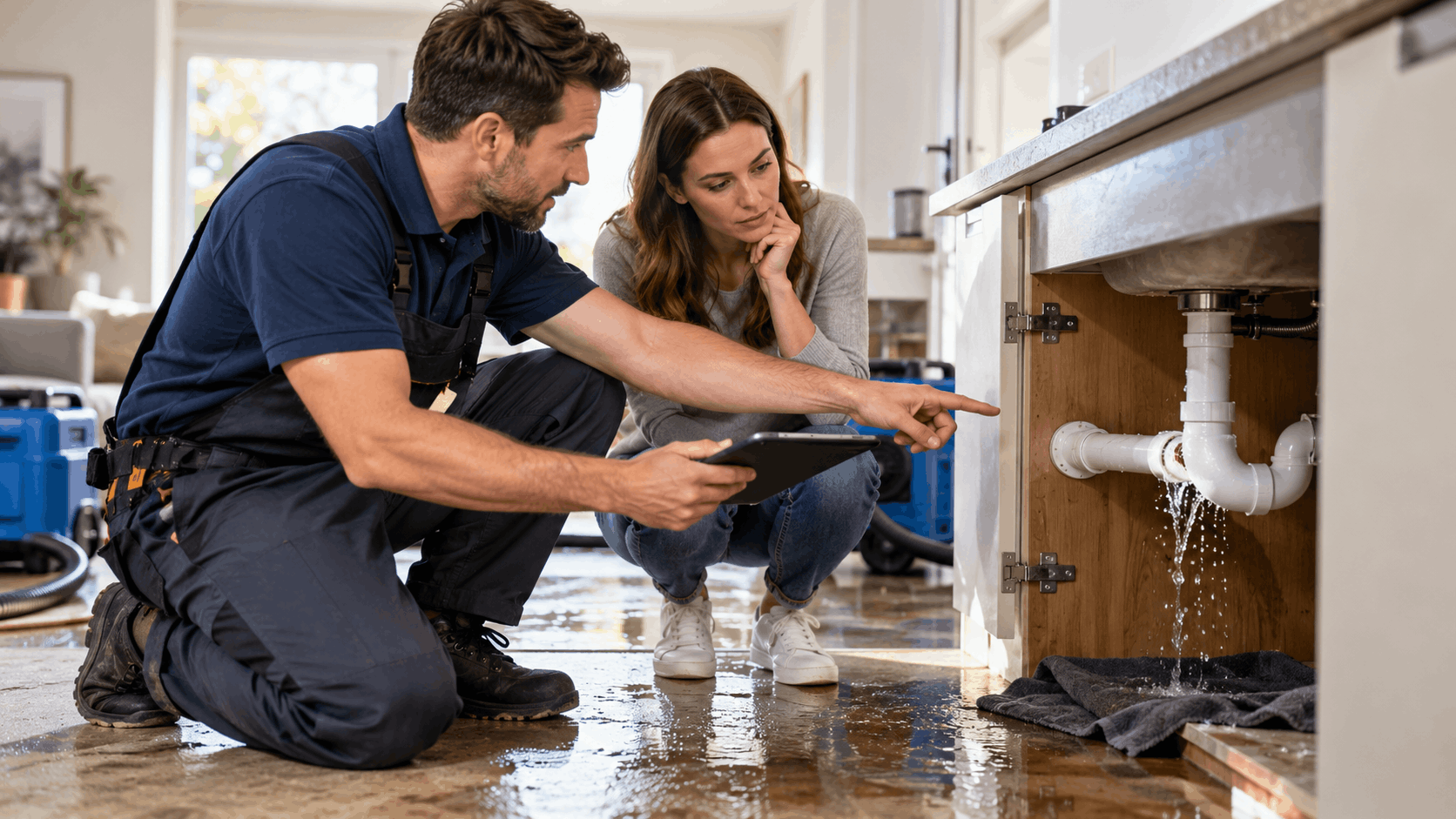
A licensed plumber who finds and documents the failed pipe gives the adjuster a clear cause for the loss. That diagnosis is what connects the water damage to a sudden event, which is exactly what a water damage claim needs. A vague cause invites a denial; a documented one supports the file.
Permitted repairs must be performed by an appropriately licensed contractor. Insurers tend to want properly done, documented work, so using a licensed plumber protects both the repair and the claim. A homeowner is entitled to ask for a license number and verify it.
If you rent, the order changes. Nearly half of Spring Valley homes are rented, which means a large share of these calls start with the landlord or property manager, not the plumber. A renter should call the property manager first, since they authorize the repair and carry the dwelling coverage.
For a leak hidden in a wall or under the slab, electronic leak detection locates the failure without tearing the whole house apart. Pinpointing the source keeps the repair focused and the documentation precise.
Filing the Water Damage Claim: How the Process Works
Once the water is off and the damage is documented, the claim process begins. Knowing the steps in order keeps a Spring Valley homeowner from losing time at a point where time matters. The path runs from reporting the loss to the adjuster visit to the estimates and, sometimes, to a dispute.
Each step builds on the last. Prompt reporting, clear documentation and a solid cause from the plumber all feed into a cleaner outcome. Rushing in without evidence or dragging your feet both work against the claim.
Reporting the Loss and Opening the Claim
Notify the carrier promptly. Most policies require prompt notice, and delay can complicate the sudden and accidental argument by raising questions about how long the water was running. The call that opens the claim should happen soon after the leak is stopped and documented.
When you report, you get a claim number. Keep it handy, because every follow-up conversation, estimate and document ties back to it. Write it down along with the name of the person you spoke to and the date.
Use that first call to ask what the policy covers for this specific loss. Ask about the deductible, whether tear-out is covered, and how the pipe repair is treated. Getting those answers early shapes every decision that follows.
Prompt notice also protects you if the carrier later questions the timeline. A claim reported the same day a pipe burst is far easier to defend as sudden than one reported weeks later.
The Adjuster Visit and the Scope of Loss
The adjuster inspects the damage and writes a scope of loss, which is the detailed list of what was damaged and what the carrier will pay to restore. They look at the water-damaged materials, the source of the leak, and the signs that tell them whether the loss was sudden or gradual.
This is where your preparation pays off. Having the plumber's documentation of the cause and your own photos on hand gives the adjuster a clear picture. The more organized the evidence, the less room there is for the scope to shortchange the actual damage.
Walk the adjuster through what happened in order: when you found the water, where it came from, what you did to stop it, and what the plumber found. A clear, consistent account supports the scope and reduces back-and-forth later.
The scope of loss drives the estimate and the payout, so it is worth reviewing carefully. If something is missing from the scope, it is easier to address it at the inspection than after the check is cut.
Repair Estimates and the Plumber's Role
There are usually two separate estimates on a burst pipe. One is the water-damage restoration estimate, covering the drying, demolition and rebuild of the damaged areas. The other is the plumbing repair estimate, covering the fix to the broken line.
Keeping these straight matters because the carrier often handles them differently. The restoration estimate feeds the covered claim. The plumbing repair estimate is frequently the homeowner's own cost, as covered earlier.
A written plumbing price supports the claim file by documenting the cause and the fix in clear terms. Even when the pipe repair is not reimbursed, that written estimate shows the adjuster exactly what failed and what was needed to stop it.
Having both estimates in hand also helps a homeowner understand their true out-of-pocket. The deductible, plus the uncovered pipe repair, is the real number to plan around, and two clean estimates make that math straightforward.
When a Claim Gets Denied or Underpaid
Claims get denied or underpaid for a handful of common reasons. The most frequent is the gradual damage exclusion, where the carrier decides the leak was long-running maintenance rather than a sudden event. Missing coverage, like a backup not covered without a rider, is another.
If a claim is denied, ask for the denial in writing with the specific policy language behind it. A written denial tells you exactly what the carrier relied on, which is what you need to respond. Vague verbal denials are hard to challenge.
Review your policy against the stated reason. If the denial rests on a gradual-damage call but your documentation shows a sudden burst, that evidence is your argument. This is another place where the plumber's cause documentation and your dated photos carry weight.
Coverage questions on a specific loss should be confirmed with your own carrier, since every policy is worded differently. If a decision still seems wrong after you have reviewed the policy, a homeowner can ask the carrier to reconsider and escalate the matter.
Permits and Which Department Handles Repairs in Spring Valley
Which department governs the repair depends entirely on the address, and Spring Valley trips people up. The mail says Las Vegas, but the jurisdiction is Clark County. That affects permits, inspections and the documentation an insurer may want to see.
Getting the jurisdiction right is a routine first step on any permitted job here. It is a small thing that tells a homeowner the person doing the work actually knows the area.
Spring Valley Is Clark County, Not the City of Las Vegas
Spring Valley is an unincorporated township, so permits, plan check and inspections run through Clark County, not the City of Las Vegas. This is true even though residents and their mailing addresses say Las Vegas. The postal address and the permitting authority are two different things here.
The jurisdiction should be confirmed from the parcel rather than the postal address. A home can sit in unincorporated county while its neighbor a few streets over falls under a city, so the parcel is the reliable guide. Spring Valley fills much of the southwest valley, bounded by Sahara on the north, Decatur on the east, Warm Springs on the south and Hualapai on the west.
For claim-related repairs, naming the correct department matters because insurers and permit offices both expect the paperwork to match the address. A permit pulled with the wrong authority creates delays nobody wants during a flooded-out repair.
When in doubt, confirm the permit position for your specific parcel with Clark County before the work is scheduled. That one check keeps the repair on track and the documentation clean.
Permitted Repairs and Licensed Contractors
Work that requires a permit must be performed by an appropriately licensed contractor. That is the rule, and insurers often prefer permitted, properly documented repairs precisely because they confirm the work was done correctly. A permitted repair creates a paper trail that supports the claim file.
Contractor licensing in Nevada is statewide through the Nevada State Contractors Board, not through the county. A homeowner can verify any plumber's license, classification, status, bond and workers compensation for free at the board's website. That verification is public record.
Asking for and checking a license number is a reasonable step, especially in a market with a known unlicensed trade problem. A legitimate contractor will hand over the number without hesitation. You can confirm it yourself at the Nevada State Contractors Board.
Permitted work and a licensed contractor together protect both the repair quality and the claim. Cutting corners on either can come back to complicate reimbursement or the sale of the home later.
Repiping as a Claim Outcome in Older Tracts
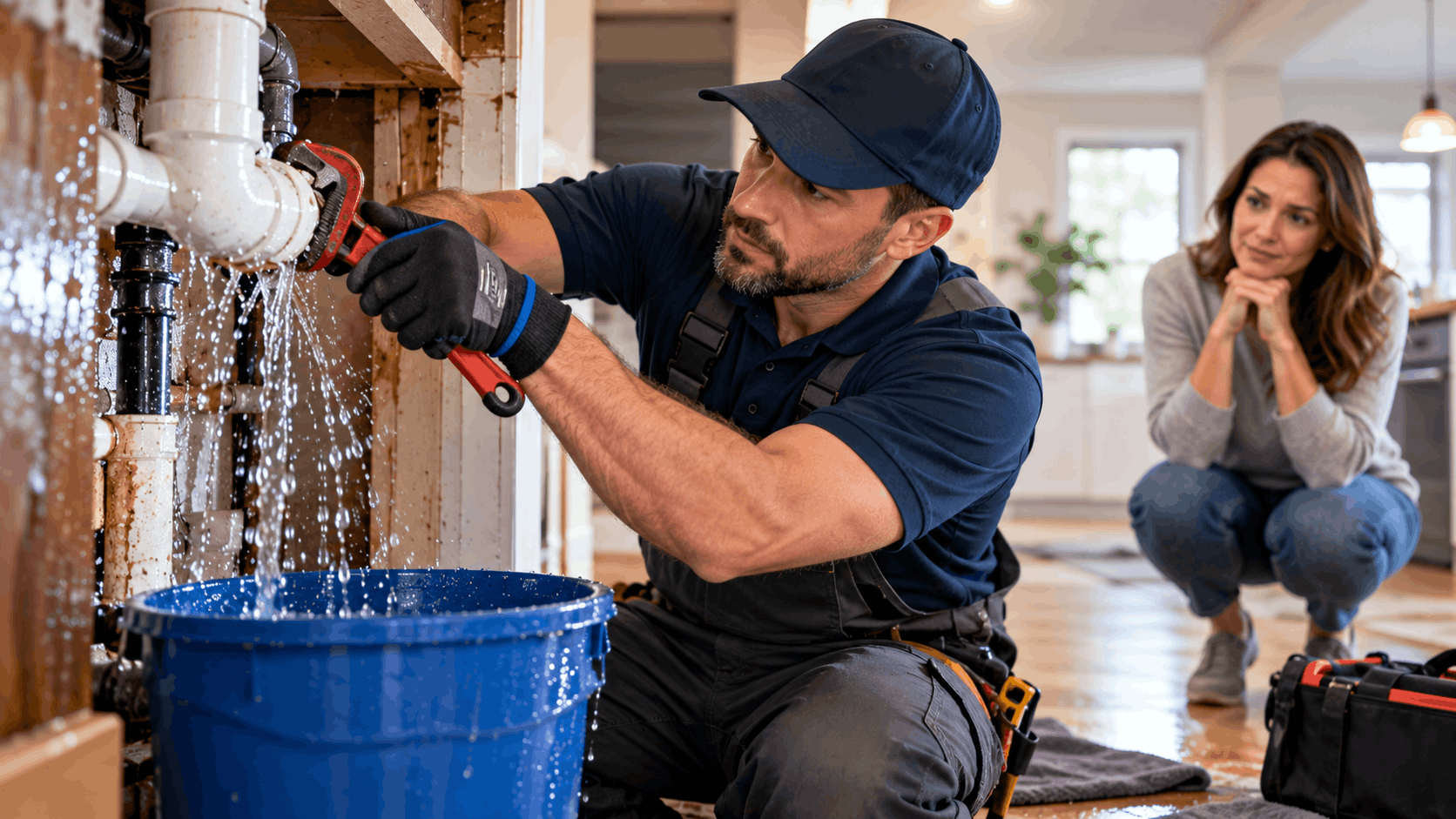
Sometimes the burst that triggered the claim is a symptom, not the whole problem. When a failed polybutylene or aging copper system is the cause, one burst often signals that more are coming. Insurance may pay for the resulting damage from this single event, but the real fix is frequently a repipe.
A repipe is work, not a claim category. The carrier is unlikely to pay to replace an entire aging system just because one section failed. That leaves the homeowner deciding whether to patch the one spot or get ahead of the pattern with a whole-house repipe.
How a repipe gets done is governed by the Southern Nevada Amendments to the Uniform Plumbing Code, adopted by Clark County and the other valley jurisdictions. Those amendments set the materials and methods, and the Building Official is the authority on any alternate method.
In central Spring Valley's polybutylene-era tracts, planning a repipe on your own schedule beats reacting to the next flood. The pipe should always be confirmed on site first, since a home may already have been partly or fully repiped.
Need Help in Las Vegas?
Active Plumbing serves Las Vegas and all of Las Vegas Valley.
What Burst Pipe Repair Actually Costs in the Las Vegas Valley
Beyond the insurance payout, there is the plumbing side of the bill. These are typical market ranges for the Las Vegas Valley, not a quote for any specific job. The actual price depends on the job and is given in writing before work begins.
Knowing the ranges helps a homeowner understand the out-of-pocket math, since the pipe repair is often not covered. The figures below are the ones to plan around.
| Service | Typical Valley Range |
|---|---|
| Burst pipe repair | $200 to $800 |
| Slab leak detection | $150 to $300 |
| Slab leak repair | $500 to $3,000 |
| Electronic leak detection | $150 to $350 |
| Whole-house repipe | $4,000 to $15,000 |
| After-hours emergency service fee | $150 to $300 plus repair costs |
Repair, Detection and Repipe Ranges
A straightforward burst pipe repair typically runs $200 to $800 in the valley, depending on where the break is and how accessible it is. A break in an exposed line is quicker than one buried in a wall or under concrete.
When the failure is under the slab, detection and repair are separate steps. Slab leak detection typically runs $150 to $300, and slab leak repair typically runs $500 to $3,000. Electronic leak detection, used to pinpoint hidden leaks without demolition, typically runs $150 to $350.
When the burst is really a symptom of a failing system, a whole-house repipe typically runs $4,000 to $15,000. That is a planned project rather than an emergency fix, and it replaces the aging pipe that keeps causing trouble.
All of these are typical area ranges. The job in front of you may land anywhere in or around them depending on access, materials and what the inspection turns up, which is why the written price comes after the diagnosis.
Why Caliche Makes Under-Slab and Buried Work Cost More
Caliche is a cemented calcium-carbonate hardpan common across much of the valley, and it drives up the cost of any buried work. It is tough to trench through and hard to bed a pipe into evenly, which makes excavation slower and more expensive than digging in softer ground.
That slower digging is the honest reason buried repairs cost what they do. Breaking through a hardpan layer takes more time, more equipment and more labor than a straightforward dig. It belongs in any real discussion of repair cost here.
Caliche is also abrasive. Where a line runs through it, the hardpan can abrade the buried pipe over time. That is a wear mechanism, not a shifting one, and it is part of why buried lines in parts of the valley need attention.
What caliche does not do is move, swell or crack pipes. Seasonal ground movement and poorly compacted backfill settling under a line are what pull pipes out of grade and create bellies. Those are soil and fill issues, separate from the abrasion caliche causes.
After-Hours and Emergency Charges
Burst pipes rarely wait for business hours. They happen at night, on weekends and over holidays, which is when after-hours rates apply. After-hours emergency calls carry a service fee of $150 to $300 plus repair costs.
That service fee covers coming out when a normal shop would be closed. It is on top of the actual repair, not instead of it, so the total on an overnight burst is the service fee plus whatever the repair runs from the ranges above.
Because stopping the water fast limits the damage, an after-hours call often pays for itself by containing a flood before it ruins more of the house. Waiting until morning to save the service fee can cost far more in soaked flooring and drywall.
For a middle-of-the-night emergency, emergency plumbing service stops the water and stabilizes the situation so the full repair can follow in order. The priority at 2 a.m. is getting the flow off and the damage contained.
What the Deductible Means for Your Out-of-Pocket Cost
Tie the price ranges back to the claim and the real out-of-pocket becomes clear. The homeowner usually pays the deductible plus the uncovered pipe repair. Those two numbers together, not the sticker price of the restoration, are what comes out of pocket.
On a small loss, that math often favors paying direct. A burst pipe repair at the low end of $200 to $800 may cost less than the deductible, which means filing a claim gains nothing and still puts a claim on your record.
On a large loss with ruined flooring and cabinets, a claim makes sense because the covered damage far exceeds the deductible. The pipe repair you pay yourself becomes a small part of the total.
The decision comes down to weighing the deductible against the total damage. When the damage is close to the deductible, pay direct. When it clearly exceeds it, file. Running those numbers before you call the carrier saves second-guessing later.
Preventing the Next Burst and the Next Claim
The best claim is the one you never file. A handful of practical steps, grounded in how homes here are built and what the water does to them, cut the odds of a repeat loss. Prevention is cheaper than restoration every time.
These steps focus on the things a homeowner can control: knowing the shutoff, catching leaks early, protecting exposed lines, and dealing with aging pipe before it fails on its own schedule.
Know Where Your Main Shutoff Is Before You Need It
Every homeowner should know where the main shutoff is and that it actually works, long before a pipe bursts. Finding it in the dark during a flood wastes the exact minutes that decide how bad the damage gets. Locate it on a calm day and make sure everyone in the house knows too.
Test it. Turn it off and back on so you know it moves freely. In 1980s central Spring Valley tract homes, older valves can seize from years of sitting untouched, and a frozen valve is useless in an emergency.
The same goes for fixture valves under sinks and behind toilets. Being able to isolate one fixture lets you stop a leak there without killing water to the whole house. These small valves seize too, so working them occasionally keeps them functional.
If a valve is seized or weeping, replace it before you need it. A working shutoff is the difference between a quick stop and a soaked room, and it is one of the cheapest insurance policies a homeowner has.
Leak Detection Systems and Flushing in Hard-Water Country
A whole-home leak detection system catches a slow leak before it becomes a claim. These systems monitor flow and can alert a homeowner, or even shut the water off automatically, when something is leaking where it should not be. A whole-home leak detection system typically runs $300 to $800.
Catching a slow leak early is exactly what keeps a gradual-damage denial off the table. The system turns a problem the adjuster would call maintenance into a problem you fixed before it spread. A whole-home leak detection system is a strong fit for homes with aging pipe behind the walls.
Regular water heater flushing fights the scale that the very hard valley water deposits. Left unflushed, a tank works harder against a bed of scale on the bottom and fails earlier than its rated life. Flushing clears that buildup and extends the equipment's working years.
In hard-water country, flushing and leak detection are maintenance, not extras. They slow the wear that leads to the next burst and give early warning when something starts to go wrong.
Winterizing Exposed Lines and Hose Bibbs
Before a desert cold snap, insulate exposed exterior lines and hose bibbs. Residents who assume the valley never freezes get caught when a winter night drops below freezing and an uninsulated line splits. A few dollars of pipe insulation prevents a burst.
Hose bibbs are the usual casualties because they stick out from the wall with no protection. Foam covers and faucet insulators are cheap and go on in minutes. Disconnecting hoses before cold nights helps too, since a trapped column of water in the hose can freeze back into the bibb.
Any line in the garage or an unconditioned space deserves attention as well. These spaces are not heated, so they follow the outdoor temperature on the coldest nights. Insulating the runs there closes an easy gap.
A frozen line that bursts creates a sudden break and a mess, so the small effort of winterizing pays off. It takes an afternoon in the fall and spares a homeowner a January emergency.
Addressing Aging Pipe Before It Fails
Confirming what is behind the walls lets a homeowner plan a repipe on their own terms rather than after a flood. Polybutylene, aging copper and Kitec all have known failure patterns, and knowing which one you have changes the plan.
Pipe should be confirmed on site, not assumed from the build year. A home in the polybutylene window may already be repiped, and a newer home may have Kitec fittings nobody flagged. The only reliable answer comes from looking.
Once the material is confirmed, a homeowner can decide whether to plan a repipe. Doing it on a schedule means no emergency rates, no flood damage, and time to budget. Doing it after a burst means dealing with all three at once.
For owners in central Spring Valley's older tracts, getting ahead of the pattern is the smart play. One pinhole or one failed fitting in a system that age usually means more are coming.
Need Help in Las Vegas?
Active Plumbing serves Las Vegas and all of Las Vegas Valley.
How Active Plumbing Handles a Burst Pipe and Water Damage Call
When a Spring Valley homeowner calls with water running, the response is built to protect both the house and the claim. Active Plumbing has served the Las Vegas Valley since 1991 as a fourth-generation family business, some of whose owners are US military veterans.
The work follows a clear order: get there fast, find and stop the cause, document it for the adjuster, and put a written price in the homeowner's hand before any work starts.
Response Across Spring Valley and the Southwest Valley
Technicians arrive in 30 to 60 minutes anywhere in the Las Vegas Valley. That window covers Spring Valley from The Lakes and the custom homes of Section 10 near Desert Inn and Sahara, to the guard-gated golf of Rhodes Ranch, to the dense tract housing along the Rainbow and Flamingo corridors.
That reach matters on a burst pipe because every minute of water running adds to the damage. A fast arrival means the water gets stopped sooner and the covered loss stays smaller.
Having worked the valley since 1991, the team knows the build eras street by street, from the polybutylene-era tracts in central Spring Valley to the newer construction toward the Enterprise boundary. That local knowledge speeds up the diagnosis.
Whether the call is near Spring Valley Hospital on South Rainbow or out toward Hualapai, the response window and the service area are the same across the southwest valley.
Finding the Cause and Documenting It for Your Claim
The diagnostic starts with locating and stopping the leak. For hidden failures, that means electronic leak detection and, under a slab, slab leak detection that pinpoints the break without tearing up the whole floor. Finding the exact spot keeps the opening small.
Once the cause is found, it gets documented so the adjuster has a clear picture of what failed and why. That written record of the cause is what supports the sudden and accidental argument on the claim.
Where a permit applies, the work is done as licensed, permitted work. That keeps the repair correct and gives the insurer the properly documented paperwork they tend to want.
The result is a homeowner who can hand the adjuster a clean story: here is the pipe that failed, here is when and how, and here is what it took to stop it. For hidden leaks, electronic leak detection makes that documentation precise.
A Written Price Before Work Begins
The customer gets a written price before work starts. That is how the job is quoted, so a homeowner knows the number before anyone picks up a tool. It is a business practice, and it also gives the claim file a clear plumbing figure to reference.
A written price lines up neatly with the two-estimate reality of a burst pipe claim. The plumbing repair estimate is documented in writing, which supports the adjuster's scope even when the pipe repair is the homeowner's own cost.
Active Plumbing holds Nevada plumbing license NSCB #0047021, verifiable free at nvcontractorsboard.com, along with the certifications required for the work it performs. A homeowner can check the license, classification, status and bond there in minutes.
Licensed, documented work with a written price up front is what keeps a burst pipe repair clean on both the plumbing side and the insurance side.
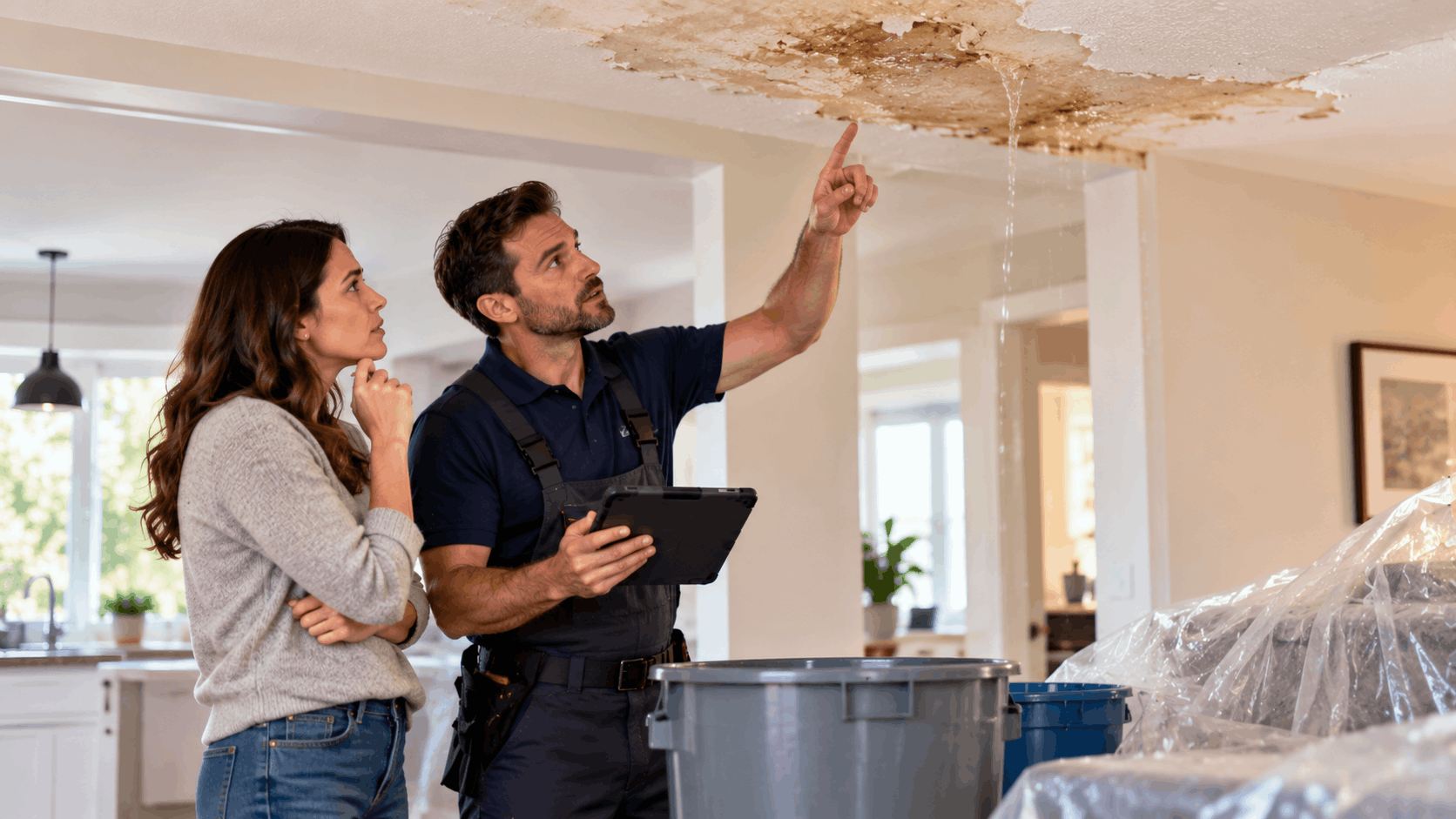
Stopping the Water and Getting It Documented
A burst pipe in Spring Valley is two problems at once: a flooded home and an insurance question. Stopping the water fast, documenting the cause, and getting a written price before work starts keeps both under control. Active Plumbing finds and stops the leak, documents the failure for your adjuster, and puts the price in writing first, with technicians across the valley in 30 to 60 minutes. Call (702) 438-3357 to get the water stopped and the cause documented.
Frequently Asked Questions
- Does homeowners insurance cover a burst pipe in Spring Valley?
- Most policies cover the sudden, accidental water damage a burst pipe causes, such as ruined drywall, flooring and cabinets. What they usually do not cover is the repair of the broken pipe itself or a long-running leak treated as maintenance. Coverage depends on your exact policy, so confirm the specifics with your own carrier before assuming what applies to your loss.
- Will insurance pay to fix the actual broken pipe?
- Usually not. Policies commonly pay for the resulting water damage and often for the tear-out needed to reach the failed line, but the repair of the broken pipe itself is frequently the homeowner's cost. The pipe is considered part of maintaining your own plumbing system. Expect a burst pipe claim to involve two bills, one for restoration and one for the plumbing repair.
- What if the leak was slow and went unnoticed for months?
- Gradual leaks are often denied as maintenance rather than covered as a sudden event. Rusty staining, layered mineral buildup and widespread mold tell an adjuster the water ran a long time. That is why documenting that a burst was sudden matters so much. Clear photos, a noted discovery time, and a plumber's diagnosis of the cause all help establish the loss was accidental.
- How much does burst pipe repair cost in the Las Vegas Valley?
- Typical valley ranges are burst pipe repair $200 to $800. When the failure is under a slab, slab leak detection typically runs $150 to $300 and slab leak repair typically runs $500 to $3,000. These are typical area ranges, not a quote. The actual price depends on the job and is given in writing before work begins.
- Should I file a claim or just pay for the repair?
- Weigh the deductible against the total damage. A small repair near or below the deductible is often cheaper to pay directly, since filing gains nothing and still puts a claim on your record. A large loss with ruined flooring and cabinets usually justifies a claim because the covered damage clearly exceeds the deductible. Run both numbers before calling your carrier.
- Do I need a permit to repair a burst pipe in Spring Valley?
- Spring Valley is unincorporated Clark County, so the permit position is confirmed through the county for your parcel, not the City of Las Vegas, even though your mail says Las Vegas. Confirm jurisdiction from the parcel rather than the postal address. Work that requires a permit must be performed by an appropriately licensed contractor, and insurers often prefer permitted, documented repairs.
- I rent my home. Who handles a burst pipe claim?
- A renter calls the landlord or property manager first, not the plumber. Nearly half of Spring Valley homes are rented, so on many calls the decision maker is not the person in the house. The property owner authorizes the repair and carries the dwelling coverage. A tenant's own renters insurance may cover their belongings, which is a separate policy from the owner's.
- Why do pipes burst in older Spring Valley homes?
- Central Spring Valley between Rainbow, Jones, Flamingo and Tropicana sits in the polybutylene window of roughly 1978 to 1995, where fittings fail, and it is also where copper has reached pinhole age. Very hard water at about 280 ppm scales the inside of pipe and speeds that wear. The material should always be confirmed on site rather than assumed from the build year alone.
- How fast can a plumber get to a burst pipe emergency?
- Technicians arrive in 30 to 60 minutes anywhere in the Las Vegas Valley, including Spring Valley neighborhoods from The Lakes and Section 10 to the Rainbow and Flamingo corridors. Because burst pipes often happen at night or on weekends, after-hours emergency calls carry a service fee of $150 to $300 plus repair costs. Getting the water stopped quickly keeps the damage, and the claim, smaller.
- Can a plumber help with my insurance claim?
- Yes. A licensed plumber can locate, stop and document the failed pipe, which gives the adjuster a clear cause and supports the sudden and accidental argument. A written plumbing price documents the fix for the claim file and the scope of loss. The repair itself is often the homeowner's cost, but the documentation strengthens the covered portion of the claim.
Licensed plumbing professionals serving Las Vegas and Las Vegas Valley.
Licensed in Nevada · License #0047021
Last updated on
Why trust Active Plumbing?
Founded in 1991, Active Plumbing is a licensed and insured plumber serving Las Vegas and Las Vegas Valley. All content is reviewed by our licensed technicians.

Need Help in Las Vegas?
Active Plumbing serves Las Vegas and all of Las Vegas Valley.
Related Articles

How Caliche Soil Shapes Every Underground Pipe Decision in the Las Vegas Valley
Caliche soil shapes every buried pipe decision in the Las Vegas Valley. Learn how this hardpan affects trenching, pipe materials, sewer and water lines, and cost.

How Spring Valley Homeowners Deal with Aging Galvanized Pipes
Aging galvanized pipes cause brown water and weak pressure in older Spring Valley homes. Learn the warning signs, safety concerns, and repair or repipe options near Las Vegas.

The Spring Valley Town Advisory Board and County Rules: What Governs Plumbing Work on Your Home
Plumbing work on a Spring Valley home runs through Clark County, not the City of Las Vegas, and the Town Advisory Board does not issue permits or write code.