Maintenance
How Long Does a Water Heater Last in Spring Valley's Hard Water?
Key Takeaways
- Spring Valley's water is about 280 ppm, roughly 16 grains per gallon, which the SNWA categorizes as very hard.
- A tank water heater that is flushed regularly can reach its rated life, while an unflushed one builds sediment, works harder and fails earlier.
- Tankless units have narrow heat exchangers that foul fast in hard water, so they depend on routine descaling to last.
- Warning signs include rumbling or popping, less hot water, slower recovery, rust-colored water and moisture at the base of the tank.
- Whole-house softeners, regular flushing, anode rod checks and tankless descaling are standard responses that extend equipment life here.
- Spring Valley is unincorporated Clark County, so permits and inspections run through Clark County, confirmed from the parcel not the postal address.
- The 2024 Southern Nevada Amendments require drain pans where a leak would cause damage and specify approved relief valve drain materials.
- The Section 25C heat pump water heater tax credit ended December 31, 2025 and is not available for 2026 installs.
In This Article
A homeowner near Rainbow and Flamingo recently asked why their tank gave out well before the warranty sticker said it should. The honest answer starts with the water. With the Southern Nevada Water Authority reporting valley hardness of about 280 parts per million, or roughly 16 grains per gallon, a tank that gets flushed on a regular schedule can reach its rated life, while a neglected one works harder every day and fails earlier than expected.
That single number explains more water heater failures in Spring Valley than almost anything else. Calcium and magnesium scale settles inside the tank, bakes onto the elements and traps heat where it should not be. The heater runs longer, runs hotter at the bottom and wears out the metal that is supposed to last for years.
The Short Answer: Typical Water Heater Lifespan in Spring Valley
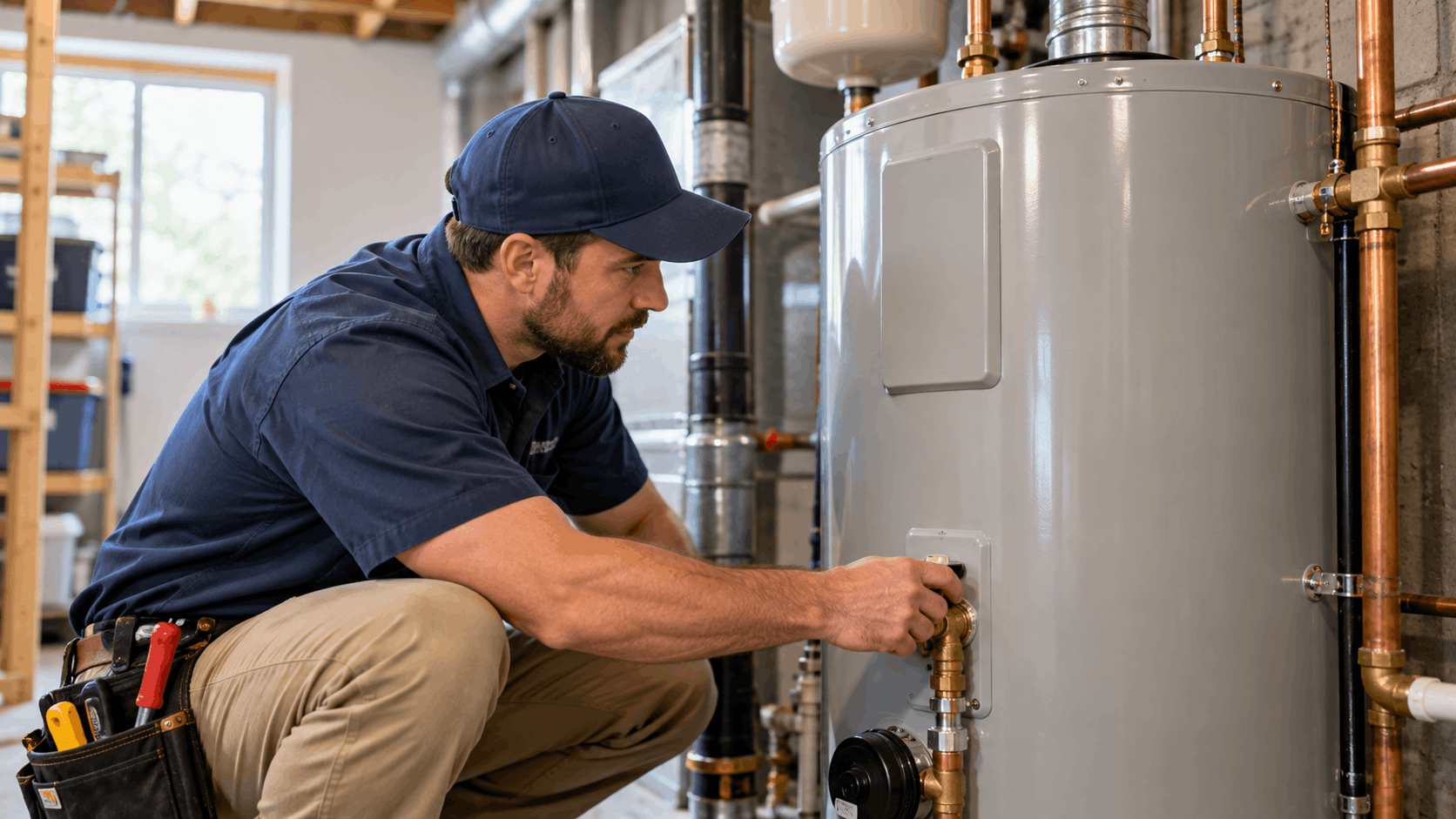
Water heater lifespan in a hard water area is not a fixed number. It is a range that depends almost entirely on how the unit is maintained against the valley's very hard water. The same model installed on the same street can last years longer in one garage than another, and the difference usually comes down to flushing and scale management.
A standard tank unit has a rated service life, and manufacturers publish it based on average conditions. Spring Valley is not average when it comes to hardness. At about 280 ppm, the scale load on every heater here is heavy, so the deciding factor between an early failure and reaching that rated life is maintenance, not luck.
Tankless units follow the same logic with a twist. Their heat exchangers are narrow passages, so scale has an outsized effect and descaling becomes the thing that keeps them alive. Across both types, the homeowners who flush and descale tend to get their money's worth, and the ones who forget tend to call us for a replacement sooner than they hoped.
What a Tank Water Heater Usually Gives You Here
A standard tank water heater carries a rated life that most manufacturers put somewhere in the range of eight to twelve years under normal water conditions. That rating assumes a reasonable mineral load and periodic maintenance. It does not assume 280 ppm hard water sitting in the bottom of the tank year after year.
In Spring Valley, an unflushed tank rarely coasts to the top of that range. Sediment builds on the tank bottom, the burner or lower element has to fire through a growing layer of mineral, and the steel works harder to deliver the same hot water. A heater working that hard fails before its rated life rather than after it.
The flip side is encouraging. A tank that is flushed on a sensible schedule clears that sediment before it bakes into a hard crust. That heater runs closer to how it was designed to run, and it stands a real chance of reaching its rated life. The difference between those two outcomes is almost always maintenance history, not the brand on the label.
If a tank unit fits the home and the budget, the installation itself is straightforward for a licensed crew. Our team handles tank water heater installation across Spring Valley, and we size the unit to the household rather than to a round number.
Tankless Units and the Narrow Heat Exchanger Problem
A tankless water heater heats water on demand by pushing it through a heat exchanger, which is a series of narrow passages wrapped around a burner or element. Those passages are where the efficiency comes from, and they are also where very hard water does the most damage. Scale builds inside a narrow channel far faster than it does across the wide bottom of a tank.
As scale coats the inside of the heat exchanger, water flow narrows and heat transfer drops. The unit has to work harder to hit the set temperature, and the mineral layer can create hot spots that stress the metal. In 280 ppm water, a tankless heater that is never descaled can foul years before it should.
The good news is that tankless lifespan responds strongly to care. Routine descaling flushes the scale out of those passages before it hardens, and a well maintained tankless unit can outlast a tank. The commitment is simply real and ongoing in this water. We handle tankless maintenance and descaling so the narrow passages stay clear.
Homeowners weighing a switch should understand that choice before they buy. A tankless unit rewards discipline and punishes neglect more sharply than a tank does, because the scale has nowhere to settle harmlessly.
Why the Number Varies From House to House
Two identical heaters can age very differently, and household usage is the first reason. A large family drawing hot water all day cycles the heater far more than a couple who travels, and more cycles mean more heating, more scale deposition and more wear on the parts that move.
Flushing history is the second reason, and in this valley it may be the biggest one. A tank that has been flushed yearly carries almost no sediment, while one that has never been touched can hold a thick mineral bed on the bottom. That bed insulates the burner from the water and forces the unit to run hotter and longer.
Incoming water temperature plays a part too. Summer heat raises the temperature of the water entering the home, which changes how the heater works through the hottest months. Location matters as well, since a heater in a hot Spring Valley garage lives in a harsher environment than one tucked into a conditioned interior closet.
Put those variables together and the real-world lifespan of a water heater here is a story about the specific home, not a single published figure. Regular water heater maintenance is the one lever a homeowner controls, and it is the one that moves the number the most.
Get Your Quote
Tell us what's going on and we'll get back to you fast.
Why Spring Valley's Hard Water Shortens Water Heater Life?
The mechanism behind early water heater failure in Spring Valley is not a mystery, and it is not heat or sun on its own. It is dissolved mineral in the water precipitating out as scale the moment the water gets hot. Every gallon that enters a heater here carries a heavy mineral load, and heat is exactly what drops that mineral out of solution.
The Southern Nevada Water Authority reports treated hardness of about 280 ppm as calcium carbonate, which works out to roughly 16 grains per gallon. That figure places valley water firmly in the very hard category. It is not a range and it is not an estimate, it is the published municipal number, and it is the starting point for understanding why heaters struggle here.
Once you accept that number, the scale buildup story writes itself. The calcium and magnesium have to go somewhere, and inside a water heater they go onto the elements and onto the tank bottom, where they make the whole system work harder for the same result.
The Verified Hardness Figure for the Valley
The SNWA number to hold onto is about 280 ppm, or roughly 16 grains per gallon. That is the hardness category called very hard, and it applies to the treated water delivered across the valley. A home test kit might read differently, but the municipal figure is the one that describes what comes out of the main.
Most valley water is Colorado River water drawn from Lake Mead, not local groundwater. Around 90 percent of the supply comes from the lake, treated at SNWA facilities before it reaches homes. That matters because the hardness is a property of that source water, consistent enough across the valley that no Spring Valley neighborhood gets a pass on it.
Knowing the real number stops homeowners from chasing the wrong fix. Some test their own water, see a high reading and assume something is wrong with their line. In reality the hardness is baseline for the whole area, and the question is never whether the water is hard but how the home manages equipment against water that is this hard.
That framing shapes every recommendation in this article. The hardness is fixed. What a homeowner controls is how the heater and the plumbing respond to it.
How Scale Builds on Elements and the Tank Bottom
Inside a tank heater, the heating happens at the burner under the tank or at the electric elements inside it. When very hard water meets that heat, calcium and magnesium come out of solution and bond to the hottest surfaces first. On an electric unit, that means a hard crust forms right on the elements.
A scaled element has to push its heat through a mineral shell before it reaches the water. That shell acts like insulation, so the element runs hotter and longer to deliver the same hot water. Over time the extra heat stress shortens the life of the element and drives up the energy the unit draws.
Meanwhile, loose mineral settles out and collects as sediment on the tank bottom. On a gas unit, that sediment sits directly over the flame, trapping water beneath it and creating the rumbling and popping many homeowners hear. The trapped water superheats, and the base of the tank bakes rather than gently heats.
Both effects point the same direction. The heater works harder than it was designed to, the metal and the components wear faster, and the unit edges toward failure sooner. Clearing that sediment before it hardens is the entire point of flushing.
The Ripple Effect Through the Rest of the Home
The heater is only one place the scale shows up. The same very hard water moves through every supply line in the house, and over years it narrows the bore of those lines as mineral slowly lines the inside. Flow drops gradually enough that homeowners often do not notice until a faucet runs weak.
Fixtures take the hit too. Scale clogs aerators on faucets and the small holes in showerheads, which is why they spray unevenly or drip after years of service. It also fouls the fine passages inside mixing valves and cartridges, the parts that blend hot and cold, so a shower that used to hold its temperature starts to wander.
That white crusting customers see on fixtures and around fittings is the visible edge of the same process. It is the mineral that the water leaves behind everywhere it sits or dries. The heater is simply the most expensive place the scale collects, not the only place.
Seeing the whole picture helps a homeowner decide on treatment. If scale is clogging faucets and fixtures and narrowing supply lines, the heater is one symptom of a water chemistry issue that treatment addresses at the source.
Summer Heat and Garage-Located Heaters
Spring Valley summers are intense, and that heat does two things to a water heater. First, it raises the temperature of the water entering the home, so the heater starts its work from a warmer baseline through the hottest months. The incoming water is simply not as cold as it would be in a mild climate.
Second, the heat stresses equipment that lives outside the conditioned envelope. In many Spring Valley tract homes, the water heater sits in the garage, which bakes in summer. A heater in a hot garage runs in a harsher environment than one in an interior closet, and the surrounding heat adds to the load on the tank and its components.
Neither of these effects shortens a heater by some fixed multiplier, and nobody can honestly claim one. What they do is stack onto the scale problem. A unit already working harder because of sediment is also sitting in a hot space with warmer incoming water, and those pressures compound.
For garage-located heaters, that is one more reason maintenance pays off. Flushing keeps the sediment load down so the unit is not fighting scale and ambient heat at the same time.

Need Help in Las Vegas?
Active Plumbing serves Las Vegas and all of Las Vegas Valley.
Warning Signs Your Water Heater Is Near the End in a Hard Water Area
A failing water heater usually warns you before it floods the floor. In a hard water area the symptoms have a specific flavor, because most of them trace back to scale. Catching them early is the difference between a planned replacement and an emergency on a slab-on-grade floor.
The signs below are the ones our crews see most often in Spring Valley homes. None of them alone proves the heater is finished, but several together usually mean the end is close. The table lays them out, and the subsections explain what each one is telling you.
| Warning Sign | What It Usually Means | How Urgent |
|---|---|---|
| Rumbling, popping or banging | Sediment trapping water over the burner or element | Service soon |
| Less hot water or slow recovery | Scale insulating elements, reduced capacity | Service soon |
| Higher energy bills | Unit working harder through scale | Investigate |
| Rust-colored hot water | Internal corrosion advancing | Plan replacement |
| Crusting or moisture at the base | Leak starting, fittings failing | Act now |
Rumbling, Popping and Banging Sounds
If a water heater sounds like a kettle full of gravel, sediment is the culprit. As mineral settles on the tank bottom, it forms a layer that traps a thin film of water against the hot metal. When that trapped water heats and turns to steam, it forces its way up through the sediment with a pop or a bang.
This is one of the most reliable hard water symptoms there is. In softer water the tank bottom stays cleaner and the noise rarely develops. In Spring Valley's 280 ppm water, a tank that has gone years without a flush will often start talking back during every heating cycle.
The noise itself is not an immediate hazard, but it is a clear message. The sediment is thick enough to trap water, which means the burner is working through an insulating layer and the tank base is running hotter than it should. That heat stress is what shortens the tank's life.
A flush can quiet a heater that has only recently started making noise. A heater that has rumbled for a long time may have sediment baked hard enough that flushing helps less, which is a sign the unit is well into its wear.
Less Hot Water, Slower Recovery and Higher Bills
When scale coats the heating surfaces, two things happen that a homeowner feels directly. The usable hot water capacity drops, because sediment takes up space in the tank and the insulated elements heat less efficiently. Showers that used to run long start running short.
Recovery time also stretches out. Recovery is how fast the heater reheats a tank after it has been drawn down, and a scaled unit is slower because the heat has to pass through mineral before it reaches the water. The second shower of the morning goes lukewarm sooner than it used to.
Those same inefficiencies show up on the bill. A heater fighting through scale runs longer to deliver the same hot water, and that extra runtime costs money. For an electric or heat pump unit, that cost lands on the NV Energy bill, since NV Energy supplies electricity in the valley. A sudden jump with no change in habits is worth investigating.
If capacity and recovery are both slipping on an older unit, scale is usually well advanced. That combination often means the heater is near the end rather than in need of a quick fix.
Rust-Colored Water, Leaks and Crusting at Fittings
Rust-colored or discolored hot water is a serious sign. It usually means the inside of the tank is corroding, and once corrosion is visible in the water, the tank's days are numbered. If the discoloration shows up only on the hot side, the heater is the likely source rather than the supply line.
White crusting at the fittings on top of the heater is the hard water signature again, the mineral the water leaves wherever it seeps or dries. On its own, a little crusting is cosmetic, but around a fitting it can mark a slow weep that is building toward a leak. It is worth a closer look rather than a shrug.
Any moisture, dampness or dripping at the base of the tank is the most urgent sign on the list. A tank that is weeping at the bottom is failing, and tank leaks tend to go from slow to fast with little warning. Once the steel gives way, the full contents can empty onto the floor.
When crusting, discoloration and base moisture appear together on an aging heater, replacement is usually the right call. Our water heater services team can confirm the source on site before anything gets swapped.
Why a Leak Matters More on a Slab Home
Most Spring Valley homes are slab-on-grade, built on a concrete slab poured on the ground rather than over a basement or crawl space. That construction is normal across the valley, and it changes what a water heater leak means. There is no basement to catch the water, so a failed tank pours straight onto finished floors.
On a slab home, a leak spreads fast across the floor and into adjacent rooms, baseboards and flooring. A tank that lets go in a garage might stay contained, but one in an interior closet can soak carpet and drywall before anyone notices. Speed matters, which is why the base-moisture warning sign deserves immediate attention.
The 2024 Southern Nevada Amendments to the Uniform Plumbing Code address this risk directly. A drain pan is required where a leak would cause damage, such as an attic or a floor-ceiling assembly, with a drain line of not less than three quarters of an inch running to an approved visible location and a pan at least an inch and a half deep. The relief valve is not allowed to discharge into that pan.
Those details are confirmed per address with the building department, but the intent is clear. The code anticipates that heaters leak and tries to route the water somewhere harmless before it reaches the slab.
What Actually Extends a Water Heater's Life Here
There is no trick that makes very hard water gentle, but there are honest, standard responses that help a heater reach its rated life instead of failing early. All of them manage scale, either by removing it before it hardens or by reducing how much of it forms in the first place.
None of these is an optional luxury in this valley. At 280 ppm, scale management is what keeps equipment running close to how it was designed to run. The homeowners who treat flushing, softening and descaling as routine are the ones whose heaters quietly reach the end of their rated years.
The four approaches below work together. A softener reduces the mineral load, flushing clears what still settles, anode and descaling care protect the vulnerable parts, and carbon filtration handles the taste side of the water without touching the hardness.
Regular Flushing to Clear Sediment
Flushing a water heater drains the tank and clears the sediment that has settled on the bottom. Done periodically, it removes the mineral bed before it bakes into a hard crust, so the burner or element heats the water rather than fighting through a layer of scale.
In Spring Valley's water, flushing is the single most effective thing a homeowner can do for a tank. Because the mineral load is so heavy, sediment accumulates faster here than it would in soft water, and a neglected tank can build a thick layer within a few years. Clearing it on a schedule keeps the tank working near its design conditions.
A tank that is flushed regularly also runs quieter and recovers faster, because there is no sediment trapping water over the heat source. That is the difference between a unit that reaches its rated life and one that works harder every month and fails before it should.
How often to flush depends on the household and the unit, and our team can advise a sensible schedule after seeing the home. The important point is that it happens consistently rather than once and then forgotten.
Whole-House Softeners and Scale-Reduction Systems
A whole-house softener treats water at the point it enters the home, removing or exchanging the calcium and magnesium that cause scale. Scale-reduction systems take a different approach to the same goal, conditioning the water so the mineral is less likely to deposit. Either way, the heater and the rest of the plumbing see far less scale.
In this valley, these systems extend equipment life rather than being optional extras. When the mineral load drops, the heater stops baking a crust onto its elements, fixtures stop clogging as fast, and supply lines stop narrowing. The heater is the biggest beneficiary because it is where heat drives the most deposition.
Homeowners weighing the cost should think of it against the equipment it protects. A water softener installation works on every fixture and appliance in the home at once, not just the heater, which spreads the benefit across the whole system.
One note for anyone considering reclaimed water as part of a home system: the 2024 Southern Nevada Amendments do not allow reclaimed water systems in residential buildings, and they are prohibited for evaporative coolers. Treatment for a home here works on the potable supply, not on reclaimed sources.
Anode Rod Checks and Descaling Tankless Units
Inside a tank heater sits an anode rod, a sacrificial metal rod that corrodes in place of the tank's steel. As long as the rod has material left, it draws corrosion to itself and protects the tank. Once it is spent, the tank itself starts to corrode, which is why checking and replacing the anode rod can add years to a tank's life.
In hard water, inspecting the anode rod during routine service is a smart habit. A worn rod on an otherwise sound tank is a simple replacement that protects a much larger investment. Skipping it lets the tank corrode from the inside, which is exactly the process behind rust-colored water.
Tankless units do not have an anode rod, but they need their own attention in the form of descaling. The narrow passages in the heat exchanger foul fastest in this water, so running a descaling solution through them on a routine basis clears the mineral before it hardens. This is the single most important maintenance a tankless heater gets here.
A tankless unit that is descaled on schedule can outlast a tank, while one that is ignored can foul years early. The hardware rewards the care and punishes the neglect, and there is no shortcut around the descaling in 280 ppm water.
Carbon Filtration for Chlorine Taste and Odor
Valley water is disinfected with ozone first and then chlorine as it leaves the treatment plants, and chlorine is used throughout the distribution system. It is not treated with chloramine, which is a different disinfectant some cities use. That distinction matters when choosing filtration, because the right filter depends on what is actually in the water.
For chlorine taste and odor, ordinary activated carbon does the job. A standard carbon filter handles the chlorine that reaches the tap, improving how the water tastes and smells without any exotic media. There is no need for special catalytic carbon for valley water, since the disinfectant here is chlorine rather than chloramine.
It is worth being clear that carbon filtration addresses taste and odor, not hardness. A carbon filter will not soften the water or stop scale, so it does nothing on its own for the heater. It solves a different complaint, and homeowners who want both soft water and better taste typically pair a softener with carbon.
If taste and odor are the concern, our water treatment team can match the right carbon stage to the home and keep the scale side on its own separate track.

Replace or Repair? Making the Call in Spring Valley Homes
When a water heater acts up, the decision between repair and replacement comes down to two things: what has actually failed, and where the unit sits in its service life. A young heater with one broken part is usually worth fixing. An old, heavily scaled or leaking tank usually is not.
The home's construction factors in too. On a slab-on-grade Spring Valley home, a leak spreads quickly, so pushing a failing tank past its limit carries real risk. The table below sorts the common situations, and the subsections explain the reasoning behind each call.
| Situation | Usual Call | Why |
|---|---|---|
| Failed element or thermostat, unit still young | Repair | Part is replaceable, tank is sound |
| Failed pressure relief valve, unit still young | Repair | Valve swaps out, tank unaffected |
| Tank leaking at the base | Replace | Tank failure is not repairable |
| Heavily scaled, past rated life | Replace | Repairs will not restore life |
| Rust-colored hot water, aging tank | Replace | Internal corrosion is advanced |
When Repair Still Makes Sense
Plenty of water heater problems are fixable, especially on a unit that is still within its service years. A failed heating element on an electric heater is a common one, and it is a straightforward replacement that brings the unit back without touching the tank. A single bad element does not mean the heater is finished.
A faulty thermostat is another repairable issue. If the heater is overheating, under-heating or cycling oddly, the thermostat may be the cause rather than the tank, and swapping it is a modest fix. The same goes for the pressure relief valve, which protects the tank and can be replaced on its own when it fails or weeps.
The logic for repair is simple. If the tank itself is sound and the heater is within its expected years, fixing the broken component is usually the sensible and economical choice. There is no reason to replace a whole unit over a part that costs a fraction of a new heater.
Our technicians diagnose the specific failure on site before recommending anything, because the right call depends on what actually broke and how old the tank is. A good diagnosis saves a homeowner from replacing a heater that only needed a part.
When Replacement Is the Better Choice
Some failures are not repairs, and the clearest one is a leaking tank. When the steel tank itself gives way, there is no patch that restores it. A tank weeping at the base is telling you the vessel has corroded through, and the only real answer is a new heater.
Age and scale push the decision the same direction. A heater that is past its rated life and heavily scaled has little left to give, and sinking money into repairs on it rarely pays off. The sediment and corrosion that come with years of 280 ppm water mean the unit is simply worn out, and new parts will not change that.
On a slab home, the case for timely replacement is stronger still. A tank leak spreads fast across a concrete floor with no basement to catch it, so running an aging tank until it bursts invites water damage across finished rooms. Replacing a tank that is clearly near the end, before it fails, avoids that mess entirely.
The practical rule is to weigh the repair cost against the heater's remaining life. On a leaking or heavily scaled tank past its rated years, replacement protects both the budget and the floor.
Tank Versus Tankless for Your Water
Choosing between tank and tankless in a very hard water area is really a choice about which maintenance routine the household will actually keep up. Both can serve a Spring Valley home well, and both depend on scale management to reach their potential. Neither escapes the hardness.
A tank is simple and familiar, and it tolerates occasional neglect better than a tankless unit because sediment can settle harmlessly on the bottom until the next flush. Its care is flushing, done on a regular schedule, to clear that sediment before it bakes in. A homeowner who will commit to flushing gets long, reliable service from a tank.
A tankless unit saves space and heats on demand, but its narrow heat exchanger fouls fast in this water. It needs disciplined descaling, done routinely, or the scale builds in the passages and the unit struggles early. For a household that will keep up with descaling, tankless can last well and even outlast a tank.
The honest comparison is about discipline, not about one being universally better. We install both, including tankless water heater installation, and we match the choice to how the home will realistically maintain it.
Federal Tax Credit Status to Know Before You Buy
Anyone shopping for a heat pump water heater should know where the federal tax credit stands. The Section 25C Energy Efficient Home Improvement Credit offered 30 percent up to $2,000 a year for qualifying heat pump water heaters, but it applied only to equipment placed in service by December 31, 2025.
That credit is no longer available for 2026 installations. The One Big Beautiful Bill Act ended it, so a heat pump water heater installed in 2026 does not qualify for the Section 25C credit. It should not be presented or expected as a current benefit when planning a purchase this year.
Utility and manufacturer rebates are a separate matter, and some have been offered over the years. These programs change often, so the right move is to check what is currently available rather than counting on a figure from a past season. Current rebate details are worth confirming with the provider at the time of purchase.
For questions about electric service or rebate programs on electric and heat pump units, NV Energy is the valley's electricity provider, and LVVWD Customer Care can be reached at 702-870-4194 for water-related programs.
Need Help in Las Vegas?
Active Plumbing serves Las Vegas and all of Las Vegas Valley.
Permits, Code and Who Governs the Work in Spring Valley
Before any permitted water heater work starts in Spring Valley, the first step is confirming who governs the address. Spring Valley is not the City of Las Vegas, even though residents often describe it that way, and that distinction decides which department issues the permit and inspects the job.
Getting the jurisdiction right up front is a routine part of doing the work correctly here. It also tells a homeowner they are dealing with someone who knows the valley rather than someone guessing from a mailing address. The code edition and the permit rules both flow from which authority has jurisdiction.
Spring Valley Is Unincorporated Clark County
Spring Valley is an unincorporated township of Clark County, filling much of the southwest valley. It is bounded by Sahara Avenue on the north, Decatur Boulevard on the east, Warm Springs Road on the south and Hualapai Way on the west. Flamingo Road and Rainbow Boulevard run through it, but the governing authority is the county, not a city.
Because of that, permits, plan check and inspections for a Spring Valley water heater job run through Clark County rather than any city building department. A homeowner who assumes their Las Vegas mailing address means City of Las Vegas permitting has the wrong authority, which can slow a job down.
The correct way to confirm jurisdiction is from the parcel, not the postal address. Postal city names cross jurisdictional lines in this valley, so the parcel is what actually settles which authority governs. Our team confirms that before quoting any permitted work so the permit position is right for the specific property.
This matters on more than water heaters. Any permitted plumbing in Spring Valley, from a repipe to a sewer or waste project, runs through the county, and the Spring Valley service area page covers the broader picture.
What the 2024 Code Says About Water Heater Pans and Relief Valves
Southern Nevada adopted the 2024 Uniform Plumbing Code with Southern Nevada Amendments in July 2025, and Clark County's effective date was January 11, 2026. That is the edition that applies to a Spring Valley water heater job now, replacing the older 2018 editions.
On drain pans, the amendments require a pan where a leak would cause damage, such as an attic or a floor-ceiling assembly. The pan must be at least an inch and a half deep, with a drain line of not less than three quarters of an inch running to a visible approved location, and the relief valve is not permitted to discharge into the pan. Readily accessible tankless and point-of-use heaters are an exception.
On relief valve drains inside a building, the approved materials are specific. The code allows galvanized steel, hard-drawn copper piping and fittings, CPVC, PP, listed flexible corrugated connectors or a listed drain tube running to the exterior, unless the listing prevents it. An air gap to a secondary washer port, floor sink, mop sink or funneled floor drain is also allowed.
These are the published amendment points, but the exact application is confirmed per address with the Clark County building department. The amendments also note that an alternate material or method can be approved by the Building Official, who is the authority on alternates.
Licensed Work and How to Verify It
Permitted plumbing work in Nevada has to be performed by an appropriately licensed contractor. Plumbing contractors are licensed statewide through the Nevada State Contractors Board, not by the county, and the Southern Nevada Amendments carry a licensing provision governing who may lead or direct installation on a job site.
A homeowner is entitled to ask for a license number and to verify it, and that verification is free. The Nevada State Contractors Board publishes license records at nvcontractorsboard.com, where classification, status, bond and workers compensation are all public record. Checking takes a minute and protects against the valley's unlicensed trade problem.
Active Plumbing holds Nevada license #0047021, which can be looked up at that same site. Confirming a contractor's license before work begins is a simple step that confirms the company is authorized to pull permits and do the work legally in Clark County.
Verifying the license and confirming the permit authority are two sides of the same habit. Both put a Spring Valley homeowner on solid footing before any water heater work starts.

Spring Valley Neighborhoods and What's Likely in Your Home
Spring Valley grew in waves, and the pipe and equipment behind the walls reflect when each part was built. Knowing a home's build era and location gives a strong hint about what is likely there, which helps a homeowner understand their setup before anyone opens a wall.
That said, the pipe should always be confirmed on site rather than assumed from the build year alone. Builders mixed materials, and remodels change what is in the ground. The era tells you what to look for, and the inspection tells you what is actually there.
Central Spring Valley Tract Homes From the 80s and 90s
The large body of tract housing between Rainbow, Jones, Flamingo and Tropicana went up in phases through the late 1970s, 1980s and early 1990s, built by production builders. That exact window is the polybutylene question, roughly 1978 to 1995, when many valley tracts were plumbed with polybutylene supply pipe.
Polybutylene is now a known repipe candidate because it tends to fail at the fittings. Homes in this part of Spring Valley that still have their original supply system are worth inspecting for it, since a failure can show up anywhere the fittings are stressed. A whole house repipe is the standard fix when polybutylene is confirmed.
Copper is also common across these middle decades, and copper in central Spring Valley homes has reached pinhole age. Pinhole leaks are tiny perforations that develop in aging copper, and they tend to appear as homes pass a few decades. In this area, a copper system is old enough that pinholes are a real possibility.
For a water heater, the age of the surrounding pipe matters because a new heater connects into whatever is already there. Confirming the pipe condition during a heater job is sensible, since an aging supply line near Flamingo Road may be due for attention too.
South Spring Valley and the Rhodes Ranch Corridor
South Spring Valley, running toward the Rhodes Ranch corridor and the Enterprise boundary, is a decade or more newer than the central tracts. These are mostly 1990s and 2000s homes, slab-on-grade, plumbed with copper or PEX. That newer build era largely postdates polybutylene.
It does, however, sit inside the Kitec window of about 1995 to 2007. Kitec fittings appear in some later 1990s and 2000s construction and are associated with failure, so homes in this era are worth checking for them. The presence of Kitec is confirmed on site, not assumed, but the era is the reason to look.
Rhodes Ranch itself is a guard-gated master-planned golf community built from the late 1990s through the 2000s, slab-on-grade with copper or PEX. PEX is the flexible modern supply material that dominates newer construction, and it holds up well, which is good news for homes that have it.
For water heater work in this corridor, the newer pipe usually means fewer surprises on the supply side. The slab-on-grade construction still means a leak spreads fast, so the same drain pan and prompt replacement logic applies as elsewhere in Spring Valley.
Custom Homes in The Section 10 and Spanish Trail
The Section 10 takes its name from its legal survey section, bounded by Desert Inn, Sahara, Rainbow and Buffalo near The Lakes. It is custom homes only, on lots of half an acre or more, some well over an acre, with horse-friendly zoning in pockets and no mandatory HOA except in some gated cul-de-sacs.
Those large lots change the plumbing picture. Long private supply runs, yard and irrigation lines, and outbuildings are normal in The Section 10, which means a leak can run for weeks before anyone notices. A water heater in a custom home there may serve a layout very different from a tract home, and the whole system deserves a careful look.
Spanish Trail is the guard-gated country club community in west Las Vegas from the mid-1980s, roughly forty years old. It holds custom and semi-custom homes, villas and condominiums under association governance. Equipment age and layout in a forty-year-old custom community differ from newer tract housing, so the heater and its connections vary from property to property. The Spanish Trail service page covers more on that community.
In both of these areas, the custom nature of the homes is the reason to confirm everything on site. Build era points the way, but a custom home's equipment and layout are specific to that house.
Need Help in Las Vegas?
Active Plumbing serves Las Vegas and all of Las Vegas Valley.
How Active Plumbing Handles a Water Heater Job in Spring Valley
When a Spring Valley homeowner calls about a water heater, our approach is to diagnose first and quote second. The goal is to understand the specific unit, the specific pipe and the specific home before recommending anything, because the right call depends on all three.
That approach fits a neighborhood where roughly half the homes are rented, according to the Census, which means the person calling is often a landlord or property manager rather than the resident. Clear diagnosis and a written price help whoever authorizes the work make a sound decision.
The On-Site Diagnostic and Written Price
Our team inspects the water heater on site rather than diagnosing it over the phone. We look at the unit, check the connections, confirm the pipe and setup rather than assuming them from the build year, and identify what has actually failed or scaled. That inspection is what separates a needed repair from an unnecessary replacement.
Confirming the pipe matters especially in Spring Valley, where a central tract home might have polybutylene or aging copper and a Rhodes Ranch corridor home might have PEX or Kitec-era fittings. The heater connects into whatever is there, so knowing the real material on site shapes the work.
Once the diagnosis is clear, Active Plumbing gives the customer a written price before work starts. That written price lets the homeowner or property manager see the scope and the cost before committing, with no work beginning until it is agreed.
This sequence keeps the decision in the owner's hands. The diagnosis explains the problem, the written price explains the fix, and nothing moves forward until both are understood.
Response Time Across the Valley
A water heater problem is often time-sensitive, especially when there is any sign of a leak on a slab floor. Our technicians arrive in 30 to 60 minutes anywhere in the Las Vegas Valley, including Spring Valley neighborhoods from the central tracts to the Rhodes Ranch corridor and The Section 10.
That window covers the whole township, bounded by Sahara, Decatur, Warm Springs and Hualapai. Whether the address is near Rainbow and Flamingo or out toward the Enterprise boundary, the response time holds across the service area.
For an active leak, that speed matters because of how fast water spreads on a slab-on-grade floor. Getting a technician on site quickly can mean the difference between a contained problem and water in the finished rooms. When a water heater is actively failing, it falls under our emergency plumbing response.
The point of the window is simple: a homeowner with a failing heater is not left waiting all day while water collects on the floor.
Local Experience and Licensing You Can Check
Active Plumbing is a fourth-generation family plumbing business that has served the Las Vegas Valley since 1991. That is more than three decades working the same neighborhoods, learning which tracts carry polybutylene, where copper has reached pinhole age, and how the valley's hard water wears on equipment.
The company holds Nevada plumbing license NSCB #0047021, along with the certifications required for the work it performs. That license is verifiable free at nvcontractorsboard.com, where anyone can confirm classification, status, bond and workers compensation.
Being able to check the license is part of doing honest work in a market with a real unlicensed trade problem. A homeowner never has to take the credentials on faith, since the state board publishes the record.
Combining long local experience with a license a customer can verify is the foundation of how the company works. The experience informs the diagnosis, and the license confirms the work is authorized to be permitted and inspected properly.

Getting Your Water Heater Sorted in Spring Valley
If your water heater is rumbling, running cool or showing moisture at the base, the next step is an on-site look rather than a guess. Call Active Plumbing at (702) 438-3357, and a technician will diagnose the unit, confirm the pipe and setup, and give you a written price before any work starts.
Frequently Asked Questions
- How long should a water heater last in Spring Valley?
- A standard tank unit carries a rated life that most manufacturers put in the range of roughly eight to twelve years under normal conditions. In Spring Valley's very hard water, a tank that is flushed on a regular schedule can reach that rated life, while an unflushed one works harder through a bed of sediment and tends to fail earlier. Maintenance history is the deciding factor more than the brand on the tank.
- How hard is the water in Spring Valley?
- The Southern Nevada Water Authority reports treated hardness of about 280 parts per million as calcium carbonate, which is roughly 16 grains per gallon. That figure places valley water in the very hard category. Most of the supply is Colorado River water drawn from Lake Mead, so the hardness is consistent across Spring Valley neighborhoods. A home test kit may read differently, but 280 ppm is the published municipal figure for the water coming out of the main.
- How often should I flush my water heater here?
- Regular flushing clears the sediment that settles on the tank bottom, and it is the standard response to very hard water. Because the mineral load is heavy at 280 ppm, sediment builds faster here than in soft water, so flushing on a consistent schedule keeps the tank working near its design conditions. The right interval depends on the household and the unit, and our team can advise a sensible schedule after inspecting the specific home.
- Will a water softener make my water heater last longer?
- Yes. A whole-house softener removes or exchanges the calcium and magnesium that cause scale, so the heater sees far less mineral and stops baking a crust onto its elements. In this valley, softeners and scale-reduction systems extend equipment life rather than being optional luxuries. The benefit reaches beyond the heater too, since the same treated water protects fixtures, mixing valves and supply lines throughout the home.
- Does a tankless water heater last longer in hard water?
- A tankless unit can last well, but only with disciplined descaling. Its heat exchanger is a series of narrow passages where scale builds faster than it does across a wide tank bottom, so very hard water fouls it quickly if it is ignored. Routine descaling flushes that scale out before it hardens, and a well maintained tankless heater can outlast a tank. Without that care, it can foul years early.
- What are the first signs my water heater is failing?
- The early signs include popping or rumbling sounds from sediment trapping water over the heat source, less hot water than usual, and slower recovery after a draw. Rust-colored hot water points to internal corrosion, and any moisture or dripping at the base of the tank is the most urgent sign. White crusting at the fittings is the hard water signature and can mark a slow weep. Several of these together usually mean the end is near.
- Do I need a permit to replace a water heater in Spring Valley?
- Spring Valley is an unincorporated township of Clark County, so permits, plan check and inspections run through Clark County rather than any city building department, even though the mailing address may say Las Vegas. The jurisdiction is confirmed from the parcel, not the postal address, since city names cross jurisdictional lines here. Our team confirms the permit position for the specific property before quoting any permitted work.
- Is the heat pump water heater tax credit still available?
- No. The federal Section 25C credit, which offered 30 percent up to $2,000 a year for qualifying heat pump water heaters, applied only to equipment placed in service by December 31, 2025. The One Big Beautiful Bill Act ended it, so it is not available for 2026 installations. Utility and manufacturer rebates may still exist and change often, so check the current programs with the provider at the time of purchase.
- Why is my water heater making banging noises?
- Banging and popping come from sediment on the tank bottom. As mineral settles into a layer, it traps a film of water against the hot metal, and when that trapped water turns to steam it forces its way up through the sediment with a pop or bang. It is a direct result of hard water scale and one of the most reliable symptoms in this area. A flush can quiet a tank that has only recently started making the noise.
- Should I repair or replace an aging water heater?
- It depends on what failed and how old the unit is. A failed element, thermostat or pressure relief valve on a heater still within its service years is usually a sensible repair, since the tank itself is sound. A tank leaking at the base, or one heavily scaled and past its rated life, is usually a replacement, especially on a slab home where a leak spreads fast. Our technicians diagnose the specific failure on site before recommending either.
A
Licensed plumbing professionals serving Las Vegas and Las Vegas Valley.
Licensed in Nevada · License #0047021
Last updated on
Why trust Active Plumbing?
Founded in 1991, Active Plumbing is a licensed and insured plumber serving Las Vegas and Las Vegas Valley. All content is reviewed by our licensed technicians.

Need Help in Las Vegas?
Active Plumbing serves Las Vegas and all of Las Vegas Valley.
Related Articles
Maintenance
Tankless Water Heater Maintenance in Las Vegas: Why Hard Water Makes It Critical
Las Vegas hard water from Lake Mead builds scale fast inside tankless heaters. Learn the warning signs, real maintenance steps, and how often valley homes need service.
Maintenance
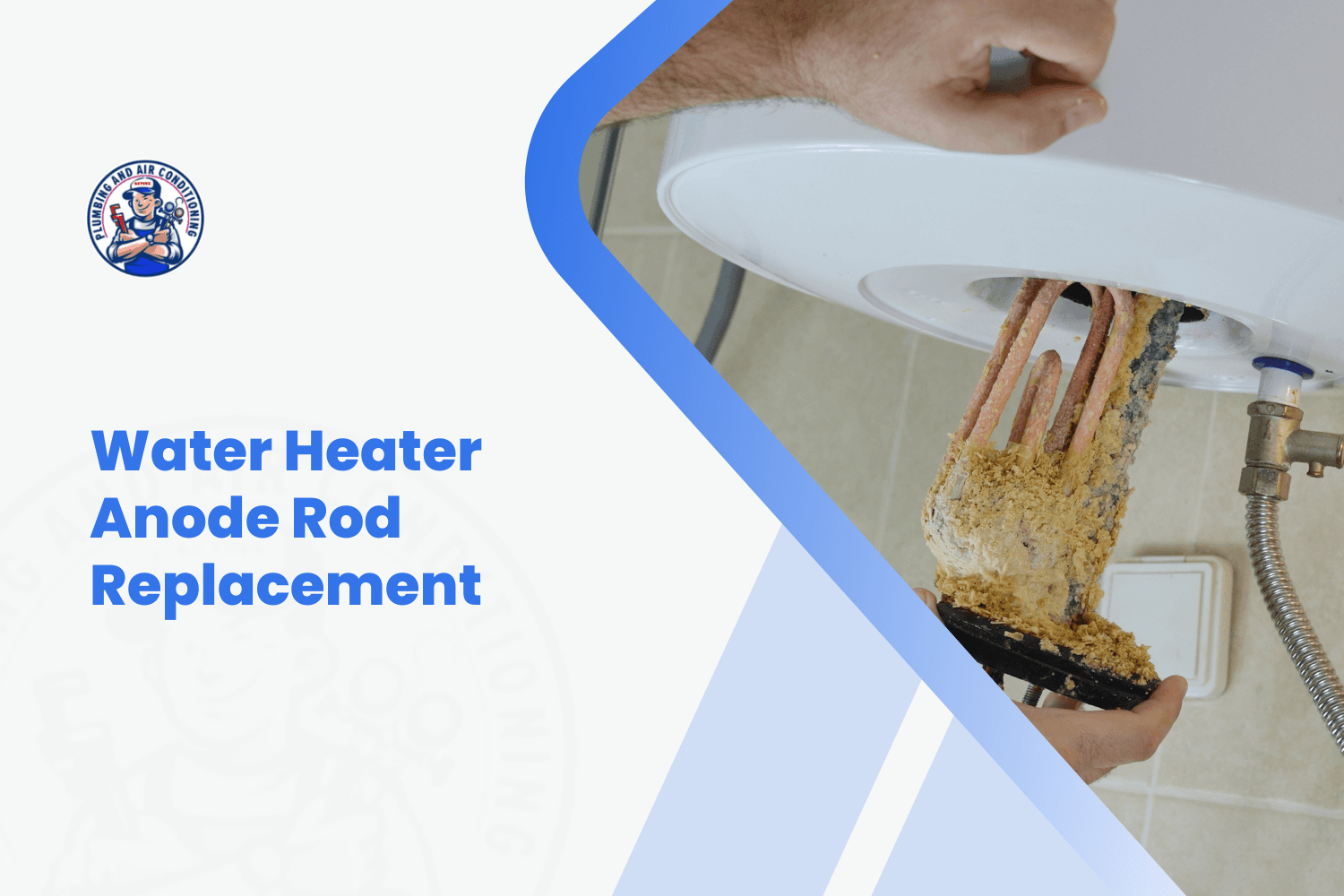
Water Heater Anode Rod Replacement: Why Vegas Hard Water Eats Them in 18 Months
Las Vegas hard water destroys anode rods in 18 months instead of years. Learn the warning signs, replacement costs, and how to protect your water heater long term.
Maintenance
How Long Water Heaters Actually Last in Las Vegas Hard Water (With Flush vs Without)
Las Vegas hard water often kills water heaters years early. See real lifespan ranges, how a yearly flush adds 3 to 5 years, and how to protect your tank.