Water Heater Replacement Cost in East Henderson for 1960s to 1980s Homes

Looking for a Plumber? Contact Us Now
Open 24/7. Written price before work starts.
Get Your Quote
Tell us what's going on and we'll get back to you. We're open 24/7.
Key Takeaways
- Tank water heater installation typically runs $800 to $1,500 and tankless $1,500 to $3,500 in the Las Vegas Valley, with the final figure given in writing before work starts.
- The age of an East Henderson home matters: Pittman carries galvanized pipe, early Green Valley from 1978 falls in the polybutylene window, and the material is confirmed on site before any quote.
- The valley's water is about 280 ppm, roughly 16 grains per gallon, so scale shortens heater life and a unit left unflushed works harder and fails earlier than its rated life.
- Tight closets, seized shutoffs, and corroded connections in 1960s to 1980s homes add labor and push a job toward the high end of the range.
- Henderson runs its own permits through the City of Henderson Development Services Center, not Clark County, and current code requires a drain pan where a leak would cause damage.
- Gas work relates to Southwest Gas and electric or heat pump running costs relate to NV Energy; the federal 25C credit ended for installs after December 31, 2025.
- Permitted work must be done by a licensed contractor; Active Plumbing holds NSCB #0047021, verifiable free at nvcontractorsboard.com.
- After-hours emergency calls carry a $150 to $300 service fee plus repair costs, and technicians arrive in 30 to 60 minutes across the valley.
In This Article
A homeowner in one of the older ranch houses off Boulder Highway notices the hot water run cold mid-shower, then finds a damp ring around the base of the tank in the garage. That heater has probably been fighting very hard water for years, and in the east side of Henderson it is sitting in the oldest housing stock in the city. The question that follows is almost always the same: what will a replacement actually cost?
Here is the short answer. A standard tank water heater installation in the Las Vegas Valley typically runs $800 to $1,500, and a tankless water heater installation typically runs $1,500 to $3,500. Those are typical area ranges, not a quote, because the final number depends on the specific house, the pipe behind the wall, and what it takes to bring an old install up to current requirements.
Let's walk through what moves a job from the low end to the high end, why the age of an East Henderson home changes the work, how the valley's hard water shortens heater life, the permit and code rules the City of Henderson enforces, and how our team at Active Plumbing handles a replacement from the first on-site check to the written price.
What a Water Heater Replacement Costs in East Henderson?
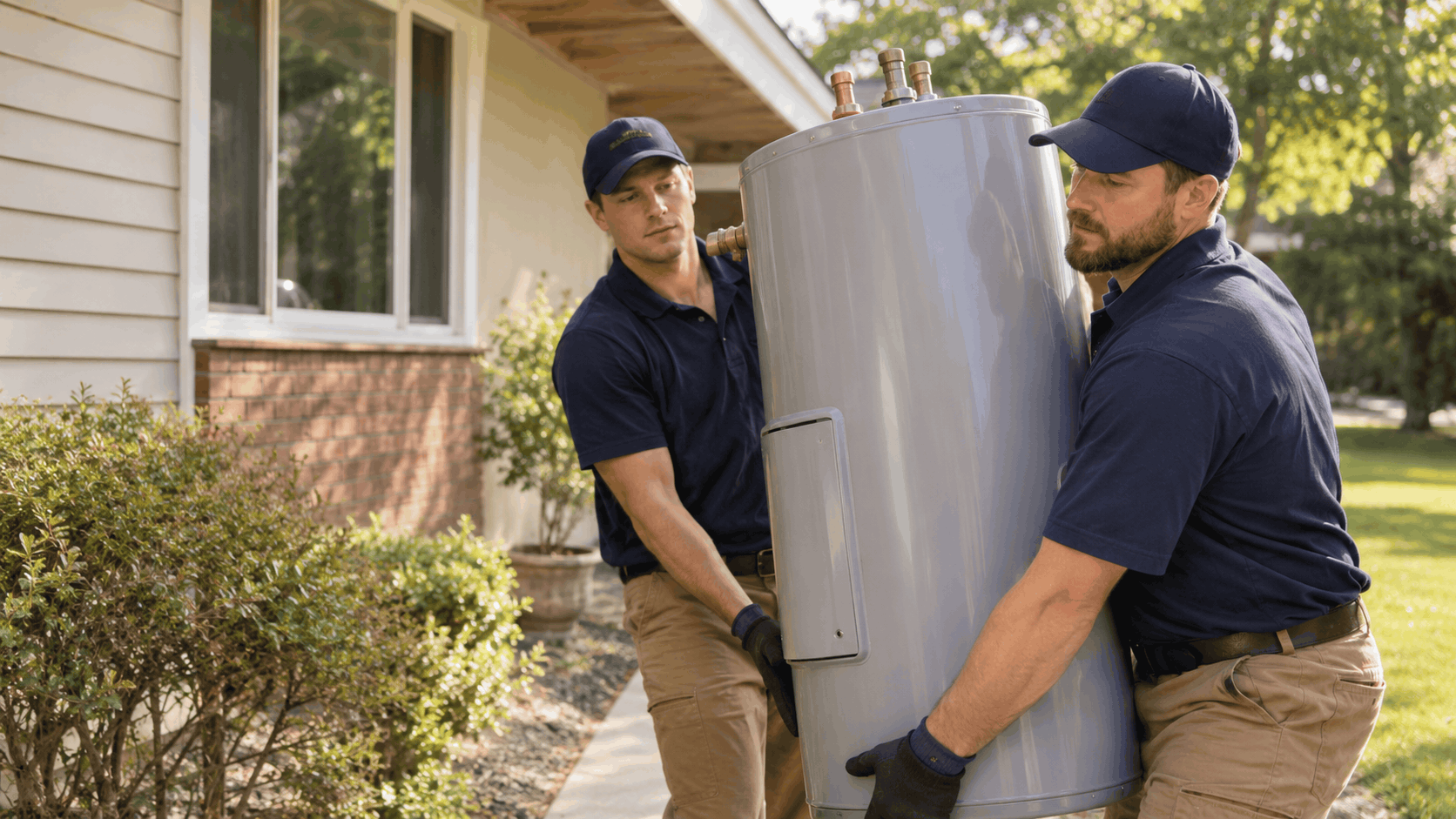
The honest starting point is a set of typical ranges for the valley, copied exactly from our service pricing. These are what a reader should expect to see, not a fixed number for any one home. The actual figure for a specific job depends on that job and is given in writing before work begins.
Older east-side homes near Pittman and the early phases of Green Valley tend to carry more surprises behind the wall than newer tract housing. That is where the spread in these ranges comes from. A clean swap in an accessible garage lands near the low end, while a job that needs new shutoffs, updated venting, or a drain pan added to meet code climbs toward the high end.
| Job | Typical Las Vegas Valley Range |
|---|---|
| Tank water heater installation | $800 to $1,500 |
| Tankless water heater installation | $1,500 to $3,500 |
| Tankless pre-filter (where hard water calls for one) | $150 to $300 |
| Water heater repair | $150 to $500 |
| Tankless maintenance and descaling | $150 to $250 |
| Recirculation pump installation | $400 to $900 |
| Commercial water heater installation | $1,500 to $6,000+ |
| After-hours emergency service fee | $150 to $300 plus repair costs |
Typical Tank Water Heater Price Range
A tank water heater installation typically runs $800 to $1,500 in the Las Vegas Valley. That range covers the unit, the labor to remove the old tank and set the new one, and the standard connections. Where the old install is straightforward and the gas or electric supply is already in good shape, the job sits at the lower end of that band.
Water heater repair typically runs $150 to $500. A repair makes sense when a single part has failed on a tank that still has life in it, such as a thermocouple, a gas control valve, or a heating element. When the tank itself has corroded through or scale has built up on the bottom for years, repair money is better spent toward a replacement.
A standard tank unit suits most older east-side homes well. The upfront cost is lower than tankless, the swap is simpler in a garage or utility closet, and it works with the venting and gas that many 1960s to 1980s houses already have. For a family that wants a predictable, lower-cost replacement, a tank is usually the practical choice.
The thing that lifts a tank job toward $1,500 is almost always the extra work around the unit, not the unit itself. Corroded shutoff valves, brittle supply connections, or an undersized drain pan location can all add labor. Our team identifies those conditions on site before giving a number.
Tankless and Recirculation Pump Pricing
A tankless water heater installation typically runs $1,500 to $3,500. The higher price reflects the unit cost, the gas and venting work tankless often requires, and the mounting. In this valley, a pre-filter adds $150 to $300 where hard water calls for one, because the narrow heat exchanger in a tankless unit is sensitive to scale.
Tankless maintenance and descaling typically runs $150 to $250. That service flushes mineral scale out of the heat exchanger and keeps the unit running at full output. In water this hard, descaling is not an optional extra, it is routine maintenance that extends the life of the equipment.
A recirculation pump installation typically runs $400 to $900. A recirculation pump moves hot water through the lines so it arrives at the tap faster, which matters in larger or older homes where the heater sits far from the master bath. It can be paired with either a tank or a tankless unit.
For an older East Henderson home, the tankless decision comes down to layout, gas supply, and the willingness to budget for a pre-filter and regular descaling. When those pieces line up, tankless delivers endless hot water and frees up floor space in a tight garage.
What Pushes an Older-Home Job Toward the High End
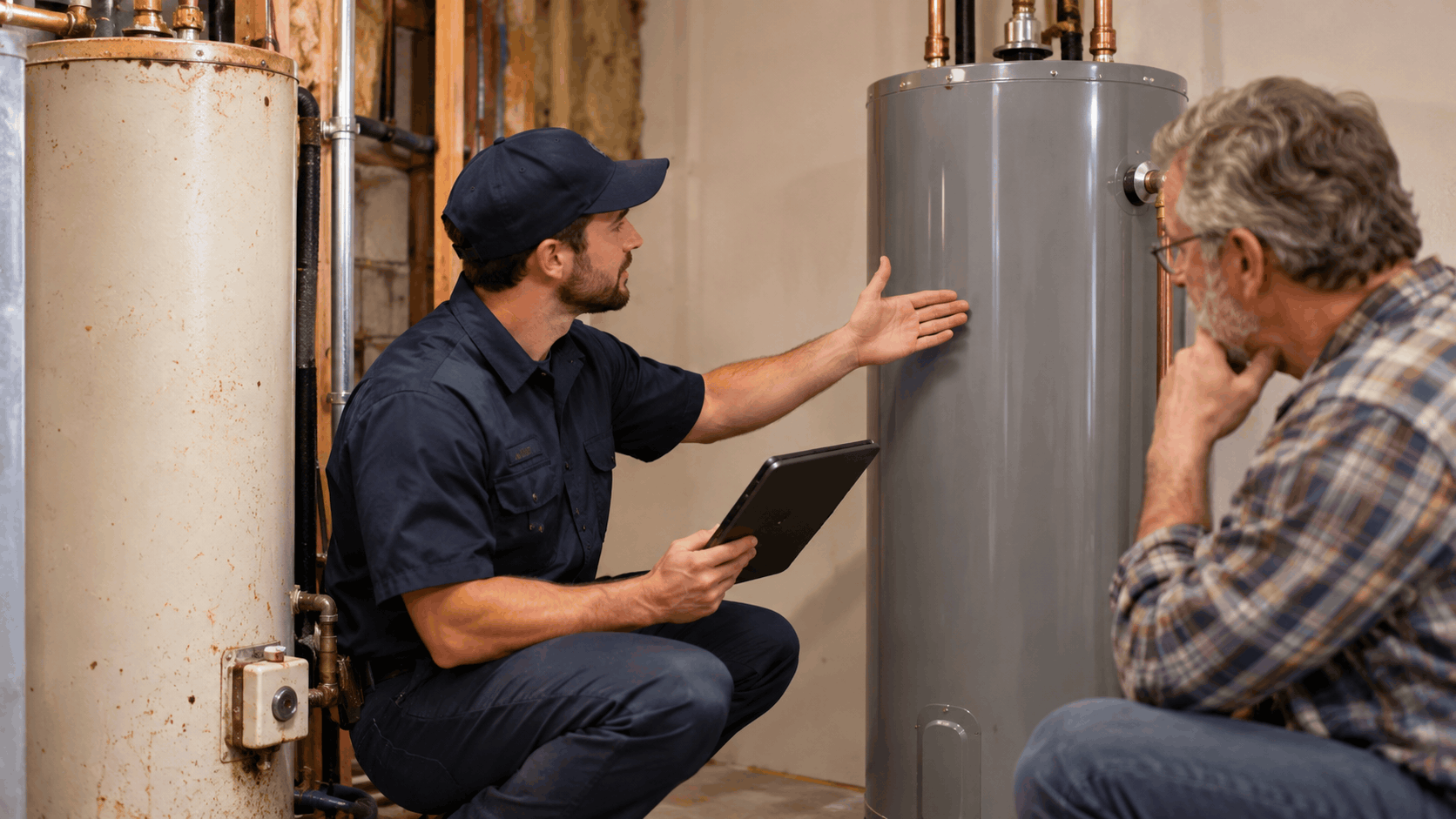
The biggest cost driver in 1960s to 1980s houses is access and the condition of the existing connections. Many east-side garages have the heater tucked into a tight closet or corner where there is little room to maneuver a tank in and out. That added handling takes time, and time is labor.
Outdated shutoff valves are the next common factor. A gas or water shutoff that has not moved in decades often seizes or weeps when a plumber tries to close it, and a seized valve has to be replaced before the new heater can be connected safely. The same goes for old supply connections that have corroded where dissimilar metals meet.
Bringing an install up to current requirements also adds to the job. An older heater may have been set without a drain pan, with an undersized relief valve discharge, or with venting that no longer meets code. Correcting those items is part of a proper replacement, and it is one reason an old-home job can land near the top of the range.
None of this is padding. It is the real work of replacing a heater in housing that was plumbed forty to sixty years ago. The way to avoid a surprise is a careful on-site check, which is why our team confirms the connections and the pipe before putting a number in writing.
After-Hours and Emergency Replacement
A tank does not always fail during business hours. When it lets go overnight or over a holiday weekend, the choice is often to deal with it right away rather than live with no hot water or a flooding garage. For those calls, an after-hours emergency service fee of $150 to $300 applies plus the repair or replacement costs.
A sudden failure usually shows up as water spreading across the garage floor or a steady drip that will not stop. Shutting off the water supply to the heater and, for a gas unit, the gas valve, limits the damage until help arrives. Our emergency plumbing team can respond across the valley.
Because the after-hours fee is separate from the install cost, a reader can plan for it. A failed tank replaced overnight carries the emergency fee on top of the tank installation range. Where the situation can safely wait until morning, scheduling during normal hours avoids the extra fee.
The decision to call right away or wait usually comes down to how much water is escaping and whether the home can go without hot water for a night. A slow weep that can be contained can often wait, while an active leak soaking drywall or flooring is worth addressing immediately.
Get Your Quote
Tell us what's going on and we'll get back to you. We're open 24/7.
Why the Age of an East Henderson Home Changes the Job?
East Henderson spans a remarkable range of build eras, and that history sits behind every water heater swap. The single most useful question on any Henderson call is when the house was built, because the answer points to what pipe and connections are likely behind the wall.
Pittman, strung along Boulder Highway in the east, is older than the city itself. It began as informal housing around 1930, took its name in 1942 after Senator Key Pittman, and merged with Henderson in 1953. Green Valley, Henderson's original master-planned community, was developed from 1978. Those two areas bracket much of the 1960s to 1980s window this guide covers, and each carries different pipe.
The build era matters because the work at the heater is only as clean as the connections feeding it. A heater replacement in a home with sound copper is a different job from one in a home with corroded galvanized or aging polybutylene, and the difference shows up in both labor and cost.
Pittman and the Oldest Pipe on the East Side
Pittman carries the oldest pipe in the city. The working-class ranch housing along Boulder Highway was built with galvanized steel supply lines, cast iron drains, and original sewer laterals. Those materials have been in the ground and in the walls for the better part of a century.
Galvanized steel fails by internal corrosion and scale buildup. Over decades the inside of the pipe narrows and rusts, so by the time a plumber reaches the heater connections, the nipples and fittings coming off the tank are often badly corroded. Those connections usually have to be replaced as part of the swap rather than reused.
Cast iron drains and original laterals are a separate concern, but they shape the overall picture of an old Pittman home. When a house still has this generation of plumbing, a water heater job can reveal that the surrounding supply lines are near the end of their service life too. That is a conversation worth having before, not after, the work.
For homeowners in this part of the east side, the honest read is that a heater swap sometimes uncovers the need for broader attention to old supply lines. Confirming the pipe material at the heater tells our team how much connection work the replacement will actually involve.
Early Green Valley and the Polybutylene Window
Green Valley developed from 1978, which puts its earliest phases squarely in the polybutylene window, roughly 1978 to 1995. Polybutylene supply systems were installed in many valley tracts during those years, and the material is now associated with failure at the fittings.
Polybutylene tends to fail where the pipe meets a fitting rather than along its length. For a water heater swap that matters because the supply lines running to the tank may be polybutylene, and disturbing old fittings during a replacement can expose or worsen a weak joint. A plumber needs to know what is there before cutting into it.
When old polybutylene supply lines are discovered during a heater swap, the practical choice is often to address the connections at the heater and discuss whether a broader repipe makes sense. Polybutylene is a standard repipe candidate across the valley, and whole-house repipe is a known path for homes carrying it.
None of this means every early Green Valley home has polybutylene behind the wall. Build year points to what is likely, but the material has to be confirmed on site. A home from this era could have copper, polybutylene, or a mix depending on the tract and any prior work.
Why Identifying the Pipe Matters Before Any Quote
Pipe material is confirmed on site before any quote, because galvanized, polybutylene, copper, and PEX each change the connection work at the heater. A clean copper or PEX connection is quick, while corroded galvanized or fragile polybutylene fittings add time and parts. The quote has to reflect what is actually there.
Beyond those two, Kitec appears in some later 1990s and 2000s construction, and its brass fittings restrict flow before they leak. Copper is widespread across the middle decades, and PEX dominates newer building such as Inspirada and Cadence. Each material has its own connection method and its own failure pattern.
This is why the question of when the house was built comes first. The build year narrows the likely material, and the on-site look confirms it. Together they tell our team whether the job is a straightforward swap or one that needs new shutoffs, new nipples, or a transition fitting between two materials.
Quoting a heater swap without confirming the pipe risks a surprise for the homeowner mid-job. By checking the material up front, our team can give a written price that accounts for the real connection work, not an optimistic guess that changes once the old unit comes off the wall.
Need Help in Las Vegas?
Active Plumbing serves Las Vegas and all of Las Vegas Valley.
How Las Vegas Valley Hard Water Shortens Heater Life
The single biggest technical factor in this market is water hardness. It explains more plumbing failures in the valley than anything else, and it drives both why a heater fails and what it costs to keep the next one healthy.
Very hard water deposits calcium and magnesium scale throughout a system. On a water heater that scale settles on the tank bottom and on the elements, and in a tankless unit it coats the narrow heat exchanger. The consequences are specific and predictable, which is why addressing hardness belongs in any honest water heater conversation here.
For an east-side home, the takeaway is that the new heater will face the same water the old one did. Planning for that with flushing, softening, or a pre-filter is what extends the life of the replacement rather than letting it repeat the failure of the last unit.
The Verified Hardness Figure for the Valley
The Southern Nevada Water Authority reports treated water hardness of about 280 parts per million as calcium carbonate, which is roughly 16 grains per gallon. That figure is categorized as very hard, and it is the published number for the valley.
If a homeowner runs a home test kit and gets a higher reading, that is their own reading of the water at their tap, not the municipal figure. Local conditions, an old softener, or the test method can all shift a home reading. The published value for the valley remains about 280 ppm, roughly 16 grains per gallon.
Most valley homes, including those in Henderson, are served with Colorado River water from Lake Mead treated by SNWA. The water is disinfected with ozone and then chlorine as it enters the distribution system. Ordinary activated carbon handles the chlorine taste and odor for homeowners who want it.
Knowing the real hardness number matters because it sets realistic expectations. At 16 grains per gallon, scale is not a maybe, it is a certainty over the years a heater sits in service. That is the backdrop for every water heater decision in this market.
What Scale Does Inside a Tank and a Tankless Unit
In a tank heater, scale settles on the bottom of the tank and builds up around the heating elements or over the burner area. That layer insulates the water from the heat source, so the heater has to run longer to reach temperature. The sediment is also what produces the rumbling and popping sounds many homeowners describe.
A tank left unflushed works harder and fails earlier than its rated life. The heater is not broken in a single moment, it is worn down steadily as scale forces it to fight for every degree. Over the years that extra work shortens the useful life of the unit and often shows up first as reduced hot water volume.
Tankless units are even more sensitive because the heat exchanger is a narrow passage. Scale accumulates inside those tight channels and restricts both flow and heat transfer. Left unaddressed it degrades performance and accelerates failure, which is why tankless units in this valley need regular descaling.
The common thread is that hard water does not leave a heater alone. Whether the unit is a tank or a tankless, the minerals in the water are steadily depositing where the heat is applied. Managing that buildup is the difference between a heater that reaches its rated life and one that falls short of it.
Flushing, Softeners and Pre-Filters as Life Extenders
Regular water heater flushing clears sediment out of a tank before it hardens into a thick layer. Doing it on a schedule keeps the elements or burner working against clean water, which lets the heater reach its rated life rather than wearing out early. In this valley, flushing is maintenance, not a luxury.
A whole-house softener or scale-reduction system attacks the problem at the source by treating the water before it reaches the heater and the rest of the home. Water softener installation typically runs $800 to $2,500, and salt-free water conditioning runs $800 to $2,500 installed. Whole-house filtration also runs $800 to $2,500. In this valley these systems extend equipment life rather than being optional extras.
For a tankless unit, a pre-filter adds $150 to $300 where hard water calls for one, and it protects the heat exchanger from the worst of the scale. Combined with descaling, it keeps a tankless heater running at the output it was sized for. Our water treatment team can advise on the right approach for a specific home.
Treating the water also protects everything downstream of the heater, from faucet aerators to shower heads to the small passages inside mixing valves. A softener or conditioner is a whole-home investment, and the longer heater life is one of several returns it delivers in water this hard.
Tank vs Tankless for Older East Henderson Houses
Choosing between a tank and a tankless unit in an older east-side home comes down to layout, the existing gas and venting, the budget, and how a household uses hot water. Both are good options when matched to the right house.
The hard water here shapes the decision too. A tankless unit delivers more and asks more, needing a pre-filter and regular descaling to survive the scale. A tank is more forgiving of neglect but takes up floor space and holds a fixed amount of hot water. The table below lays out the trade-offs.
| Factor | Standard Tank | Tankless |
|---|---|---|
| Typical install range | $800 to $1,500 | $1,500 to $3,500 |
| Hot water supply | Fixed tank volume | Continuous, on demand |
| Space used | Larger footprint in garage or closet | Wall-mounted, frees floor space |
| Hard water needs | Regular flushing | Pre-filter plus regular descaling |
| Gas and venting | Often works with existing setup | May need gas sizing and new venting |
When a Standard Tank Makes Sense
A standard tank is the lower upfront cost option, and for many older east-side homes that is the deciding factor. The install runs $800 to $1,500 typically, and the household gets a reliable supply of hot water without the added expense of upgrading gas or venting.
Tanks are simpler to swap in a garage or utility closet. The new unit sits where the old one did, connects to the existing gas or electric supply and water lines, and vents the same way. In a tight space, a like-for-like tank swap is usually the quickest path back to hot water.
A tank also fits an older home's existing gas and venting without much fuss. Many 1960s to 1980s houses were built around a tank heater, so the supply and the flue are already sized for one. That compatibility keeps the job on the simpler end.
For a household with steady but not heavy hot water demand, a tank covers the need at a price that is easier to plan for. It is the practical default for a straightforward replacement in older housing.
When Tankless Pays Off, and What It Needs
Tankless pays off for households that want endless hot water and the floor space a wall-mounted unit returns. It never runs out mid-shower because it heats water on demand, which suits larger families or homes where several fixtures run at once. The trade-off is the higher install price of $1,500 to $3,500.
A tankless unit often needs gas line sizing attention. These heaters draw more gas at peak than a tank, so the existing gas line in an older home may need upsizing to feed the unit properly. That gas work is part of why the tankless range sits higher, and it is handled by our gas line team.
In this valley, a tankless install should include a pre-filter where hard water calls for one, adding $150 to $300, plus regular descaling at $150 to $250. The narrow heat exchanger cannot be left to scale up. Budgeting for that maintenance is part of owning a tankless unit here.
A recirculation pump can be added to cut the wait for hot water at distant taps. In a larger or spread-out east-side home, that pump keeps hot water close to the fixture so less runs down the drain waiting. It pairs well with tankless and with tank setups alike.
Electric, Gas and Heat Pump Running Costs
Running costs depend on the fuel. Gas work and gas bills relate to Southwest Gas, which supplies natural gas in the Las Vegas Valley. If the heater burns gas, the gas line, pressure testing, and coordination all go through Southwest Gas.
Electric and heat pump water heater running costs relate to NV Energy, which supplies electricity in the valley. A heat pump water heater can be efficient to run, and an unexplained spike in an electric bill sometimes points to a hidden hot-water leak rather than the heater itself.
The federal Energy Efficient Home Improvement Credit under Section 25C, which offered 30 percent up to $2,000 a year for heat pump water heaters, applied only to equipment placed in service by December 31, 2025. The One Big Beautiful Bill Act ended it, so it is not available for 2026 installs. Readers can check for current utility or manufacturer programs, which change often.
Choosing the fuel is partly a running-cost question and partly a matter of what the home already has. A house plumbed and vented for gas usually stays gas, while a home set up for electric may suit an electric or heat pump unit. Our team weighs both the install and the ongoing cost when advising on the choice.
Permits, Code and Drain Pan Rules in the City of Henderson
Henderson is its own city, not Clark County and not Las Vegas. That distinction decides where the permit comes from and which code amendments apply to a replacement. Establishing the correct jurisdiction is the first step on any permitted east-side job.
Las Vegas and Clark County, along with Henderson, adopt the Uniform Plumbing Code together with the Southern Nevada Amendments. In July 2025 the valley's jurisdictions adopted the 2024 edition of that code, and Henderson's effective date was January 2, 2026. Those amendments carry specific rules that affect what a water heater replacement must include.
Code compliance is not red tape, it is what keeps a new heater safe. The drain pan, the relief valve discharge, and the right installer all exist to prevent water damage and hazards. In an older home that was set before some of these rules, meeting them can add to the job.
Henderson Runs Its Own Permits, Not Clark County
Permits, plan check, and inspections for a Henderson address run through the City of Henderson Development Services Center. A heater replacement is a permitted job, and that permit comes from the city, not from Clark County and not from the City of Las Vegas.
A frequent source of confusion is the unincorporated Whitney township, which sits nearby but is county, not city. A Henderson mailing address is often mixed up with Whitney, and the two run through different permit counters. Confirming which authority governs the specific address avoids filing with the wrong office.
Whitney Ranch in west Henderson adds to the confusion because it sounds like the Whitney township but is part of the City of Henderson. For Henderson properties the permit path is the city, while a true Whitney township address runs through the county.
Because the permit position depends on the exact address, our team confirms it for the specific home before quoting permitted work. Telling a homeowner which department governs their address is a small step that keeps the job on the right track from the start.
Drain Pan and Relief Valve Requirements
The Southern Nevada Amendments require a water heater drain pan where a leak would cause damage, such as an attic, a floor-ceiling assembly, or similar locations. The pan must be at least 1-1/2 inches deep with a drain of not less than 3/4 inch running to a visible, approved location. Readily accessible tankless and point-of-use heaters are excepted.
The relief valve discharge is also regulated. Where it drains inside a building, approved materials include galvanized steel, hard-drawn copper, CPVC, PP, flexible corrugated connectors, or a listed drain tube to the exterior. The relief valve discharge is not allowed to dump into the drain pan itself.
In an older east-side home, these rules can add to the cost because the previous install may predate them. A heater set decades ago without a pan or with an undersized discharge line needs those items brought up to the current amendment during a replacement. That is part of a proper, permitted job.
Hard water adds one more wrinkle at the drain side. The amendments allow barrier trap seals under ASSE 1072 in floor drains as an alternative to trap primers, which hard water corrodes. These are the kinds of code details our team accounts for so the finished install passes inspection.
Who Is Allowed to Do the Work
Permitted work must be performed by an appropriately licensed contractor. Plumbing contractors in Nevada are licensed through the Nevada State Contractors Board, and the Southern Nevada Amendments carry a plumbing license provision governing who may lead or direct the installation on a job site.
Licensing is statewide, not county by county. A homeowner can verify a contractor's license free at nvcontractorsboard.com, where the classification, status, bond, and workers compensation are all public record. Asking for a license number and checking it is a reasonable step in a market with a real unlicensed-trade problem.
The Nevada State Contractors Board licenses contractors, but it does not write the plumbing code. The code is the Uniform Plumbing Code with the Southern Nevada Amendments, adopted by the City of Henderson. Those are two separate authorities, and both matter on a permitted heater replacement.
For an east-side homeowner, the practical point is simple. A permitted water heater replacement should be done by a licensed plumbing contractor, and the license can be checked in minutes online before any work begins.
Need Help in Las Vegas?
Active Plumbing serves Las Vegas and all of Las Vegas Valley.
East Henderson Conditions That Affect Install and Cost
The desert and the local build conditions shape where a heater sits and how the install goes. East Henderson near Boulder Highway and the older core has its own mix of garage-located units, exterior lines, and tight utility spaces.
Southern Nevada is a low-rainfall desert with extreme summer heat, large day-to-night temperature swings, and caliche-bearing soils across much of the valley. Those conditions drive a recognizable set of issues that touch water heater work, from where the unit sits to how its lines hold up.
The table below sums up the main local conditions and how each one bears on a heater install in an older east-side home.
| Condition | Effect on the Heater Job |
|---|---|
| Extreme summer heat | Raises incoming water temperature, stresses garage and outdoor equipment |
| Winter freeze nights | Can freeze exposed or poorly insulated lines near a garage or exterior heater |
| Older housing stock | Tight closets, outdated shutoffs, and corroded connections add labor time |
| Very hard water | Scale shortens heater life and drives maintenance needs |
Garage and Exterior Heater Heat Exposure
Many older east-side homes keep the water heater in the garage, which bakes in summer. Summer heat raises the incoming water temperature and stresses garage-located and outdoor equipment. A heater in a hot garage is working in a harder environment than one in a conditioned space.
Higher incoming water temperature changes how hard the heater works to reach its setpoint. It is a smaller factor than scale, but combined with the heat load on the unit itself, a garage install sits in a demanding spot during the valley's long summers.
Placement and unit choice factor in here. A tankless unit mounts on the wall and frees garage floor space, while a tank sits on the floor where it is exposed to the full temperature swing of the space. Our team considers the location when recommending an option for an older garage.
None of this means a garage heater is a bad idea, it is where most of these homes keep the unit. The point is that the environment is part of the picture, and a replacement is a good moment to make sure the install suits where it actually lives.
Winter Freeze and Exposed Lines
The desert is not immune to cold. Winter nights can still freeze exposed or poorly insulated lines near a garage or exterior heater, which surprises residents who assume the desert never freezes. A hard freeze on an uninsulated line is a real risk on the coldest valley nights.
Lines running to a garage heater or along an exterior wall are the most vulnerable. If those lines are exposed and uninsulated, a freeze can stress or split them. Proper insulation on the supply lines at the heater is cheap protection against a cold-snap failure.
Hose bibbs, irrigation backflow assemblies, and exposed lines on the exterior also face intense UV and heat degradation through the long summers, then the freeze risk in winter. The lines around an exterior or garage heater see both extremes across the year.
A replacement is the right time to check the insulation on the lines feeding the heater. Addressing exposed supply lines during the swap costs little and heads off a frozen-line problem on the handful of nights each winter that actually drop below freezing.
Old Connections and Access in 1960s to 1980s Homes
The oldest east-side housing adds labor in ways newer homes do not. Tight closets and corners leave little room to work, so getting an old tank out and a new one in takes longer. That handling time is a direct cost factor on these jobs.
Outdated shutoff valves are common in homes of this age. A water or gas shutoff that has sat untouched for decades often seizes or leaks when it is finally operated, and a bad valve has to be replaced before the new heater can be connected safely. That is routine on old-home swaps.
Older supply connections add time as well. Corroded nipples, mismatched fittings, and brittle joints where the old pipe meets the heater often cannot be reused. Replacing them is part of doing the job right, and it is a reason the final price can climb within the range.
The way to keep these surprises from derailing a job is to find them before the work starts. Our team checks the shutoffs, the connections, and the access during the on-site visit, so the written price reflects the real labor the house demands.
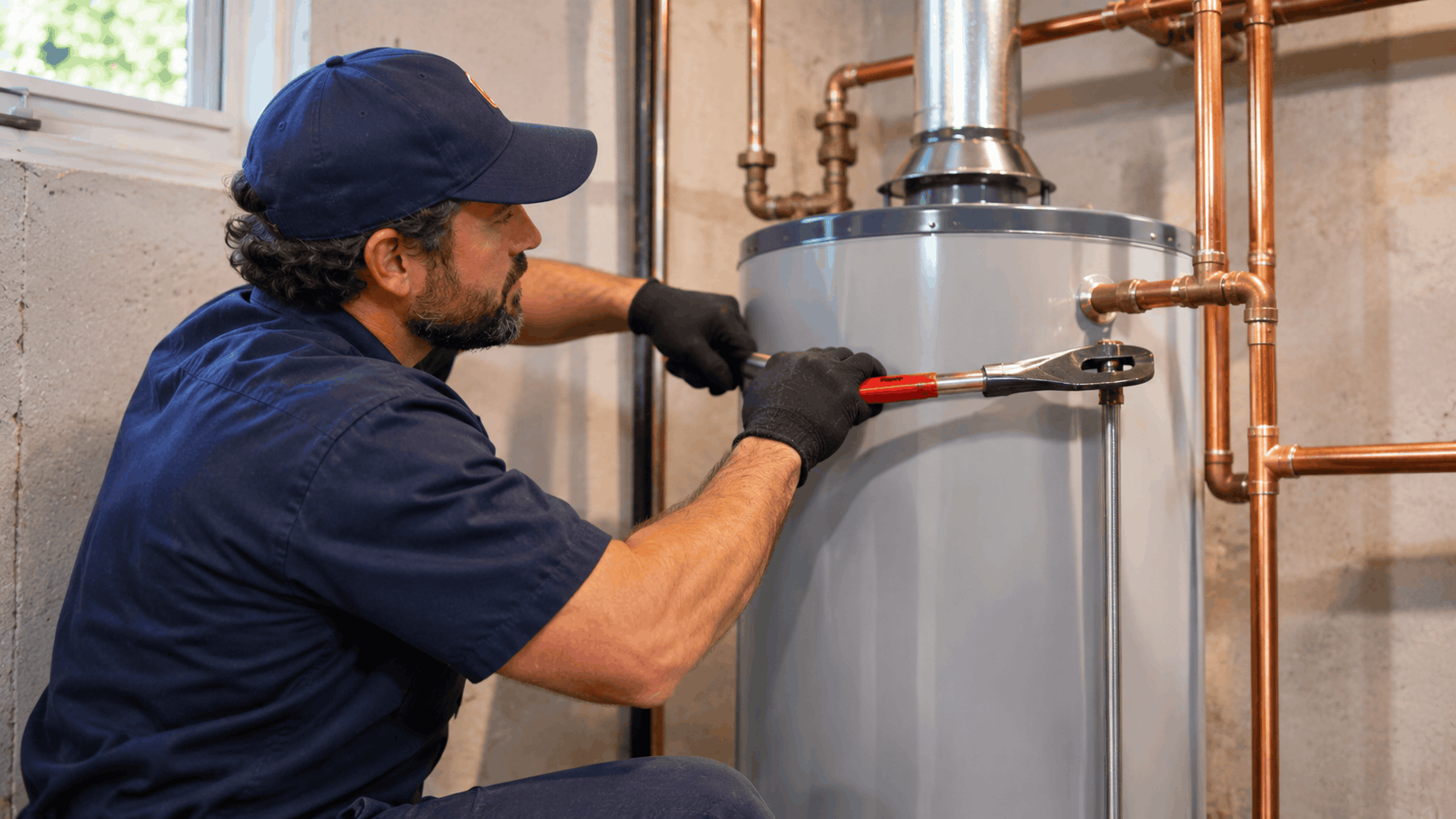
Signs an Older East Henderson Water Heater Needs Replacing
Deciding whether to repair or replace comes down to a few plain symptoms and the age of the unit. Homeowners usually describe the same handful of warning signs, and each one points toward how far scale and corrosion have advanced.
A repair makes sense when one part has failed on a unit that still has life. A replacement makes sense when the tank itself is failing or when years of scale have the heater working harder than it should. Reading the signs correctly keeps a homeowner from spending repair money on a unit that is near the end.
Rusty Water, Noise and Sediment
Rumbling and popping from the tank is one of the most common signs. Those sounds come from sediment and scale on the tank bottom, where water trapped under the mineral layer boils and forces its way out. It means years of hard-water buildup have settled in the unit.
Rusty hot water is another warning. When the hot side runs discolored but the cold side is clear, corrosion inside the tank or the hot-water fittings is the likely cause. In older east-side homes with galvanized connections, the rust can come from the pipe as well as the tank.
Reduced hot water volume often tracks with both of those. As sediment fills the bottom of a tank, there is less room for actual water, so the household runs out of hot water sooner than it used to. That shrinking supply is a sign the scale has advanced.
Taken together, these symptoms say the heater has been fighting hard water for a long time. A flush may buy some time on a newer unit, but on an older tank these signs usually point toward planning a replacement.
Leaks and Pooling Around the Tank
Water pooling around the base of the tank is a serious sign. If the puddle keeps coming back after it is wiped up, the tank itself may have corroded through, and a corroded tank cannot be repaired. That situation calls for a full replacement.
Drips at the connections are a different story. A leak at a fitting, a valve, or the relief valve can often be repaired, and water heater repair typically runs $150 to $500. The key is figuring out whether the water is coming from a fixable connection or from the tank body.
The distinction between repair and replace turns on the source. A leak at a connection on an otherwise sound tank is a repair. A leak from the tank itself, or a tank that is both leaking and old and scaled, is a replacement. Our team traces the water to its source before advising.
Standing water around a heater also risks the floor and anything stored nearby, which is why a drain pan is required where a leak would cause damage. If a tank is actively leaking, shutting off its water supply limits the damage until it can be addressed.
Age and When Replacement Beats Another Repair
Age plus unflushed scale is the combination that tips the balance toward replacement. A unit that has run for years without flushing has been working harder than it should and is nearing the end of its rated life. At that point, another repair is money spent on a unit that is already worn.
A heater left unflushed fails earlier than its rated life because scale forces it to run longer and hotter for every gallon. When an aging unit starts needing repairs on top of that, the repairs tend to come more often as other parts give out in sequence.
The practical rule is to weigh the cost of the repair against the remaining life. Spending $150 to $500 on a part makes sense for a unit with years left. Spending it on an old, scaled tank that will likely fail again soon rarely pays off compared with a replacement.
For an older East Henderson home, the age of the heater is a major part of the decision. When a unit is both near the end of its service life and showing the signs above, a replacement is usually the better value than chasing one repair after another.
Need Help in Las Vegas?
Active Plumbing serves Las Vegas and all of Las Vegas Valley.
How Active Plumbing Handles a Water Heater Replacement
A replacement on the east side starts with confirming what the house actually has, moves to a clear written price, and then to the install. The process is built around the realities of older housing and the valley's hard water.
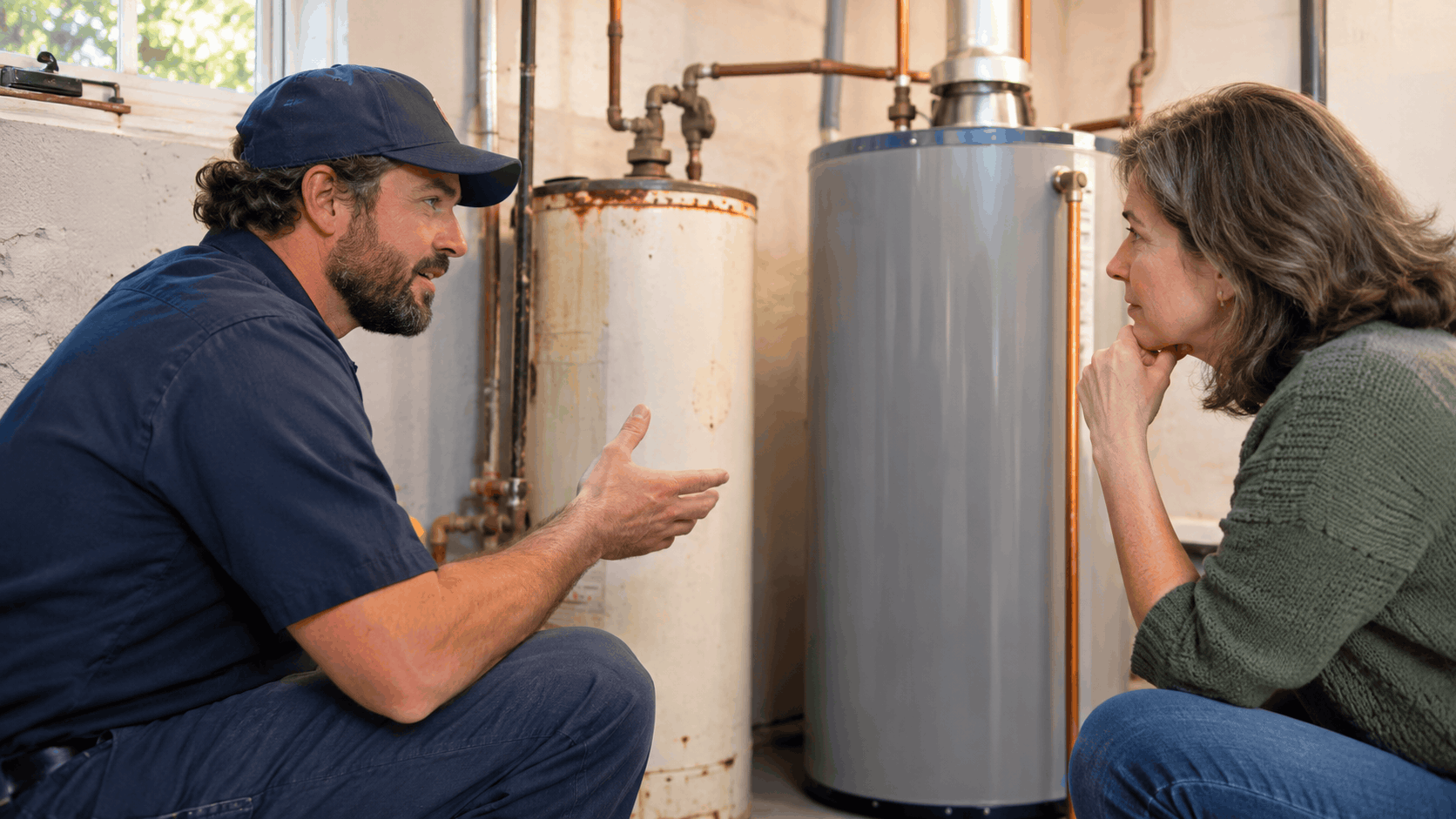
Because East Henderson spans everything from Pittman's galvanized to the newest PEX, no two heater swaps are identical. Our approach is to establish the facts of the specific home first, then price and perform the work against those facts rather than a generic assumption.
On-Site Check of Pipe, Gas and Jurisdiction
The first step is confirming the pipe material on site. Galvanized, polybutylene, Kitec, copper, and PEX each change the connection work at the heater, so our team identifies what is there before quoting. Asking when the house was built helps narrow it, and the on-site look confirms it.
Next is checking the gas or electric supply. For a gas unit, that means confirming the gas line and shutoff are sound and sized for the heater, and for an electric or heat pump unit it means checking the electrical side. Any seized shutoffs or corroded connections are flagged at this stage.
The team also confirms the permit position for the specific Henderson address. Because Henderson runs its own permits through its Development Services Center and the address could be mistaken for the unincorporated Whitney township, nailing down the correct jurisdiction up front keeps the permitted work on the right path.
This on-site diagnostic is what makes an accurate price possible. By the end of it, our team knows the pipe, the supply, the access, the code items the install must meet, and the permitting authority. That is the foundation for the number that follows.
A Written Price Before Work Starts
Active Plumbing gives the customer a written price before work starts. That means a homeowner sees a clear number for the specific job, based on what the on-site check found, before anyone begins removing the old heater.
The written price reflects the real conditions of the house, from the pipe material to the shutoffs to any drain pan or relief valve work the code requires. It is tied to that home, not a generic valley average, which is why the on-site check comes first.
The typical ranges in this guide are what a reader should expect to see in that written number, but the actual figure depends on the specific job. Seeing it in writing up front lets a homeowner decide with full information rather than worrying about the total shifting mid-job.
This is a business practice, not a guarantee of a particular figure. What it gives a homeowner is a defined price for defined work before the job begins, so there are no surprises once the old unit is off the wall.
Response Window and Local Experience
Technicians arrive in 30 to 60 minutes anywhere in the Las Vegas Valley. For a failed heater, that quick response limits the time a household spends without hot water or the time a leak has to spread across a garage floor.
Active Plumbing is a fourth-generation family business that has served the valley since 1991. That long run across the area's distinct build eras, from Pittman's galvanized to the newest PEX, is the kind of local knowledge that matters on an older east-side heater swap. Some of the owners are US military veterans.
The company holds Nevada plumbing license NSCB #0047021, verifiable free at nvcontractorsboard.com, along with the certifications required for the work it performs. A homeowner can check the status, bond, and workers compensation as public record before booking.
That combination of a fast response, decades of local experience, and verifiable licensing is what a homeowner is relying on when an old heater fails. It is the reason the first call on an east-side replacement is worth making to a team that knows the housing stock.
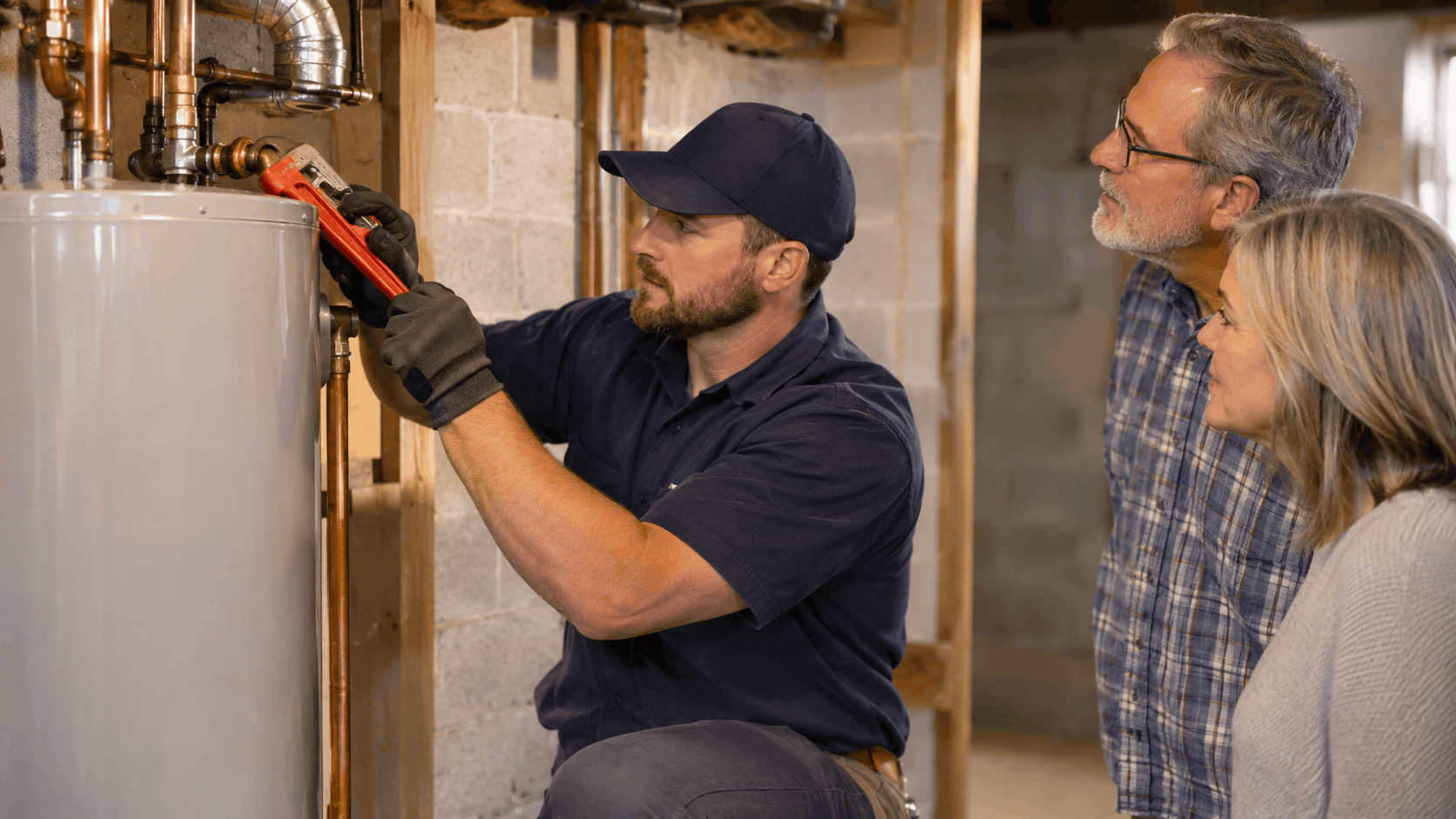
Getting Your East Henderson Water Heater Replaced
A water heater replacement on the east side starts with an on-site check of the pipe, the gas or electric supply, and the permit position for the specific Henderson address, followed by a written price before any work begins. Technicians arrive in 30 to 60 minutes anywhere in the valley.
To get a failing heater looked at, call Active Plumbing at (702) 438-3357 or reach out through the contact page to schedule the on-site visit.
Frequently Asked Questions
- How much does it cost to replace a water heater in East Henderson?
- Tank water heater installation typically runs $800 to $1,500, and tankless water heater installation typically runs $1,500 to $3,500. Those are typical area ranges for the Las Vegas Valley, not a quote. The final price depends on the specific job, including the pipe behind the wall, the condition of the shutoffs, and any code items the install must meet. Active Plumbing gives a written price for the specific home before work starts.
- Why do water heaters fail faster in the Las Vegas Valley?
- The Southern Nevada Water Authority reports water hardness of about 280 parts per million, roughly 16 grains per gallon, which is categorized as very hard. That hard water deposits scale on the tank bottom and on the heating elements, and inside a tankless heat exchanger. A unit left unflushed works harder to reach temperature and fails earlier than its rated life. Regular flushing, softening, and descaling help the replacement last longer.
- Do I need a permit to replace a water heater in Henderson?
- A water heater replacement is permitted work, and in Henderson the permit, plan check, and inspections run through the City of Henderson Development Services Center. Henderson is its own city, so the permit does not come from Clark County or the City of Las Vegas. A Henderson address is sometimes confused with the unincorporated Whitney township, which is county. The permit position should be confirmed for the specific address before the work is quoted.
- Is a tankless water heater worth it in an older East Henderson home?
- Tankless can be worth it for endless hot water and reclaimed floor space, but it carries a higher install cost of $1,500 to $3,500 and may need the gas line sized up. In this valley it also needs a pre-filter, adding $150 to $300 where hard water calls for one, plus regular descaling at $150 to $250. When the layout and gas supply suit it and the maintenance is budgeted, a tankless unit fits an older home well.
- Does my 1970s or 1980s home have old pipe that affects the swap?
- It might. Homes built roughly 1978 to 1995, including early Green Valley phases, can carry polybutylene, which fails at the fittings. The oldest Pittman housing along Boulder Highway carries galvanized steel supply and corroded connections at the heater. Some later homes have Kitec, and many have copper or PEX. The pipe material is confirmed on site before any quote, because each material changes the connection work at the heater.
- How long does a water heater replacement take?
- A straightforward tank swap in an accessible garage is usually a shorter job than a tankless install, which involves mounting, venting, and possibly gas line work. In older east-side homes, tight closets, seized shutoffs, and corroded connections can add time to either job. Our team confirms the access and the connections during the on-site check so the expected timeframe and the written price reflect what the house actually requires.
- Is there still a federal tax credit for heat pump water heaters?
- No. The federal Energy Efficient Home Improvement Credit under Section 25C, which offered 30 percent up to $2,000 a year for heat pump water heaters, applied only to equipment placed in service by December 31, 2025. The One Big Beautiful Bill Act ended it, so it is not available for 2026 installs. Utility and manufacturer rebates may still exist but change often, so it is worth checking the current program before relying on any of them.
- Can flushing extend the life of my water heater here?
- Yes. In water this hard, regular flushing and scale reduction extend equipment life rather than being optional. Flushing clears sediment from a tank before it insulates the heat source, which lets the unit reach its rated life instead of wearing out early. For a tankless unit, maintenance and descaling run $150 to $250 and keep the narrow heat exchanger clear. Treating the water at the whole-house level protects the heater and the fixtures downstream.
- Who do I call about gas for my water heater, Southwest Gas or NV Energy?
- Gas work and gas bills relate to Southwest Gas, which supplies natural gas in the valley. Electric and heat pump water heater running costs relate to NV Energy, which supplies electricity. If you suspect a gas leak, leave the building, avoid light switches and open flames, and call the gas utility from outside before calling a plumber. Once the area is safe, a licensed plumber can handle the water heater gas connection work.
- How do I verify Active Plumbing is licensed?
- Plumbing contractors in Nevada are licensed statewide through the Nevada State Contractors Board. Active Plumbing holds NSCB #0047021, and you can verify it free at nvcontractorsboard.com. On that site the classification, status, bond, and workers compensation are all public record. Checking a license takes only a few minutes, and it is a reasonable step before hiring any contractor for permitted plumbing work in Henderson.
Licensed plumbing professionals serving Las Vegas and Las Vegas Valley.
Licensed in Nevada · License #0047021
Last updated on
Why trust Active Plumbing?
Founded in 1991, Active Plumbing is a licensed and insured plumber serving Las Vegas and Las Vegas Valley. All content is reviewed by our licensed technicians.
Need Help in Las Vegas?
Active Plumbing serves Las Vegas and all of Las Vegas Valley.
Related Articles

Water Heater Replacement Cost in Paradise Palms for 1960s Palmer and Krisel Homes
Water heater replacement cost in Paradise Palms runs $800-$1,500 for tank and $1,500-$3,500 for tankless. See why 1960s Palmer and Krisel homes change the job.

Water Heater Replacement Cost in Sun City Summerlin for Late 1980s and 1990s Homes
What water heater replacement really costs in Sun City Summerlin homes from 1989 to the 1990s, shaped by unit type, the 2024 code, hard water, and City of Las Vegas permits.
Water Heater Replacement Cost in The Lakes for 1980s and 1990s Homes
Water heater replacement cost in The Lakes: tank $800-$1,500, tankless $1,500-$3,500. See what 1980s-90s homes need, how hard water and City of Las Vegas permits factor in.