How-To Guides
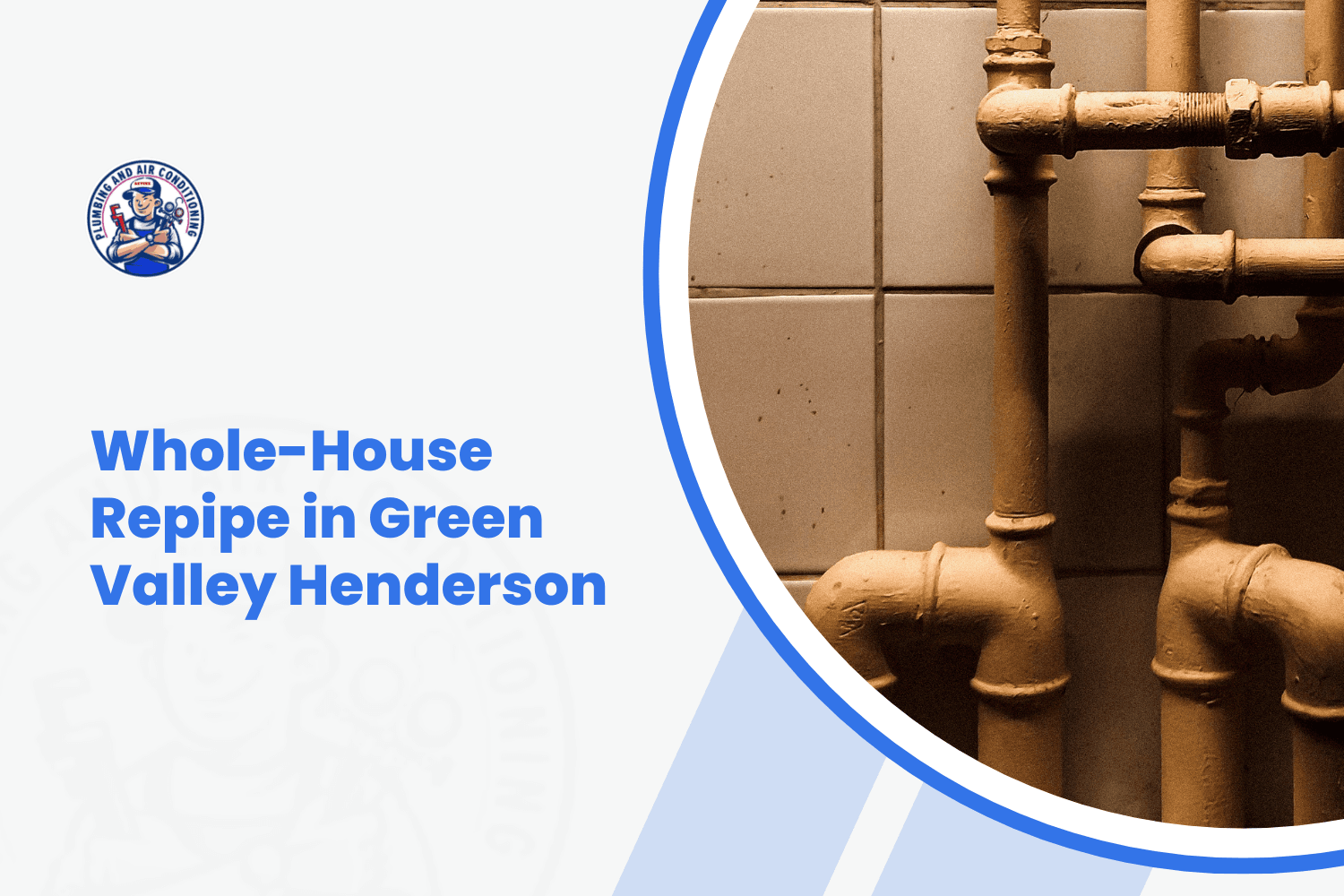
Whole-House Repipe in Green Valley Henderson: Two-Story Logistics and HOA Parking
Key Takeaways
- Green Valley homes built in the 1990s often reach repipe age due to hard water, aging copper, and polybutylene lines.
- PEX usually beats copper in Henderson's hard water because it resists mineral scaling and installs with fewer joints.
- Two-story repipes add labor for vertical runs through chases and attics, which also restores strong upstairs pressure.
- Sort out HOA gate access, parking, work hours, and neighbor notice before the trucks arrive to avoid fines and delays.
- A typical two-story repipe runs three to six days, with water only off for a few hours during day-two tie-ins.
- Repipe cost depends on home size, bathroom count, two-story access, permits, and whether drywall repair is included.
- A whole-house repipe in Henderson requires a city permit and inspection before the walls are closed.
- Verify Nevada licensing, bonding, and insurance, and ask about warranty, drywall, and HOA experience before signing.
In This Article
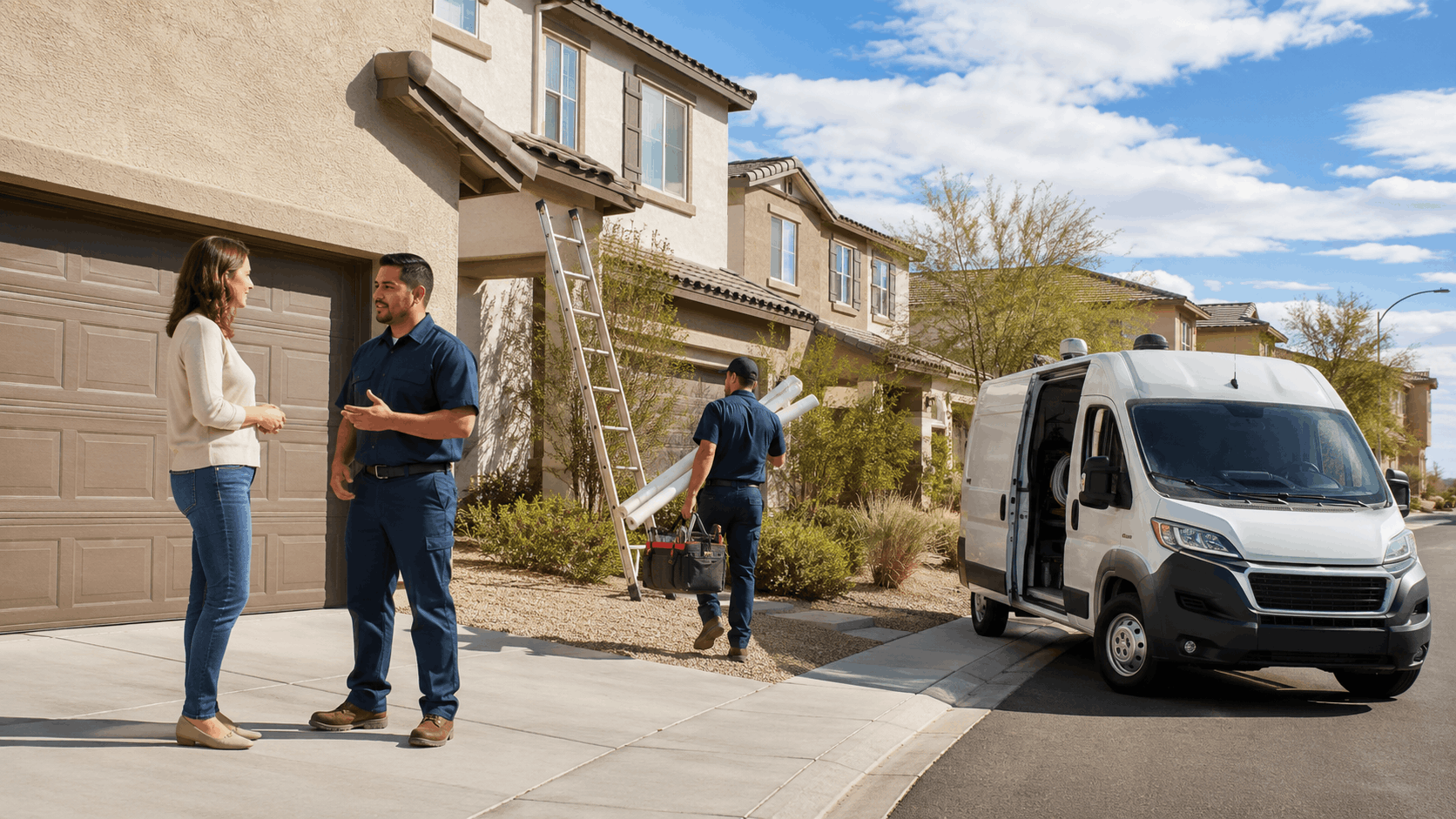
It usually starts with a small stain on the second-floor ceiling. A homeowner in Green Valley notices a damp spot below the upstairs bathroom, then hears a faint hiss behind the wall. By the time they call us, the shower upstairs barely pushes out warm water, and the same wall has been patched twice already.
Pinhole leaks and weak pressure are two of the most common calls we get from two-story homes across Green Valley and Green Valley Ranch. These older tracts were built when copper and polybutylene ruled, and decades of hard water have taken a toll. A whole-house repipe fixes the root problem instead of chasing one leak at a time.
Why Green Valley Homes Need Repiping?
Green Valley grew fast in the late 1980s and 1990s, and a lot of those homes still run on their original pipes. After 25 to 35 years, the plumbing behind the walls is often the oldest system in the house.
Most repipe calls in this area come down to a handful of repeat problems:
- Hard water scaling that narrows the pipe over time
- Original polybutylene supply lines that were never meant to last this long
- Corroded copper that starts weeping at the joints
- Pressure that drops off, especially at upstairs fixtures
- Repeat leaks in the same wall or slab area
When two or three of these show up at once, a whole-house repipe often makes more sense than another round of spot repairs. Good Green Valley plumbing work starts with knowing what is actually failing behind the drywall, and pinhole leaks are usually the first clue.
Hard Water Damage From Las Vegas Valley Water District
The water that reaches Green Valley homes is some of the hardest in the country. It carries a heavy load of calcium and magnesium, which is normal for this part of the desert. Over years, those minerals coat the inside of pipes and build up on fixtures.
That hard water scaling does two things. It slowly shrinks the inside diameter of the pipe, which chokes off flow. It also creates rough spots inside copper lines where corrosion can start.
The Las Vegas Valley Water District serves much of the valley, and the mineral content stays high year round. Homeowners near Green Valley Parkway and Pecos Road often see white crust on faucets and shower heads within a few months of cleaning them. That same buildup is happening inside the walls where nobody can see it.
A water softener installation can slow future damage, but it will not reverse pipes that are already scaled and thin. That is where a repipe comes in.
Aging Copper and Polybutylene in 1990s Builds
Many Green Valley Ranch and Legacy-era homes were plumbed with copper, and some earlier tracts used polybutylene. Both have a shelf life, and both are past it in a lot of these houses.
Polybutylene was a gray plastic pipe used widely into the mid 1990s. It reacts badly with chlorine and minerals in treated water, growing brittle and cracking from the inside out. Insurance companies flag it, and many homeowners find out about it only when a hidden line lets go.
Copper holds up longer, but it is not immune. In hard-water areas, copper pipe corrosion shows up as pinhole leaks at elbows and along horizontal runs. Once one pinhole appears, others usually follow within a year or two because the whole system aged the same way.
When we open a wall in a 1993 build near Wigwam Parkway and find corroded copper or gray poly, that tells us the rest of the house is likely the same. Replacing one section rarely ends the problem.
Warning Signs Homeowners Notice First
Most families do not think about pipes until something goes wrong. The early signs are easy to brush off, but they add up.
Rusty or discolored water is a common first complaint, especially first thing in the morning. That brown tint often means corrosion is flaking off the inside of aging metal lines. It usually shows up worse at fixtures farthest from the water heater.
Low water pressure is the one people notice most. When two people try to shower at once, or when someone runs the dishwasher and the upstairs sink slows to a trickle, scaled pipes are often the reason. Second-floor fixtures feel it first because water has to climb.
The clearest red flag is recurring leaks. If the same wall or slab area has been patched more than once, or if you have found more than one leak in a couple of years, the pipes are telling you they are done. A whole-home leak detection system can catch these early, but repeated leaks point toward a full replacement.
Repair vs. Full Repipe Decision Points
Not every leak means you need a repipe. A single failure on an otherwise healthy system is worth patching and moving on. The math changes when problems start stacking up.
We tell homeowners to think about the pattern, not the single event. One leak in a 15-year-old copper system is a repair. Three leaks in two years in a 30-year-old system is a sign the whole thing is failing on the same timeline.
The repipe vs repair decision also comes down to cost over time. Each patch means cutting drywall, fixing pipe, and repainting. Pay for that three or four times and you are close to what a full plumbing replacement would have cost, with none of the long-term fix.
A whole-house repipe resets the clock on your supply lines for decades. For most Green Valley homes past the 25-year mark with active problems, that is the smarter spend.
Get Your Quote
Tell us what's going on and we'll get back to you fast.
What a Whole-House Repipe Actually Involves
A lot of homeowners picture their whole house torn apart for a week. The reality is more controlled than that. A repipe follows a clear repipe process, and a good crew keeps the mess contained.
Here is the basic flow of a plumbing installation for a full repipe:
| Phase | What Happens | Typical Time |
|---|---|---|
| Assessment | Map lines, check materials, quote job | 1 visit |
| Prep and protection | Cover floors, mark wall access points | 2-3 hours |
| Rough-in | Run new lines to every fixture | Day 1 |
| Tie-in | Connect new lines, restore water | Day 2 |
| Inspection | City permit sign-off | Day 3-5 |
| Drywall repair | Patch, texture, paint | Day 4-6 |
Most of these homes use a PEX repipe today because it handles hard water better and installs faster. We walk through the material choice below.
PEX vs. Copper for Henderson Homes
The two main choices for a repipe are PEX and copper. Both work, but they behave differently in our water.
PEX piping is a flexible plastic line that resists mineral buildup and does not corrode. Because it bends, crews can run it with fewer joints, which means fewer places to leak. It also installs faster, which lowers labor cost on a two-story job.
A copper repipe is still an option, and some homeowners prefer it for its long track record. The problem is that copper is what failed in the first place in many of these homes. In hard water, new copper can start scaling and pitting again over time.
For most Green Valley houses, we recommend PEX. It shrugs off the calcium and magnesium that wrecked the original pipes, and it costs less to install through finished walls. Our pipe and fixture services team can walk you through both if you want to compare.
Mapping Existing Lines and Access Points
Before any wall gets opened, the crew maps where the water goes. This step decides how few holes we can get away with. Good mapping is the difference between a clean job and a torn-up house.
We trace the water line mapping from the main shutoff valve through the manifold or splits, then out to every fixture. That includes both bathrooms, the kitchen, laundry, and any hose bibs. On a two-story home, we also find the vertical runs feeding the upstairs.
Once the layout is clear, we mark access points at strategic spots, usually near fixtures and where lines turn corners. The goal is to reach every pipe through the fewest openings possible. Attics and closets often give us hidden routes that avoid cutting main living-area walls.
This planning stage also flags surprises, like a line buried in a slab or a run behind tile. Knowing those in advance keeps the job on schedule and avoids mid-project change orders.
Wall Openings, Insulation, and Drywall Patching
Access holes are cut cleanly, not smashed. Crews use a drywall saw to make neat rectangles that are easy to patch later. Most openings sit low on the wall or up near the ceiling where the pipe runs.
After the new lines go in, the openings get capped and any disturbed insulation is put back. In two-story homes, we pay attention to insulation in exterior walls and around the garage so the house stays as it was.
The drywall repair and wall access restoration is where jobs differ between companies. Some plumbers cut the holes and leave the patching to you. We coordinate patch, texture, and paint so the wall matches when the job is done.
Ask any contractor whether finish work is included before you sign. A repipe quote that skips drywall can look cheaper until you hire a separate crew to close the walls.
Pressure Testing and Final Inspection
New pipe is never left to chance. Before water goes back to the fixtures, the whole system gets a pressure test. Crews charge the lines with air or water and watch the gauge to confirm nothing leaks.
If the pressure holds steady, the system passes. If it drops, we find the weak spot and fix it before closing any walls. This step catches problems while they are still easy to reach.
A repipe in this area requires a Henderson permit, and the City of Henderson sends an inspector to sign off. The inspector checks that the work meets code and that connections are done right. You can review the local permit process through the City of Henderson Building Division.
Only after inspection passes do we move to final drywall repair. Doing it in that order protects you if the inspector needs to see anything.
Need Help in Las Vegas?
Active Plumbing serves Las Vegas and all of Las Vegas Valley.
Two-Story Logistics Unique to Green Valley Layouts
Single-story repipes are straightforward. Two-story homes, which are common across Green Valley and the tracts near Anthem, add a layer of planning. Water has to travel up, and the crew has to reach lines on both floors.
A two-story repipe means dealing with vertical runs, upstairs pressure, and protecting stairs and floors the crew crosses all day. Getting upstairs plumbing right takes more time, but the payoff is strong flow on both levels.
Running New Lines Between Floors
The trick with a two-story home is getting pipe from the ground floor up to the second floor without opening every wall. Crews look for existing chases, closets, and interior walls that already carry the old lines. Those hidden paths save a lot of drywall.
Vertical risers usually run through a wet wall shared by the upstairs and downstairs bathrooms. When bathrooms stack, the job gets easier because the pipe path is short and direct. When they do not stack, the crew maps a longer route through closets or a pipe chase.
Sometimes the cleanest path is up through a closet on the first floor into the closet directly above it. That keeps cuts inside closets where patches are hidden. In older Green Valley Ranch homes, we often find the builder left usable chases behind linen closets.
Planning these runs before cutting is what keeps the ground-floor ceiling and living-area walls mostly intact. The fewer surprise walls we open, the faster and cleaner the job goes.
Upstairs Bathrooms and Pressure Balance
The whole reason many people repipe is weak flow upstairs. Getting that right takes more than new pipe. It takes correct sizing so water reaches the top floor with strength.
Water loses pressure as it climbs, so water pressure balance matters on a two-story home. We size the risers and branch lines so a second floor bathroom gets full flow even when a downstairs fixture is running. PEX helps here because smooth interior walls hold pressure better than scaled old copper.
We also check the pressure regulator and the water heater feed during a repipe. If the regulator is set low or failing, upstairs fixtures suffer most. Correcting it as part of the job restores the flow homeowners have been missing for years.
After tie-in, the crew tests every upstairs fixture, running showers and sinks at the same time to confirm balance. If a master shower still feels weak, we track down the restriction before we call the job done.
Protecting Stairs, Flooring, and Furniture
A repipe happens in a home people still live in. That means the crew is walking through the house all day, up and down the stairs, carrying tools and pipe. Protecting the home is part of the job, not an afterthought.
We lay drop cloths and adhesive floor protection along the main pathways, especially on carpet and hardwood. Stairs get covered runners so nothing gets scratched or tracked with dust. Tile and laminate get the same care because grit underfoot can scuff a finish.
Home protection also means moving or covering furniture near the work areas. Crews shift what they can and drape plastic over the rest to keep drywall dust off. In bedrooms upstairs, we clear a work zone and seal it off from the rest of the room.
Dust control matters most on interior cuts. We use plastic sheeting to close off rooms and vacuum as we go, so the cleanup at the end is small rather than a whole-house project.
Working Around Attic and Ceiling Access
The attic is a plumber's best friend on a two-story job. Running lines through the attic space lets crews drop pipe down into walls from above, which cuts down on holes in finished rooms.
Attic plumbing works well for feeding second-floor fixtures because the crew can reach the tops of walls without opening the ceiling below. In Green Valley homes with accessible attics, this is often the cleanest route. Summer heat makes attic work brutal, so crews plan attic time for early mornings.
When lines have to cross the ground-floor ceiling, we plan ceiling access carefully. A few small, well-placed openings beat a long torn-up strip. We map the joists and run pipe along them to keep cuts minimal.
The result is a home where most of the visible repair happens in a handful of patchable spots, not scattered across every ceiling and wall. That keeps both the mess and the drywall cost down.
HOA Parking and Community Rules in Green Valley
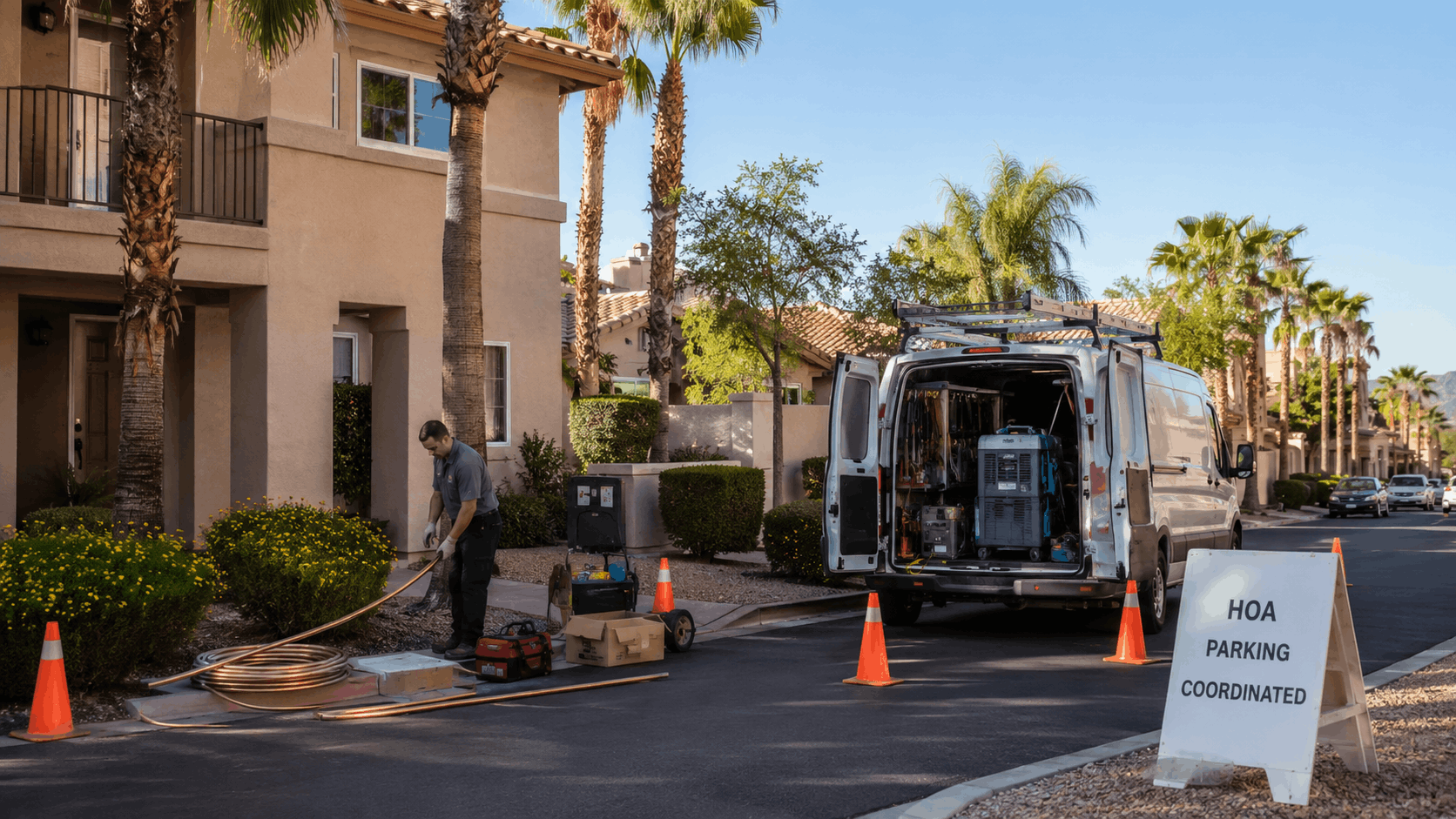
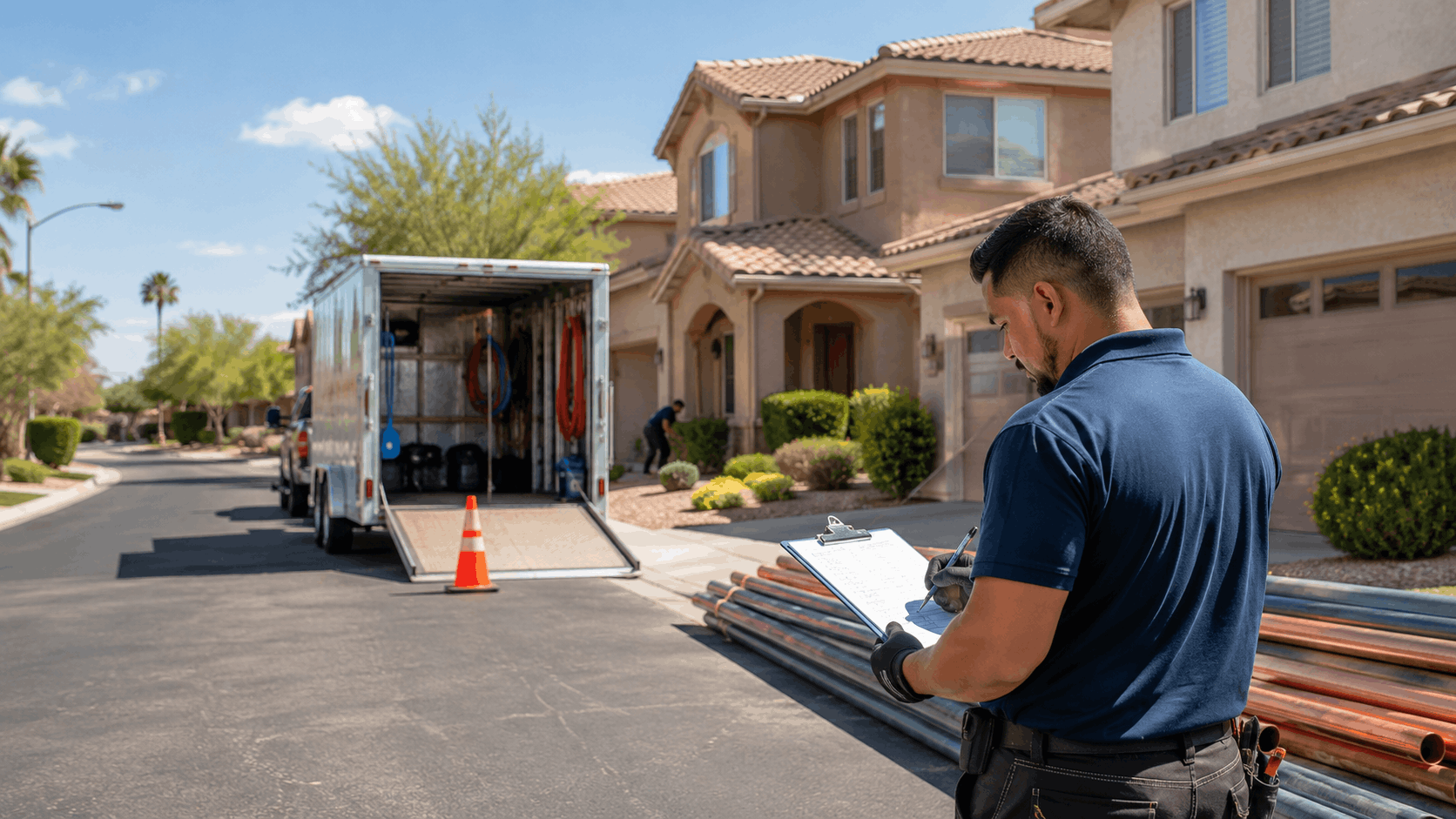
Green Valley is full of managed and gated communities, from The Fountains to Silver Springs. Those HOAs have rules about parking, work hours, and access that affect any multi-day job. Sorting them out early keeps the repipe on schedule.
A few things to line up before repipe day:
- Gate codes or guest passes for the crew's trucks
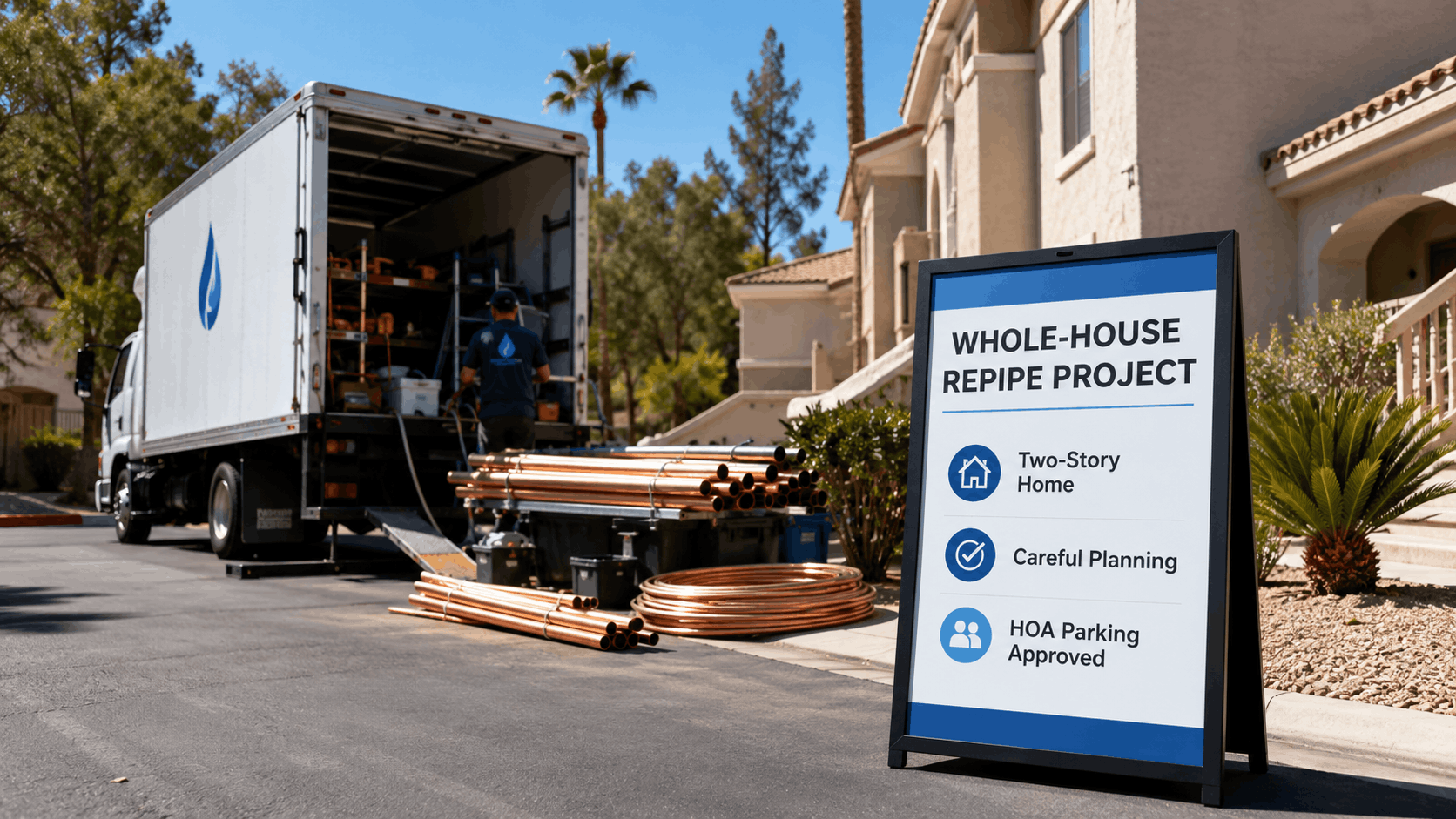
- Where trucks and trailers can legally park
- Approved work hours and quiet-hour windows
- Advance notice to the management company and neighbors
Knowing your Green Valley HOA rules ahead of time avoids fines and awkward standoffs with a gate guard. Some communities even require work permits or contractor registration on file.
Gated Community Access on Repipe Day
Gated communities like The Fountains and Silver Springs control who comes and goes. A repipe crew arriving without gate access can lose an hour sitting at the callbox. That is billable time nobody wants to waste.
The fix is simple if you plan ahead. Most gated HOAs let residents add a contractor to a guest list or issue a temporary guest pass. Call your management office a few days before the job and give them the company name and the dates.
For communities with a live gate attendant, leave the crew's name and vehicle info at the guard shack. For keypad gates, ask whether you can share a temporary code or meet the crew at the entrance on the first morning. We coordinate this with homeowners as part of scheduling.
Getting access sorted means the crew rolls in on time and starts protecting the home instead of waiting outside. On a tight two-day plan, that first hour counts.
Where Crews Can Legally Park Trucks and Trailers
A repipe brings a work truck and sometimes a trailer for materials. In many Green Valley HOAs, street parking is limited, and trailers left overnight can draw a fine. Knowing the rules protects you from a surprise notice.
The best setup is usually driveway staging. Crews park the main truck in or near the driveway so tools and pipe are close to the door. That keeps truck parking off the street and out of the HOA's crosshairs.
Some communities allow daytime street parking but ban overnight commercial vehicles or trailers. If the job runs multiple days, ask the HOA whether the crew can leave equipment overnight or whether it needs to clear out each evening. Avoiding HOA fines is easier when everyone knows the plan.
We work with homeowners to stage vehicles in a way that respects the community and keeps the job efficient. A quick chat with the management office usually settles it.
Approved Work Hours and Noise Rules
Repipe work makes noise. Saws, drills, and crews moving through the house are not quiet. Most Green Valley HOAs and the City of Henderson set work hours for construction-type activity.
Typical approved hours run from about 7 a.m. to 6 p.m. on weekdays, with tighter windows on weekends. Some communities have quiet hours that push the start time later. The local noise ordinance backs these rules up, so they are worth checking.
We schedule the loud work, like cutting and drilling, inside those approved windows. Quieter tasks can happen earlier or later if needed. Planning the day this way keeps neighbors happy and keeps you clear of complaints.
If your HOA has unusual restrictions, tell us during scheduling. We would rather adjust the plan than trigger a violation on your account.
Notifying Neighbors and the HOA in Advance
A little communication goes a long way. Telling the HOA and your neighbors before the trucks arrive heads off most complaints before they start. It also shows the management company you are following the rules.
Send the management company an HOA notice a week or so ahead. Include the contractor name, the dates, and where the trucks will park. Ask whether they need a certificate of insurance or contractor registration on file, since some Green Valley HOAs require it.
Neighbor notification is just being a good neighbor. A quick heads-up to the homes on either side about a couple of days of trucks and noise usually earns patience instead of frustration. Mention the water may shut off briefly if you share a line.
These small steps make the whole project smoother. Neighbors who know what is happening are far less likely to call the HOA over a parked truck.
Timeline and What to Expect Day by Day
Families want to know one thing above all: how long will the water be off. A well-run repipe timeline keeps outages short and predictable. Here is how a typical two-story job breaks down.
| Day | Work | Water Status |
|---|---|---|
| Day 1 | Prep, protect, rough-in new lines | On most of the day, off briefly |
| Day 2 | Tie-ins, restore water, test fixtures | Off for tie-in, back on by evening |
| Day 3-5 | City inspection | Fully on |
| Day 4-6 | Drywall patch and paint | Fully on |
Most two-story repipes run three to six days start to finish. The actual plumbing takes two days, and the rest is inspection and finish work. The project schedule depends on home size and how fast the city inspects.
Day One: Prep, Protection, and Rough-In
The first day sets the tone. Crews arrive, lay floor protection, and cover furniture before any tool comes out. They mark and cut the access points mapped during the assessment.
Once the house is protected, the rough-in plumbing begins. Crews run new PEX lines from the main to every fixture, threading through walls, attics, and chases. On a two-story home, this is when the vertical risers go in to feed the upstairs.
Water usually stays on for most of prep day because the old lines are still connected. There may be a short shutoff while crews set up the new manifold. By the end of the day, most of the new pipe is in place, waiting to be tied in.
Homeowners can stay home and go about their day during rough-in. The crew works around the family, and the biggest noise happens midday.
Day Two: Connections and Water Restoration
Day two is when the new system comes to life. Crews make the fixture connection at each sink, shower, tub, and appliance, joining the new lines to the fixtures. This is the part that requires the water to be off for a stretch.
Once connections are made, the crew pressure tests the system to confirm no leaks. Then comes water restoration. They open the main, bleed air from the lines, and check flow at every fixture.
The team runs each fixture, upstairs and down, to confirm strong pressure and no drips. They check that hot and cold are correct and that the water heater feeds properly. Any weak spot gets addressed before the day ends.
By evening on day two, the family usually has full water again on new pipes. The walls stay open until the inspector signs off.
Inspection and Drywall Repair Days
After the plumbing passes the crew's own test, the City of Henderson inspects the work. This is inspection day, and the timing depends on the city's schedule. It often lands a day or two after tie-in.
The inspector checks that the repipe meets code and that connections are correct. Walls stay open so the inspector can see the work. Once it passes, we get the green light to close everything up.
Then comes patch and paint. Crews close the access holes, tape and mud the drywall, match the texture, and paint. Texture matching in Green Valley homes often means knockdown or orange peel, which we blend to match the existing wall.
Patch work usually adds a day or two depending on how many openings there were. When it is done, the walls should look close to how they did before, minus the leaks.
Staying in the Home During the Work
Most families stay home through a repipe. There is no need to book a hotel for a job this size. Planning around the short outages is the main thing.
Living during repipe means knowing when the water goes off. The longest water outage is during day-two tie-ins, so fill a few jugs and run the dishwasher the night before. Kids and pets can stay, though it helps to keep them out of active work zones.
Dust is the other factor. Crews seal off rooms and vacuum as they go, but a fine layer can settle near cut areas. Closing doors to bedrooms you are not using keeps them clean.
If anyone in the home works from home, plan calls around the loud midday hours. A little scheduling makes the few days go smoothly for the whole household.
Need Help in Las Vegas?
Active Plumbing serves Las Vegas and all of Las Vegas Valley.
Cost Factors for a Green Valley Repipe
Price is the first question most homeowners ask. There is no single number because every home is different, but the drivers are predictable. Understanding them helps you read a plumbing estimate and budget honestly.
| Factor | Effect on Cost |
|---|---|
| Home size | More square footage means more pipe and labor |
| Bathroom count | Each bathroom adds fixtures and connections |
| Two-story access | Vertical runs add labor hours |
| Material choice | PEX usually costs less than copper |
| Permits | City of Henderson permit fees |
| Drywall repair | Included or separate, ask upfront |
Green Valley pricing for a full repipe typically lands in a range based on these factors. A larger two-story home with three bathrooms sits at the higher end. A clear repipe cost quote should spell out each of these lines.
Home Size, Fixtures, and Bathroom Count
The biggest driver is how much pipe the job needs. A 1,600-square-foot home takes far less than a 3,200-square-foot two-story. More square footage means longer runs and more labor hours.
Bathrooms matter because each one is a cluster of fixtures. A powder room, two full baths, and a master suite all add connections, valves, and access points. The fixture count across the whole house, including kitchen, laundry, and hose bibs, shapes the total.
When we quote a Green Valley home, we count every point that needs a new supply line. That number, combined with the pipe run length, gives an honest labor estimate. Homes with stacked bathrooms often come in a bit lower because the runs are shorter.
Ask any contractor to show how they arrived at their number. A quote tied to fixture and square-footage detail is more reliable than a flat guess.
Two-Story Access Adds Labor
A two-story repipe costs more than a single-story one of the same size. The reason is access, not extra pipe alone. Getting lines up to the second floor takes planning and time.
Vertical runs mean working in tight chases and reaching high wall openings. Crews spend hours routing risers through closets, walls, and attics. That extra labor cost shows up as more man-hours on the job.
Two-story access also means more floor protection, more stair traffic, and more careful dust control across two levels. All of that adds time. It is normal for a two-story job to run higher than a comparable single-story home.
The upside is that the added work is what restores strong upstairs pressure. Paying for proper vertical runs is what fixes the exact problem most two-story owners called about.
Permits and Drywall Restoration
Two line items surprise homeowners who did not ask: permits and drywall. Both belong in a complete quote. Leaving them out makes a bid look cheaper than it is.
The City of Henderson requires a permit for a repipe, and permit fees are part of the job. A licensed plumber pulls the permit and handles the inspection. That fee protects you because it means the work gets checked against code.
Drywall cost is the other piece. Some quotes include patch, texture, and paint, and some stop at capping the holes. Ask directly whether finish work is in the price or whether you will hire a separate crew.
A quote that covers permits and full drywall restoration is easier to compare and less likely to grow later. We spell both out so there are no surprises at the end.
Financing and Warranty Options
A repipe is a real investment, and not everyone wants to pay it all at once. Many homeowners look for payment options that spread the cost. It is worth asking what a company offers.
Plumbing financing can turn a large one-time bill into monthly payments. Ask about terms, interest, and any prepayment options before you commit. A clear plan helps families budget without draining savings.
The repipe warranty matters just as much as the price. Ask about coverage on both workmanship and materials. PEX manufacturers back their pipe for decades, and a good installer stands behind the labor for years.
Get the warranty in writing. A company confident in its work will happily put the coverage terms on paper. That paper is what protects you if a connection ever fails down the road.

Choosing the Right Local Repipe Team
A repipe touches every wall in your house, so the crew you pick matters. The right team knows Green Valley homes, the local HOAs, and the City of Henderson process. The wrong one leaves you with a torn-up house and a failed inspection.
A strong Henderson repipe comes from a local plumber who has done this work in your neighborhood. Here is how to tell a good fit from a risky one.
Licensing, Bonding, and Insurance in Nevada
Nevada requires plumbers to be licensed, and a repipe is not a job for an unlicensed handyman. The state contractor board tracks who holds a valid license. Checking it takes two minutes and saves major headaches.
A proper Nevada plumbing license means the contractor has met the state's training and testing requirements. You can verify a license through the Nevada State Contractors Board. Never skip this step for a job this size.
The contractor should also be bonded insured. Bonding protects you if the company fails to finish the work. Liability insurance covers your home if something goes wrong during the job.
Ask for proof of both before signing. A legitimate company hands it over without hesitation. If a contractor dodges the question, that is your answer.
Experience With Two-Story and HOA Jobs
Not every plumber has run pipe up a two-story wall or dealt with a gated HOA. Two-story experience shows in how a crew plans vertical runs and protects two floors. It is a different job than a single-story slab home.
A crew that regularly works Green Valley knows the common layouts, from stacked bathrooms to attic chases. They have seen the polybutylene and aging copper in these tracts. That familiarity means fewer surprises and a faster job.
HOA jobs take their own know-how. A team used to communities like The Fountains and Silver Springs already knows how to arrange gate access and respect parking rules. They handle the paperwork so you do not have to chase it.
Ask a contractor how many two-story repipes they have done in Green Valley. Real answers with real detail tell you they belong on your street.
How Active Plumbing Serves Green Valley
Our team is based in Las Vegas and works across Henderson and Green Valley every week. We know these neighborhoods, from Green Valley Ranch to the tracts near Wigwam and Green Valley Parkway. We have opened plenty of walls in these homes.
As a Las Vegas plumber serving the whole valley, Active Plumbing handles the full repipe from mapping to final paint. We coordinate the Henderson permit, the inspection, and the drywall so you deal with one team. Our crews know the local HOA rules and plan around them.
Beyond repipes, we handle water heater services, leak detection, and everything else these homes need over the years. If you want to see the full range, our services page lays it out. We treat your home like we would want ours treated.
Serving Henderson and Green Valley is what we do daily, not a side trip. That local focus is why our crews already know your community's gate codes and quiet hours.
Questions to Ask Before You Sign
Before you sign a repipe contract, run through a short list. The right questions to ask protect you and reveal how a company operates. A good contractor welcomes them.
Start with materials and scope. Ask what pipe they use, PEX or copper, and why. Ask how many access holes they expect and where. Get the timeline in days and confirm whether the plumbing and drywall are on the same schedule.
Then cover the details that catch people off guard. Ask whether the repipe quote includes permits and drywall patch and paint. Confirm who cleans up and how they protect floors and furniture. Ask about the workmanship and material warranty and get it in writing.
Finally, ask about HOA coordination. A local crew should already know how to handle gate access and parking in your community. Their answer tells you whether they have worked your streets before.
Need Help in Las Vegas?
Active Plumbing serves Las Vegas and all of Las Vegas Valley.
Final Thoughts
A whole-house repipe ends the cycle of pinhole leaks and weak upstairs pressure for good. For Green Valley's aging two-story homes, it replaces failing copper and polybutylene with PEX that shrugs off our hard water. The job takes planning, from vertical runs to HOA parking, but a good crew keeps it clean and on schedule.
Plan ahead on gate access, work hours, and neighbor notice, and the few days of work go smoothly. Ask the right questions about materials, permits, drywall, and warranty before you sign.
If your Green Valley home has pinhole leaks, rusty water, or pressure that fades upstairs, our team is ready to help. Contact Active Plumbing for a repipe consultation and a clear, honest estimate. We know these neighborhoods, and we will treat your home with the care it deserves.
Frequently Asked Questions
How long does a whole-house repipe take in a two-story home?
Most two-story repipes run three to six days from start to finish. The plumbing itself takes about two days, with the rest going to city inspection and drywall patch and paint. Two-story homes take a bit longer than single-story ones because crews route pipe up to the second floor through chases and attics. Home size and the city's inspection schedule affect the exact number of days.
Do I have to move out during the repipe?
No, most families stay home through the whole job. Water stays on for much of the first day and only goes off during the day-two tie-ins, usually for a few hours. Fill a few water jugs ahead of time and plan around that short outage. Crews seal off work zones and control dust, so the home stays livable throughout the project.
How much does a repipe cost in Green Valley?
Cost depends on home size, bathroom count, whether it is two stories, and the pipe material. A larger two-story home with three bathrooms sits at the higher end of the range because of the added labor for vertical runs. Permits and drywall restoration also factor in. Ask for a written estimate that breaks out each line so you can compare quotes fairly.
Is PEX or copper better for Henderson's hard water?
PEX usually wins in our hard water. It resists the calcium and magnesium buildup that scales and corrodes copper over time. PEX also installs faster with fewer joints, which lowers labor cost on a two-story job. Copper still works and has a long track record, but since copper is what failed in many Green Valley homes, most owners choose PEX for the repipe.
Do I need an HOA approval before a repipe?
It depends on your community. Most Green Valley HOAs do not require approval for interior work, but many do have rules about parking, work hours, and gate access. Some ask for a certificate of insurance or contractor registration on file. Give your management company advance notice with the dates and truck details, and confirm parking rules to avoid fines during a multi-day job.
Will the crew repair the drywall they cut?
A full-service repipe includes closing the walls, though not every company covers it. Ours coordinates patch, texture, and paint so the walls match when the job is done. Always ask upfront whether the quote includes drywall restoration or stops at capping the holes. A quote that skips finish work can look cheaper until you hire a separate crew to close the walls.
Does a repipe require a City of Henderson permit?
Yes. A whole-house repipe in Henderson requires a permit, and a city inspector signs off on the work before the walls close. A licensed plumber pulls the permit and handles the inspection as part of the job. The permit protects you because it means the new plumbing gets checked against code. Walls stay open until the inspection passes.
Where will the trucks park in a gated community?
The best setup is driveway staging, with the main truck parked in or near the driveway so tools stay close to the door. That keeps vehicles off the street and clear of HOA rules. For gated communities like The Fountains and Silver Springs, arrange gate codes or guest passes with your management office a few days ahead so the crew rolls in on time.
Will my water pressure improve upstairs after a repipe?
Yes, usually a lot. Weak upstairs flow is often caused by scaled, corroded old pipes that choke off water as it climbs. New PEX lines, sized correctly for the second floor, restore strong flow to showers and sinks. We also check the pressure regulator and water heater feed during the job. After tie-in, the crew tests every upstairs fixture to confirm the balance.
Is there a warranty on a whole-house repipe?
Yes. A repipe should come with coverage on both workmanship and materials. PEX manufacturers back their pipe for decades, and a good installer stands behind the labor for years. Always get the warranty in writing before you sign, including what is covered and for how long. That paper protects you if a connection ever fails down the road.
Frequently Asked Questions
- How long does a whole-house repipe take in a two-story home?
- Most two-story repipes run three to six days from start to finish. The plumbing itself takes about two days, with the rest going to city inspection and drywall patch and paint. Two-story homes take a bit longer than single-story ones because crews route pipe up to the second floor through chases and attics. Home size and the city's inspection schedule affect the exact number of days.
- Do I have to move out during the repipe?
- No, most families stay home through the whole job. Water stays on for much of the first day and only goes off during the day-two tie-ins, usually for a few hours. Fill a few water jugs ahead of time and plan around that short outage. Crews seal off work zones and control dust, so the home stays livable throughout the project.
- How much does a repipe cost in Green Valley?
- Cost depends on home size, bathroom count, whether it is two stories, and the pipe material. A larger two-story home with three bathrooms sits at the higher end of the range because of the added labor for vertical runs. Permits and drywall restoration also factor in. Ask for a written estimate that breaks out each line so you can compare quotes fairly.
- Is PEX or copper better for Henderson's hard water?
- PEX usually wins in our hard water. It resists the calcium and magnesium buildup that scales and corrodes copper over time. PEX also installs faster with fewer joints, which lowers labor cost on a two-story job. Copper still works and has a long track record, but since copper is what failed in many Green Valley homes, most owners choose PEX for the repipe.
- Do I need an HOA approval before a repipe?
- It depends on your community. Most Green Valley HOAs do not require approval for interior work, but many do have rules about parking, work hours, and gate access. Some ask for a certificate of insurance or contractor registration on file. Give your management company advance notice with the dates and truck details, and confirm parking rules to avoid fines during a multi-day job.
- Will the crew repair the drywall they cut?
- A full-service repipe includes closing the walls, though not every company covers it. Ours coordinates patch, texture, and paint so the walls match when the job is done. Always ask upfront whether the quote includes drywall restoration or stops at capping the holes. A quote that skips finish work can look cheaper until you hire a separate crew to close the walls.
- Does a repipe require a City of Henderson permit?
- Yes. A whole-house repipe in Henderson requires a permit, and a city inspector signs off on the work before the walls close. A licensed plumber pulls the permit and handles the inspection as part of the job. The permit protects you because it means the new plumbing gets checked against code. Walls stay open until the inspection passes.
- Where will the trucks park in a gated community?
- The best setup is driveway staging, with the main truck parked in or near the driveway so tools stay close to the door. That keeps vehicles off the street and clear of HOA rules. For gated communities like The Fountains and Silver Springs, arrange gate codes or guest passes with your management office a few days ahead so the crew rolls in on time.
- Will my water pressure improve upstairs after a repipe?
- Yes, usually a lot. Weak upstairs flow is often caused by scaled, corroded old pipes that choke off water as it climbs. New PEX lines, sized correctly for the second floor, restore strong flow to showers and sinks. We also check the pressure regulator and water heater feed during the job. After tie-in, the crew tests every upstairs fixture to confirm the balance.
- Is there a warranty on a whole-house repipe?
- Yes. A repipe should come with coverage on both workmanship and materials. PEX manufacturers back their pipe for decades, and a good installer stands behind the labor for years. Always get the warranty in writing before you sign, including what is covered and for how long. That paper protects you if a connection ever fails down the road.
A
Licensed plumbing professionals serving Las Vegas and Las Vegas Valley.
Licensed in Nevada · License #0047021
Last updated on
Why trust Active Plumbing?
Founded in 1991, Active Plumbing is a licensed and insured plumber serving Las Vegas and Las Vegas Valley. All content is reviewed by our licensed technicians.

Need Help in Las Vegas?
Active Plumbing serves Las Vegas and all of Las Vegas Valley.
Related Articles
Cost Guides
Plumber in Green Valley Henderson: Service Costs and Response Times for Sun City Anthem Area
Real plumbing service costs, response times, and local conditions for Sun City Anthem, Green Valley, and the wider Henderson area from Active Plumbing.
Tips & Advice
Water Heater Replacement in Green Valley Henderson: High Water Pressure and PRV Pairing
High street pressure quietly kills water heaters in Green Valley Henderson. Learn why pairing a new unit with a PRV protects your investment, warranty, and home.
How-To Guides
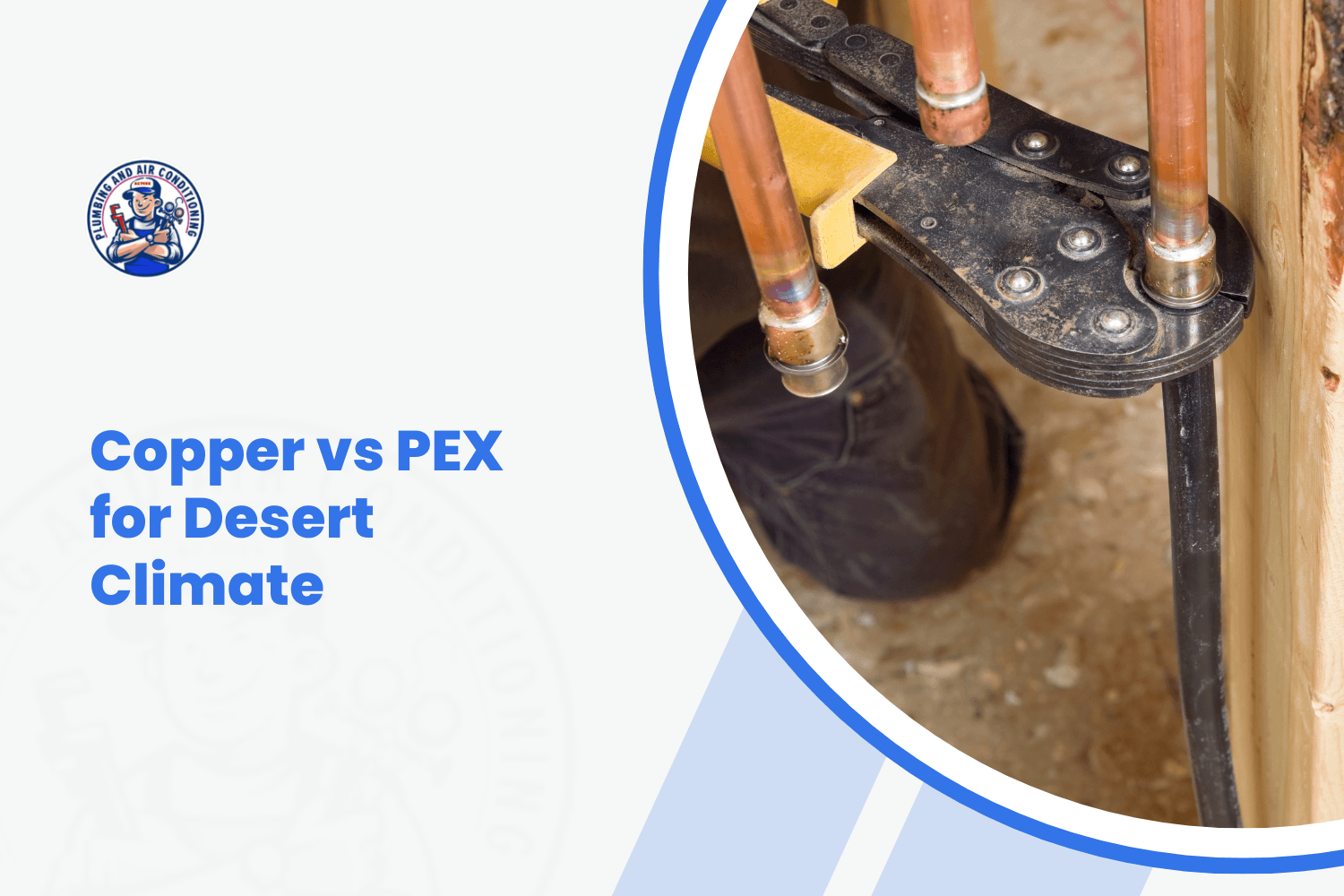
Whole-House Repipe in Las Vegas: Copper vs PEX for Desert Climate
Las Vegas homeowners face faster pipe failure from hard water and desert heat. Compare copper vs PEX for a whole-house repipe and learn what Active Plumbing recommends for valley homes.