Anode Rods Explained for Las Vegas Homeowners: Magnesium vs Aluminum-Zinc in Our Water Chemistry
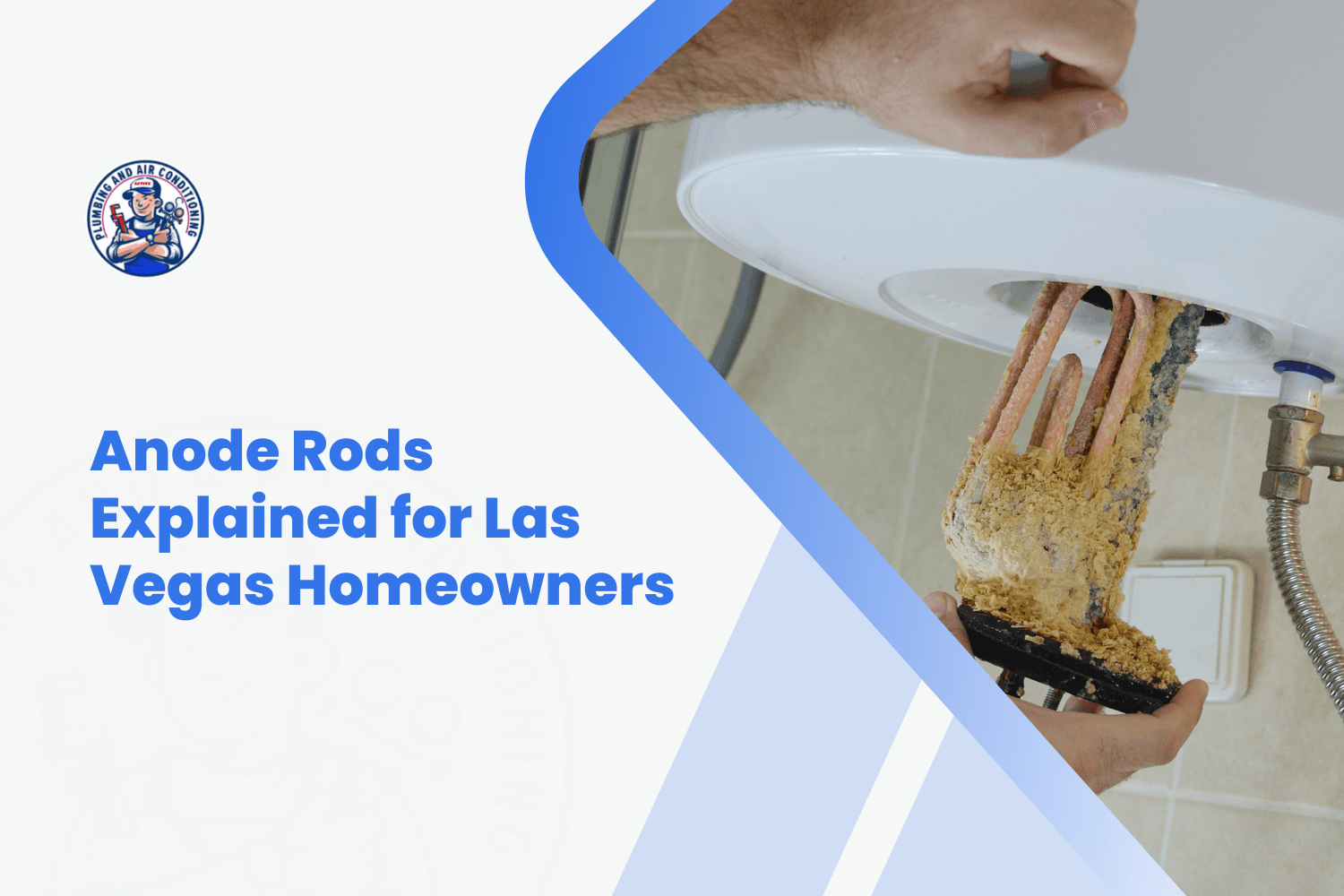
Key Takeaways
- An anode rod is a sacrificial metal that corrodes on purpose so your steel water heater tank does not rust from the inside.
- Las Vegas water pulls from Lake Mead and the Colorado River, testing at about 16 grains per gallon, which wears rods out more quickly than the national average.
- Magnesium rods give stronger protection and suit soft or softened water but can cause rotten egg odor and wear out in three to four years here.
- Aluminum-zinc rods last longer in hard untreated water and the zinc content helps fight sulfur smell, making them a common local pick.
- Homes with a softener usually do best with magnesium; untreated hard-water homes and smelly-water homes usually do better with aluminum-zinc.
- In our water, check the anode rod yearly and pair it with an annual tank flush to prevent early water heater failure.
- Stuck rods and tight garage or closet spaces make DIY swaps tricky, so a plumber with flexible rods is often the safer choice.
- Powered anode rods and tankless units are alternatives worth considering, and sometimes an aging tank is better replaced than re-rodded.
In This Article
Every few weeks, our phones light up with the same worried question from homeowners in Summerlin and Henderson. The hot water smells like rotten eggs, or it runs rusty at the tap, or the water heater that should have lasted a decade quit after six years. These calls come from all over the valley, but the story rarely changes.
The culprit is almost always the same small part sitting quietly inside the tank: the anode rod. Most people have never heard of it, yet it decides whether a water heater lasts eight years or fifteen. In our local water, that little metal rod works harder and wears out sooner than it would in most American cities.
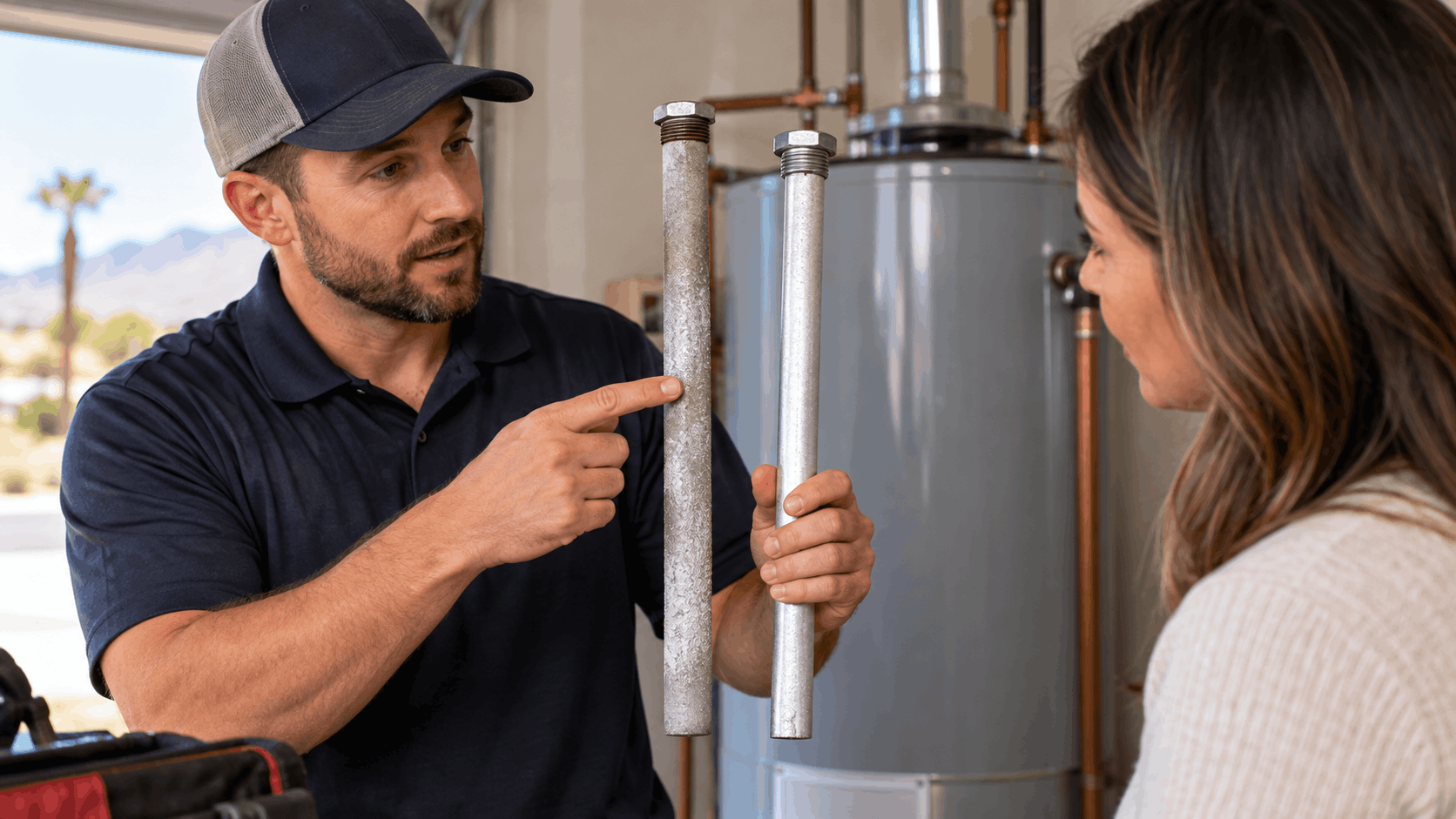
What an Anode Rod Actually Does Inside Your Water Heater?
The anode rod is the part of your water heater almost nobody thinks about until something goes wrong. It quietly does one job every single day, and that job matters more in Las Vegas than in most places in the country.
A sacrificial anode rod is a long metal rod that hangs down inside your water heater tank. Its whole purpose is corrosion protection for the steel tank around it. Our local water speeds up the wear on this rod, which is why so many valley homeowners see short tank lifespans.
The Sacrificial Metal That Protects Your Tank
Inside every tank-style water heater sits a steel shell coated with a thin glass-like lining. That lining protects the metal, but it always has tiny gaps and chips. Without help, water would attack those weak spots and rust the tank from the inside out.
The rod is made from a sacrificial metal that corrodes more easily than steel. Through a process called electrolysis, the water pulls metal off the rod instead of off the tank. The rod gives itself up so the steel stays protected.
Think of it like a bodyguard for your tank. As long as the steel tank lining has that rod defending it, corrosion targets the rod first. When the rod is gone, the water turns on the tank itself.
This is why a healthy rod is the single biggest factor in how long a water heater lives. It is cheap, it is replaceable, and it does the dirty work so the expensive tank does not have to.
Where the Rod Sits and How to Find Yours
Most anode rods screw into the top of the water heater. Look for a hex head bolt on the top surface of the tank, sometimes hidden under a plastic cap or a layer of insulation. That hex head is the top of the rod threaded into the tank.
Some units use a combo anode rod that runs through the hot water outlet instead. In those cases the rod and the hot water fitting share the same opening, which makes them a little harder to spot and swap.
In local homes we see a lot of Rheem, Bradford White, AO Smith, and Kenmore tanks. Each brand places the rod a bit differently, and some tuck it under sheet metal that has to come off first.
If a homeowner cannot find the hex head, that usually means it is a combo rod or it is buried under insulation. Our team knows where each brand hides them, so a quick look during a service visit clears up the mystery fast.
Signs Your Anode Rod Has Given Up
A common warning we hear about is the rotten egg smell coming from the hot water. When the rod reacts with certain minerals and bacteria in the water, it can create a sulfur odor that makes showers unpleasant.
Another red flag is rusty hot water. If the cold side runs clear but the hot side comes out tinted or brown, that often points to a spent rod and a tank starting to corrode inside.
Popping or rumbling sounds during heating also hint at trouble. That noise comes from sediment and scale, which builds up more quickly once the rod stops doing its job. Tank age matters too, since a heater past six or seven years old has often burned through its original rod.
When we get calls about anode rod failure across the valley, these four signs show up again and again. Catching them early can save the whole tank.
Why This Small Part Decides Tank Lifespan
A working rod can add years to a water heater. Homes that stay on top of rod replacement often push their tank lifespan well past the warranty period, while neglected tanks fail early.
In softer water, a rod might last five or six years. In our aggressive valley water, the same rod can wear out in three to four years, sometimes more quickly behind a softener.
Skipping rod inspection is the fastest path to an early water heater replacement. Once the rod is gone and the tank starts leaking, there is no rod that will fix it.
That is the whole point of paying attention to this part. A twenty-dollar rod checked on schedule can protect a tank worth many times more.
Get Your Quote
Tell us what's going on and we'll get back to you. We're open 24/7.
Las Vegas Water Chemistry and Why It Punishes Water Heaters
Our water is beautiful to look at coming out of the tap, but it is rough on plumbing. The mineral load in Las Vegas hard water is one of the highest in the nation, and water heaters take the brunt of it.
Most of our supply comes from Colorado River water, which picks up a heavy mineral content on its way to our homes. That mineral load is what makes anode rods wear out sooner here than almost anywhere else.
Hard Water From the Colorado River and Lake Mead
Roughly ninety percent of the valley's drinking water is drawn from Lake Mead, which is fed by the Colorado River. That river runs through miles of rock and soil, dissolving minerals the whole way.
By the time it reaches your tap, the water carries a lot of calcium magnesium and other dissolved solids. Those minerals are what plumbers call hardness, and they are the reason for the white crust on faucets and shower doors.
The Las Vegas Valley Water District and the Southern Nevada Water Authority both publish water quality reports that confirm how mineral-heavy the supply is. These are not opinions, they are measured numbers.
All that dissolved mineral gives corrosion more to work with. It also feeds scale buildup inside the tank, which piles onto the same rod that is already fighting hardness every day.
Grains Per Gallon: How Hard Our Water Really Is
Water hardness gets measured in grains per gallon. Anything above ten grains counts as very hard, and much of the valley tests between twelve and eighteen grains depending on the neighborhood and season.
Those water hardness levels sit far above the national average. For comparison, many parts of the country run under seven grains, so our water can be double or triple that.
High hardness means more scale buildup and more quickly rod consumption. The rod not only fights corrosion, it also gets coated and pitted by the constant mineral load.
Homes on private wells in the outskirts sometimes test even harder or carry different minerals entirely. Whether a home runs city water or well water changes how quickly the rod disappears, so the right answer is never one-size-fits-all.
How Softeners and Filtration Change the Equation
A water softener swaps hardness minerals for sodium, which cuts scale and protects the tank. But softened water can actually speed up magnesium rod loss because it becomes more conductive.
That means softened water corrosion can eat through a magnesium rod more quickly even though the water feels gentler. It is a trade-off many homeowners never hear about until their rod is gone.
Homes in Summerlin and Southern Highlands that run whole-home softeners should check their rods more often, not less. The softer feel does not mean the tank stops needing protection.
Adding whole-home filtration or a softener changes which rod makes sense for a given home. We factor the treatment setup into every rod recommendation because it flips the math on rod choice.
Neighborhood Differences Across the Valley
Water conditions and plumbing age are not the same across every part of town. In historic North Las Vegas, older homes often have aging galvanized pipe that adds its own rust and corrosion problems on top of hard water.
Those North Las Vegas plumbing systems tend to show sediment and discoloration sooner. The combination of old pipe and hard water is hard on any water heater.
Newer Henderson new construction in areas like Lake Las Vegas and Inspirada usually has modern piping and sometimes pre-installed treatment. Those homes fight scale but avoid the rust issues of older plumbing.
The point is that older home pipes and newer builds face different challenges. A rod that fits a 1970s ranch near Owens Avenue may not be the best pick for a five-year-old home in the foothills.
Need Help in Las Vegas?
Active Plumbing serves Las Vegas and all of Las Vegas Valley.
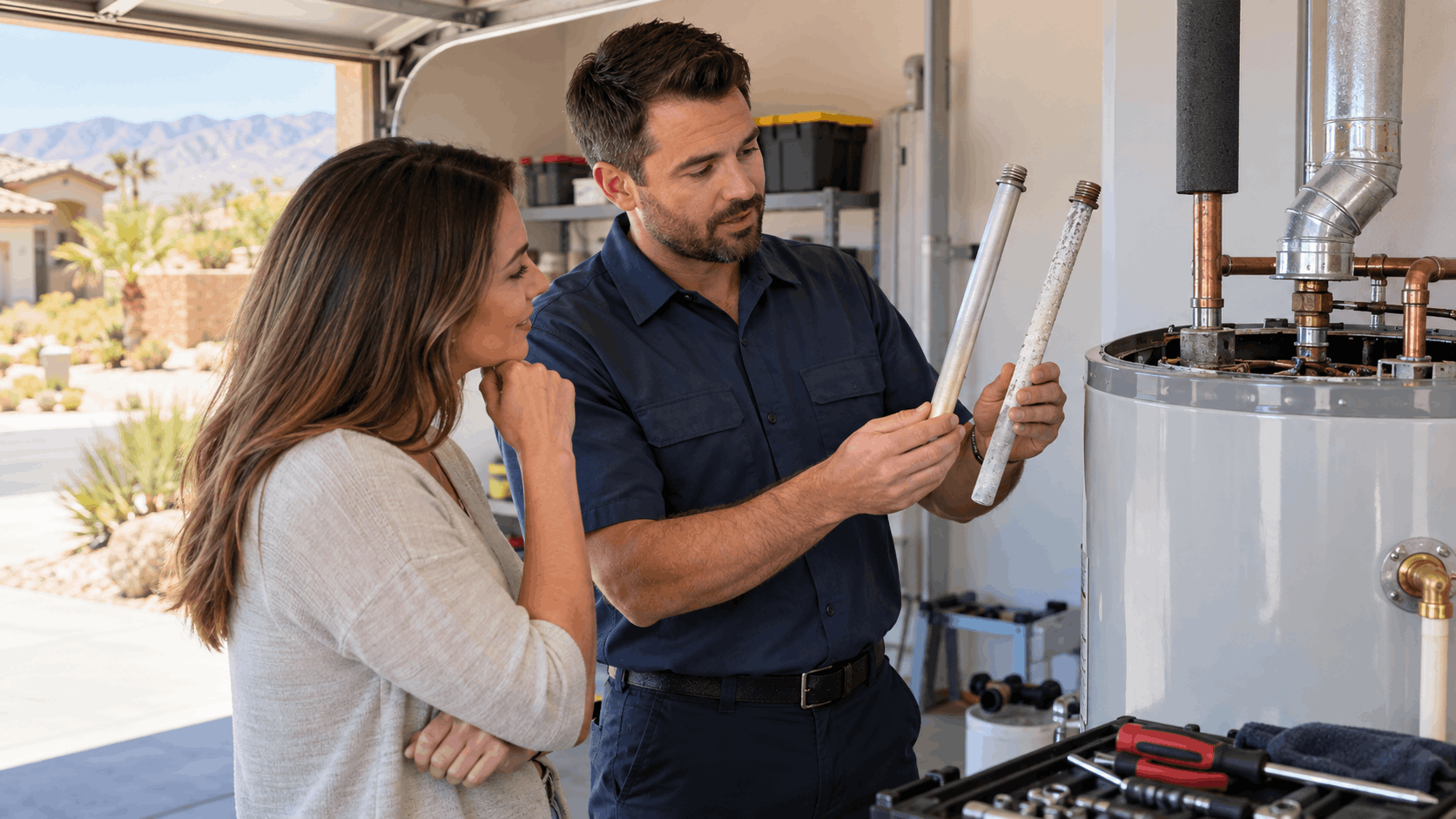
Magnesium Anode Rods: Strengths and Weaknesses Here
Magnesium is the classic anode rod material and often the one that ships inside a new tank. It has real strengths in our area, but it also has a couple of weaknesses that trip homeowners up.
A magnesium anode rod is a high output rod, meaning it gives strong sacrificial protection. That power is a benefit and a drawback at the same time depending on your water.
Stronger Protection for Soft or Softened Water
Magnesium is more chemically active than aluminum. That means it gives more aggressive magnesium protection to the steel tank, especially when the water is soft or treated.
In softened water, magnesium shines because it can push out enough protective current to guard the tank even in gentler water. It stays an active anode where a weaker rod might struggle.
Homes with a properly running softener often get the best tank protection from magnesium. The rod and the treated water work together to slow corrosion.
The catch is that stronger activity also means the rod sacrifices itself more quickly. More protection now can mean a shorter rod life and more frequent swaps.
The Rotten Egg Smell Problem
The number one complaint we hear about magnesium is the smell. When magnesium reacts with sulfate-reducing bacteria in the water, it can produce hydrogen sulfide gas.
That gas is what creates the sulfur smell people describe as rotten eggs. It tends to hit hardest in homes where the water sits in the tank for a while, like vacation properties or lightly used guest baths.
Our crews find this magnesium reaction in homes all over the valley, and it is one of the more common odor calls we take. The water is safe, but the smell is genuinely unpleasant.
When we trace a rotten egg smell to a magnesium rod, switching rod material is usually the cleanest fix. That is where aluminum-zinc enters the conversation.
Quicker Wear in Very Hard Water
Our aggressive water can chew through a magnesium rod quickly. The same mineral load that scales up a tank also speeds up hard water corrosion on the rod.
That fast rod wear means some valley homes need a new magnesium rod every three years or so. In the hardest-water pockets, even sooner.
A shorter replacement interval is not the end of the world if a homeowner stays on schedule. The problem comes when the rod vanishes unnoticed and the tank starts corroding.
For homes without treatment on the very hardest water, magnesium can feel like it disappears too fast. That frustration pushes many owners toward a longer-lasting alternative.
Best-Fit Homes for a Magnesium Rod
A magnesium rod makes the most sense in homes with a working softener and no history of smelly water. The magnesium rod fit is strongest where the water is treated and gentle.
A soft water home in Summerlin West with a softener and clean, odor-free hot water is a textbook case. There the extra protection pays off and the smell risk stays low.
Magnesium also suits homeowners who do not mind checking the rod more often. If someone is comfortable with a shorter cycle in exchange for strong tank protection, it is a fine choice.
Where it falls apart is untreated hard water or any home already fighting sulfur odor. In those cases we usually steer people the other direction.
Aluminum-Zinc Anode Rods: Strengths and Weaknesses Here
The aluminum-zinc rod is the workhorse many local homes end up needing. It trades a little protection power for better longevity and odor control in our tough water.
An aluminum-zinc anode rod is a zinc alloy rod built to handle heavy mineral loads. As a hard water rod, it often outlasts magnesium in untreated valley water.
Better Longevity in Aggressive Hard Water
Aluminum resists our hard water better than magnesium does. Because it is less chemically active, it sacrifices itself slower, giving better aluminum rod longevity.
That hard water durability matters in homes running straight tap water with no softener. Where a magnesium rod might last three years, an aluminum-zinc rod often stretches to five or more.
For a lot of untreated homes in Enterprise and Spring Valley, that extra rod lifespan is the deciding factor. Fewer swaps means less hassle and less risk of a missed replacement.
The longer life also lines up better with normal maintenance visits. A rod that survives to the next annual check is a rod doing its job.
The Zinc That Fights Sulfur Smell
The zinc content in these rods is the secret weapon against odor. Zinc interferes with the bacteria reaction that produces hydrogen sulfide, which cuts down the rotten egg smell.
That built-in odor control is why we so often recommend aluminum-zinc as a sulfur smell fix. When a home has smelly hot water from a magnesium rod, swapping to aluminum-zinc frequently solves it.
The change is not always instant, since the tank may need a flush too. But for chronic sulfur odor, the zinc alloy rod is usually the first move we make.
Homeowners tired of holding their breath in the shower tend to love the difference. Clean-smelling hot water makes the switch worth it.
Weaker Protection Level to Consider
The trade-off is real. Aluminum-zinc gives slightly less active protection than magnesium, so it pushes out a bit less protective current.
That protection trade-off matters most in soft or softened water, where a weaker rod can leave the tank a little more exposed. This is one of the aluminum rod limits to keep in mind.
In hard, untreated water the gap barely matters because the aluminum rod lasts so much longer. The longevity makes up for the lower active protection.
The wrong pairing is aluminum-zinc behind a softener with no odor issue. In that case magnesium usually protects the tank better.
Health and Sediment Notes on Aluminum
Some homeowners ask whether aluminum is safe. As the rod wears, it leaves a fine aluminum sediment that settles at the bottom of the tank.
That tank byproduct is mostly a gel-like sludge that stays in the tank and gets removed during a flush. It does not dissolve into the water the way people sometimes fear.
On drinking water concerns, most authorities consider aluminum anode rods safe for household use. Still, some families prefer not to drink or cook with hot tap water regardless of rod type, which is smart practice anyway.
Homes that use hot water for drinking or want to avoid aluminum entirely can look at a powered rod instead. We cover that option below.
Need Help in Las Vegas?
Active Plumbing serves Las Vegas and all of Las Vegas Valley.
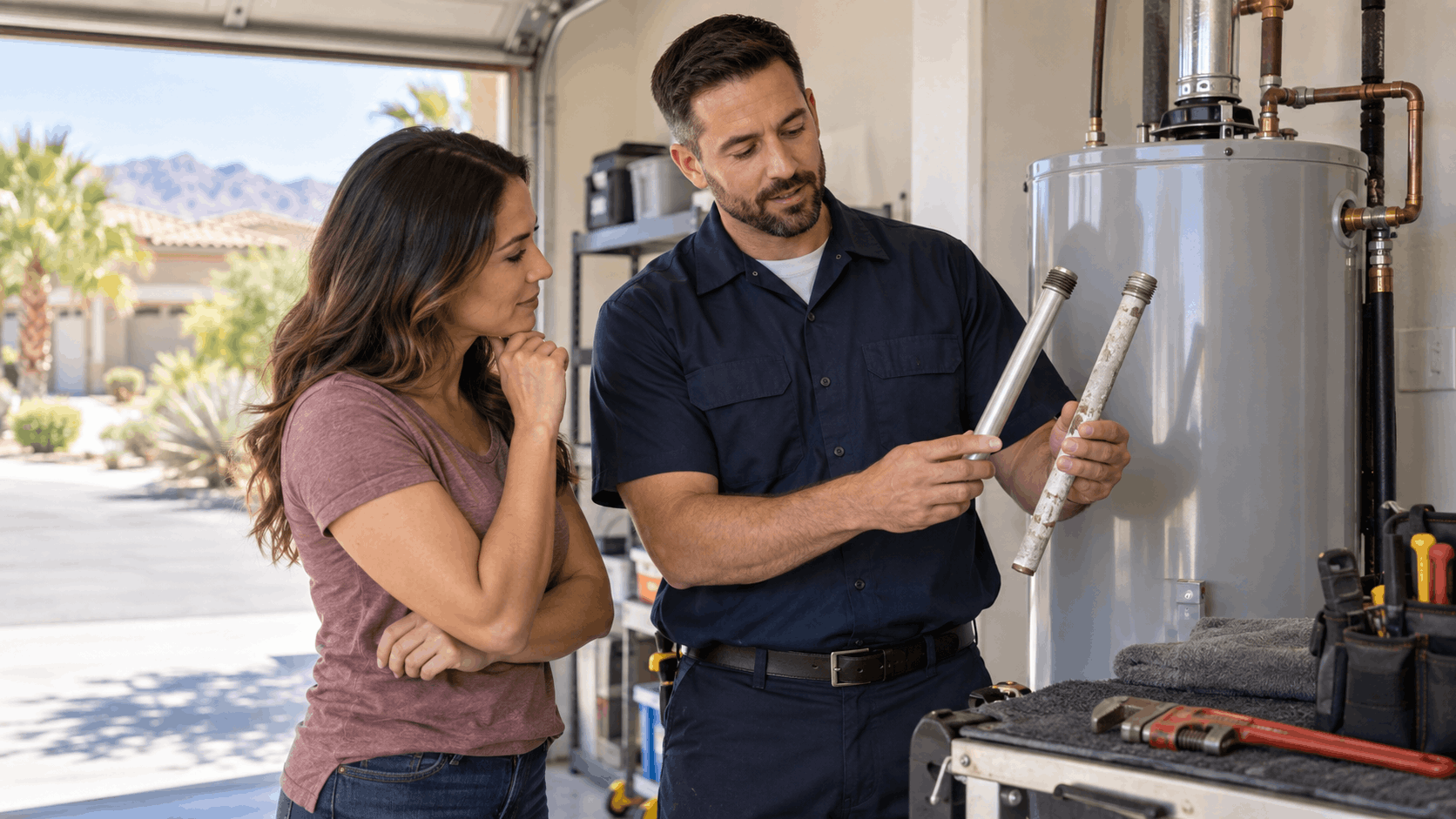
Side-by-Side: Which Rod Wins in Las Vegas Homes
There is no single winner for every home. The right rod depends on your water treatment, your hardness, and whether you are fighting odor. Here is how the two stack up in our conditions.
This magnesium vs aluminum-zinc breakdown puts the anode rod comparison in plain terms for any Las Vegas water heater owner.
| Factor | Magnesium Rod | Aluminum-Zinc Rod |
|---|---|---|
| Protection strength | Higher | Moderate |
| Life in hard untreated water | 3 to 4 years | 5+ years |
| Best water type | Soft or softened | Hard, untreated |
| Odor tendency | Can cause sulfur smell | Fights sulfur smell |
| Sediment | Less sludge | More aluminum sludge |
If You Have a Water Softener
A softener home usually does best with magnesium. The softened water is more conductive, so magnesium can deliver strong protection even in the gentler water.
For rod selection behind a softener, magnesium is the default unless there is a smell problem. The stronger current guards the tank where a weaker rod might fall short.
The catch is that softened water rod life runs shorter. Homeowners with softeners should plan to check the magnesium rod more often, since it works harder and wears sooner.
If a softened home also smells like sulfur, that changes things, and we look at aluminum-zinc or a powered option instead.
If You Are on Untreated City Water
Homes running straight hard tap water with no treatment usually do better with aluminum-zinc. On untreated water, the aluminum rod simply lasts longer against our mineral load.
That makes aluminum-zinc the go-to hard water rod choice for most no-softener homes across the valley. Fewer replacements and better durability win the day.
On raw city water straight from the Lake Mead supply, magnesium tends to vanish too fast. The longer aluminum life fits the maintenance rhythm better.
If odor ever shows up later, the aluminum-zinc rod also has the zinc working in its favor. That covers two problems with one part.
If You Are Fighting a Smelly Water Problem
For homes already dealing with rotten egg odor, the smelly water fix starts with the rod. If a magnesium rod is in there, that is almost always the source.
The cleanest odor solution is a zinc rod switch to aluminum-zinc, paired with a full tank flush to clear out the bacteria and sludge. That combination knocks out most sulfur smells we encounter.
In stubborn cases where the smell keeps coming back, a powered anode rod removes the reaction entirely. We save that for homes that a rod swap alone cannot fix.
Either way, the goal is hot water that smells like nothing at all. That is the standard we aim for on every odor call.
The Powered Anode Rod Alternative
There is a third option worth knowing about. A powered anode rod uses electricity instead of sacrificial metal to protect the tank.
This electric anode plugs into an outlet and sends a small current through a titanium rod that never wears out. Because there is no magnesium or aluminum reacting, it produces no sulfur smell and no sludge.
As a long-term option, powered rods can last twenty years and often come with long warranties. They cost more upfront but end the cycle of replacing rods every few years.
For homes stuck in a loop of odor or fast rod wear, a powered rod is often the best answer. We install them regularly for valley homeowners who want a set-and-forget solution.
Inspecting and Replacing Your Anode Rod
Knowing about rods is one thing. Knowing when to check and swap them is what keeps a tank alive. Here is what the process looks like in our area.
Regular anode rod replacement is a core part of smart water heater maintenance. A simple rod inspection on schedule prevents most early tank failures.
How Often to Check It in Our Water
The national advice of checking every three to five years does not hold up here. Our hard water calls for a tighter inspection schedule.
For most valley homes we suggest an annual check of the rod, or at least every two years. Homes with softeners or known odor problems should lean toward the yearly end.
This hard water maintenance habit catches a dying rod before it exposes the tank. Waiting the full national interval often means the rod is long gone.
Pairing the rod check with an annual tank flush makes it easy to remember. One visit covers both jobs and keeps everything on track.
What a Worn Rod Looks Like
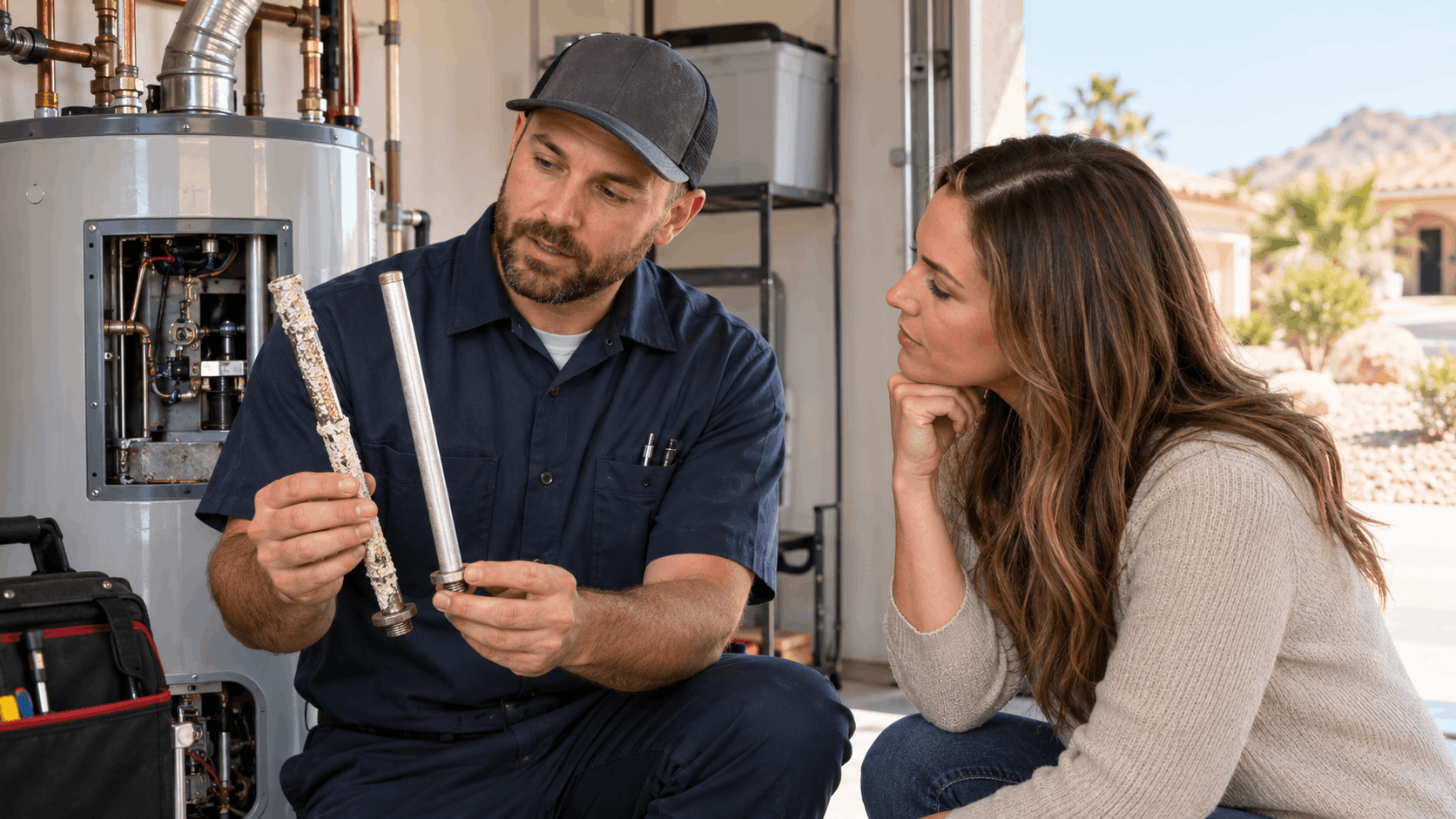
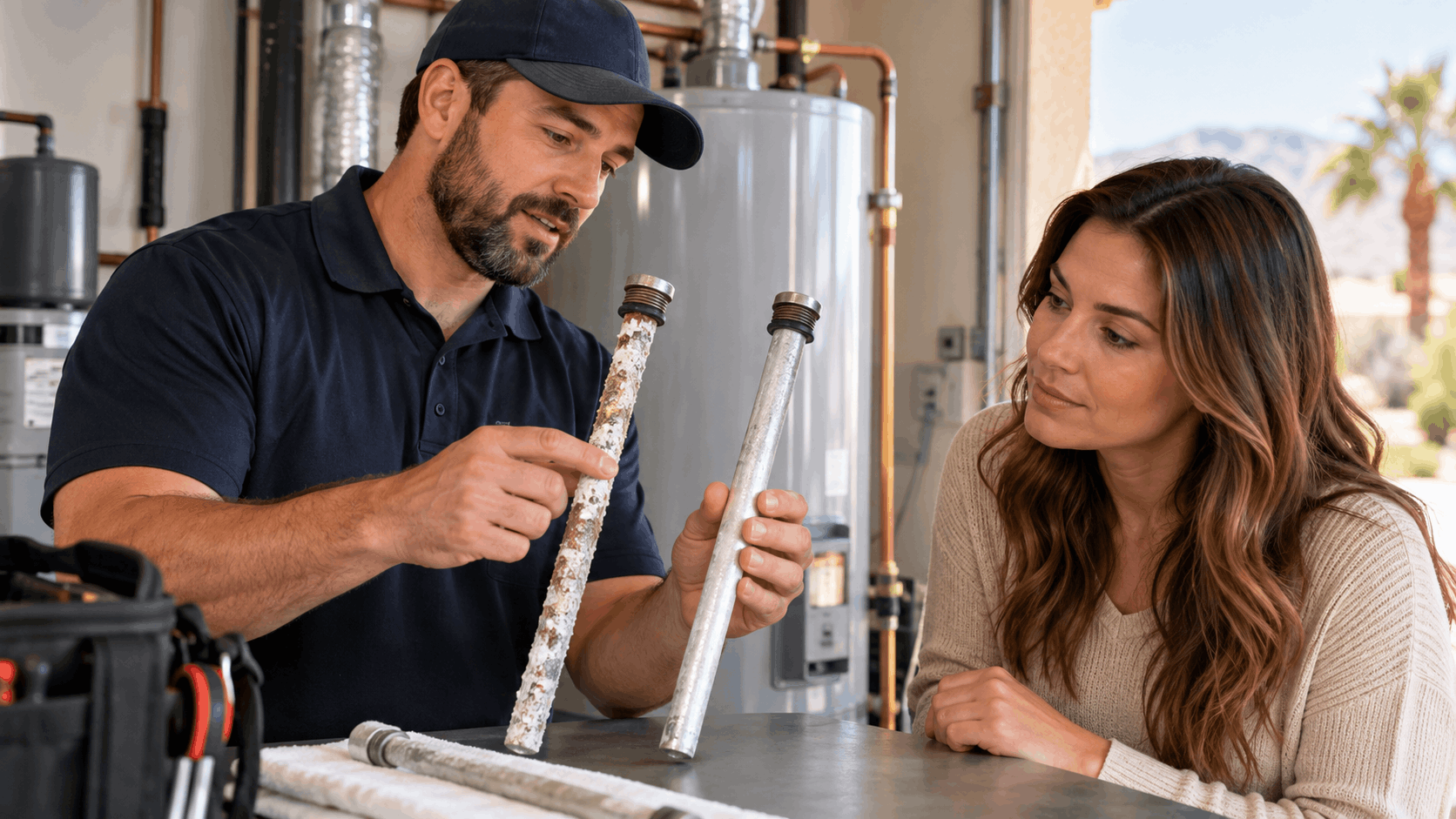
A fresh rod is a solid rod of metal around three-quarters of an inch thick. A worn anode rod looks nothing like that.
When it is spent, you will see the steel core wire running down the center exposed, with most of the sacrificial metal eaten away. It looks skeletal and thin.
Heavy rod pitting and chunks of missing material are the other tell. If less than half the rod remains or the core wire shows, it is time to replace it.
Some rods come out coated in a thick calcium crust from our hard water. That crust hides how worn the rod really is, which is another reason to have trained eyes look at it.
DIY Versus Calling a Plumber
A DIY anode swap sounds simple, and sometimes it is. But in practice, a lot of valley rods fight back.
The biggest problem is a stuck rod. Years of heat and mineral buildup can seize the hex head so tight that a normal wrench will not budge it, and forcing it risks damaging the tank.
Space is the other issue. Many Las Vegas water heaters sit in cramped garage corners or tight hallway closets with little clearance above the tank, and rods need vertical room to pull out.
That tight clearance often forces a plumber replacement using a segmented or flexible rod. When the rod is stuck or the space is tight, calling a pro saves a lot of frustration and a possible ruined tank.
How Our Team Handles the Job
When homeowners call for Active Plumbing service, we start by inspecting the existing rod and the tank condition. We check age, sediment, and how much rod is left.
Next we perform a tank flush to clear out the scale and sludge that our water leaves behind. Flushing first makes the whole system run cleaner and helps the new rod work better.
Then comes the rod installation. We bring breaker bars, impact tools, and flexible rods to handle stuck fittings and tight closets across the valley.
We also match the rod material to the home's water and any odor history. That way the new rod is not just a replacement but the right choice for that specific house.
Need Help in Las Vegas?
Active Plumbing serves Las Vegas and all of Las Vegas Valley.
Pairing the Right Rod With a Full Water Heater Plan
The rod is one piece of a bigger picture. To get the most life out of a tank in our water, it helps to think about flushing, treatment, and the tank itself together.
A simple water heater maintenance plan built around a regular tank flush and the right water treatment keeps everything working longer.
Flushing Sediment on a Local Schedule
Our scale-heavy water dumps sediment into the bottom of every tank. That is why a sediment flush matters more here than in soft-water cities.
Without regular scale removal, that sediment layer traps heat, wastes energy, and speeds up corrosion. It also makes those popping and rumbling sounds homeowners describe.
For most valley homes, a good flush schedule is once a year, ideally at the same visit as the rod check. Heavy-use homes may benefit from twice a year.
Flushing keeps the tank floor clean so the rod and the heating elements can do their jobs. It is one of the cheapest ways to add years to a tank.
Adding Softening or Filtration
Treating the water at the source changes everything downstream. A water softener install cuts the hardness that scales up tanks and wears out rods.
Good filtration can also remove sediment and some of the compounds that feed odor problems. Cleaner water in means less stress on the whole heater.
Treating the water helps extend tank life and shifts the rod math toward magnesium, since softened water suits that material. Homeowners weighing a softener should factor the water heater benefit into the decision.
For families wanting softer water without salt, a salt-free conditioning system is another route we install. Each option changes the tank and rod picture in its own way.
Tankless Considerations for Newer Builds
Newer homes in Henderson and Summerlin often come with a tankless water heater instead of a tank. These units work differently and skip the anode rod entirely.
Because there is no steel tank sitting full of water, tankless units do not need a sacrificial rod for corrosion protection. Their weak spot is scale, not rust.
In our hard water, scale prevention for tankless means regular descaling to keep the heat exchanger clear. We handle tankless descaling for homes across the valley.
For newer construction with tankless units, the maintenance shifts from rods to descaling. Same goal of long life, different method.
When Replacement Beats Another Rod
Sometimes a new rod is throwing good money after bad. If a tank is already leaking, no rod will save it, and a water heater replacement is the only fix.
An aging tank past ten or twelve years with heavy sediment and a rusted-out rod is often near the end. Spending on a rod for a tank that may fail next year rarely pays off.
The cost decision comes down to age, condition, and how much life is realistically left. We give honest assessments rather than pushing a rod onto a tank that should be retired.
When a tank is worth saving, a rod is a smart, cheap investment. When it is not, we help homeowners plan a replacement before a leak floods the garage.
Final Thoughts
The anode rod is a small part with a big job, and our water makes that job harder than almost anywhere else. Magnesium protects strongly and suits softened water, while aluminum-zinc lasts longer and fights odor in hard, untreated water.
The right choice comes down to your softener, your water hardness, and whether you smell rotten eggs at the tap. Checking the rod yearly and flushing the tank on schedule keeps a water heater alive years longer in the valley.
Whether you need a rod inspection, an odor fix, or a full tank plan, our team knows the water and the neighborhoods across Las Vegas. Reach out and we will match the right rod to your exact home.
Frequently Asked Questions
- How long does an anode rod last in Las Vegas water?
- In our hard water, most anode rods last about three to five years, shorter than the national average of five to ten. Magnesium rods on the very hardest untreated water can wear out in three years, while aluminum-zinc rods often reach five or more. Homes with softeners should check yearly, since softened water can shorten magnesium rod life even further.
- Which is better for my home, magnesium or aluminum-zinc?
- It depends on three things: whether you have a softener, how hard your water is, and any odor problems. Magnesium suits soft or softened water and gives stronger protection. Aluminum-zinc lasts longer in hard untreated water and fights sulfur smell. If you have odor or straight tap water, lean aluminum-zinc. If you run a softener with clean-smelling water, magnesium usually wins.
- Why does my hot water smell like rotten eggs?
- That sulfur odor usually comes from a magnesium anode rod reacting with bacteria in the water to form hydrogen sulfide gas. The water is safe but the smell is unpleasant. Switching to an aluminum-zinc rod, which contains zinc that blocks the reaction, paired with a full tank flush, clears up the smell in most homes we treat across the valley.
- Is aluminum in my anode rod safe for drinking water?
- Aluminum anode rods are widely considered safe for household use by water authorities. As the rod wears, it leaves a gel-like sediment at the bottom of the tank rather than dissolving into your water, and that sludge gets removed during a flush. Many families avoid drinking or cooking with hot tap water anyway, which is good practice regardless of rod material.
- Can I replace an anode rod myself?
- Sometimes, but be ready for two common obstacles. Rods often seize in the tank from years of heat and mineral buildup, needing serious torque to break loose. Many valley water heaters also sit in tight garages or closets with little overhead room, which blocks pulling a full-length rod. If the rod is stuck or space is tight, a plumber with flexible rods and the right tools is the safer call.
- How much does anode rod replacement cost in Las Vegas?
- Most anode rod replacements run somewhere between roughly 150 and 350 dollars depending on the rod type, tank access, and whether the old rod is stuck. Powered anode rods cost more upfront but last far longer. Pairing the swap with a tank flush adds a little but saves money over time by extending the tank's life. We give clear quotes before starting any work.
- Does a water softener change which rod I need?
- Yes. Softened water is more conductive, which lets magnesium give strong protection but also wears the rod more quickly. If you have a softener and no odor problem, magnesium is usually the better fit but needs more frequent checks. If your softened water smells like sulfur, aluminum-zinc or a powered rod is the smarter move. We factor your treatment setup into every recommendation.
- What is a powered anode rod and is it worth it?
- A powered anode rod uses a small electric current through a titanium rod instead of sacrificial metal, so it never wears out and produces no odor or sludge. It plugs into a nearby outlet and can last twenty years. The upfront cost is higher, but for homes stuck in a loop of fast rod wear or chronic sulfur smell, it often pays off as a long-term fix.
- Do tankless water heaters have anode rods?
- Most tankless units do not use anode rods, because they have no steel tank sitting full of water to protect from corrosion. Their main enemy in our water is scale, not rust. Instead of rod service, tankless heaters need regular descaling to keep the heat exchanger clear. We handle tankless descaling for newer Henderson and Summerlin homes throughout the valley.
- How do I know if my anode rod already failed?
- Watch for four warning signs: rusty or discolored hot water, a rotten egg smell at the tap, popping or rumbling sounds during heating, and a tank older than six or seven years. Any of these suggest the rod may be spent and the tank could be starting to corrode. If you notice them, have the rod inspected before the tank itself begins to leak. Our team works water heaters and water treatment across Summerlin, Henderson, North Las Vegas, Enterprise, Spring Valley, and the whole valley every day. If you are dealing with rusty water, a rotten egg smell, or a tank that seems to be aging too fast, contact Active Plumbing for a rod inspection and a full water heater checkup. Call us and we will match the right rod to your water, flush your tank, and help you get years of extra life out of your heater.
Licensed plumbing professionals serving Las Vegas and Las Vegas Valley.
Licensed in Nevada · License #0047021
Last updated on
Why trust Active Plumbing?
Founded in 1991, Active Plumbing is a licensed and insured plumber serving Las Vegas and Las Vegas Valley. All content is reviewed by our licensed technicians.

Need Help in Las Vegas?
Active Plumbing serves Las Vegas and all of Las Vegas Valley.
Related Articles
Pinhole Leak in Copper in a Las Vegas Wall - Why Our Water Chemistry Eats Copper and What to Do Today
A pinhole leak in copper starts small but spreads fast in Las Vegas. Learn why local water eats copper, the warning signs, and what to do today.
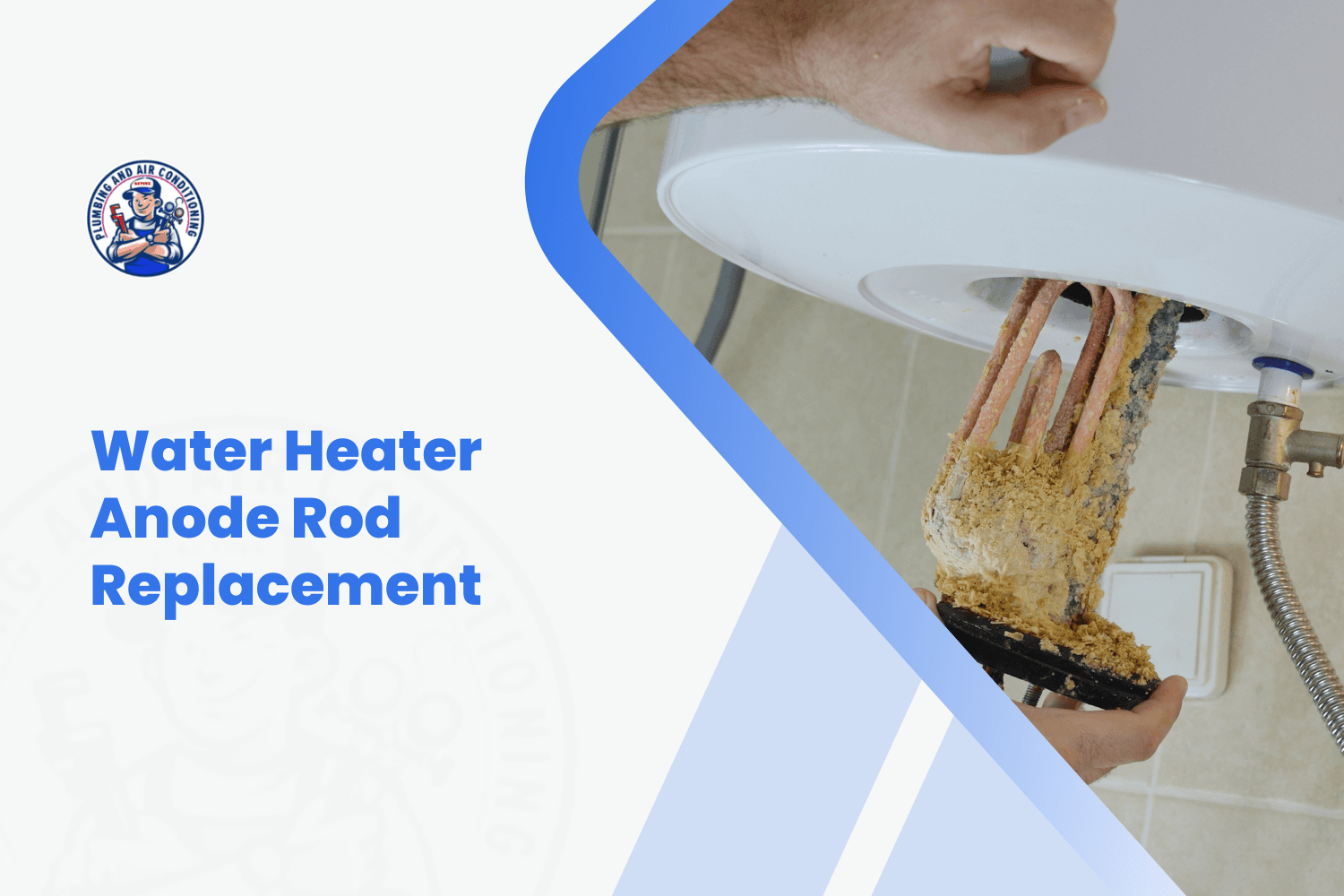
Water Heater Anode Rod Replacement: Why Vegas Hard Water Eats Them in 18 Months
Las Vegas hard water destroys anode rods in 18 months instead of years. Learn the warning signs, replacement costs, and how to protect your water heater long term.
Why Kitec Fittings Fail: Dezincification Chemistry Meets Las Vegas Water
Kitec fittings fail fast in Las Vegas because dezincification meets hard, hot valley water. Learn the warning signs, risks, and repipe options.