Tips & Advice
Las Vegas Water Pressure Regulations: PRV Requirements by Neighborhood
Key Takeaways
- Local plumbing code caps home static pressure at 80 PSI, and anything higher legally requires a pressure reducing valve.
- Elevation drives big pressure differences across the valley, with foothill areas like Summerlin and hillside Henderson often running 90 to 110 PSI.
- Adding a PRV creates a closed system that also requires a thermal expansion tank to meet code.
- A hose bib pressure gauge test takes minutes and tells homeowners whether they are over the 80 PSI limit.
- PRVs last 8 to 12 years, but Las Vegas hard water and mineral buildup push most toward the shorter end.
- Newer builds in Mountain's Edge, Skye Canyon, and Aliante usually include a PRV, but builder valves start wearing out around 8 to 10 years.
- Most PRV replacements cost 350 to 750 dollars installed depending on access, pipe material, and permit needs.
- A water softener or salt-free conditioning slows scale buildup and extends valve life across the valley.
In This Article
A homeowner in Summerlin called our office last spring after a strange thing started happening. Every time someone shut off the kitchen faucet, the pipes behind the wall banged like someone was hitting them with a hammer. She had not touched a thing in the house. The problem showed up right after the Las Vegas Valley Water District boosted line pressure in her zone.
This is more common than most people think. Water pressure across the valley is not the same from one street to the next. A home in The Ridges gets a very different push than a home near Charleston Boulevard, and that difference decides whether a house needs a pressure reducing valve or not.
How Water Pressure Works in the Las Vegas Valley
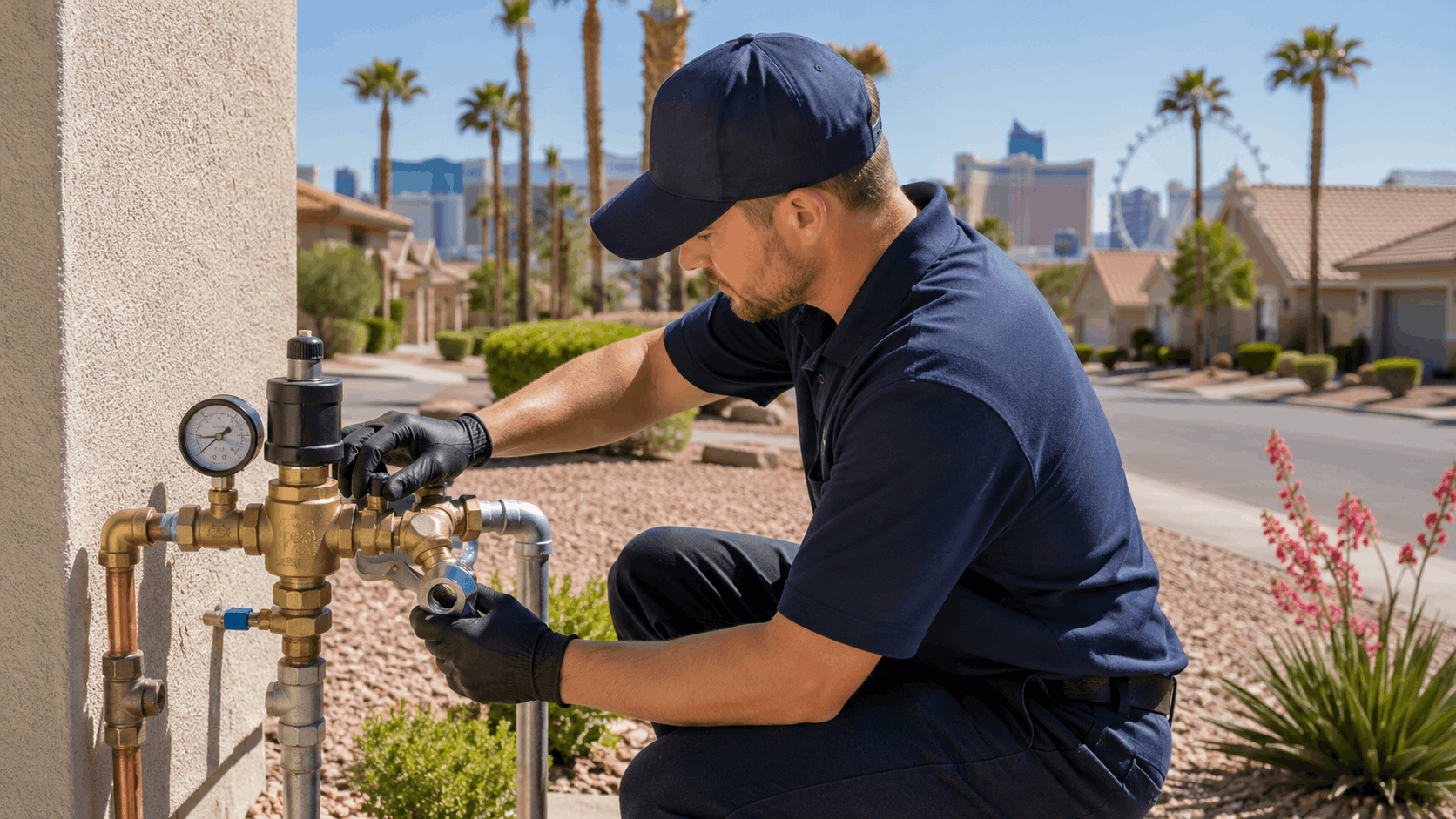
Water pressure in the valley is a moving target. Two homes a mile apart can read 30 PSI apart on a gauge. The reason comes down to where our water starts and how far uphill it has to travel to reach your tap.
- Most valley water comes from Lake Mead and gets pushed through a network of pipes and pumps.
- Higher-elevation homes need extra pressure to get water uphill, which can push past safe limits.
- The Las Vegas Valley Water District sets zone pressure, and that number changes as demand shifts.
Where Valley Water Comes From and How It Gets Pressurized
Roughly 90 percent of Southern Nevada's water comes from Lake Mead. The Southern Nevada Water Authority manages that supply and treats it before it enters the local system. From there, the Las Vegas Valley Water District distributes it to homes and businesses across the metro area.
Getting water from the lake to your house is not a simple downhill ride. Much of the valley sits at higher elevation than the intake points, so the water has to be pushed. That is where a booster station comes in. These stations use large pumps to raise pressure and force water uphill toward the western and southern edges of town.
Each booster station serves a pressure zone. When demand spikes on a hot July afternoon, or when the district adjusts a zone to serve new construction, the pressure feeding your street can climb. Homes closest to a booster station often feel these changes first and hardest.
This is why our team always asks which neighborhood a caller lives in before we guess at their pressure. The supply and the pumping setup tell us a lot before we ever attach a gauge.
Why Elevation Changes Pressure Across the City
Elevation is the single biggest reason pressure varies across Las Vegas. For every foot of elevation drop, water gains pressure on its way down. Homes at the base of the valley sit lower, so they naturally see more static pressure built up in the lines.
Foothill communities like MacDonald Ranch and The Ridges sit hundreds of feet higher than downtown. To serve them, the district has to pump water up to strong pressures. When that water reaches a home that happens to sit at the low end of a high-pressure zone, the static pressure can be brutal.
Static pressure is the reading you get when no water is running. In parts of Summerlin and Henderson's hillside tracts, we regularly measure static pressure in the 90 to 110 PSI range. That is well above what home plumbing is built to handle.
Meanwhile, a flatter neighborhood like parts of Sunrise Manor might sit comfortably in the 50s. Same city, same water source, completely different pressure story. That gap is why blanket advice never works here.
Signs a Home Has High Pressure
Most homeowners do not check pressure until something goes wrong. The symptoms are usually loud and annoying long before they turn into real damage. Banging pipes are the classic complaint we hear from the western foothills.
That banging is water hammer, a shockwave that travels through the pipes when high-pressure water stops suddenly. You might also notice toilets that run on their own, faucets that drip no matter how tight you close them, and shower heads that blast harder than they should.
High pressure symptoms also show up in your water heater. Excess pressure strains the tank and the relief valve, which shortens its life by years. If you are replacing a water heater more often than your neighbors, pressure could be the hidden cause.
The worst outcome is leaks. Constant high pressure works joints loose and stresses supply lines until one gives out. Our whole home leak detection system catches these before they flood a room, but fixing the pressure first is what stops them from happening.
Get Your Quote
Tell us what's going on and we'll get back to you fast.
Las Vegas Water Pressure Code Requirements
Local plumbing code is clear about pressure, even if most homeowners never read it. The rules exist to protect your pipes, fixtures, and water heater from damage. Both Clark County and the City of Las Vegas follow the same core standard.
- Maximum static pressure allowed at a home is 80 PSI.
- Anything over 80 PSI requires a pressure reducing valve.
- Adding a PRV usually triggers a thermal expansion tank requirement too.
The 80 PSI Rule Explained
The plumbing code caps static pressure inside a home at 80 PSI. That number is not random. Fixtures, valves, and supply lines are tested and rated for pressure at or below that limit, and pushing past it voids the safety margin.
When static pressure at the meter reads above 80 PSI, code requires a pressure reducing valve to bring it down. This is the code limit that inspectors check on new work. There is no gray area here. If the gauge reads 95 PSI, a valve is not optional.
Most valley pressure zones aim to keep homes under that ceiling, but zones overlap and elevation plays tricks. A house at the low edge of a high zone can easily exceed 80 PSI even when the district thinks it is fine.
That is why we always measure rather than assume. A quick gauge reading tells us instantly whether a home is already breaking code and needs a valve installed.
Clark County vs City of Las Vegas Permitting
Whether your home falls under Clark County or the City of Las Vegas depends on its address, not just the mailing zip. Many Summerlin and Enterprise homes sit in unincorporated Clark County, while central homes fall under the city building department.
Both jurisdictions require a permit for certain plumbing changes and both may inspect PRV work tied to new construction or major remodels. The Clark County building department and the City of Las Vegas building department have their own submittal steps and fees.
For a straight valve swap on an existing line, permit expectations vary. Some inspectors treat a like-for-like replacement as maintenance, while new installs where none existed before draw more scrutiny. We handle the paperwork so homeowners are not guessing.
Knowing which department covers a given street saves days. Our team works across both jurisdictions daily, so we know where the line falls between county and city for neighborhoods like Spring Valley, Paradise, and Winchester.
When a PRV Is Legally Required
A PRV requirement is triggered by more than just high readings. New construction in a high-pressure zone must include one from day one. Builders in the foothills install them as standard because the district pressure demands it.
Replacing a water heater can also bring the rule into play. When a plumber pulls a permit for a water heater, an inspector may flag missing pressure protection and require a valve before signing off. This surprises a lot of homeowners mid-project.
Remodels that touch the water supply are another trigger. If you open walls and reroute plumbing during a remodel, the work has to meet current code, and that includes the 80 PSI cap. An old home with no valve suddenly needs one.
These triggers are why we check pressure at the start of any water heater service or repipe. Catching the requirement early keeps the job on schedule instead of stalling at inspection.
Thermal Expansion and Backflow Rules
Installing a PRV changes how water behaves in your home. The valve stops water from flowing backward into the main, which creates what plumbers call a closed system. That sounds harmless, but it introduces a new problem.
When water heats up in a closed system, it expands and has nowhere to go. Pressure spikes fast and can push relief valves open or stress the water heater tank. Code answers this by requiring a thermal expansion tank alongside the PRV.
The expansion tank gives that heated water a cushion to expand into, holding system pressure steady. Skipping it is a common shortcut that fails inspection and leads to dripping relief valves down the road.
Backflow protection ties into the same logic. Keeping treated water from siphoning back into the supply protects both your home and the neighborhood system. When our team installs a valve, the expansion tank and backflow details are part of the same job, not an afterthought.
Need Help in Las Vegas?
Active Plumbing serves Las Vegas and all of Las Vegas Valley.
What a Pressure Reducing Valve Actually Does
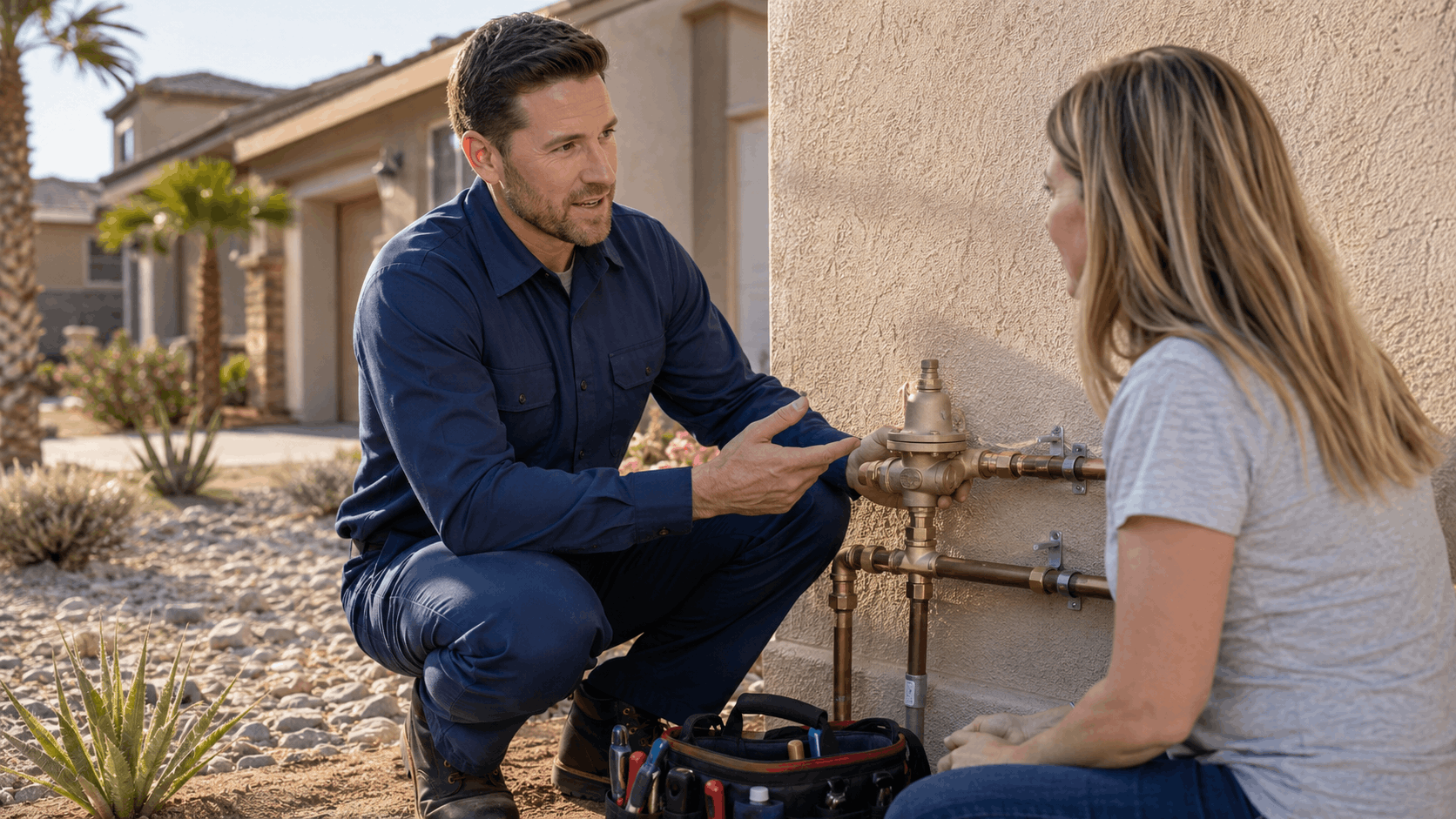
A pressure reducing valve, or PRV, is a small brass device that does one big job. It takes the strong pressure coming from the street and knocks it down to a safe level for your home. Homeowners also call it a water pressure regulator.
Think of it as a gatekeeper on your main line. No matter how hard the city pushes water toward your house, the valve keeps what actually reaches your fixtures under control.
How a PRV Controls Incoming Pressure
Inside the valve is a spring pressing against a diaphragm. High-pressure water from the main line pushes on that diaphragm, and the spring pushes back. The balance between the two sets how far the valve opens.
When incoming pressure rises, it squeezes the diaphragm and narrows the opening, which drops the downstream pressure heading into your home. When you open several taps and pressure falls, the spring pushes the valve wider to keep flow steady. It all happens automatically with no power needed.
The valve sits on the main line, usually right where water enters the property. Everything upstream of it feels full city pressure, while everything downstream stays at the safe level you set.
A plumber sets that downstream target during install, commonly around 55 to 60 PSI for valley homes. That setting is what protects every faucet, toilet, and appliance past the valve.
Where the Valve Sits on a Las Vegas Home
On most valley homes, the PRV lives close to the water meter near the front of the property. Builders often place it in a below-grade box near the sidewalk or tucked against the front foundation. This keeps it right where city water enters.
Many newer tract homes in the southwest put the valve inside the garage wall, just after the main enters the structure. That location makes service easier and protects the brass from constant sun exposure. You will usually find the main shutoff valve nearby.
Older central homes are less predictable. We have found valves buried under landscaping, hidden behind hose bibs, and in a few cases missing entirely. Locating it is the first step whenever we assess pressure on an aging property.
If you cannot find yours, that is worth knowing. A home built in a high-pressure zone with no visible valve may never have had one, which means it has been running over code for years.
How Long a PRV Lasts in Our Water
A pressure reducing valve lasts about 8 to 12 years on average. In many parts of the country, homeowners get the longer end of that range. In Las Vegas, hard water pushes most valves toward the shorter end.
Our water carries heavy mineral content, mostly calcium and magnesium. Over time that mineral buildup coats the diaphragm and spring inside the valve. Once scale hardens on those moving parts, the valve stops regulating cleanly.
A valve near the end of its PRV lifespan often lets pressure creep up or bounce around instead of holding steady. Homeowners notice fixtures acting up again years after the original install seemed to fix everything.
This is one reason we push water treatment for homes with valves. A water softener installation cuts the mineral load and helps the valve reach its full lifespan instead of failing early.
PRV Requirements by Neighborhood
Here is where local knowledge really pays off. Pressure and PRV needs shift dramatically across Las Vegas neighborhoods. What is standard in one tract is unheard of in another just a few miles away.
The table below shows how PRV needs break down by area based on what our team measures in the field. Use it as a starting point, then test your own home to be sure.
| Area | Typical Static Pressure | PRV Usually Needed? |
|---|---|---|
| Summerlin / The Ridges | 85-110 PSI | Yes, almost always |
| Hillside Henderson / MacDonald Highlands | 80-105 PSI | Yes, very common |
| Green Valley Ranch | 70-95 PSI | Often |
| Central / Downtown Las Vegas | 55-80 PSI | Sometimes, valves often worn out |
| Southwest / North Las Vegas new builds | 65-85 PSI | Usually already installed |
Summerlin and the Western Foothills
Summerlin sits high against the western edge of the valley, and that elevation shows up on the gauge. Communities like The Ridges, Red Rock Country Club, and the upper Vistas tracts often read well past 80 PSI thanks to strong booster pressure.
This is a genuine high pressure zone. To get water uphill to these homes, the district pumps hard, and homes at the lower edges of these tracts catch the brunt of it. We routinely see static readings above 95 PSI in Summerlin West homes.
Most newer Summerlin builds came with a PRV from the builder, but many are now 10 to 15 years old and worn out. When a Summerlin homeowner reports banging pipes, a tired valve is usually the culprit.
If you live anywhere in the western foothills, assume high pressure until a gauge proves otherwise. Homeowners in Summerlin should test at least once a year given how hard these zones push.
Henderson, Green Valley, and MacDonald Highlands
Henderson's hillside communities tell a similar story. MacDonald Highlands and the upper Green Valley tracts climb into the foothills, so the district pumps hard to serve them. Zone pressure swings are common as demand shifts through the day.
Green Valley Ranch homes frequently need PRVs, and many that have them are aging out. The pressure here is not always sky-high, but it swings enough that a valve keeps fixtures from taking a beating during peak periods.
Lake Las Vegas and the surrounding hillside developments add another wrinkle with their own elevation quirks. Homeowners near Lake Las Vegas should treat high pressure as the default and verify with a test.
Our crews cover Henderson daily and know these zone boundaries well. That familiarity means faster diagnosis when a Henderson home starts showing pressure trouble.
Older Central Las Vegas and Downtown Homes
Central and downtown Las Vegas homes are a different animal. Many were built decades ago near Charleston Boulevard and in the John S. Park Historic District, long before current pressure rules took shape. Pressure here tends to run lower, but that does not mean these homes are safe.
The problem in older homes is worn or missing valves. A PRV installed in the 1990s has long outlived its lifespan and may be failing quietly. Some homes never had a valve at all and rely purely on lower zone pressure.
When downtown pressure does spike, these aging supply lines are the least able to handle it. Galvanized and older copper lines corrode from the inside, and a pressure surge finds the weakest joint fast.
We work these older neighborhoods often, including areas like the Arts District. Replacing a decades-old valve and checking the supply lines is one of the smartest moves an older-home owner can make.
Newer HOA Communities in the Southwest and North Las Vegas
Newer master-planned communities almost always ship with a PRV already installed. Homes in Mountain's Edge, Skye Canyon, and Aliante were built to current code, so the valve is there from day one, usually in the garage wall.
The catch is timing and HOA rules. Builder-grade valves start wearing out around the 8 to 10 year mark, and many of these communities are now hitting that window. A home that felt perfect at move-in can develop pressure symptoms right on schedule.
HOA guidelines in these communities may dictate where equipment can be visible and how work is done, so we check those rules before starting. Homeowners in Mountain's Edge and Aliante should verify their warranty timeline before assuming a valve issue is covered.
Just because a home is newer does not mean the valve is fine. Test it like any other, because a builder valve running in our hard water ages just as fast as any other.
Need Help in Las Vegas?
Active Plumbing serves Las Vegas and all of Las Vegas Valley.
How to Test the Water Pressure at a Home
You do not need a plumber to find out where your pressure stands. A simple test with a cheap gauge tells you the story in two minutes. This is the first thing we recommend before anyone spends money.
Knowing your PSI reading upfront helps you make a smart decision and gives us a starting point if you do call. Here is how to do it right.
Using a Hose Bib Pressure Gauge
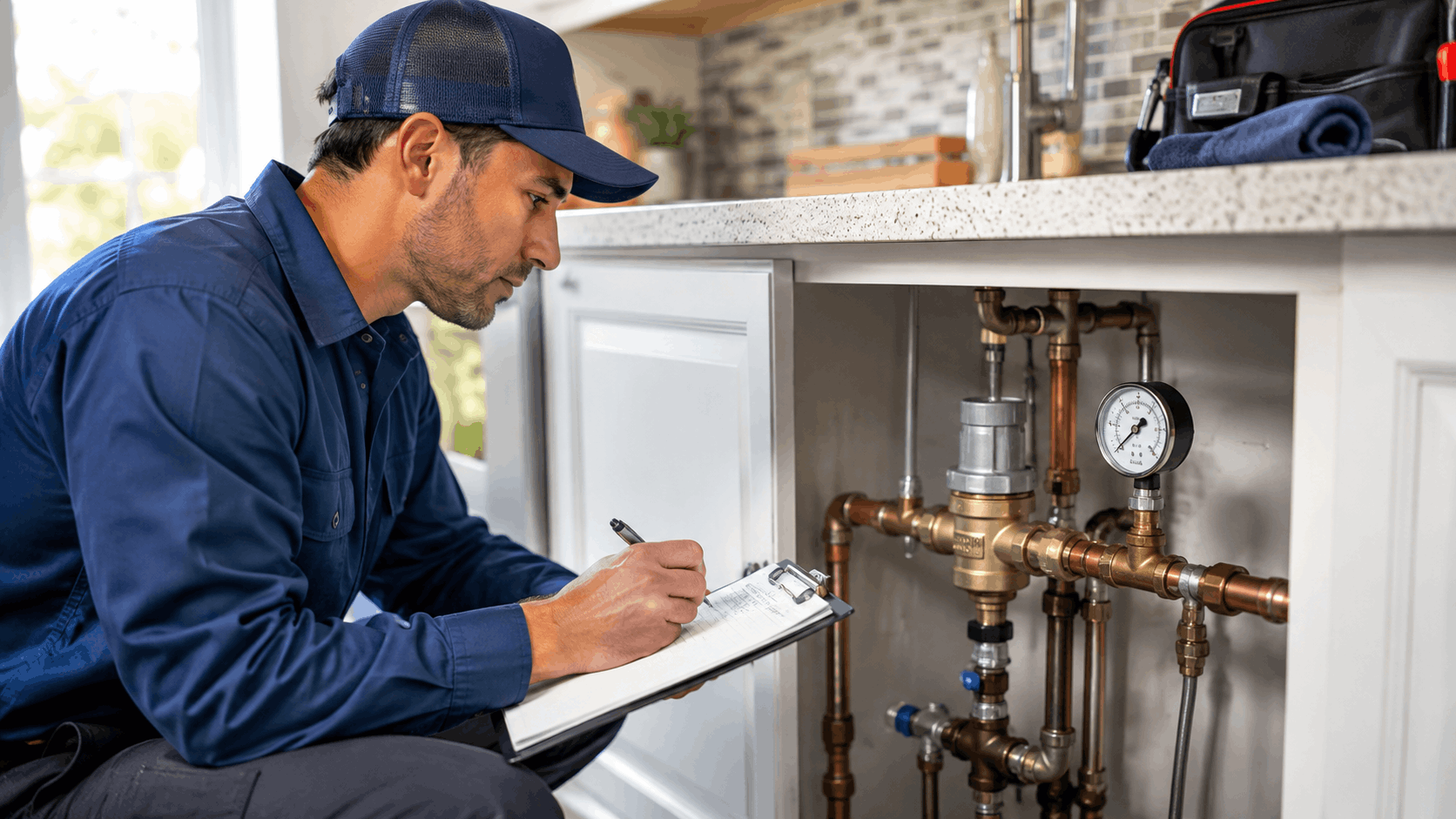
A hose bib pressure gauge costs around 10 to 15 dollars at any hardware store. It threads onto a standard outdoor spigot just like a garden hose. Look for one with a clear dial marked in PSI.
Pick an outdoor spigot closest to where the water main enters the house, usually near the front. Make sure every faucet and appliance inside is off so you capture true static pressure. Thread the gauge on hand-tight, then open the spigot all the way.
The needle jumps and settles on a number within seconds. That number is your static water pressure at that moment. Write it down along with the time of day.
For the fullest picture, take readings at a few different times. Pressure often runs higher late at night when neighborhood demand drops, which is exactly when hidden problems show up.
Reading the Results and What They Mean
The safe pressure range for a home is 40 to 60 PSI. Readings in that window mean your fixtures and water heater are living an easy life. This is the sweet spot every home should sit in.
Between 60 and 80 PSI, you are still legal but climbing toward the edge. Fixtures wear faster and it may be worth setting a valve down a notch if one exists. It is a warning range, not an emergency.
Anything above 80 PSI is over code and calls for action. A high reading like 90 or 100 PSI means your home needs a working pressure reducing valve now. That level of pressure is actively shortening the life of everything on your water system.
If your gauge shows readings jumping around during a single test, that points to a different problem. Steady is good. Bouncing usually means a valve is failing.
Checking Whether a PRV Already Failed
A failed PRV often reveals itself at night. If your daytime reading is fine but a nighttime test shows a pressure spike into the 90s or higher, the valve is no longer holding back the increased off-peak pressure. A healthy valve keeps the number flat regardless of the hour.
Fluctuating pressure during normal use is another red flag. If pressure surges when a toilet finishes filling or drops sharply then rebounds, the diaphragm inside the valve may be shot. These swings mean the valve cannot maintain a steady downstream setting.
You can sometimes hear a failing valve too. A faint chattering or whistling from the valve area often signals internal wear. Combined with a bouncing gauge, that sound usually confirms it.
When we find these signs, replacement is almost always the right call over adjustment. A worn valve cannot be tuned back to health, and our pipe and fixture services team can swap it in a single visit.
PRV Installation and Replacement in Las Vegas
Replacing or installing a PRV is a focused job that a good plumber finishes in a couple of hours. Knowing what to expect helps you plan around water being off and set a realistic budget. Here is how the work breaks down.
- Most standard replacements take one to two hours start to finish.
- Cost depends on valve access, pipe material, and whether a permit applies.
- Local pressure-zone knowledge speeds up correct diagnosis and setting.
What the Installation Process Looks Like
Every job starts by locating and closing the main shutoff so the line can be opened safely. We then relieve pressure by opening a low faucet and draining the section where the valve will go. This keeps the work area dry and clean.
Next comes cutting the old valve out or preparing the line for a new one. We fit the new PRV into the main line, solder or thread the connections depending on pipe type, and add the thermal expansion tank if the closed system requires it.
With the valve in place, we set the pressure. Using a gauge, we dial the valve to a safe downstream target, usually around 55 to 60 PSI, and confirm it holds steady. This valve setting step is what actually protects your home.
Where a permit applies, an inspection follows to verify code compliance. We coordinate that inspection so the homeowner does not have to chase the building department.
Cost Ranges and What Affects Them
For most valley homes, a PRV replacement runs somewhere in the range of 350 to 750 dollars installed. A brand-new install where none existed before, or one requiring an added expansion tank, can push higher. These are ballpark figures, not quotes.
Valve access is the biggest swing factor. A valve sitting cleanly in a garage wall is quick. One buried in a below-grade box under landscaping takes more time to reach and reseal, which adds to PRV cost.
Pipe material matters too. Copper, PEX, and older galvanized lines each call for different fittings and techniques. Transitioning between materials adds parts and labor to the job.
Permit fees, where required, add a modest amount and vary between Clark County and the City of Las Vegas. We fold those into a clear estimate so there are no surprises at the end.
Why Local Experience Matters for Valley Homes
Pressure zones in Las Vegas are not intuitive, and guessing wrong wastes time and money. Active Plumbing has worked homes in nearly every valley pressure zone, from the foothills of Summerlin to the flats of Sunrise Manor. That map lives in our crews' heads.
When a homeowner tells us their address, we often have a strong idea of the pressure before we arrive. That head start means faster, more accurate diagnosis and the right parts on the truck the first time. A local plumber who knows the zones does not have to run tests blind.
We also know which neighborhoods fall under county versus city permitting, which builders installed which valves, and where hard water hits hardest. Those details shape how we approach each job.
That is the difference between a shop that treats every house the same and one that actually knows this valley. Reach out through our contact page and we will bring that local knowledge to your door.
Need Help in Las Vegas?
Active Plumbing serves Las Vegas and all of Las Vegas Valley.
Maintaining Water Pressure Long Term
Installing a valve is not the finish line. Our hard water and shifting zone pressure mean a little upkeep keeps the whole system healthy for years. A few simple habits protect the investment you just made.
PRV maintenance and general water pressure care come down to watching the numbers and protecting the valve from scale. Here is how to stay ahead of trouble.
Yearly Pressure Checks
Once a year, put that hose bib gauge back on and take a reading. An annual check takes five minutes and catches slow problems before they become loud ones. Note the number and compare it to last year.
Pressure monitoring over time reveals trends a single test cannot. If your reading has crept from 58 to 72 PSI over two years, your valve is starting to slip. Catching that drift early lets you plan a replacement instead of reacting to a burst line.
Test at more than one time of day when you can. A gauge test at night often exposes off-peak pressure spikes that a daytime reading hides. This is especially worth doing in high-pressure zones like Summerlin and hillside Henderson.
Keep a simple log on your phone or a note in the garage. Two or three readings a year build a history that makes any future diagnosis quick and clear.
Protecting the Valve From Hard Water Buildup
Las Vegas water is among the hardest in the country, and that mineral content is rough on valve internals. Scale buildup coats the diaphragm and spring, slowly stiffening the moving parts until the valve loses accuracy. This is the number one reason valley valves fail early.
A water softener is the most effective defense. By pulling calcium and magnesium out before they reach your plumbing, a softener slows scale buildup on the valve and every fixture downstream. Homes with treatment routinely get more years out of the same valve.
For homeowners who prefer not to use salt, other options exist. Our salt-free water conditioning reduces scale formation without the maintenance of a traditional softener. Either approach beats letting hard water eat the valve.
Whole-home treatment also protects your water heater, faucets, and appliances at the same time. Protecting the valve is really just one benefit of getting the mineral load under control.
When to Replace Instead of Repair
Some valve problems can be adjusted, but many cannot. If a gauge shows pressure creeping up despite adjusting the valve, the internal parts are worn and replacement is the right move. A worn valve will not hold a setting no matter how you turn it.
Age is another clear signal. A valve past 10 years in our water has likely reached the end of its service life, and pouring labor into a repair rarely pays off. At that point, a fresh valve costs about the same and lasts far longer.
Fluctuating or bouncing pressure that returns after adjustment tells the same story. When the diaphragm is scaled or torn, no amount of tuning brings it back. Repair versus replace comes down to whether the core of the valve is still sound.
When in doubt, we test the valve and give a straight answer. If a simple adjustment fixes it, that is what we do. If the valve is done, we say so and swap it.
Final Thoughts
Water pressure in Las Vegas is not one-size-fits-all, and neither are PRV requirements. Where you live in the valley, how high you sit, and how old your home is all decide whether you need a valve and how hard it works. The 80 PSI code limit is the line that matters, and a simple gauge test tells you which side of it you are on.
If your pipes bang, your fixtures wear out fast, or you live in a high-pressure zone like Summerlin or hillside Henderson, do not wait for a leak to force the issue. Test your pressure, and if the number climbs past 80, call our team. Active Plumbing knows this valley street by street, and we will get your home back into the safe range. Reach out through our contact page or give us a call for a consultation.
Frequently Asked Questions
- What is the legal maximum water pressure in Las Vegas homes?
- Local plumbing code caps static pressure inside a home at 80 PSI. Anything measured above that number requires a pressure reducing valve to bring it back down to a safe level. Both Clark County and the City of Las Vegas follow this code limit. If a gauge reads 85 or 95 PSI, your home is over code and needs a working valve installed.
- How do I know if my house needs a PRV?
- Start with a simple pressure test using a hose bib gauge on an outdoor spigot. If the static reading tops 80 PSI, you need a PRV. Your neighborhood is a strong clue too. Homes in higher-elevation areas like Summerlin, The Ridges, and hillside Henderson almost always need one, while flatter central neighborhoods sometimes run low enough to skip it.
- How much does a PRV installation cost in Las Vegas?
- Most PRV replacements run between 350 and 750 dollars installed for a typical valley home. Price moves based on valve access, pipe material, and whether a permit and expansion tank are required. A clean garage-wall valve costs less than one buried in a below-grade box under landscaping. We provide a clear estimate before starting so there are no surprises.
- Do newer Summerlin and Skye Canyon homes already have a PRV?
- Yes, almost all newer builds in Summerlin, Skye Canyon, and similar communities came with a PRV from the builder, usually in the garage wall. The thing to watch is age. Builder valves start wearing out around 8 to 10 years, so many are due. Run a gauge test to confirm yours still holds a steady reading under 80 PSI.
- How long does a pressure reducing valve last here?
- A PRV typically lasts 8 to 12 years, but Las Vegas hard water pushes most toward the shorter end. Heavy mineral content coats the diaphragm and spring inside, so scale buildup wears the valve down faster than in softer-water regions. A water softener or conditioning system slows that buildup and helps the valve reach its full lifespan.
- Can high water pressure damage my water heater?
- Yes. Excess pressure strains the tank, the relief valve, and every connection on the unit. Over time that constant stress shortens the water heater's life by years and can force the relief valve to drip. If you are replacing water heaters more often than expected, high pressure is a likely hidden cause worth testing for.
- Do I need a permit to replace a PRV?
- It depends on your jurisdiction and the scope of work. Clark County and the City of Las Vegas may require a permit and inspection, especially for new installs or work tied to a remodel or water heater replacement. A straight like-for-like swap is sometimes treated as maintenance. We handle the permitting so you do not have to guess.
- Why do my pipes bang when I turn off the faucet?
- That banging is water hammer, a shockwave that travels through the pipes when high-pressure water stops suddenly. It usually points to pressure that is too high or a failed pressure reducing valve that is no longer holding the line. A quick pressure test will confirm whether high pressure is behind the noise.
- What is the ideal water pressure for a home?
- The sweet spot is 40 to 60 PSI. In that range, faucets, toilets, appliances, and your water heater all run without strain, which extends their life. Below 40 PSI water feels weak, and above 60 PSI wear accelerates. Setting a PRV to hold around 55 to 60 PSI keeps a valley home comfortable and protected.
- Can I install a PRV myself?
- It is possible but risky. A PRV install involves shutting the main, cutting into the supply line, adding an expansion tank for the closed system, and setting the pressure correctly. Getting any of it wrong can cause leaks or fail inspection. Because code compliance matters and permits may apply, professional installation is the safer choice for most homeowners.
A
Licensed plumbing professionals serving Las Vegas and Las Vegas Valley.
Licensed in Nevada · License #0047021
Last updated on
Why trust Active Plumbing?
Founded in 1991, Active Plumbing is a licensed and insured plumber serving Las Vegas and Las Vegas Valley. All content is reviewed by our licensed technicians.

Need Help in Las Vegas?
Active Plumbing serves Las Vegas and all of Las Vegas Valley.
Related Articles
Tips & Advice
Henderson vs Las Vegas Water Pressure: Why Some Neighborhoods Have PRV Issues
Henderson vs Las Vegas water pressure varies by terrain, utility systems, and neighborhood age. Learn why PRV issues hit some areas harder and when to act.
Tips & Advice
Pinhole Leak in Copper in a Las Vegas Wall - Why Our Water Chemistry Eats Copper and What to Do Today
A pinhole leak in copper starts small but spreads fast in Las Vegas. Learn why local water eats copper, the warning signs, and what to do today.
Tips & Advice
Water Heater Replacement in Green Valley Henderson: High Water Pressure and PRV Pairing
High street pressure quietly kills water heaters in Green Valley Henderson. Learn why pairing a new unit with a PRV protects your investment, warranty, and home.