Water Damage Claims in Summerlin and What Insurance Covers on a Burst Pipe

Key Takeaways
- Most standard policies cover sudden and accidental water damage from a burst pipe, but usually not the pipe repair itself or damage from slow leaks and neglect.
- Water claims commonly touch three parts: dwelling coverage for the structure, contents for belongings, and loss of use for lodging during drying.
- Summerlin's build eras decide the risk: aging copper in Sun City Summerlin and Summerlin North, polybutylene before 1995, and Kitec from 1995 to 2007.
- In the first hour, shut off the water, protect belongings, photograph everything before cleanup, and call a licensed plumber to stop the leak.
- Documentation of a sudden event, including photos and a plumber's cause statement, is what keeps a claim on the covered side of the line.
- Summerlin spans the City of Las Vegas and unincorporated Clark County, so the permit office is confirmed from the exact address.
- Typical valley ranges: burst pipe repair $200 to $800, leak detection $150 to $350, and a whole-house repipe $4,000 to $15,000.
- Active Plumbing gives a written price before work starts, responds in 30 to 60 minutes valley-wide, and holds Nevada license NSCB #0047021.
In This Article
It usually starts with a sound. A hiss behind a wall in a Summerlin North home, or water spreading across the tile in a Sun City Summerlin kitchen while the family sleeps. By the time someone notices, the baseboards are soaked and the panic sets in over what it will cost and whether insurance will help.
Here is the short answer. Most standard homeowner policies cover sudden and accidental water damage from a burst pipe, meaning the drywall, flooring, and cabinets the water ruined. What they usually do not cover is the repair of the failed pipe itself, or damage that came from a slow leak or deferred maintenance. The difference between a paid claim and a denied one often comes down to proving the failure was sudden.
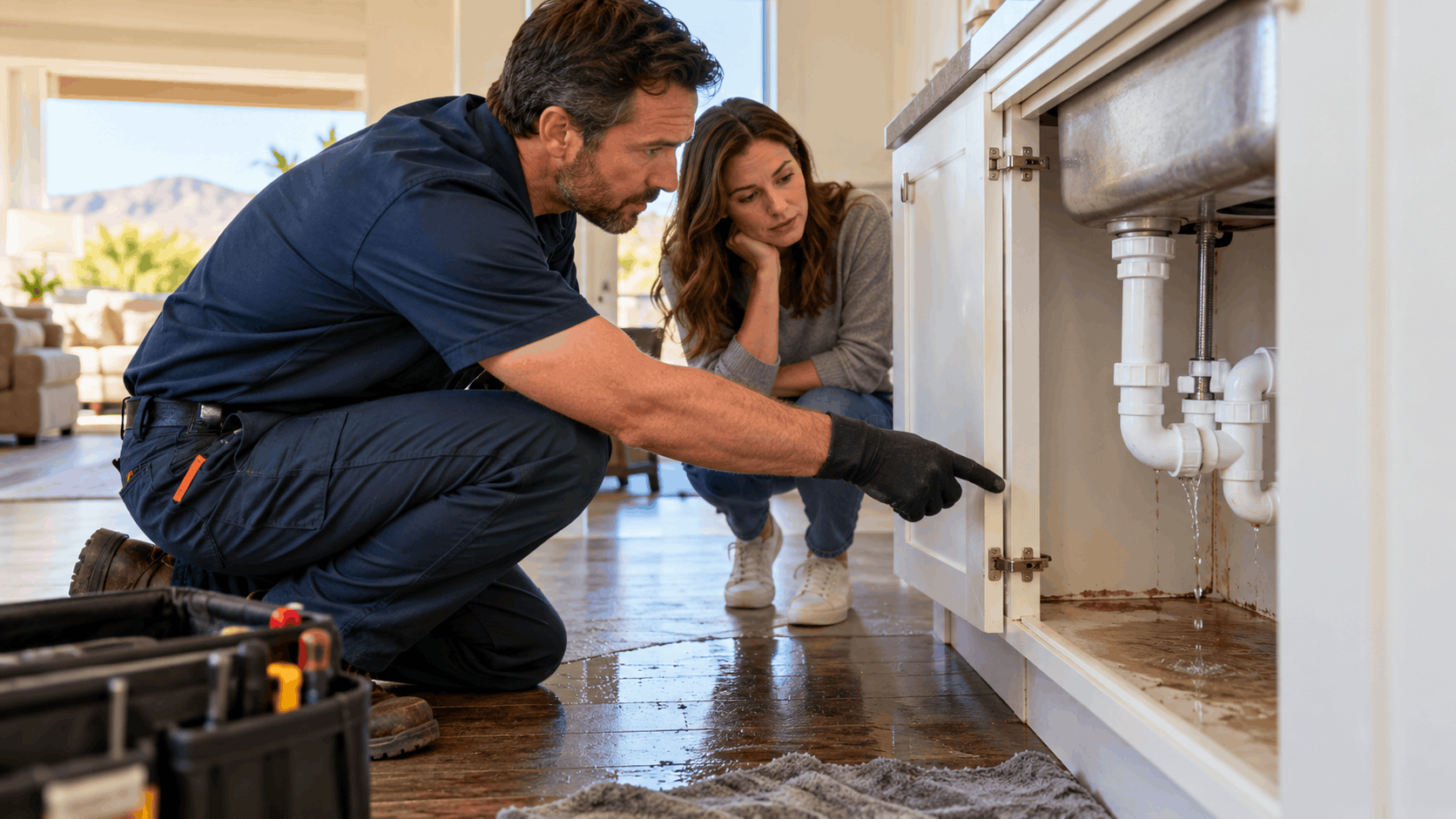
What a Standard Policy Covers When a Pipe Bursts?
Homeowner insurance is built around a simple idea. When something breaks suddenly and by accident, the policy helps pay to put the home back together. When damage builds slowly over time because something was worn out and ignored, that is treated as maintenance, and maintenance is the owner's job.
A burst pipe is usually a textbook sudden event. The pipe held pressure one minute and let go the next, flooding the area in a short window. That is the kind of water damage claim most carriers are set up to pay. The catch is the line between sudden failure and a problem that was quietly developing for weeks.
These are general industry principles, not a rule written only for Summerlin. Your declarations page and your carrier are the final word on what applies to your home.
| Situation | Typically Covered | Typically Not Covered |
|---|---|---|
| Pipe bursts and floods a room | Drywall, flooring, cabinets, drying | The failed pipe section repair |
| Slow drip under a sink for weeks | Often denied as gradual | Rot, mold, and the leak itself |
| Belongings ruined by the flood | Personal property, up to limits | Items damaged by neglect |
| Home unlivable during drying | Loss of use, lodging costs | Routine living expenses |
Sudden and Accidental Damage vs. the Pipe Itself
When a supply line fails without warning, the water goes where it wants. It soaks into drywall, wicks up the base of cabinets, and saturates flooring and the pad beneath carpet. Most policies treat that ruined material as covered damage, paying to dry the structure out and rebuild what the water destroyed.
The part that surprises people is the pipe. The actual repair of the failed copper, polybutylene, or Kitec section is usually the homeowner's cost, not the insurer's. The policy pays for the consequences of the failure, not the worn-out plumbing that caused it.
That split matters for how you plan. The drying and reconstruction may run through your claim, while the plumbing repair runs through a licensed plumber on a separate invoice. Knowing this upfront keeps the two sides from getting tangled when the adjuster arrives.
It also explains why a clear cause statement from your plumber helps. A sudden accidental failure reads very differently to a carrier than a pipe that had been seeping for a long time, and the invoice for the repair documents exactly what gave way.
Where Slow Leaks and Neglect Fall Outside Coverage
A leak that dripped quietly for weeks behind a vanity is the classic denial. The damage looks the same as a burst, but the cause is different. Carriers call this gradual damage, and most policies exclude it because the owner had time to notice and fix it.
Deferred maintenance follows the same logic. If an angle stop had been weeping, a water heater had been corroding, or a fitting had been staining the ceiling for months, an adjuster can point to the history and deny the claim as a maintenance issue rather than a sudden event.
This is the heart of the slow leak exclusion. The policy is not there to replace plumbing that wore out on a predictable schedule. It is there for the pipe that failed in a moment, without the owner having any reasonable chance to stop it.
That is why documentation of a sudden event is so important. Photos of fresh water, a clean break, and a plumber's finding that the failure was recent all tell the story of an accident rather than neglect, which keeps the claim on the covered side of the line.
Dwelling, Contents and Loss of Use Explained
Most water claims touch three coverage parts. Dwelling coverage pays to repair the structure itself, including the drywall, flooring, cabinets, and finishes the water ruined. This is the largest piece on a serious flood and the one tied to your home's rebuild value.
Contents coverage, sometimes called personal property, handles your belongings. Furniture, electronics, clothing, and stored items damaged by the water fall here, usually subject to their own limit and sometimes to depreciation depending on the policy type.
Loss of use covers the cost of living elsewhere when drying and repairs make the home unlivable. If you need a hotel or a short-term rental while fans and dehumidifiers run, this part can reimburse those added expenses within set limits.
Each of these has its own limit and deductible on your declarations page. Read that page before you assume what you have, because the numbers vary widely from one policy to the next, and from one carrier to another.
Get Your Quote
Tell us what's going on and we'll get back to you. We're open 24/7.
Why Burst Pipes Happen in Summerlin Homes?
Summerlin did not go up all at once. It grew village by village from the late 1980s outward, so the pipe behind the walls changes with the age of the neighborhood. That build history is the best predictor of why a given home springs a leak.
The community spans Summerlin North, Summerlin South, and the newer Summerlin West, each with its own typical plumbing. Pairing the failure to the era tells you whether you are looking at a one-off repair or a sign the whole system is near the end of its run.
| Area or Village | Era | Common Pipe Concern |
|---|---|---|
| Sun City Summerlin | From 1989 | Aging copper, worn angle stops |
| Summerlin North villages | Early 1990s | Copper, some polybutylene |
| Santa Barbara, The Hills South | About 1997 | Inside the Kitec window |
| Talaverde, The Vistas | 2003-2004 | Possible Kitec fittings |
| Summerlin South, West | Later and newest | Copper and PEX |
Older Copper and Pinhole Leaks in Early Summerlin
Sun City Summerlin, the age-restricted Del Webb community developed from 1989 with roughly 7,700 homes, is the oldest part of Summerlin by a clear margin. Its earliest phases are around thirty-five years old now. The copper supply lines in those homes have been carrying hard valley water for decades.
The Summerlin North villages from the early 1990s sit in the same aging bracket. Copper supply was typical for that era, and that copper has now reached the age where pinhole leaks start showing up, especially on hot water lines and under-slab runs that stay warm and wet.
Pinhole leaks earn their name. Corrosion works through the copper wall from the inside until a tiny hole opens, and water finds it. On a line under pressure, that small weakness can let go into a full burst with almost no warning, which is why a thirty-year-old copper system can flood a room overnight.
When these leaks start appearing on the hot side or under the slab, a single patch rarely ends the trouble. The same conditions affect every run of the same age, so repeated repairs are a signal worth taking seriously in these older villages.
Polybutylene and Kitec by Village Age
Homes built before about 1995 may carry polybutylene supply piping. This gray plastic material is a known failure candidate, and it tends to give way at the fittings rather than along the pipe body. When a polybutylene fitting lets go, it can dump water fast, and a repipe is the standard long-term answer.
The Kitec window runs from roughly 1995 to 2007. Santa Barbara in The Hills South, built around 1997, falls inside it, as do Vistas homes like Talaverde from the mid 2000s. Kitec uses brass fittings that corrode internally, and that corrosion restricts flow long before a visible leak shows up.
That restriction is a useful warning sign. A Kitec home may show weak pressure at fixtures as the brass fittings close down, which gives a homeowner a chance to act before a fitting fails outright. Catching it early turns a planned whole-house repipe into something far less stressful than an emergency flood.
No two homes of the same year are identical, so the material is confirmed on site, never assumed from the build date alone. A plumber who checks the actual pipe at accessible points can tell you what you really have before anyone talks about a repair plan.
Hard Water, Slab Construction and Desert Temperature Swings
The Southern Nevada Water Authority reports valley water at about 280 parts per million, roughly 16 grains per gallon, which is categorized as very hard. That hardness deposits calcium and magnesium scale through a plumbing system, and over years that scale narrows the bore of supply lines and stresses the whole system.
Scale does more than slow the flow. It builds on water heater elements, clogs aerators and mixing valves, and leaves the white crusting on fixtures. On supply lines it works alongside corrosion, so the combination of hard water and aging metal is a common backdrop to the failures seen across older Summerlin.
Most of the valley is slab-on-grade construction, which makes under-slab supply line failures their own category of work. A leak below the concrete is hidden, so it often goes unnoticed until water surfaces through the floor or the water bill jumps. Finding and reaching those lines is harder than a leak in an open wall.
The desert still freezes. Cold winter nights can freeze poorly insulated exposed lines, including hose bibbs and exterior runs, and that surprises residents who assume the desert never gets cold enough. Along the edge of Summerlin West against the Spring Mountains, exposed and uninsulated lines deserve a look before the coldest nights arrive.
Need Help in Las Vegas?
Active Plumbing serves Las Vegas and all of Las Vegas Valley.
The First Hour After a Pipe Bursts
What you do in the first hour shapes both how much your home suffers and how smoothly your claim goes. The goal is simple. Stop the water, protect what you can, and get the source under control before drying starts.
Move with purpose, not panic. Each step below limits the damage, and limiting damage keeps the covered portion of your loss as small as it can be, which is exactly what a policy expects a reasonable owner to do.
Shut Off the Water and Stop the Source
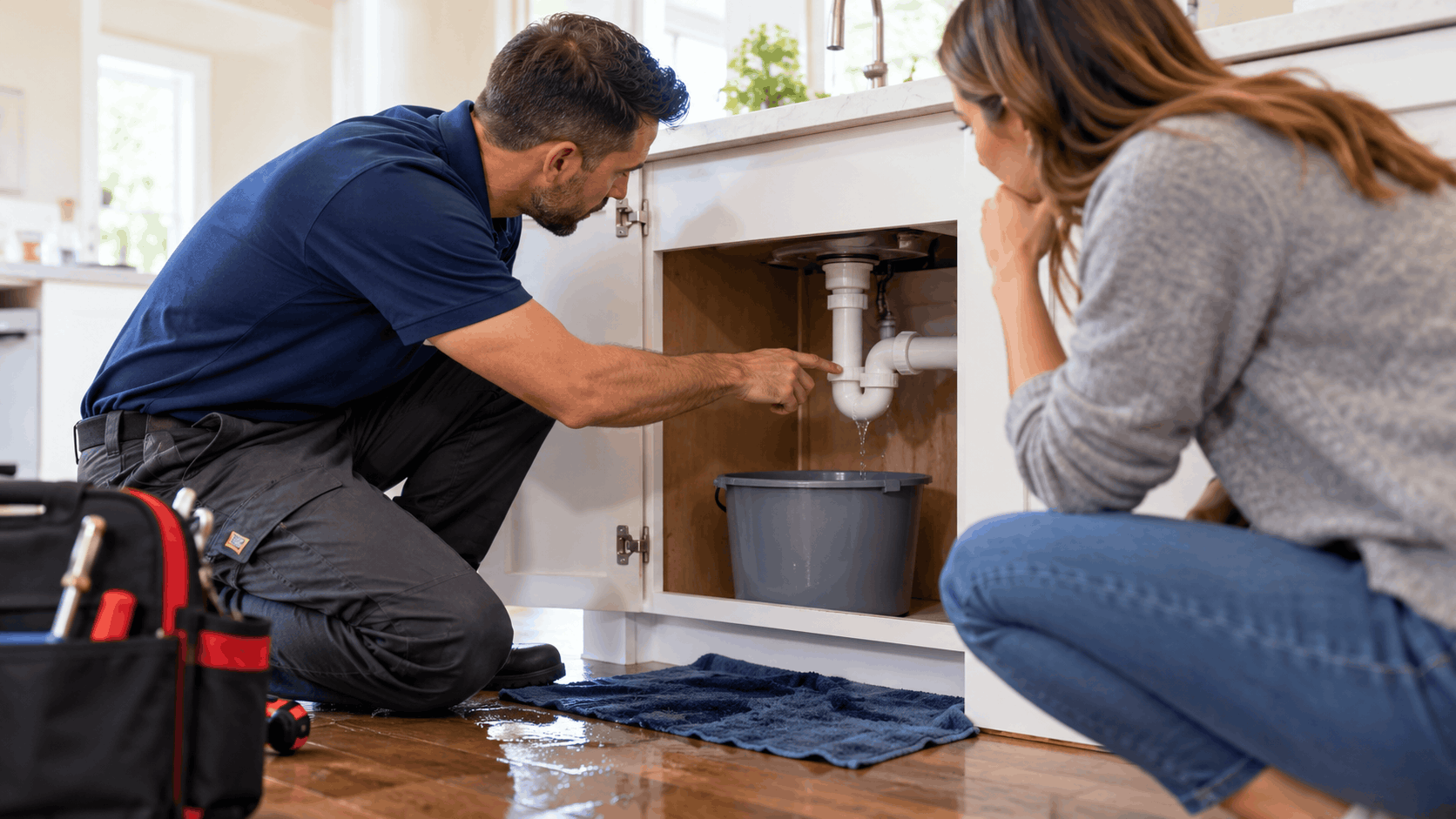
Start at the source. If the leak is at a single fixture, the angle stop under the sink or behind the toilet shuts off just that line. If the burst is in the wall or you cannot find the fixture valve, go to the main shutoff and close the water to the whole house.
Know where your main shutoff is before you ever need it. In many valley homes it sits near the front of the house or at the meter, and a quarter turn or a few full turns closes it. A moment spent finding it on a calm day saves precious minutes during a real flood.
In older Sun City Summerlin homes, the original angle stops may be well past their service life. Decades of hard water scale can seize them, so the valve you reach for may be hard to turn or may not fully close. If a fixture valve will not budge, do not force it to the point of breaking it. Go straight to the main instead.
Stopping the flow quickly is the single biggest thing you can do to limit covered damage. Less water in the structure means less drywall, less flooring, and fewer belongings ruined, which keeps the whole loss smaller and the claim cleaner.
Protect Belongings and Reduce Standing Water
Once the water is off, protect what the flood has not reached yet. Move valuables, electronics, and important papers to a dry room. Lift furniture off wet flooring, and slide foil or small blocks under furniture legs to stop finish stains from bleeding into carpet.
Remove standing water where it is safe to do so. Towels, a mop, or a wet vacuum all help. The faster you get the water off the floor, the less it wicks into walls and subfloor, and the less chance it has to start feeding mold in the days that follow.
Watch for hazards as you work. If water has reached outlets, electronics, or a panel, stay clear of those areas and do not wade through water near live electrical. Your safety comes before any belonging.
A policy generally expects reasonable steps to prevent further loss after the initial event. Pulling items to dry ground and clearing standing water is exactly that kind of step, and it shows the carrier you acted responsibly once the damage began.
Call a Licensed Plumber to Stop the Leak
Shutting the main stops the flow, but it also leaves you without water to the house. A licensed plumber finds the failed section, repairs or isolates it, and restores water to the rest of the home so drying can begin and life can go on.
Getting the right person matters. Work that requires a permit must be performed by an appropriately licensed contractor, and a plumber who finds leaks every day will locate a hidden break far faster than trial and error. On a burst in the wall or under the slab, that speed limits how far the water spreads.
Active Plumbing technicians arrive in 30 to 60 minutes anywhere in the Las Vegas Valley, which keeps the gap between the first panic and a controlled water source short. The faster the source is stopped and documented, the tighter your claim stays. Our emergency plumbing team handles exactly this kind of call.
Having a professional confirm and repair the failure also gives you the cause statement your adjuster will want. That record ties the damage to a sudden event, which is the whole point when a carrier is deciding whether to pay.
Documenting the Damage for Your Claim
A strong claim is a documented claim. The water will be gone in days, so the record you build in the first hours is what the adjuster actually sees weeks later. Good habits here protect the money you are owed.
Think of yourself as building a case that the failure was sudden and that you acted fast. Photos, receipts, and a plumber's finding together paint that picture far better than memory ever could.
Photos and Video Before You Clean Up
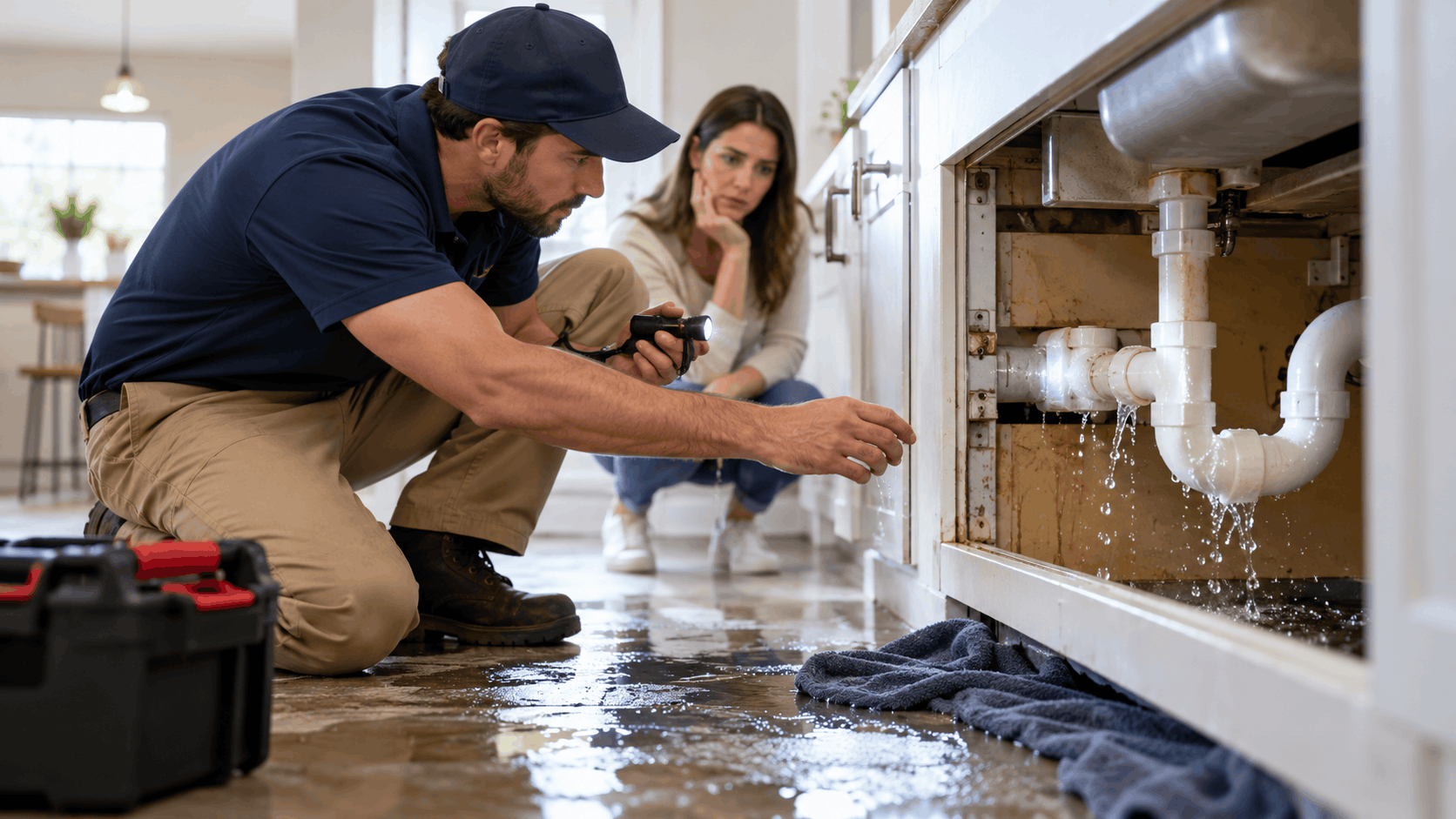
Before you move a single item, photograph everything. Capture the burst point, the standing water, the soaked walls and flooring, and every damaged belonging where it sits. Shoot both wide shots that show the room and close-ups that show the detail.
Video adds context that stills cannot. A slow walk-through narrating what happened and when gives the adjuster a clear sense of the scene. Timestamps on your phone photos quietly back up that the damage was recent.
The condition of the water matters more than people realize. Fresh, clean standing water and a clean break on the pipe read as a sudden failure. That visual evidence helps separate a burst from a slow leak that would have left stains, rot, and mold behind.
Only after you have the photos should you start removing water and moving items. The documentation comes first because you cannot recreate the scene once cleanup begins, and a gap in the record can give a carrier room to question the cause.
Keeping Receipts and a Record of Repairs
Save every receipt tied to the loss. Emergency plumbing work, drying equipment rental, materials, and any hotel or temporary lodging all belong in one folder, physical or digital. These support the covered portions of your claim, including loss of use.
Keep the plumber's written findings on the cause right alongside those receipts. A document that states what failed and that the failure was recent is one of the most useful pieces of paper in the whole file. It links the damage directly to a sudden event.
Log the timeline too. Note when you found the water, when you shut it off, when the plumber arrived, and when drying started. A simple record of those times shows you responded quickly and reasonably.
Organized records speed up the claim and reduce back-and-forth with the adjuster. The more complete your file, the fewer questions slow down your payment, and the cleaner the separation stays between the covered damage and the plumbing repair you handle on your own.
What to Tell the Adjuster About the Cause
Be clear and honest with the adjuster about what happened. Describe a sudden failure in plain terms. The pipe held, then let go, and water spread fast. That account, backed by your photos, helps the adjuster classify the loss correctly.
Your plumber's cause statement does a lot of the heavy lifting. When a licensed professional confirms a sudden failure rather than long-term seepage, it carries weight with the carrier and supports the covered side of the claim.
Do not guess or inflate. If you are unsure how long something was leaking, say so and let the plumber's findings speak. An honest, consistent story holds up far better than one that stretches the facts.
Confirm your claim steps directly with your own carrier, since every policy handles the process a little differently. Your agent can tell you what order to file in, what your deductible is, and which documents they want first.
Need Help in Las Vegas?
Active Plumbing serves Las Vegas and all of Las Vegas Valley.
Jurisdiction and Permits Depend on Your Summerlin Address
Summerlin is not a single permitting authority. The name covers neighborhoods in two different jurisdictions, so the correct permit office is confirmed from the exact address, not from the word Summerlin. That matters whenever a repair during a claim involves permitted work.
Getting the jurisdiction right is a routine first step before any permitted work. Filing with the wrong department costs time you do not have when a home is torn open and drying out.
City of Las Vegas vs. Unincorporated Clark County
Summerlin North and Summerlin West lie within the City of Las Vegas. Summerlin South is unincorporated Clark County, bounded by Charleston Boulevard, Russell Road, Hualapai Way, and the Red Rock Canyon conservation area. The line between them decides which building department governs your home.
The City of Las Vegas and Clark County each run their own permit counter. A permit for a home on the north side goes through a different office than one just across the boundary to the south, even though both addresses say Summerlin.
Filing with the wrong department is a real risk here. It stalls the job while the paperwork is redirected, which is the last thing anyone wants when reconstruction is waiting on an approved permit. Checking the address first avoids that delay entirely.
Because the split runs right through the community, a plumber who works these neighborhoods daily will confirm the authority for your specific address before quoting permitted work. That small step signals real local knowledge and keeps the repair on schedule.
When Burst Pipe Repair Needs a Permit
A simple repair of a single failed section often does not rise to the level of a permit. Larger jobs are different. A whole-house repipe or significant plumbing work may require a permit, and that is decided by the jurisdiction for your address.
Whatever the scope, work requiring a permit must be performed by an appropriately licensed contractor. A customer is entitled to ask for a license number and to verify it with the Nevada State Contractors Board, which is a fair thing to do in a market with an unlicensed trade problem.
Confirming the permit position for the specific address is a normal part of starting the job. It is not a hurdle so much as a first step, and a local contractor handles it as a matter of course rather than leaving it to the homeowner.
When a burst leads to a bigger repair, the permit question and the licensing question travel together. Both come back to doing the work correctly and verifiably, which also gives you a cleaner record for the claim file.
HOA and Association Responsibility in Sun City Summerlin
Sun City Summerlin is an age-restricted community with its own association, golf courses, and recreation centers. In communities like this, responsibility for a leak or a backup can be split between the association and the individual homeowner, depending on where the failure sits and what the governing documents say.
That split affects who files and who pays. A failure inside your unit may be your responsibility, while something in a shared line or common area may fall to the association. Assuming wrong can mean filing the claim under the wrong party.
Because the earliest Sun City Summerlin phases are over three decades old, these shared-versus-private questions come up more often than in newer villages. Original components reach the end of their life, and the line of responsibility is not always obvious from the kitchen floor.
Confirm the position with the Sun City Summerlin association before you assume who covers what. They can point to the governing documents that settle where the association's responsibility ends and yours begins, which keeps the claim pointed at the right party from the start.
What Repairs Actually Cost After a Burst Pipe?
The plumbing repair sits separately from the insured damage. Your carrier may pay to dry and rebuild what the water ruined, while the plumbing work to fix the failure is usually your own cost. Knowing the typical plumbing side helps you budget for the part the policy likely will not cover.
The figures below are typical ranges for plumbing work in the Las Vegas Valley, not a quote and not a fixed price from us. Active Plumbing gives a written price before work starts, and the actual price for your job depends on that job.
| Plumbing Service | Typical Las Vegas Valley Range |
|---|---|
| Burst pipe repair | $200 to $800 |
| Electronic leak detection | $150 to $350 |
| Slab leak detection | $150 to $300 |
| Slab leak repair | $500 to $3,000 |
| Whole-house repipe | $4,000 to $15,000 |
| After-hours emergency service fee | $150 to $300 plus repair costs |
Burst Pipe and Leak Detection Ranges
A straightforward burst pipe repair typically runs $200 to $800 in the Las Vegas Valley. The variation comes from where the break sits, how accessible it is, and what material is involved. An open, reachable line is simpler than one buried in a wall or below the slab.
When the leak is hidden, detection comes first. Electronic leak detection typically runs $150 to $350 and uses sound and pressure tools to pinpoint a break without tearing the house apart to find it. Pinpointing the spot keeps the repair targeted.
Under the slab, the numbers shift slightly. Slab leak detection typically runs $150 to $300, and slab leak repair typically runs $500 to $3,000. The repair range is wide because reaching a line below concrete can mean anything from a small access cut to a reroute. Our slab leak detection and repair service covers both ends of that work.
These are typical area ranges to set expectations. The real figure for your break comes in a written price after the leak is located and the scope is clear, because a hidden under-slab failure is a different job from a fitting you can see.
When a Repipe Makes More Sense Than a Patch
One leak is a repair. Repeated leaks are a pattern. In homes with polybutylene or Kitec, a single patch often buys only a little time before the next fitting fails, because every run of that material shares the same weakness and the same age.
When failures start repeating, a whole-house repipe can make more sense than chasing one leak after another. The typical range is $4,000 to $15,000 in the Las Vegas Valley, and it replaces the problem system rather than treating its symptoms.
The build era points the decision. A pre-1995 polybutylene home or a 1995-to-2007 Kitec home is a natural repipe candidate once leaks begin stacking up. Catching a Kitec home before a flood, while the brass fittings are just restricting flow, turns an emergency into a planned project.
The material is always confirmed on site first. A plumber checks the actual pipe at accessible points before anyone recommends a repipe, so the choice rests on what is really behind your walls, not on the year the tract was built.
After-Hours and Emergency Costs
Pipes do not wait for business hours. An after-hours emergency call carries a service fee of $150 to $300 plus repair costs. That fee reflects getting a licensed plumber to your door at night or on a weekend when every hour of flooding adds to the damage.
Excavation changes the math on any repair that goes underground. Caliche, a cemented calcium-carbonate hardpan common across the valley, is hard and abrasive. It makes trenching slower and more expensive, so a slab or sewer line repair that involves digging through it takes more time and labor.
Caliche also makes it hard to bed a pipe into evenly. The practical result is that any underground work in this ground belongs in an honest cost conversation, because the soil itself adds to the effort before the plumbing even starts.
All of these figures are typical area ranges. The actual cost arrives in a written price before work begins, which also gives you a clear document to keep with your claim records. For a flood in progress, our 24/7 emergency plumbing service is the number to call.
Need Help in Las Vegas?
Active Plumbing serves Las Vegas and all of Las Vegas Valley.
How Active Plumbing Handles a Burst Pipe Call
When the water is spreading, the workflow matters as much as the repair. The job runs from the first call to a controlled water source to a written price, and each step quietly supports the homeowner's insurance claim by documenting the cause and the fix.
Here is how a burst pipe call actually goes with our team, start to finish.
Finding and Stopping the Leak
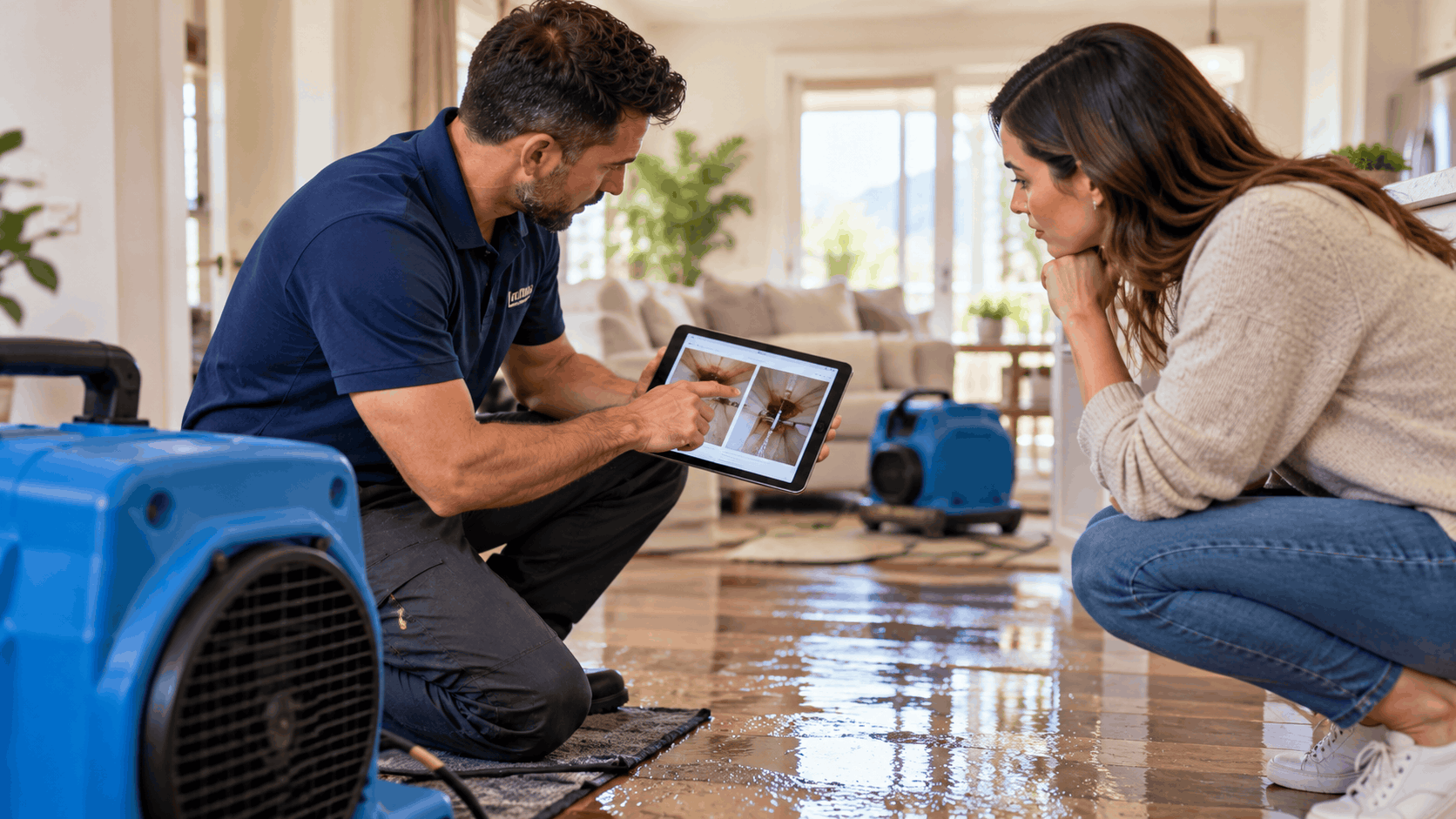
The first job is locating the failure. When the break is visible, that is quick. When it is hidden in a wall or below the slab, we use electronic and slab leak detection to pinpoint the spot without opening the whole house to find it.
Once the break is located, we stop the water at the source and restore service to the rest of the home where possible. Controlling the leak before drying begins is what keeps the damage from growing while the dehumidifiers run.
Speed is part of the service. Technicians arrive in 30 to 60 minutes anywhere in the Las Vegas Valley, which shortens the window between the first flood and a controlled source. On a burst pipe, those saved minutes translate directly into less soaked drywall and fewer ruined belongings.
Pinpointing the exact failure also sharpens the cause statement your adjuster will want. We can tell you and your carrier what gave way and where, which ties the damage to a specific sudden event.
A Written Price Before Work Starts
Before any work begins, the homeowner gets a written price. That is a business practice we hold to on every job, so there is no guessing about cost once the leak is located and the scope is clear.
A written price does double duty during a claim. It is a clear document showing exactly what the plumbing repair involved and what it cost. That paper slots neatly into your claim file alongside your photos and receipts.
It also keeps the plumbing side and the insured side cleanly separated. The repair invoice is one record, the damage claim is another, and having both in writing prevents the two from blurring together when the adjuster reviews the loss.
The written price reflects the actual job in front of us, not a generic estimate. Once we have found the break and know what it will take, you see the number before we pick up a tool.
Licensed, Local and Confirming the Right Department
Active Plumbing holds Nevada license NSCB #0047021, verifiable free at nvcontractorsboard.com, where classification, status, bond, and workers compensation are all public record. We have been licensed and working the valley since 1991.
We are a fourth-generation family plumbing business, and some of our owners are U.S. military veterans. That background shows up in how we treat a home that is flooding and a homeowner who is stressed about the claim.
Because Summerlin spans the City of Las Vegas and unincorporated Clark County, we confirm the permit position for your specific address before any permitted work. Getting that right from the start keeps reconstruction from stalling on a misfiled permit.
Serving the valley since 1991 means we know these villages, from the early copper in Summerlin North to the Kitec window in the Vistas. That history is why we check the actual pipe rather than guessing from the build year, and why the fix matches what is really behind your walls.
Get the Leak Stopped and the Record Started
A burst pipe is a race against the water, and the sooner it is stopped and documented, the smaller your loss and the cleaner your claim. We locate the failure, stop the source, confirm the permit position for your Summerlin address, and hand you a written price before any work begins.
Call Active Plumbing at (702) 438-3357 when a pipe lets go. Technicians reach any part of the Las Vegas Valley in 30 to 60 minutes, license NSCB #0047021, verifiable at nvcontractorsboard.com.
Frequently Asked Questions
- Does homeowner insurance cover a burst pipe in Summerlin?
- Most standard homeowner policies cover sudden and accidental water damage from a burst pipe, meaning the flooring, drywall, cabinets, and belongings the water ruined. What they usually do not cover is the repair of the failed pipe itself, or damage traced to a slow leak or deferred maintenance. Every policy differs, so confirm your specific coverage and limits directly with your carrier before you assume what applies.
- Will insurance pay to fix the pipe or just the water damage?
- Policies typically pay for the damage the water caused, such as drying out and rebuilding soaked drywall, flooring, and cabinets. The repair of the failed pipe section is usually the homeowner's cost, handled through a licensed plumber on a separate invoice. The policy covers the consequences of the failure, not the worn plumbing that caused it. Your declarations page and carrier confirm the details.
- How much does burst pipe repair cost in the Las Vegas Valley?
- Burst pipe repair typically runs $200 to $800 in the Las Vegas Valley, and electronic leak detection typically runs $150 to $350 when the break is hidden. These are typical area ranges, not a quote. The actual cost depends on where the break sits and how accessible it is, and it is confirmed in a written price before work begins on your specific job.
- Why do pipes burst in Summerlin homes?
- It depends on the village and build era. Early Summerlin North homes and Sun City Summerlin, developed from 1989, have aging copper prone to pinhole leaks, especially on hot lines and under-slab runs. Homes before about 1995 may carry polybutylene, and those from 1995 to 2007 may have Kitec. Hard water scale narrows lines over years, and cold desert nights can freeze exposed, poorly insulated pipes.
- What should I do first when a pipe bursts?
- Shut off the water first, either at the fixture angle stop or the main shutoff for the whole house. Protect belongings by moving valuables and lifting furniture off wet flooring, then remove standing water where it is safe. Photograph the burst point and damage before cleaning up, and call a licensed plumber to find and stop the leak so drying can begin.
- What does insurance deny on a water claim?
- Carriers commonly deny slow leaks, long-term seepage, and damage tied to deferred maintenance. A leak that dripped for weeks behind a vanity, or a fitting that had been staining a ceiling for months, reads as a gradual problem the owner could have caught. That is why documenting a sudden event with photos and a plumber's cause statement matters so much for keeping a claim on the covered side.
- Do I need a permit to repair a burst pipe in Summerlin?
- It depends on the scope and the address. A simple single-section repair often does not require a permit, while a larger job or a whole-house repipe may. Summerlin North and West sit in the City of Las Vegas, and Summerlin South is unincorporated Clark County, each with its own permit counter. Permitted work must be done by a licensed contractor, and we confirm the position for your address.
- Who is responsible for a leak in Sun City Summerlin, the HOA or the homeowner?
- In age-restricted Sun City Summerlin, responsibility for a leak or backup can be split between the association and the homeowner, depending on where the failure sits and what the governing documents say. A failure inside your unit may be yours, while a shared line may fall to the association. Confirm the position with the Sun City Summerlin association before filing so the claim points at the right party.
- Can a repipe stop repeat burst pipe claims?
- Often, yes. Homes with polybutylene or Kitec tend to see repeated failures because every run shares the same weakness and age, so one patch rarely ends the trouble. A whole-house repipe, typically $4,000 to $15,000 in the valley, replaces the problem system rather than chasing leaks. The material is always confirmed on site first, so the decision rests on what is actually behind your walls.
- Does Active Plumbing provide documentation for my insurance claim?
- Yes. You get a written price before work starts, which is a clear document of what the plumbing repair involved and cost. We can also provide a statement of the cause, tying the damage to a specific sudden failure. Those records slot into your claim file alongside your photos and receipts, giving your adjuster a clear account to work from.
Licensed plumbing professionals serving Las Vegas and Las Vegas Valley.
Licensed in Nevada · License #0047021
Last updated on
Why trust Active Plumbing?
Founded in 1991, Active Plumbing is a licensed and insured plumber serving Las Vegas and Las Vegas Valley. All content is reviewed by our licensed technicians.

Need Help in Las Vegas?
Active Plumbing serves Las Vegas and all of Las Vegas Valley.
Related Articles
Burst Water Heater in a Las Vegas Garage: Flood Control, Drywall, and Insurance Documentation Steps
A step-by-step Las Vegas guide to a burst garage water heater: stop the flood fast, protect drywall, dry the space, and build a clean insurance claim.
Hard Water at Thirty Years in Summerlin North, From Scale to Failed Valves
After thirty years on 16-grain water, Summerlin North heaters, valves and cartridges fail from scale. Here is the mechanism, the fixes, and how the work is done.
Water Damage Claims in Spring Valley and What Insurance Covers on a Burst Pipe
Most Spring Valley homeowner policies cover sudden water damage from a burst pipe but not the pipe repair itself. Here is what is covered, why pipes fail here, and how to file.